The Naming of the Goats

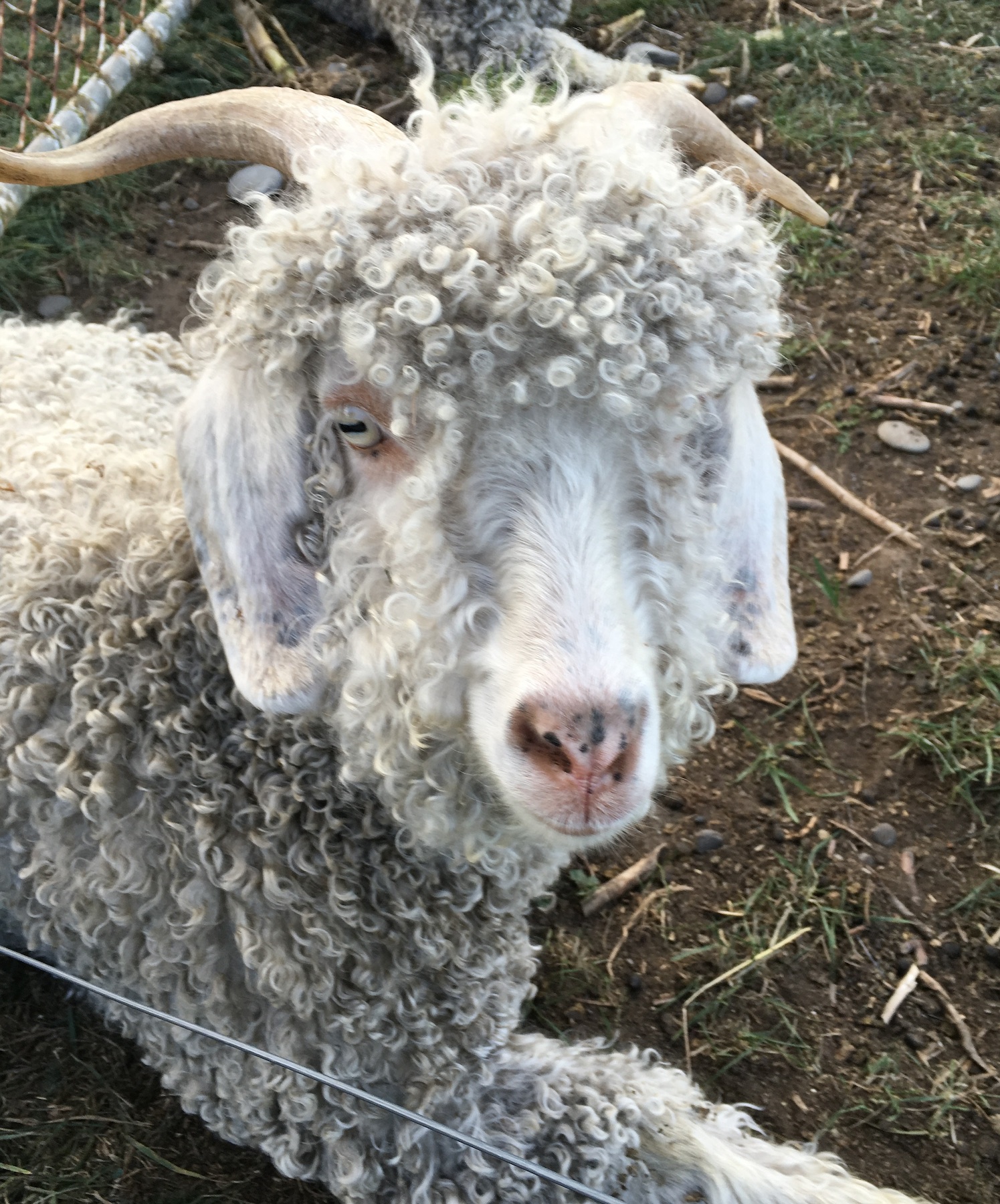
2016-05-07 12.47.01 smIt’s been over a week since we got the new angora goats, and I was beginning to stress because we still hadn’t named them. At lunch today, we talked over the options, and nothing seemed quite right.

Pavarotti, Carreras, and Domingo (the three tenors)? Meh.

Athos, Porthos, and Aramis (the three musketeers)? Too hard to remember.

Larry, Mo, and Curly (the three stooges)? Too dumb.

Well, we named all our dairy goats after goddesses, perhaps the wethers should be named after gods? But their behaviour isn’t godlike, and who can imagine a castrated god?

Bumble, Fagan, and The Artful Dodger? No.

Mars, Neptune, and Uranus? Er…no.

So we sent my daughter out to the paddock to ask the goats what their names were.

She came back saying the goats were giving confusing answers. She said that they claimed their names were Dennis, Darwin, and Dale.

Darwin!

That was it! Scientists!

So out in the paddock there now graze Darwin, Darwin sm

Einstein, Einstein sm

Newton sm and Newton.

New Arrivals

IMG_1139 cropThe Saturday Story will have to wait until Sunday this week, because there’s excitement in the paddock today.

I made the difficult decision a few weeks ago to sell my dairy goats and switch to angoras. The daily grind of milking, dealing with mastitis, kiddings, and all the other stress that goes along with breeding and milk production was getting really old. It was time for a new adventure.

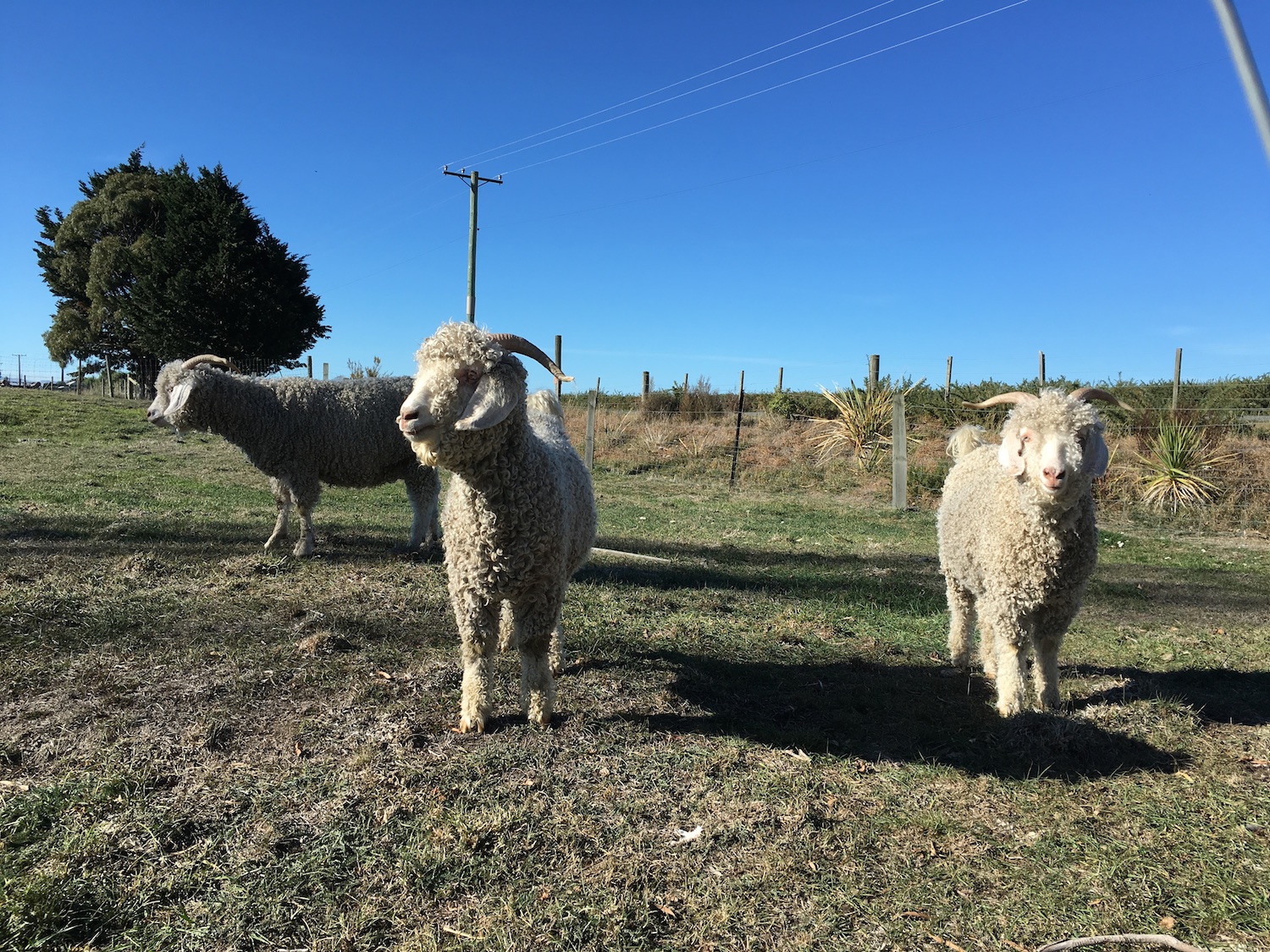
So today, we drove to Rangiora and picked up three lovely wee boys (wethers) from Mohair Pacific. My elderly dairy goat, Artemis, will remain with us. The last of the other dairy goats is due to be picked up on Monday morning.

We’re still getting to know the new boys, and they’re still settling into the paddock. We’ve been tossing around names for them, with such notable trios as the three musketeers, the three stooges, and the three tenors being among them, but I think we’ll wait and learn a bit about their personalities before we stick names on them.

This will be a new adventure for me—learning to spin and dye yarn. I love mohair, though, and I’m looking forward to weaving and knitting with it.

Ahh…sweet love!

'Tis the season.

‘Tis the season.

I swear I’m going to kill my goats.

They caught a whiff of buck a couple of days ago, and all hell has broken loose in the paddock.

Last night, I barely even heard the d*#&$ cat howling at the window over the F@#$^&*ng goats in the paddock. I finally gave up trying to sleep at four this morning and got up and fed them. I figured if they were eating, they’d have to be quiet, right?

Unfortunately, love-sick goats aren’t interested in food. The novelty of it kept them quiet for a few minutes, at least. Around five, I went out and hung out with them for a while—again, it was good for a few minutes, until they decided I wasn’t nearly as interesting as the prospect of a buck. Somewhere. If only they could call loud enough for him to hear.

They’ve worn a path around the perimeter of the paddock—pacing and calling all night.

And they’ve worn a path in my nerves. I’ve warned them. Another peep out of them, and we’re having goat for dinner.

Pumpkins

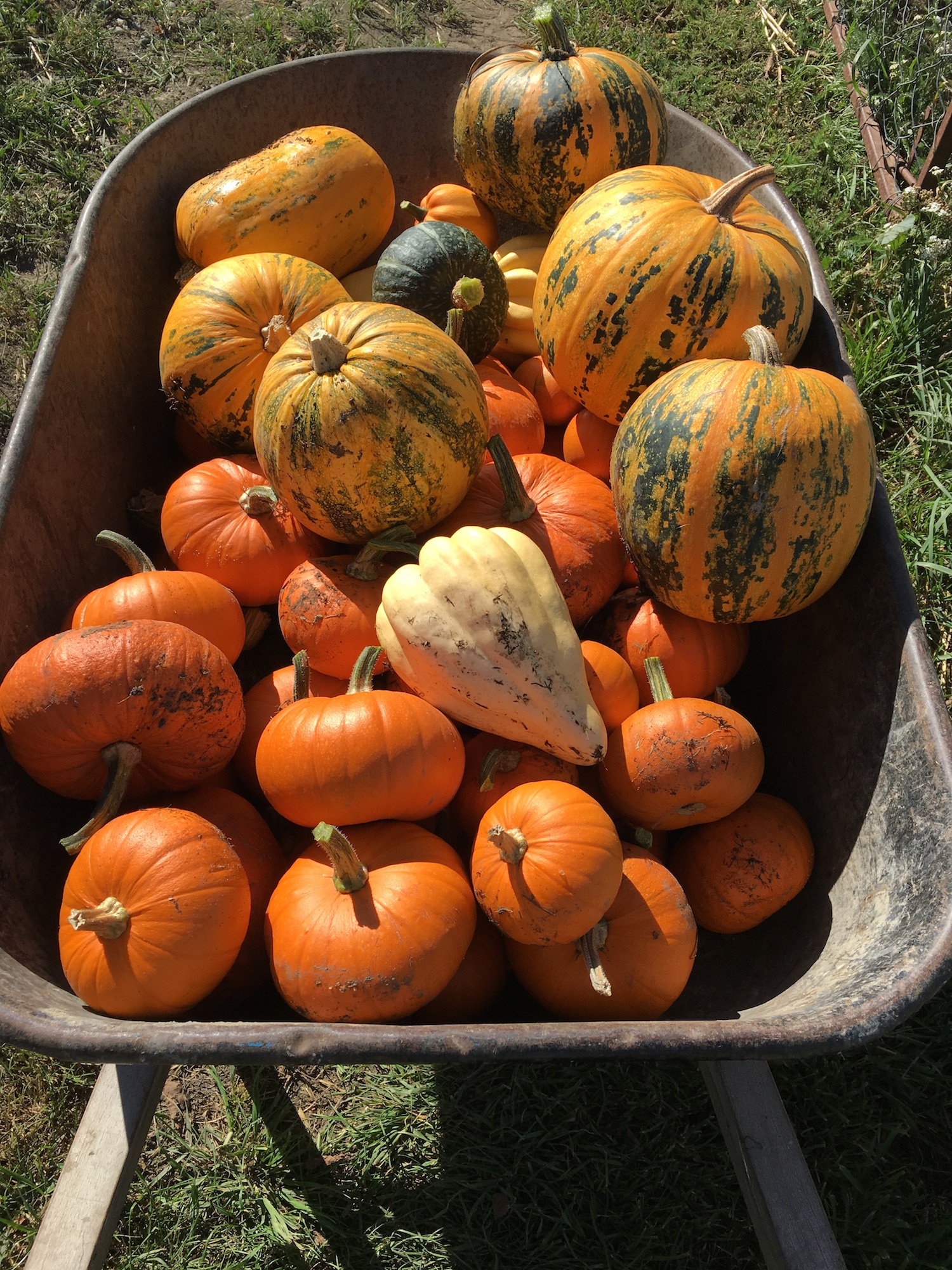
About a third of the harvest.

About a third of the harvest.

Autumn wouldn’t be complete without the requisite wheelbarrow loads of pumpkins and other winter squash. In spite of some late-frost drama this spring, the harvest wasn’t bad.

My kids ask every year, “Which are the pumpkins and which are the squash? What makes a pumpkin a pumpkin?”

The short answer is that a pumpkin is a squash that we call a pumpkin. There are four species and countless varieties that variously get called pumpkin and squash. Some fruits are known as pumpkins in one place, and squash in another.

I don’t bother with the distinction. The important distinctions are between varieties. Some are best made into soup, others make splendid pies. Some have robust, dry flesh that holds up well in savoury galettes. Some are just the right size for baking whole. Some keep well, and others need to be eaten quickly after harvest. Some have flesh only useful as goat food, but have naked seeds that are wonderful toasted with salt and spices.

Which is, of course, how I justify planting so many pumpkins of so many varieties. I need them all!

Death in the Paddock

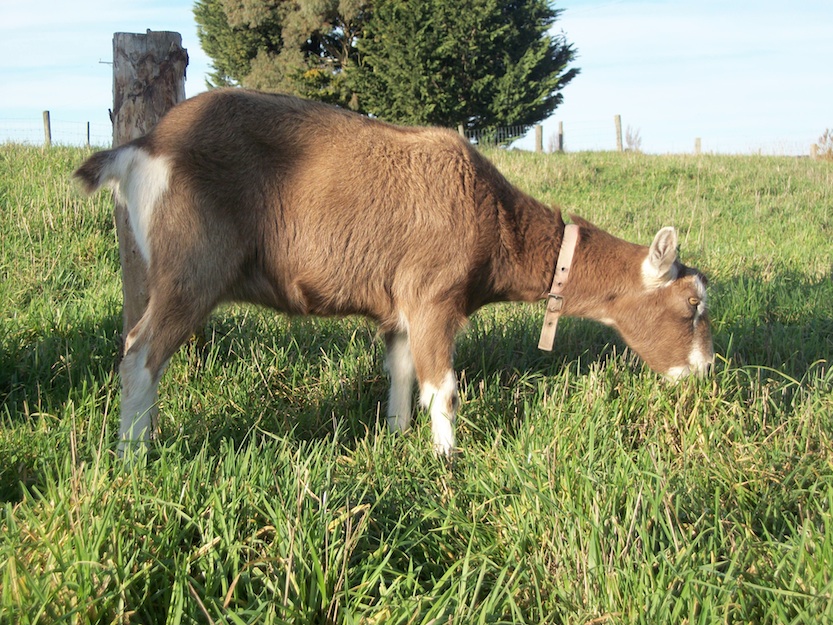
100_1931smI buried a goat today—Ixcacao, my little toggenburg. Well, I considered her little until I had to dig a hole big enough for her, and drag all 65 kg of her deadweight over to it.

I’ve found that, for most of the goats, digging their graves gives me the time and exercise I need to face the loss stoically. Usually, anyway. But each death is a blow.

There was Hebe, 9 months old, dead two weeks after I bought her. No clear cause. Just dead one morning.

Quickly following her was Hebe 2, four months old, who tore the ligaments in one of her knees. “If she were a rugby player, we’d operate on her, but…” was the way the vet delivered the verdict. I had kidded her myself at the end of a long struggle with three tangled kids. She was weak and couldn’t stand properly for the first few weeks, and I’d hand fed her until she could hold her own against her two big brothers. I held her while the vet put her down.

Hebe is the Greek goddess of youth. I should have known no goat named Hebe would live to adulthood.

There was Demeter, eight years old, who poisoned herself on green acorns, destroying her liver and causing her to waste away. She had always been a sweetheart. I sat next to her in the goat shed, stroking her head while the vet injected her.

There was Delilah, three years old, who wasted away, probably from Johnes disease. She was never particularly friendly, but I sat with her, too, when the vet came to put her down.

Ixcacao, four, went too fast for me to call in the vet. She had been off her feed a bit yesterday, which I attributed to being in season. Now, I think she must have had a tumour—she’d been looking a bit lopsided lately. And I wonder if it had been there in the spring when she delivered a dead, malformed kid. I won’t ever know, I suppose. She gave me no signs of trouble until late yesterday.

As a breeder once said to me, “If you have goats, you have dead goats.” It just goes with the territory, I suppose.

And tomorrow we will get up and carry on with another ordinary day.
Fruit overload

2016-03-15 19.20.44 smCan you have too much fruit? I’m not certain, but if you can, I think we’re approaching it.

I mentioned the apples the other day—there’s still a 20 litre bucket and a large bowl full of them in the kitchen. Then there are the melons I mentioned yesterday—a great heaping platter of them, and more to come in the next few days.

And a houseguest brought us a box of apricots as a gift.

And the grapes have started coming in, so there’s a colander full of them in the kitchen.

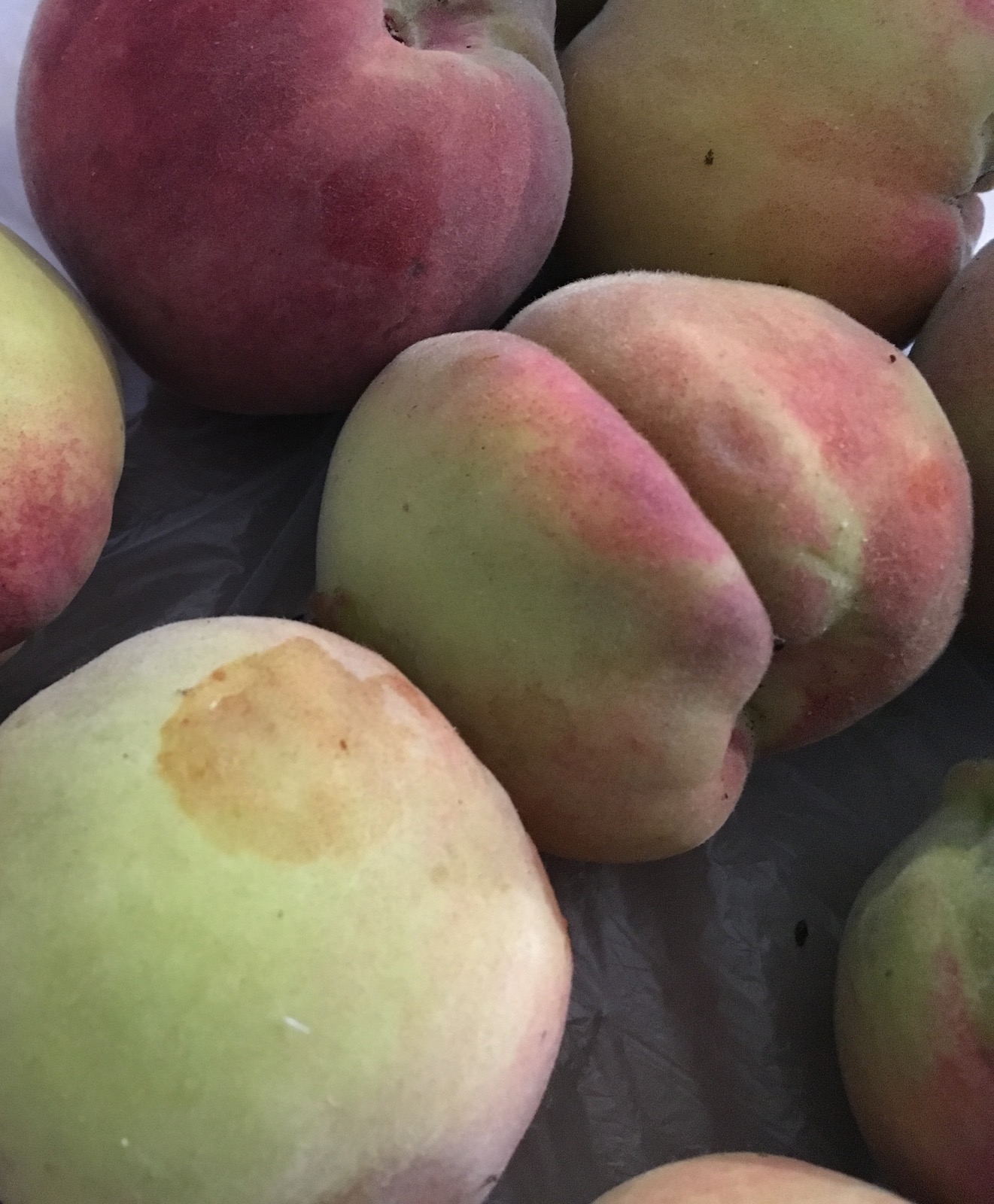
And today I went to pick up 200 daffodil bulbs I ordered, and it turns out that the woman selling the bulbs was the first person I ever sold goat kids to—she’s still got one of them. Anyway, so we got to talking (as you do), and next thing I know, she’s filling a bag with peaches for me—dead ripe and luscious.

So sitting in the kitchen right now are probably 10 kilos of fruit for every person in the family.

So I wonder, can you have too much fruit?


Cat Games

Exhausted after a hard night's hunting.

Exhausted after a hard night’s hunting.

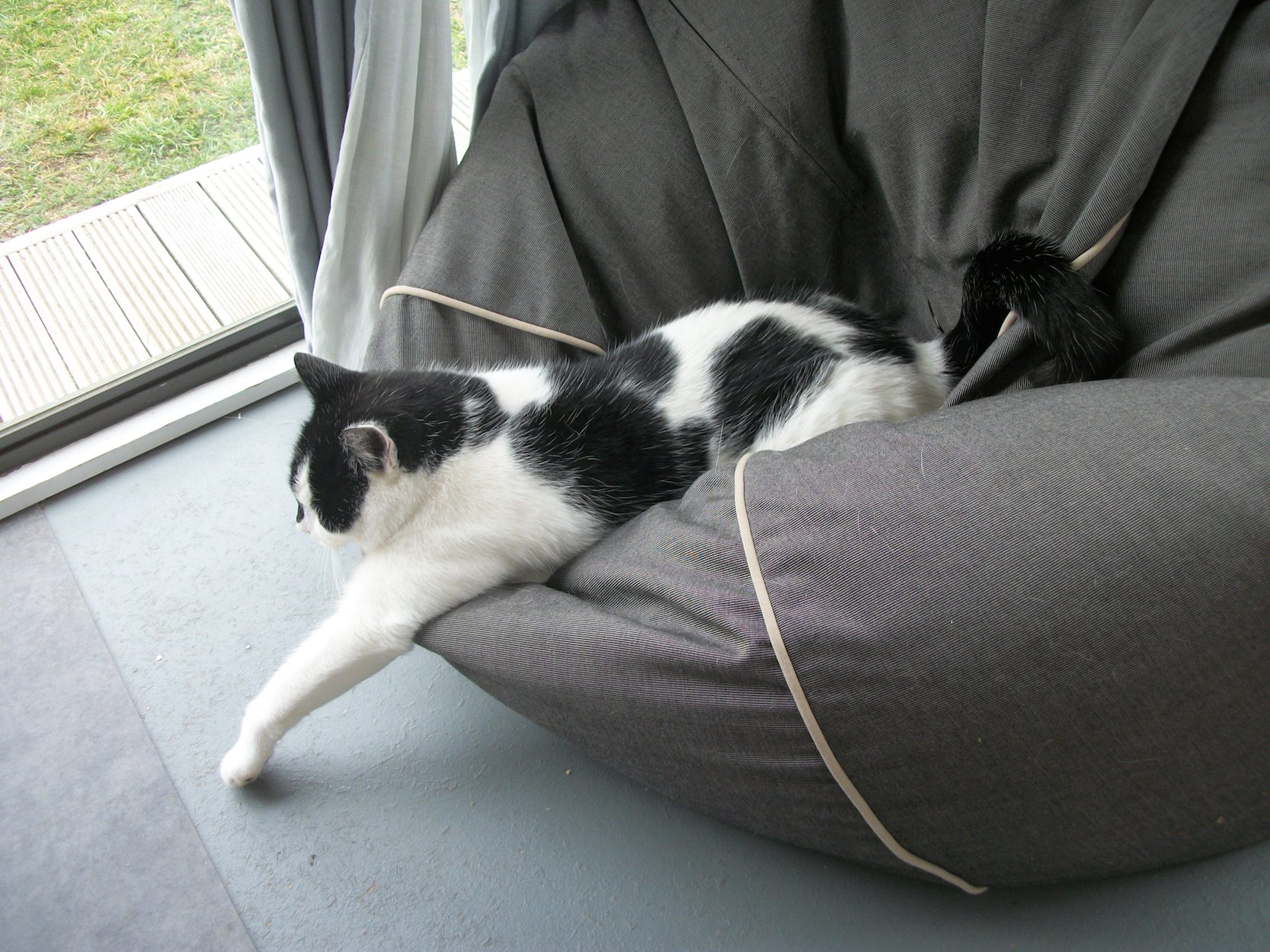
The routine is the same every morning. About 5 am, the cat starts howling at the bedroom window. I eventually roll out of bed, grumbling at him, but knowing I need to get up anyway. On my way through the house to the bathroom, I let him in. He has a snack while I get ready to milk the goats. He comes back outside when I go out.

I set up grain and milk pail at the milking stand, then head out to let the chickens out for the day and feed them.

The cat is there, in the tall grass half way to the chicken coop. His black and white body stands out stark on even the darkest morning. He crouches as I go past on the way to the chickens. When I come back, he pounces. I can almost hear him saying,

“Boo! HAHAHA! Gotcha!”

I head to the paddock to bring out the first goat. As the goat trots up the hill toward the milking stand, the cat bounds across the goat’s path, back arched, leaping menacingly as he goes, as though he is going to bring down an animal ten times his size.

Or he might lie in wait for the goat’s return to the paddock, leaping out from behind the corner of the shed.

Sometimes, he gets more than he bargains for. If it’s Artemis he threatens, it goes badly for him. She has a vendetta against the cat, and lunges at him every chance she gets. If I’m not right there, ready to grab her collar and hold her back, she’ll chase the cat all over the yard to show him who’s boss.

In truth, I think the cat enjoys being chased by the goat. He enjoys pretending to attack me in the dark as I feed the other animals and do the milking.

By the time I’m finished with the milking, the cat is done playing. He trots back indoors with me, has another snack, then finds a cosy place to curl up and sleep for the day.

Sing to Your Plants

DSC_0006smMy plants are fond of show tunes—Oklahoma!, Pirates of Penzance, The Music Man.

At least, I hope so, because I sing show tunes in the garden.

Sometimes I switch up the words so the song is appropriate to the moment:

Oh what a beautiful eggplant!

Oh what a beautiful bean.

I’ve got a wonderful feeling

I’m going to eat like a queen.


I sing to the chickens and goats, too, though they prefer folk songs.

Oh my chickens, oh my chickens,

Oh my darlin’ little birds.

You’re revolting, you’re disgusting,

You’re obnoxious little turds.


I don’t know if any of my charges like it. I don’t believe that my singing will actually make my plants grow better. But when I’m pulling stubborn weeds, mucking out the chicken house, or trimming goat hooves, I can either grumble or sing. I choose to sing.

Sunflowers

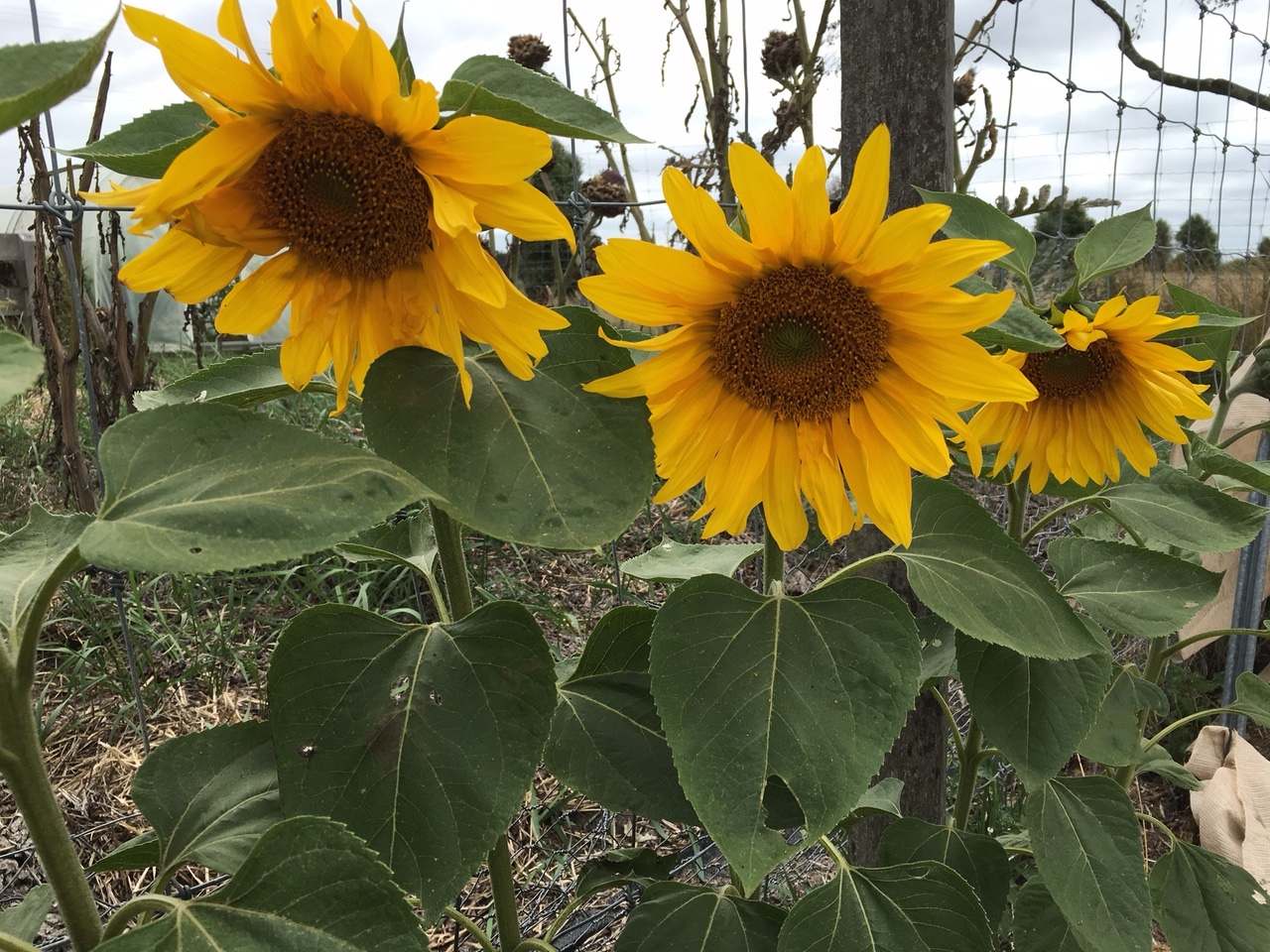
sunflowersI am of the opinion that you can never have too many sunflowers.

I have Golden Toasted sunflowers in the vegetable garden, with big fat seeds for eating, and I have half a dozen other varieties of sunflower in other places around the property.

Sunflowers don’t like the wind here, and they tend to grow short and stocky or to fall over unless they’re staked or well protected from the wind. Still, I plant them wherever I can.

Sunflowers serve many purposes in my garden, beyond the seeds for eating. The blooms look great in the garden—pale yellow through orange to deep russet—and make stunning cut flowers, too. They also attract lots of insects. Though there are many pollenless varieties, I steer toward the varieties that produce copious pollen, because they are more attractive to insects. Pollen provides important protein for—bees flies, parasitic wasps, beetles, ants, and many other insects.
2016-01-22 07.43.48 cropThe pollen attracts some insects, and they, in turn attract others. Preying mantises regularly visit my sunflowers.

When autumn comes and the blooms are spent, the sunflowers (the entire plant), make a nutritious snack for the goats.

Beauty, food for me, food for my livestock, and food for the wildlife—what more can you ask of a plant?


Look for the Good

100_3873I’m not always successful at it, but I do try to find pleasure and beauty in everything, even the day-to-day chores.

It’s not necessarily easy. The laundry doesn’t present a perfect rainbow every day.

But knowing that it can…well, that goes a long way.

2016-01-10 15.59.26 HDR smIn the garden, there is a weed (okay, there are many hundreds of weeds, but there’s one in particular…). I know I need to pull it—it will soon set seed and cause me grief. But it is a lovely English daisy—a perfect mound of spoon-shaped leaves with dainty white and yellow flowers dancing above it. I smile as I carefully weed around it. I will get rid of it…eventually.

The drag of getting up at 5am to milk is a small payment for the peace and silence of a sunrise.

The ache in my back in the morning reminds me that I did something yesterday.

The brown film I scrub off the bathtub means we all spent the week outdoors.

The failed project teaches me.


I still grumble sometimes.

I still sometimes wish for a day off.

But it helps, to look for the good. It’s usually there, if only I look.