And the Winner Is…

2017-03-01-19-04-27It’s Oscar season in the garden–the time of year when I start reviewing in my head how various crops performed over the summer. I plant a wide variety of vegetables, because some do well and some don’t every year, and not always the same ones.

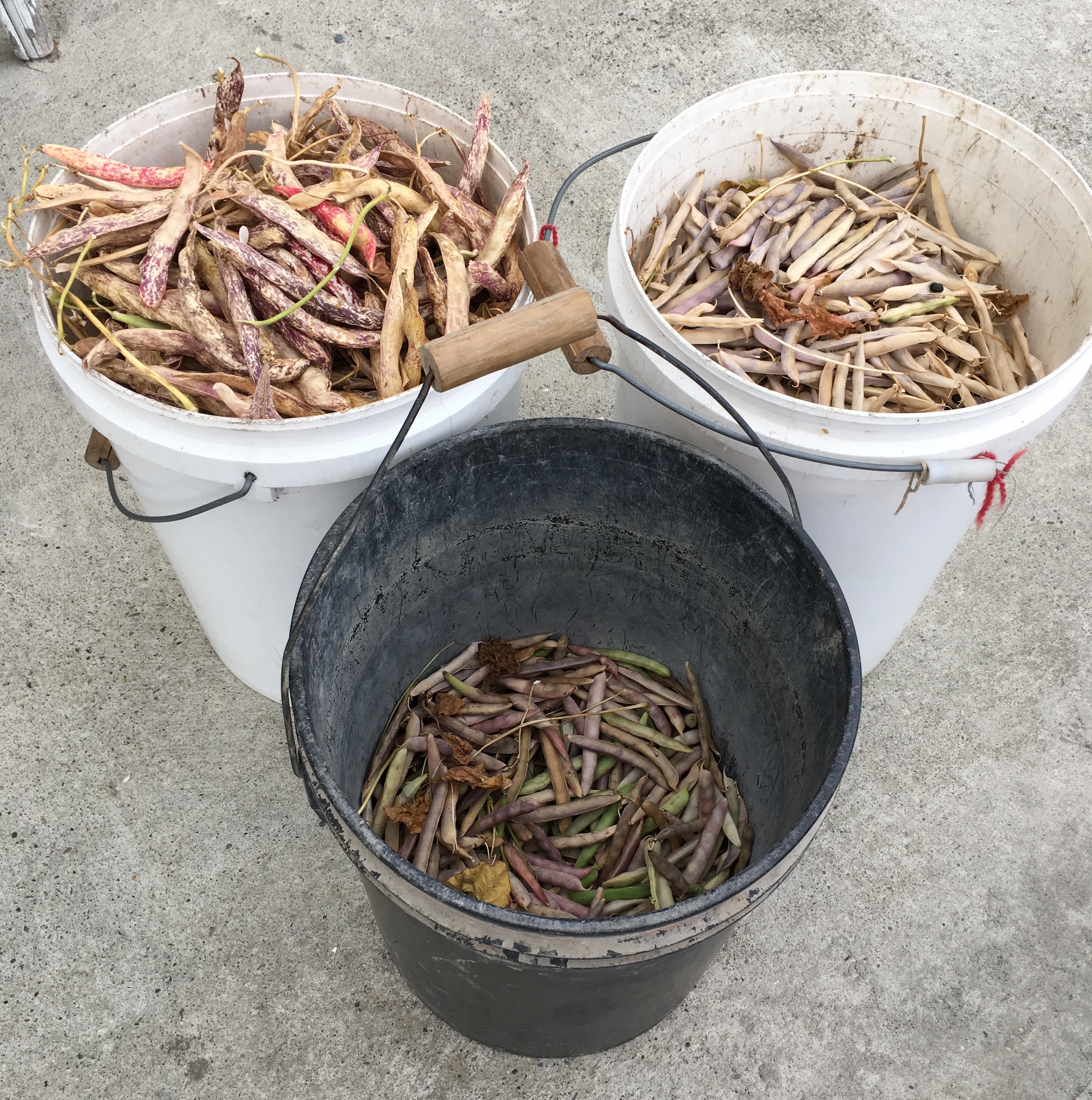
This year, for reasons known only to the plants, the black beans produced spectacularly well. I spent two hours harvesting yesterday and haven’t picked them all yet. I’ve easily got twice as many per square metre as I did last year. Add to that the fact I planted more this year than I did last year, and we’ve got a heap of beans.

You won’t find me complaining about that. Black beans are one of those staple foods for us that I can never produce enough of. I can already taste the burritos, chilli, and plain old beans and rice that will warm our stomachs through the rest of the year.

Of course, shelling them will take ages. I managed to shell about three-quarters of a bucket last night before the boredom got me. My secret to shelling without going crazy is movies. Movies I’ve watched before are best, so I don’t mind having to look away now and again to grab another handful of beans. I can settle in for the whole evening of shelling with a good movie. By the time I get to the final credits, I realise I’ve shelled a bucketful.

Perhaps I should watch Moonlight? Two winners together in one evening.
Bittersweet Sweet Corn

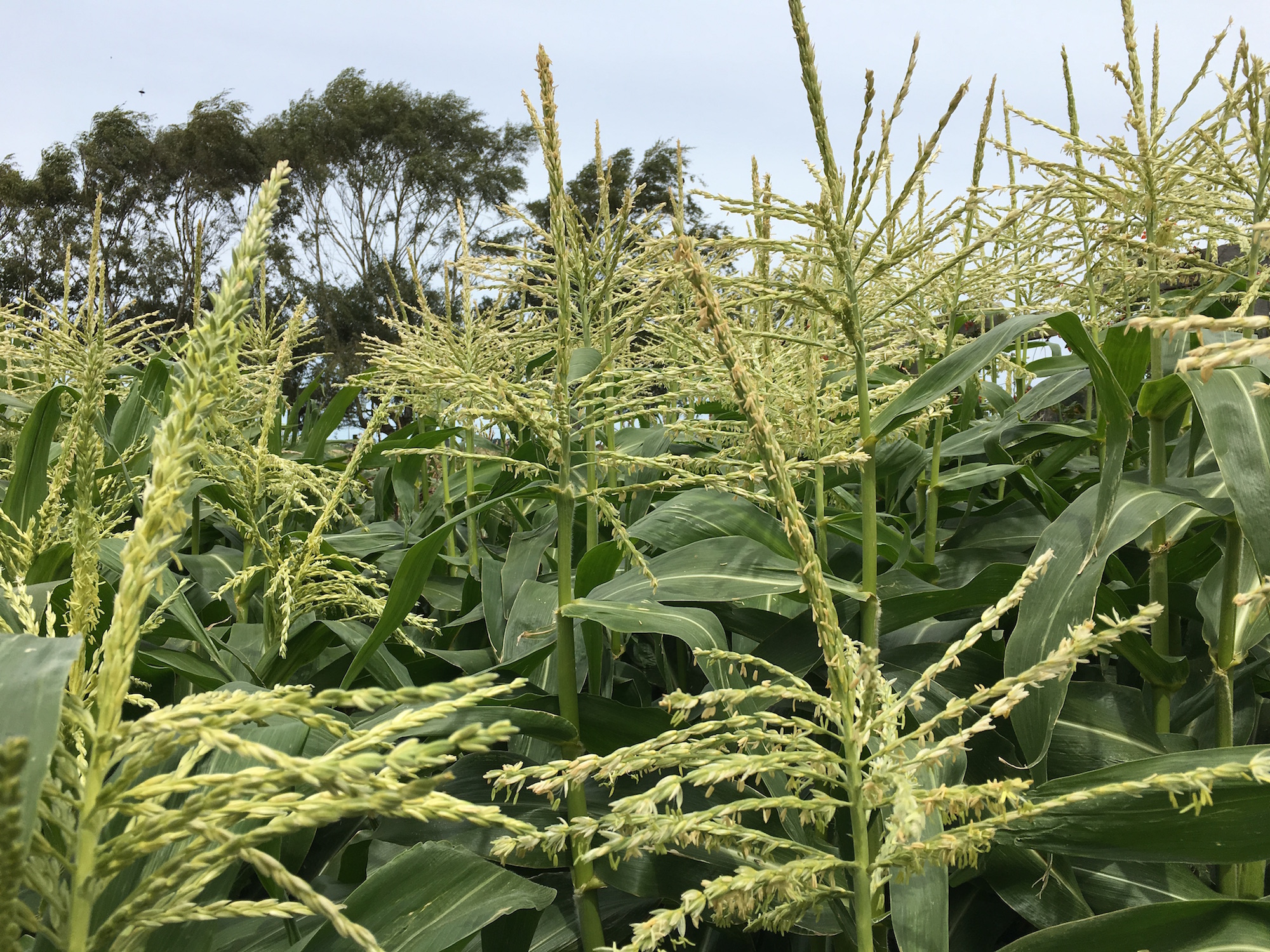
2017-01-24-15-16-41-smYou wait for it all summer. You watch it grow taller and taller. You marvel when it overtops your head. You cheer when it starts to flower, and you impatiently poke the ears as they grow and fatten.

Then one day–finally–the first ears of sweet corn are ready to pick. Always eaten as corn-on-the-cob, the first ears are celebrated and savoured. They cry out Summer!

They are the beginning of the end, of course.

Once the sweet corn is coming on, the green beans will start to slow down. The peas, already on their last hurrah, will give up. February’s heat and dry will begin to take its toll on all the plants.

There is still plenty of time to enjoy summer’s bounty–the deluge of vegetables won’t be over until mid-April. There is still ketchup to make, and summer soup to bottle. And lots and lots of corn-on-the-cob to eat.

But once the corn is ripe, the clock is ticking. From here on out, the garden will look a little worse each day. I’ll start pulling plants out, clearing beds, harvesting storage crops.

And in a shady corner of the yard are two trays of seedlings, sheltering from the heat and harsh sun. Waiting for the end of the sweet corn. Winter crops.

Because every season’s end is another’s beginning.

Greengages

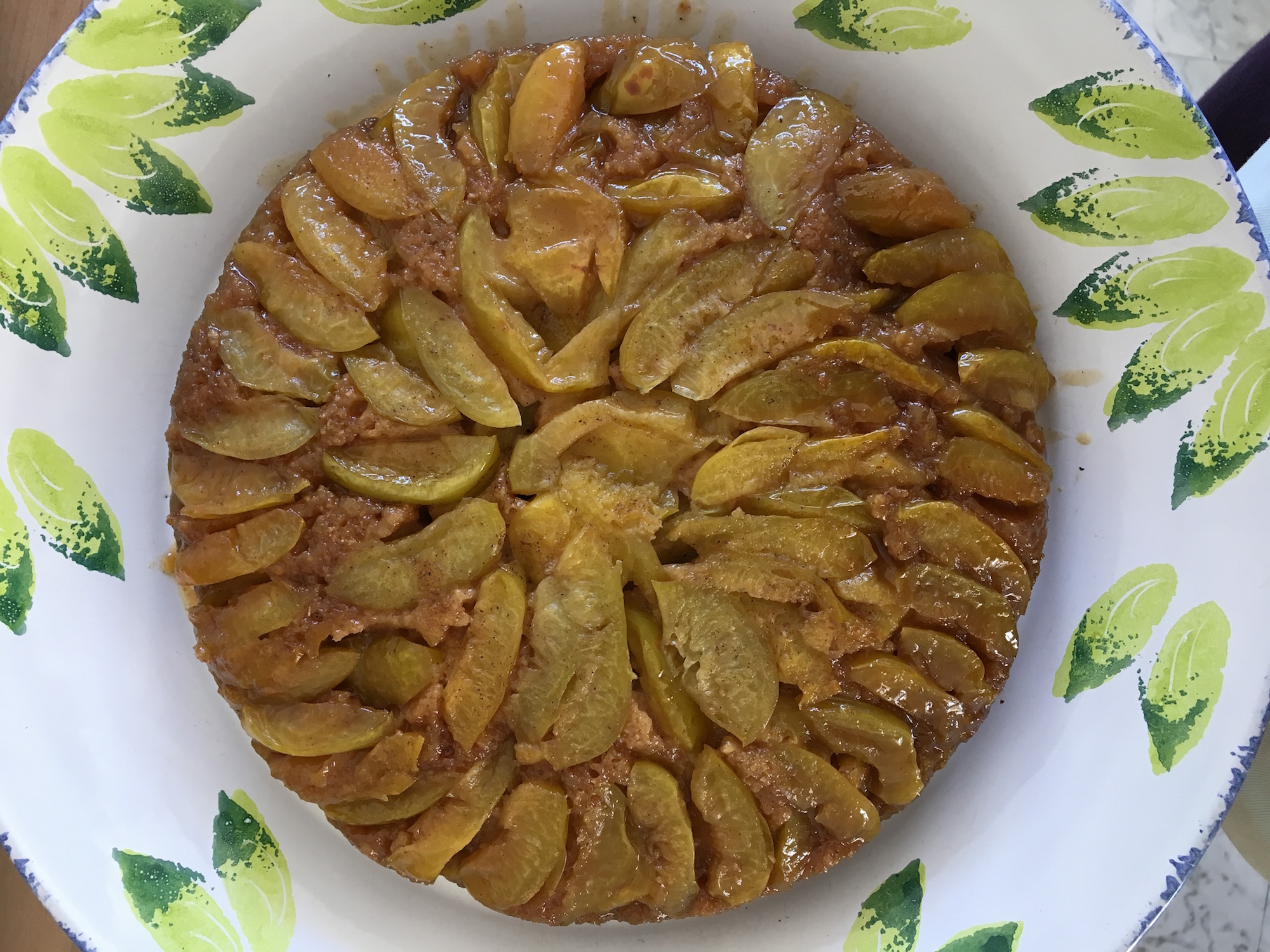
2017-01-25-14-58-09-smWe don’t often get many greengage plums. Our tree is small, and it sits in a windy location, so many fruits blow down before they are anywhere close to ripe. This year wasn’t too bad–we harvested about three kilos of fruit. Plenty to enjoy.

One of my favourite things to do with summer stone fruits is to make upside down cake. Indeed, I’ve blogged about it three times in the past two years. So today I’ll ignore the cake, and mention the plum, instead.

I didn’t know a lot about greengages before coming to New Zealand, where I found a fair number of people had them growing in their yards.

Greengages are named after Sir William Gage, who imported them to England from France in 1724. The cultivar he imported had another name, but apparently the tag was lost in transit (These were the days before anyone considered biosecurity…Importing a strange plant? Whatever). They were popular in America in the 1700s, but fell out of favour in the 1800s.

According to a 2004 article in the New York Times, there’s good reason greengages fell out of favour. The trees take longer to mature than other plums, they fruit erratically (I thought it was just our tree), the ripe fruit is fragile, and they’re prone to cracking and rotting on the tree. Not exactly an easy plum for commercial production.

But the greengage is considered one of the finest plums for flavour. Grown commercially, it fetches a high price. According to the New York Times article, in 2004 fewer than 100 greengage trees were harvested commercially in the United States. They are more common in Europe and New Zealand. New Zealand exports a small quantity of greengages to the US each year, where they are sold in specialty markets.

So I feel much better about my 3 kilo harvest of greengages. They are wonderful, and if they’re a bit finicky to grow? Well, that just makes them all the more special when we have a good year.

Celebrate January

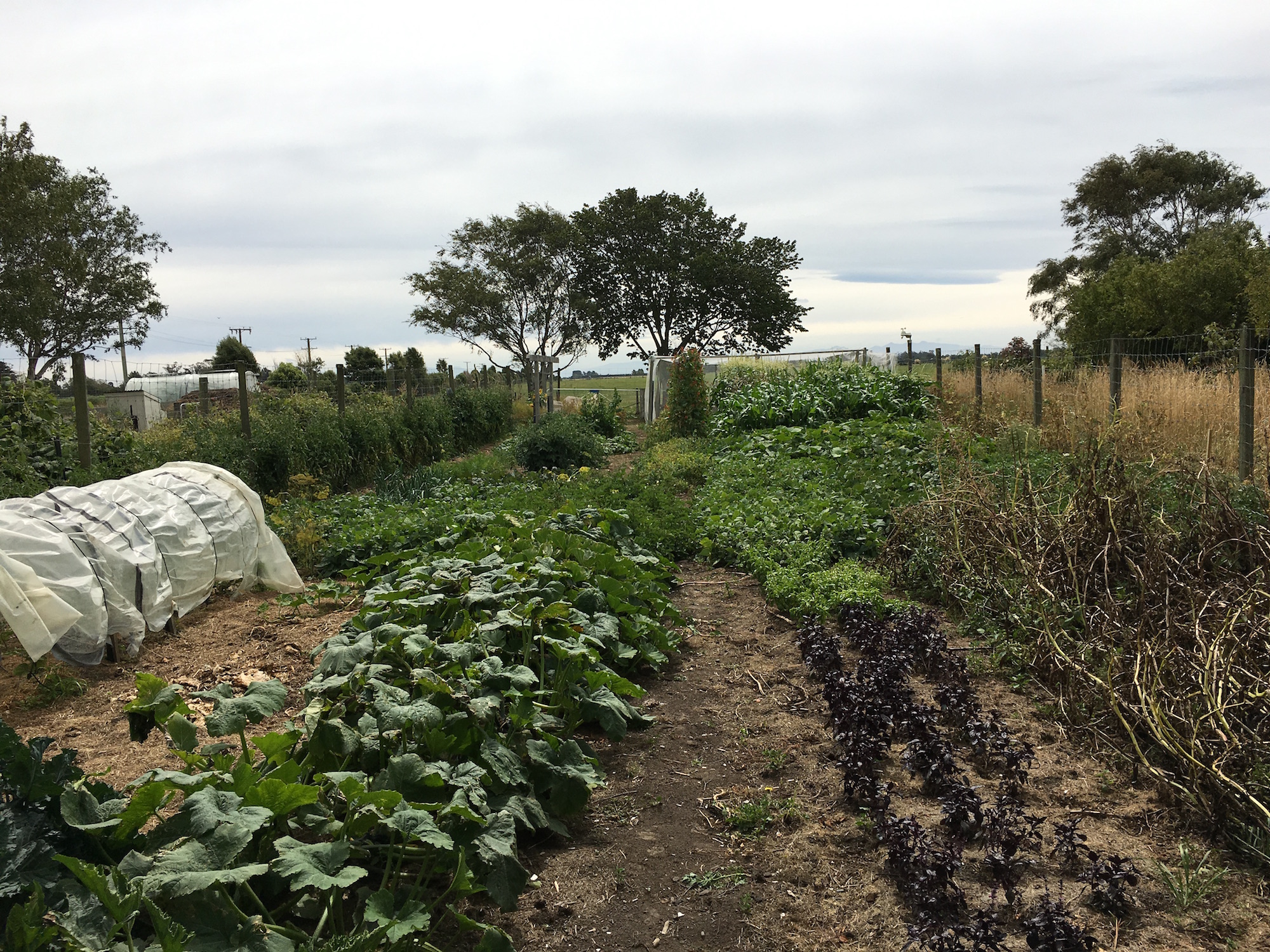
2017-01-24-15-13-32-smThe golden month is nearly over. January is the sweet spot of the year.

The Christmas frenzy is over. The kids are o vacation. much of the rest of the population goes on holiday too.

Even I get a break. By January, the plants in the garden are large enough to suppress weeds, so there’s little weeding to be done. Te early crops are winding down and the summer crops are ramping up. Full-scale bottling (canning) and dehydrating will come later. January is mostly a time to enjoy the garden’s summer bounty.

There is work to do, of course. Peas, pickling cucumbers, and green beans all peak in January, and they need to be processed. But they are relatively quick and easy crops to preserve.

Along with the garden respite usually comes sunny summer weather. We can go camping and backpacking, and take trips to the beach. January is a month of sand, sun and effortless meals.

February will come, with school, work, and a mountain of vegetables to process. The nationwide party mindset will end, and we’ll all settle in for another year at the grindstone.

But there’s still a week left. Enough time for a bit more fun…

Noddy’s Flycap

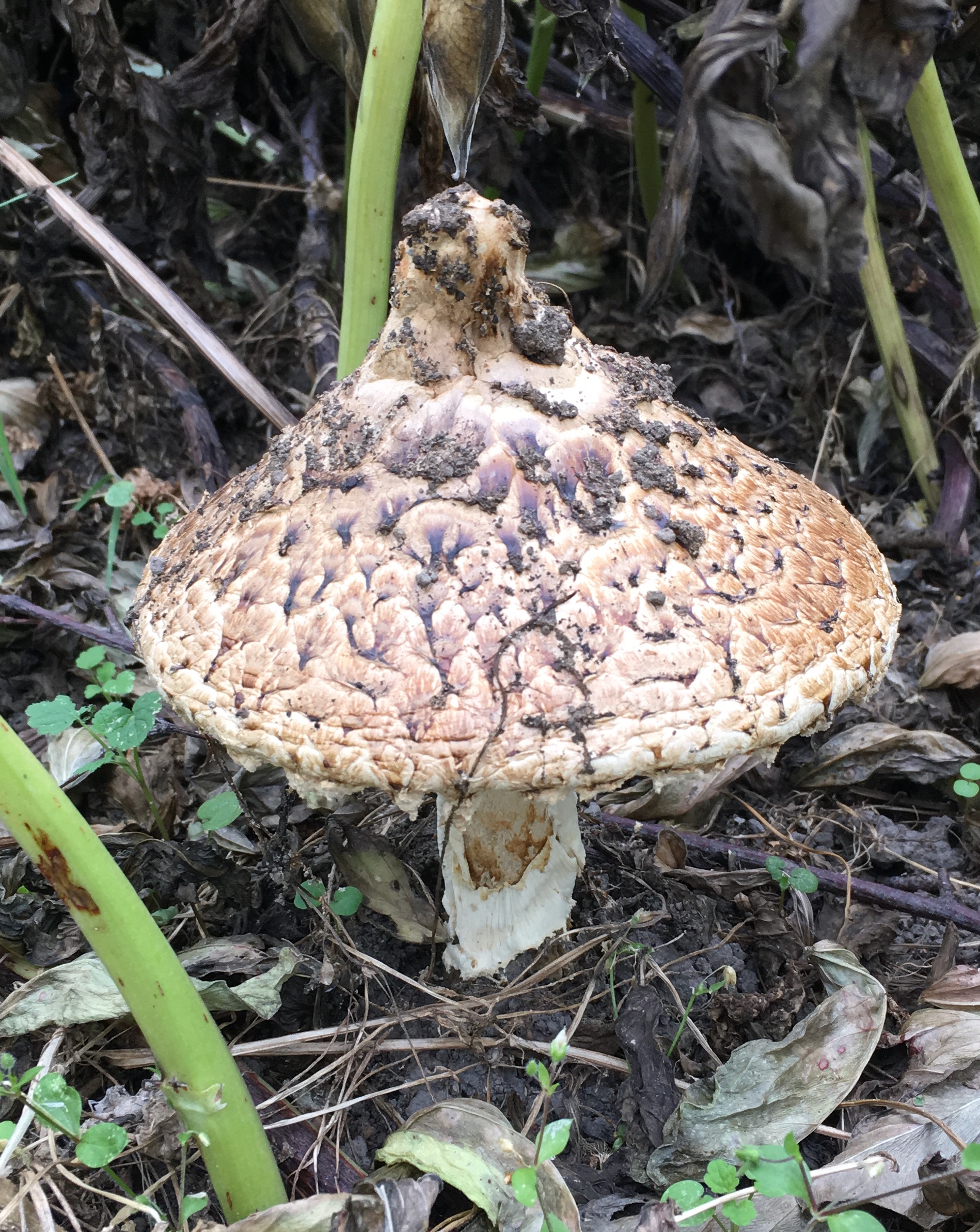
img_2955-cropI was working in the garden this morning, and came across this stunning mushroom in the middle of the broad beans.

My first reaction was, “Oh, my! Fairies must have visited the garden.” I wondered if nature was trying to tell me I needed a little whimsy among the vegetables. I began to consider the possibilities. A few fanciful carvings on my trellises? Gargoyles atop the fence posts?

My next reaction was, “I’ve got to show this to my husband.” (He researches mycorrhizal fungi, and this looked to me a bit like an Amanita, which are usually mycorrhizal). He saw it, and said, “Oh!…Oh!…that’s a…no, wait…I won’t say anything until I’m sure…this could be important.”

He did some research and confirmed the mushroom as Noddy’s flycap–Amanita sp. 2–an unusual fungus recorded only from New Zealand, but thought to be introduced, as it is generally found among non-native vegetation. It has never been recorded this far south, and we’ve never seen it on our property before.

Geoff Ridley has written a nice blog post about this fungus and its odd distribution and mysterious origin.

And so, perhaps nature was, instead, telling me to keep my eyes open for scientific wonders, even in my own back yard.

And then, I learned that Noddy’s flycap is named for the Enid Blyton character, Noddy (and his pointy hat).

And at this point, the symbolism of this strange fungus in my garden got really weird. A whimsical-looking fungus of unknown origin, and not known to be present here, named after a character in a middle grade novel?

The message was loud and clear–this fungus has to show up in my next book. Excuse me while I go scribble down some ideas…

The Art of Food (or Beauty and the Beets)

img_2953-smTwenty-seven years ago, when I became a vegetarian, I had no idea that doing so would be an artistic adventure, as well as a culinary one.

The dietary change came easily and quickly. Because I was actually thinking about my food, I ate much better than I had before–a lot less pre-packaged swill, and a lot more fresh ingredients. I never missed the meat.

The artistic change has come more slowly and has only really blossomed in the past two years of blogging about food. In the past, I concerned myself with the look of food only on special occasions. Most of the time, I didn’t pay much attention to the aesthetics of my meals.

Now, even meal preparation has become an artistic experience. I notice how water beads on the surface of a tomato or how yellow carrots contrast beautifully with the dark kitchen benchtop, I choose vegetables for their colour as well as their flavour, I appreciate the vision of my ingredients lined up in little bowls waiting to be cooked. Sometimes, I’ll pick the vegetables for dinner a little earlier than I have to, simply so I can enjoy seeing them heaped in colander in the kitchen.

Being a gardener makes the aesthetics all the more rewarding to me–when the fruits of my labour are as beautiful as they are delicious, how can I help but be pleased? And, of course, I’m thinking about colours when I plant my vegetables too.

I say the aesthetics are part of the vegetarianism because I can’t imagine a raw chicken leg looking nice sitting on the kitchen bench. There’s something about the vegetables that’s pleasing, whether raw or cooked. Maybe it’s the colours. The vegetable palette is more varied and bright than the meat palette–snow white cauliflower, dark green spinach, deep magenta beets, bright green peas, sunny yellow squashes, scarlet tomatoes…Cooking with those vegetables is like dipping a paintbrush into the colours and creating a work of art.


No More Grammar

img_2951I’ve spent the last three days—11 hours each day—editing. I have no brains left to write a blog—they have all leaked out, stabbed by excessive punctuation, and strangled by curly quotes. If I see another comma, I will scream. I’ve had my fill of cut-and-paste errors. No dependent clauses can depend upon me this evening.

Instead, I will head to the garden, or to the piano. I’ll ignore infinitives, and banish adverbs. I will say whatever I please, and not worry about sentence fragments. Sentences without verb. Subject. Object.

  1. Do. Not. Care.

The English language can take a holiday this evening. Tell the Oxford Style Manual to stay home. I won’t answer the door. Come back tomorrow.


Get Outside—See Cool Stuff

The swarm--apologies for the image quality; I'm allergic to bee stings.

The swarm–apologies for the image quality; I’m allergic to bee stings.

I’m trying to make myself go out for a walk at lunchtime every day. I’ll admit that I can be a bit of a slave driver when I’m working, and I don’t always manage it. I have a tendency to simply work through lunch, and then suddenly discover it’s late afternoon.

In truth, the walks available to me from my front door aren’t necessarily all that inspiring—endless agricultural fields in every direction.

But you can’t experience anything if you don’t first go out. Yesterday, I took the most boring of the boring walks from my house—the one that doesn’t offer so much as a mailbox for the first kilometre. Don’t ask why I chose that way—maybe I wanted to clear my mind, as I’d been doing intense editing all morning.

On this most boring of walks, I happened to see something awesome—a honey bee swarm.

We are blessed with many nearby apiaries, and I always have a plentiful supply of bees to pollinate my garden vegetables, but even so, it’s unusual to spot a swarm. This one was hanging in a drooping mass off the neighbour’s fence.

Bees swarm to create a new colony. It’s usually the old queen who leaves her hive with a large portion of the workers. A new queen will hatch in her absence and take over the old hive.

The swarming bees leave the hive and gather nearby while scout bees search for a new hive location. This is what I saw—the resting swarm. It likely flew away to a new home within a few hours. Where those bees are now, I don’t know, but I hope they found a nice place nearby from which to visit my garden.

So, my most boring walk was amazing. That reminds me, I still haven’t gotten out for a walk today. Time to step away from the desk and get outside. Who knows what I might see?

The View from the Compost

img_2929-smI finished turning the compost today—a back-breaking, exhausting job I don’t particularly enjoy. After I added each layer, I climbed on top of the pile to even it out and water it. From my two-metre high perch, I had a lovely view. I admired the neighbour’s seed radishes—wide stripes of white and pink flowers marking the two varieties he is crossing this year. It looked more like a curtain than an agricultural field.

Then I turned to admire my own garden. Well, actually I just turned. I’ll admit that I was a little surprised I found the view so nice.

The early January vegetable garden is always gorgeous—everything is at its peak lushness. I expected to find that attractive. But surveying the entire “production” side of the property from my perch, I was pleased to note that the whole place looked surprisingly lush. The berry beds are dense and tidy. The extra vegetables planted in my “overflow beds” (because 300 m2 (3230 ft2) of vegetables naturally wasn’t enough) are growing well, too. The artichokes look a little sad, and the grass paths are brown, but that is to be expected in the heat of summer.

The overall effect was one of lush productivity. I spent a little extra time on top of the compost pile to enjoy the view. It made today’s brutal job a little bit nicer.