Crazy Cake Season 2023

Crazy Cake seasons have become far less crazy, now that the kids are out of the house. Last year, my daughter didn’t ask for anything specific, but this year she slyly said, “I’ll be happy with any cake … but a peripatus would be cool.”

Behold, the velvet worm cake!

Naturally, I made a red velvet cake for the body. The legs are walnut shortbread cookies, usually shaped into crescents, but in this case shaped into peripatus legs. The antennae are cinnamon sticks. I covered the whole thing with light blue cream cheese frosting, and then piped dots of coloured white chocolate on top. The moss is coloured coconut.

It’s not the most biologically accurate peripatus–I couldn’t fit all 30 legs on (I couldn’t even fit in all the legs into the inner loops of its body)–but the extra legs I made gave me something to snack on as I decorated the cake.

Zucchini and Tomato Tart

We’re in the bountiful days of summer right now. And while I’d like to be sitting in a chaise lounge enjoying that bounty all day, someone’s got to pick it and process it. At the moment, the processing mostly involves making pickles and chutneys, but there’s a lot more to come. Then there’s the necessary watering, weeding, tying up of tomatoes, planting of winter crops (because as John Snow says, winter’s coming)…

zucchini tomato tart

But at the end of each day, we do get to enjoy the fruits of the season. Last night I made one of my favourite mid-summer meals—zucchini and tomato tart.

The beauty of this tart belies its simplicity—just tomato and zucchini, embellished with a little parmesan cheese, garlic and basil. 

Back when I had dairy goats, I’d spread a layer of chevre on the bottom, too, which was divine. It also had the bonus of preventing the crust from getting too soggy. These days, without an unlimited supply of goat cheese, I put up with a soggy crust—the tart is still amazing.

This tart relies on having the best tomato and zucchini possible—it’s not a dish to make with out-of-season vegetables—so if you’re in the Northern Hemisphere, hang in there and enjoy this gem in July and August instead.

Download the recipe here.

The Grumbling Gardener

Like every serious gardener I know, I complain a lot.

The weather’s too hot and dry. It’s too cold and wet.

The winter was too cold. The winter was too mild.

The frost came too early, it came too late.

Aphids have killed this, a fungus has stunted that.

Poor germination, poor pollination, nitrogen deficiency, weed growth, pest birds … I can always find something about the garden that’s not right. Because there is so much that’s out of my control, it can’t possibly all go right.

And like all good gardeners, I hedge my bets.

Sixteen varieties of tomato, nine types of beans, six varieties of pumpkin, four different kinds of broccoli, and three different eggplants is betting on at least one or more of those varieties not surviving, not producing anything. Twelve zucchini plants, twenty-one peppers, and fifty-nine tomato plants is betting that some will die, fruits will be eaten by the birds, and many will underproduce for one reason or another.

So today, after grumbling about dry soil, nutrient-deprived plants and destructive blackbirds, I returned from the garden with more than we could eat, as I did yesterday and the day before, and the day before that. I’m awash in garden largess, in spite of the birds, the aphids, the weather.

I’ve largely ignored rising food costs and the current egg shortage crisis. I don’t worry about what we’ll eat the next time we contract Covid and have to isolate. I plan my main picking for weekdays, when excess can be given away at work. I bottle, dry and freeze as much as I can, squirreling away the extra for the winter (hedging my bets that the winter crops won’t germinate, will be eaten by birds, will be flooded out …).

It is the precarious wealth of the garden, and January is the time when my grumbling is often silenced by the next mouthful of delicious vegetables. I can occasionally walk through the garden in January and be overwhelmed by the abundance.

Of course, once I get over that, I’m back to my grumbling. I mean, just look at this photo—the yellowed corn, the stunted pumpkins, the prematurely senescing potatoes …

Black Currant Icing

bowl of black currant icing

I made chocolate cupcakes yesterday and wanted to make use of some of the last of the fresh back currants in them. Instead of tossing a handful of black currants into the batter (which would have been lovely), I used the fruit to make a black currant icing—tart, sweet, and shockingly pink! 

You could do this with frozen currants, too, and it’s not difficult. The result is worth the bit of extra work.

100 g softened butter
3/4 cup fresh black currants
1 cup icing sugar

Place the black currants in a sauce pan and cook until soft—3-5 minutes. Press them through a sieve to remove seeds and skins. Set the puree aside to cool to room temperature.

Beat the butter until fluffy. Add 3 tablespoons of the black currant puree and beat until uniformly mixed. Sift the sugar over the butter mixture and beat until smooth. Adjust by adding more sugar or puree until the icing is spreading consistency.

Salad Trifecta

Holiday cooking is always special. And with the holidays falling during the summer here, it’s easy to create stunning meals without a trip to the grocery store.

For Christmas Day, I made homemade linguini, and my husband topped it with a delicious selection of garden vegetables—a fabulous, festive meal.

But Boxing Day’s dinner sort of blew Christmas Day out of the water.

It was a simple meal. Just three salads.

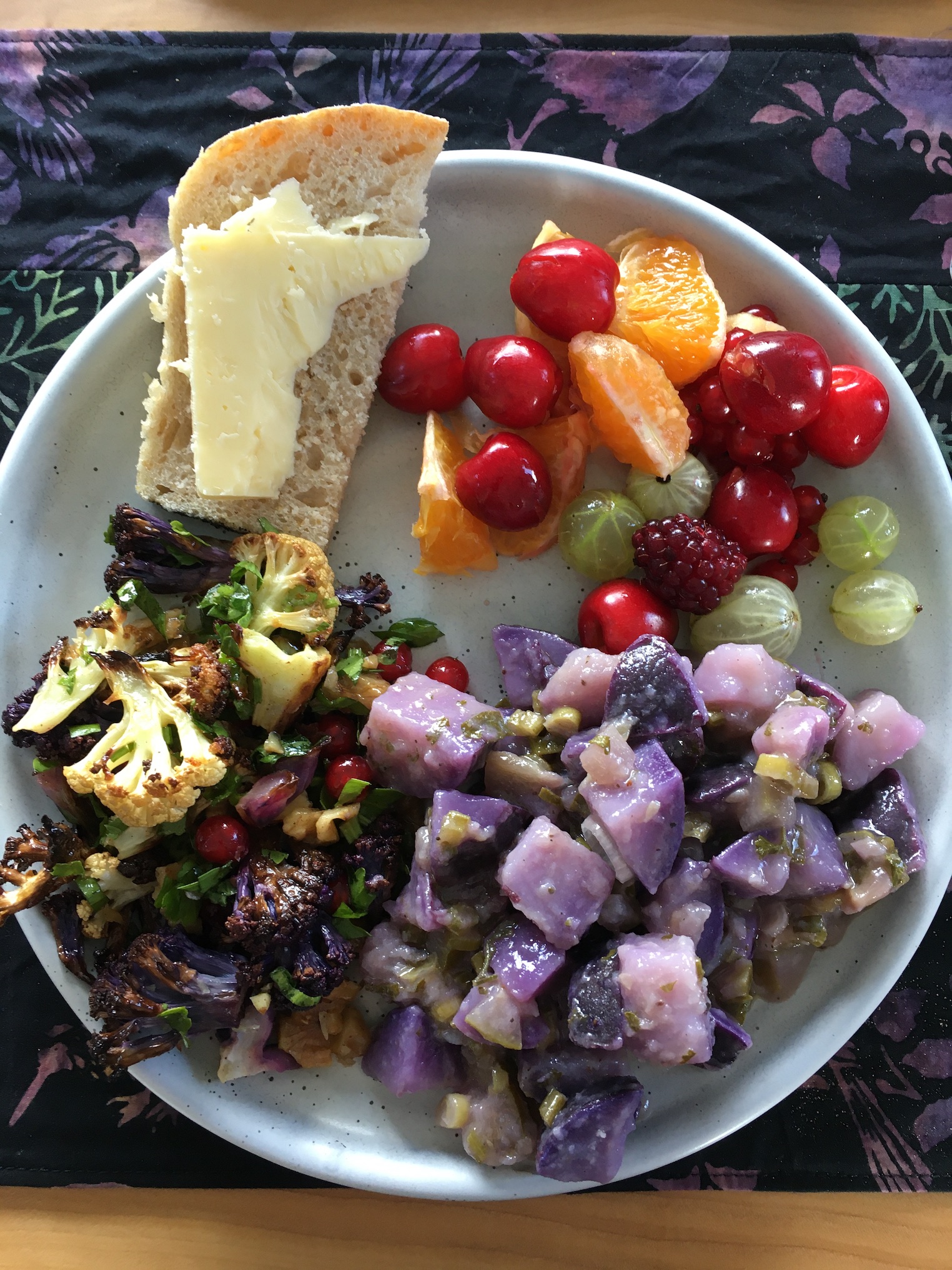
A potato salad made with purple potatoes, sparked up with celery, spring onion, parsley, and homemade pickles.

An Ottolenghi-inspired roasted cauliflower salad made with purple and white cauliflower and toasted walnuts. A dressing of vinegar, oil, maple syrup, cinnamon and allspice added complexity to the flavours, and fresh red currants added crunch and zing.

A fruit salad made with the many fruits gushing from the garden these days.

The overall effect was a riot of colour and flavour. Best of all, nearly everything came from the garden. Holiday meals don’t get much better than that.

Spicy Christmas Gift

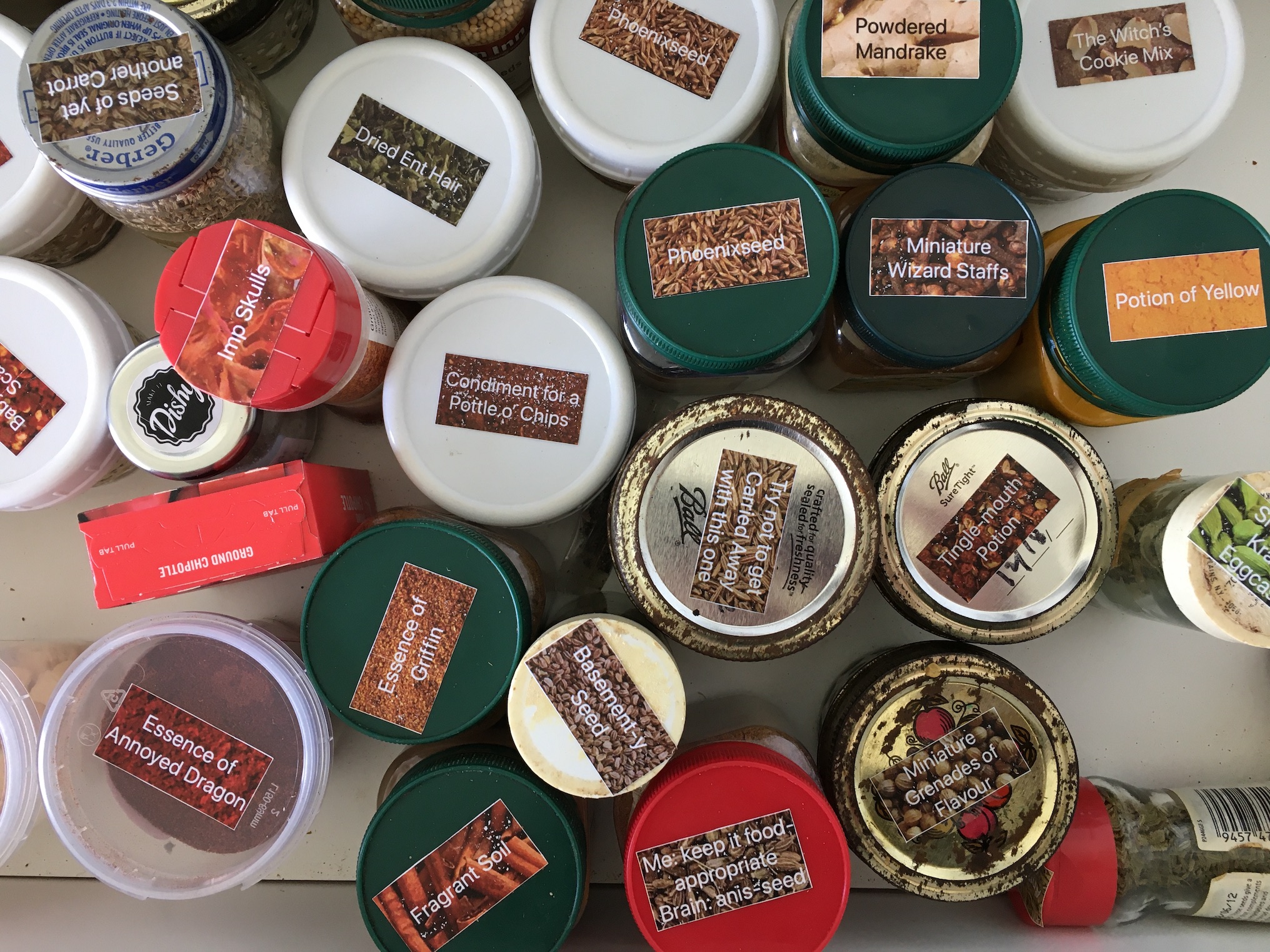
One of my Christmas gifts from my daughter this year was a set of creative spice jar labels. She spent an hour or so on Christmas Day affixing the labels to all our spice jars.

I love the creativity of the names: imp skulls, essence of griffin, condiment for a pottle o’ chips, miniature grenades of flavour …

Today I was looking for cinnamon and allspice. It took ages to find the ‘fragrant soil’, and ‘cannonballs of spice’. LOL!

Biscuit Stars (a.k.a. Starry Scones)

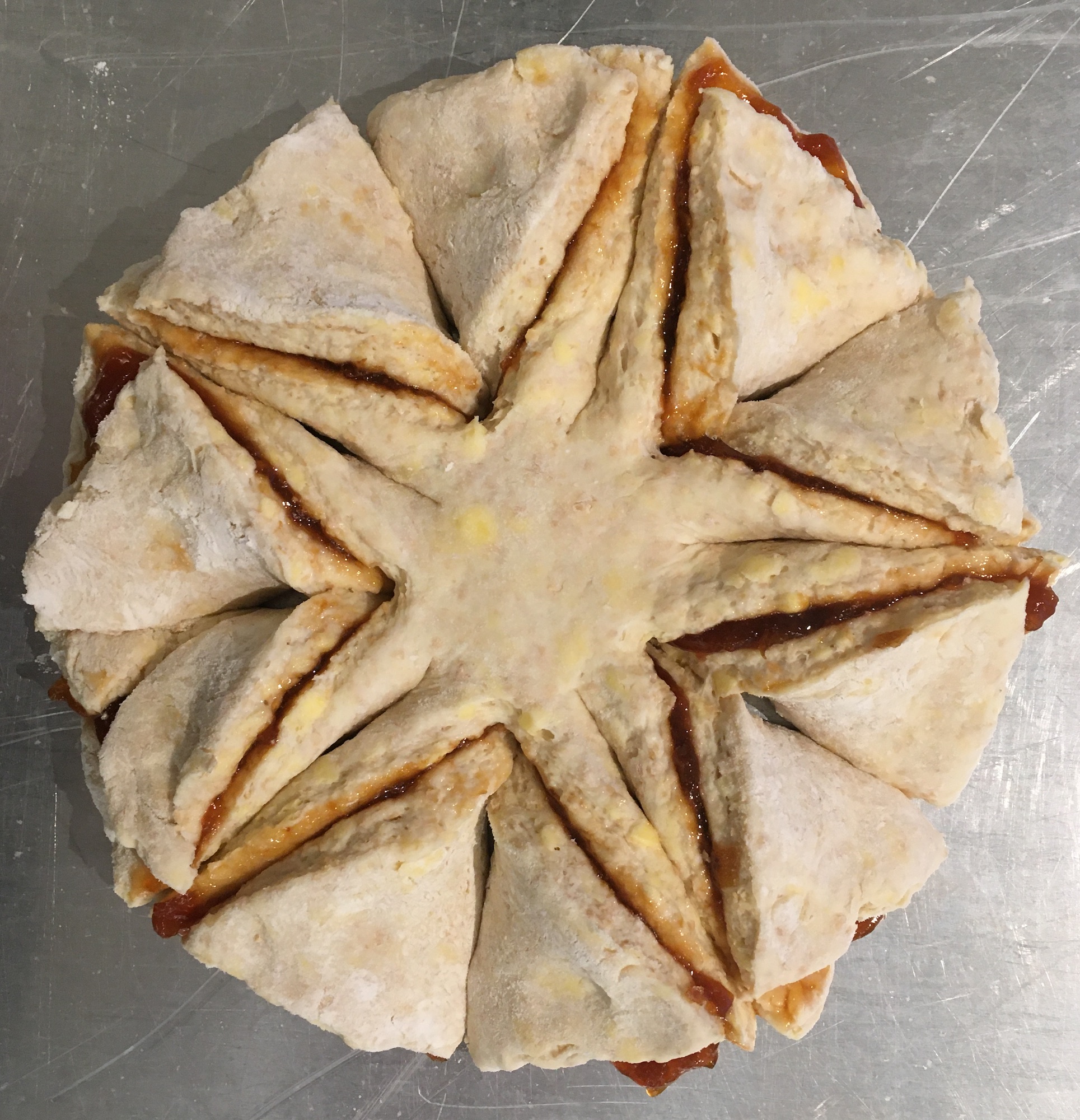
It’s been a long time since I blogged about biscuit stars (or Starry Scones, as I call them here in NZ, since ‘biscuits’ are cookies here). It’s been a while since I made them, too.

I was feeling whimsical on Sunday morning, though, and whipped one up for breakfast. As usual, it turned out beautifully and took minimal effort. It struck me as the perfect ‘fancy’ breakfast for the coming busy holiday season.

Try making one of these yourself—everyone will ooh and aah over your amazing culinary skills, and you never have to let on that it’s dead easy (I won’t tell …). 

Here’s the recipe. Enjoy!

Accidentally Perfect

I didn’t set out to make a spectacular cake.

lemon cake with blackcurrant puree

I actually set out to whip out something simple and quick—a Covid cake—because I had little energy for baking last week as I recovered from the virus.

So I chose a tried and true recipe. My favourite lemon cake is a recipe I came up with years ago when my daughter asked for a lemon birthday cake. It draws on components of a good lemon scone recipe, an orange cake recipe, and a coconut cake recipe. 

It’s a recipe I’ve honed over the years, and one I could probably make in my sleep.

And this iteration of it was one of the best cakes I’ve ever made.

The butter was at the perfect temperature to whip up light and fluffy. And maybe I gave it a little extra time with the mixer, because I was bored of Covid isolation. And because I wasn’t up for much work, I added a little extra liquid to the batter to make the egg whites easier to fold in.

The recipe always makes a cake with good texture, but this one was a step up from the usual. Whether it was perfectly whipped butter or a wetter batter, something worked in my favour, and the finished cake’s texture was positively sublime—soft and fluffy, but with body like a good butter cake should have.

When it came time for a topping, I took the lazy way out. I topped and filled the cake with black currant puree I happened to have in the fridge. No measuring, and no additions to it—I simply spread it between the layers and poured it over the top. The puree spread out thickly, dripping down the sides and drying to a shiny, soft, fruity layer. Not only did it look great (and appropriately bloody-looking for Halloween), but the tart, unsugared black currant was the perfect foil for the sweet cake underneath.

It was a cake I could have served to anyone.

Unfortunately, because we were in isolation, only my husband and I got to enjoy this perfect cake, but I’ll definitely be trying to replicate it in the future.

Carrot Success

young carrots
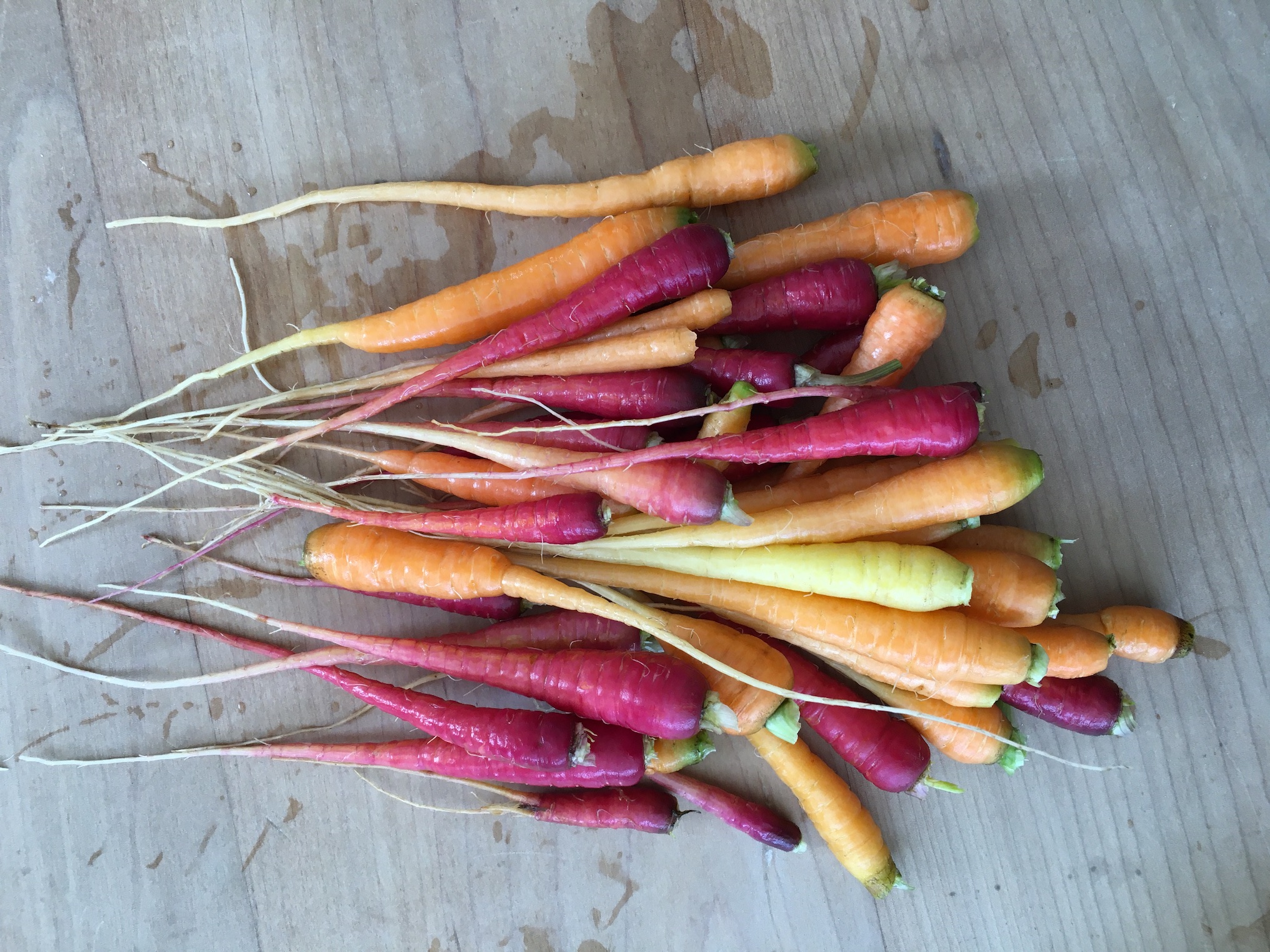
Young carrots, fresh from the garden–nothing is better!

I used up the last of the fresh carrots yesterday—the last of the carrots that I planted a year ago at this time. 

There are still about 2 kilograms of frozen carrots left that should last almost until the first of this season’s carrots are ready to pick.

I can’t tell you how pleased I am about that. It’s the first time ever I’ve grown (nearly) enough carrots for the year. Usually I end up buying commercial carrots by mid-June.

We eat a lot of carrots. I have raw carrots for lunch every day, and at least half our dinners have carrots in them. We also discovered the joy of Mexican pickled carrots this year, and probably ate five kilos of them in the past two months. So a year’s supply is a whole heap of carrots! 

And if you wonder why I go to all the effort of attempting to grow a year’s supply of carrots, you have clearly never grown your own carrots. Home grown carrots put the tasteless, watery supermarket carrots to shame. Yes, they’re not as uniform in size and shape—I harvest some pretty ugly, twisted roots from my rocky garden—but their flavour (and colours) are far superior to commercially grown carrots.

I plant a wide variety of carrots. Last year I planted Paris Market, Scarlet Nantes, Touchon, Kuroda Improved, Tendersweet, and Purple Dragon. Touchon has been my workhorse carrot for years—flavourful, reliable and nicely shaped. When we moved to the rocky soil of the new property, I first tried Paris Market—a stubby round carrot I figured would be less bothered by the rocks. I wasn’t terribly excited about it at first—little carrots can be a pain to process in the kitchen, when you want a whole lot of carrot for dinner. What I didn’t know was that Paris Market carrot also has fantastic flavour for eating raw, and roasts beautifully as whole little carrot nuggets. It can also grow to a whopping size if you let it. And because of its shape, it’s easy to pick in my heavy clay soil. It’s beginning to nudge Touchon out of the top spot on my favourite carrots list.

Now that I’ve successfully grown enough carrots, my goal this year is to spread my carrot planting over a longer period, so I get just as many carrots off half the garden space, and so I don’t have 40 kilos of carrots in the fridge at any one time. 

And there’s one of the many reasons I love gardening—there’s always something new to learn, new to try. There are always tweaks and improvements to be made. A gardener can always aspire to a more productive, less weedy, less labour-intensive garden for the coming season.

Happy gardening everyone!

Winter Culinary Adventuring

One of the best things about winter is the excuse to try unusual foods. During every other season of the year, there are so many vegetables coming out of the garden, it feels wrong to buy any fruits or vegetables. And as a rule, I only buy local produce, even during the winter, but once in a while it’s fun to splurge.

can of jackfruit

A few weeks ago I bought a can of jackfruit. This tropical tree is related to mulberries and figs, and produces large fruits with stringy flesh. The young fruits (before they ripen and become sweet) are used as a meat substitute, because the texture is somewhat meat-like.

I’ve eaten jackfruit in restaurants, but never cooked with it before, so it seemed like a good winter splurge.

Jackfruit itself has little flavour—its intrigue is in the texture. Most of the jackfruit recipes I found online take advantage of this texture by using it in dishes most commonly made with shredded pork.

After scanning a number of recipes, I decided to make gyro-inspired jackfruit wraps.

flatbreads fresh from the oven

I started by making flatbreads based somewhat loosely on a naan recipe I have.

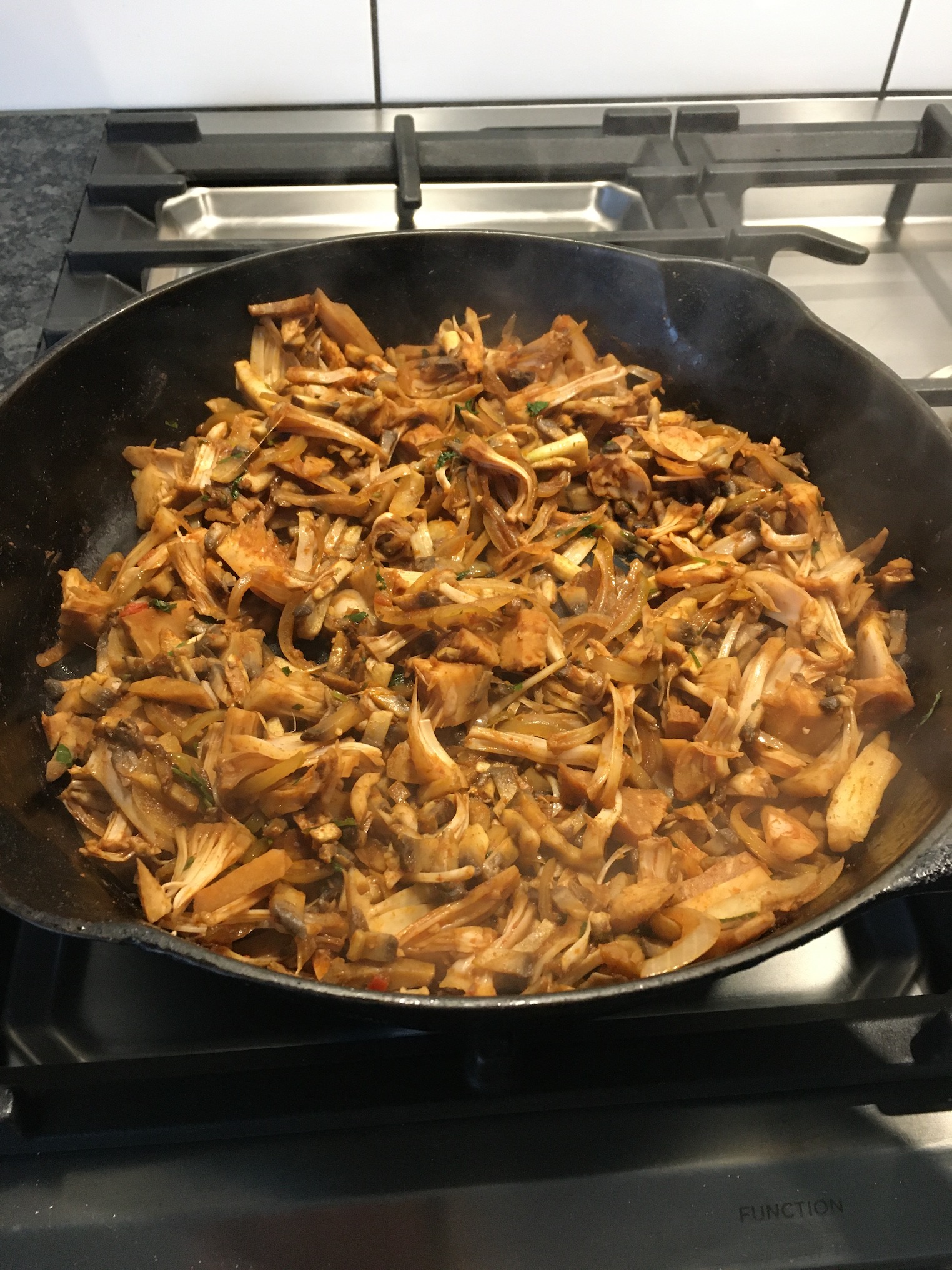
Then I made a hash of shredded jackfruit, mushrooms and onions, heavily spiced with paprika, smoked paprika, and chipotle. A dash or two of vegetarian Worcestershire sauce gave it a little tang, and a handful of fresh cilantro tipped it towards Asian flavours.

Finally, I made a yogurt and tahini sauce to go with it, generously flavoured with fresh mint.

I’m not sure what cuisine the final Greek/Indian/Southeast Asian wraps would fall into, but they were absolutely delicious. The hot and spicy jackfruit hash was balanced beautifully by the yogurt sauce, and the fresh flatbreads, still warm from the oven were everything a good flatbread should be.

jackfruit has cooking on the stove

It was fun to cook with a new and unusual ingredient, and the results were well worth the effort. I won’t be adding jackfruit to my regular grocery run, as it’s not exactly a local food (the can I bought was imported from Thailand), but I’ll definitely consider it next time I’m looking for a little winter splurge.