Oven Fries

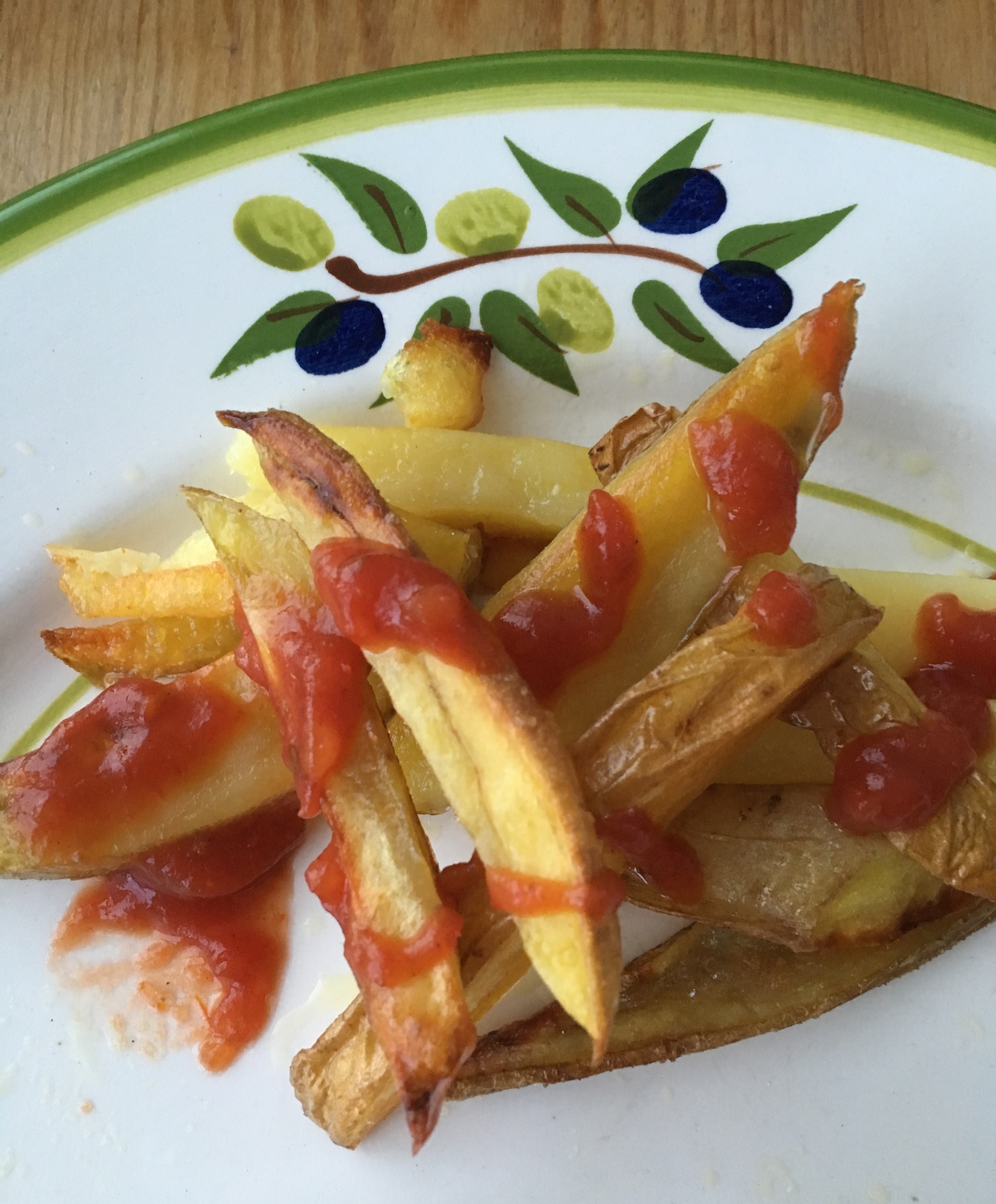
2016-09-03 18.01.27I’ve been making oven fries for 25 years, and the only thing I don’t like about them is that they stick to the pan, and it takes an overnight soak to clean it.

It’s because I’ve been doing it wrong.

I only learned this a few weeks ago. I was making fries for dinner, and had just slipped the tray into the oven when my daughter asked me to play a game of Bananagrams with her.

I can’t possibly turn down Bananagrams (we usually play two games every evening), and I had the time…

Half an hour and two games of Bananagrams later, I remembered my fries. Whoops! I usually stir them after about 15 minutes to ensure they bake properly and stick less.

I opened the oven to find a tray of perfectly baked fries.

They’ll stick badly, I thought.

Nope. They popped right off the tray—much easier than usual.

Well, you learn something new every day. Since then, I’ve made them several more times, “forgetting” to stir them, and tweaking the technique until I’ve got the best oven fries ever. Here it is…

Cut your potatoes into fries or wedges, however thick you’d like. Toss them generously with olive oil and salt on an oiled baking sheet (I use a jelly roll pan).

Bake on fan-assist at 210°C (400°F) for about 40 minutes, until the fries are nicely browned. Enjoy a glass of wine or a game while they bake—no need to do anything to them!

Happy Spring!

I don’t need the calendar to tell me it’s spring. I know it’s spring because…

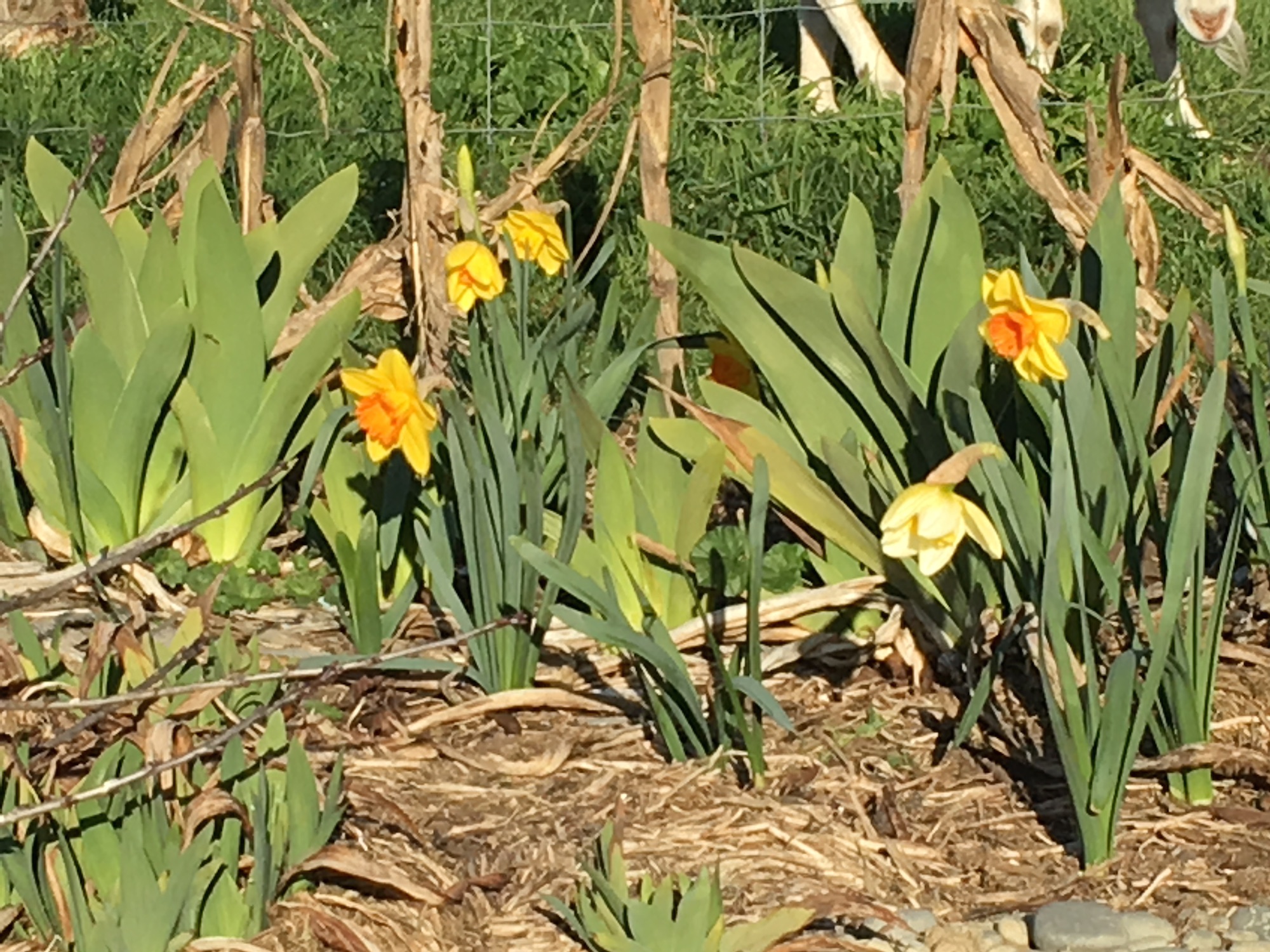
The daffodils are blooming.

The daffodils are blooming.

The office is full of plants.

The office is full of plants.

The fruit trees are budding up.

The fruit trees are budding up.

Artichokes!

Artichokes!

The grass needs mowing.

The grass needs mowing.

The weeds are out of control.

The weeds are out of control.

The wind blows hard from the northwest.

The wind blows hard from the northwest.

The dandelions are blooming.

The dandelions are blooming.

Ode to a Seed

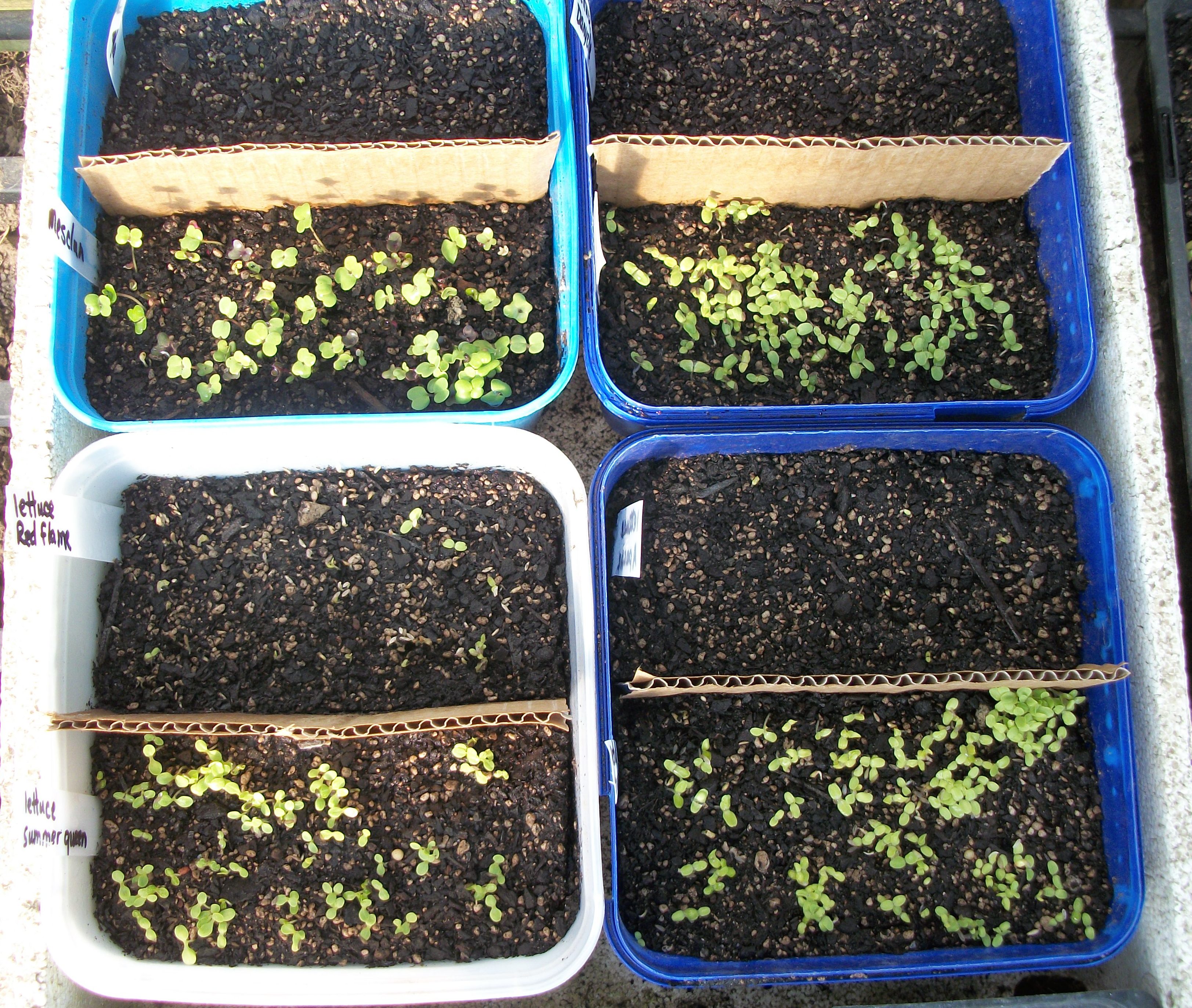
100_3612

Oh, little seed
Barely a speck.
Germ and cotyledon armoured
In seed coat.
You hold such potential–
A pea, a bean, a sprawling melon
Waits inside your humble shell.
Such modest desires you possess–
Soil, sun, water, warmth.
It is my pleasure to provide for you
Knowing you, someday, will provide for me–
Succulent tomatoes, crisp lettuce, spicy radishes.
I can taste your future.

Grow, little seed.
You are my sun, my life, my lunch.
You are spring itself.

Cranberry Orange Muffins

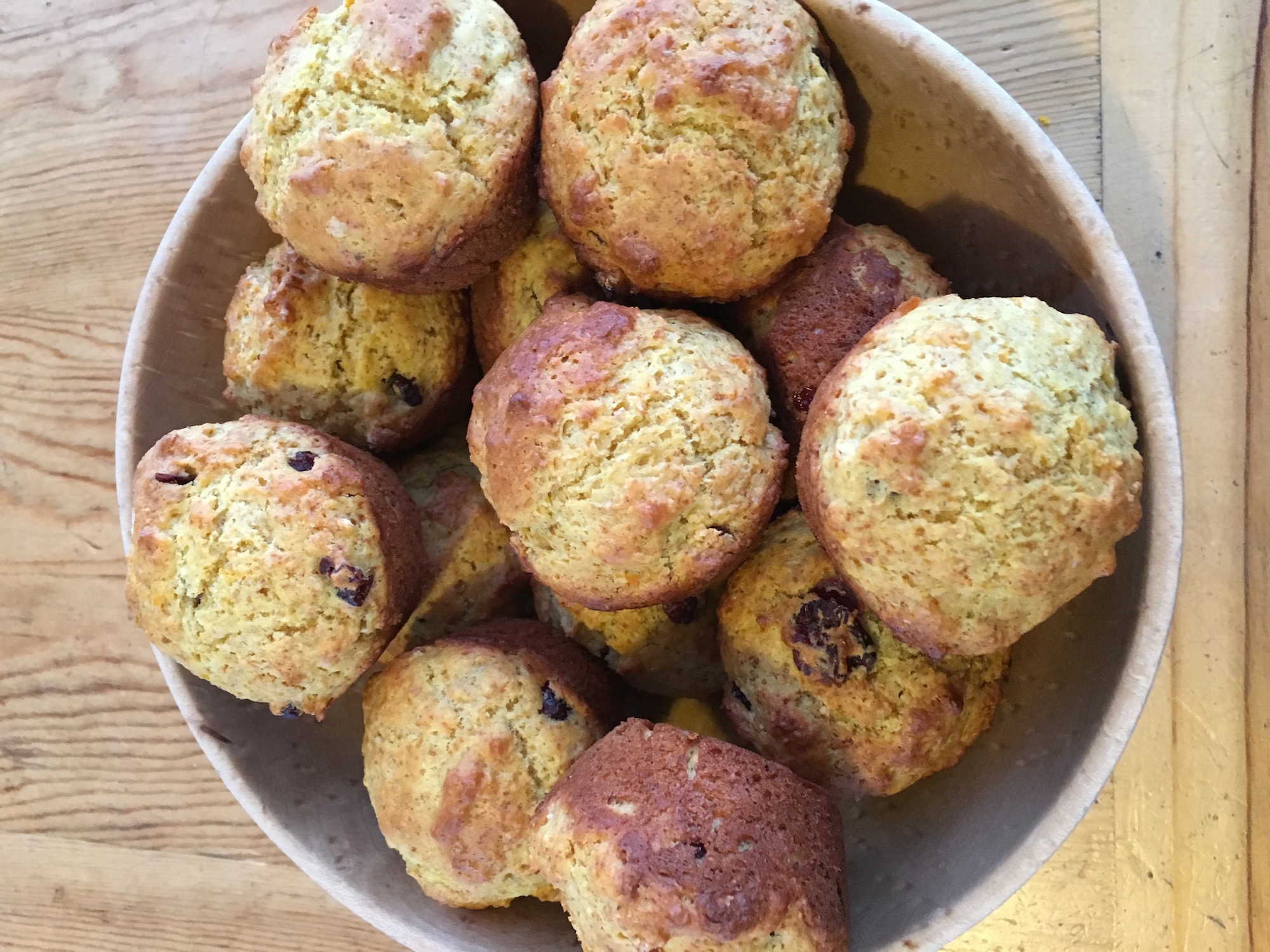
2016-08-21 07.16.45 smI made up this recipe this morning because I had a hankering for cranberry and orange, but was too lazy to search for a recipe. They were so good I thought I’d share.


2 cups all-purpose flour
1 cup whole wheat flour
1 ½ Tbsp baking powder
¾ tsp baking soda
½ tsp salt
3 eggs
zest and juice of 1 orange
approx 1 ¼ cup plain yogurt (see instructions below)
½ cup brown sugar
8 Tbsp melted butter
1 cup dried cranberries

Combine the dry ingredients in a large bowl. In a medium bowl, whisk together the eggs, orange zest, orange juice, yogurt, and butter. To measure the yogurt, squeeze the orange juice into a measuring cup, and add enough yogurt to make 1 ½ cups.

Combine wet and dry ingredients, plus cranberries in a few swift strokes.

Fill greased muffin tins, and bake at 210°C (400°F) for 15 minutes. Makes about 21 muffins.

List It

See no evil--list it instead.

See no evil–list it instead.

It’s about this time of year when I look around and see how shabby the garden looks. Through the depths of winter, I didn’t notice. I wasn’t outside enough. The days were short. I didn’t want to work outdoors.

But even if the lengthening days and singing magpies weren’t enough to tell me, the calendar is screaming that it’s just two weeks to spring.

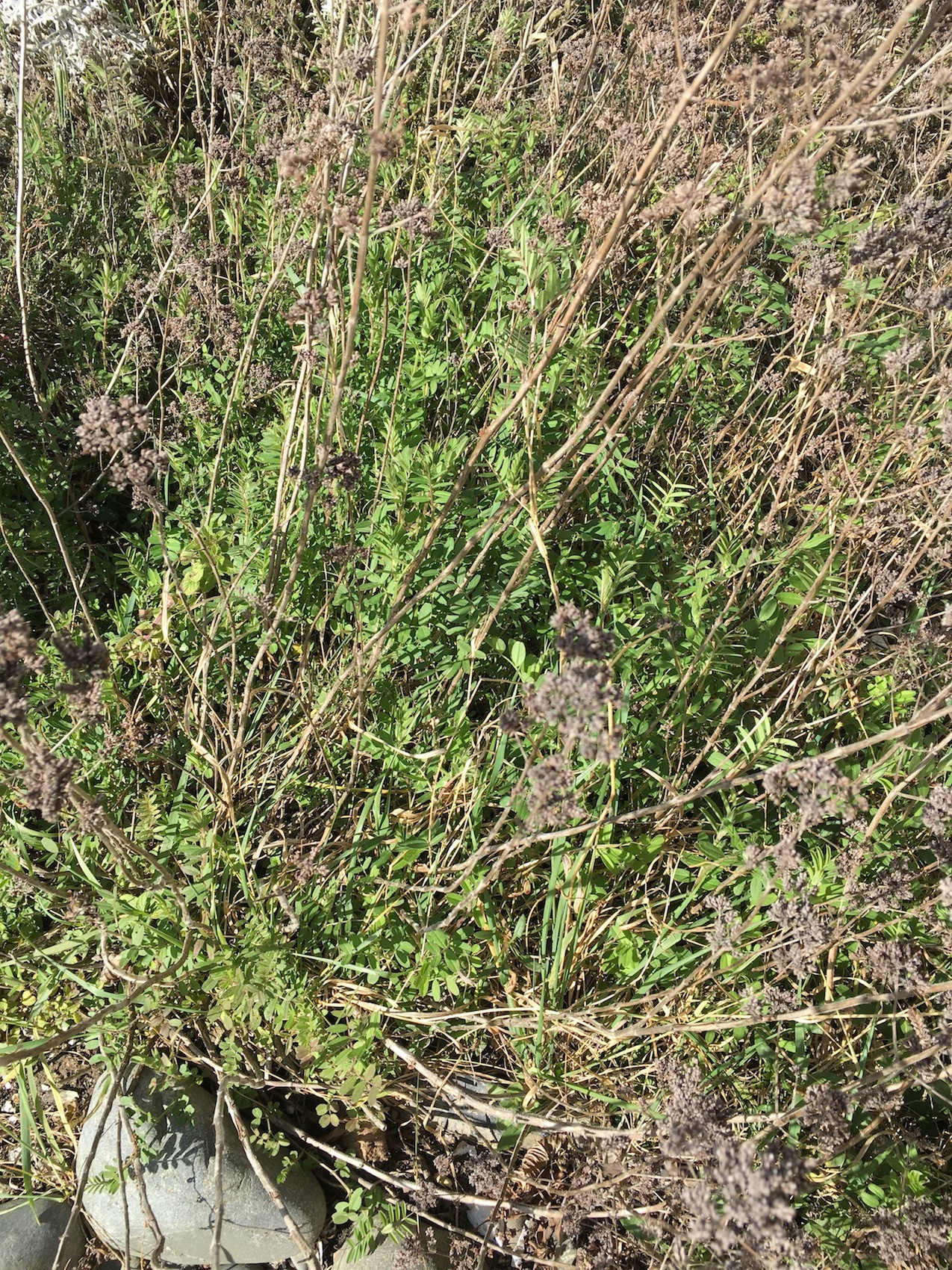
So I’m paying more attention to the yard and garden. I’m taking a second glance at what I thought was my herbs beginning to resprout…and finding that the green I saw was actually a giant, aggressively spreading vetch. I’m walking through the vegetable garden to assess what needs to be done…and finding that though the chickens did a lovely job on some weeds, they didn’t touch the most difficult ones. I’m checking the bird netting over the strawberries, and finding hole after hole that needs repairing. I’m inspecting irrigation pipes, and finding ice-cracked valves. I’m walking the rows of currants and raspberries, and finding enough thistles to make me want to cry.

In short, I’m finding so many things to do, I begin to think I can’t possibly do them all.

And so, to maintain my sanity, I make lists.

A list of things to do this weekend.

A list of things to do in the evenings during the week.

A list of things to purchase in town.

A list of things to do next weekend.

A list of things to do the weekend after that.

A list of things that need to go on a list…

By mid-September, I’ll have every weekend through late-November planned in detail—exactly what needs to be done in order to have everything under control and planted out at the right time.

It sounds crazy, but it keeps me sane. Once a task is on a list, I can ignore it. I can walk past that aggressive vetch plant every day, knowing that if I just keep to my lists, I will eventually get to it. I can be completely blind to the holes in the bird netting, because I know that fixing it is on the list the week before the strawberries should start to ripen.

Without my lists, I’d be overwhelmed by the mountain of tasks to get done between now and December.

But the lists aren’t just good for making me get my work done. They also help me get my play in, too. Fun stuff goes on the lists, too. A weekend tramping trip, a day at the beach—I can schedule these things in alongside my work, and then actually enjoy them, because I know I’ve got time to do them. It says so, right on my lists.


Cricket Flour

IMG_1784I was running errands in town today, and called in to Bin Inn for some flour and cornmeal.

I was excited to find this sitting on the shelf next to the rice flour and barley flour. It was the first time I’ve seen commercial insect products that admit to being insect products sold in an ordinary store (there are plenty of things you’ve probably bought that contain insect products, but manufacturers generally don’t advertise that).

It’s nice to see insects showing up on the grocery store shelves. I am a proponent of entomophagy, even though I am a vegetarian. If you’re going to eat meat, insects are probably the most environmentally sound way to go.

Being cold-blooded, insects convert feed into body mass much more efficiently than our warm-blooded livestock. You can raise a kilo of crickets on just 1.7 kilos of feed. Compare that to chicken at 2.5 kg of feed per kilo of chicken, or cows at 10 kg of feed per kilo of cow. Adjust these numbers for percentage of the animal that’s edible, and they favour insects even more—80 percent of a cricket is edible, whereas only 55 percent of a chicken and 40 percent of a cow is.

It still takes resources to produce insects. Though they convert feed into food more efficiently, insects need to be kept warm—warmer than you need to keep a cow, because they can’t keep their own bodies warm. There is an energy cost in that.

Of course the biggest problem with farming insects is getting people in Western countries to eat them. Most of the world’s people actually do eat insects, but our modern Western culture had separated us so much from our food, that we even get squeamish when we can identify the animal that our cuts of meat came from.

Consumers generally don’t want to actually see the animal when they’re preparing dinner. I’m sure cricket flour goes over better than, say pickled whole crickets (sort of like sliced ham vs. pickled pigs feet).

It will take a change in our attitude toward insects before Westerners will agree to bar nuts that include roast, salted crickets (which are delicious, by the way). When preschoolers learn that a cricket says “chirp, chirp” along with the cow says “moo”, we’ll be on our way. When we begin to view insects, not as enemies to be beaten, but as fellow organisms on Earth, we’ll be on our way. When we stop seeing insects as dirty, but rather recognise that they carry fewer potential human pathogens than our close relatives the cow and pig, we’ll be on our way.

As a vegetarian and a gardener, I value the insects that come into the kitchen on my vegetables. I don’t get enough vitamin B12, because it is only found in animal products. Insects are full of vitamin B12. So, I’m casual about cleaning the insects off our organically grown vegetables. We eat a lot of aphids, and quite a few caterpillars, I’m sure. And that’s great—it gives us all the nutrition we need, without any extra effort on our part (less, in fact).

Indeed, though I support insect farming, I’m afraid I will probably never buy any insect products–there are so many wonderful insects out there free for the taking, I couldn’t see spending $120 per kilo (and that’s half off!) for cricket flour.

Besides, I prefer my crickets whole—the best part about them is the crunch, after all.
Going bananas

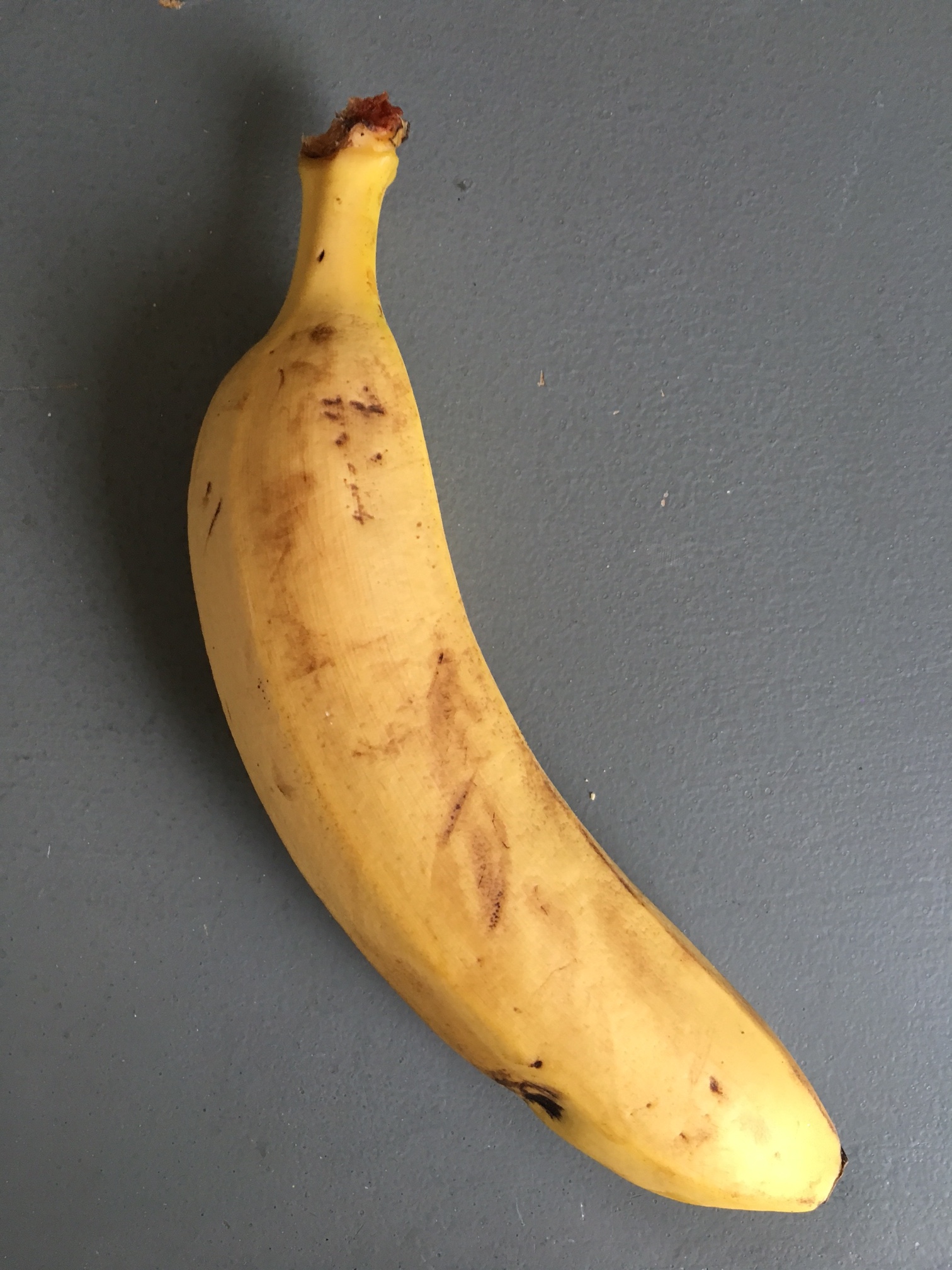
bananaOver 100 billion bananas are eaten globally every year, making bananas the fourth most important food crop in the world. Most bananas are consumed locally—only 15% are exported. Almost all the bananas grown for export are a variety known as Cavendish. New Zealand is said to have the highest per-capita consumption of Cavendish bananas in the world, at 18 kg per person per year.

The Cavendish was named for the Duke and Duchess of Devonshire—whose family name was Cavendish. Their head gardener imported a plant from Mauritius in 1830 and grew it in the family’s hothouse. The banana flourished and provided the duke’s guests with fresh bananas to eat. The Cavendish banana grew so well, the duke was able to supply two cases of plants to a missionary in Samoa. Those bananas were the start of the banana industry in Samoa.

Missionaries spread the Cavendish throughout the Pacific, but it wasn’t until the 1950s that the variety became popular commercially.

Until the 1950s, the most important banana for export was the Gros Michel, but in that decade, it was almost wiped out by a fungus known as Panama disease.

The Cavendish—smaller and not as flavourful as the Gros Michel—was immune, so growers switched largely to the Cavendish.

Almost all commercially grown bananas today are Cavendishes—clones of the plant grown by the Duke and Duchess of Devonshire.

Panama disease didn’t sit idly, though. By 1992, a strain evolved in Southeast Asia that was able to attack the Cavendish. And since the plants are all genetically identical, they are all susceptible to the new strain of the disease. At least 10,000 hectares of Cavendish bananas have been destroyed, and more will certainly fall as the fungus spreads.

For many of the nations that export bananas, it will be an economic disaster. For those of us who enjoy bananas…who knows?

There will likely be a time in which bananas become more expensive, even hard to find in our grocery stores.

But having lived in Panama, I know there are many banana varieties (about 1000, worldwide). And every single one I’ve eaten is better than the Cavendish. The Cavendish’s main selling point is its ability to survive transport, not its flavour.

In our village in Panama, everyone grew bananas. They came in many sizes, shapes, and colours. Some were more starchy, some were sweeter. Some tasted so much like banana, they seemed almost fake. Others tasted like a fruit salad, with tangy citrus overtones to the banana flavour.

I have to believe that as growers develop a replacement for the Cavendish, they will naturally end up with something more flavourful than the bland Cavendish. If we’re really lucky, they’ll develop more than one variety, providing greater insurance against the future evolution of Panama disease and more variety in our supermarkets. That has to be a good thing in the long run.

Want to know more? Visit the Panama Disease website.

Heavenly Hash Browns

2016-08-07 17.28.05 smSunday is usually a day for cooking an elaborate dinner. But the kids and I were in the city all afternoon, and came home late. After scones for breakfast and leftovers for lunch, none of us really needed a big dinner anyway.

So we had breakfast, instead—fried eggs and hash browns.

They were the first really good hash browns I’d ever made. In the past, my hash browns have been a bit too gummy, a bit too soft.

But thanks to the Internet, I had many hash brown recipes at my fingertips today (yes, it’s been that long since I made them—I had only cook books before).

So, I tried a new method today, and hit it just right.

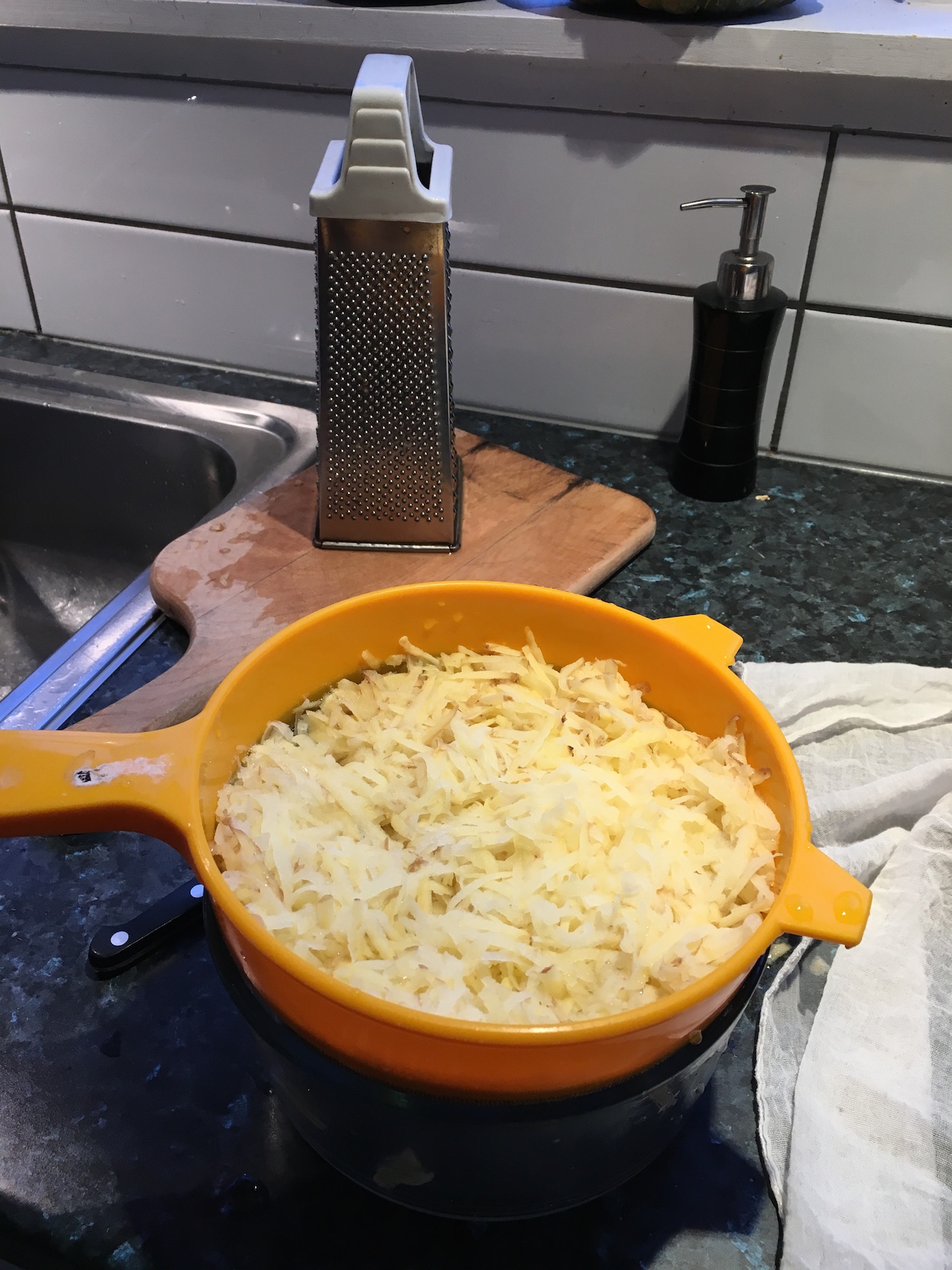
After grating my potatoes, I rinsed them well, and squeezed the excess water out of them. I tossed them with salt and pepper and fried them in a non-stick skillet with a generous quantity of clarified butter.

They were everything a hash brown should be—salty, crispy, and greasy.

Looks like hash browns are back on the menu!

Swiss Army Kitchen

2016-08-01 12.36.13My husband and I try to maintain good kitchen utensils and appliances. Our kitchen is well-stocked with mixing bowls, spatulas, knives, and measuring cups. We have a cutting board for every occasion. We have a high-quality tool for every task in the kitchen.

Except one.

We don’t have a single decent can opener.

We used to have two—one each from our pre-marriage days. Neither one worked well, but we limped along with them for 23 years. Last Christmas I decided that, though we don’t use a can opener very often, we deserved a new one. Guess who got a can opener in his stocking?

I happily threw away the two old ones, only to fish one back out of the rubbish when we found that the new one was absolutely useless.

That quarter-century old opener has been growing progressively worse in the past months (I think it knows I threw it away, and it’s bitter about that). Now, instead of reaching for the kitchen drawer when I want to open a can, I’m going to my purse—the can opener on my Swiss Army knife is vastly superior to the one in the kitchen.

One of these days, I’ll try buying another.

Until then, the Swiss Army knife is my new best kitchen tool…

Frosting Experiments

2016-07-27 18.47.26 smI should have known it would be disappointing.

Nothing can compare to a good cream cheese frosting.

That’s what these delicious pumpkin cupcakes needed, but I had no reason to leave the house yesterday, and couldn’t justify going out simply to get cream cheese.

Surely, I could use yogurt, right? I had yogurt in the house.

A quick search online uncovered a variety of yogurt frostings and glazes. Many were, frankly, disgusting-sounding attempts to make a fatty, sweet confection with no fat or sugar—soy yogurt sweetened with stevia was the worst. But my thought was to just mix yogurt and confectioner’s sugar to a spreadable consistency, with a little vanilla for flavour.

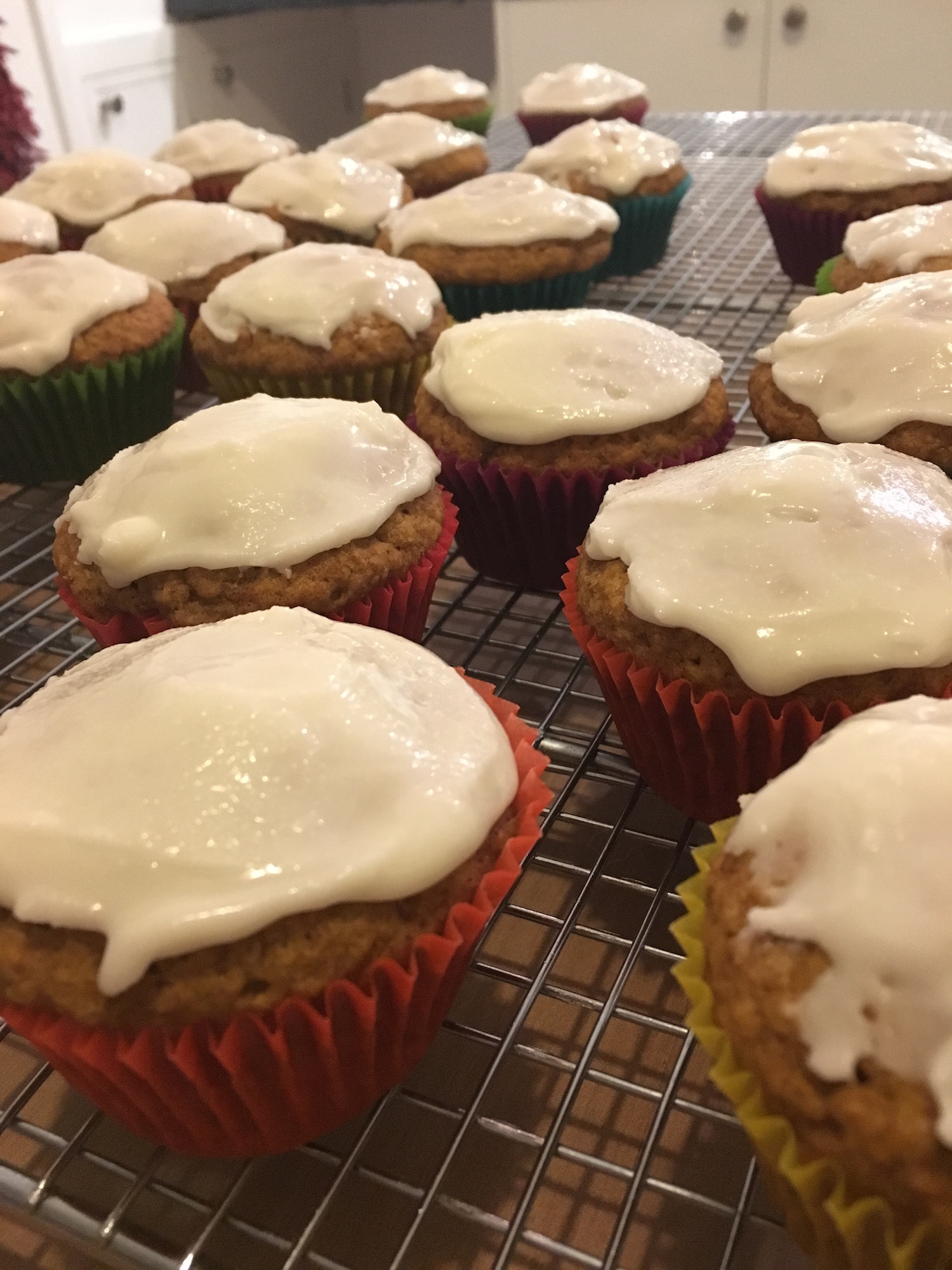
It certainly worked. Two cups of sugar, half a teaspoon of vanilla, and about 3 tablespoons of unsweetened yogurt made a reasonable frosting.

But it wasn’t cream cheese frosting—too sweet and not sour enough. Not enough fat, either. It was less like cream cheese frosting, and more like a sugar and lemon juice glaze. In fact, with more yogurt and less sugar, it would probably make an excellent thin glaze for sticky buns.

Next time I make pumpkin cupcakes, though, I’ll make sure I have cream cheese in the house first.