Size Does Matter

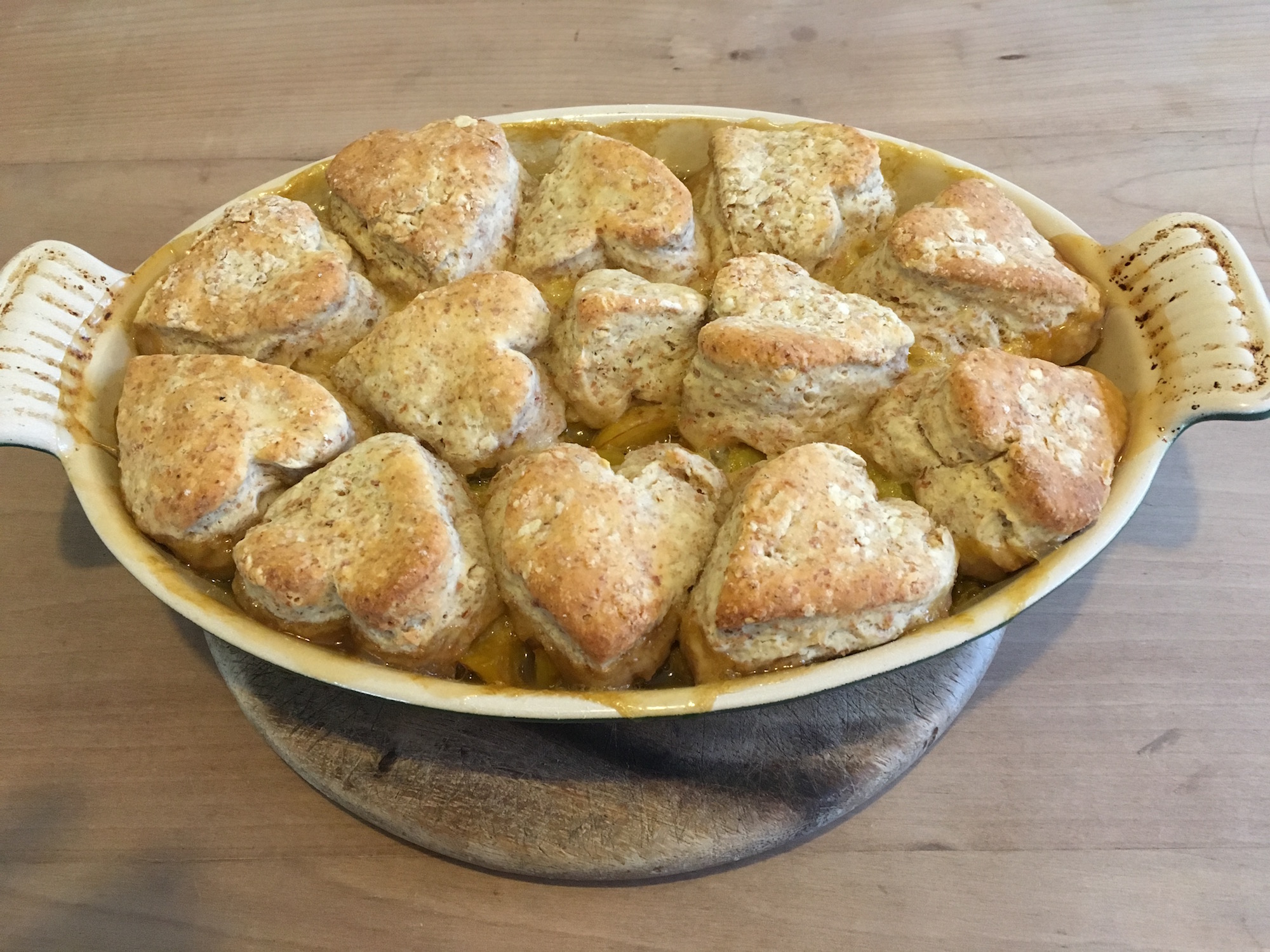
img_3065The weather was finally cool enough today to think about baking. Knowing there’s another birthday cake to make Thursday evening, I decided to make something entirely different today–peanut butter cookies.

I’ve made a number of different peanut butter cookie recipes over the years, and there was a new one I wanted to try; it used wholegrain flours and whole peanuts in addition to peanut butter.

But as I glanced at the recipe, I realised it only made two dozen cookies. What kind of cookie recipe is that? I know I could have doubled the recipe, but it was the principle of the thing. Two dozen is hardly any cookies at all (especially with two teens in the house). It’s not worth the kitchen mess to make that few cookies, and they would look lost in the cookie jar.

So I pulled out Old Faithful–the 1975 edition of Joy of Cooking. Sixty-five peanut butter cookies later, I was pleased I had.

Bittersweet Sweet Corn

2017-01-24-15-16-41-smYou wait for it all summer. You watch it grow taller and taller. You marvel when it overtops your head. You cheer when it starts to flower, and you impatiently poke the ears as they grow and fatten.

Then one day–finally–the first ears of sweet corn are ready to pick. Always eaten as corn-on-the-cob, the first ears are celebrated and savoured. They cry out Summer!

They are the beginning of the end, of course.

Once the sweet corn is coming on, the green beans will start to slow down. The peas, already on their last hurrah, will give up. February’s heat and dry will begin to take its toll on all the plants.

There is still plenty of time to enjoy summer’s bounty–the deluge of vegetables won’t be over until mid-April. There is still ketchup to make, and summer soup to bottle. And lots and lots of corn-on-the-cob to eat.

But once the corn is ripe, the clock is ticking. From here on out, the garden will look a little worse each day. I’ll start pulling plants out, clearing beds, harvesting storage crops.

And in a shady corner of the yard are two trays of seedlings, sheltering from the heat and harsh sun. Waiting for the end of the sweet corn. Winter crops.

Because every season’s end is another’s beginning.

Salty Pretzels, Shiny Pots

img_3057I love soft pretzels. If I had an unlimited supply of them, I’m certain I would simply eat them until I was sick. So it’s a really good thing they’re basically not available in New Zealand.

They’re easy to make, though, and the kids enjoy shaping them. We make them with some regularity, usually timed so that they’re coming out of the oven at lunchtime. Served with dill pickles, mustard, and a good sharp cheese, they make an excellent meal (if a bit salty).

I love these pretzel meals, but even after the pretzels are gone, they leave a lasting bonus.

A shiny pot.

Boiling the pretzels in a baking soda/water mixture loosens all the burnt-on oil from my cooking pots. You know, all those dark spots you chalk up to ‘patina’ because they’re a real pain to wash off. Loosened by the baking soda, they lift right off when you wash the pretzel-boiling pot.

I learned this years ago, and regularly boil water and baking soda in my pots to get them nice and clean. But I never have the patience to boil it long enough–by making pretzels in the baking soda mixture, I leave it boiling long enough to lift the stains.

Pots looking dingy? Maybe it’s time to make pretzels!

Greengages

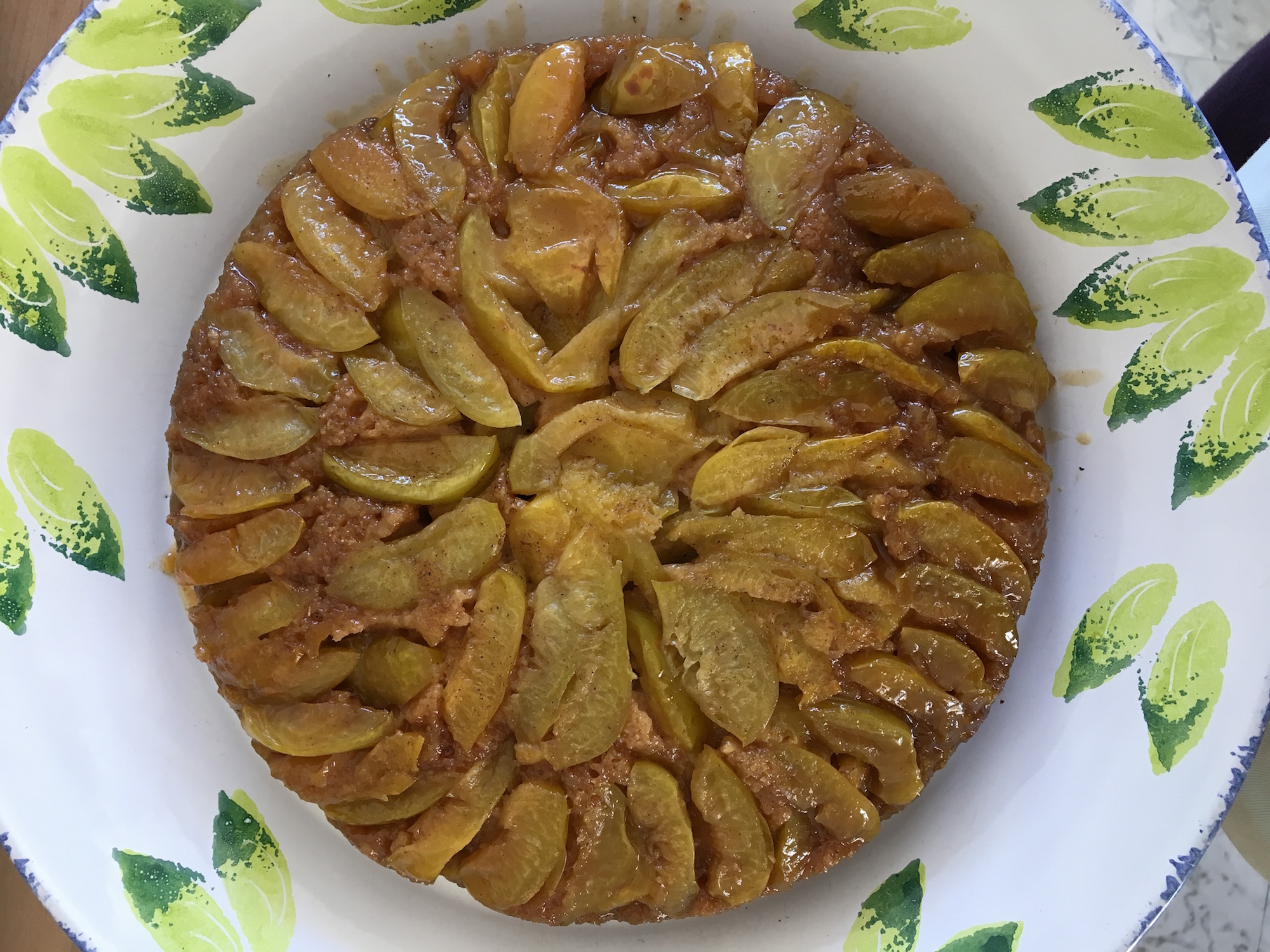
2017-01-25-14-58-09-smWe don’t often get many greengage plums. Our tree is small, and it sits in a windy location, so many fruits blow down before they are anywhere close to ripe. This year wasn’t too bad–we harvested about three kilos of fruit. Plenty to enjoy.

One of my favourite things to do with summer stone fruits is to make upside down cake. Indeed, I’ve blogged about it three times in the past two years. So today I’ll ignore the cake, and mention the plum, instead.

I didn’t know a lot about greengages before coming to New Zealand, where I found a fair number of people had them growing in their yards.

Greengages are named after Sir William Gage, who imported them to England from France in 1724. The cultivar he imported had another name, but apparently the tag was lost in transit (These were the days before anyone considered biosecurity…Importing a strange plant? Whatever). They were popular in America in the 1700s, but fell out of favour in the 1800s.

According to a 2004 article in the New York Times, there’s good reason greengages fell out of favour. The trees take longer to mature than other plums, they fruit erratically (I thought it was just our tree), the ripe fruit is fragile, and they’re prone to cracking and rotting on the tree. Not exactly an easy plum for commercial production.

But the greengage is considered one of the finest plums for flavour. Grown commercially, it fetches a high price. According to the New York Times article, in 2004 fewer than 100 greengage trees were harvested commercially in the United States. They are more common in Europe and New Zealand. New Zealand exports a small quantity of greengages to the US each year, where they are sold in specialty markets.

So I feel much better about my 3 kilo harvest of greengages. They are wonderful, and if they’re a bit finicky to grow? Well, that just makes them all the more special when we have a good year.

Crazy Cake Season Begins!

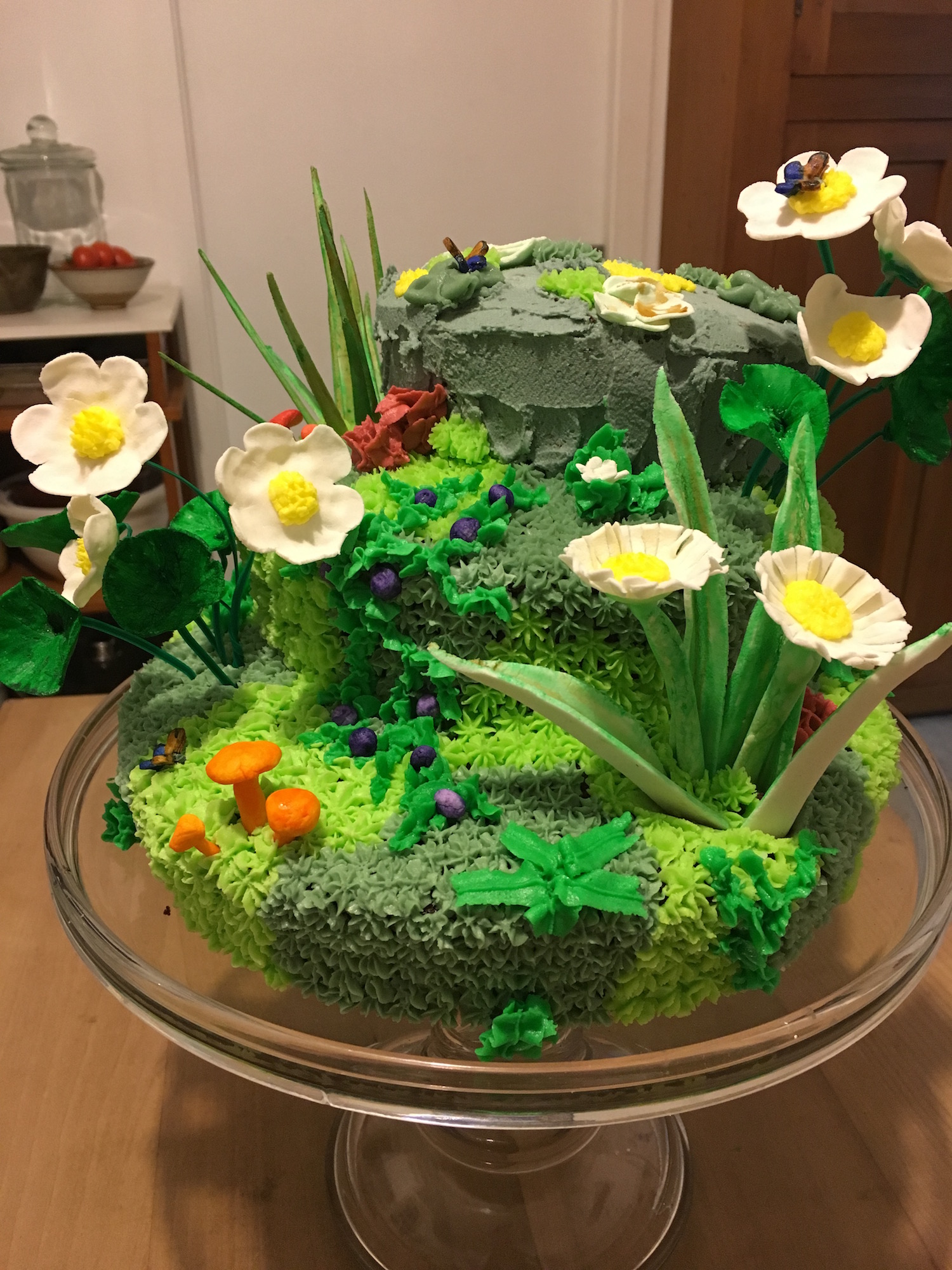
2017-01-26-21-49-17-smWoo hoo! My favourite time of year–the time when I have lots of excuses to make ridiculous cakes–has begun with the daughter’s birthday.

I like to try new cake decorating techniques, and this year I’m using Mexican paste. It’s surprisingly easy to make and to work with, if you don’t mind remortgaging your house to pay for the gum tragacanth that gives it the right texture. I expect the stuff is dirt-cheap elsewhere in the world, but here the price was shocking (about $10 per tablespoon).

Great fun to work with, though. I’ve already gotten my money’s worth in entertainment.

Combine 227 g (8 oz) icing sugar (confectioner’s sugar) and 1 Tbsp (15ml) gum tragacanth in a bowl. Add 2 Tbsp water. Stir until it becomes crumbly and damp. Turn out of the bowl and knead until pliable. Place in a plastic bag and leave at room temperature for 12 hours until firm. When you’re ready to use it, break off a small piece and knead until softened.

The paste can be moulded into shapes, or rolled thin and cut with cookie cutters. It works a lot like modelling clay, though it tends to stick. I rolled mine out on a non-stick baking sheet, and would have appreciated a non-stick rolling pin, too, but with care I managed with an ordinary wooden rolling pin. I picked up a cheap set of fondant shaping tools that proved very helpful for producing the shapes I wanted.

After you’ve made your shapes, you need to let them dry and harden for about 24 hours. Then they can be painted with paste food colouring thinned with gin. You can also knead food colouring into the paste.

Once the paste hardens it is quite tough, but thin pieces are brittle (reminds me of unfired ceramics). I didn’t plan very well for my leaf and flower stems. I made the leaves and flowers, and only considered what I was going to use for stems after they’d dried. In hindsight, I should have attached the stems while the paste was still pliable. Nothing a little gingerbread icing, used as glue, couldn’t fix.

So, where was all this sugary sculpture heading?

My brief was an alpine scene atop chocolate cake.

Failure

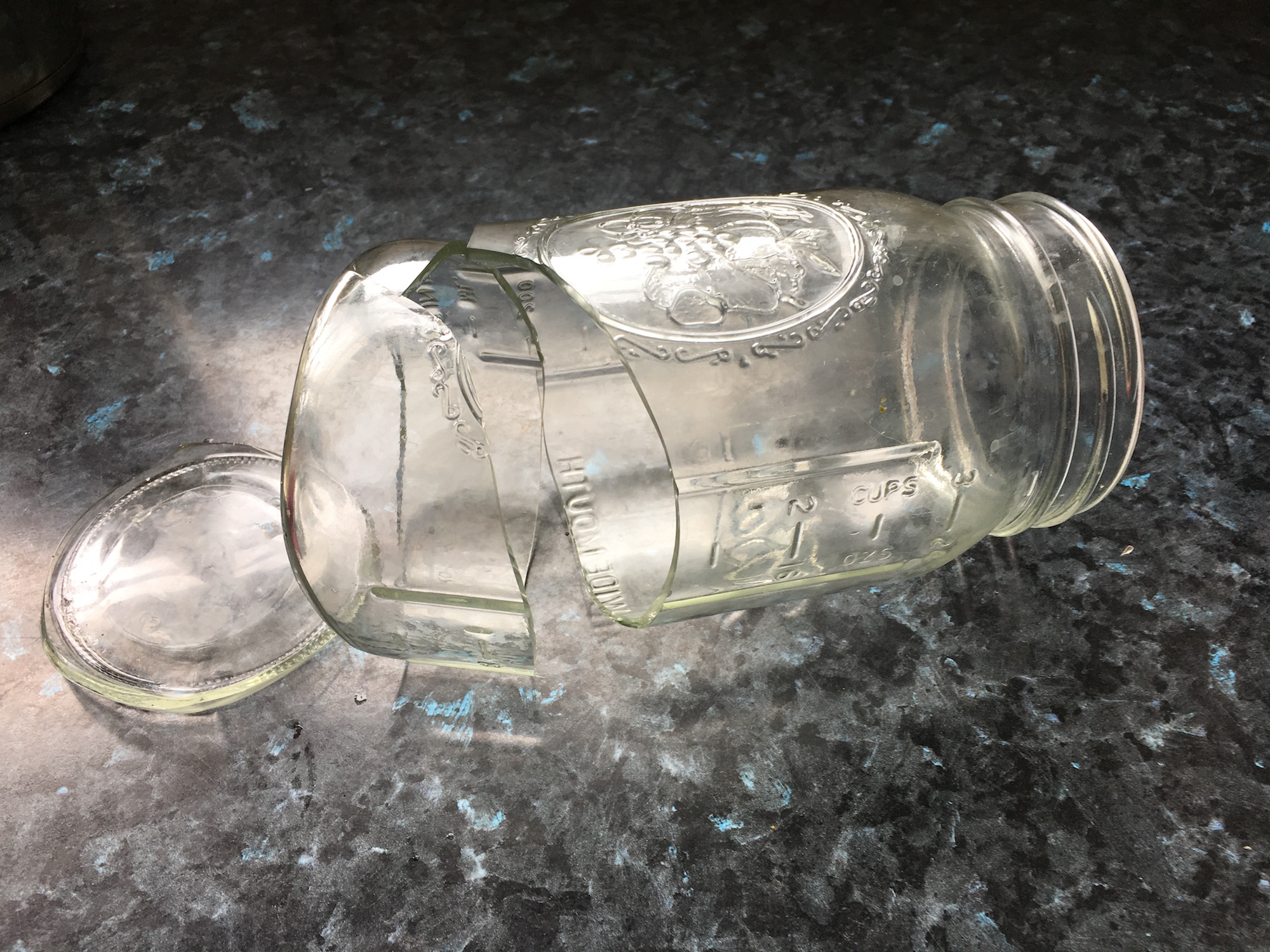
2017-01-21-09-23-03smI’ve been in a veritable frenzy of pickling the past couple of weeks. Before that, there was a good stint of jam-making. I’ve had a brilliant run. I’ve been able to run a full canner-load almost every time, every jar has sealed, and the jam has been the perfect consistency.

Until two days ago, when a jar of dill pickles exploded when it was lowered into the canner. Then yesterday, I ran fifteen jars through the canner, and FIVE of them didn’t seal. What? FIVE? I never have that sort of failure rate. I did what I always do though, upon reflection, maybe my lids or jars weren’t quite as hot as they should have been, because I was doing two batches at once, and my attention was divided.

Today I reran the five unsealed jars, making sure they were nice and hot, and they all dutifully sealed.

But it made me think about failure and my response to it.

I fail a lot. I have hundreds of rejections of my writing from agents and publishers. I’ve thrown away entire rounds of cheese that just didn’t work properly. I’ve made loaves of bread that could be deadly projectiles. I’ve made birthday cakes that didn’t look anything like what they were meant to be. I’ve taught lessons that have flopped completely. I’ve made clothes that have gone immediately into the rubbish upon completion. The list of my failures goes on and on.

When we fail, we have a number of options.

Option 1: We can pout, blaming our failure on the weather, the phase of the moon, the person next to us, the wrong tools, millions of illegal immigrants, or whatever. This might make us feel good, because it allows us to pretend our failure was not our own fault. But it doesn’t make us likely to succeed next time.

Option 2: We can get angry, blaming our failure on our own stupidity, clumsiness, incompetence, or lack of innate ability. We can believe that, because we failed, we are a failure. This is an easy response, because it allows us to justify not trying again. “I’ve tried that, and I can’t do it.”

Option 3: We can critically analyse what went wrong. Maybe it was poor tools–I’ve had cheese fail when a thermometer was inaccurate. Maybe we got sloppy–I’ve ruined garments by rushing to finish them. Maybe we didn’t understand enough about what we were doing–the first time I taught preschoolers, they chewed me up and spit me out, because I had no idea how they related to the world. Analysing our failures takes time. It requires a willingness to critique ourselves in an honest and constructive manner. It requires us learn new things. It requires us to get back on that bicycle and try again.

It’s hard.

But it’s the only option that leads to success.

Brioche

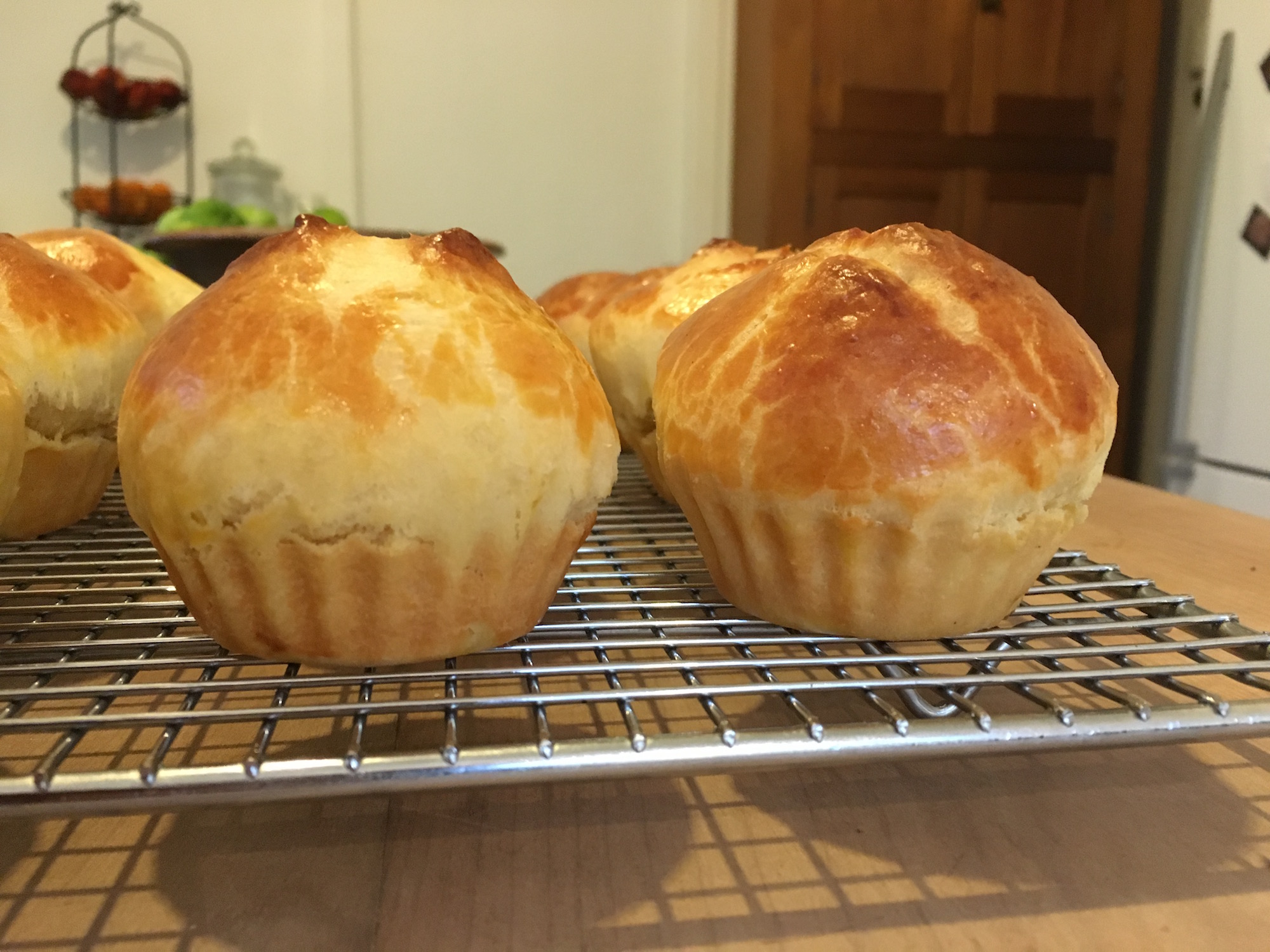
2017-01-22-07-09-00-smI’ve been threatening to make brioche for some time. Last time I made it was about seventeen years ago.

Not that I don’t like brioche–I love it–but I reckon that’s about how frequently one should eat it if one wants to live to a ripe old age. Three eggs provide most of the liquid, and 175 grams of butter give it that unbelievable silky texture. The butter and egg also make the dough incredibly sticky and difficult to work with, so it’s not something to make every weekend.

A cool, drizzly evening and the promise of a rainy day today made Sunday morning decadence sound like a good idea. I made up the dough after dinner Saturday and left it in the fridge overnight. This morning, it was a simple thing to roll balls of dough around chunks of intense dark chocolate and spoonfuls of sparkling red currant jam and pop them into little tart tins.

Half an hour later, these gorgeous little buns emerged from the oven. They were every bit as good as I remember them being seventeen years ago.

It may be another decade or two before I make brioche again, but something that decadent doesn’t need to come around too often. The memory is just as tasty as the real thing.

The Art of Food (or Beauty and the Beets)

img_2953-smTwenty-seven years ago, when I became a vegetarian, I had no idea that doing so would be an artistic adventure, as well as a culinary one.

The dietary change came easily and quickly. Because I was actually thinking about my food, I ate much better than I had before–a lot less pre-packaged swill, and a lot more fresh ingredients. I never missed the meat.

The artistic change has come more slowly and has only really blossomed in the past two years of blogging about food. In the past, I concerned myself with the look of food only on special occasions. Most of the time, I didn’t pay much attention to the aesthetics of my meals.

Now, even meal preparation has become an artistic experience. I notice how water beads on the surface of a tomato or how yellow carrots contrast beautifully with the dark kitchen benchtop, I choose vegetables for their colour as well as their flavour, I appreciate the vision of my ingredients lined up in little bowls waiting to be cooked. Sometimes, I’ll pick the vegetables for dinner a little earlier than I have to, simply so I can enjoy seeing them heaped in colander in the kitchen.

Being a gardener makes the aesthetics all the more rewarding to me–when the fruits of my labour are as beautiful as they are delicious, how can I help but be pleased? And, of course, I’m thinking about colours when I plant my vegetables too.

I say the aesthetics are part of the vegetarianism because I can’t imagine a raw chicken leg looking nice sitting on the kitchen bench. There’s something about the vegetables that’s pleasing, whether raw or cooked. Maybe it’s the colours. The vegetable palette is more varied and bright than the meat palette–snow white cauliflower, dark green spinach, deep magenta beets, bright green peas, sunny yellow squashes, scarlet tomatoes…Cooking with those vegetables is like dipping a paintbrush into the colours and creating a work of art.


Proof We’re Lame

A boat shed in Duvauchelle

A boat shed in Duvauchelle

It was Mum and Dad’s annual day out today. We dropped the kids off at summer camp in the morning, then had the whole day together with no other obligations.

Yeah! Party time!

Or not.

We brought our wetsuits and snorkels, thinking we might do some snorkelling…

But it was cloudy and chilly.

We drove into Akaroa to visit a couple of art galleries and have lunch on the waterfront…

But a cruise ship had just disgorged 2,000 tourists into the town, and it was so crowded, we left.

We ended up having toasties, chips, and a beer on the deck at the pub in Duvauchelle, watching the wading birds and a luckless pair of hitchhikers. Then we went for a short walk and came home.

Lame, lame, lame.

It was a lovely day, but we could have done all that with the kids. In fact, our summer outings with the kids are usually more exciting than that.

Truth is, I wasn’t surprised. It happens most every year. We have a week with no kids in the house, and what do we do? We go to work, we weed the garden and mow the lawn. Sometimes we might go so far as to rent a movie.

No all-night dancing, no dinners out—just the normal routine, with less washing up needed afterward.

Is that lame? Perhaps. I like to think of it as an indication that our daily life is pretty darned good. I like to think of it as an indication that we enjoy spending time with our kids, and our kids don’t stop us from doing the things we enjoy.

So tomorrow, I’ll have a nice long work day (I have lots of editing to do!), and when my husband comes home from work, we’ll make a delicious dinner. We’ll spend the evening sitting on the couch reading, and then we’ll do it all again the next day. Not really too hard to take.