Melon Season

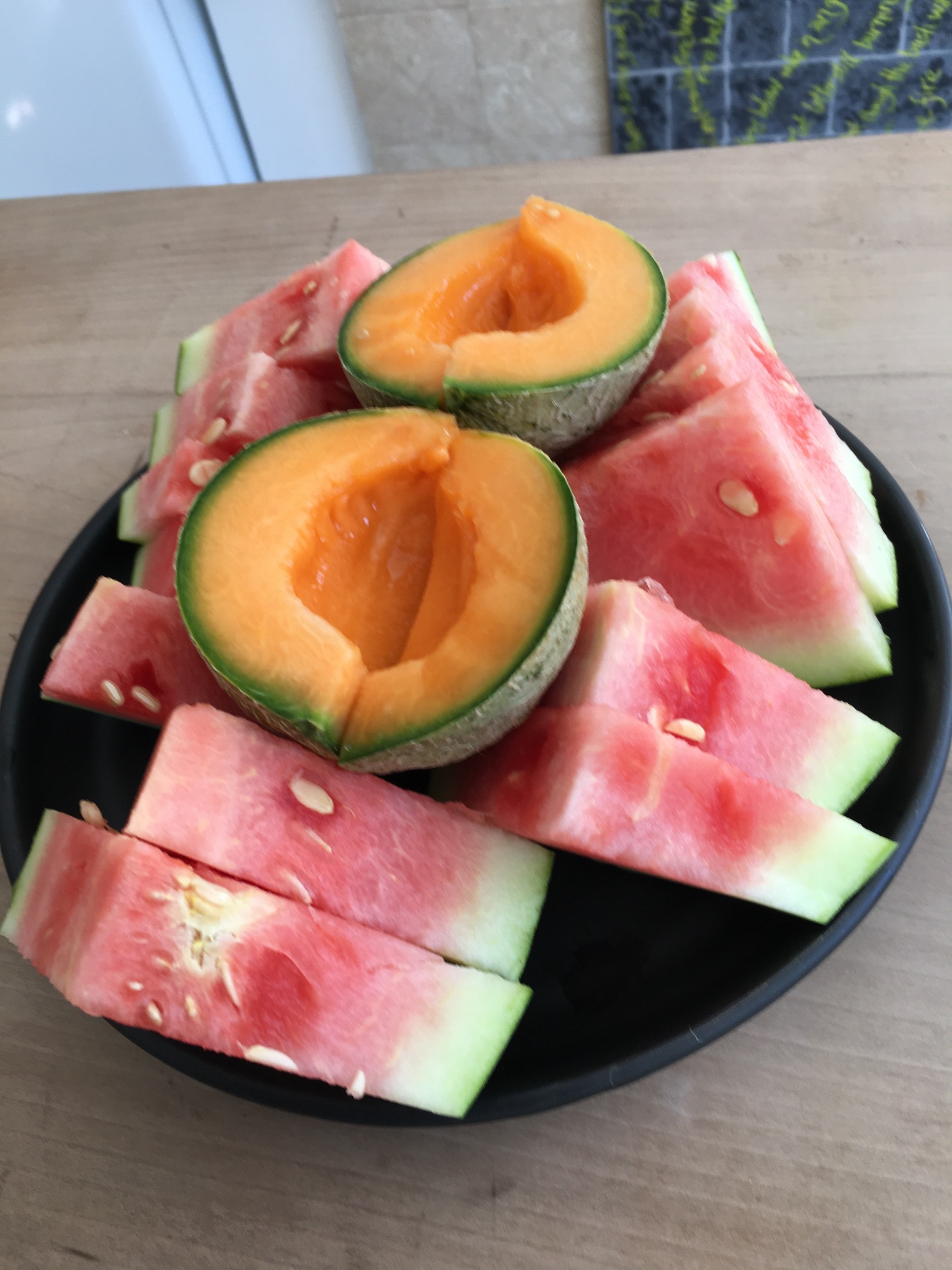
I picked the first melons of the season the other day—a lovely watermelon and a small cantaloupe (rock melon). The watermelon could have used another couple of days on the vine, but it was sweet and delicious anyway. The cantaloupe was perfectly ripe and fragrant.

In fact, it was the smell that clued me in that the melons were ripening—I couldn’t even see this one amidst the tangle of foliage.

I’ve blogged previously about the smell of melons and the memories it evokes. Along with the odour of tomato and corn plants, it is the essence of summer. More than a seasonal fruit, melon is the season, all rolled into one fragrant ball.

So even though melons don’t start ripening here until it’s almost officially autumn, summer for me lasts as long as the melons do.

Crazy Cake #2–2020

My son, the budding architect, has always challenged my cake decorating skills with his annual birthday cake requests. A star destroyer, the city of Dale, Wellington … his requests tend toward angular, built structures difficult to sculpt in cake and icing. This year he asked for ‘a brick’. Just getting the colour right was going to be a challenge. And then I had to make the brick special in some way.

I thought maybe I’d cover it in lichens and moss (easy to fashion from frosting and Mexican paste). But a photo online caught my attention … I came up with a plan that I thought would tax my confectionery skills more than mere decoration would. A little maths, a little measuring, a little cutting, and …

There’s more to this brick than meets the eye.

Crazy Cake #1–2020

It’s birthday cake season again! This year, my daughter’s brief for me was a Kura Tawhiti bouldering theme, with ‘maybe a climber and some alpine plants’ done in chocolate and hazelnut flavours.

I think both of us had a vision of a grey boulder or boulders with climber, plants, etc. But as I started in on the cake, the vision changed.

I made one of my favourite devil’s food cake recipes (from Tartine) in a range of round layer sizes. I sliced each layer in half and filled it with my homemade Nutella, stacking the layers in a wonky boulder-like shape. 

Then I stood there and contemplated the decoration. My plan had been to make the standard quick icing I use for decorating, but the amazing rich chocolate cake with decadent Nutella filling really needed something better than quick icing. It needed ganache.

So that’s what it got—chocolate ganache covered with ground hazelnuts to get a more appropriate boulder colour. 

I added chunks of hazelnut praline for a more rocky appearance, and made some alpine plants and a climber from Mexican paste. A few small final touches with a simple sugar and milk icing, and the cake was finished.

It didn’t look anything like I thought it would when I started, but it tasted absolutely divine! No wonder—it contained over 400 grams of chocolate, two cups of hazelnuts, and a gloriously unhealthy quantity of butter and cream. In the end, no one was paying much attention to the look—we were too busy oohing and aahing over the taste.

The Apricots of Wrath

I should have listened to Fate. 

“Don’t can apricots today!” it told me the other day. “You have no sugar in the house.”

But I looked at the vast quantities of quickly ripening apricots in the kitchen and knew they wouldn’t wait.

I drove to the store to pick up sugar.

Back home, I made my sugar syrup, washed and heated my jars, got my canning water to a boil, and prepared seven kilos of apricots.

All was going well until I was packing the fruit into jars. I kept an ear on my canner, making sure it stayed at a boil while I worked. When the bubbling hiss faded and died, I knew the gas bottle was empty. Not now!

I left off my jar filling and raced outside to switch gas bottles.

Back inside, water, jars, and sugar syrup were cooling, but I finished packing the apricots in and poured sugar syrup over them …

Only to find I was about a cup short of syrup. Gah! I quickly made up a small batch to finish off the jars.

Into the canner went the jars, and I heaved a sigh of relief. It took longer than usual to bring it all back to a boil, but I shrugged it off. It’s always that way for a cold-packed fruit. 

Then a few minutes into the boil, the canner started boiling over—orange, chunky, foamy water spilled onto the stove. Darn! A jar had broken. It’s rare, but after 30 years of use, sometimes the bottom of a jar will pop off during canning.

So for 25 minutes, I fought the sticky water boiling over on the stove. When I finally pulled the jars out, they were all coated in slimy chunks of overcooked apricot from the broken jar, and the stove was an gooey mess.

The six remaining jars all sealed, though, which was good. Pity about the stove. Took forever to clean.

Later, once the water had cooled, I tackled the job of emptying broken glass and gunk from the canner. And the first thing I did was drop the remainder of the slippery broken jar onto the floor, where it smashed to pieces.

Then, just to add insult to injury, when I dumped the chunky sticky canning water onto the compost pile, it somehow funnelled through the pile directly onto my foot. 

Cleaning up the mess took almost as long as the rest of the process, and I questioned whether it was worth it, or if I should have simply thrown away a couple of kilos of fruit and called it a day before I started.

Then my daughter pointed out that we had the makings of six fruit desserts there, ready to pull out on a winter evening. She had a point—we’ll enjoy that fruit, and by winter, I’ll have forgotten the frustration of preserving it.

But, still, I keep thinking I could have sat on the porch with a good book instead …

Homemade Nutella, Take 2

A while back, I mentioned the Nutella I’d made, and noted it wasn’t quite right, so I’d have to try again.

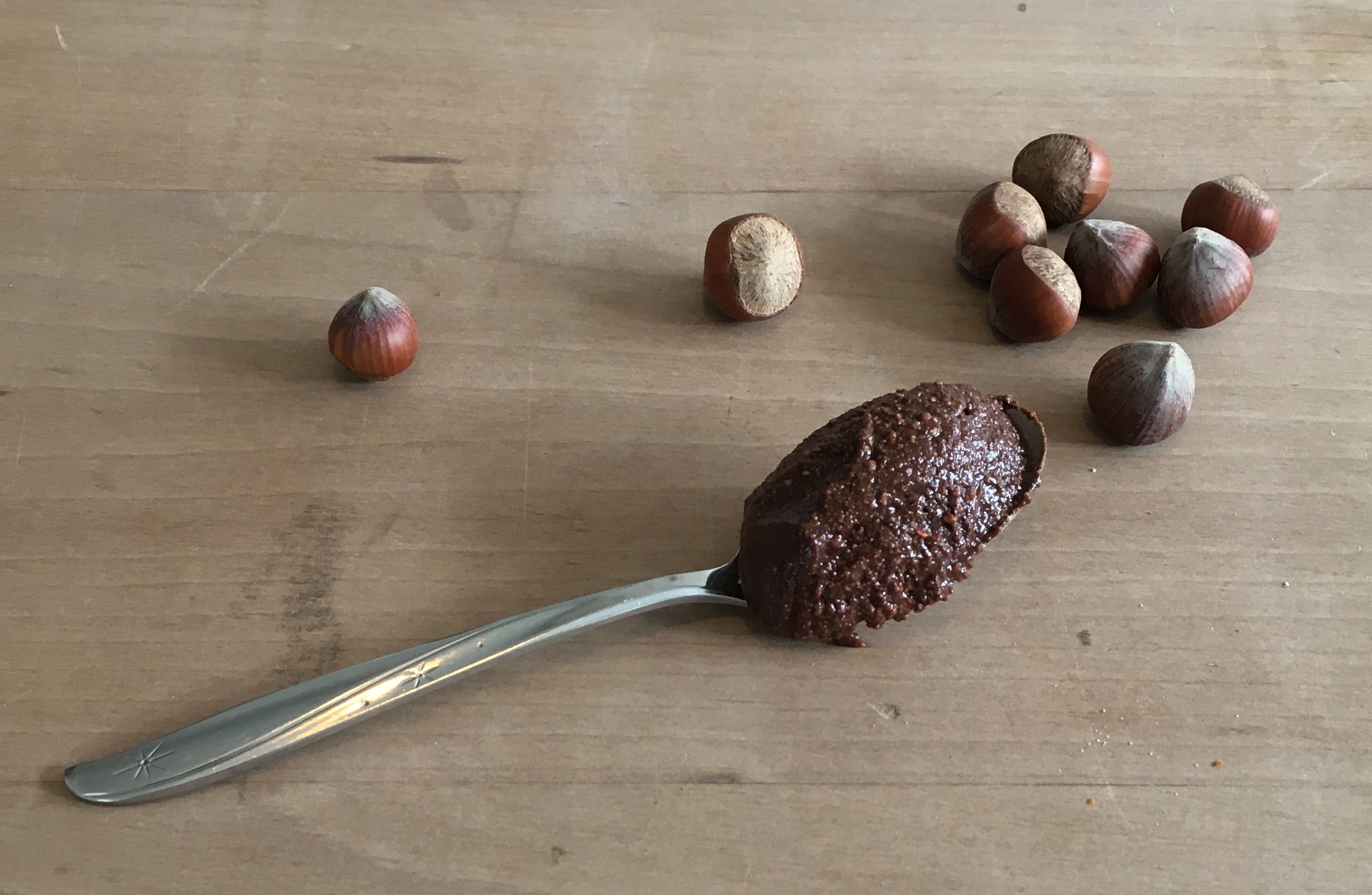
Well, the most recent attempt, modified based on the shortcomings of the last batch, was a winner. I increased the hazelnuts and decreased the chocolate, so the nut flavour was more dominant, and I used a dark chocolate with a lower cocoa content, which prevented the spread from setting up like a rock when cool.

Here’s the recipe:

1 1/4 cups hazelnuts
175 g dark chocolate (50% cocoa solids)
2 Tbs vegetable oil
3 Tbs confectioner’s sugar
1/2 tsp salt
1/2 tsp vanilla

Spread hazelnuts on a tray and roast approximately 10 minutes at 180ºC until fragrant. Rub off the skins and allow to cool.

Chop the chocolate and melt over simmering water. Allow to cool.

Grind the nuts in a food processor until they form a paste. Blend in the oil, sugar, salt and vanilla. Add the chocolate and blend until smooth and well-mixed.

The mixture will be quite runny, but will set as it cools.

Of course, I’ll almost certainly tweak this recipe more. Just a touch less sugar and a touch less salt next time, perhaps. And I still haven’t achieved the silky smoothness of commercial Nutella—no matter how long I grind the hazelnuts, they still lend a gritty texture to the spread. It would be a whole lot of work, but I might try using a mortar and pestle on the nuts next time, to work on the texture issue …

You see, there’s always a good excuse to make more Nutella.

No Vampires Here!

Mid-winter, when it was time to plant the garlic, I had no idea where we were going to be living at harvest time. 

So I covered all my bases and planted a full complement of garlic at the old house and at the new house.

Last week I harvested the garlic from both properties. As I expected, the garlic at the new house grew poorly in the clay and rock, but it did grow and is perfectly acceptable. The garlic at the old house had a spectacular growing year—nearly every head is large and plump.

So, knowing we struggle to finish off a normal year’s garlic harvest before it sprouts and gets nasty, I made an effort to preserve a few heads. Well, thirty-two heads, to be exact.

First, I filled the dehydrator with thinly sliced garlic and dried 20 heads. I’ve dried garlic before, and we appreciate the ease of tossing a few flakes into the mortar and pestle and grinding them up. Twenty heads of garlic dries down to less than a pint jar full of flakes—uninspiring until you think about how concentrated the garlic flavour is in that jar!

Then I tried something new—I pickled 12 heads. According to the recipe I used, the cloves can be used just like fresh garlic, and when you finish off a jar, the pickling liquid makes a great flavoured vinegar for things like salad dressings. They’re quite pretty in their little jars, and I look forward to trying them long about August when the fresh garlic is sprouting. Again, twelve heads looks like nothing when peeled and packed into jars, but with 32 heads preserved and another three dozen hanging braided in the kitchen, I still have a whole bunch to give away. 

So if you’re looking for vampires, go somewhere else. They’ll be staying far away from my house for a long time.

Uplifted Polenta Lasagne, Take 2

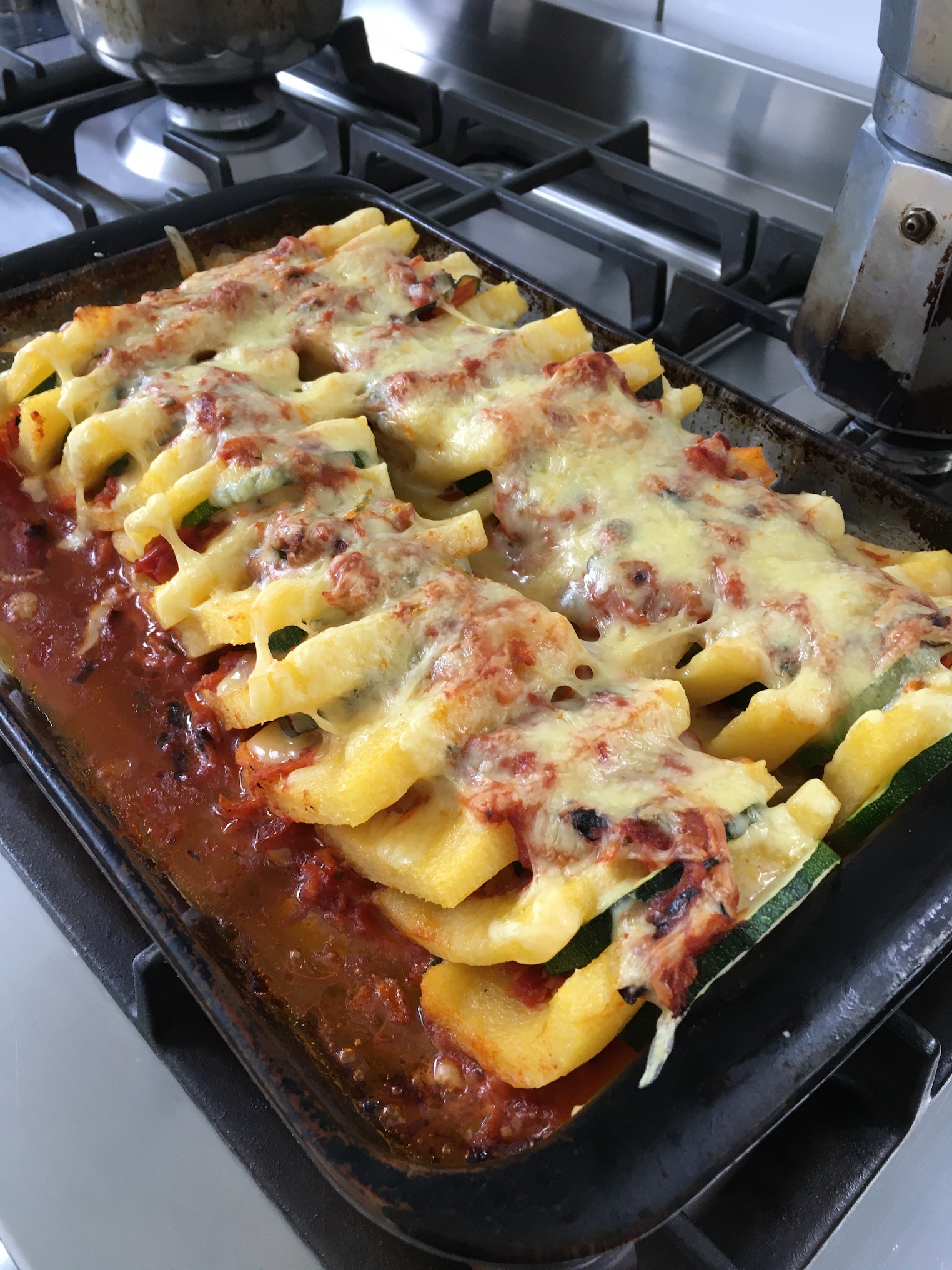
A while back I blogged about the Uplifted Polenta Lasagne my husband made. Well, recently I decided to create another version of it based on the ingredients I had available. The result was spectacular and deeply satisfying.

First, make the firm polenta:

1 1/2 cups corn meal (sold as ‘polenta’ here, sold as ‘instant polenta’ in many other places)
5 cups water
1 1/2 tsp salt

Bring salted water to a boil and whisk in the cornmeal. Turn the heat down slightly and whisk for about five minutes, until the polenta thickens. Pour out onto a large, lightly oiled jelly roll pan and spread evenly. Allow to cool for at least 30 minutes.

While the polenta is cooling, make the tomato sauce:

2 cloves garlic
2 Tbs olive oil
2 smallish carrots, grated
1 Tbs paprika
1 can chopped tomato (I would have used fresh if I’d had any)
handful fresh basil
salt and pepper to taste

Saute the garlic in oil until fragrant. Drop in carrots and paprika and cook for a minute or two longer. Add tomato, basil, salt and pepper and simmer for 15 minutes.

While the tomato sauce is simmering:

Preheat the oven to 190ºC (375ºF).

Slice a medium-large zucchini into 3 mm thick rounds.

Grate 1 1/2 cups edam cheese.

When all the components are ready, oil a 23×33 cm (9×13-inch) baking pan. Cut polenta into about 24 squares. Layer polenta squares, tomato sauce, and zucchini rounds in sideways ‘stacks’ to fill the pan. Pour over the remaining tomato sauce and top with cheese. Bake for 30 minutes.

Cilantro Security

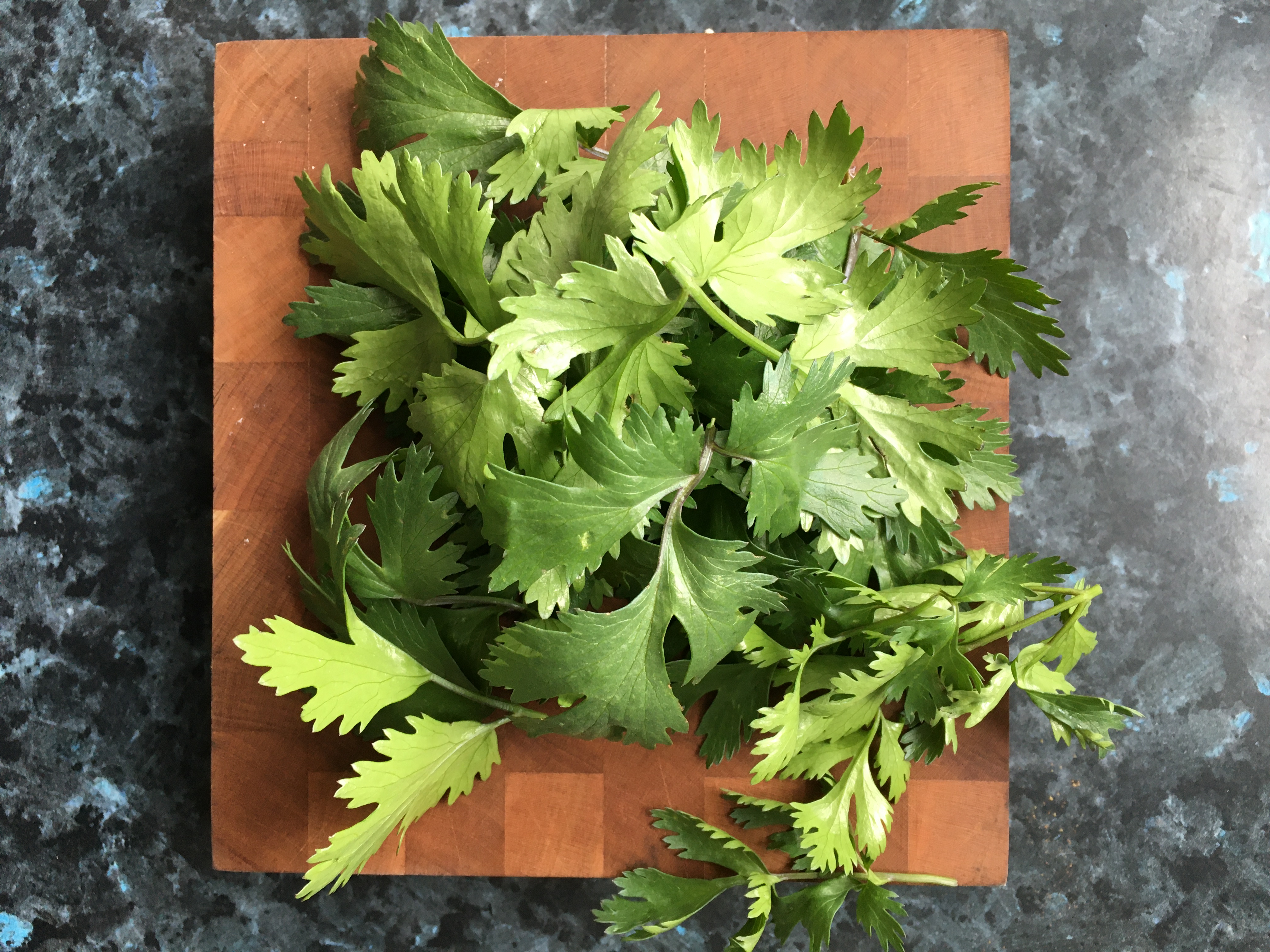
Cilantro (aka coriander) is an acquired taste. When I first had it, I thought it tasted like soap. Now I love it. Which makes this year’s crop all the more welcome, because we’ve been without it for several months.

Cilantro will grow year-round here, although during our dry summers, it bolts quickly. Usually I plant a spring crop and let it bolt and re-seed itself for a fall/winter crop of volunteer plants. Unfortunately, last spring’s crop was badly stunted by aphids and a hot dry spell, and it didn’t set seed. 

So we went all winter without cilantro—a sad state, when winter is the time for chilis and bean dishes that we normally flavour with cilantro.

It’s hot and dry again, but I’ve taken precautions against another cilantro failure. I planted two crops several weeks apart, and I’m watering them well. Hopefully we’ll be back to a continuous cilantro supply this year.

Lazy Sunday Baked Oatmeal

I make a cooked breakfast every Sunday. It’s a luxury—a gift I give myself as much as to the family. So it doesn’t feel like a chore to get up early and cook once a week.

At least, most of the time it doesn’t. Once in a while I’m uninspired on a Sunday morning, particularly if I spent Saturday in the kitchen.

Last week was one of those Sundays. I couldn’t be bothered making scones or pancakes or muffins. So I pulled out a recipe my mother gave me years ago. One I don’t recall ever having made, but it was a simple, stir-together baked oatmeal that struck me as just the thing for a Sunday I didn’t feel like cooking. Best of all, the bread oven was still hot from the previous day, so I didn’t even have to use the electric oven. 

I modified the recipe a bit (because I can’t seem to ever make a recipe exactly as it calls for).

here’s my version of baked oatmeal—delicious with a generous dollop of unsweetened yogurt or a splash of milk.

125 g (1/2 cup) melted butter
1/2 cup brown sugar
2 eggs, beaten
3 cups quick cooking oats
2 tsp baking powder
1 tsp cinnamon
1 tsp salt
1 cup milk
1/2 cup raisins

Mix all ingredients in a bowl. Pour into a 23 cm (9-inch) square baking pan. Bake at 180ºC (350ºF) for 30-35 minutes. 

Colourful Carrots

The carrots are just at the thinning stage right now. I’m embarrassed to admit it took years for me to figure out that if I pulled the largest carrots at thinning time, we could eat them, and the ‘runts’ (which I used to pull out) would grow to a fine size.

But I’ve learned, and so at thinning time, we enjoy handfuls of pretty little baby carrots.

I planted six varieties of carrot this year. And despite my talent for over-planting, I’ve never yet grown enough carrots to satisfy the family’s annual consumption. The range of varieties encourages me to plant more, and they make for beautiful kaleidoscope dishes, cheerful with colour.