Throw the Windows Open

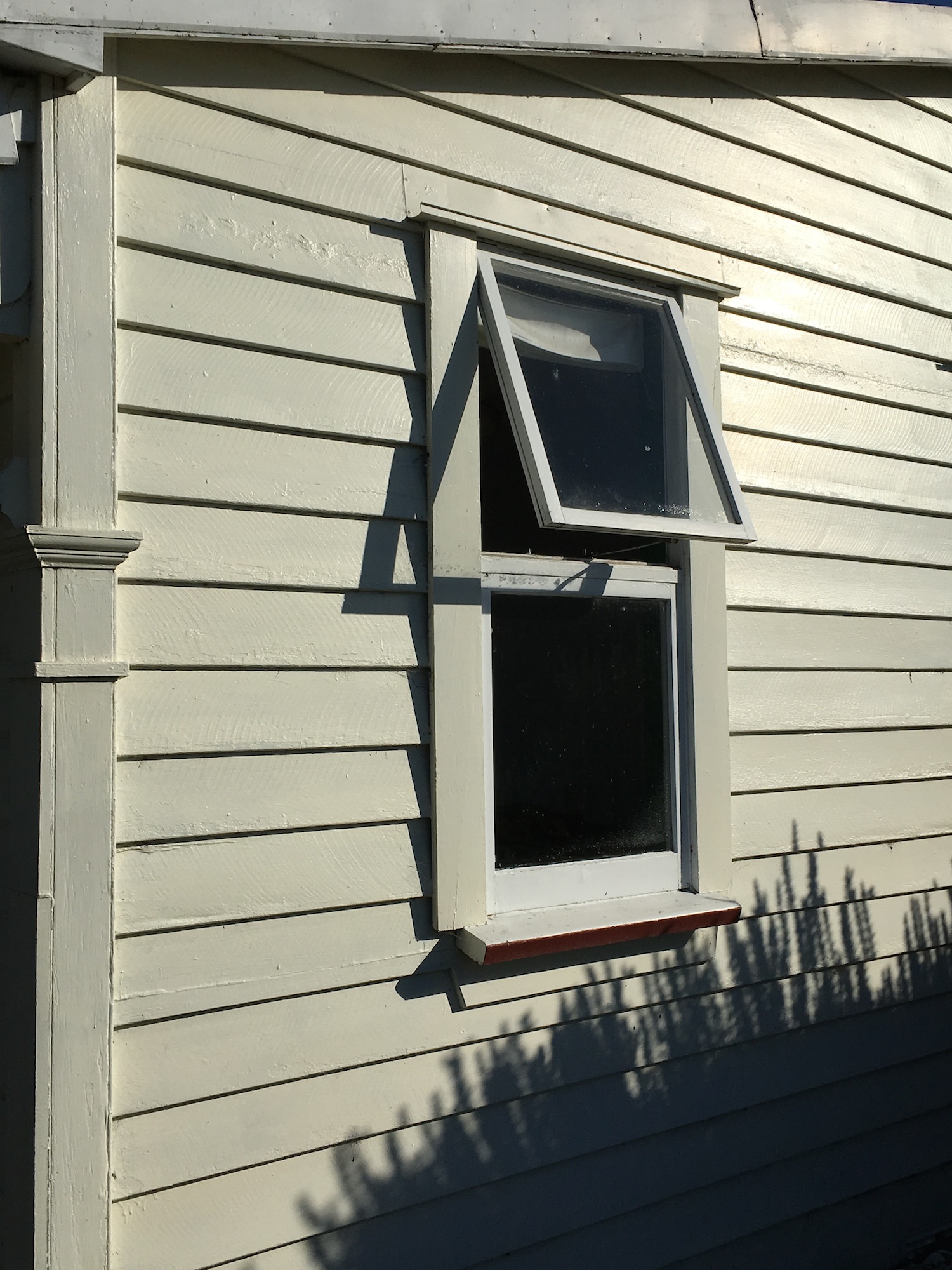
2016-06-29 13.02.59Until we moved to New Zealand, I would have laughed at the idea of opening the windows and doors in mid-winter. When it’s well below zero, a fresh breeze through the house isn’t exactly welcome.

Somehow here, the idea of a fresh breeze through the house at any time of year is welcome.

It helps that the climate is warm—there’s never a day that remains below freezing, even in the depths of winter. But even so, I noted after I flung the house open today that the outside temperature is only 11°C (52°F). I’m sure I never opened the windows at that temperature in Minnesota or Pennsylvania.

Of course, in Minnesota and Pennsylvania, the windows never ran with moisture. Puddles didn’t form on the windowsills every morning (in MN, it was ice, but that’s another story). The winter air here is warm enough to hold plenty of moisture, and without central heating to dry out the air, it can get pretty damp indoors. A couple of hours of a brisk breeze on a sunny afternoon can do wonders for the indoor humidity.

Perhaps that’s part of what I like about living here—the opportunity to invite the outdoors in, even during the wintertime.

As Horace Everett wrote (to Aaron Copland’s music): Stomp your foot upon the floor / Throw the windows open / Take a breath of fresh June air and dance around the room.

Functional and Meaningful

2016-06-28 16.00.01The pattern weights in the slick sewing magazine were tempting, for sure—sleek brass cylinders that screamed ‘professional sewer’. Just looking at the picture, I could feel their delicious heft and smooth finish.

But my life is not one of polished brass. Though the fancy pattern weights were elegant and undoubtedly fit for the job, my beach rocks are, too.

Smooth greywacke cobbles I collected myself from the beach just 4km away beat out the fanciest weights. They belong here. They fit my hand nicely, come in many sizes and weights, and they speak to me of waves and water, sun and sand. Nothing purchased can do that.

My pie weights come from the beach, too, and work just as well as a fancy set of ceramic beads. More so, because they make me smile whenever I use them.

Objects that are of a place. Objects that belong.

In our global economy, with the products of the world just one click (and a credit card number) away on the Internet, it’s easy to forget that what is in our back yard may be just as useful, and far more meaningful, than anything manufactured and stamped with a brand name.


Playing with Fire

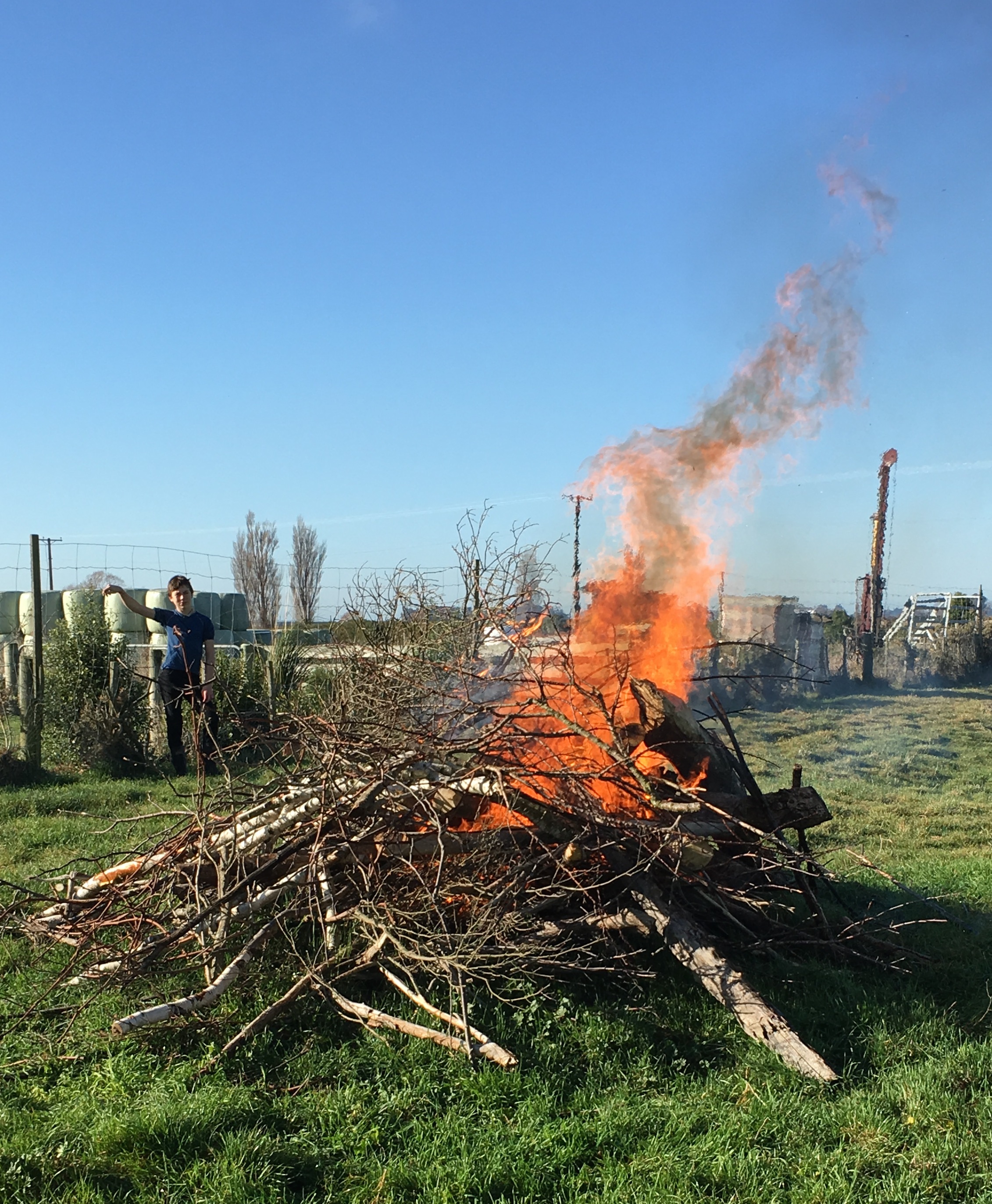
2016-06-25 11.56.06There is nothing better calculated to get my teenage son outside than the prospect of fire.

Most weekends, he spends the day indoors reading books or playing computer games. He’ll come out to help in the yard or garden if we ask him to, but as soon as he’s released, he’ll be back inside.

Tell him we’re going to burn off the brush pile, though, and he’s out the door like a shot, and will spend all day pottering around the fire—tossing sticks in, raking coals together, hosing down the grass around the fire to keep it from spreading.

What makes fire so compelling, especially for teenage boys?

Believe it or not, scientists have actually tried to answer this question. Researchers at the University of Alabama found that gazing at even a video of a fire reduced subjects’ blood pressure. The longer they watched the fire, the more relaxed they became. The researchers suggest that the multisensory aspect of a fire focuses our attention and reduces anxiety.

Whether that is simply an outcome of meditation associated with this sensory focus, or an evolutionary response to the social and physical security that a fire was to our ancestors is a matter of speculation.

Fire is, in fact, essential to humans. Our power-hungry brains need the extra nutrition provided by cooked food (about one-fifth of our calories are used by our brain). We can’t grow and develop properly on a raw diet, and human culture never would have evolved without it, so it stands to reason it would be important to us.

So, why are kids so interested in fire—more so than adults?

Researchers at UCLA have studied fire play among children in various cultures, and have concluded that the desire to master the control of fire is common among cultures. This makes sense from an evolutionary standpoint—we need fire to survive, so those able to control it historically did better and produced more children.

In westernised cultures, where open fires aren’t used on a daily basis, children’s interest in fire lasts longer than in cultures where fire is a daily necessity for cooking or heating. They remain fascinated by fire until they’ve learned to master it.

This doesn’t fully explain my teen—he mastered fire years ago, learning to light and maintain a fire in our log burner. But I do think there is an aspect of control that keeps us coming back to fire, especially when we’re young. Fire has incredible destructive power. To ignite that power, then hold it in check to achieve a goal (heating the house, cooking dinner, or disposing of brushwood), is a heady thing, particularly for teens who have so little control over their own lives.

All of which leads me to believe that it’s important for us to teach our kids to safely light and control fires. Research indicates they will play around with it until they learn—it’s an innate need. Better they learn safely than by burning down the house.

I also think that giving kids safe ways to exert control is important for their growing sense of accomplishment and self-worth. There is so much we can’t let them control—they can’t drive, they have to go to school, they can’t leave home—I remember all those restrictions eating away at me when I was a teen, eager to exert myself on the world.

So, yeah, we let our kids play with fire. It’s good for them.
My Love/Hate Relationship with Yarrow

2016-06-24 13.33.30Growing up, yarrow was a flower to be dried for arrangements. An innocuous plant that grew along the roadsides. I liked the flowers, and I loved the insects and spiders it attracted.

It wasn’t until I moved to New Zealand, where yarrow is a pernicious weed in my garden, that I began to consider yarrow more closely and learn more about it.

Yarrow is native to Europe and parts of Asia, but has been spread widely, because of its many uses.

It is referenced in Homer’s Iliad as being used for stanching wounds, and has been used all over the world for many other medicinal purposes—from reducing fevers and soothing earaches, to curing urinary problems and head colds.

Yarrow was probably originally brought to New Zealand as a medicinal plant, but it has other uses that are more valid than the medicinal ones.

Today yarrow is a common pasture plant. Its deep rhizomes make it drought resistant, and it is higher in certain key nutrients than either ryegrass or white clover. I discovered this when I began to worry about the goat paddock. After two dry summers, the yarrow was taking over a big swath of the paddock. I worried, knowing that to remove that much yarrow would be a Sisyphean task—dig it out and any bits of rhizome left in the soil will simply resprout. Even herbicides are largely ineffective against yarrow.

So I was thrilled to learn that its virtues went beyond pretty dried flowers, and that I could ignore it in the paddock.

Of course, it grows everywhere, and isn’t bothered by mowing. But that has benefits, too. This past summer, when all the grass of the lawn was brown and dead, the yarrow remained some of the only spots of green.

And then there are the insects it attracts, which I naturally love.

And so, I love yarrow…and I hate yarrow. Either way, I have to live with it.

A Fondness for Finials

2016-06-05 10.31.13 smWellington is a city rich in finial posts.

And…um…what’s a finial post?

Finial posts are the ornamentation found on the gable ends of roofs. Roof finials have been used for millennia all over the world. They originally served the purpose of capping the point of a roof, where the tiles come together (think of the fancy post on top of a Japanese pagoda). You need something to cover the unavoidable hole where all the tiles meet. Many roof finials still serve this purpose, but they are also ornamental.

2016-06-05 10.29.42 smGable finial posts were popular in the New Zealand villas built between about 1880 and the beginning of World War I. They were just one of the many ornamentations (inspired by the new steam-powered woodworking tools of the time) used in these houses. The style (including the finial posts) was also popular during this time in America and England. Folklore in the eastern U.S. suggests that finial posts were not just attractive, but also prevented witches from landing their broomsticks on the roof.

At this point most of you are wondering why on earth I even notice finial posts. My appreciation of finial posts started when we did a major repair on our own house—a tiny villa built around 1880. The front gable was rotting and in need of replacement. It had been repaired in the past, and in one of the repairs the finial post had been sawn off at the roofline. This is a common fate of finial posts on old villas—re-roofing is much easier without finial posts in the way.

When we repaired our house, my husband insisted on restoring the house’s finial post, and this started a whole-family appreciation of finial posts. Now we can’t go anywhere without noticing good finial posts, or noticing when they’ve been removed.

And so, while in Wellington this weekend, I took several long walks, simply to admire the finial posts.

Of course, the question I have is, with so many finial posts in Wellington, do witches need to land at the airport instead?

Predictability

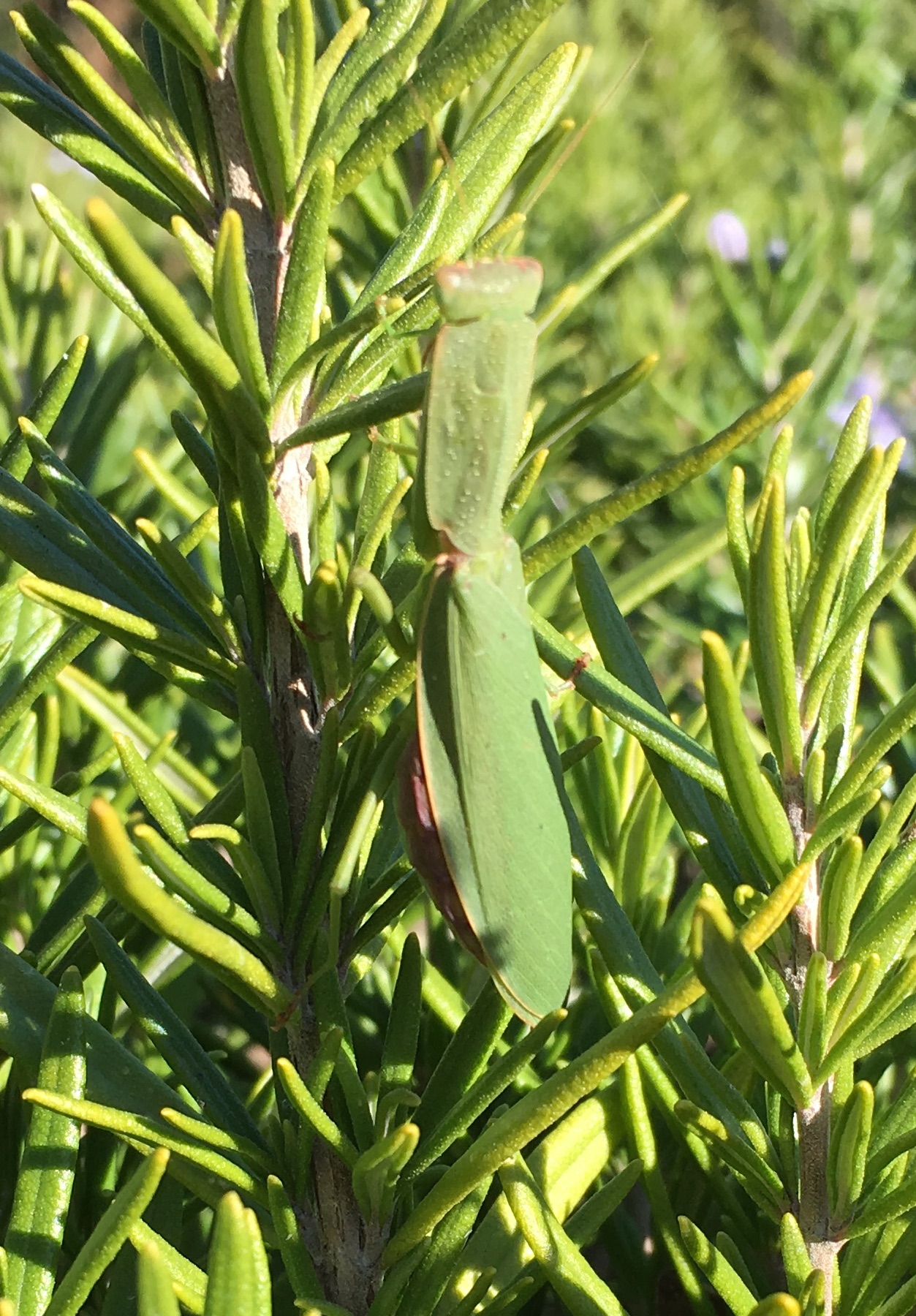
She's occupied the same plant for weeks. Her neighbour, on the next plant over, is equally predictable.

She’s occupied the same plant for weeks. Her neighbour, on the next plant over, is equally predictable.

There isn’t a huge body of research on why people don’t like insects and spiders, but the studies that have been done have concluded that one of the main problems people have with creepy crawlies is their unpredictability. They could jump, bite, sting, run, fly…and most people can’t predict what an insect will do next.

But I’ve come to realise that insects and spiders are, in fact, highly predictable.

For three years (its entire adult life) there was a metallic green ground beetle underneath the goats’ water barrel. It was there every time I looked, and I came to depend upon it to be there for Bugmobile programmes (along with two or three others whose ‘addresses’ I knew).

Until age and winter claimed her, I had an Australian orb weaver who I would pluck from her hiding place in the morning, take to a bug program, and return to her home in the afternoon—day after day, week after week.

A bee or wasp will always be the first insect to fly out of a sweep net, so you can quickly let them go before seeing who else you’ve caught.

If you put two adult male crickets together in a cage, they will always chirp.

A ladybug will always climb up an object, and fly away when it gets to the top.

A bee will not sting unless it feels threatened.

Most spiders will quickly rappel to the floor when frightened.

In fact, because insects and spiders behave largely out of instinct, they are incredibly predictable.

But, of course, you have to spend time with them to know that. You have to pay attention to them, instead of just stomping on them when you see them. You have to learn their ways. You have to behave predictably around them, in order to note that they are predictable themselves.

Somewhere, there is an insect research project going on to try to figure out why insects are so frightened of people. I suspect the bugs will find it’s because we’re so unpredictable.


A Scourge of Snickerdoodle Scent

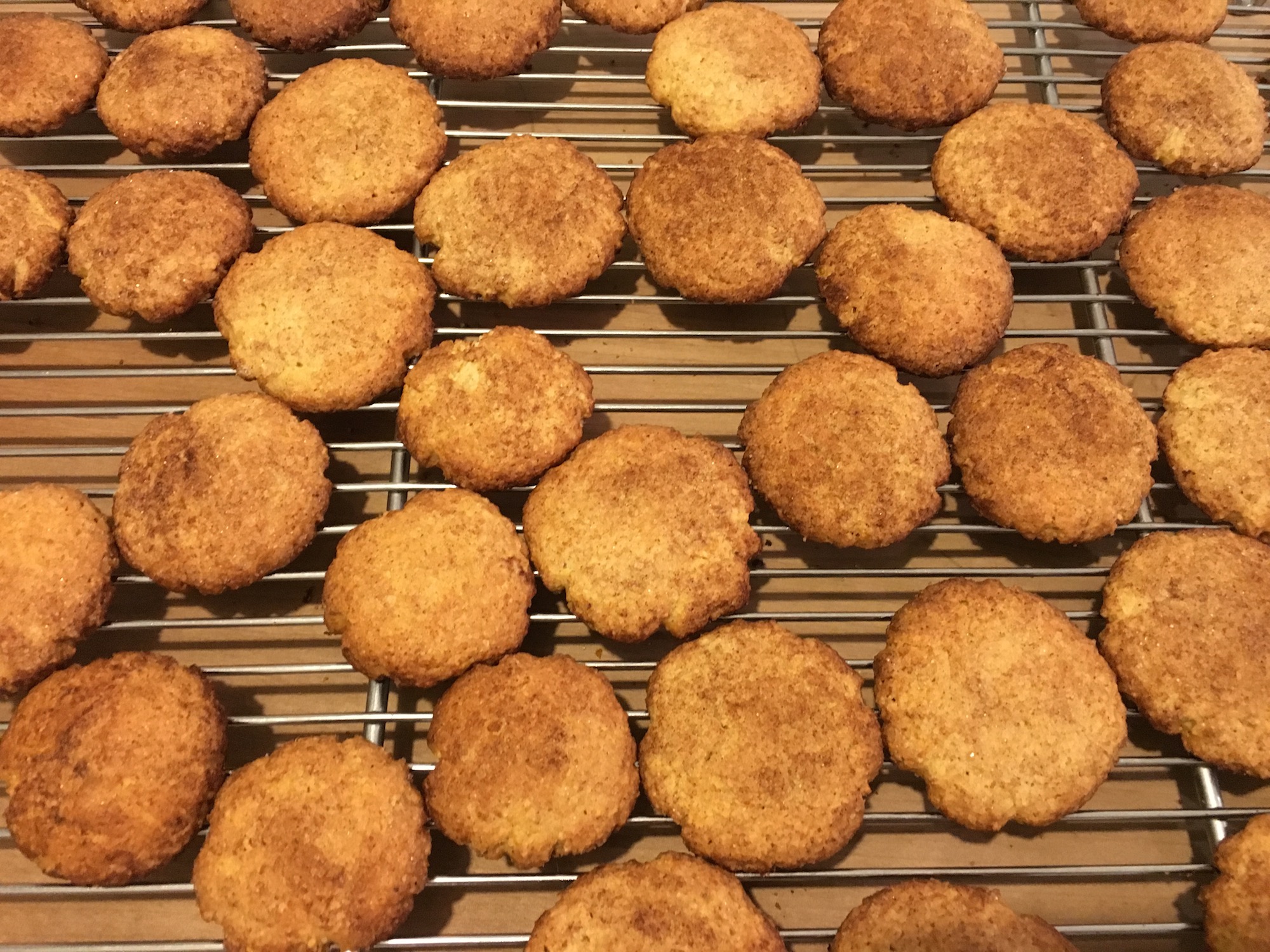
2016-05-05 19.47.42 smWell, I made Snickerdoodle cookies the other day, and it wasn’t until I thought to write a blog post about them that I discovered I could also buy Snickerdoodle scented shampoo, thus having that “just been baking” smell all day.

BLECH!

I love snickerdoodles, which, lets face it, are just sugar cookies rolled in cinnamon, but snickerdoodle shampoo?

Modern commercialisation has a way of turning even the best things into something I wouldn’t wish on my worst enemy. Next, there will be snickerdoodle scented hand lotion, snickerdoodle scented pillows, a snickerdoodle scented Barbie who comes with an apron and oven mitts.

How about just baking some cookies, eh? That’s a great way to fill your house with snickerdoodle aromas.

Homeland

Lovely, but doesn't make me feel at home.

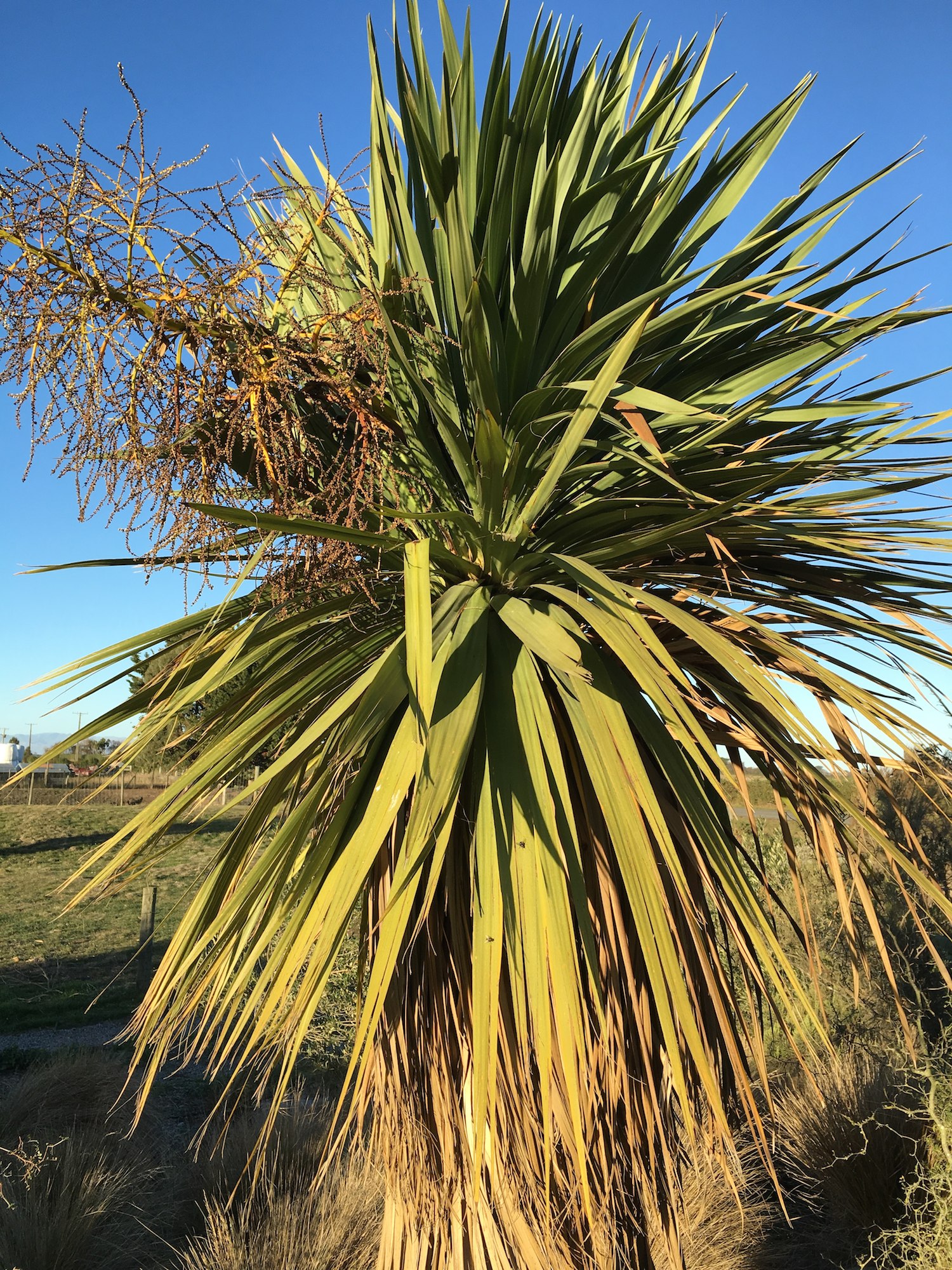
Lovely, but doesn’t make me feel at home.

When Europeans settled new lands, they had a habit of bringing all their favourite plants and animals with them. The result has been a plague of invasive exotic species all over the world. It’s easy to dismiss these settlers to as misguided imperialists, and I’ve done so myself.

But being a stranger in a strange land more than once in my life, I have to admit that I understand the desire to bring a little of the homeland to a new land.

Autumn is when I feel it most.

Most native New Zealand trees are evergreen. There are no native autumn colours, no piles of native leaves to be raked and jumped in. No smell of wet leaves carpeting the ground on crisp autumn mornings.

Last year my daughter and I found a lovely little path along a stream on one of our city walks. Dropping down to the stream edge from the street, I was first struck by the fact that all the trees were non-native oaks and maples. Then I was struck by the smell, and the rustle of fallen leaves on the path, and the glow of yellow that suffused everything. The familiarity of that little stretch of path lifted a weight I didn’t know I carried—the weight of being away from home. For the three minutes it took us to stroll through that little patch of Northern Hemisphere trees, I was in my element. The illusion came to an end all too quickly as we stepped back out onto the street.

So, while I still advocate native plantings, and whittle away at the non-natives on our own property as our young native trees grow, I don’t pass judgement on those early Europeans. They carried a weight in their hearts greater than mine—once they were here, there was no going back for most of them. Never to return to their homeland, they needed to bring a piece of it here. I can sympathise.

Throwback Thursday: At the Centre of the Universe

d1scans001 copy“This bit needs to be yellow. It’s part of the United States.”

“No it’s not. It can’t be! There is the United States. This bit, way over here can’t be part of it.”

I was working with a group of students in Membrillo, Panama. We were painting a map of the world on the wall of the school, and we were arguing about Alaska.

We argued about more than one country placement, including Panama.

It wasn’t really a surprise that these children, most of whom had never gone further from home than they could walk in a few hours, didn’t know where on the planet they lived.

But talking to them, I realised they didn’t even know where in Panama they lived. Many of them had parents working in Panama City, and most of them would one day work there themselves, but they had no idea where the city was in relation to their own village.

So when we finished the world map, I spent a week enlarging a map of Panama to transfer to the other blank wall at the school. Before these kids were going to make sense of Panama’s place in the world, they needed to be able to see their place in Panama. We outlined the provinces, and labelled the cities and towns. When we finished, Membrillo was the largest name on the map—the centre of the universe, with their nation and their world arrayed around them.

Ristras

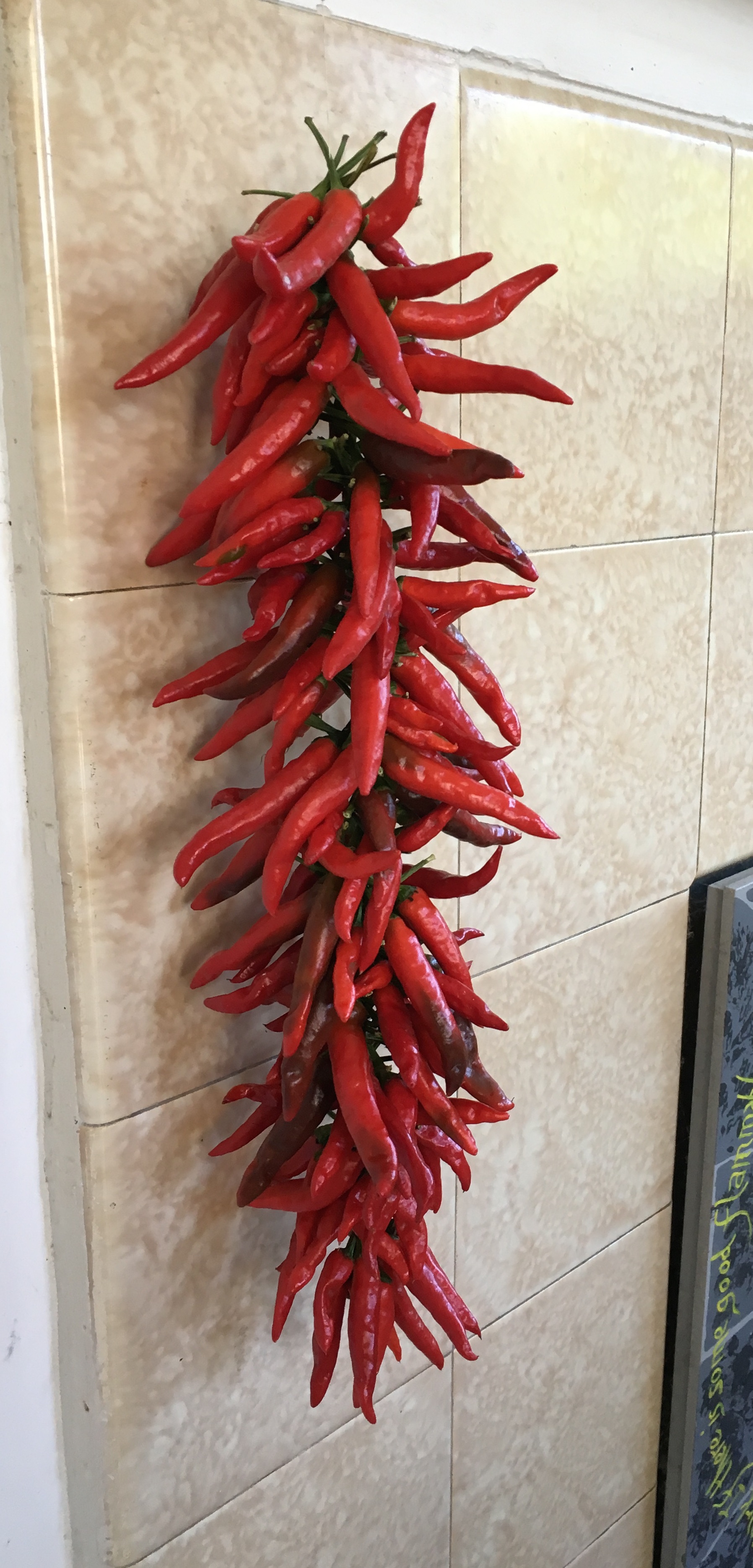
2016-04-19 12.51.22 cropHung on the kitchen fireplace mantel, a ristra of hot peppers looks beautiful, and is said to bring good health and good luck.

But mostly it just brings good food.

They’re often just used for decoration these days, but stringing chiles began as a way to dry and store them. And a string of chile peppers in the kitchen makes it easy to add spice to any meal.

I grew up in a house with all sorts of dried plant material hanging from rafters and tucked into baskets. It was all purely for decoration. My house today has a similar profusion of plant material, but for more utilitarian purposes. Ristras are convenient ways to dry and store peppers, garlic and onions. They’re also very convenient hanging in the kitchen.

Do I make sure my ristras look nice? Do I string twice as many peppers as we can realistically use, so that I can pair the ristras on each side of the mantel? Yes, of course—they do make nice decorations, after all.