Cheesy Scones

I came home late earlier this week. No time to really cook. So I pulled out a couple of jars of summer soup and made savoury scones (biscuits to the Americans) to go with it.

But I didn’t want plain scones…

These are what I threw together, and they were divine.

1 cup all-purpose flour
3/4 cup whole wheat flour
1 Tbsp baking powder
1/2 tsp salt
60 g butter (about 4 Tbs)
1/2 cup chopped parsley
1/4 cup chopped dill
1 cup grated cheddar cheese
2 small leeks (about 1/2 cup), finely chopped
3/4 cup milk

Combine flours, baking powder and salt in a large bowl. Cut butter in until it’s the consistency of coarse meal. Mix in the herbs, cheese, and leek. Stir in the milk. On a well-floured board, knead the dough gently 4 or 5 times, then roll out to 1.5 cm (5/8 inch) thickness. Cut into squares or use a biscuit cutter.

Bake on an ungreased sheet 15 minutes at 200ºC (400ºF).

An Abundance of Artichokes

It’s a terrible thing, having excess gourmet vegetables. We are in our usual springtime artichoke excess. It’s not unusual for us to eat eight or nine artichokes five days out of seven.

A quick online search shows artichokes currently selling for anywhere from US$3 to 10 per pound (that’s NZ$9-31/kg). Given we easily eat a kilo per meal…Well, you get the idea. If we had to pay for them, we couldn’t afford them.

Of course, the problem remains–what do you do with that many artichokes? We preserve quite a few for use at other times of the year, but that still leaves plenty to enjoy during the season.

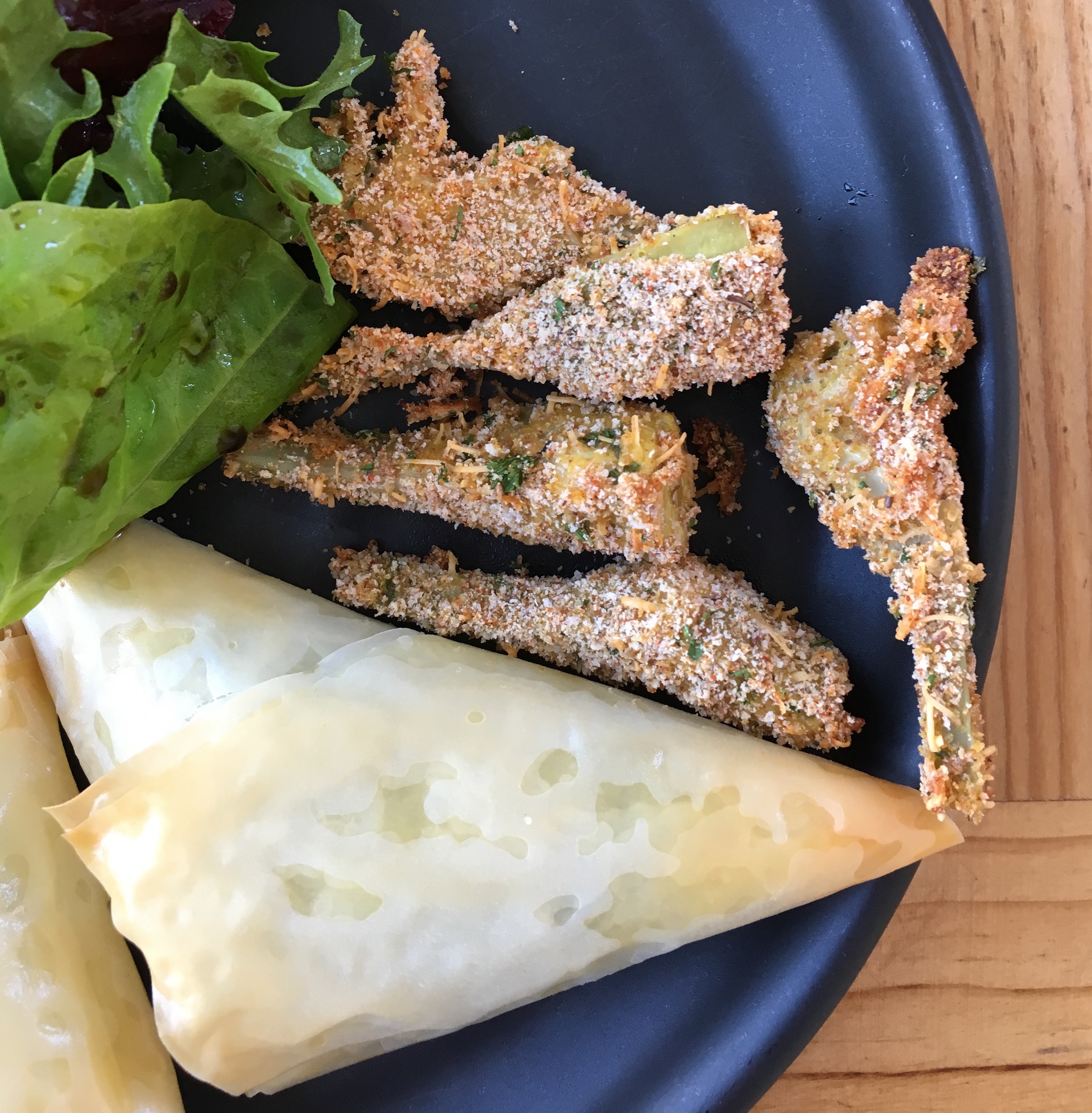
We eat a lot of artichokes in risotto, pasta, pizza, and gratins. The other day, I tried a new way of preparing them–crusted with parmesan and baked.

It’s simple, if a bit time-consuming (it would be trivial if you simply bought canned or frozen artichokes).

First, prepare the artichokes: snap off the outer leaves, peel the base and stem, trim off the top 1/3 of the leaves, remove the choke and any spines on the inner leaves, and cut the remaining heart into wedges. Drop wedges into a bowl of lemon juice and water as you go to avoid browning. Drain and steam for 3-5 minutes, until just tender, but not falling apart.

Then prepare the breading: mix in a medium bowl 1 cup bread crumbs, 1 cup grated parmesan cheese, 1/4 cup finely chopped parsley, 1 tsp salt, 1 tsp paprika, 1/8 tsp cayenne, and black pepper to taste.

In another bowl, beat two eggs.

Dredge the artichoke wedges first in the egg, then in the breading to coat thoroughly. Arrange in one layer on an oiled baking sheet. Bake for about 20 minutes at 190°C (375°F) until brown.

I served them plain, but they would be lovely with a dipping sauce like aioli or skordalia. They made a delicious accompaniment to the tiropitas (spinach and feta triangles) and salad that rounded out the meal.

Restaurant Review: Crazy Corner Cuisine

“I e-mailed you a picture. I want a blog.”

I find it difficult to blog about a meal I haven’t cooked myself. I can’t give you a recipe or even a detailed ingredient list.

So I’ll have to blog as though I went to a restaurant for a fine meal…

I walked into Sedgemere’s finest vegetarian restaurant, Crazy Corner Cuisine, early–my reservation wasn’t until six–but I was ushered into the lounge and encouraged to relax with a book while I waited. As I reclined in a delightful window seat overlooking the restaurant’s herb gardens, the wonderful aroma of my meal wafted through the restaurant.

Crazy Corner isn’t your usual restaurant, where the meal is prepared behind closed doors. At Crazy Corner, the chef consults with the patrons, tweaking the meal to suit their tastes. In fact, on this visit to Crazy Corner, I was given a colander and allowed to enter the restaurant’s garden to pick my own salad.

Crazy Corner Cuisine grows nearly all the vegetables used in the restaurant, so you can be sure that whatever you eat, only the freshest ingredients are used.

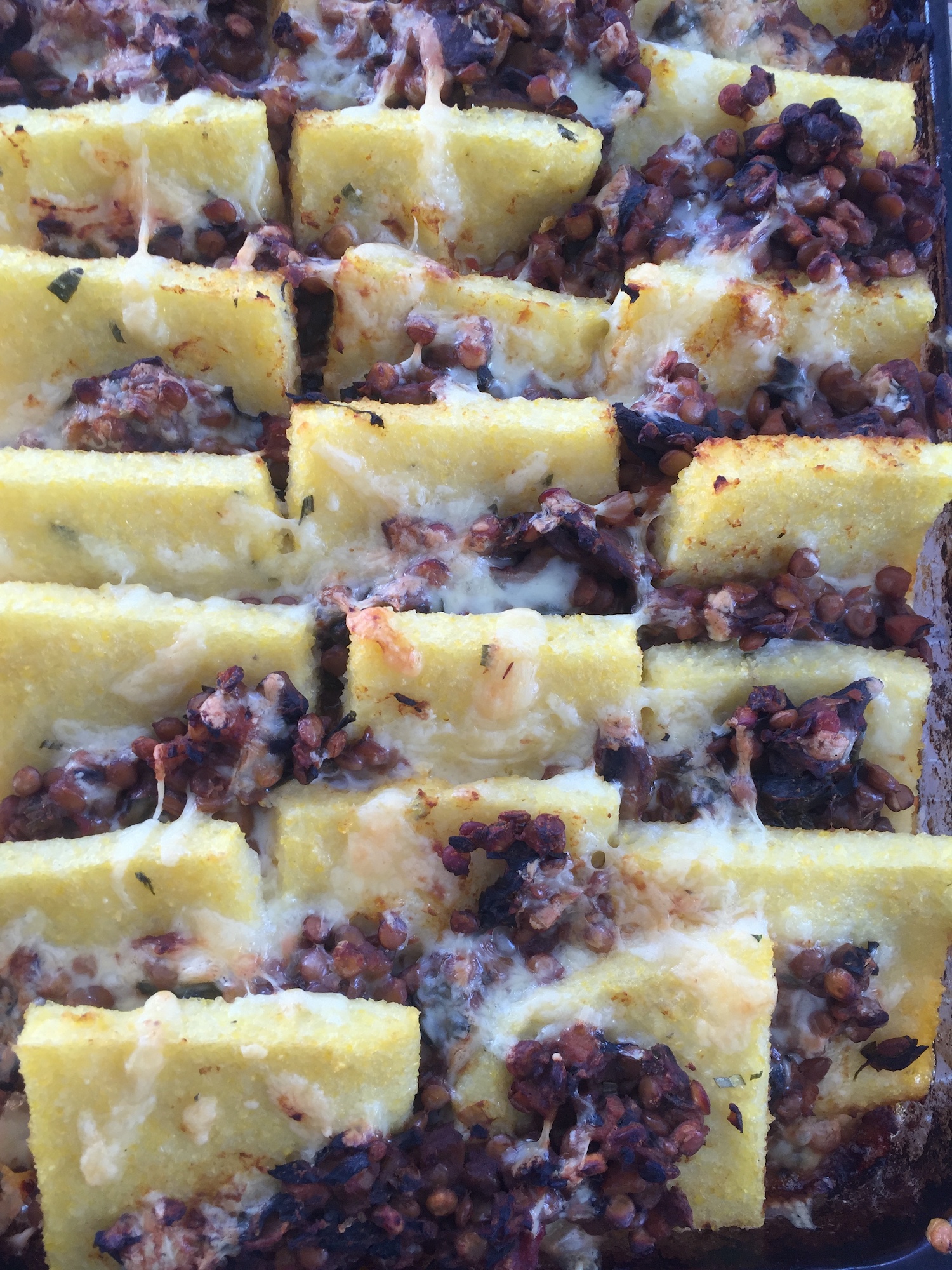
On this visit, dinner included a beautiful polenta ‘lasagna’–layers of herb-filled polenta and thick lentil stew rich in mushrooms and spinach generously topped with cheese and baked to perfection. The portions were generous, and the side salad was the perfect foil to the hearty lasagna. The meal was accompanied by an excellent New Zealand Merlot.

I have to put in a good word for the kitchen staff, too. Though quite young, they cleared the table efficiently and I heard them industriously washing dishes as I left.

The whole experience was delightful and relaxing. I highly recommend a visit to Crazy Corner Cuisine the next time you’re in Sedgemere.

Who’s Debbie?

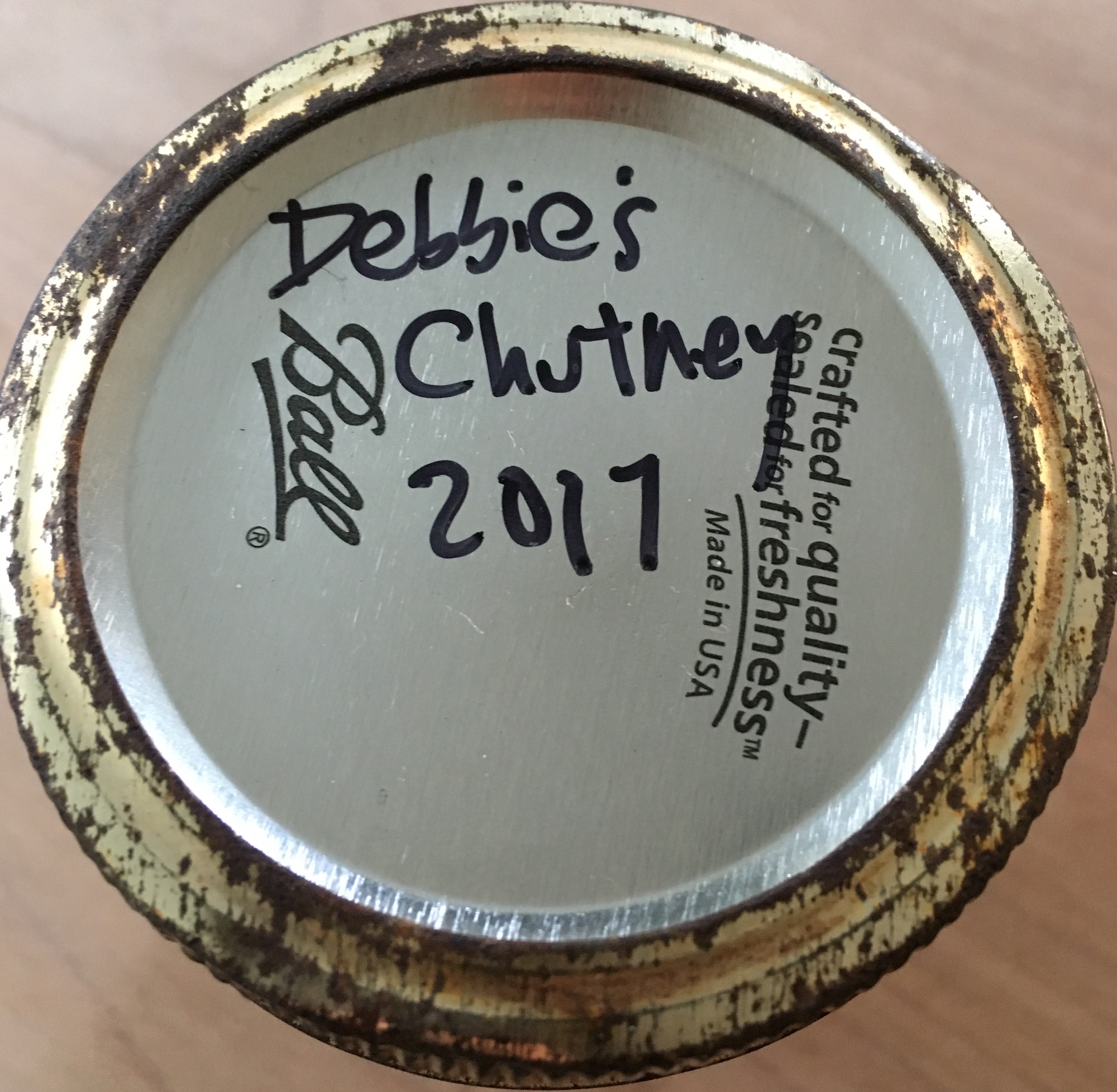
We pulled a jar of chutney from the cabinet a few days ago, and it inspired hours of speculation.

Who is Debbie? My husband made the chutney, and he labeled it, but no one can remember why it’s called Debbie’s chutney. Did someone named Debbie give us some fruit that was used in the chutney? Is Debbie an acronym for something? Delicious black boy [peach] interesting experiment? Is it a description of what’s in it? December berries?

The truth is, no one remembers. Which is a shame—I’m sure it’s a good story.

Many of our preserves and homemade products have names that tell a story, or describe what went into them. Just a few memorable ones:

Strawgooberry Jam—strawberry and gooseberry jam

Brewcurgooberry Jam—black currant, strawberry, red currant, and gooseberry jam.

Windfall Chutney—made from not-quite-ripe apples that blew down in a storm.

Black Daze of May—a dark beer brewed during a May several years ago when it rained continuously.

Baby Butt Bitter—a beer brewed many years ago during the potty training phase of one of the children.

Non-Dillicious Pickles—a batch of dill pickles that I forgot to put dill into (they were actually quite good)

Ginpricot Jam—apricot and ginger jam

Taumutu Squeak—mozzarella cheese that hasn’t quite worked properly and can’t be stretched, but squeaks when you bite into it

And, of course, Summer Soup—soup made of all the late summer vegetables.

So…

Who the hell is Debbie?

Tastes Like Christmas

I know, I know, you’re wondering why I’m posting about Christmas in mid-August. Bear with me here…

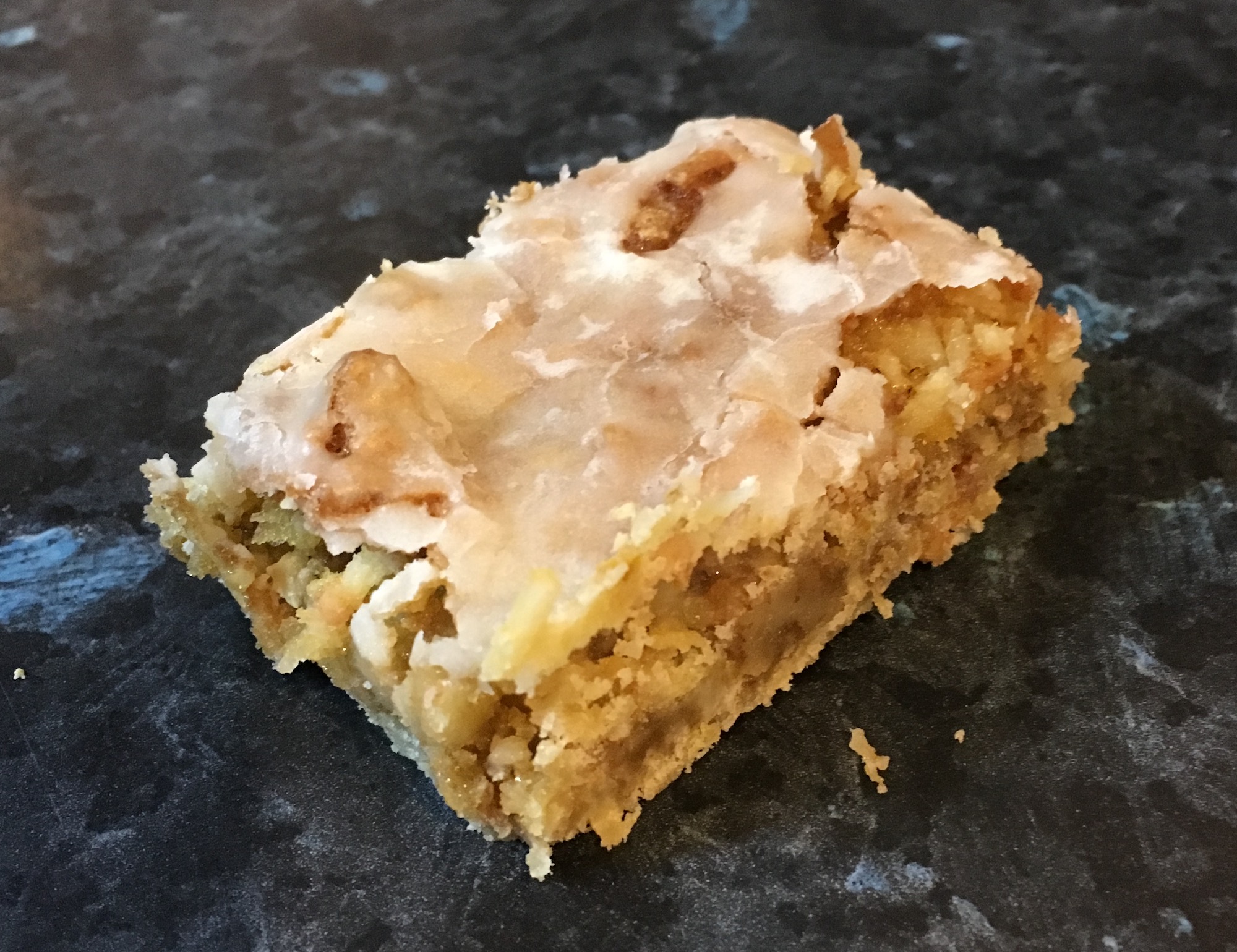
I made lemon coconut bars yesterday–a super easy recipe that I chose out of sheer laziness (and the fact I’d written ‘excellent’ beside it in the cookbook).

As I bit into one of them today, I was struck that they taste like Christmas.

Now, if you had asked me what Christmas tastes like, I would have said cinnamon, cloves and black walnuts.

My Christmassy lemon coconut bars contain none of these ingredients. As you would imagine, lemon and coconut are the primary flavours.

But these bars are loaded with brown sugar, and the more I considered it, the more I thought that must be the true flavour of Christmas. It shows up in most Christmas cookies, and even makes an appearance in some of the traditional savoury dishes, like mashed sweet potatoes.

I use brown sugar in many of the baked goods I make, so theoretically, they should taste like Christmas, too. So, why don’t they?

I think it has to do with the concentration of brown sugar. We tend to prefer baked goods that aren’t pure sugar bombs. For my everyday baking, I usually stick to less sweet items. Not so at Christmastime. Then, I throw all caution to the wind and make the most decadent sweets possible.

The lemon coconut bars fall into that decadent category, containing more sugar than flour. They taste like the decadence of Christmas.

And, perhaps that is the true taste of Christmas–the taste of decadence.


Eggsplaining the Difference

A standard egg at the supermarket weighs 53 grams, large eggs are 62 grams and jumbo eggs are a massive 68 grams.

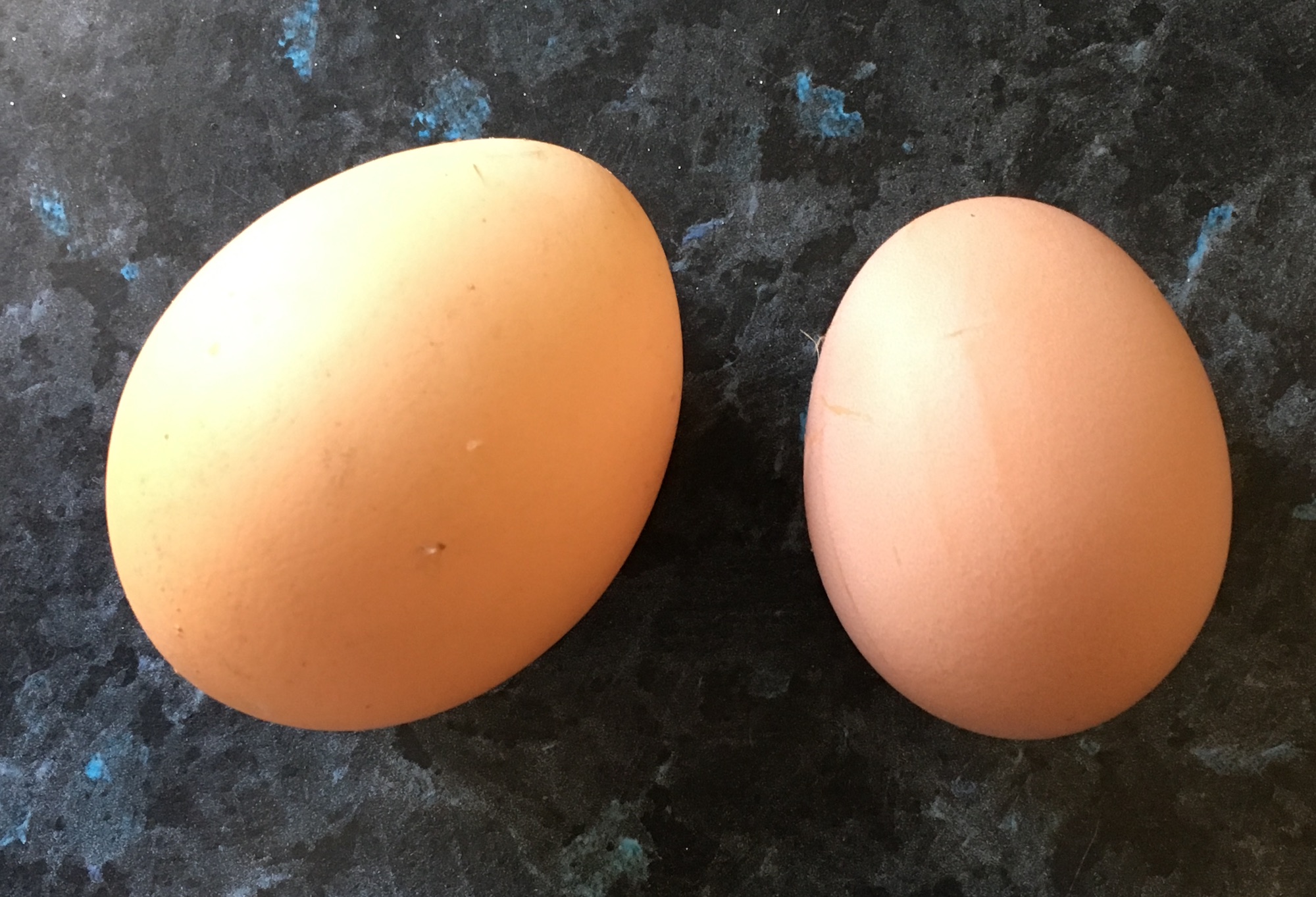
My new chickens just started laying yesterday, and I smiled at the tiny eggs they laid.

Then I weighed them—far from being tiny, they weigh as much as a standard egg.

Turns out the ‘normal’ egg from my chickens weighs 80 grams or more (I had a 92 gram one last week—I know because it looked big, even to me, so I weighed it).

I’ve known this for some time. My eggs are bigger than the eggs called for in your average recipe. I can usually skimp on the number of eggs I use, with no repercussions. It comes in handy in wintertime, when egg production is down, and I’m often rationing eggs.

But I hadn’t really quantified it before. So, doing the maths, if a recipe calls for four large eggs, that’s 248 grams of egg. Just three of my 80+ gram eggs will do, in that case. That matches my experience with skimping on eggs in a 4-egg cake. In recipes that call for three eggs, I can probably get away with two. Start looking at a genoise cake that may call for 7 eggs, and I should really be using closer to 5.

I can’t tell you why my chickens lay such enormous eggs. I assume it’s a combination of genetics and diet. Coming from the same breeder, I expect my new ones to eventually lay 80 gram eggs, like the older ones do. But if they don’t, that’s just fine. Truth is, those super jumbo eggs don’t fit very well in the egg holder on the fridge door. Sometimes, when I open the fridge, an egg flies out to splat on the kitchen floor. I wouldn’t mind non-ballistic eggs.

Funny Fruit

Some days you just have to be silly.

Half way through cooking yesterday’s dinner, I felt it was incomplete. It need a little something extra. Something light and fresh. By the time I thought this, it was already dark outside. I didn’t feel like picking a salad in the dark, so I thought I might make a fruit salad.

But neither the bananas, nor the pears in the fruit bowl were ripe yet, and that left just apples and mandarines. Pretty boring fruit salad.

How could I make plain old apples exciting?

Turn them into swans, of course!

I found instructions for these fun little fruit birds on the Curious Little Kid blog. Hers are much prettier than mine, but mine got a laugh at the table all the same. They turned boring apples into an exciting side dish.

Nostalgic Baking

I made Irish soda bread to go with dinner today. As I mixed up the dough, I remembered making soda bread back when the kids were preschoolers. The recipe I have is easily quartered, so I would make a full batch, and each of the kids would make their own quarter-sized loaf. It didn’t even require any calculations—I simply gave them a smaller measuring cup (1/4-cup and 1/4 tsp to my one-cup and 1 tsp measures) and they could follow the recipe just like I did.

They loved baking their very own loaf, and then seeing it next to their plate at the dinner table.

Of course, these days, the teenagers are less keen on baking the bread and more keen on eating it, but I reckon one day they might make their own Irish soda bread again and remember making mini-loaves with Mum.

The recipe I use comes from Beard on Bread, by James Beard. I don’t know if this wonderful little cookbook is still in print, but I encourage you to find a copy—if you’ve never made bread before, Beard will walk you through it. If you’re a seasoned baker, Beard’s comprehensive selection of recipes will give you plenty to riff off as you experiment.

3 cup wholemeal flour
1 cup all-purpose flour
2 tsp salt
1 tsp baking soda
3/4 tsp baking powder
2 cups buttermilk

Combine dry ingredients. Mix in enough buttermilk to make a soft dough. Knead on a lightly floured board for 2-3 minutes. Form a round loaf and place on a buttered baking sheet. Cut a cross in the top with a sharp knife. Bake at 190ºC (375ºF) for 40-45 minutes.

Citrus for Sickness

Salty lemons and sweet lemon curd…mmmmm.

The entire family came down with a nasty head cold last weekend. We’re all still feeling under the weather a week later.

The scientific evidence is pretty clear that, contrary to popular belief, vitamin C doesn’t actually help a cold. Regardless, we’ve all been gravitating to citrus fruit this week. We went through more than six litres of orange juice, a kilo of lemons, half a kilo of oranges, and the better part of a bottle of lemon juice. I made lemon cornmeal pound cake for the week’s lunchbox treats. I made lemon barley scones with lemon curd for Sunday breakfast. As I type, my husband is making roast vegetables with salted lemons for dinner.

There’s something soothing and clean about citrus on a sore throat. Something refreshing about a juicy orange, even if you can’t taste it because of a stuffy nose. No, it doesn’t actually help us get over a cold faster, but it’s pleasant. When you’re sick, all you want is comfort.

So bring on the citrus. I’m under no illusions about its health benefits, but if that’s what tastes good, I say enjoy.

The Mathematics of Pastry

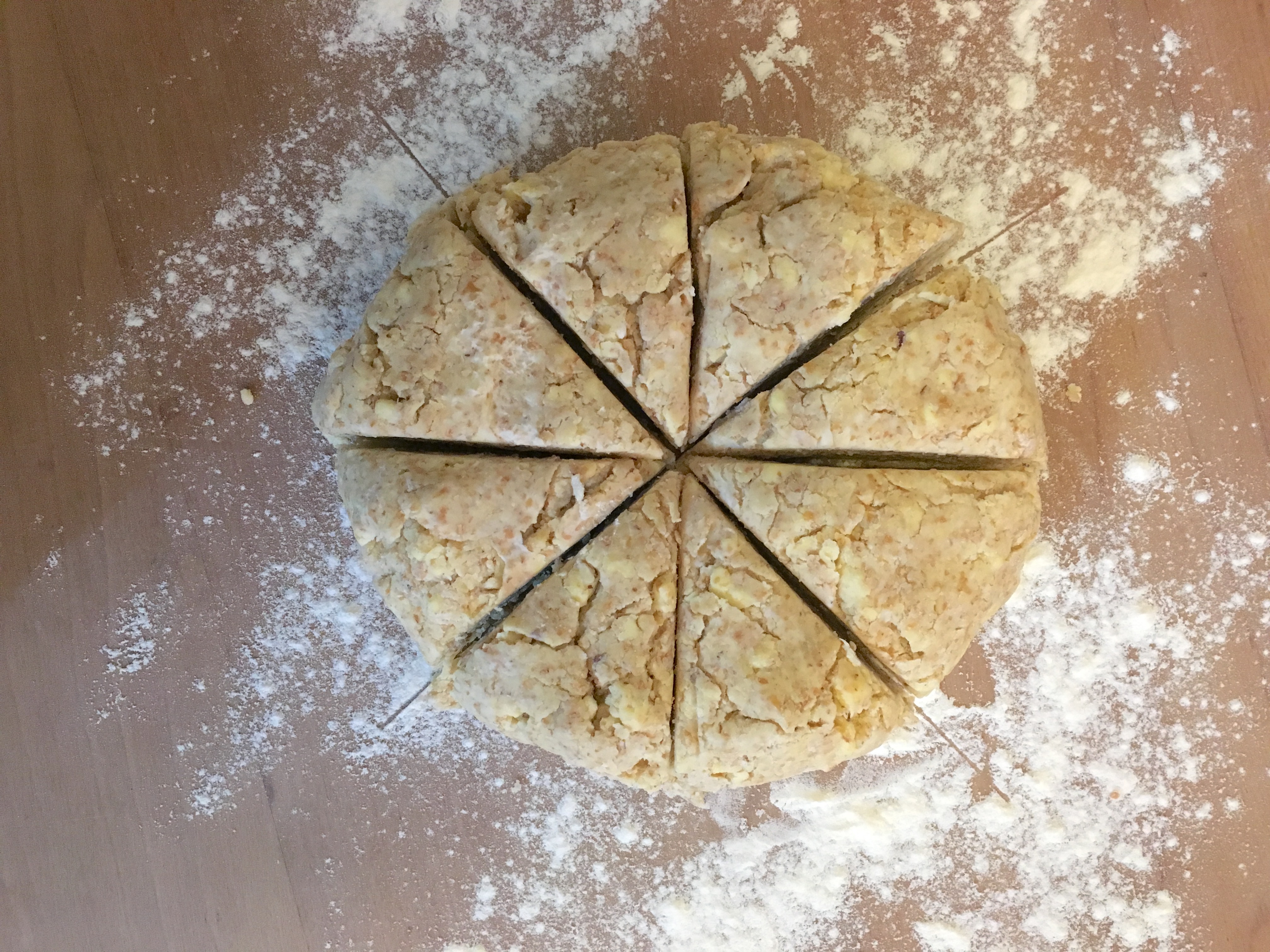
I was making pastry for cheese pasties the other day. I made a thick round of the dough on the kitchen table and cut it into eighths for rolling out into individual pastie rounds.

The cut pastry on the floured table was so lovely, I had to take a picture. There’s something pleasingly mathematical about the shapes.

Makes me think about those old school days…

Robinne makes a double-crust recipe of pie dough and divides it into eight equal portions. She makes a cheese pastie from each portion. What percentage of a pie is each resulting pastie? If each of the four family members eats one and a half pasties, what percentage of a pie has each member eaten? How long before they all die of a coronary from eating too much pastry?