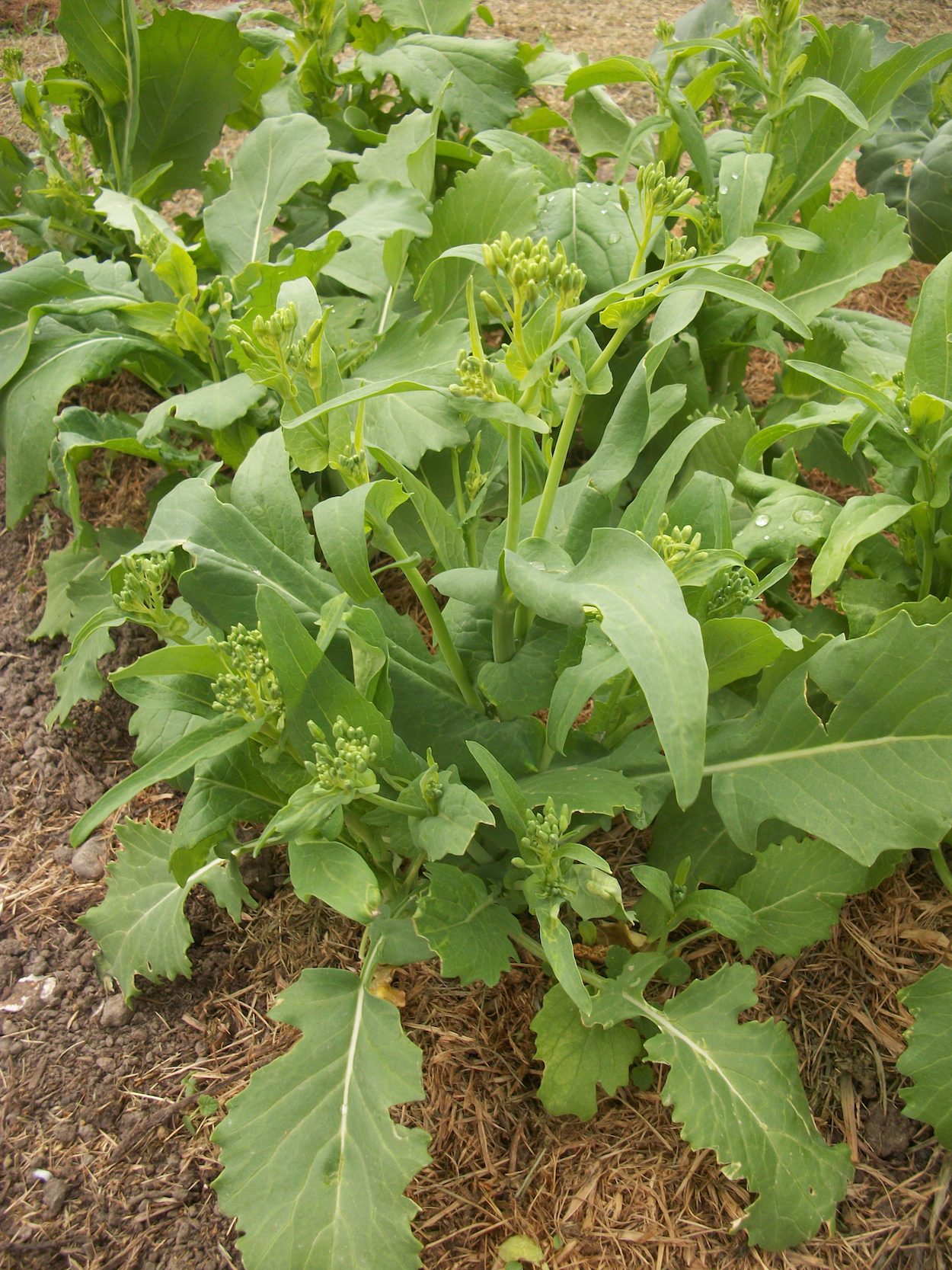
Broccoli raab

100_3940 smOne of my favourite spring vegetables is broccoli raab. Not so much because it is the best vegetable, but because it produces so early, before any of the other brassicas are ready.

Broccoli raab looks like mini-broccoli, though it is more closely related to turnip than to broccoli. Broccoli raab is eaten “lock, stock and barrel”—leaves, stem and flower buds. As one of the earliest spring vegetables at our house, it gets used in everything from stir fry to pasta to pizza to gratins.

It is more bitter and pungent than broccoli (more like turnip greens), and a little goes a long way in a dish. I plant just a small amount of broccoli raab, and by the time the other brassicas are producing, it has bolted and is ready to pull out. A perfect little filler crop that adds kick to springtime meals!

Preparing artichokes

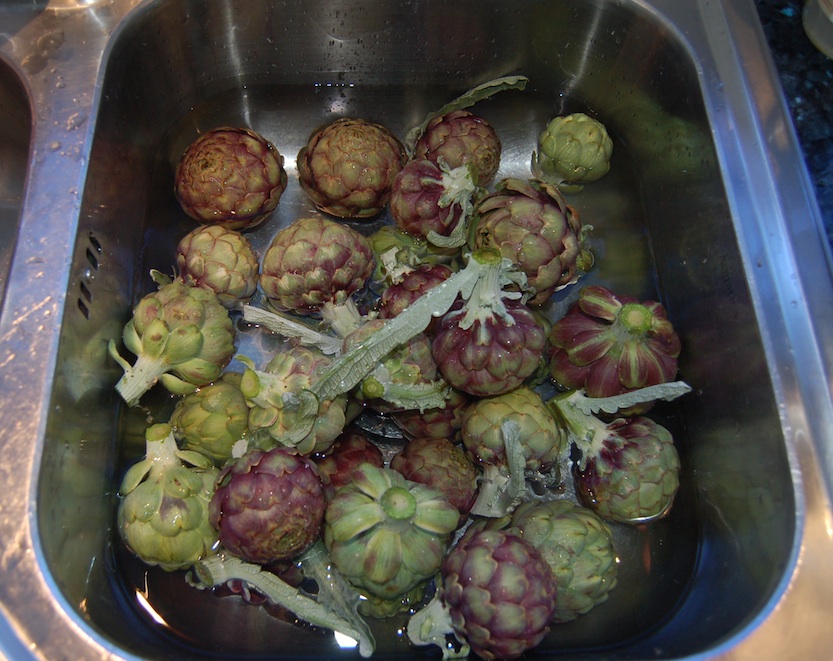
100_3927 smUntil we grew them ourselves, I really didn’t know how to prepare artichokes. How does one make a giant thistle flower edible?

Now, I don’t think twice about prepping a dozen artichokes for dinner. It’s time-consuming, and can be painful (they are thistles, after all), but it’s not difficult.

If you’re preparing your artichokes for use in a pasta, risotto, pizza, or other dish, you need to remove all the really tough and prickly bits.

100_3929 smStart by snapping off the outer bud scales until the remaining scales are pale and soft about half way to their tips. I find this easiest to do by pushing sideways with my thumb—the scale snaps cleanly off, and I avoid the spine on the tip of the scale.

100_3931 smNext cut off the top third of the artichoke with a large knife (cut where the remaining scales change from soft to tough).

Peel the stem with a paring knife, then cut the artichoke in half lengthwise.

Nice and young--no need to remove the choke.

Nice and young–no need to remove the choke.

Check the inside of the artichoke—there is a part known as the choke, made of spiky hairs. If these are soft and small, you don’t need to do anything. If they are long and stiff, use the tip of your knife to cut them out.

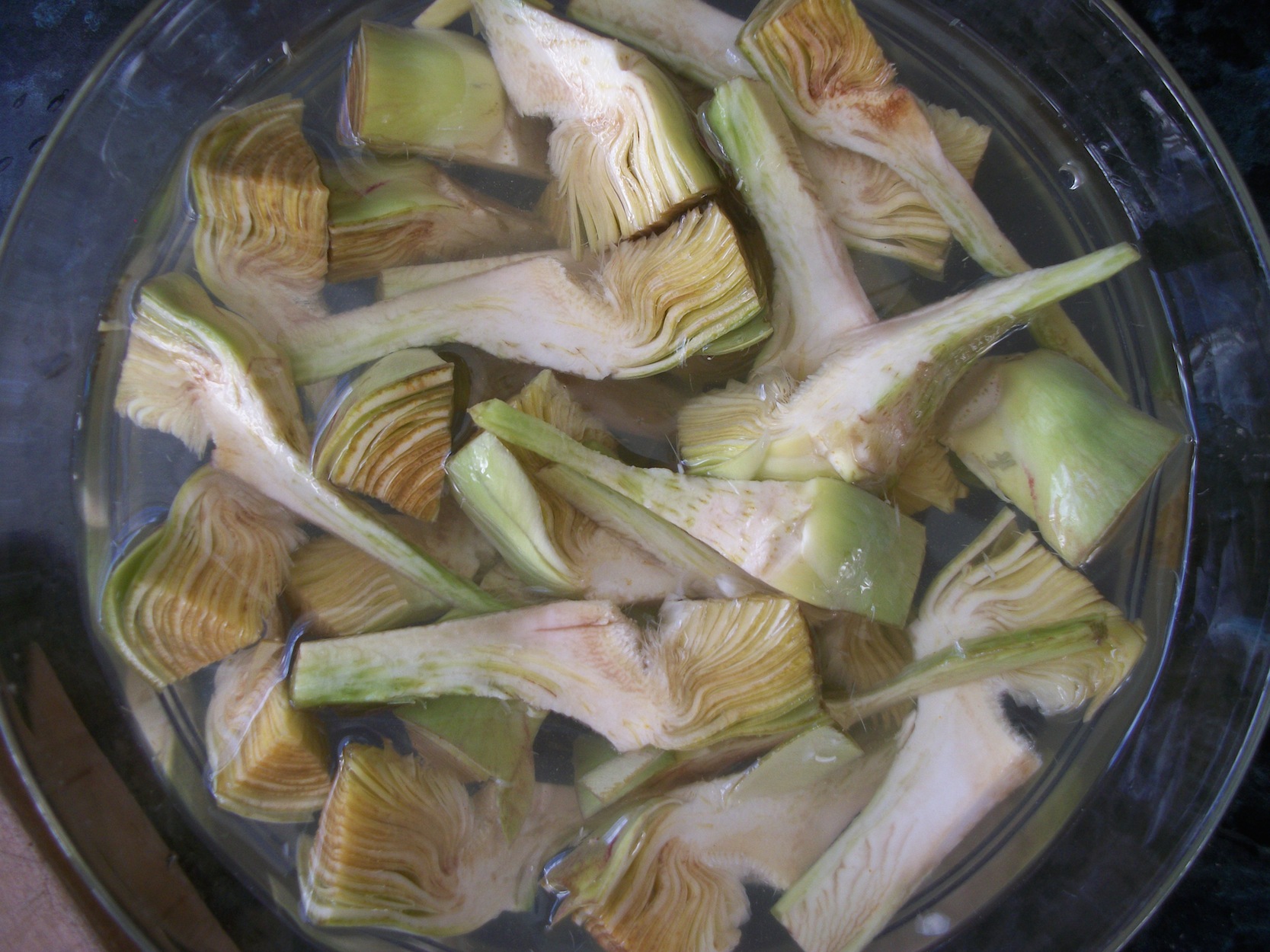
Then, cut your artichoke into whatever size pieces you want, and drop them into acidulated water (water with a generous amount of lemon juice in it), to prevent them from browning. You won’t be able to prevent all browning, but the brown seems to largely vanish during cooking.100_3936 sm


Artichokes

artichokes2cropsmI don’t think I ever ate an artichoke until I was an adult. They just weren’t a part of the diet in eastern Pennsylvania in the 1970s and 80s.

I probably could have counted on one hand the number of artichokes I’d eaten until I started growing them. And I had no idea how incredible and prolific they could be until I lived in a place where artichokes were perennial.

Now I can hardly imagine springtime without them.

The globe artichoke is a thistle (not to be confused with the very different Jerusalem artichoke, which is a sunflower). It grows as a large rosette of leaves and can reach over 1.5 metres tall. The edible part is the unopened flower bud. If you let the buds mature, they open into giant purple flowers that bumblebees can’t resist.

Artichokes are the same species (different variety) as cardoon which is more commonly planted as an ornamental. Cardoon flowers are smaller, and it is generally the leaf stems that are eaten. I grew cardoon for food briefly, before realising that blanching the leaves (by wrapping the plants in straw and cardboard as they grow) is time-consuming, and the final product—the cooked leaf stems—tastes a lot like artichoke, only more bitter and less rich. (Then, of course, I tried to get them out of the garden—it took four years—they are thistles after all) Now I keep just one in the flower garden as a stunning centrepiece plant.

The first records of artichokes come from ancient Greece, where wild varieties were selected and bred into the large-flowered plants we grow today.

Today Egypt and Italy produce about half the world’s artichokes, but with new cultivars that can tolerate cold winters, they can be grown just about anywhere. Put them in the perennial part of your garden, and even if you don’t like to eat them, you can enjoy their beauty!

Omelettes

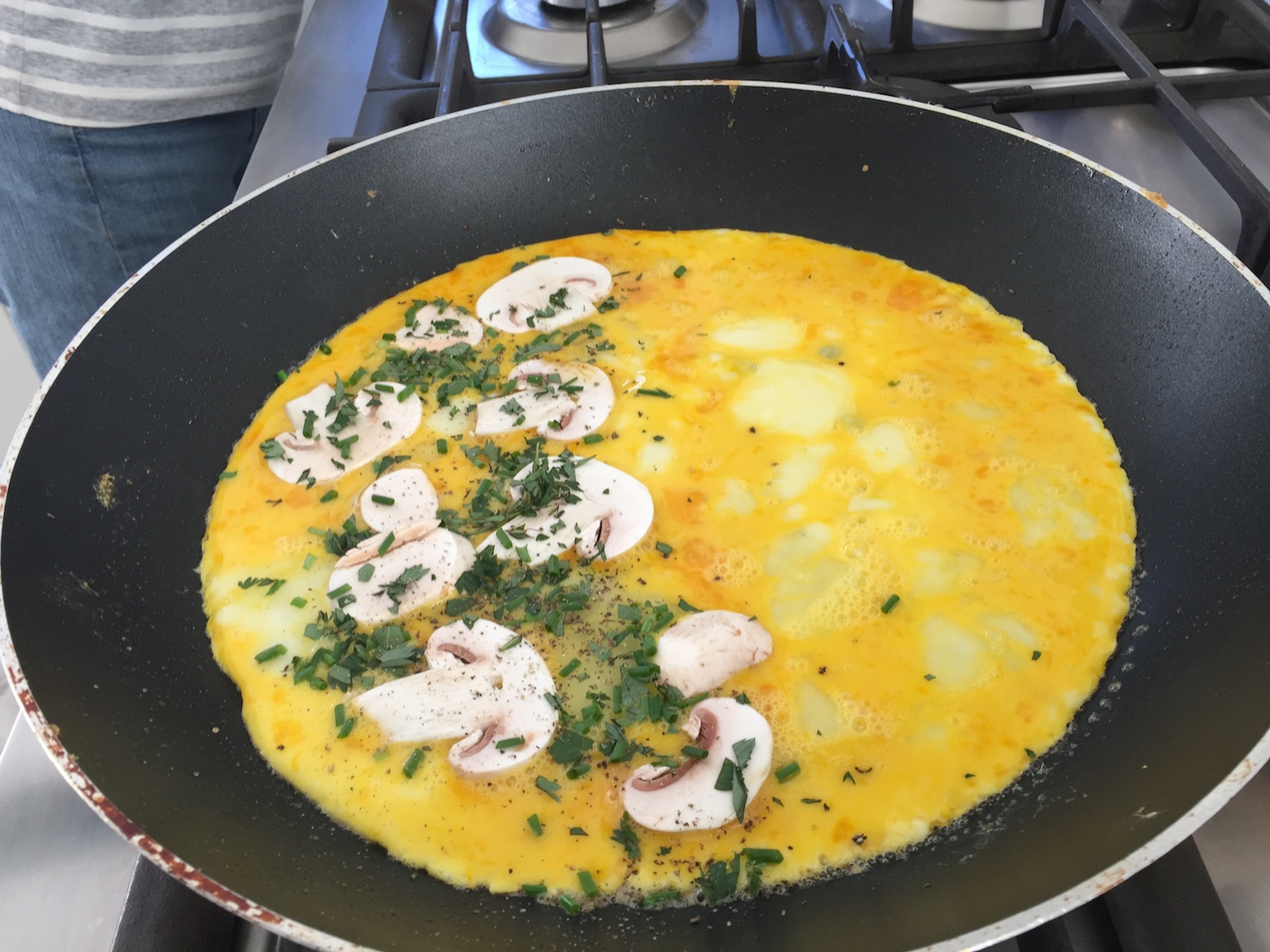
IMG_3731 smIt’s funny how quickly we can go from being desperate for eggs to having more than we know what to do with. My new chickens have all started laying now, and so this afternoon when I was looking for a quick dinner after getting home late, I found a fridge full of eggs.

Of course, that meant omelettes! Filled with cheese, mushrooms and herbs, they’re a delicious, quick-to-make, high protein meal that everyone loves. I served ours tonight with roast potatoes slathered in ketchup.


Favourite Kitchen Tools—Mortar and Pestle

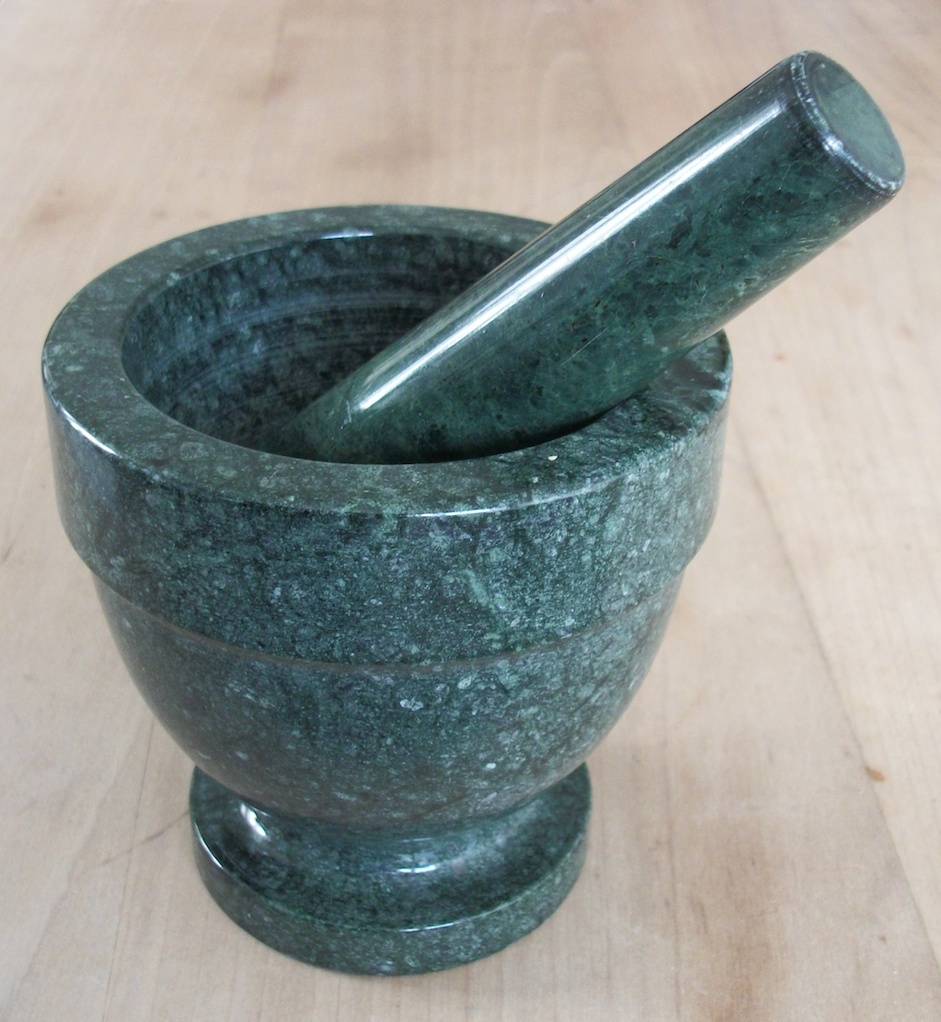
100_3915 smOkay, I admit it. We own two mortar and pestles—a large wooden one, and this small stone one. And we use them both.

There’s something satisfying about a mortar and pestle. There’s the timelessness of the act of grinding food between two stones—people have been doing that probably since we first used tools. There’s the rewarding transformation of some seed, herb, or vegetable into a powder or paste. There’s the lovely aroma of whatever it is you’re crushing. And there’s the joy of the physical work (which always makes me think of the Luddite’s Kitchen Weight Loss Programme). You just don’t get all that from a spice grinder or food processor.

We grow all of our own herbs, and some of the spices, too, so the mortar and pestle gets used regularly on herbs and spices. It’s great for crushing the dried garlic we use at this time of year, too. And with the milking season underway, I’ll soon be using it to grind rock salt to just the right consistency for salting cheeses.

A very handy tool to have around!

Watercress

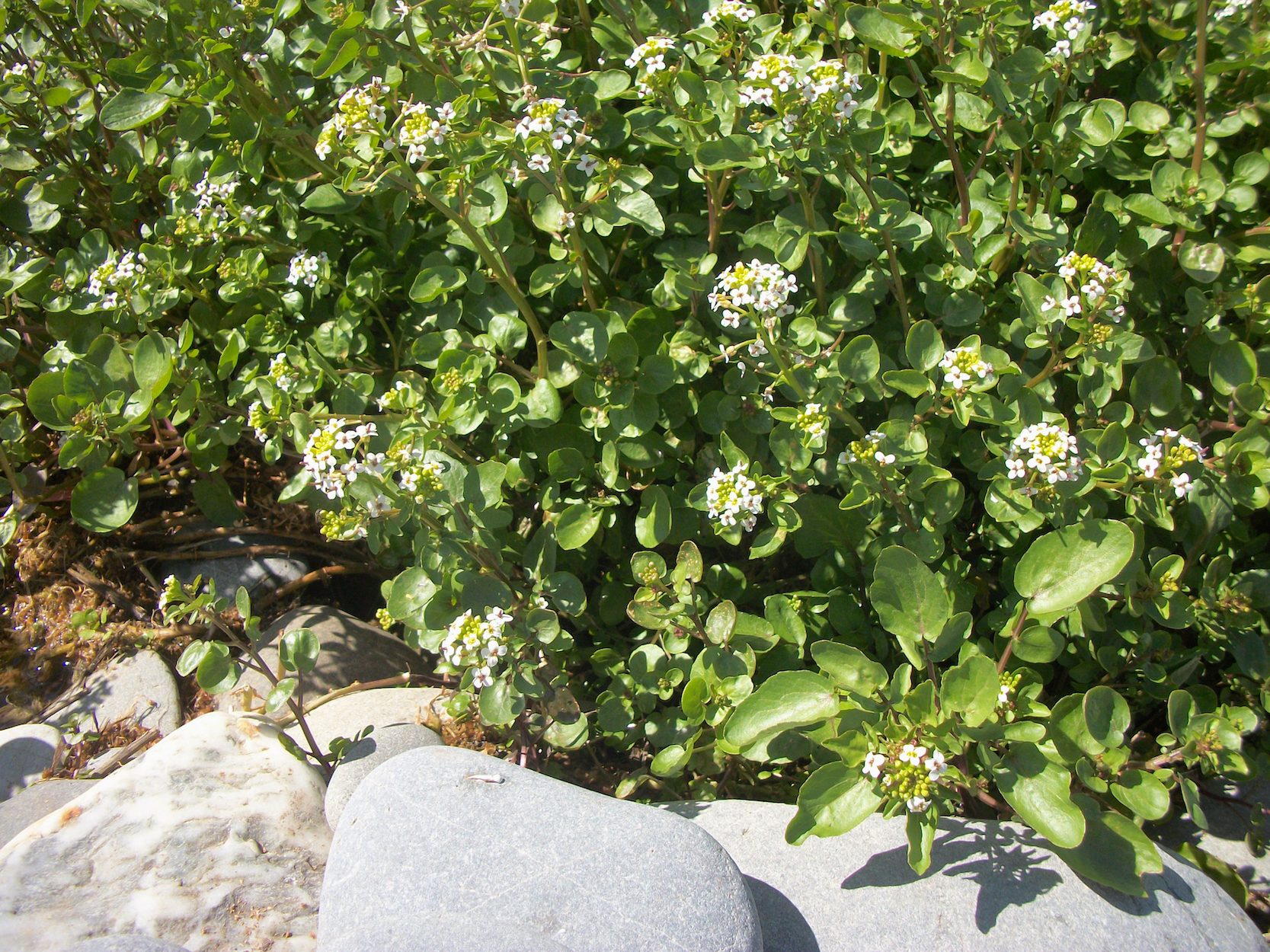
100_3897 smI probably first read The Trumpet of the Swan, by E.B. White when I was 7 years old. I remember being enthralled by the book, and ever since, I have loved the song, Beautiful Dreamer, which the mute swan Louis plays to woo his lady friend, Serena. I don’t remember much else about the book, but for some reason I vividly remember that Louis and 11-year-old Sam eat watercress sandwiches.

This was the only experience I ever had with watercress until we grew it ourselves (though thinking back, I’m pretty sure it grew in the neighbour’s stream, growing up, but I didn’t know what it was at the time).

Now, I’m very impressed that Sam ate watercress sandwiches. I can’t imagine many 11-year-olds who would do that.

Watercress is in the mustard family, and it’s glossy leaves are sharply bitter, like a mixture of arugula and radishes. They are delicious, but challenging for the palate of a child. I enjoy them on a cheese sandwich (and my 11-year-old does, too), but I’m not sure I would want an entire sandwich of nothing but watercress.

Still, watercress is a great way to spark up salads and sandwiches, and I look forward to trying it in soups and stir-fries as well.

Salad Burnet

100_3894 smSanguisorba minor, salad burnet, began primarily as a medicinal herb. Sanguisorba means “blood absorber”, and it was thought to stanch the flow of blood. Later, it was also used as a cure for diarrhoea, digestive disorders, rheumatism and gout. It was also thought to protect against plague.

Sadly, salad burnet’s real virtues are more modest and culinary in nature. Its toothy, slightly bitter, cucumber-flavoured leaves make a delicious addition to salads, herbed butters, and cheeses. We use salad burnet heavily in the spring, when the fresh new growth is less bitter, and before the cucumbers are in—a springtime taste of summer in our salads.

But it’s virtues aren’t confined to the kitchen. Perennial, drought tolerant, and pretty, too, salad burnet is a perfect addition to your landscaping.

Salad Spinner

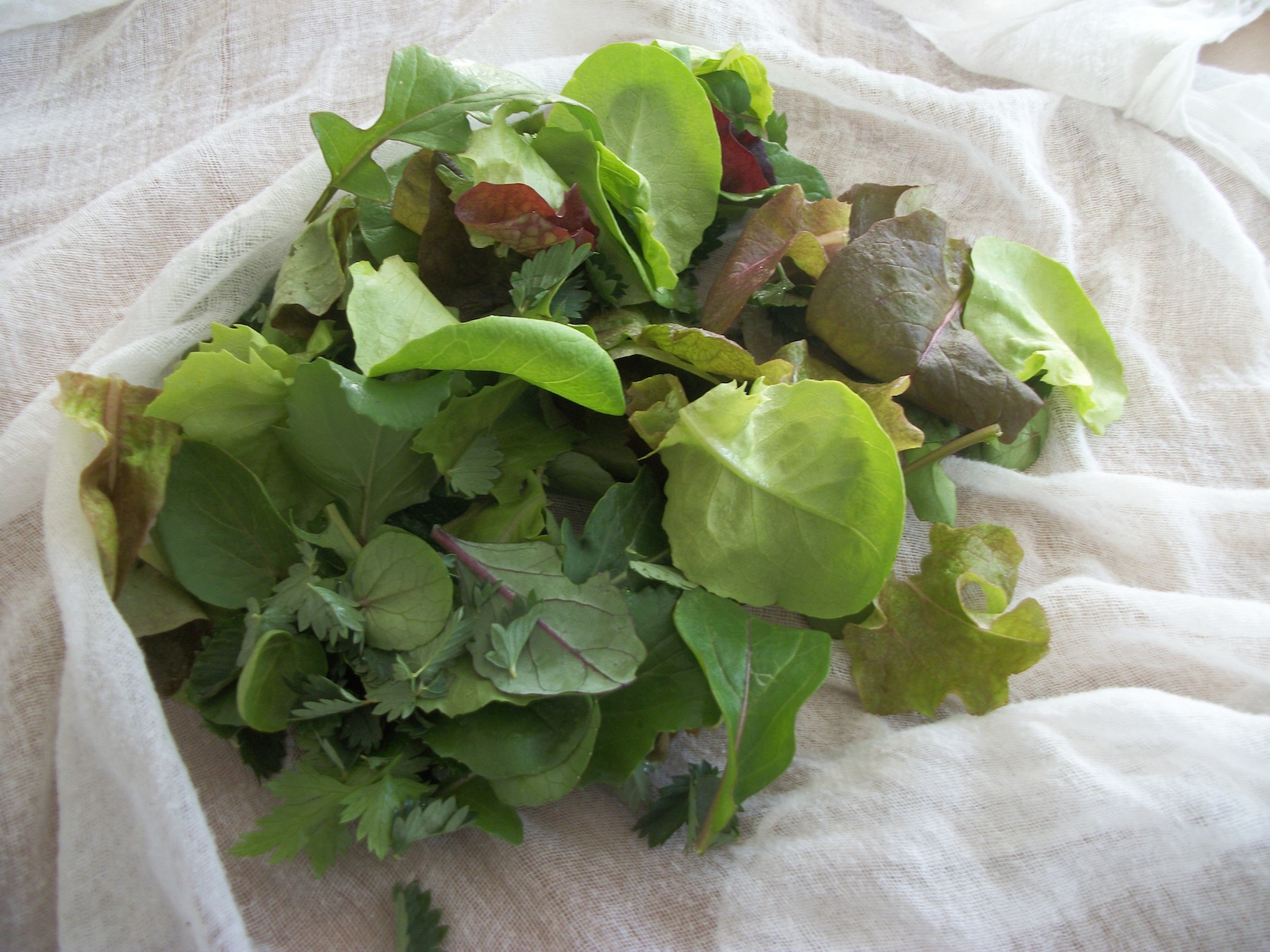
100_3890 smWe had our first salad from the new, spring-planted lettuces yesterday—a carnival of colours and flavours!

It got me thinking about salad, and the preparation of salad.

Which of course, led me to think about salad spinners.

Now, I don’t own a TV, so I don’t know if there are still salad spinner commercials, but I remember back in the 1980s when they were all the rage—fancy machines that spun your salad leaves dry. A quick Google search tells me that salad spinners are still out there, though whether they rank as such a gourmet sort of tool anymore or not, I have no idea.

Growing up, I never considered the water on my lettuce leaves. You washed it, gave it a good shake, and that was that.

But when I married, I found my husband prefers dry lettuce. I wasn’t about to buy a salad spinner, and I wasn’t going to put my lettuce in the spin cycle of the washing machine, as I’ve heard some people do (What?!).

Instead, we use a high-tech, oh-so-fancy way of spinning our salad.

Remember when you were a kid and you learned the trick where you swing a bucket full of water around without spilling a drop? Now, put your salad greens in a tea towel (I use my cheese cloths—they’re perfect!), hold onto the corners, step outside, and do the same. A few good twirls, and your salad greens are nicely dried.

Best of all, the kids LOVE doing it, especially if they get to spray a sibling with the water as they whip the towel around. One more dinner preparation task Mum doesn’t have to do!

Fennel Salad

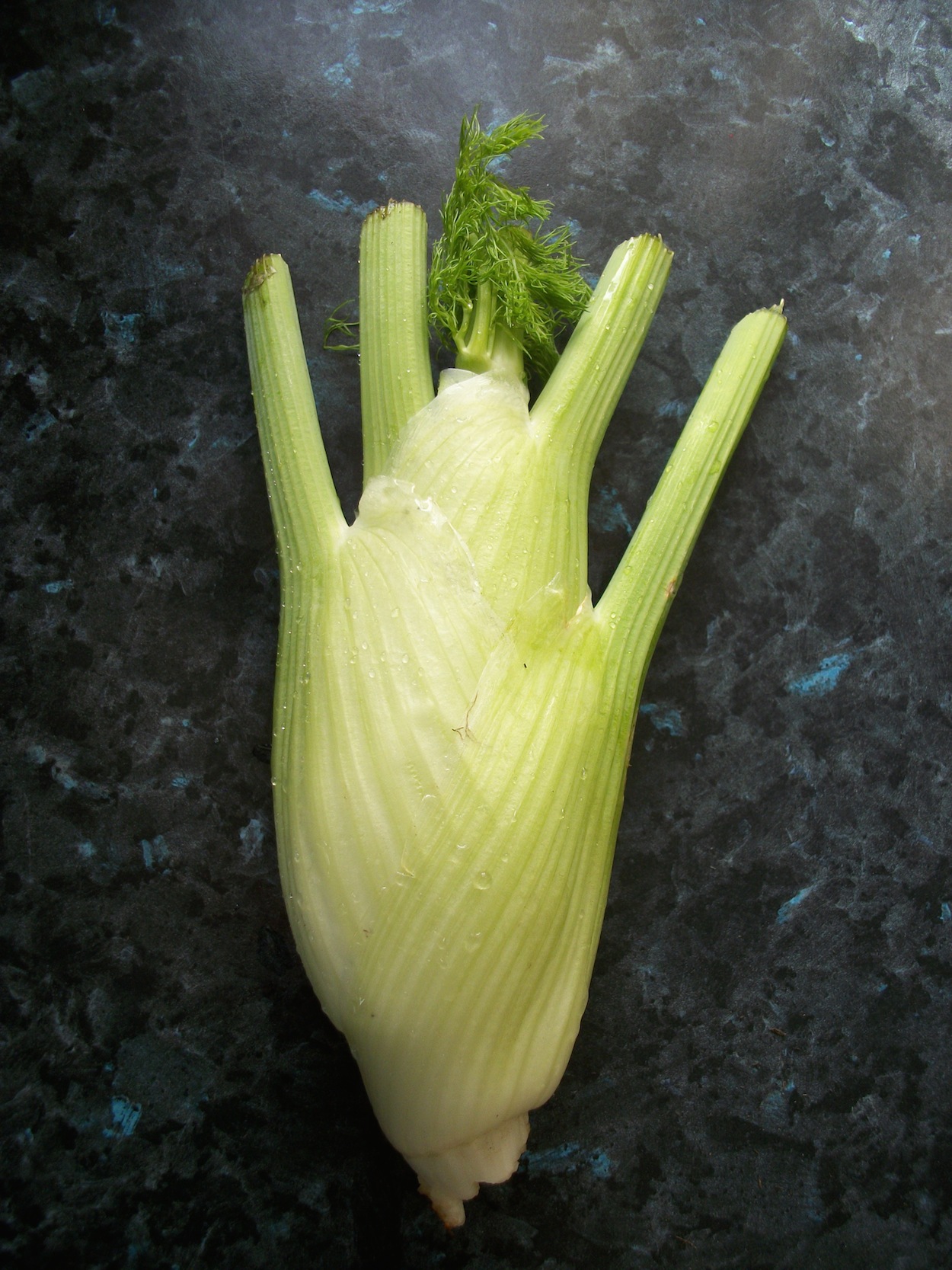
100_3864 smIn the course of clearing the winter weeds from the garden every spring, I always find some volunteer fennel that’s perfect for the picking.

With our summery weather this week, I decided to make a simple fennel salad with my find. It was perfect with a light pasta for a hot day, but would also be excellent as a side dish to lighten a heavy winter gratin.

4 fennel bulbs, plus a few fronds

4-5 sprigs flat-leaf parsley

1 ½ Tbsp each olive oil and white wine vinegar

salt and pepper to taste

Slice the fennel as thinly as possible, and coarsely chop a small amount of the frond. Pull the leaves off the parsley. Whisk together the oil and vinegar, and add salt and pepper to taste. Toss the fennel and parsley with the oil and vinegar.


Asparagus!

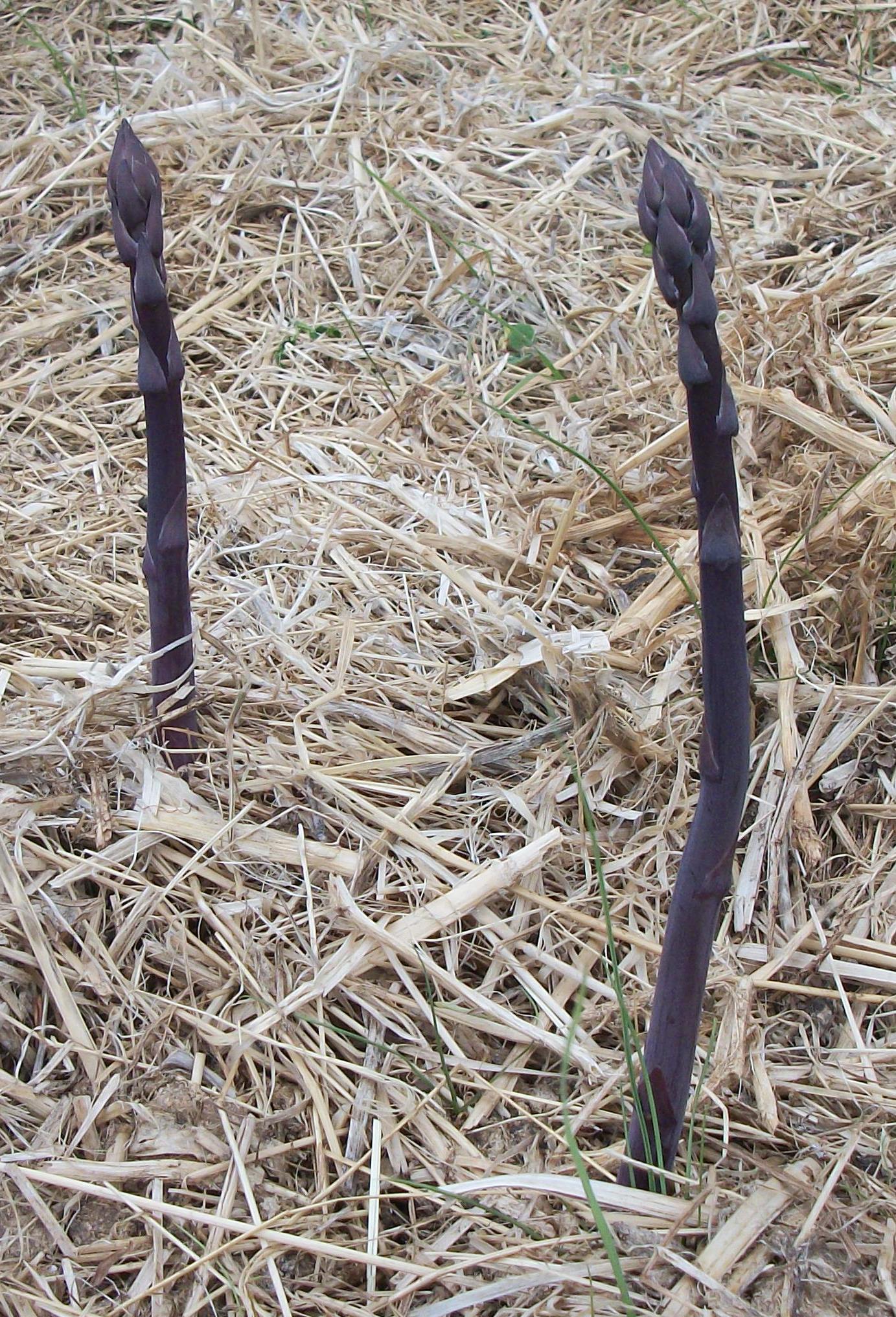
100_3847The long winter wait is over! The first of the spring crops is here! We’ve been watching carefully for weeks now, hoping, waiting…

And yesterday the first asparagus pushed up through the mulch (and, yes, these are purple asparagus. We have green, too). Asparagus and artichokes are the two perennial vegetable crops that get us through the end-of-winter gap. They always show up just in the nick of time (just a few freezer-burned bags of summer veggies left). That they are delicious, gourmet foods is a special bonus to the spring season. While we wait on the early lettuces, spinach, broad beans, and other crops, we will gorge on asparagus and artichokes.

Asparagus has been eaten for at least 5000 years, and I can imagine that it was an even more welcome springtime sight in the days before our modern food system did away with the lean periods of the year for many of the world’s inhabitants. Full of nutrients, it would have served to bolster people’s health in spring, just like the spring herbs like dandelion.

We always have plenty of food, with the supermarket making up any deficiencies in our own production, but we still feel that lean season. We crave fresh greens and fresh green vegetables. We’re tired of potatoes and pumpkin. So when the asparagus comes on and the artichokes begin to put up flower buds, it’s a cause for celebration.

So happy spring to everyone!