Waxing Lyrical

100_4015 smWhen I say I’m going to do some waxing, chances are it’s not the sort of waxing you think of. Instead of depilatory waxing, I’m doing cheese waxing.

I used to hate to wax cheeses. The “instructions” for cheese wax say you should brush it on. I used to try to brush my wax on, but very quickly realized that the wax hardens in the bristles before you’ve even got half a cheese covered, and then you’re trying to brush wax onto your cheese with what amounts to a block of wood. Meanwhile, half the wax ends up on your fingers, and you end up with a lumpy cheese, burnt fingers, and a stove covered in wax drips.

So I started dipping my cheese. This worked much better…until I accidentally dipped my fingers one day and dropped the cheese into the wax. I thought drips of wax on the stove were bad, but the tsunami of hot wax resulting from the dropped cheese took weeks to remove.

I still dip my cheeses, but now waxing is quick, clean and painless. Instead of holding the cheese, I create a sling for it out of cotton string. With my fingers hooked into the string and safely above the wax, I can dip an entire cheese all at once. I get a beautiful finish, no drips on the stove, and no burns. I also get a perfect place to attach a label, so I know which cheese is which after months of maturing in the fridge.
 

Too Hot To Eat

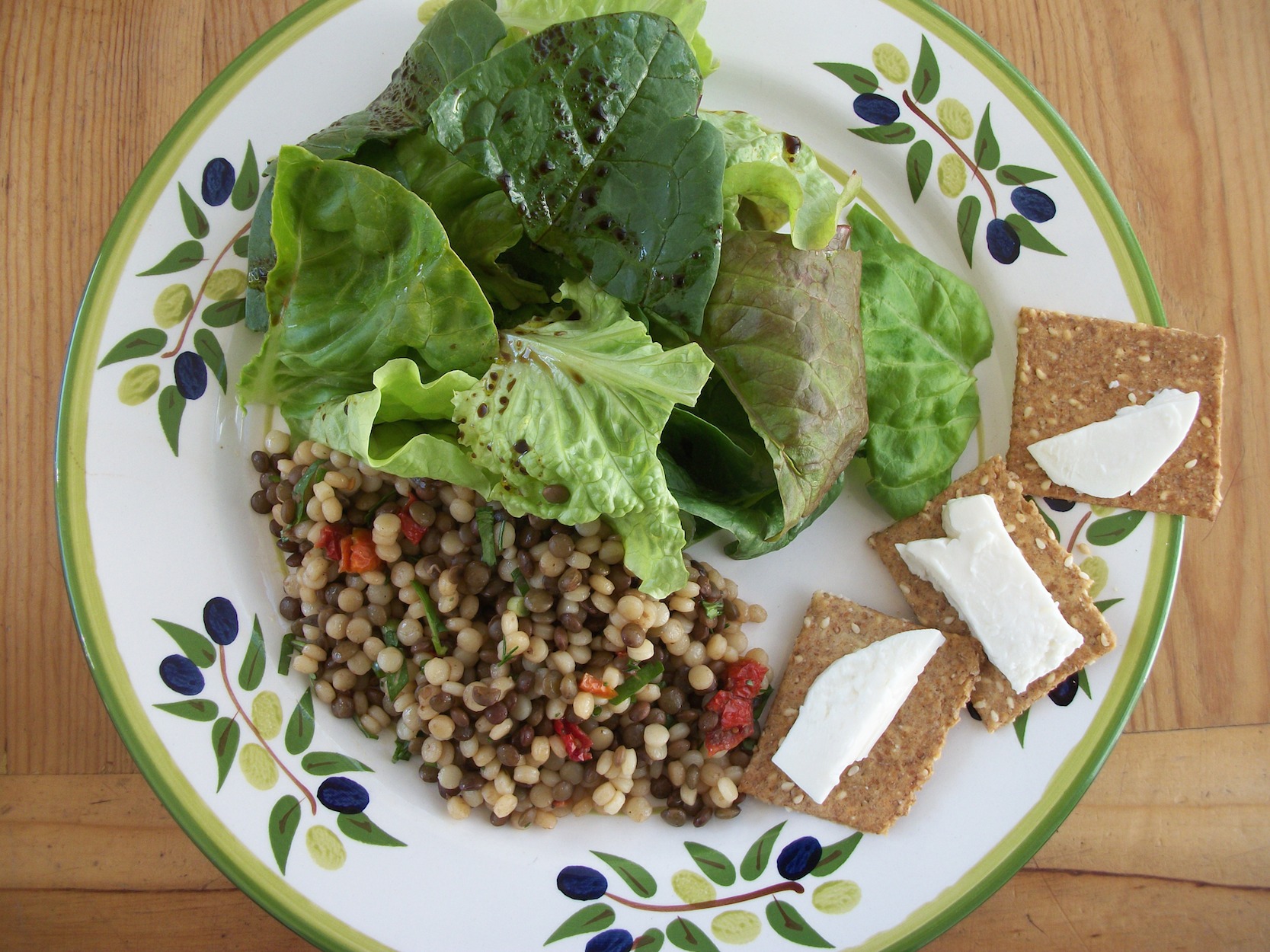
100_3989 smIt was 32°C (90°F) when we got home today. Too hot to eat a hot meal. So it was salads and cheese for dinner.

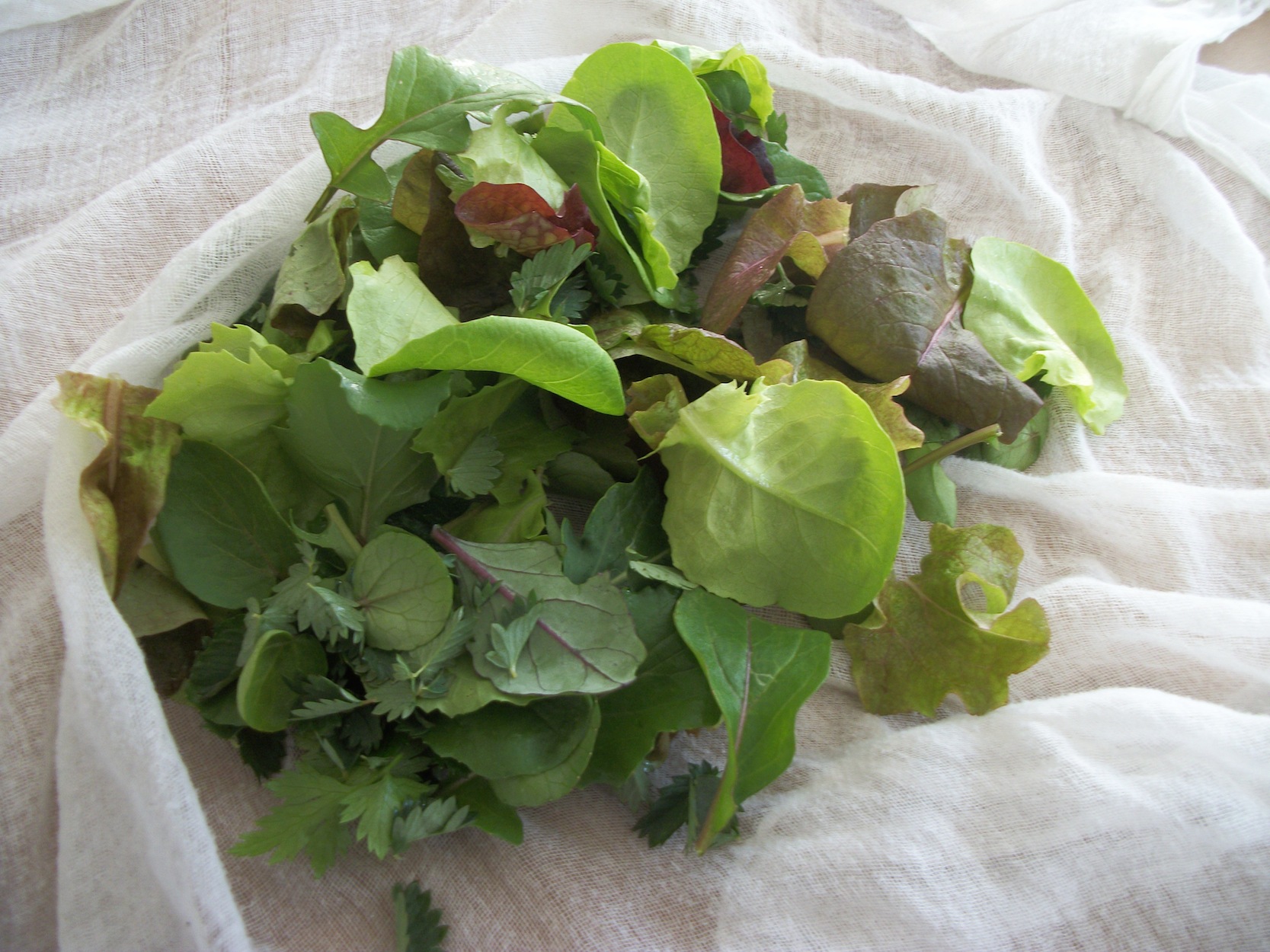
A luscious green salad of spring lettuces.

A hearty lentil salad with Israeli couscous, dried tomato, spring onion and fresh herbs.

Homemade feta on Mommy’s Magical Crackers.

A perfect summer meal!


What’s your perfect summer meal?

(ch)Eating from the garden

saladgreens1 smSometimes it feels like cheating.

I came home today tired and not feeling like cooking. I had 16 litres of milk that needed to be made into cheese waiting for me in the fridge. Dinner was going to be a slap-dash affair cooked in the wait times during cheese making. I didn’t expect much.

But with vegetables so fresh they’re still photosynthesizing as they go into the pot, herbs snipped moments before cooking, and homemade cheese on hand, even a thrown together meal is bound to be something special.

I whipped up a pasta from whatever was on hand in the garden and could be picked in 6 minutes, threw in some feta cheese and a handful of olives, and had a meal I would have happily served to company.

You just can’t help but eat well when you’re eating out of the garden.

Feta Cheese

Feta draining the kitchen.

Feta draining the kitchen.

I’m making one of my favourite cheeses this evening—feta. It’s the cheese that inspired me to get goats in the first place.

When we lived in St. Paul, Minnesota, there was a Greek deli just a couple of miles from home—Spiros (a quick Google tells me that Spiros is no longer open). Spiros sold several different feta cheeses, half a dozen types of olives, and all manner of other Mediterranean foods. We almost always had a block of feta from Spiros in the fridge.

When we moved to New Zealand, I was dismayed at the lack of good feta available. When we needed some livestock to keep the paddocks under control (just until we got around to planting the trees…that was 10 years ago), I chose goats so that I could make proper feta.

I was not disappointed by my decision. Feta made from goat milk, and processed just right to get the crumbly texture I like…divine!

We use feta in many ways. Because it is strongly flavoured and very salty, a little goes a long way, and more is wonderfully decadent. We add it to pasta, gratins, and pizza. It browns beautifully in the oven, and the “toasty bits” are everyone’s favourites. It is, of course, an essential ingredient in Greek salad, and also goes well with lentils and grains. And it can be marinated in olive oil and herbs for an incredible pop-it-in-your-mouth snack or appetizer.

And it’s one of the easiest cheeses to make!

To Pasteurize or Not To Pasteurize

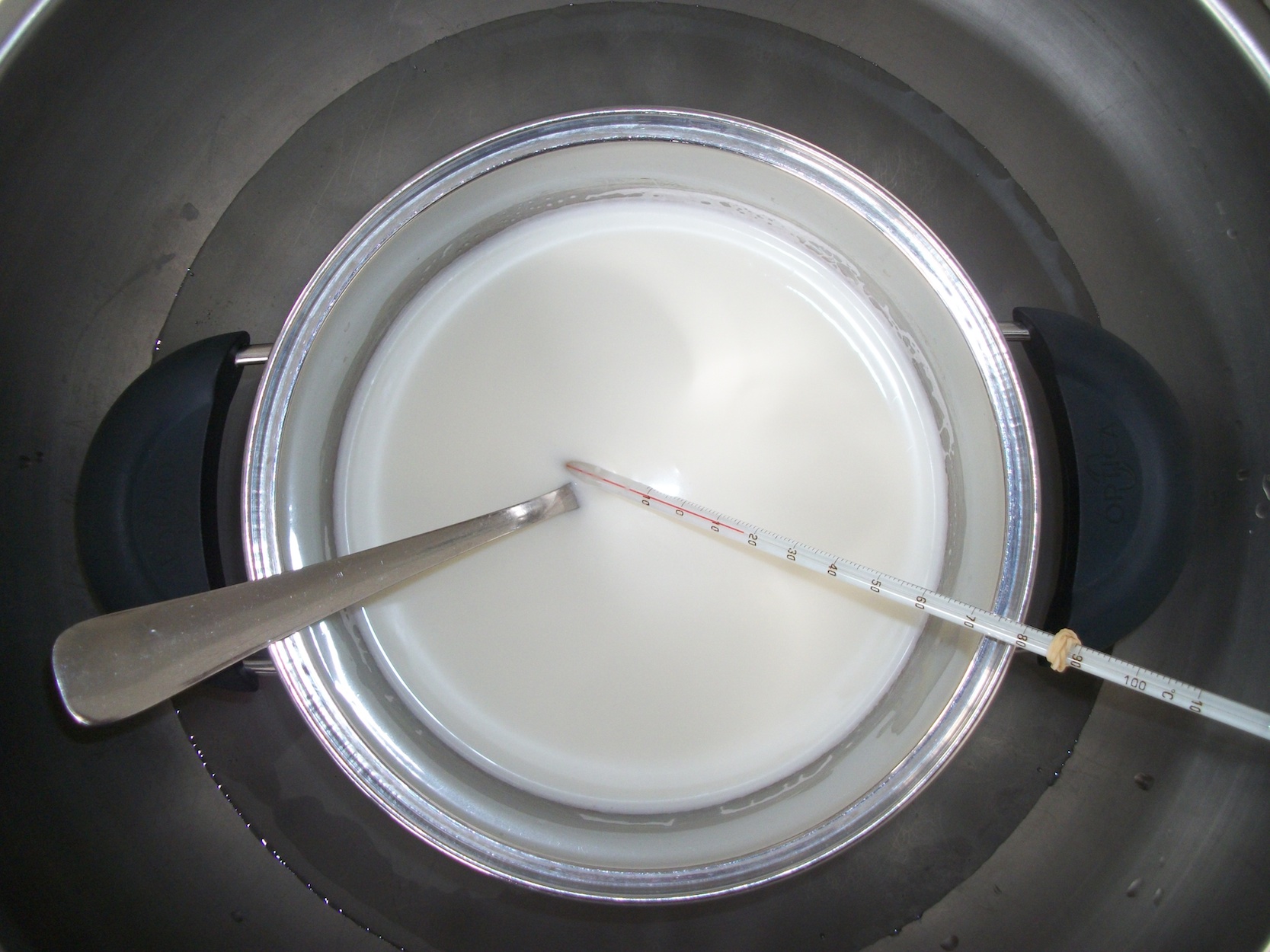
100_3960 smThis is the question, when you have your own milk-producing livestock. Pasteurization is the process of heating the milk to reduce the number of pathogens and increase the milk’s shelf-life. There are many different techniques for doing this, but they all involve raising the milk to a certain temperature and holding it there for a specific length of time (the higher the temperature, the shorter the time).

I have a number of friends and acquaintances who produce their own milk—some pasteurize, some don’t. There are certainly some strong opinions out there on both sides of the question:

“People have been drinking unpasteurized milk for thousands of years.”

“Yes, but people have been dying of diseases in unpasteurized milk for just as long. Raw milk is the perfect growth medium for all sorts of diseases.”

“It ruins the flavour of the milk.”

“I can’t taste the difference.”

“Cheese from unpasteurized milk is better.”

“I enjoy cheese from pasteurized milk just as much.”

“Unpasteurized milk is more easily digested.”

“I have no problem digesting pasteurized milk.”

“Pasteurization kills all the good bacteria and destroys nutrients in the milk.”

“It also allows milk to be kept for longer, and kills bad bacteria, too.”

The arguments go on and on.

So, what’s the truth?

Truth is that both sides have some valid points, and some points on which they grossly exaggerate or mislead. Yes, you can drink unpasteurized milk your whole life and never get sick. You can also drink pasteurized milk your whole life and never get sick.

I pasteurize.

Why?

Because I know exactly how clean I’m able to keep my milk while I’m milking. I know, from what’s left on my filter afterwards, that a few hairs, a little dirt, some dried skin flakes, the odd bug falls into the milk while I’m milking. Would bacteria from those things make us sick? Probably not. Does the idea of that stuff in my milk make me sick? Yep. Does the idea of drinking something that is the modified sweat of an animal that doesn’t even groom itself make me a little queasy? Yep.

So I pasteurize. For my peace of mind. For my sense of cleanliness.

But I gladly accept some of my non-pasteurizing neighbour’s milk when she has excess, and if for some reason I’m not able to pasteurize, I still use the milk. I don’t fret about it. Life is far too short to worry about whether your milk is pasteurized or not.

Relax and enjoy the cheese!

Omelettes

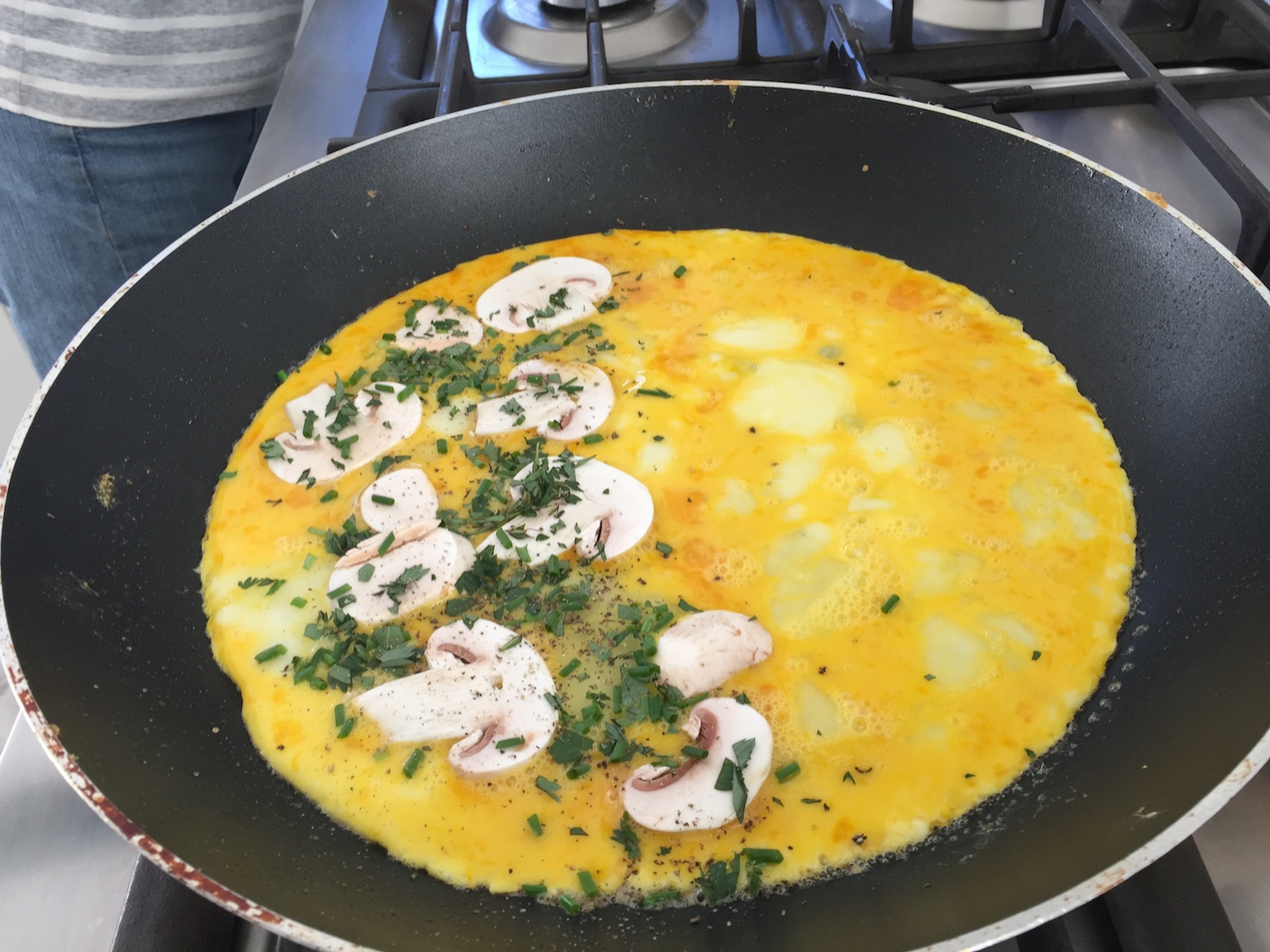
IMG_3731 smIt’s funny how quickly we can go from being desperate for eggs to having more than we know what to do with. My new chickens have all started laying now, and so this afternoon when I was looking for a quick dinner after getting home late, I found a fridge full of eggs.

Of course, that meant omelettes! Filled with cheese, mushrooms and herbs, they’re a delicious, quick-to-make, high protein meal that everyone loves. I served ours tonight with roast potatoes slathered in ketchup.


Favourite Kitchen Tools—Mortar and Pestle

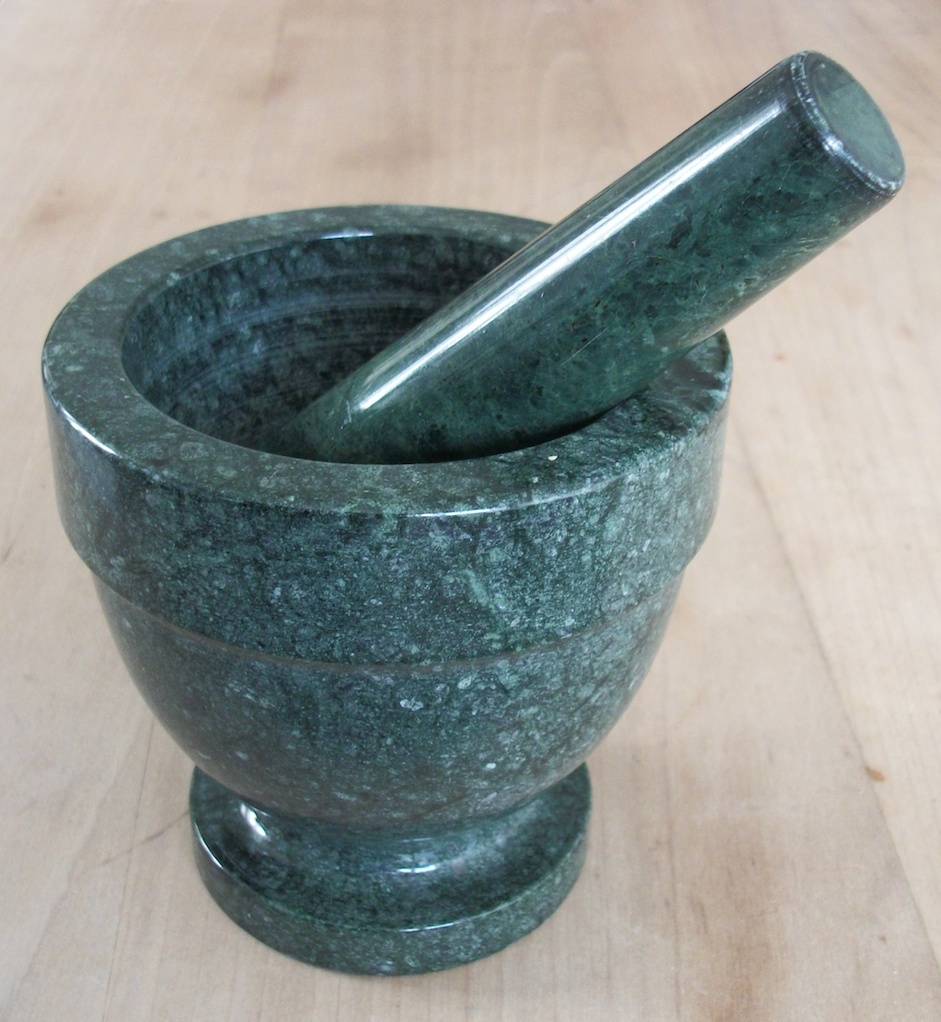
100_3915 smOkay, I admit it. We own two mortar and pestles—a large wooden one, and this small stone one. And we use them both.

There’s something satisfying about a mortar and pestle. There’s the timelessness of the act of grinding food between two stones—people have been doing that probably since we first used tools. There’s the rewarding transformation of some seed, herb, or vegetable into a powder or paste. There’s the lovely aroma of whatever it is you’re crushing. And there’s the joy of the physical work (which always makes me think of the Luddite’s Kitchen Weight Loss Programme). You just don’t get all that from a spice grinder or food processor.

We grow all of our own herbs, and some of the spices, too, so the mortar and pestle gets used regularly on herbs and spices. It’s great for crushing the dried garlic we use at this time of year, too. And with the milking season underway, I’ll soon be using it to grind rock salt to just the right consistency for salting cheeses.

A very handy tool to have around!

Ellesmere A&P Show

ellesmereA&Pparade1Today was the Ellesmere A&P Show (that’s Agricultural and Pastoral Show—Farm Show to you Americans). In true Ellesmere Show fashion, it rained, but we headed to the show mid-afternoon when it cleared somewhat.

We have a routine at the A&P show—the same every year. First stop is Karikaas Cheese.

When we first arrived in New Zealand, we could only get Karikaas cheeses at the A&P show. Now, nearly all the supermarkets carry their cheese. Still, we always make sure we buy a few wedges at the show.

Then, of course, we had to pick up a bottle of our favourite olive oil—South Lea, which I’ve blogged about before—if only to say hello to Frances Baylis.

Of course, there are the obligatory mini-donuts. It wouldn’t be an A&P show without them!

The highlight of my trip to the show is usually the sheep shearing competition. Not that it’s exciting—indeed, this year, even the caller seemed bored with the action (though it was a pretty lopsided contest we caught—no exciting race to the finish)—but because it’s just such a Kiwi thing.

We admired the poultry (some particularly handsome roosters this year), the baked goods (our neighbour, Suzie, swept the baking section as usual), the giant swedes, and the radish seed (Suzie’s brother-in-law, also a neighbour, placed second there).

We watched the wood chopping competition (another favourite stop at the show), and the kids considered a carnival ride, but found them uninspiring.

ellesmereA&Pparade2A new find this year was Emilio’s Cheese, a real Italian woman selling serious Italian cheeses, including some that could probably be classified as biohazards. We came home with two—a lovely provolone, and another whose name I can’t remember, but that oozes and smells like dirty socks (that one was double bagged before being put in the fridge!).

We stayed long enough to watch the grand parade, with the Ellesmere Pipe Band marching sedately ahead while a lurching band of livestock and their handlers followed behind.

An exciting day out, for sure.

Klim Diplomacy

Kitchensm

All the kitchen you need for making ricotta!

I ran across this lovely article about unofficial Peace Corps cookbooks, and it brought a smile to my face.

There was no Panama Peace Corps cookbook when my husband and I were there, but there were plenty of recipes shared in the Peace Corps newsletter. I still have a few of them—ragged pieces of paper torn from the newsletter, smelling ever so faintly of mould.

The best Peace Corps recipe ever was for ricotta cheese made with powdered milk.

Fresh milk was impossible to come by in our village, as there was no electricity, and hence no refrigeration. Dairy of any sort just wasn’t part of the diet. But you could buy cans of powdered milk (marketed by Borden as Klim…the most uncreative name ever).

Today, with my goat milk, I am quite precise with temperature when I make ricotta, but the Peace Corps recipe was written for the Volunteer cooking over a three-rock fire with nothing more than a pot and a spoon.

The recipe went something like this:

Mix up two litres of milk from powder.

Heat to just below a boil.

Add ¼ cup of vinegar.

Skim off the cheese curds as they form.

This little recipe made surprisingly good ricotta, even from powdered milk. With it, we managed lasagne, pizza, and all manner of other cheesy treats over our little fire. It was a delightful break from unending days of rice and yuca.

Excited by our ability to make foods from home, we shared our pizza with the neighbours.

They thought it was disgusting.

But we all laughed and enjoyed the chance to talk about and compare our different cultures and cuisines.

One of the goals of Peace Corps is to foster understanding and exchange between cultures. Food is an important part of that exchange for all Peace Corps Volunteers. Even when the various parties can’t agree on what tastes good, food opens dialogue, it makes people smile, it is a common language.

Perhaps the world would be a more peaceful place if we all tried a little Klim diplomacy.

Paneer

100_3424 smThis is such an easy, wonderful cheese to make, that even without a ready supply of fresh goat milk, I’d keep making this cheese.

Paneer is used largely in Indian cooking, though I’ve been known to throw it into oriental stir fries where it takes the place of tofu. No matter where you use it, it gets lovely crispy edges when it fries, and it soaks up spicy flavours.

Paneer takes almost no time to make (in cheese terms, anyway), and requires no special equipment or cultures. As a friend of a friend once said, “Paneer is very dangerous.” Too easy to make and too good to resist! Give it a go!


1 gal whole milk

2 tsp citric acid, dissolved in ¾ c. hot water OR ½ c. fresh lemon juice

Heat the milk on high to a foaming boil, stirring constantly to avoid scorching. Turn the heat down to low and quickly add the citric acid solution, stirring very gently. The milk should curdle almost instantly. (If it doesn’t, add a little more acid). As soon as the milk has curdled, remove it from the heat, and let it sit, covered, for 10 minutes. Spoon the curd gently into a colander lined with cheesecloth (3 layers if you’re using “cheese cloth”, 1 layer if you’re using butter muslin (known here as baby muslin; you can also just use a clean handkerchief). Once the large chunks have been transferred to the colander, gently pour the rest of the liquid and curds into the colander. Pull up the corners of the cloth and twist gently. Hold the bundle under lukewarm running water for 10 seconds, then hang to drain for 3-4 hours. To speed up the draining, you can press the cheese under a light weight (put a small plate or saucer on top of the cheese to spread the weight evenly; I use a 2 litre bottle of water) for 1 ½ hours. Refrigerate until you’re ready to use it; use within 3 days.

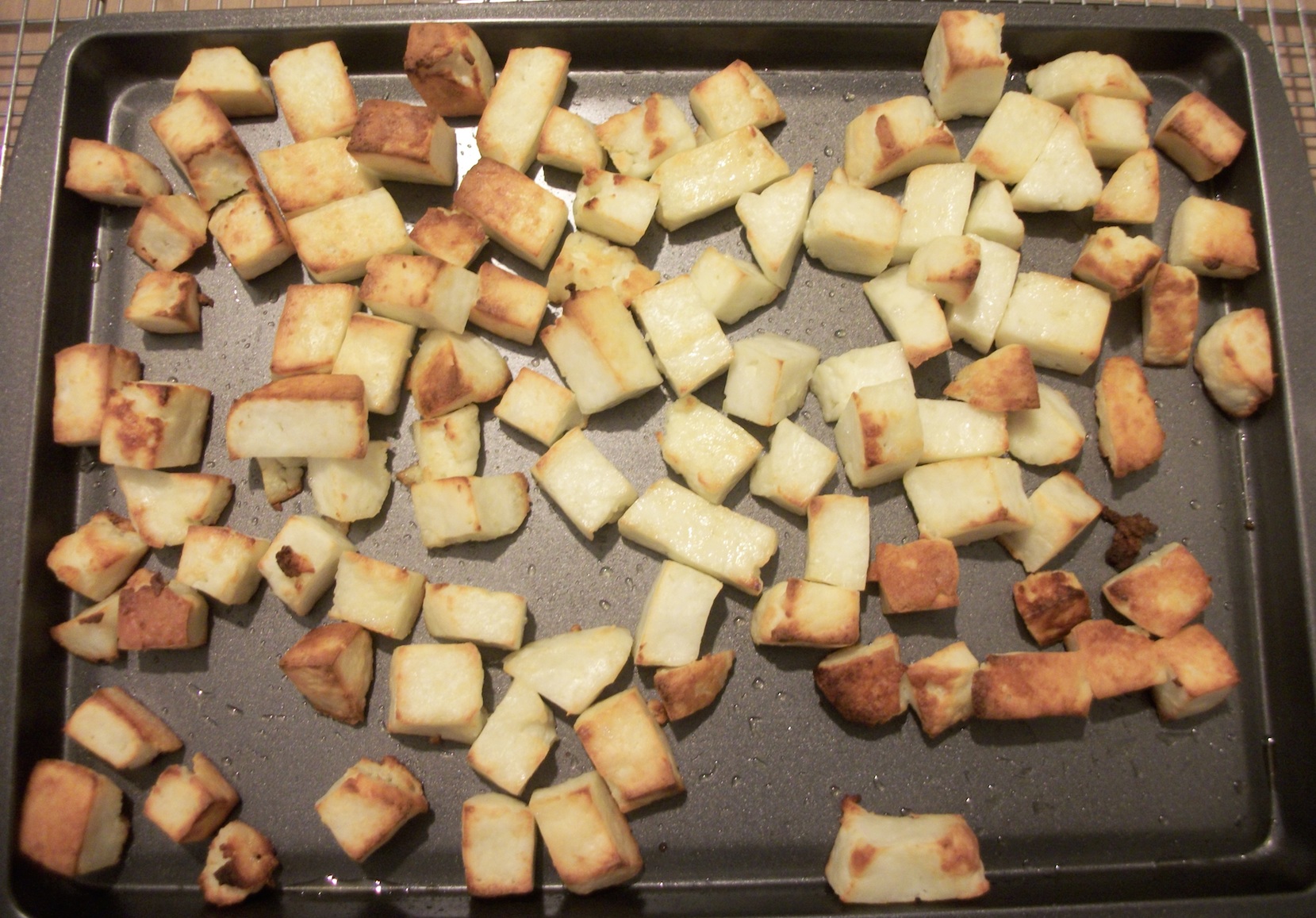
*When it comes time to cook paneer, most recipes say to fry it. If you don’t use a non-stick pan, the paneer will stick and fall apart. If you do use a non-stick pan, the paneer will sputter and spit hot oil everywhere. I avoid both by baking it on a lightly oiled non-stick baking tray in a hot (230°C/450°F) oven until it is nicely browned.