Spur-winged Plovers

Almost every year, a pair of spur-winged plovers (Vanellus miles, known as the masked lapwing in Australia) establishes a territory in the goat paddock. A few days ago, I was taking food to the goats, and noted where the plovers were making a ruckus at the other end of the paddock.

This afternoon, I took a walk out there. The plovers were nowhere to be seen, and I was worried–they’re not always successful nesters here. There are simply too many predators around our property.

I nearly turned around, but I decided to take a look anyway.

I was rewarded with the perfect plover nest. Two eggs, a little dried grass, and some rocks.

The spur-winged plover self-introduced from Australia in 1932. Since then, its population has grown dramatically. No surprise when you consider it likes open habitat, and is quite happy to set up house in paddocks, parks, and road verges (we once had a pair nesting in the middle of an intersection nearby).

It has done so well since it arrived in New Zealand that its protections as a native bird were removed in 2010 due largely to the problems it was causing for aircraft (airports are lovely habitat for it). It is one of only two native birds to not be protected under the Wildlife Act (the other is the black backed gull).

I enjoy the plovers. I love their harsh night-time cry, and their indignant posturing while defending territory and nest. I love the fact they cheekily nest wherever they want and expect everyone else to stay out of their way.

I’ll be watching these eggs closely. Fluffy plover chicks are even more fun to see than plover eggs.
When the pests are cute

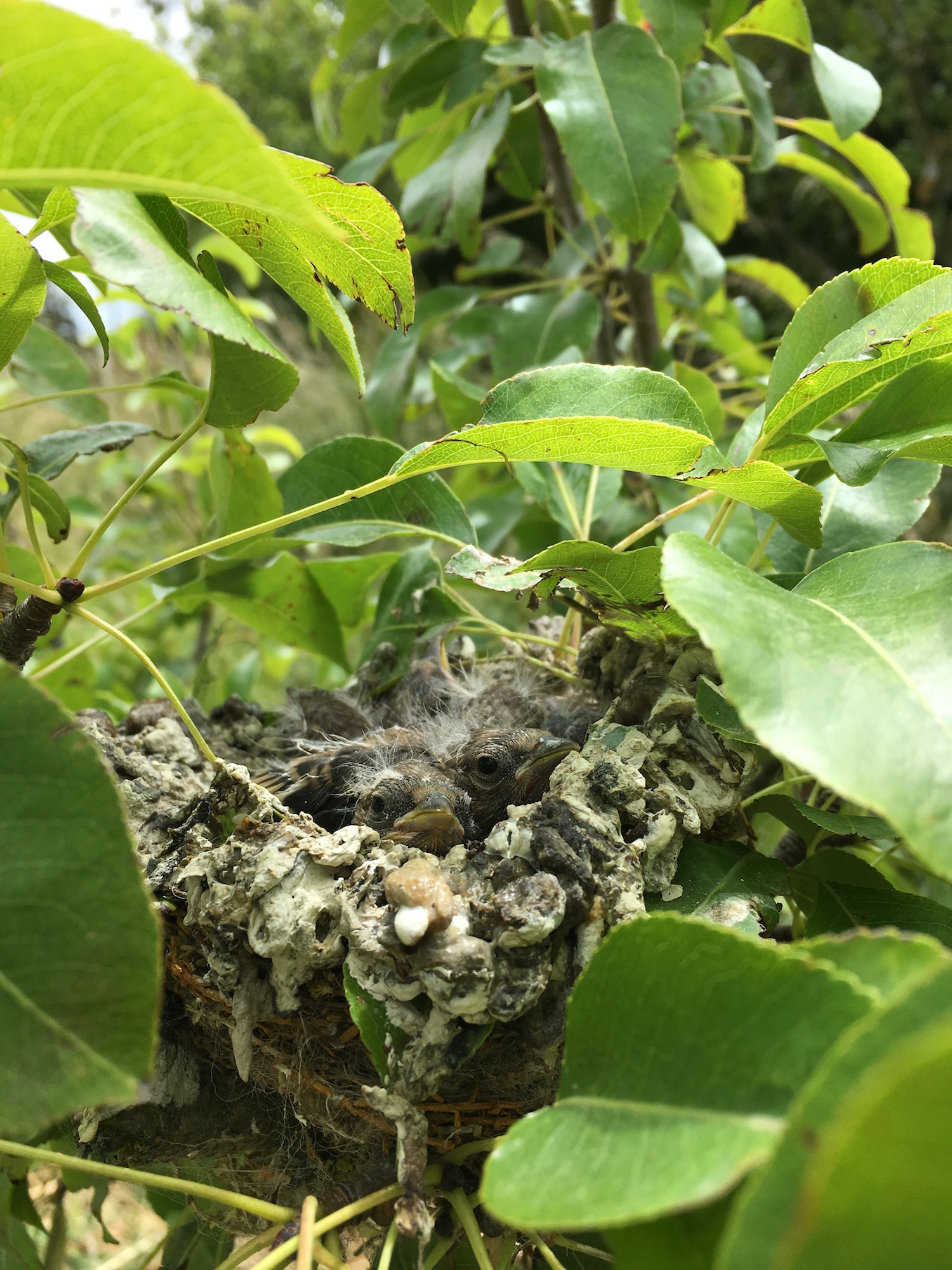
img_2765A month ago, I saw a perfect little bird nest in one of the fruit trees—incredibly tidy, and woven from grass and lichen. It was so pretty, I couldn’t bear to remove it, though I knew it must be the nest of a non-native bird (that’s about all we have here). Starling and house sparrow nests get the heave-ho as soon as I find them. This one…well, I couldn’t possibly disturb something so cute.

I forgot about the nest for several weeks, but today my husband noticed it was chock-full of chicks. Five grey fluffy European goldfinches (Carduelis carduelis)—so ugly they were adorable.

We don’t really need any more goldfinches, but since we don’t grow grain, they’re not much of a pest to us. These five chicks, though, will likely join the flock that descends on the neighbours’ fields in late summer. Sorry, guys. If you’d seen this cute nest of chicks, you’d understand.

Takahē PDA

2016-12-11-11-49-22On a family trip to Wellington this weekend, we visited Zealandia, a predator-fenced wildlife sanctuary. A number of endangered native birds, reptiles, amphibians and insects have been introduced to the sanctuary, and many have done well there. Among the birds we saw were kākā, saddlebacks, and kākāriki. But my favourites of the day were a pair of geriatric takahē. Takahē are beautifully coloured, stocky birds about the size of a large chicken. They were thought extinct until 1948 when they were rediscovered in a remote area of the Murchison Mountains. In spite of protected habitat and a captive breeding programme, takahē remain critically endangered, with a population of around 300.

This pair were once part of the captive breeding programme, but at over 20 years old, they are no longer able to produce viable eggs. They were transferred to Zealandia to live out their retirement where they can be ambassadors for their species. They were certainly doing their job this weekend.

When we were there, the takahē were hanging out in a grassy clearing, feeding leisurely and basking in the sun. As we watched, the male walked over to join the female and groom her—a cute public display of affection. They talked to each other quietly as they fed, and completely ignored the half-dozen people standing around watching. They looked content and relaxed—just like a retired couple should.

I hope this unique bird can hold on, and flourish once again, if only in predator-free sanctuaries and offshore islands. It would be sad to lose it…again.

Phalanx of Gulls

2016-04-18 14.50.46 cropThey normally announce their presence with raucous calls, but these were silent but for the faint hiss of feather on feather as they beat their wings. It was the hiss that made me look up, and I was surprised to see so many gulls being so quiet. Several hundred flew low overhead.

On their way from one freshly ploughed field to another, I suppose there was no need for conversation.

One lone gull cawed once. And the rustling wings moved on.