Overspray

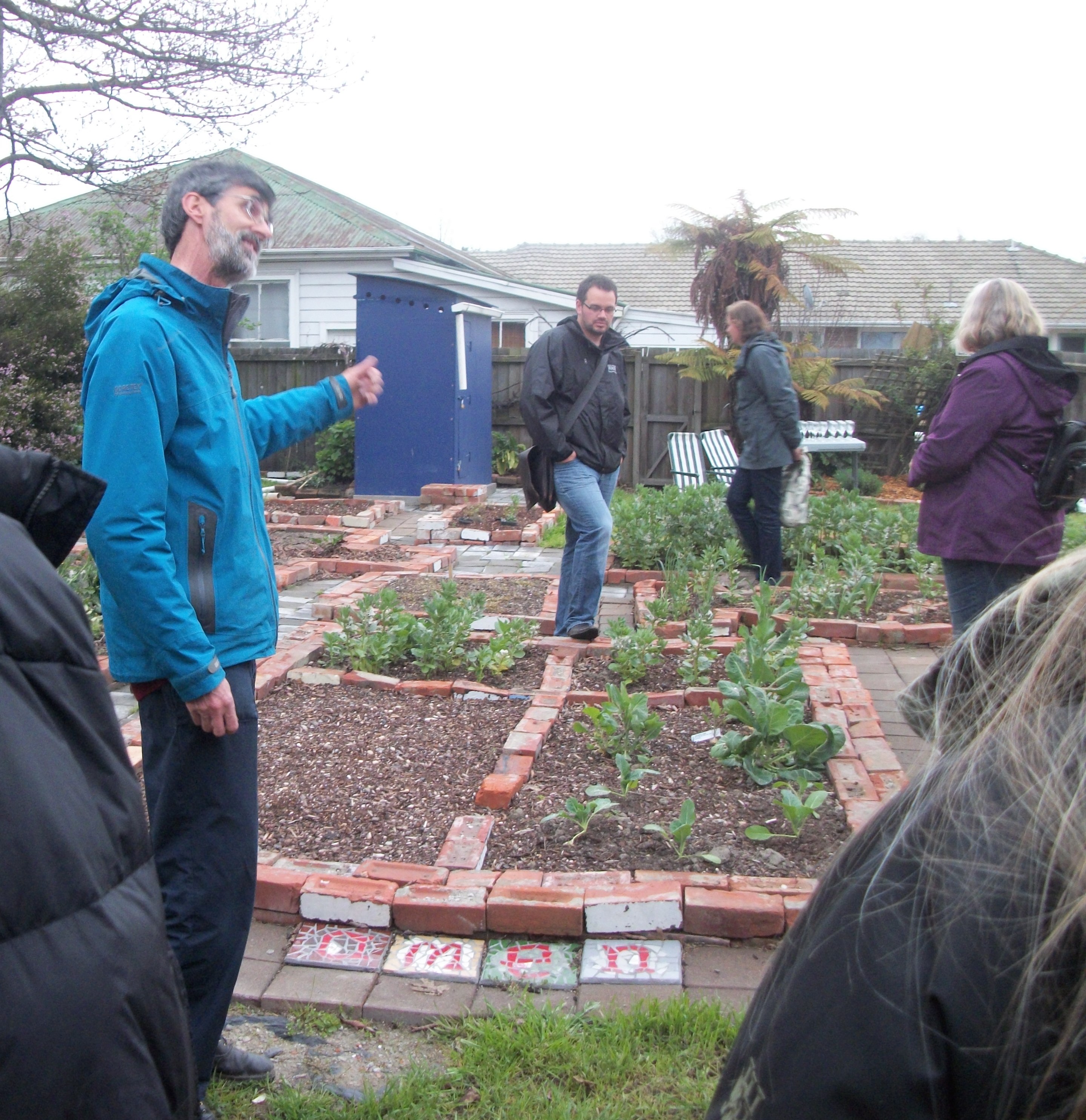
100_4002Planting out, I scrutinise each plant for health. I discard damaged or poorly growing plants. I pick off pests.

But there are some problems I can’t do anything about.

The neighbour’s 2,4-D overspray is one of those.

2,4-D is a broadleaf herbicide that has become increasingly popular with our neighbours over the past five years. Unfortunately, it is extremely volatile, so if the wind is blowing our direction when they spray, we are enveloped in a cloud of herbicide.

It usually doesn’t kill our plants outright, but it has long-lasting effects on them. Grapes are particularly susceptible, but we’ve had damage to nearly every vegetable crop in some years. Some plants, like the green beans, seem to be able to ‘grow out’ of the damage. Others never do, and the effects of an early spring spray can still be seen at harvest time in late summer.

This year, the first overspray hit us in mid-October. Though the frost-tender crops weren’t in the garden yet, they were in the greenhouse, and didn’t escape damage.

I’d surveyed the damage in general as the plants were massed in the greenhouse, but as I inspected each plant at plant out time, I saw the full extent of the damage.

The most obvious early sign of 2,4-D damage is deformation of the leaves—they elongate and curl, and develop odd-looking venation. They can also bleach, sometimes looking nearly white. This year, the tomatoes were particularly hard-hit, with almost all the young leaves deformed. Eggplants, too. Thankfully, the peppers seem to have escaped, and many plants weren’t even up yet, so they made it, too.

I accept that my neighbours aren’t organic farmers, and that they have little control over when the contractor comes to do their spraying, but still it is discouraging to face the same overspray problems year after year.
Broad Beans

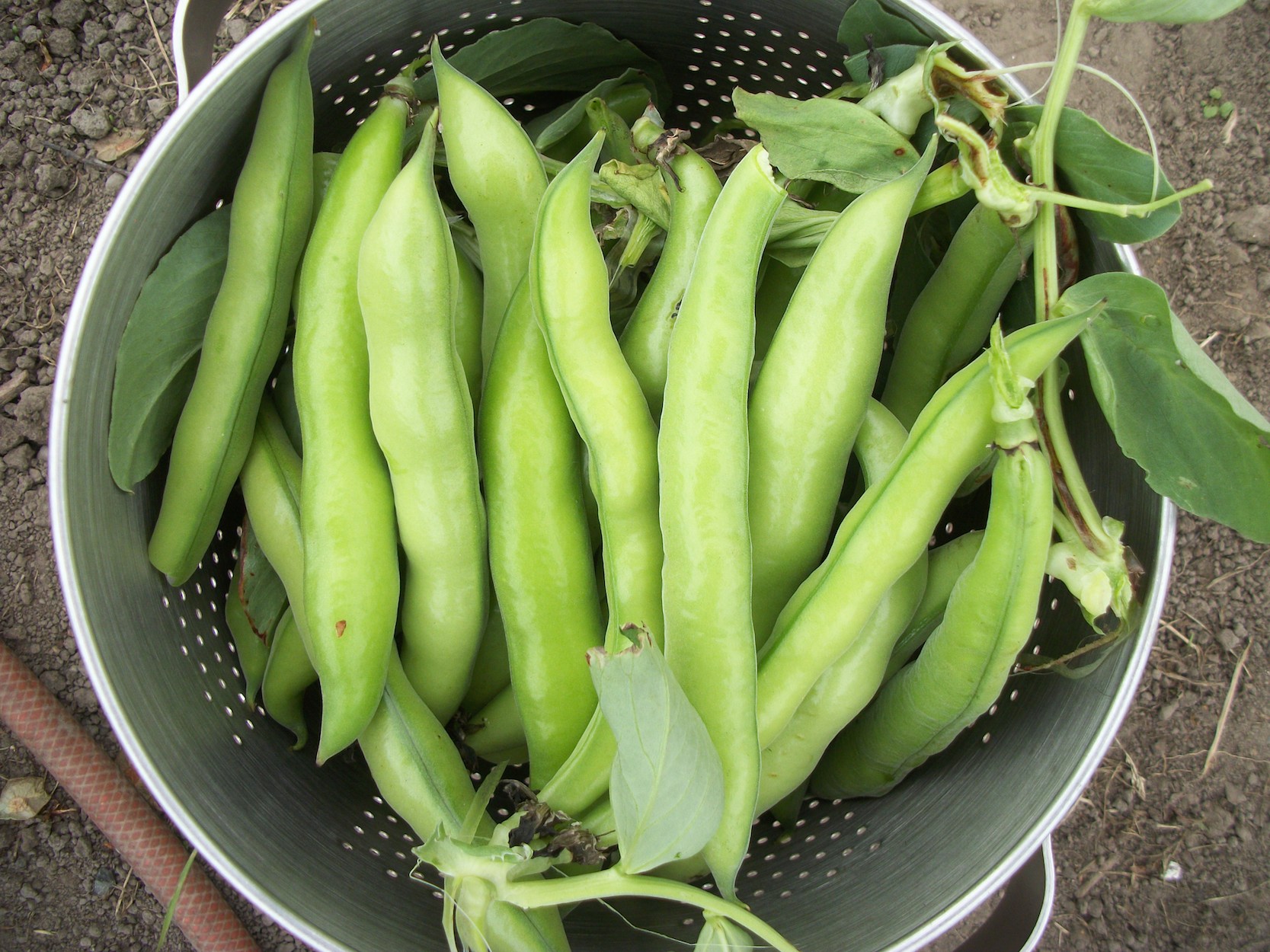
100_4007 smI had never eaten broad beans (aka fava beans) before moving to New Zealand, but now I can’t imagine early summer without them. They’re uncommon in the U.S., and even here where they’re grown by the hectare, they’re often considered “old people’s food”. During my brief stint selling vegetables at the Leeston market, I never sold broad beans to anyone under the age of 80.

But his attitude is unfair. Broad beans are more versatile than that. They have a bold, almost floral flavour that needs no embellishment. When young, the beans are sweet like peas, and they grow starchier as they mature. Somewhere between sweet and starch, they are at their best.

The “usual” way to eat broad beans is to blanch them, peel the skin off each bean, then serve them or cook them into a dish. Nothing wrong with that, unless you’re the cook, who has to shell and peel all those beans.

We prefer to make the consumers do half the work. We blanch the beans and serve them as finger food. They make a lovely appetizer—pop them out of their skins right into your mouth. Paired with a nice Sauvignon Blanc and eaten outdoors on a summer evening, they are no longer “old people’s food”. They become urbane and sophisticated. Something to be savoured with intelligent conversation.

And if you’re more the beer and burgers type, broad beans will oblige. They make a mean green burger that goes well with cheese, mushrooms and ketchup. Light enough for a lager, strong enough for a stout, broad bean burgers go with just about anything.

Broad beans—a versatile legume that’s not just for old people.


To Pasteurize or Not To Pasteurize

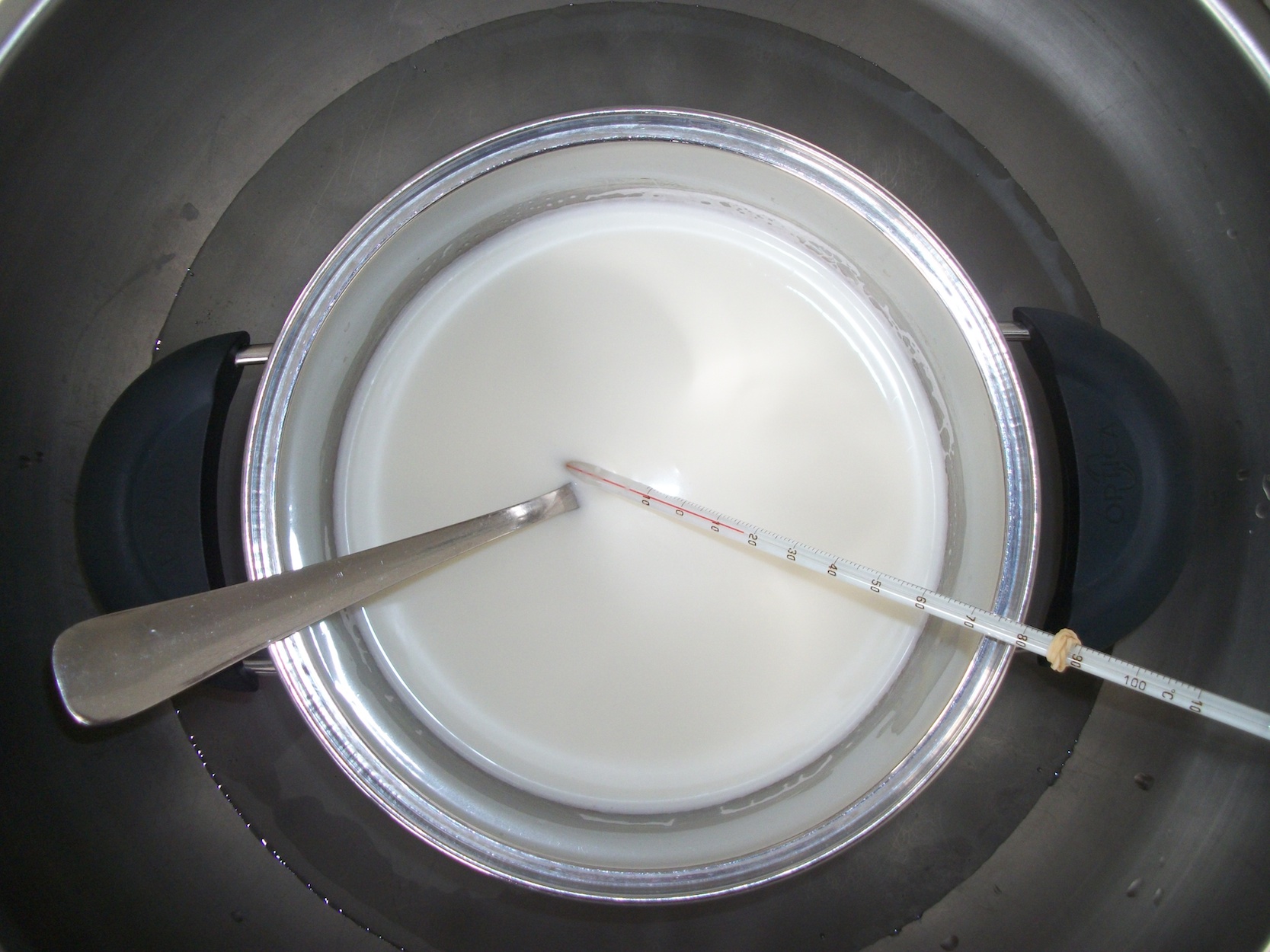
100_3960 smThis is the question, when you have your own milk-producing livestock. Pasteurization is the process of heating the milk to reduce the number of pathogens and increase the milk’s shelf-life. There are many different techniques for doing this, but they all involve raising the milk to a certain temperature and holding it there for a specific length of time (the higher the temperature, the shorter the time).

I have a number of friends and acquaintances who produce their own milk—some pasteurize, some don’t. There are certainly some strong opinions out there on both sides of the question:

“People have been drinking unpasteurized milk for thousands of years.”

“Yes, but people have been dying of diseases in unpasteurized milk for just as long. Raw milk is the perfect growth medium for all sorts of diseases.”

“It ruins the flavour of the milk.”

“I can’t taste the difference.”

“Cheese from unpasteurized milk is better.”

“I enjoy cheese from pasteurized milk just as much.”

“Unpasteurized milk is more easily digested.”

“I have no problem digesting pasteurized milk.”

“Pasteurization kills all the good bacteria and destroys nutrients in the milk.”

“It also allows milk to be kept for longer, and kills bad bacteria, too.”

The arguments go on and on.

So, what’s the truth?

Truth is that both sides have some valid points, and some points on which they grossly exaggerate or mislead. Yes, you can drink unpasteurized milk your whole life and never get sick. You can also drink pasteurized milk your whole life and never get sick.

I pasteurize.

Why?

Because I know exactly how clean I’m able to keep my milk while I’m milking. I know, from what’s left on my filter afterwards, that a few hairs, a little dirt, some dried skin flakes, the odd bug falls into the milk while I’m milking. Would bacteria from those things make us sick? Probably not. Does the idea of that stuff in my milk make me sick? Yep. Does the idea of drinking something that is the modified sweat of an animal that doesn’t even groom itself make me a little queasy? Yep.

So I pasteurize. For my peace of mind. For my sense of cleanliness.

But I gladly accept some of my non-pasteurizing neighbour’s milk when she has excess, and if for some reason I’m not able to pasteurize, I still use the milk. I don’t fret about it. Life is far too short to worry about whether your milk is pasteurized or not.

Relax and enjoy the cheese!

Ellesmere A&P Show

ellesmereA&Pparade1Today was the Ellesmere A&P Show (that’s Agricultural and Pastoral Show—Farm Show to you Americans). In true Ellesmere Show fashion, it rained, but we headed to the show mid-afternoon when it cleared somewhat.

We have a routine at the A&P show—the same every year. First stop is Karikaas Cheese.

When we first arrived in New Zealand, we could only get Karikaas cheeses at the A&P show. Now, nearly all the supermarkets carry their cheese. Still, we always make sure we buy a few wedges at the show.

Then, of course, we had to pick up a bottle of our favourite olive oil—South Lea, which I’ve blogged about before—if only to say hello to Frances Baylis.

Of course, there are the obligatory mini-donuts. It wouldn’t be an A&P show without them!

The highlight of my trip to the show is usually the sheep shearing competition. Not that it’s exciting—indeed, this year, even the caller seemed bored with the action (though it was a pretty lopsided contest we caught—no exciting race to the finish)—but because it’s just such a Kiwi thing.

We admired the poultry (some particularly handsome roosters this year), the baked goods (our neighbour, Suzie, swept the baking section as usual), the giant swedes, and the radish seed (Suzie’s brother-in-law, also a neighbour, placed second there).

We watched the wood chopping competition (another favourite stop at the show), and the kids considered a carnival ride, but found them uninspiring.

ellesmereA&Pparade2A new find this year was Emilio’s Cheese, a real Italian woman selling serious Italian cheeses, including some that could probably be classified as biohazards. We came home with two—a lovely provolone, and another whose name I can’t remember, but that oozes and smells like dirty socks (that one was double bagged before being put in the fridge!).

We stayed long enough to watch the grand parade, with the Ellesmere Pipe Band marching sedately ahead while a lurching band of livestock and their handlers followed behind.

An exciting day out, for sure.

Springtime pests

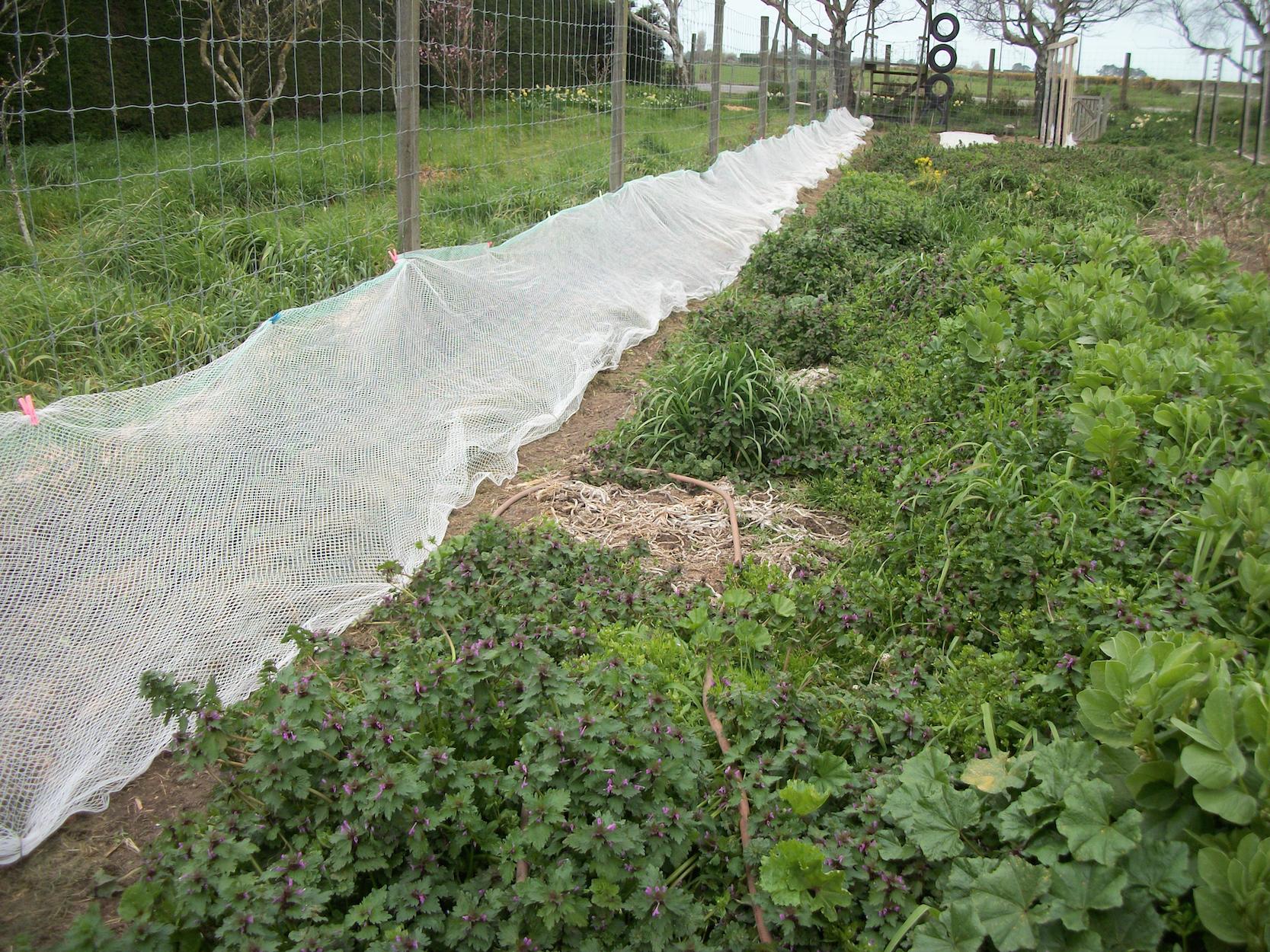
Netting covering newly-planted pea seedlings

Netting covering newly-planted pea seedlings

Pests are always a concern for me—rats and mice get into my animal feed, hedgehogs eat my cucumbers, brush-tailed possums strip the bark off trees, slugs devour the strawberries, aphids infest the lettuce—but springtime is the worst season for pests.

And English sparrows are perhaps the worst pest I deal with.

Sparrows are a problem year round. In autumn and winter, they roost in the sheds, covering everything with their droppings. They rummage through the compost pile, spreading kitchen scraps everywhere. In spring and summer, they nest in the gutters, causing rainwater to back up into the house instead of going down the drains. Or they nest the sheds, where they make an even bigger mess than they did roosting there all winter.

But the most annoying thing the sparrows do is eat seedlings. They sit in the trees and watch as I plant out my peas and lettuces, then descend upon the garden and gobble them up as soon as my back is turned. Nothing is safe from them until it is at least 30 cm tall.

Until a few years ago, the damage was minimal. The neighbour used to poison the sparrows, and their population was relatively small. Since he retired and sold his farm, however, the sparrow population has increased dramatically. The new owner doesn’t poison the birds…which I’m happy about on one hand, because it is not a humane death (I hated finding dying birds on the property–horrible to watch). On the other hand, the sparrow population has reached plague proportions.

Which means spring planting is an exercise in pest control.

Everything I plant has to be covered with bird netting for a few weeks or it is eaten to the ground. And once I remove the netting, I’m sure to lose some plants as the birds strip half the leaves within a day of the covers coming off.

I suppose I should take the Panamanian approach to planting—three seeds in each hole—one for me, one for God, and one for the pests.

Capturing water

100_3635 smSummers are dry here. Nor’west winds whip hot and dry across the plains, sucking moisture from the plants and soil. Though I protect my garden as best I can, with mulch and shelter, there is no escaping the need to water, at least once in a while.

That’s in a good year, when it rains occasionally during the summer.

Last year, we got almost no rain from October to February, and our autumn and winter have been unusually dry as well. The prediction with climate change is for more of our years to be like that.

Which naturally leads me to worry about water. For now, there is plenty of water in our well to keep the vegetable garden green in a dry year. But if we have more and more dry years, who knows what might happen to the water table.

So this year, when we needed to address some aging guttering on our sheds anyway, we tried to arrange things so we could make better use of the rain that does fall on the property.

We had a rain barrel before—a rusty old 55 gallon drum of unknown origin, from which we were able to draw rust-flecked orange water in an emergency. It was great for flushing the toilet after the earthquakes, but it wasn’t particularly pleasant, and it wasn’t enough water to make much difference if we needed to use it on the garden.

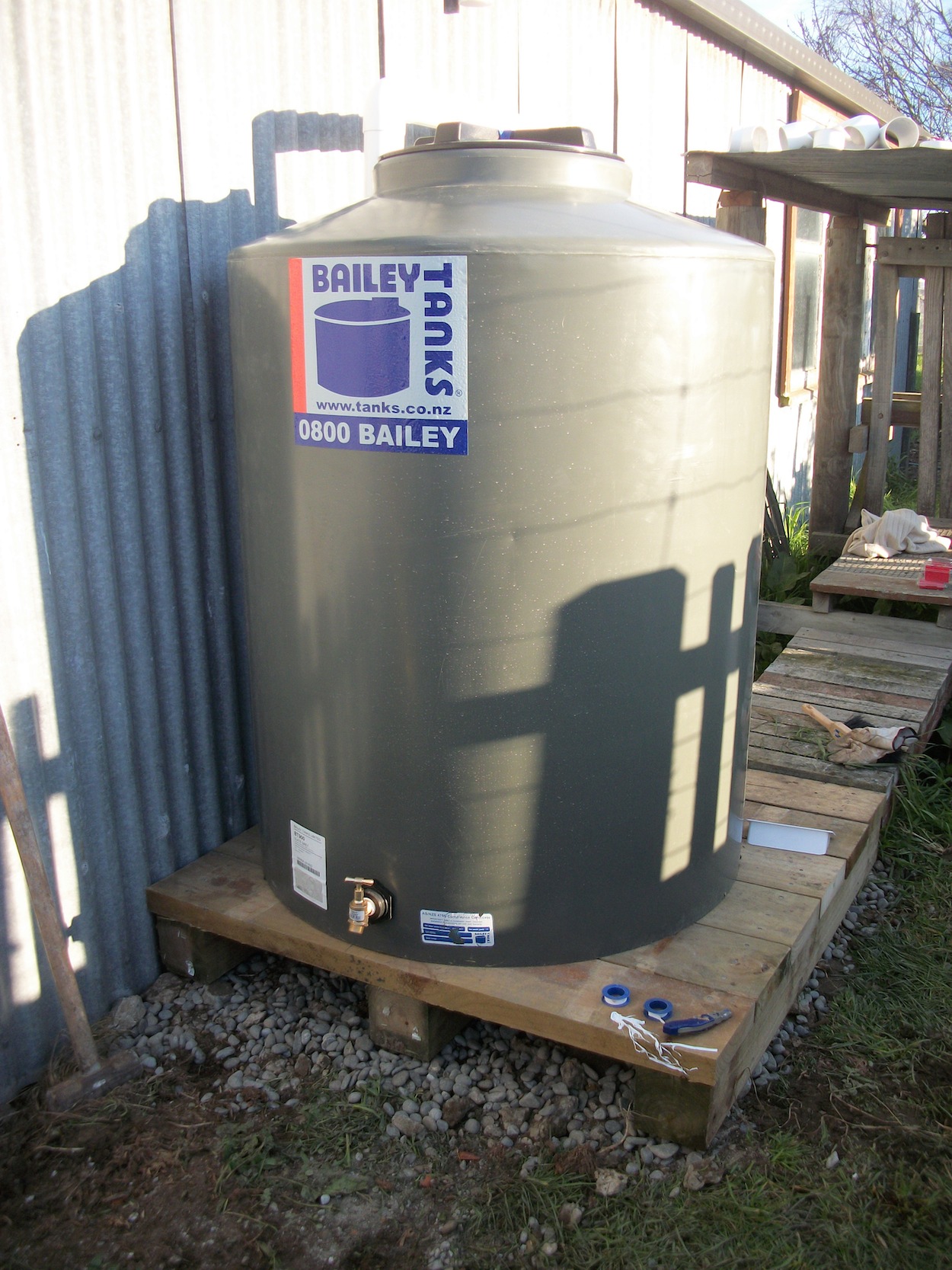
Now we have a 900 litre tank collecting water off our large shed roof, set up so I can easily attach a hose and draw off the water when I need it. And the water from the small shed’s roof is being directed into the pond, so that, hopefully we won’t need to refill it with water from the well when summer evaporation threatens to dry it up. Any overflow will water the garden around the pond.

There is still a lot of water we don’t capture, but the rain off the house roof currently runs out into perennial garden areas, including some of our fruit trees, so it’s reasonably well used.

Waste not, want not. At least, we hope so.

Where the sidewalk ends

100_2204 cropFriday afternoons, my daughter and I have two hours to kill in the city between band practices. We usually pass the time by going for a walk. But neither of us likes walking on busy city streets, so we usually drive somewhere close enough that we can walk out of town.

There is a wealth of these magical spots, particularly around the hills, where the city is patchy and interspersed with steep valleys.

Today, we walked from a tidy little neighbourhood of small houses built sometime in the 1960s on the broad flat at the mouth of a valley. We climbed out of the neighbourhood toward the head of the valley, passing houses of decreasing age and increasing size, until we were walking past brand new houses of immense proportions, with wide expanses of plate glass overlooking the valley. Then a few skeletal houses, surrounded by scaffolding, and then no more.

At some point along the way, the road narrowed and the sidewalk petered out. Paddocks full of beef cattle spread out below us, and bush-covered slopes rose above. Bellbirds sang in the afternoon light.

The road narrowed to one lane, and a sign warned motorists that there were no further turning spots and no exit. We walked on until we reached the farm at the end of the road, a vineyard spread out below on the valley floor.

The sound of traffic was just a distant hiss, and I contemplated what it must be like to be the last farmer in this valley, holding out at the end of this long road, with no way in or out, save through the city.

It must be terribly isolating—as much as being on a remote station. None of this farmer’s neighbours share his or her interests, concerns, or outlook on life—they are all townies on their lock-it-and-leave-it properties. They know nothing of calving, fencing, or weed control. They don’t notice when there has been too much or too little rain. Their only concern with a late frost is whether it means the ski fields will be able to stay open another week.

It can’t be easy to stay in that sort of situation, and I admire the farmer that can hold on in the face of the encroaching city. Too soon, I fear they will be gone.

Space Salad

Simple to grow at home. Not so simple in space.

Simple to grow at home. Not so simple in space.

Astronauts on the International Space Station made history today—they were the first people to eat lettuce grown in space. Red romaine, I understand. With a little balsamic vinegar.

It took years to work out how to do it. Things gardeners take for granted like gravity, 24 hour day cycles, water, and air, are a challenge when growing vegetables in space.

So, why is it important that astronauts can eat fresh lettuce? As of yet, we’ve found nothing edible beyond our own planet. If humans are ever to spend significant time in space, we’ll need to know how to produce food wherever we are, not just for logistical reasons, but who would want to eat those nasty pre-packaged astronaut meals for years on end?

This is another example of people taking their crops with them wherever they go, as I discussed two months ago in Eating Native?

Which, of course, makes me think of how some of the foods introduced to New Zealand have become weeds and pests, damaging the native life forms. Will there someday be weeds in space? Let’s hope we’ve learned a thing or two about avoiding introducing pests before we get to that point.

Promise

DSC_0046 smThere comes a day every year. A day when winter loses its grip.

A day when the wind vane lazily turns around and the breeze no longer cuts sharply into our cheeks, but gently caresses our faces and tucks the hair behind our ears.

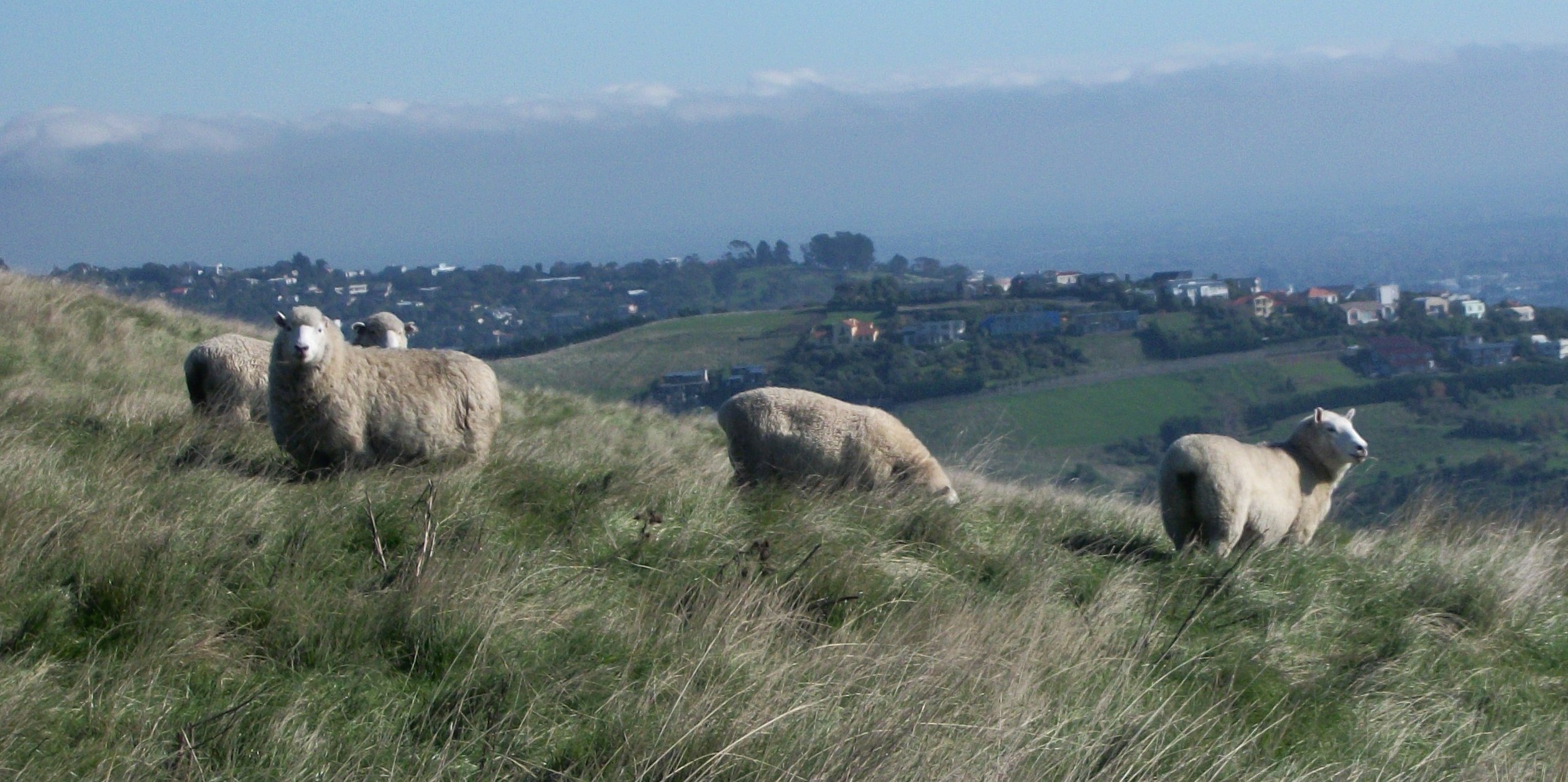
It is a day when the lanolin of four hundred Romney lambs next door warms and mixes with the smell of freshly turned earth and the exhalations of the grass.

It is a day when we throw open the windows, though it is only fourteen degrees outside.

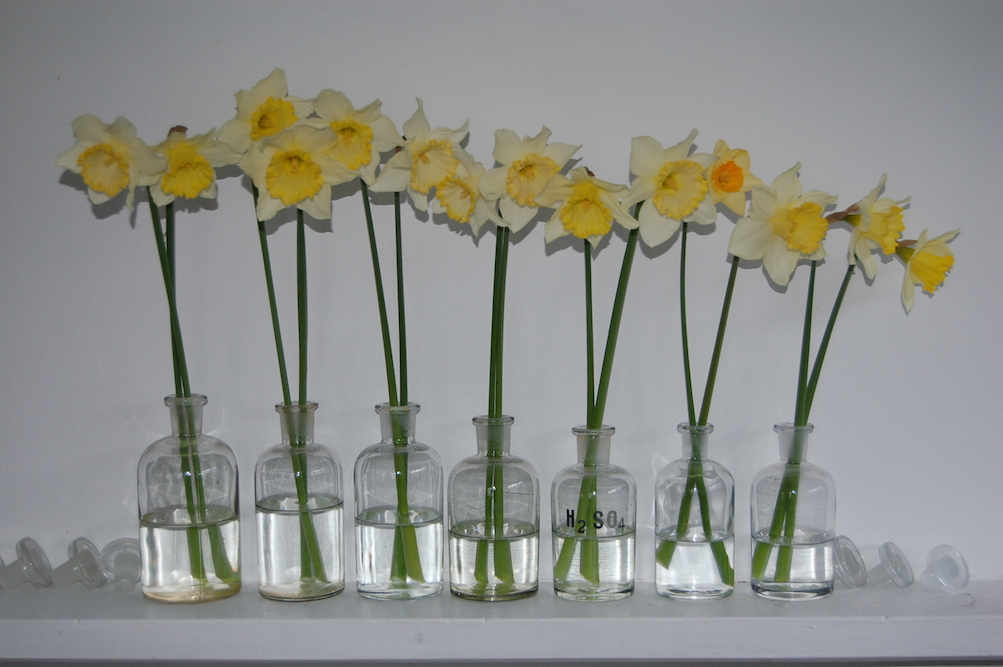
daffodils2 smIt is a day when we don’t worry that the firewood is scarce, when we can imagine a day that doesn’t start and end with a fire in the grate.

It is not spring. That day will come, but not yet. There are still weeks of kindling to split, and ice to break off the water troughs.

But it is the promise of spring.

And it is enough.

Food Security

A post-quake community garden in Christchurch

A post-quake community garden in Christchurch

After the recent earthquake in Nepal, I wrote a blog post about food security in the face of natural disasters, but I never actually posted it.

But this piece about using vacant red-zoned land to produce food in Christchurch, in the news today, made me come back to that post and decide it was worth posting.

After the February 2011 quake in Christchurch, I saw firsthand how much more devastating natural disasters could be in the city verses in rural areas. Responding to a request for help on Trade Me, my husband and I, along with a couple of neighbours, loaded the car with shovels, wheelbarrows, tools and food, and ventured into the hard-hit eastern suburbs.

We spent a day clearing houses and yards of liquefaction, tearing out buckled and destroyed linoleum, and sharing out the vegetables, bread, and milk we brought from our farms. The people we met were amazingly strong in the face of the destruction around them—not one house in the neighbourhood was still straight and level, and the street was nearly impassable, buckled and cracked.

But they had no tools to tackle the devastation. The carload of tools we brought with us for the day was more than the entire neighbourhood could muster. City living doesn’t require heavy duty wheelbarrows and large shovels, and there were more willing hands than tools to go around.

Then there was the lack of gardens in the city. With stores closed and power out for many days, getting and preparing food was difficult. While meals were airlifted into the city, in the country we simply lived on food from the garden.

So, how do we build resilience and food security into our cities? How do we create cities that can feed themselves, at least for a short time, after a natural disaster? Part of the answer lies in community gardens that can provide food and positive community support, as they did in Christchurch after the 2011 quake. Part of the answer lies in taking a long-term approach to city planning—planting fruit trees in public parks, preserving green space with good soil within the city instead of covering it all with buildings and roads.

I would love to see Christchurch, and all cities, bring food production back within the city limits. No, a city cannot produce all its food, but having community gardens and food-producing commons makes a city a more humane place, even when there isn’t a natural disaster to weather.