Thanksgiving

2016-11-25-18-36-30-smTimed to coincide with the last of the autumn harvest, Thanksgiving is traditionally a celebration of the foods that store through winter—pumpkins, apples, potatoes, corn.

Which is why we don’t really celebrate it here. Not in the traditional culinary sense, at least. Apples and potatoes are wrinkled and old by November. The pumpkins are all gone.

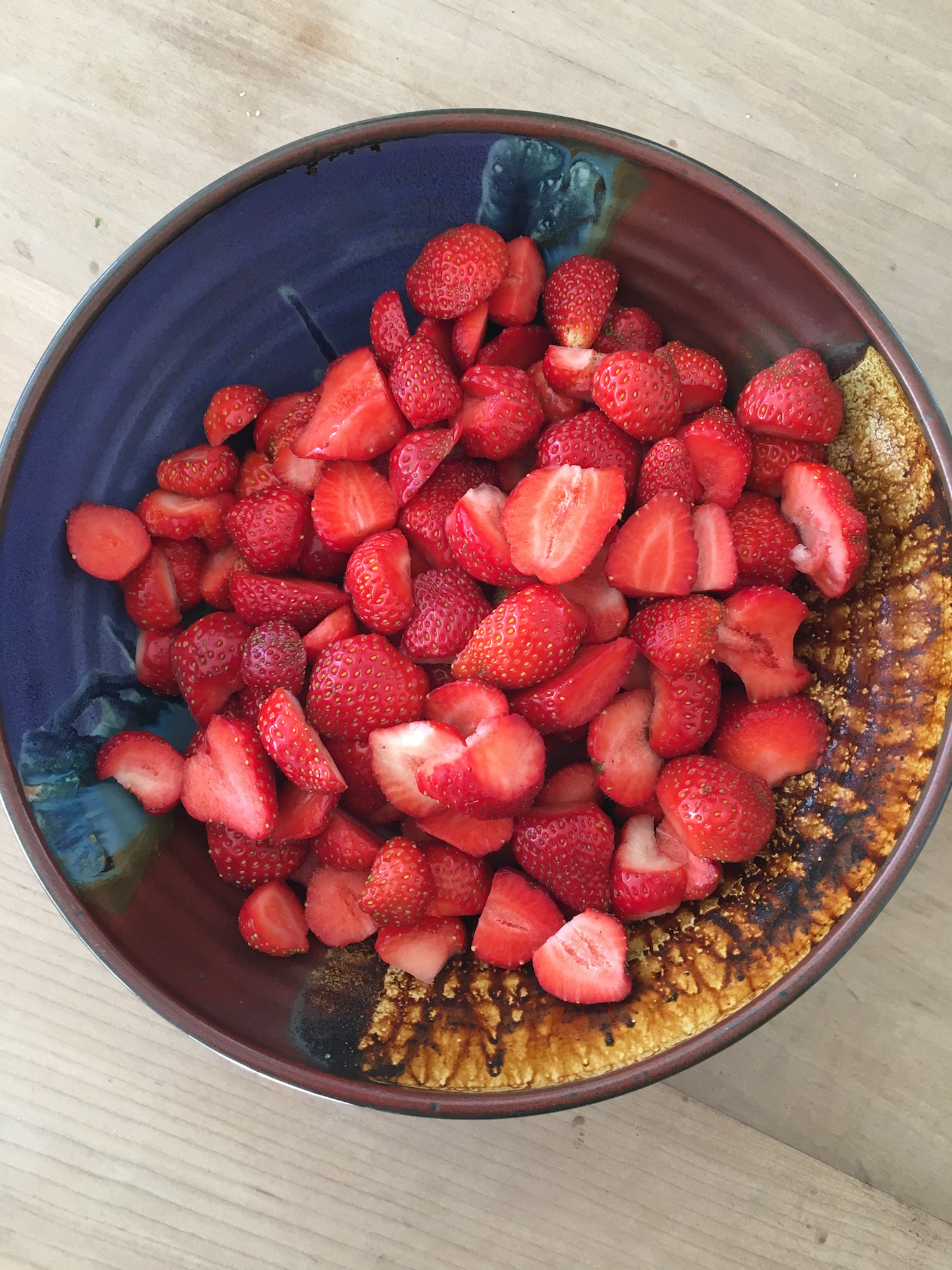
But there is much to be thankful for at the beginning of summer, and our Thanksgiving Day meal reflects this—pasta full of spinach, artichokes, and peas; a fresh green salad; and strawberries for dessert. Indeed, every day is a harvest celebration at our house. Every day, I am thankful for the sun, rain, and soil. I am thankful for our ability to produce much of our own food. I am thankful for my children, who understand and appreciate the amount of work that goes into every bite they eat—who thank the cook and the gardener every day.

I am thankful for the partner with whom I share the daily tasks that provide food for our table. I am thankful for the neighbours who help keep animals and plants alive when we go on vacation.

Yes, I’m sometimes a grumpy farmer—there’s never enough rain, the pests are terrible, the neighbour’s weed-killer has wafted across the fence line again…there’s always something to complain about.

But however much I grumble as I’m pulling weeds or dragging irrigation hoses around, dinner is always a time of Thanksgiving.

Poroporo

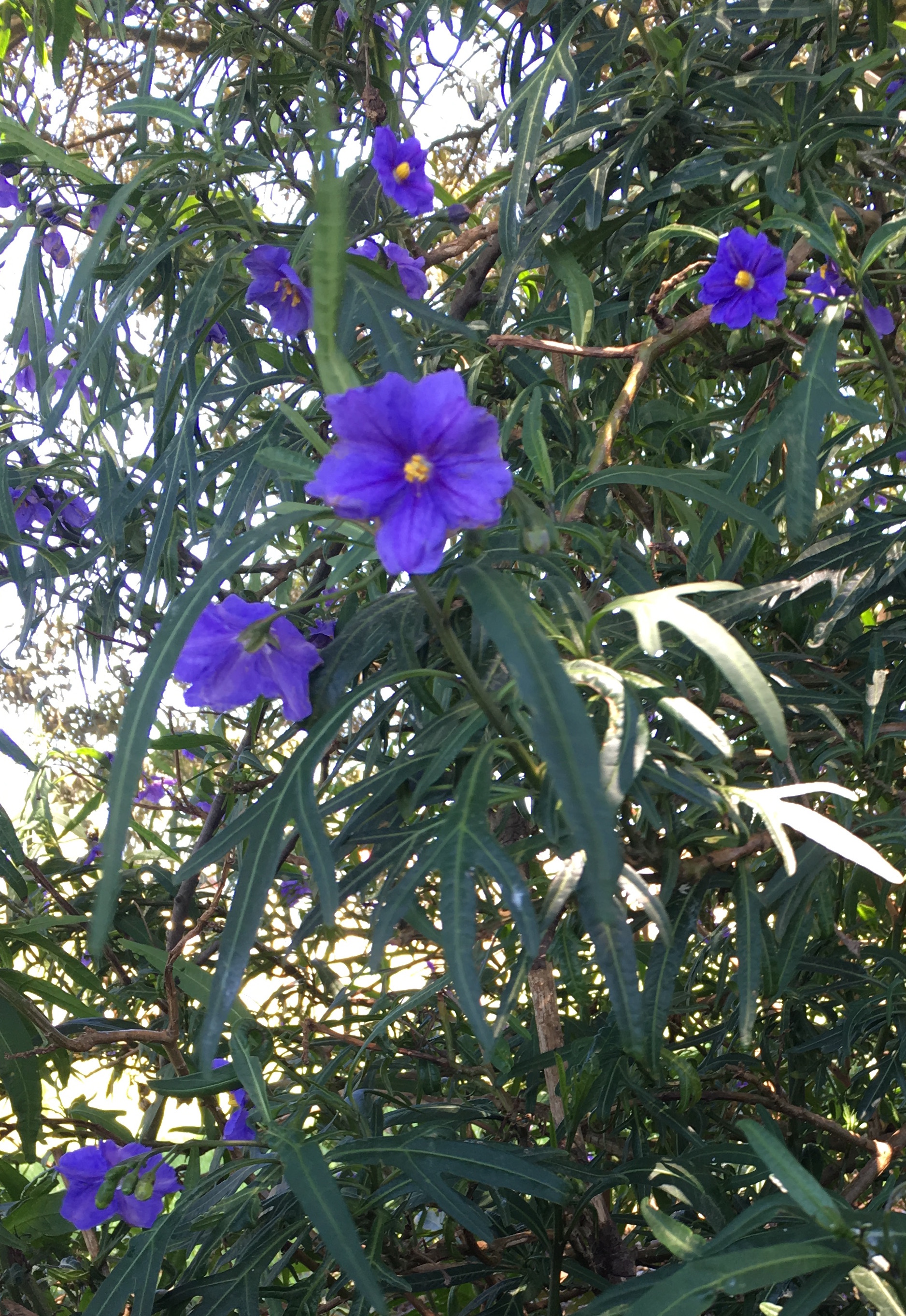
2016-11-22-13-39-04Poroporo (Solanum laciniatum) is a native shrub, and one of our few native plants typically classified as a weed. A few years ago, I noticed a tiny poroporo seedling sprouting under our oak trees—planted, no doubt by some bird roosting (and poohing) in the branches above.

At the time, the chickens were quartered under the trees, so I fenced it with a ring of chicken wire to keep it safe from their scratching.

It has now grown into a huge sprawling bush easily three metres in diameter and as tall as me. It is currently covered in gorgeous purple blooms. Later in the summer, it will drip with teardrop shaped yellow fruits. Weed or not, the plant is eye candy.

Eye candy only—not to be taken internally. Like many of the Solanums, poroporo is poisonous (though apparently the fully ripe fruit is edible…sort of). Fever, sweating, nausea, and abdominal pain are the unfortunate effects of poroporo poisoning.

In spite of its poisonous nature (well, actually because of it), poroporo is grown commercially as a source of steroidal alkaloids used medicinally to make cortico-steroid drugs like birth control and eczema treatments.

A pretty and useful weed!

Ripgut Brome

2016-11-08-16-14-49Ripgut brome. How can you not be curious about a plant named ripgut brome?

I was certainly curious, after it took over my yard this spring. I’ve hauled countless wheelbarrow loads of ripgut brome to the compost pile, and I’m still finding it everywhere.

Ripgut brome (Bromus diandrus) is an annual grass native to the Mediterranean region. It probably arrived in New Zealand as a contaminant in grain, or in the wool of imported sheep. It’s a tall, sprawling plant, and seems to spring up overnight to suddenly form a dense thicket anywhere that isn’t regularly mown or grazed.

The leaves of ripgut brome are rough, and feel like sandpaper on bare legs and arms. They leave countless, fine scratches like paper cuts on the unwary weeder.

But the worst part of ripgut brome is the seed. Sharp, and covered in little hooks, the seeds catch and burrow into animals’ fur, eyes, skin, feet and intestines (I assume that’s where the name ripgut comes from).

And like all good weeds, it produces copious seeds (over 3000 per plant), aggressively outcompetes other plants, and is drought tolerant. It has also evolved herbicide resistance in some areas.

There’s only one thing for it on our property—to pull it up before the seeds mature. The good news is, that it’s got a shallow root system, so it’s not difficult to pull. The bad news is that it covers almost every inch of our acre and a half.

Sisyphus had it easy…

Sedgemere Haiku–Spring

In honour of National Poetry Day this Friday, the remainder of my posts this week will be in verse.

2016-04-18 14.50.46 cropFog billows in wet.
Frosting hair, spider webs, grass
With silver gilding.

_______

Magpie warbles loud
In early morning darkness,
Waking up the sun.

_______

Bees hum in purple
Lavender blooms, blue pollen
Dusting hairy backs.

_______

Seedlings defy frost,
Growing tall in warm sunshine,
Sheltered under glass.

_______

Sparrows descend to
Old sheds, bringing straw, grass, noise
Leaving poo, feathers.

_______

Ploughs plough, seagulls wheel
Overhead seeking
The freshly turned worm.

Competition Ploughing

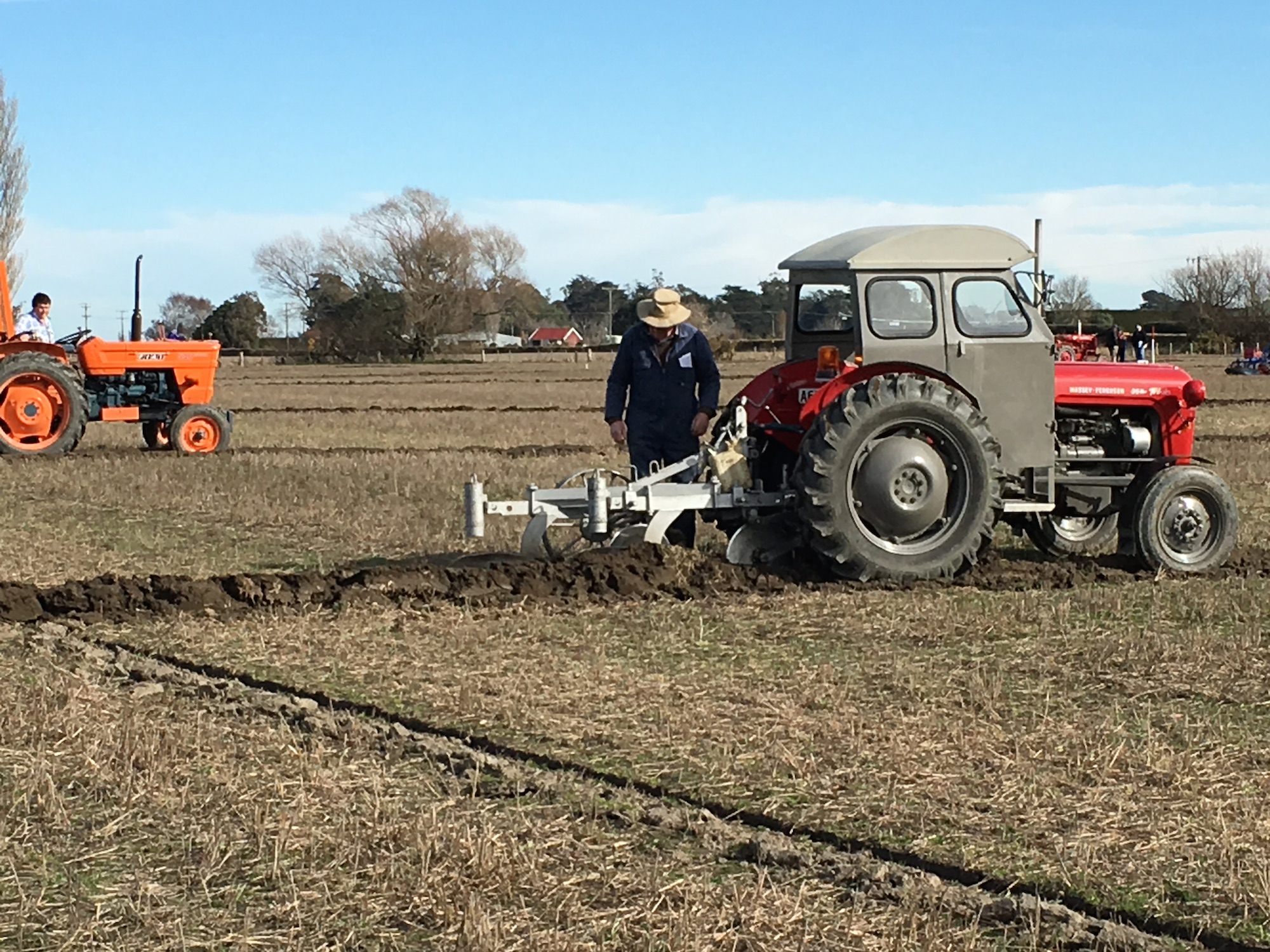
2016-08-20 11.18.35 smThis past weekend was the annual Ellesmere Vintage Club’s Ploughing Match. Our neighbour hosts the event, so we walked down there on Saturday morning to watch the action.

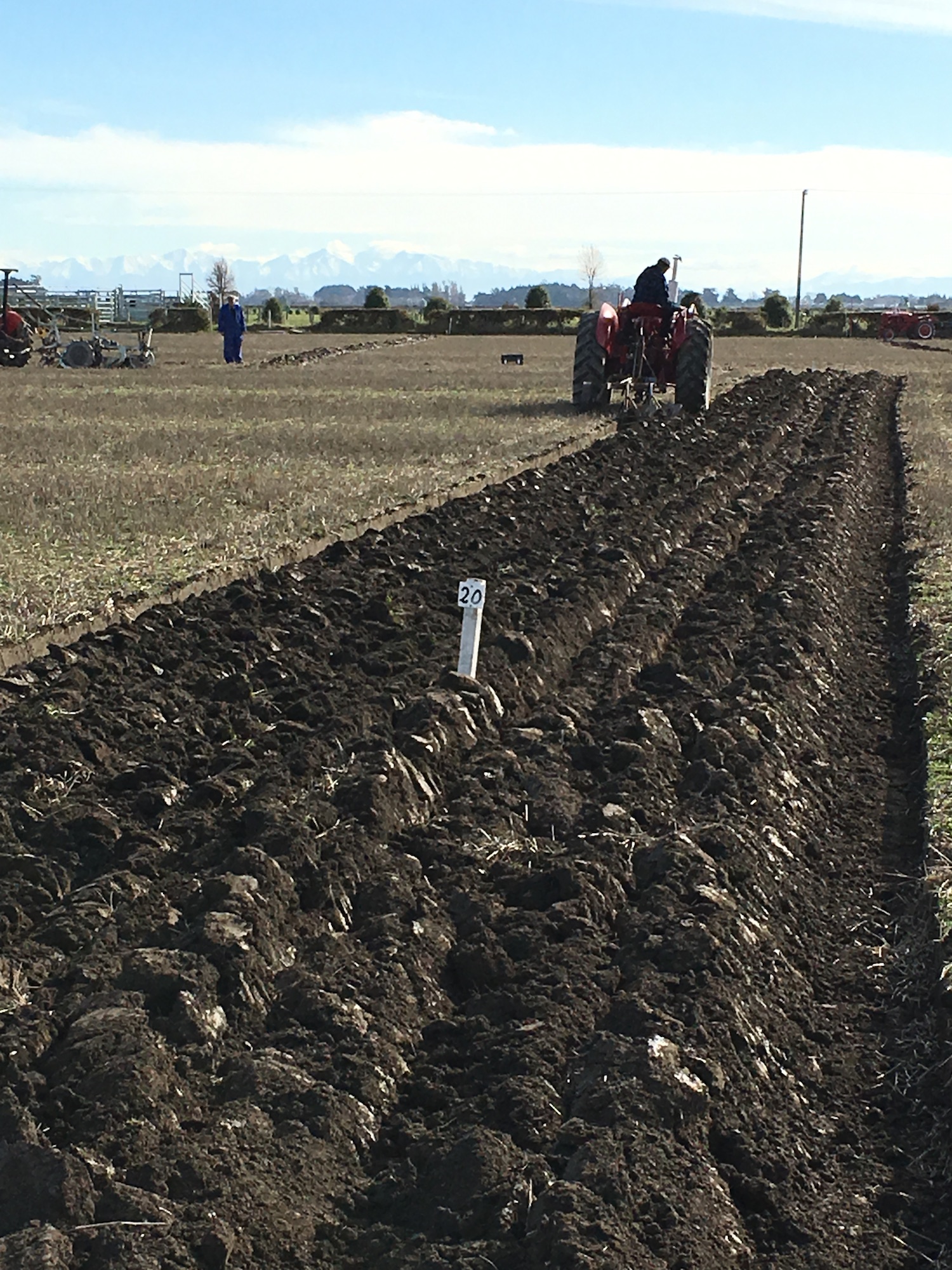
It was slow-motion action. No big thrills or adrenalin. Just the rumble of diesel engines and the smell of freshly turned soil. It was clear the point was a perfectly-turned patch of ground, not speed. There was a lot of starting and stopping, and adjusting of freshly-painted ploughs.

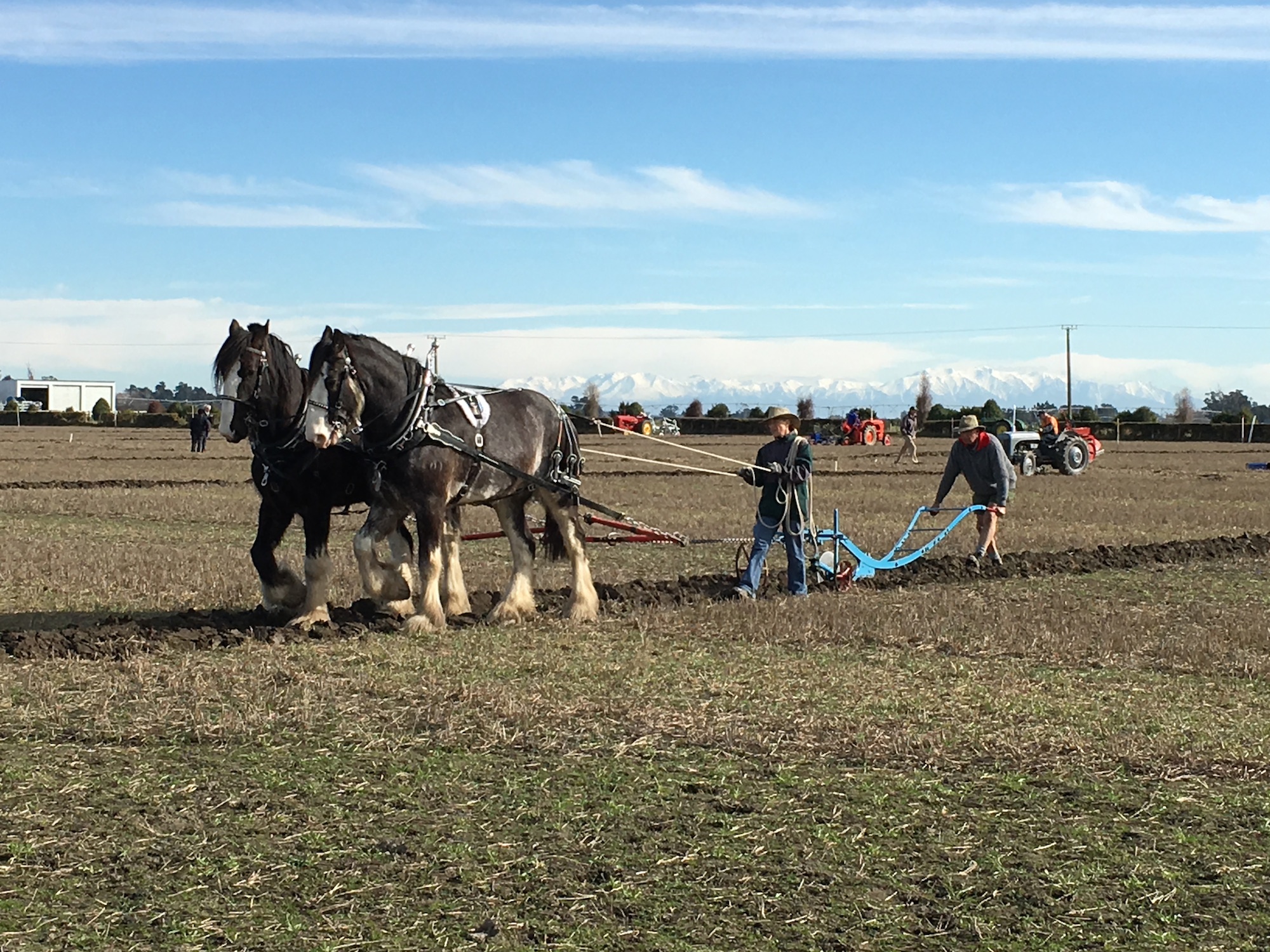
2016-08-20 11.22.21 smA pair of horses joined the 1940s and ’50s era tractors. Watching them work, it’s clear why tractors have taken over on the farm—there was significantly more fiddling to be done by the horse team in order to perfect their rows.

The demographics of the crowd were predictable. Before we arrived, I commented to my daughter that we might be the only women there. Her response was that she would likely be the youngest person there…by about 70 years.

2016-08-20 11.32.18 cropWhile the majority of competitors were as vintage as their tractors, there were a few younger ones. Two or three other children were there, too, though they were sitting in a car playing on an iPad. And there was a small contingent of women. A few wives watched from the sidelines, and a woman drove the horse team.

It was a true small-town event—25 competitors, and perhaps 40 people in total at the event when we were there. Participants were shuttled to the local hall for lunch on two long benches, set back-to-back atop a flatbed trailer.

2016-08-20 11.33.12 smLater, as the event broke up and tractors motored past the house, we laughed—it was hard to tell which vehicles were en route from the competition, and which ones were simply on their way from paddock to paddock. Many of these vintage tractors still get regular use on the farm.

Of course, I have to wonder what will happen as the vintage tractor enthusiasts and their machines age further. Will younger farmers grow nostalgic about tractors from the 60s and 70s as they age? If not, we’ll see a lot fewer than 25 contestants at vintage ploughing matches in future years.

Well, you don’t see that every day…

2016-08-19 17.44.37I couldn’t possibly post a story for Saturday Stories today—there were just too many interesting things to blog about…

The neighbours are always busy moving sheep around at this time of year—there’s shearing, lambing, tailing…sheep being shifted from paddock to paddock for all sorts of reasons. Nearly every day a mob or two pass the front gate.

Even if I don’t see them pass, I can always tell when sheep have been by, because the road is sprinkled with sheep pellets afterwards.

But yesterday, a sheep left a bit more than poo at our gate.

You know you live in rural New Zealand when…

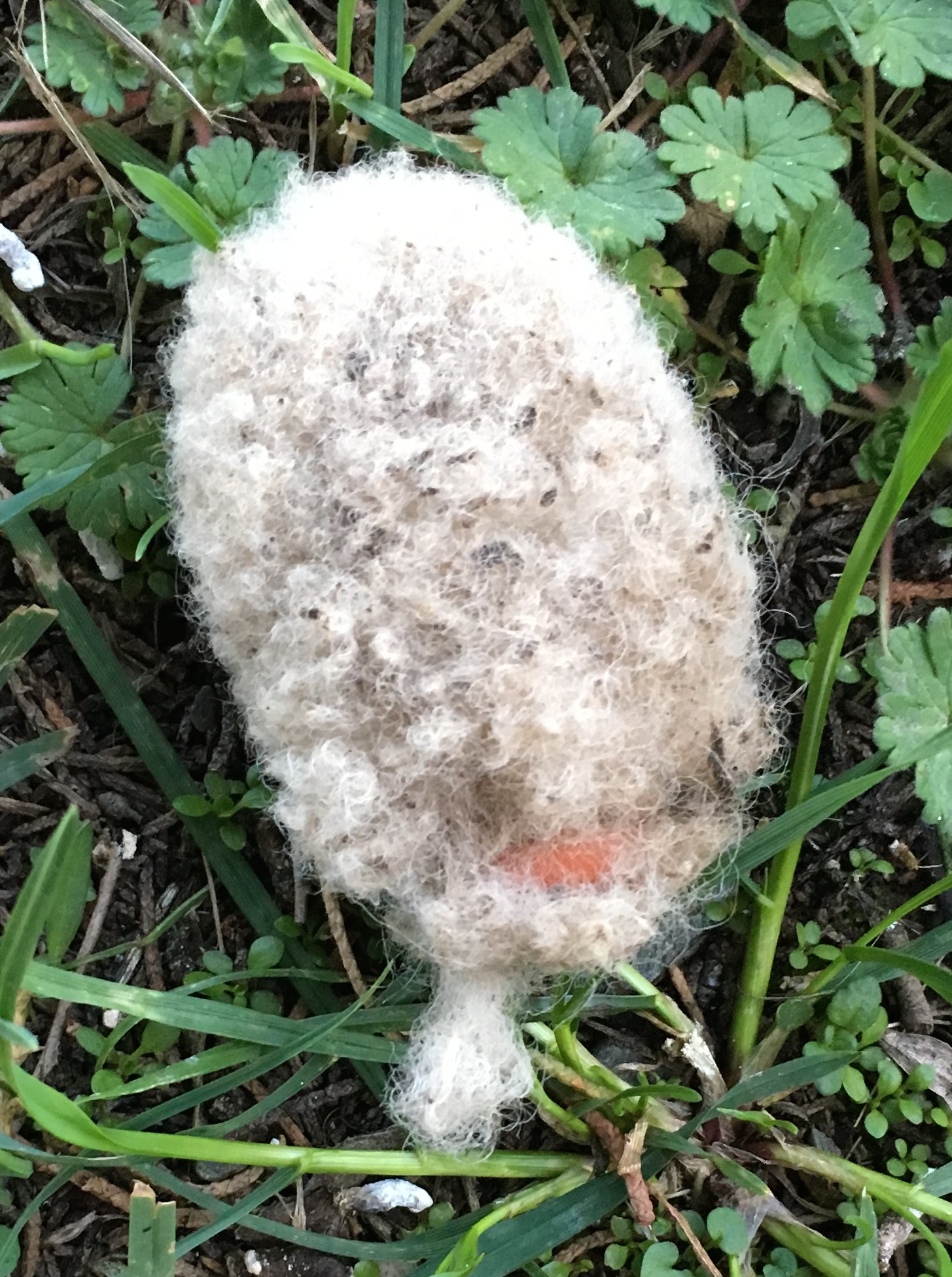
Special prize to you if you know what this is. I’ll give you the answer tomorrow.


Cricket Flour

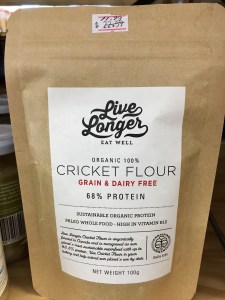
IMG_1784I was running errands in town today, and called in to Bin Inn for some flour and cornmeal.

I was excited to find this sitting on the shelf next to the rice flour and barley flour. It was the first time I’ve seen commercial insect products that admit to being insect products sold in an ordinary store (there are plenty of things you’ve probably bought that contain insect products, but manufacturers generally don’t advertise that).

It’s nice to see insects showing up on the grocery store shelves. I am a proponent of entomophagy, even though I am a vegetarian. If you’re going to eat meat, insects are probably the most environmentally sound way to go.

Being cold-blooded, insects convert feed into body mass much more efficiently than our warm-blooded livestock. You can raise a kilo of crickets on just 1.7 kilos of feed. Compare that to chicken at 2.5 kg of feed per kilo of chicken, or cows at 10 kg of feed per kilo of cow. Adjust these numbers for percentage of the animal that’s edible, and they favour insects even more—80 percent of a cricket is edible, whereas only 55 percent of a chicken and 40 percent of a cow is.

It still takes resources to produce insects. Though they convert feed into food more efficiently, insects need to be kept warm—warmer than you need to keep a cow, because they can’t keep their own bodies warm. There is an energy cost in that.

Of course the biggest problem with farming insects is getting people in Western countries to eat them. Most of the world’s people actually do eat insects, but our modern Western culture had separated us so much from our food, that we even get squeamish when we can identify the animal that our cuts of meat came from.

Consumers generally don’t want to actually see the animal when they’re preparing dinner. I’m sure cricket flour goes over better than, say pickled whole crickets (sort of like sliced ham vs. pickled pigs feet).

It will take a change in our attitude toward insects before Westerners will agree to bar nuts that include roast, salted crickets (which are delicious, by the way). When preschoolers learn that a cricket says “chirp, chirp” along with the cow says “moo”, we’ll be on our way. When we begin to view insects, not as enemies to be beaten, but as fellow organisms on Earth, we’ll be on our way. When we stop seeing insects as dirty, but rather recognise that they carry fewer potential human pathogens than our close relatives the cow and pig, we’ll be on our way.

As a vegetarian and a gardener, I value the insects that come into the kitchen on my vegetables. I don’t get enough vitamin B12, because it is only found in animal products. Insects are full of vitamin B12. So, I’m casual about cleaning the insects off our organically grown vegetables. We eat a lot of aphids, and quite a few caterpillars, I’m sure. And that’s great—it gives us all the nutrition we need, without any extra effort on our part (less, in fact).

Indeed, though I support insect farming, I’m afraid I will probably never buy any insect products–there are so many wonderful insects out there free for the taking, I couldn’t see spending $120 per kilo (and that’s half off!) for cricket flour.

Besides, I prefer my crickets whole—the best part about them is the crunch, after all.
Noisy Neighbours

2016-07-27 14.13.35Most city dwellers don’t think of the country as a noisy place, but it can be. Yesterday I was working away at my desk when I heard a deep rumble. My first thought was earthquake, then I thought it must be a milk truck. But the rumble peaked then faded, peaked and faded. I looked out to see the neighbour’s sheep running laps back and forth along our fence line. Several hundred sheep thundering back and forth, for no apparent reason other than it was fun.

It’s a noisy time for sheep, even without running races. It’s lambing season in our neck of the woods, and lambs are noisy. The ewes get noisy, too, as they call back to their bleating lambs.

And there’s no point in telling these neighbours to quiet down—they never listen. 😉

My Love/Hate Relationship with Yarrow

2016-06-24 13.33.30Growing up, yarrow was a flower to be dried for arrangements. An innocuous plant that grew along the roadsides. I liked the flowers, and I loved the insects and spiders it attracted.

It wasn’t until I moved to New Zealand, where yarrow is a pernicious weed in my garden, that I began to consider yarrow more closely and learn more about it.

Yarrow is native to Europe and parts of Asia, but has been spread widely, because of its many uses.

It is referenced in Homer’s Iliad as being used for stanching wounds, and has been used all over the world for many other medicinal purposes—from reducing fevers and soothing earaches, to curing urinary problems and head colds.

Yarrow was probably originally brought to New Zealand as a medicinal plant, but it has other uses that are more valid than the medicinal ones.

Today yarrow is a common pasture plant. Its deep rhizomes make it drought resistant, and it is higher in certain key nutrients than either ryegrass or white clover. I discovered this when I began to worry about the goat paddock. After two dry summers, the yarrow was taking over a big swath of the paddock. I worried, knowing that to remove that much yarrow would be a Sisyphean task—dig it out and any bits of rhizome left in the soil will simply resprout. Even herbicides are largely ineffective against yarrow.

So I was thrilled to learn that its virtues went beyond pretty dried flowers, and that I could ignore it in the paddock.

Of course, it grows everywhere, and isn’t bothered by mowing. But that has benefits, too. This past summer, when all the grass of the lawn was brown and dead, the yarrow remained some of the only spots of green.

And then there are the insects it attracts, which I naturally love.

And so, I love yarrow…and I hate yarrow. Either way, I have to live with it.

Any day now…

DSC_0060smOkay, it’s allowed to rain now.

Any day would be fine.

Just a little?

And maybe something a bit cooler than t-shirt and shorts weather to go with it?

Please?

Six years ago, the beginning of May looked like the picture above—we called it the black days of May. That was a bit too much rain, but normally we’ve had some good rain by the beginning of May.

Not so, this year. This year, it’ll be the brown days of May. We had plans to do a lot of landscaping this fall, but the soil is still bone dry—new plants wouldn’t stand a chance, even if we could water them. Almost every bit of promised rain has failed to materialise. The little that has fallen has evaporated within a day under summer-like heat.

2016-05-03 10.26.14It feels like summer will never end.

I’m still watering the garden, though the summer crops have mostly given up out of drought and exhaustion. The winter crops are likely to bolt in this weather, even with watering.

And who knows how long I’ll be able to water. It hardly rained last winter, and last summer was particularly dry, too. Canterbury water is over-allocated. The water table is dropping, and some people have already had to deepen their wells. How long before we run out?

Water is still being managed for short-term profit here—to ensure maximum output of dairy and crops. Environmental concerns and future supply are given lip service. That will come back to bite us. Climate change models predict less rain for Canterbury. If we keep on like this, at some point, we will run out.

Do we have the will to change before that happens? Experience in other parts of the world says no.

I do my best to conserve water here—using greywater to water plants, watering sparingly, mulching heavily, planting shrubs that can handle the dry—but I’m a tiny player, surrounded by farms hundreds of times the size of my property. The water I conserve is just a drop in the bucket.

A drop in the bucket would be nice about now. But the meteorologists are predicting no rain at all for the month of May in Canterbury.