The Beautiful Banks Peninsula

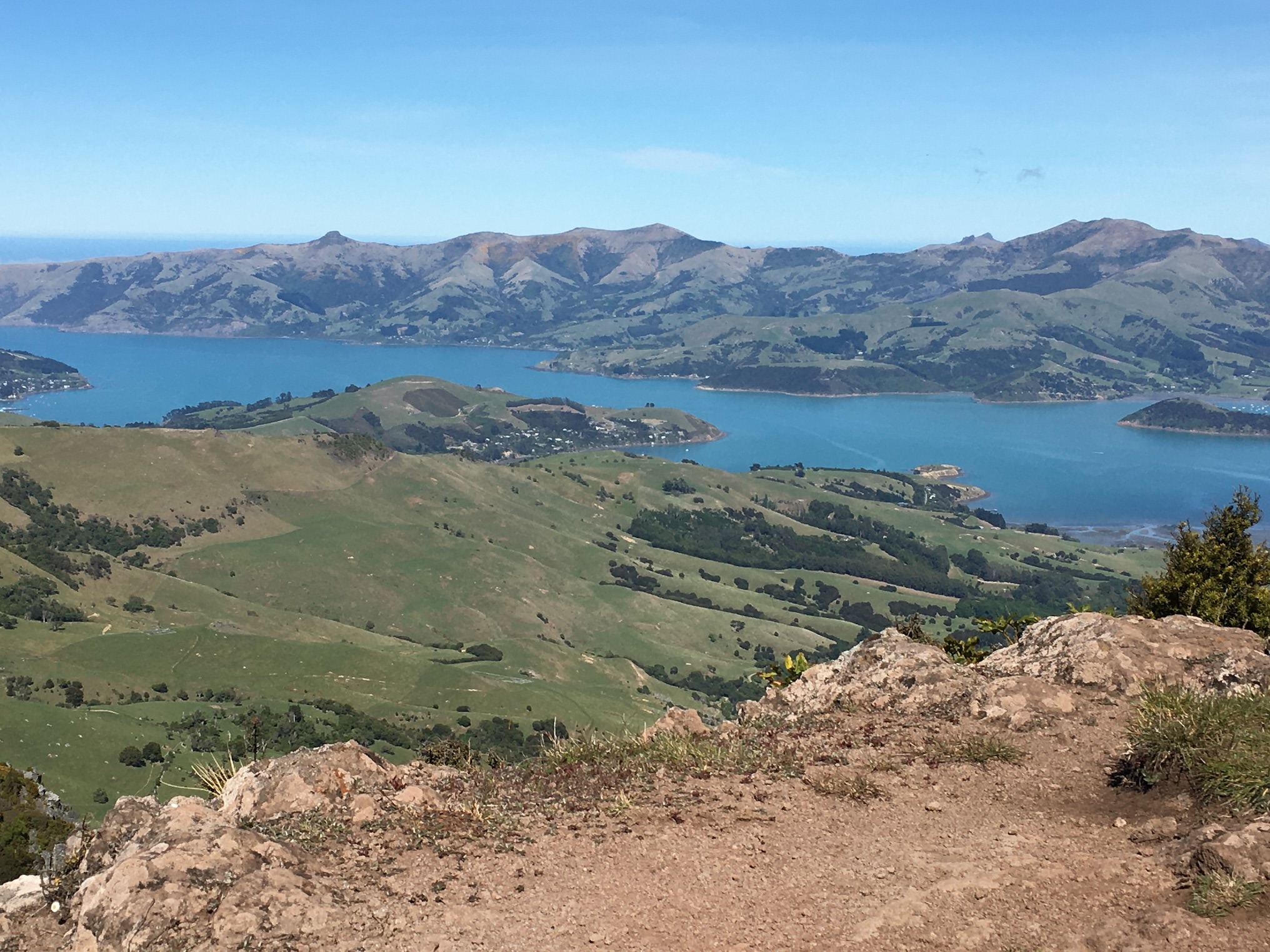
View from the top of Lavericks Peak Loop Track.

I still remember my first trip to the Banks Peninsula. It was probably less than 48 hours after we’d arrived in New Zealand and the only part of the country I’d seen was Hagley Park in central Christchurch.

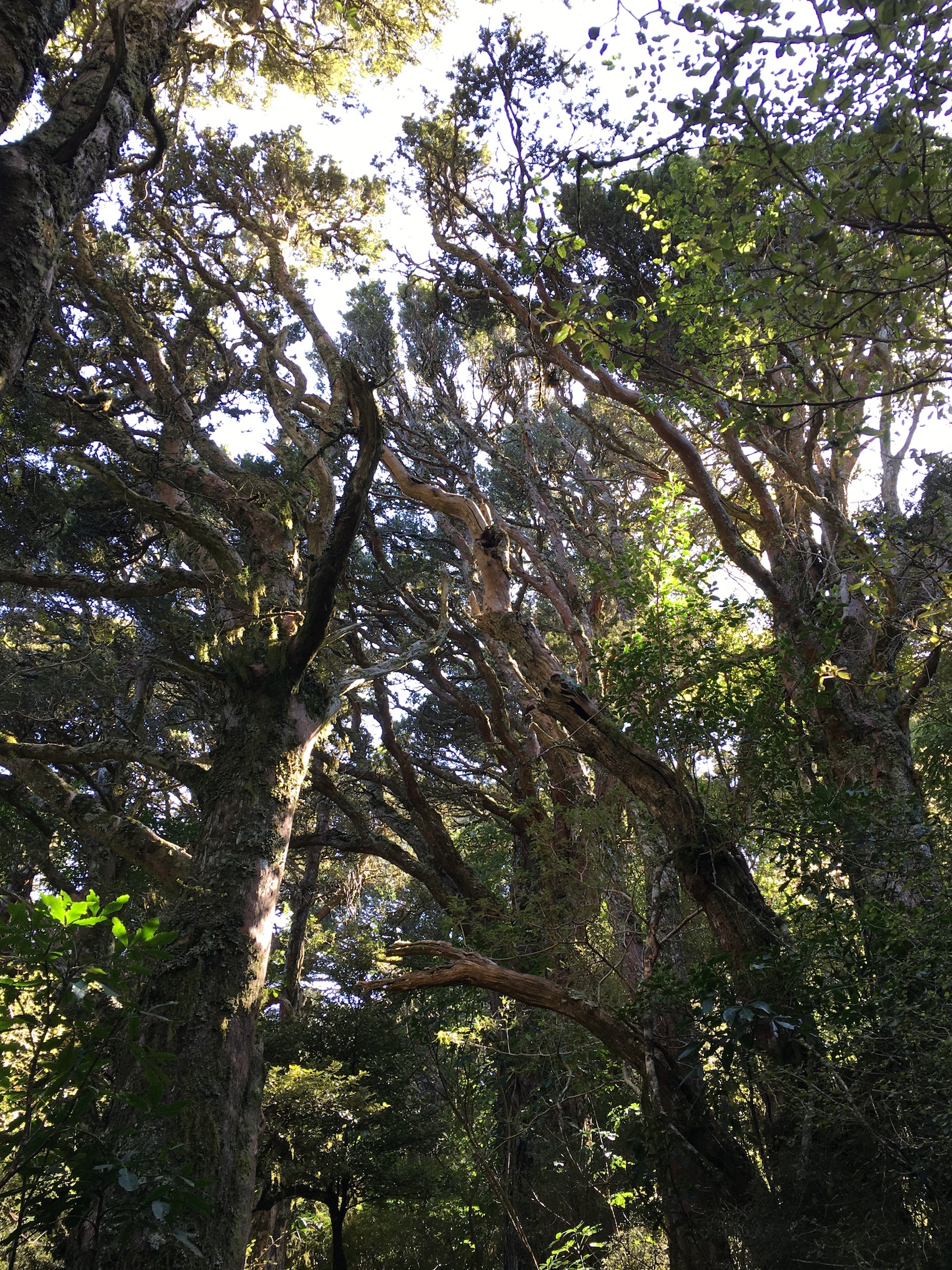
The bush at Otepatotu Reserve

When we rounded the bend and the road sidled up to Wairewa/Lake Forsyth, my face split in a grin. I craned my neck to look up the steep slopes on the left while black swans cruised the sparkling lake on the right.

We stopped in Little River for a toilet break (we had toddlers then—we stopped at every toilet), and I fell in love with the Little River Cafe and the attached Little River Art Gallery.

Carrying on toward Akaroa, we crested Hilltop, and Akaroa Harbour glittered tropical blue down below. Onawe Peninsula jutted like a bead pendant into the harbour and the road wound down through a patchwork of forest and paddock toward the sea.

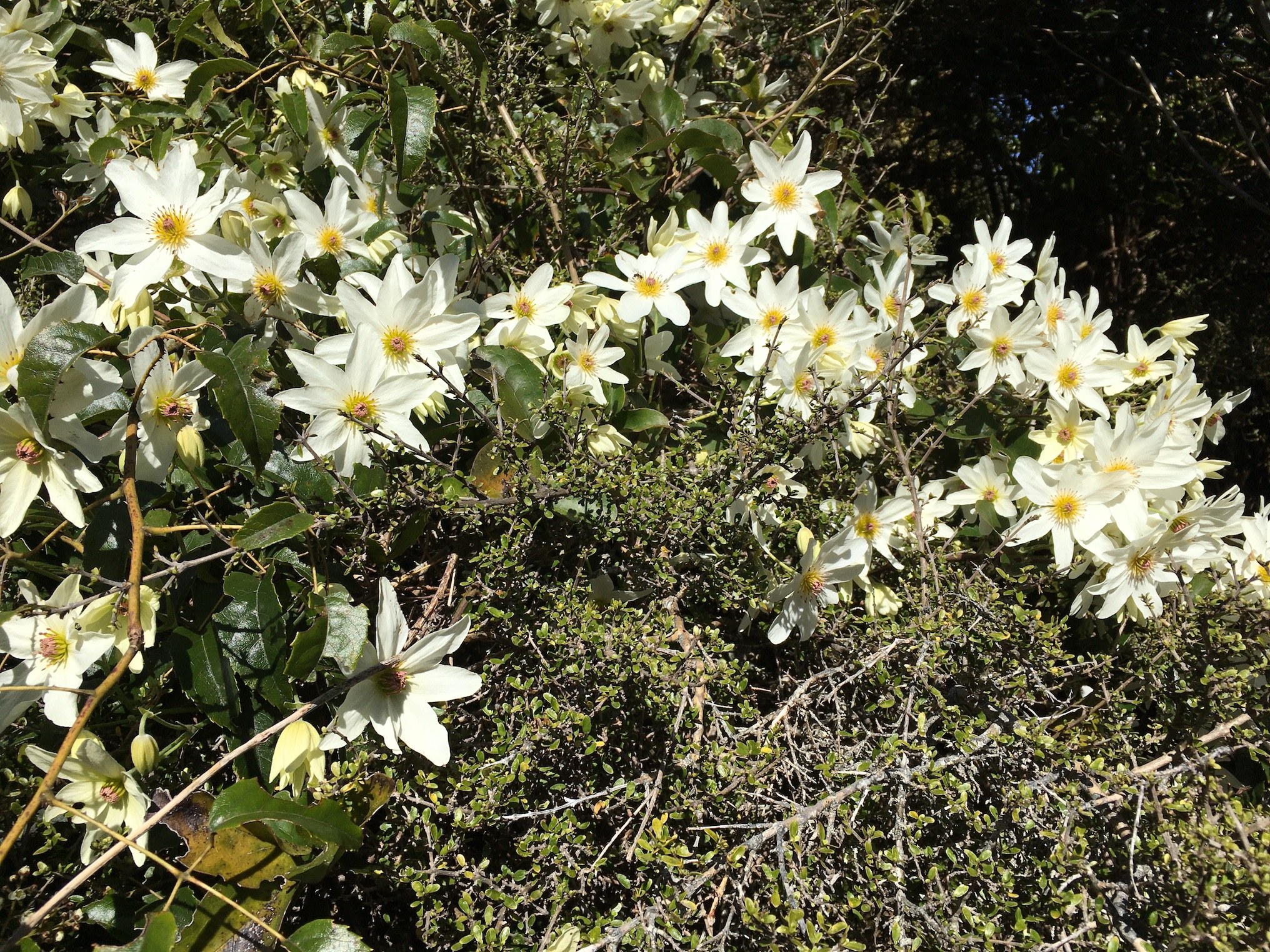
Native clematis in bloom.

I have made that drive countless times in the nearly sixteen years since the first trip. I still get that silly grin on my face. Every. Single. Time. Since that first visit I’ve scaled taller mountains, seen glaciers, stood at the base of Tane Mahuta, cruised Milford Sound … By comparison, the Banks Peninsula is positively dull.

But for me it defines summer in New Zealand. Even in winter, I feel like I’m on summer holiday when I’m out on the Banks Peninsula. I forget the to-do list. I turn off the cell phone. the daily stresses vanish.

Cushion star in a tidepool at Okains Bay

We hadn’t been to the Banks Peninsula since March, before lockdown confined us to home. But last Sunday we ventured out to sample everything we’ve been missing: morning tea in Little River, a lovely little hike through old totara and tree fuchsia in Otepatotu Scenic Reserve, a very chilly dip in the sea at Okains Bay and rock hopping along the coast to Little Okains Bay, and finally beer and chips in Akaroa and a stroll through the Garden of Tane.

We arrived home tired, crusted with salt and sand, and thoroughly satisfied with the day.

This weekend is supposed to be warm and sunny … we might just go and do it all again.

Childhood Literary Inspirations

In the lead up to the Tamariki Book Fest, I’ll be posting a series of blogs about the importance of books from my perspective as a reader, parent, teacher, and author.

I grew up with books, which should come as no surprise to anyone. Because I write fantasy for children, people often expect my childhood literary inspirations were books like The Hobbit, The Earthsea Cycle, The Lion, the Witch and the Wardrobe or other classic fantasy stories.

I read these books as a child, but the ones I really remember are quite different.

Heidi: The natural world has always been my comfort zone, so I immediately connected with a character who prefers a life running around the mountains with a herd of goats over one learning proper manners in the city. Some of the scenes in the book were so vivid to me as a child, I can still see, feel, smell and taste them.

Little House on the Prairie: Another book whose main character is a tomboy—I sense a theme here. Little House on the Prairie appealed to my sense of adventure and love of the natural world. I even learned some gardening tips from it that I still use today. 

Doctor Goat: I can still recite this silly rhyming picture book in its entirety. It taught me about rhyme, meter, and being silly. Yes, Dr. Seuss books did too, but Doctor Goat is what sticks in my mind decades later.

Time Life books: My father had a near-complete set of these non-fiction books. They fed my insatiable desire to understand the natural world for many years. They were written for adults, but I read them over and over again until I understood.

Grimm’s Fairy Tales: Something about these stories sticks with me long past the point where I can accurately recount them. Perhaps it’s the way they hone in on our most fundamental wishes and fears and turn them back on the characters who express them. Perhaps it’s just because they’re freaky and often horrifying.

So, what books inspired my own children’s books? None of them individually, and all of them collectively. My own stories are crazy-quilt patchworks of everything I have ever read, stitched together with my own personal experiences (some of which can blow any fantasy adventure out of the water). My rich reading life, coupled with a ‘real’ life lived to the fullest, has furnished me with an overflowing font of story ideas.

As a parent, I have tried to provide the same rich book life to my own children, and I’m passionate about getting kids reading. Come join me and and a fabulous line-up of local authors at the Tamariki Book Festival (Nov 22 at Tūranga), and let’s celebrate the wonderful stories written right here in Christchurch!

Books and Children—Beyond Academics

In the lead up to the Tamariki Book Fest, I’ll be posting a series of blogs about the importance of books from my perspective as a reader, parent, teacher, and author.

The research on books and academic achievement is clear—children who experience books from a young age have better literacy on entering school and carry that advantage all the way through to university and beyond. 

But what of the other, less tangible benefits of reading to children and encouraging a love of books? Research indicates reading can improve mental health, empathy, social skills, cultural understanding and imagination—all of which I can attest to in watching my own children and my students interact with books. 

My husband and I read to our children nightly for a long time. We only stopped when the eldest went off to university. Reading was family time at the end of each day. No one missed unless they absolutely had to. Not only did we read stories, but we discussed them after each night’s instalment—what did we think of the plot, the characters, the vocabulary the author used? What did we think would happen next? If the book was fiction, how did it reflect the real world? Our discussions took on history, writing, storytelling, race relations, sexism, relationships … if it showed up in a book, we talked about it afterwards.

We did all this, not so much for the literacy benefit to the children, but because we genuinely enjoy books and wanted to share that love.

The intangible benefits I’ve seen in my own children are huge:

Introspection: Most children’s books carry a message, either overt or hidden. Characters’ actions provide opportunities for parents and children to discuss behaviour in a non-confrontational way, and give children a safe way to evaluate their own behaviour. 

Love: The greatest thing we can give our children is time. I know in our family we were all busy. But by taking time every day to read together we said, “This is more important than [insert household chore here]. You are more important than [insert work obligation here].” It was a powerful way for all of us to daily reaffirm our family.

Imagination: We read some crazy books with the kids. The authors’ creativity was often reflected in the children’s subsequent play. Books fuelled their creativity by showing them ‘out of the box’ ideas and encouraging them to imagine ‘what if …’

Knowledge: Once kids realise they can learn stuff from books, they’re away, reading up on their favourite animals, looking up weird facts to impress their friends, or exploring their heritage through historical fiction. Books can both inspire and satisfy their curiosity.

Cultural understanding: Books are a window to unfamiliar cultures and alternate ways of thinking. Through books, children can walk the streets of foreign countries, experience different family structures, eat strange foods, and engage in daily life around the globe.

Mental health: Books can be a valuable part of a mental health toolkit. Bored? A book can take you somewhere exciting. Lonely? Book characters can become friends. Sad? Books can offer humour or positive stories to cheer us up. Overwhelmed? Books can give us a respite from our worries and responsibilities. Finding yourself? Books can provide role models for life.

The Tamariki Book Festival celebrates all the benefits reading provides for children—the tangible academic boost, and the intangible quality of life benefits. We hope to see you all there (22 November at Christchurch’s central library, Tūranga) to help us enjoy and celebrate the power of books.
Rock the Local Resources

A few of the rocks we’ve collected …

I’ve been struggling with what to do with my tender seedlings here at the new house. I hesitate to keep them in the house, knowing the amount of moisture they produce. It wouldn’t do to turn the new house into a humid greenhouse.

What I really need is a heated greenhouse, but that’s a luxury I don’t expect to ever have.

At the old house, I lined the perimeter of the greenhouse with water bottles to trap solar energy during the day and release it at night. I recycled all those bottles before the move, so I have nothing to keep the greenhouse warm at night now.

Except the other day I picked up a paperweight from my desk—a rock I’d collected from the beach. It had been in the sun and was positively hot to touch.

Of course! Store solar energy in rocks. It’s a technique that was used by Māori for hundreds of years in Canterbury to grow semi-tropical crops in this cool climate.

Perhaps I hadn’t thought of it before, because the previous vegetable garden was nearly rock free. But we’ve already picked tonnes (literally) of rock from the soil here. I can practically pave the greenhouse with sunlight-absorbing rock that will warm the plants all night.

It will take some thought—I really don’t want to add rocks to areas I’ll be tilling and planting each year, but I like the idea of using the materials available on site to solve a problem.

Now we have to figure out how to use all the rest of the rocks …

The Lap of Luxury

Late last week, our exile in the shed ended and we took possession of our new house. Heat, insulation, indoor plumbing … the luxuries we’re now enjoying are amazing. 

In fact, looking back over our 28-year marriage, I can confidently say we’ve never had it so good.

Our first joint living adventures were in staff housing at nature centres in Ohio and Michigan. Cold and drafty, those conditions were decidedly rustic (though they came with some excellent wildlife spotting, including sandhill cranes out the bathroom window).

During our Peace Corps service, our one room mud home in Panama had a leaky roof and harboured rats, snakes, lizards, and the most astonishing array of arthropods I’ve ever co-habitated with. It wasn’t so much a house as it was a full ecosystem.

Married student housing at Penn State University had less diverse wildlife—German cockroaches filled all the ecological niches there—and involved periodic flooding from the upstairs neighbour’s bathtub.

The 1960s duplex we moved to next had a bad mould problem, but at least we had fewer six-legged housemates.

In Minnesota, our 150-year-old house needed a new roof, piles and insulation. It was never particularly warm in winter, even after the extra insulation we added.

The 125-year-old cottage we recently moved out of was shocking when we moved in, with a leaking roof and rotting weatherboards. The only insulation was a century of accumulated bird nests in the attic. We fixed it up, but it was always drafty.

In hindsight, the shed we were living in for the past three months wasn’t so different from our previous homes.

I’m thankful, and a bit overwhelmed, to be living in a modern, warm, dry house for the first time in my adult life. Even if I live here for the rest of my life, it will never be as old as many other houses I’ve lived in. I intend to enjoy it.

Fixing Mistakes

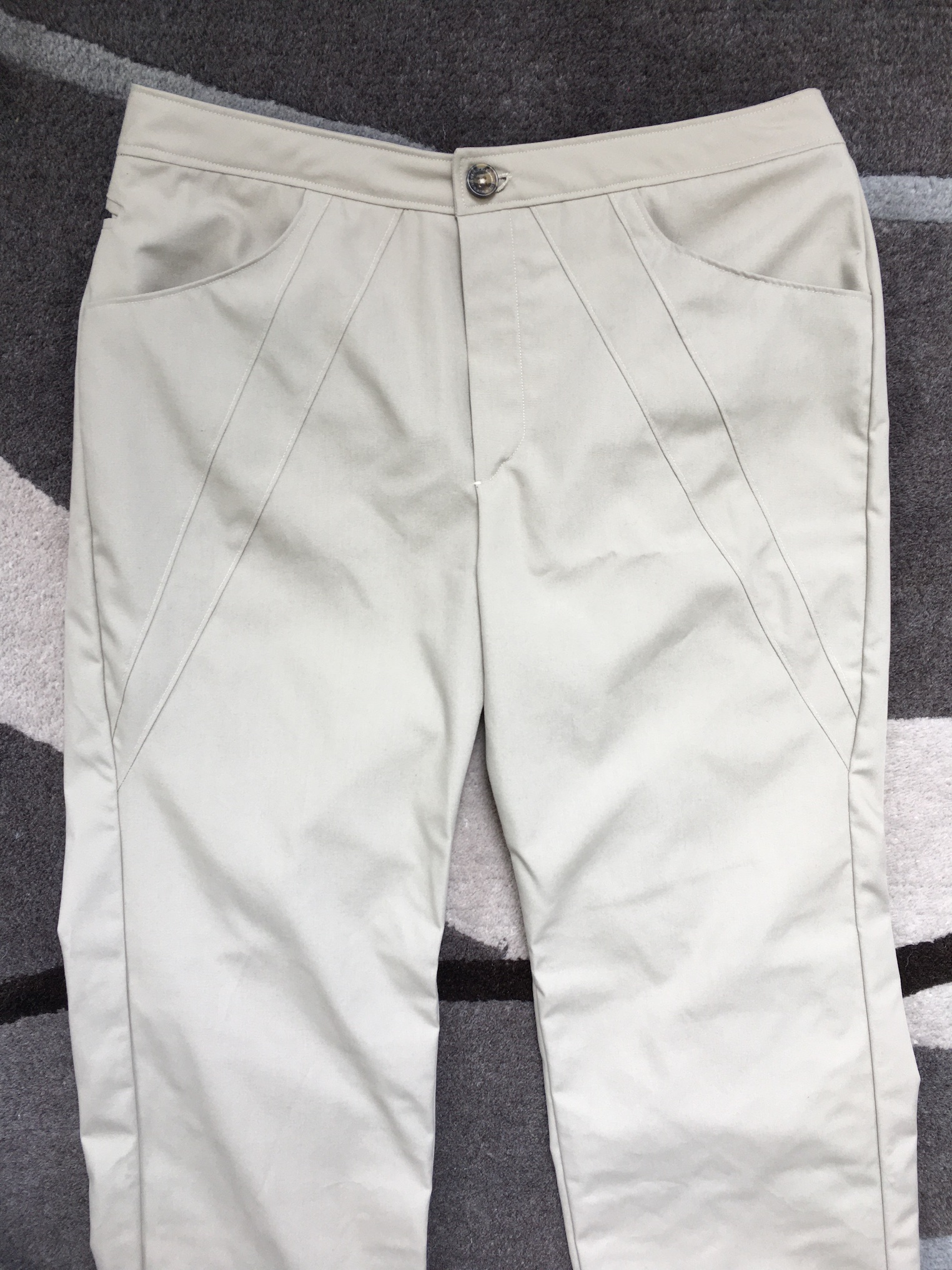
Last week I started making a new pair of trousers. Because I used a tried and true pattern, I didn’t test the fit until near the end.

That was a mistake.

I couldn’t zip them up, they were so small around the hips. 

That can’t be, I thought. I’m still wearing the last two pairs of trousers I made with that pattern. What have I done wrong? They needed extra fabric in the side seams. But I’d installed a welt pocket over one of the seams, and I’d trimmed all the seam allowances—there wasn’t enough fabric there to let out the seams.

I thought about all the hours I’d put into them—how carefully I’d set the fly zip, how beautifully the welt pocket had gone in, how I’d only bought just enough fabric, how much I really needed a new pair of pants.

Thoroughly discouraged, I nearly chucked the garment into the bin. 

But I didn’t.

I put everything away and made myself a t-shirt instead. Then I made a lovely button-down tunic with slightly quirky buttons. Then I sewed a new laundry bag. 

Finally, I was ready to face the trousers again. There had to be a way to salvage them, if only I was creative enough.

I remembered my first pair of zip-off pants, in which I didn’t allow enough ease for energetic hiking. They’d had pockets over the side seams too. I’d split the legs right up the front and back from waist to knee and put in long triangular gussets that ended up looking quite sporty.

Maybe I could do something similar with these trousers. I drafted several inserts of various shapes. I didn’t like any of them, because they all destroyed the look I wanted. But the alternative was to throw the garment away.

With nothing to lose, I carefully sliced my beautiful trousers into pieces. I tried not to worry about why I’d made such a bad mistake in the first place, but to focus on making the fix as perfect as possible.

To my relief, the adjusted trousers fit. To my surprise, the inserts don’t look bad at all. 

It reminds me of how far I have come since my youth—an easily frustrated 20-year-old me would probably have tossed those trousers in anger (in fact, I can recall doing just that to more than one garment). But I’ve learned that most mistakes can be fixed once I let go of the frustration and move on to the problem-solving. It’s probably a good lesson for the rest of life too.

Oh Christmas Tree!

This time last year, I wrote a blog post about Christmas trees and our family’s unorthodox take on them. I argued that, while our trees may not look like the traditional pine tree, they embody the spirit of the season.

This year’s tree is no exception. After years of suggesting we build the tree out of LEGO, the kids finally agreed. For over a week, the living room floor was a construction zone, strewn with LEGO bricks, mini-figures and gears. The two-metre-tall central structure took two evenings of negotiation, planning and construction. Then there were the branches—marvels of LEGO engineering.

Then came the whimsy—that took the longest. A combination staircase/ ladder/ escalator/ elevator winds upward from level to level. A waterwheel turns lazily on the eighth floor. Gravity takes a holiday as a kayaker paddles straight up, trailing his pet shark on a lead beside him, and emergency personnel (including the undead) carry an injured person up the side of a column. Mini-figures evoke Escher on a section of staircase. A large ship juts from both sides of the trunk, as though the tree grew into place around it. A man fishes from the ninth floor. Motorised gears turn a fantasy clock, spin a merry-go-round, drive a hammer in a dwarven workshop, and spin a star. Under the lowest branches, a kiosk sells tickets to visit the tree.

And all that is before ornaments were added.

Now, mini-figures greet Santa Claus, and a giant butterfly takes flight from the top of the tree. Snowflakes, baubles, and our eclectic mix of homemade ornaments (including the Christmas tardigrade, quite a few insects, and possibly the only Trichonympha ornament on the planet) add to the seasonal cheer. To the Christmas purist, I’m certain our tree is an abomination.

But … evenings of family fun, laughter and creativity—the Christmas season doesn’t get any better. 

See the tree in action:


Time Travel over a Cup of Coffee

I had every intention of blogging something cheerful about springtime this week, but when I sat down in my usual cafe to write the week’s blog, I was confronted with my future … still hopefully many years away, but it reminded me to appreciate today and make the most of every day.

I ordered my coffee and tucked myself into a seat, determined to get some writing done.

Seconds later, she sat down at the table next to me, appropriating my attention before I’d even pulled out my pen.

How her hip hurt her! Up at three AM with the pain. Cup of tea to help her get back to sleep. Lemon in her tea, not milk—she wouldn’t drink something that looked like dirty dishwater. But, then, you know what happens after a cuppa. Up an hour later to pee, and then, well, you may as well get up.

She rattled on for twenty minutes—a live blog post of the worst kind—rambling, comprehensive and incomprehensible, exposing her loneliness, her sense of purpose lost in deteriorating hips and retired life.

She grasped at relationships—her neighbours who looked after one another, as all neighbours need to do.The old woman at the grocery store who needed help with her bags. But she needed no help, not yet, while she watched her friends fail.

Her friend in a nursing home who had a wee flat, complete with bathroom and kitchen. Had I seen those before? She had no idea homes had flats. She had only ever seen single rooms.

She visited her friend in a nursing home. Younger than her but needing help. She had a wee flat, complete with bathroom and kitchen. Had I seen those before? She had no idea homes had flats. She had only ever seen single rooms.

But when she’d visited her friend in a nursing home, she’d had a kitchen. It was like a wee flat. Had I seen those before?

A scratch in the vinyl record of her memory—she skipped like an old 45. By the third repeat, I saw the despair deep in her eyes. How much longer could she fool herself, her children? How much longer could she cling to autonomy, freedom, purpose? How long before she joined her friends in the incarceration of age?

Lessons from a Stone Plant

It was a silly little gift, perched at the top of my stocking on Christmas morning—a tiny stone plant. It wasn’t much to look at—a few fleshy leaves and that was it. I put it on my office windowsill, where I could watch it grow.

But it didn’t do much—just sat there looking like a pebble.

In March, it grew two new leaves, and I expected it to get bigger, but two old leaves shrank in time with the new ones’ expansion. A month later it looked exactly as it had before.

I’d nearly given up on it ever doing anything interesting, when a bud emerged from the centre of the plant. It was different from the new leaves that had sprouted earlier. The sprout grew into an unmistakable flower bud, and I wondered if the stone plant’s flower would be as unassuming as the plant itself.

Then it opened. It was only one, but it was spectacular, coming from such a nothing of a plant.

It reminded me of some people I know—unassuming at first, but capable of spectacular things if nurtured and given time. A good reminder to always be patient and nurture those around us—you never know what they may blossom into.

Topping the Cake

Red currant jam and coconut on devil’s food cake.

Cake, as I remember it growing up, always had icing on it. Super sweet quick icing, usually, made with Crisco and powdered sugar. I’m sure there was occasionally cream cheese frosting and buttercream frosting. And, of course, frosting came in multiple flavours, including chocolate and peanut butter.

But in my memory, there was always frosting on cake.

I still enjoy frosting, but these days, I’m far less likely to use frosting on a cake than something else, or nothing.

Powdered sugar on top, jam in the middle of a coconut cake.

My current favourite is jam. We always make too much jam in the summer, when fruit pours off the berry bushes and screams out to be preserved. So using a cup of jam to fill and top a cake doesn’t seem excessive.

The best jams for cake are tart ones like currant or gooseberry. I heat the jam slightly in the microwave so it’s smooth and spreadable. Sometimes I just put jam between the layers, but other times I glaze the top with it, too. Once there’s sticky jam on top of a cake, I can’t resist sprinkling things on it—coconut, chopped nuts, grated chocolate—anything that compliments the flavours of the cake and jam.

Straight chocolate is also a nice cake topping—not a continuous layer as you would do with a ganache, but artistic squiggles, dark on a light-coloured cake. They’re pretty and delicious.

I also like powdered sugar sifted onto my cakes. Sometimes I make a stencil out of paper to create pretty patterns with the sugar.

Some cakes need no topping, for beauty or for taste.

And I’m quite fond of cakes with the topping baked on—chocolate chips and chopped nuts sprinkled over the batter before baking is particularly good.

I still like frosting, but other toppings have the advantage of traveling better than frosting does, and I enjoy the variety of flavours and textures along with my cake.