Stress Free…sort of

I’m getting better at this. Sort of.

Two weeks to plant out day, and I was able to spend a day at the beach without stressing.

Not that I didn’t stress, actually. I worked hard all day Saturday, and then scrambled to get more done Sunday morning before we left, and then scrambled to finish the rest when we got home Sunday evening.

But from the moment I stepped out the door to the moment I returned, I didn’t think about weeds, plants, animals, cleaning…nothing on the to-do list.

I slipped momentarily, sitting at the edge of a wood-chipped playground…There was a twitch plant growing up through the woodchips. I was sorely tempted to reach out and yank it out, but I stayed strong. That weed is still happily growing, though it was a near thing.

Maybe some day I’ll be able to take an overnight trip without stress. Baby steps.

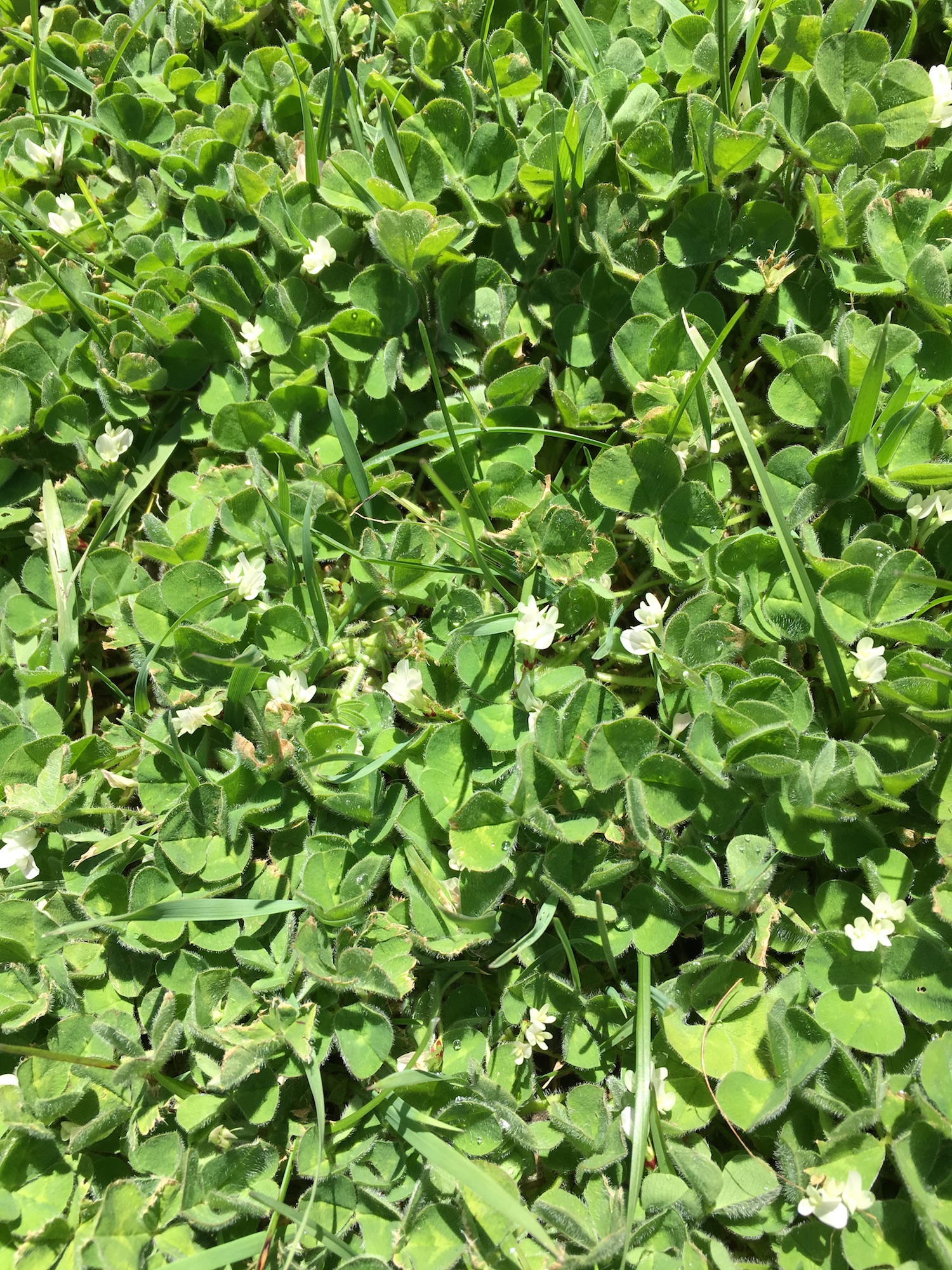
Subterranean clover

Subterranean clover (Trifolium subterraneum), like other clovers throughout the world, is an important pasture species. And it’s also a weed.

I’ve grown quite fond of ‘sub-clover’ as it’s often called. It’s much smaller than red or white clover, and the flowers form in clusters of only 2-5 in each head (as opposed to the large clusters that make up each ‘flower’ of other clovers). It also has the interesting habit of turning its flower heads downward after germination, so that the seed pods develop underground (hence, its name).

What I like most about subterranean clover is the thick mat of low-growing greenery it can produce, even in the dry rock where the old driveway used to be. Without it, some areas of the lawn would be bare year-round.

I also like the fact clover is a nitrogen-fixing plant. The clover in the old driveway is improving the soil for other plants as it grows and dies. With its help, grass might some day thrive there (though I’m not holding my breath).

Unfortunately, sub-clover dies. Dramatically. Just when we’re desperate for green. It’s a winter annual, meaning it sprouts with the autumn rain, grows through winter and spring, and flowers in early summer. When summer turns hot and dry, the plant dies, its life cycle complete. The lawn outside my office is composed almost entirely of sub-clover, so when it goes, it’s grim.

The only consolation is that the grass dies shortly after the sub-clover. Summer is simply brown here.

So for now I’m enjoying the lush greenery underfoot. It’s wonderful while it lasts.

Wasp 1: Cleaning 0

I try to keep a clean and tidy house, but sometimes it’s just not possible.

I was going to dust this weekend, but the first spot I ‘dusted’ was the dining room windowsill. It’s a big window and, for some reason, most of the insects that get into the house seem to end up there when they die.

Next thing I knew, I had a handful of dead insects in a petri dish and was looking at them through the microscope. Most were insects I was familiar with—old friends I was catching up with—but this lovely lady was new. A tiny parasitic wasp, but I couldn’t quite place her family. Several hours, a couple of taxonomic keys, and a stack of entomology books later, I still wasn’t certain, but I tentatively put her in the family Pteromalidae.

Oh, and the cleaning was entirely forgotten.

My First Selfie

So I’ve been doing a lot of weeding lately–clearing beds, dealing with a winter’s worth of growth…

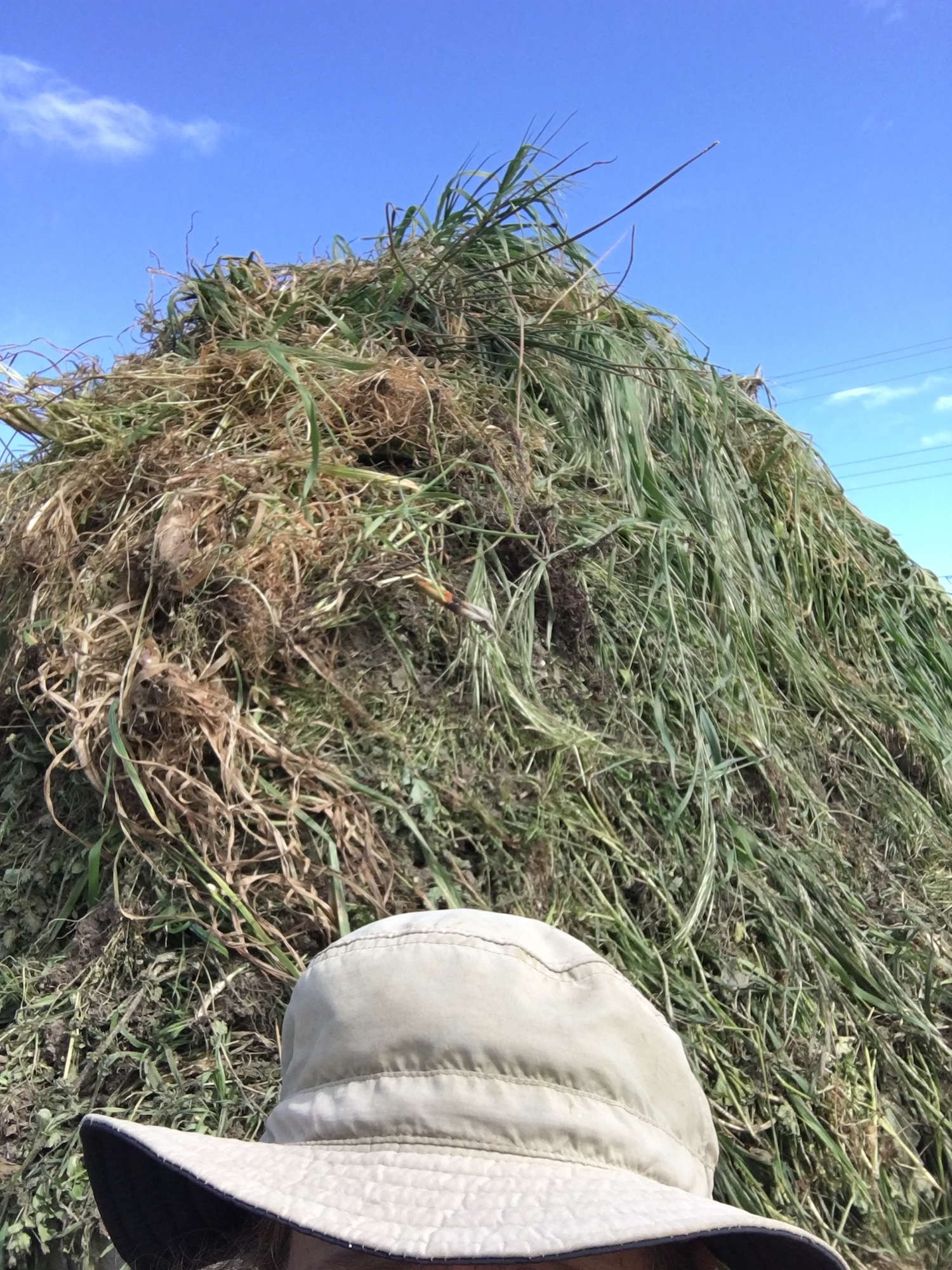
As a rule, I don’t take selfies, but I felt a picture of the compost pile needed a person in it for scale. It was hard to get any shot that included both me and the top of the compost pile, but, here it is–my selfie with Mt. Weedmore.

Spittlebugs

Spring is spittlebug season. Just about the time I want to start picking and dehydrating the perennial herbs, the spittlebugs descend upon them. In bad years, it makes harvesting herbs a slimy task.

Spittlebugs are also known as frog hoppers. As adults, they are cute, squat, dun coloured insects with spectacular leaping abilities. They really do resemble frogs (with a little imagination).

It’s the nymphs that have the disgusting habit of spitting. Well, it’s actually not spit at all. The foamy slimy ‘spittle’ is a combination of fluid from the insect’s anus, and slimy gunk from glands on the insect’s abdomen. The insect sits head downward on the stem of a plant and exudes the ‘spittle’, letting it pour over its body and cover it completely. The resulting mass keeps the young insect protected from enemies and from drying wind and sun. Gross, but effective.

Like humans, who usually stop blowing bubbles in their milk as adults, spittlebugs leave off spittle production when they grow up. As adults, they use their hopping ability to avoid predators.

Some species of spittlebug can become significant agricultural pests, stunting the growth of herbaceous plants and some forestry trees, but in the home garden, they’re usually not much more than a minor nuisance.

A New Weed!

I found a new weed in the garden the other day. I don’t know whether to be excited or dismayed.

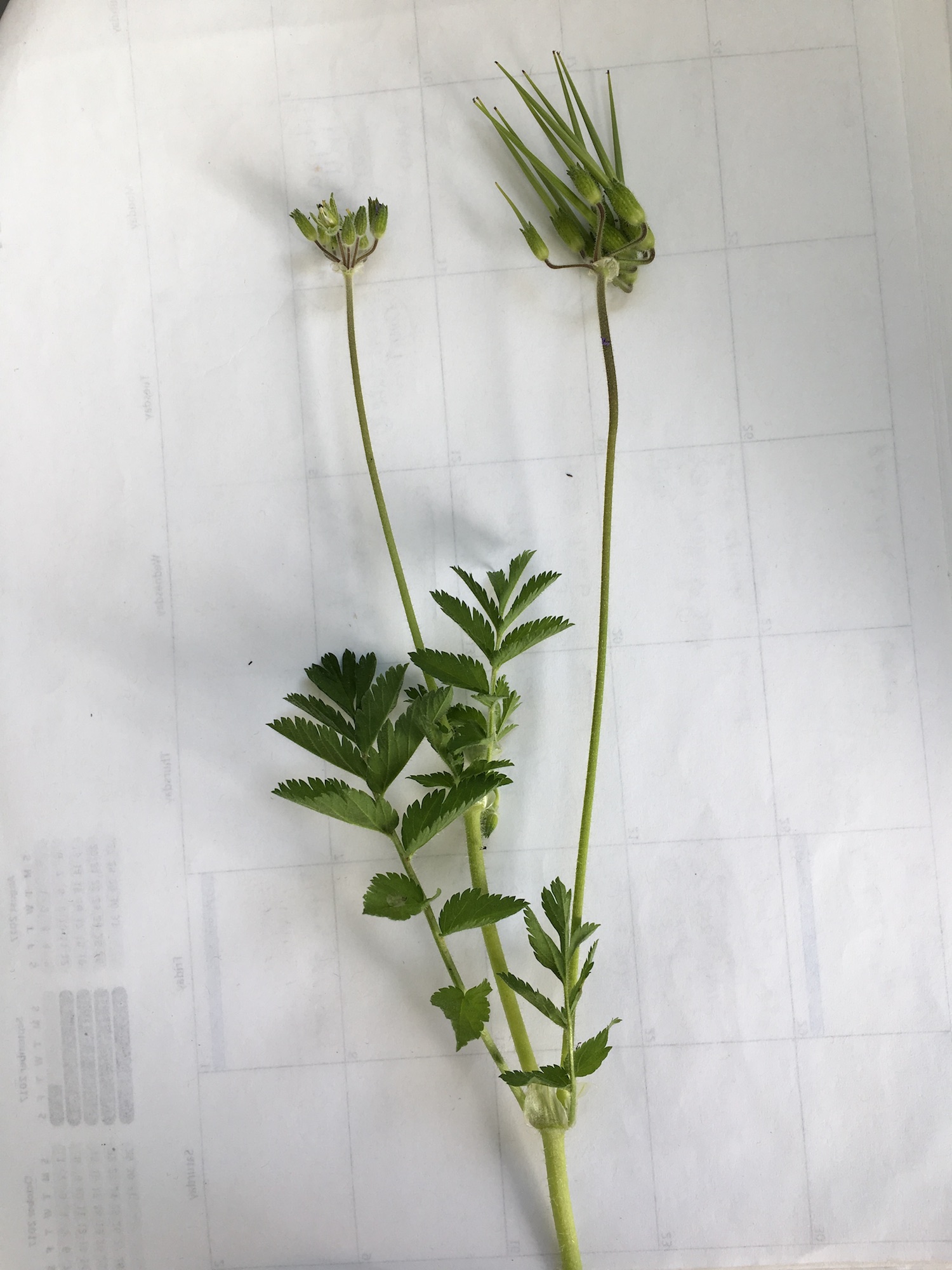
This one is beaked parsley, also known as bur chervil (Anthriscus caucalis). This weed is native to Eurasia, where it appears it is pretty much ignored. It’s listed by the UK Department for Environment, Food, and Rural Affairs as an indicator species for high value arable margins, but beyond that, it rates little mention in its homeland. It is apparently neither particularly tasty, nor poisonous. It is apparently not used for any medicinal purposes. It’s just a plant that’s neither particularly common, nor particularly rare.

Nor is it mentioned often in the many countries where it is a weed. If it is mentioned at all, it’s usually lumped with its close relative, wild chervil (Anthriscus sylvestris), which appears to be more of a problem. It apparently prefers riparian zones, but is quite happy to live in drier areas, too.

The seeds are covered in curved spines and hairs that cling to fur. The plant almost certainly arrived in New Zealand on the back of an imported sheep.

With so little information about the plant available, I am naturally intrigued. What secrets is this unassuming plant harbouring? Its family–Apiacea–includes such well-known plants as carrot, poison hemlock, fennel, parsley, coriander, dill, caraway, parsnip, celery, anise, lovage, and many others. Many of these plants produce defensive compounds, some of which are incredibly toxic to humans, and some of which are sequestered by caterpillars in the genus Papilio (swallowtail butterflies) for defence.

So I can’t help thinking that bur chervil might harbour some interesting chemistry and ecological connections, if only someone would have a look.


Storksbill

Continuing my springtime obsession with weeds…

Most of my weeds are most weedy in the vegetable garden. That’s where my tolerance is lowest and the weeds’ damage is worst. In fact many of the plants I consider weeds in the vegetable garden are quite welcome in the paddock—yarrow, clover, plantain, and nearly all the grasses. And in the lawn, I don’t worry about weeds at all—as long as it’s green and can be mowed, it works for me as lawn.

But there are a few weeds that are worse in the paddock and lawn than in the garden.

Musky storksbill (Erodium moschatum) is one of them. In the vegetable garden, the weed is aggressive and quick-growing as you would expect from a weed, but it’s pretty easy to pull out. It doesn’t resprout easily from the root, and doesn’t send out underground runners. It seeds prolifically, but the seedlings are easy to deal with along with all the other weeds.

In the paddock, however, it’s a different story. Theoretically, it’s a fine fodder plant when young, but once it sets seed, it can start causing trouble.

The long spiky fruits that give the plant its common name can work their way into animals’ flesh. I have, fortunately, never had to deal with storksbill fruits stuck in any of my goats, but it’s not something I ever want to have to do.

Keeping the storksbill out of the paddock requires constant vigilance. The plants grow quickly, and seem to go from tiny rosette to fully fruited overnight. And because I can never catch them all, for every one plant I pull, two seem to grow in their place.

In the lawn, those spiky seeds form just below mower height (instead of at about 50 cm like they do elsewhere), making barefoot walking in the heavily infested parts of the lawn an excessively exciting experience.

All in all, as weeds go, it’s not the worst. I can’t say I appreciate its charm, because it doesn’t really have any. It doesn’t appear to have any particular use (and I suspect it arrived here accidentally), but the seed heads do have a weird goofiness to their look that I have to admire while I yank them out of the ground.

Spring Cuteness

‘Tis the season for growth and new life.

Unfortunately, that means lots and lots of weeds, birds nesting in the shed (and pooing on the car), and slugs multiplying like mad (and decimating the newly-planted lettuces).

But it also means the occasional cuteness overload, like this guy.

This newly-fledged magpie has been hanging out in various locations around the yard as he learns how to get around and hunt for himself. He’s quite tame at the moment, and you can even give him a little scratch without him fluttering away. I’m sure it won’t be long before he’s dive-bombing the cat with his cohort of teenage magpie thugs, but at least for now, he’s terribly cute.

Spring Weeds–Dock

Springtime is weed season, and there are plenty in my garden–57 species at last count.

I grumble about weeds, but I also find them fascinating. Weeds are the opportunists, the survivors, the tough and persistent plants of the world. Some have been spread accidentally, through virtue of their mobile, sticky, or tough seeds, but many more have been introduced on purpose. They are plants we once considered useful, and it is our changing values that make them weeds today.

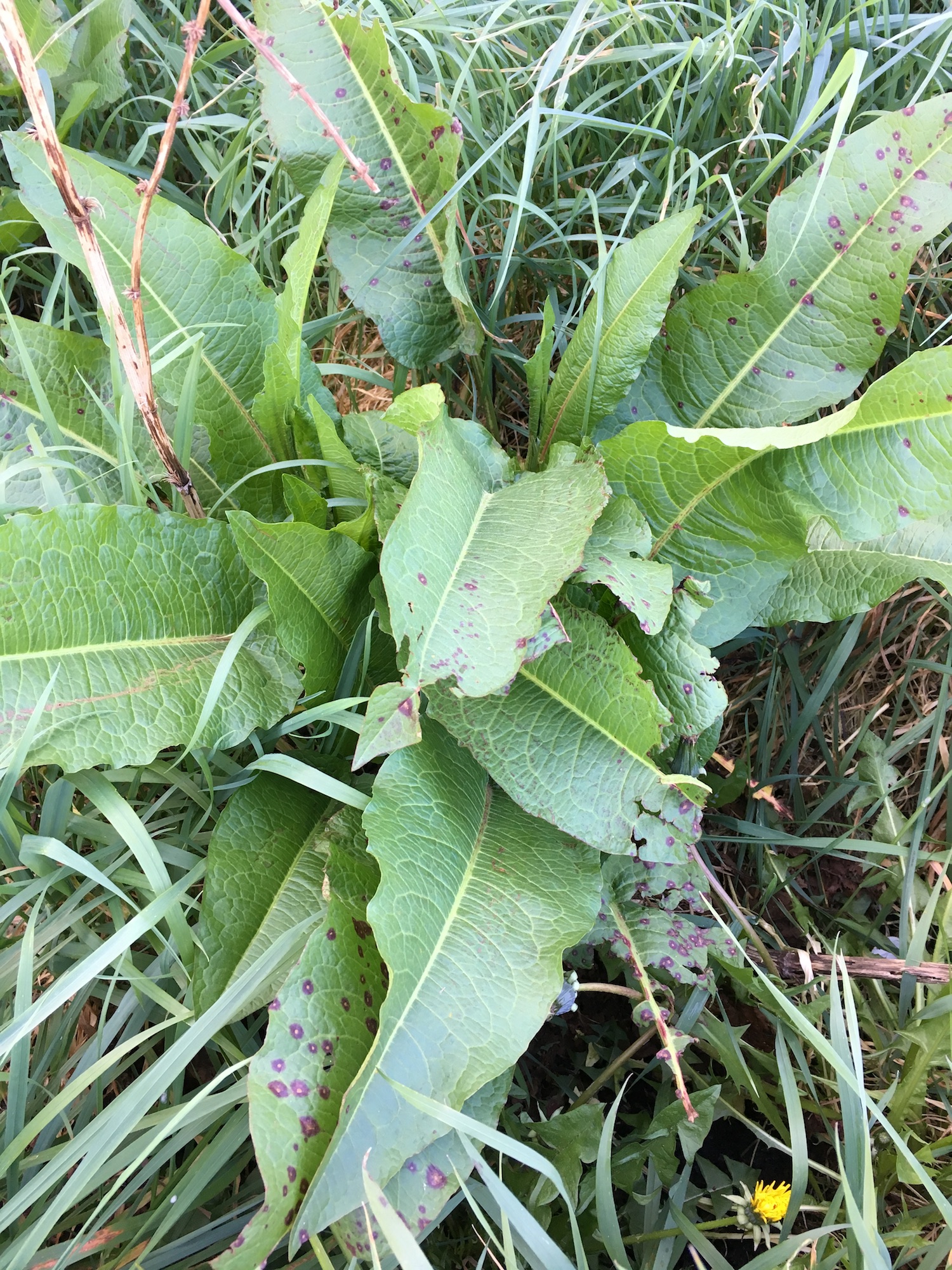
So I’ll be introducing some of my weeds over the next few weeks as they sprout and flower and generally annoy me. We’ll start today with a weed I love to hate–broad-leaved dock (Rumex obtusifolius).

Dock isn’t my worst weed. Not by a long shot. But it is persistent. Deep, branching taproots make it a struggle to pull out, and with each plant able to produce up to 60,000 seeds a year which can remain viable in the soil for up to 50 years, there is an unending supply of new plants. Still, dock struggles to compete with established plants, so it’s mostly a weed of disturbed soil.

The goats absolutely love it, so I can’t complain there. Dock is high in magnesium, phosphate, and potassium, and the tannins in the leaves can help prevent bloat in ruminants. Any dock I pull out of the garden goes directly to the goats.

It is likely dock was brought to New Zealand (from its native Europe) on purpose in the mid-1800s. Though the leaves are high in oxalates, which can irritate the stomach and bind to calcium, potentially leading to calcium deficiency, the plant was regularly eaten like spinach. It was also used to treat a variety of ailments, from coughs to cancer.

Dock often grows side by side with stinging nettle and, like many nettle associates, it can supposedly cure nettle stings. I’ve used dock for this purpose, and can attest that it seems to help, but then so does just about any fresh leaf rubbed on nettle stings.

I wouldn’t want to fight dock on a large scale–it scoffs at most herbicides, easily survives mowing, and can resprout from pieces of root left in the soil after ploughing–but for me, it’s a manageable weed that even has some utility.


Chasing Chickens

Foiled again! A chicken eyes the zip ties on top of the gate.

Two weeks ago I moved the chickens out of the vegetable garden and into their summer paddock. The summer paddock is smaller than the garden, and not quite as rich in insects and diverse weeds. The chickens are always a bit put out at their restricted terrain, and they express their dissatisfaction for the first few weeks by escaping.

When they get out, they immediately rake all the mulch from under the artichokes onto the paths. Then they attack the compost pile, spreading twitch roots, mouldy bread and last night’s leftovers around the yard.

It’s a test of ingenuity between me and the chickens. At first, they might fly over the fence–I clip their wings. Then they might scramble to the top of the gate along the fence’s diagonal bracing–I use zip ties to create a jagged edge on the gate so they can’t perch there. Then they might use the nesting boxes as a perch, jumping from the ground to the nesting boxes, and then over the fence–I add zip ties to the top of the nesting boxes. In time, they might dig underneath the fence and slip underneath–I fill their holes with rocks.

Eventually, they’ll grow tired of trying to escape. Or maybe they forget that they used to have more space–they have pretty small brains, after all. Either way, I will eventually win.

Until then, I’ll spend every afternoon rounding up the chickens who’ve escaped and returning them to their paddock, and then raking mulch off the paths, wondering why I don’t simply increase the height of their fence. Perhaps it’s me with the small brain…