Autumnal Buzz

As an entomologist, I love early autumn. Insect numbers are at their peak, and most insects are adults—their most active and visible life stage.

As a kid growing up in rural Pennsylvania, early autumn nights were nearly deafening with the cacophony of cricket and katydid chirps. Days buzzed with the sounds of cicadas and grasshoppers.

New Zealand is quieter, but autumn still has its distinct voices. Our katydids’ sharp ‘zit zit’ seems to echo from their favourite ake ake trees. Crickets twitter in the grass on sunny days. Cicadas and grasshoppers buzz from trees and bushes.

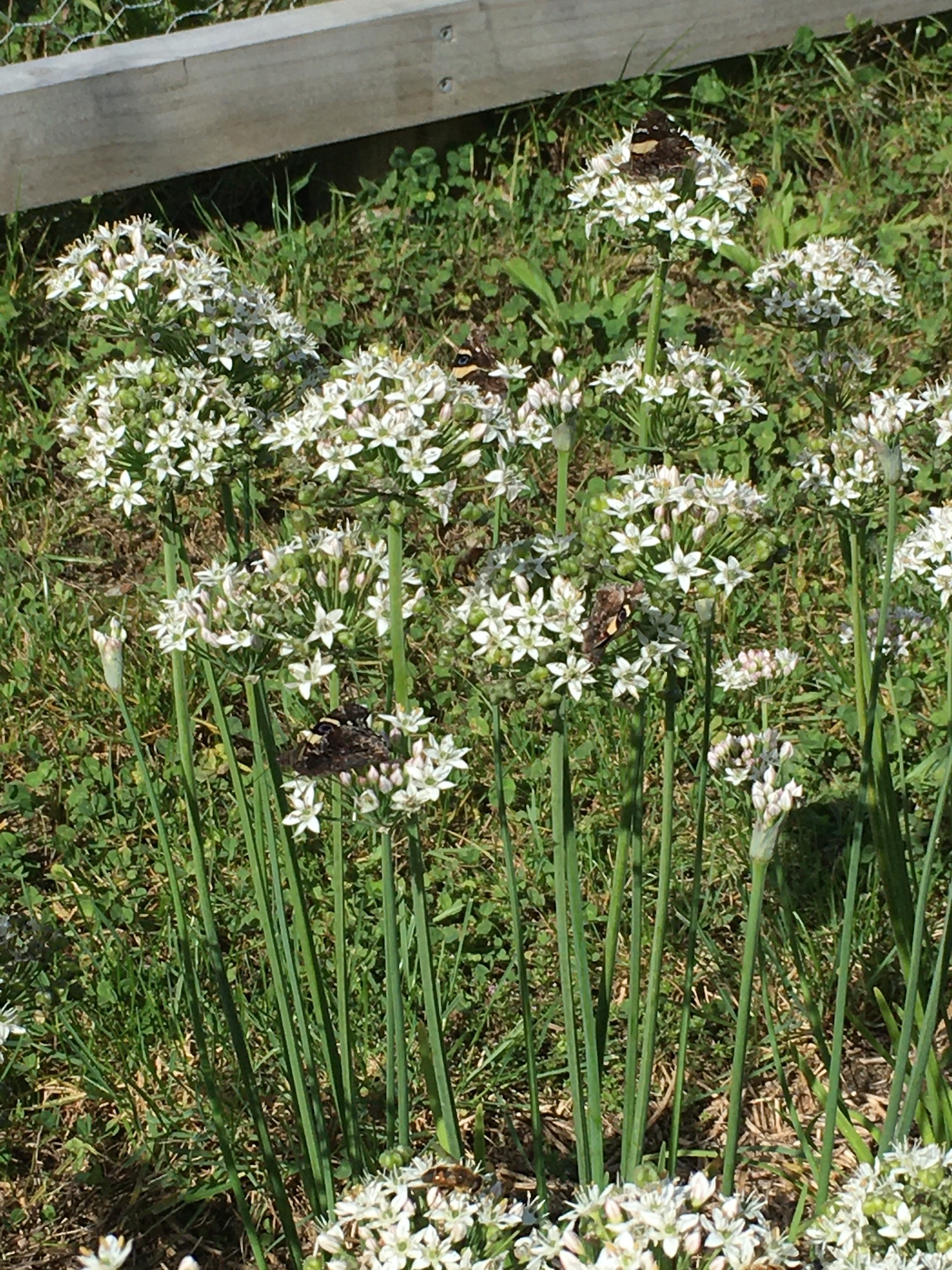
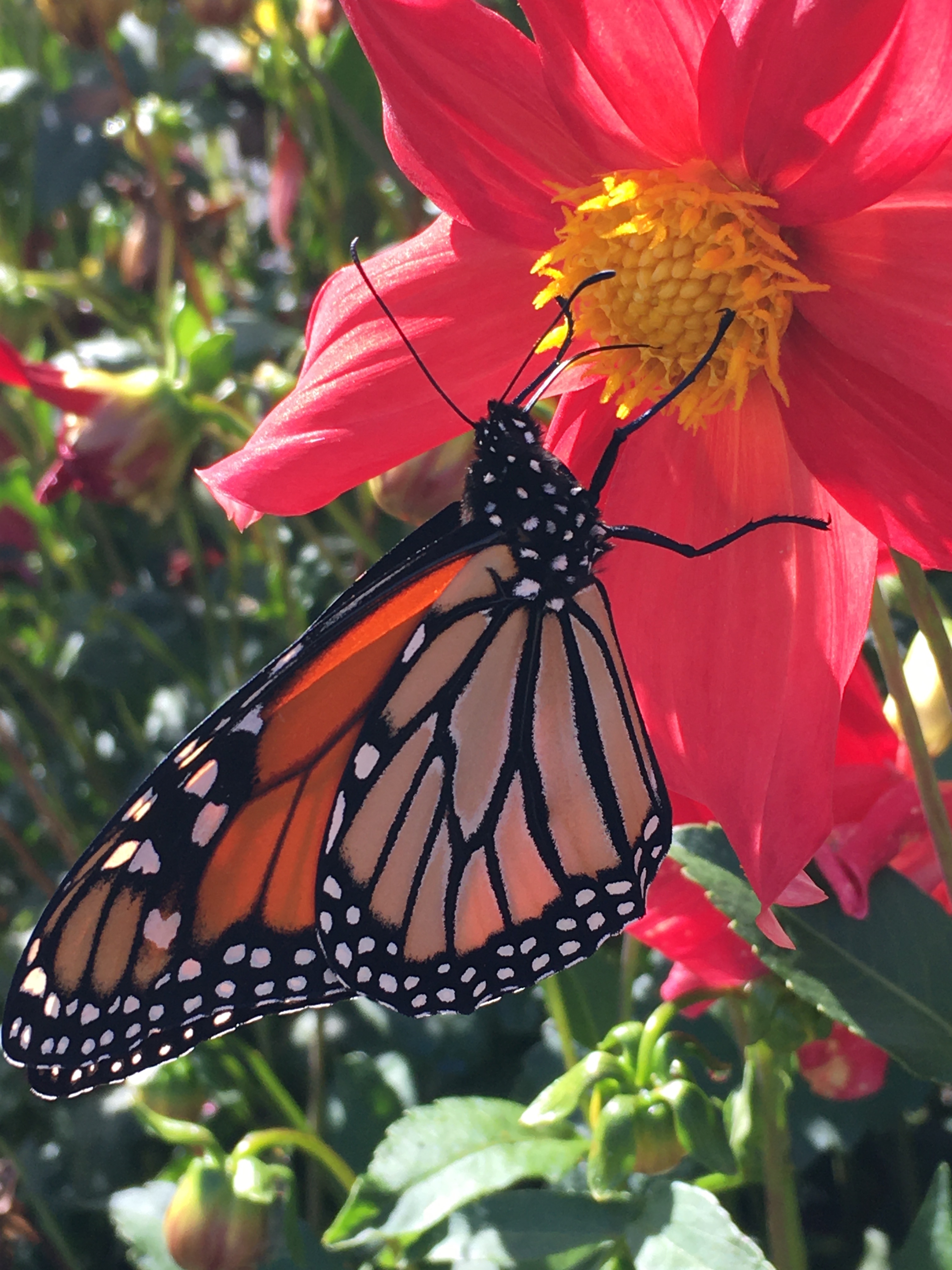
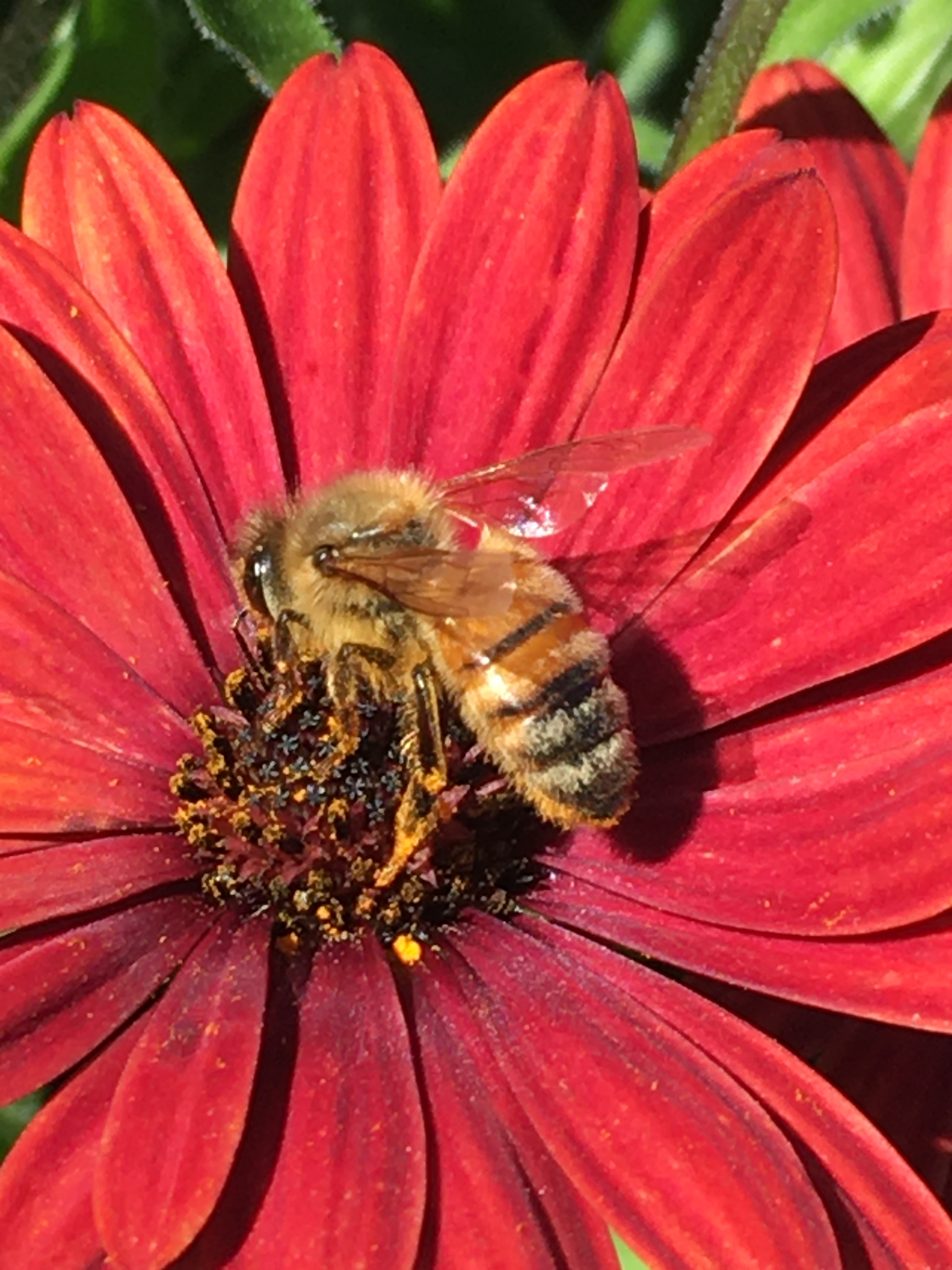
Bees and butterflies are particularly active on autumnal blooms. Many of our showy butterflies overwinter as adults, so they can be seen flitting about on warm days into late autumn.

Of course the clouds of invasive cabbage white butterflies on the brassicas and the German wasps swarming the compost pile aren’t terribly welcome. But still, I enjoy the leggy hum and flutter of the season.

Feathered Friend

The vast majority of the birds in our yard are non-native invasive pests—English sparrows, European starlings, blackbirds, goldfinches and song thrushes wreak havoc in the garden. They eat fruits and vegetables, dig up seedlings, spread mulch all over the lawn, and strip young plants of leaves. If I could net the entire yard to keep them all out I would.

But some of the avian visitors to our place are welcome. The fantails that flit in and out of the house snapping up flies are a delight. The silvereyes picking aphids off the trees are both adorable and helpful. And the magpies may be noisy and aggressive, but they are quite entertaining as they dive bomb the cat or squabble with each other.

The tall trees across the road from our place are home to a host of white-faced herons. They croak and grumble among the branches like modern pterodactyls, and I love to watch them winging home in the evenings, landing awkwardly before settling down for the night. 

They rarely give our yard a second glance, but for the past week, a young heron has taken a liking to our porch and front garden. 

There’s something wrong with him. I say that not because of his interest in our porch—it is a nice place to hang out—but because his legs are oddly splayed and he wobbles when he walks. Still, he seems to be holding his own, and he has no trouble flying out of range of the cat when he comes stalking. It’s possible his flight is impaired as well, and that’s why he’s foraging close to home in our garden. Or maybe he’s discovered our soil has lots of worms to offer. Either way, I wouldn’t mind if this bird stuck around.

From Haast to Haast Pass

My husband and I spent the past four days on the West Coast. I was helping him with some field work involving a lot of bush bashing on steep slopes.

The trip also involved a lot of driving–all the way from Greymouth to Haast, and then over to Wanaka before heading north again. It being the West Coast, the road crossed many creeks, each one named by a small road sign. After a particularly waterway-rich stretch of highway, where  we crossed a creek every 50 metres or so, we began to note ALL the creek names. At some point I began writing them down—they were strangely poetic.

I’ve taken a section—State Highway 6 between Haast and Haast Pass—and have written a poem that uses each creek name, in order starting in Haast, and evokes South Westland. The creek names are the only words capitalised.

you swish through the Grassy paddock
to take a Snapshot,
then fossick for Greenstone
on the beach amidst the strewn blossoms
of southern rata, that seasonal Myrtle
Harris says brings out the colour of
your eyes when he tucks a bloom behind your ear.

ankle deep in the Glitterburn
on a tuesday that sparkles with gold
you fire a text to Roy and Joe,
knowing they are stuck in Dismal london,
while you grow Dizzy trying to track
the flitting movement of a tomtit
in the undergrowth, its Gun Boat grey
blending into the shadows, white breast
winking like a Cron command,
Dancing to its own irregular beat.

and deep in the forest, the Roaring Swine
fill the Gap in the silence and find
the Chink between birdsongs.

your Cache of wonder sits at the Depot,
its Square Top a fitting seat
for Orman,
the Imp with Mossy eyes.
his Eighteen Mile hike on Gout swollen feet
has not dampened his spirits.
he recites MacPherson’s translations,
mixing the ancient gaelic with
lines you’re certain came from Douglas adams.

the Serpentine path you wander tumbles
over boulders soft with moss like grandma Evans’ arms
when she would pull you into those hugs you
hated as a teen, when you and your cousin Chelsea
walked the tired streets of town—
three blocks, then Pivot to retrace
the entirety of main street—hoping
for some excitement.

now it is Solitude you crave.
as Douglas said—space is Big—
surely there is enough of it that you
can carve out your own piece of it
here, among the ancient footprints
of Moa, tangled in a Briar,
imagining Haast eagles soaring overhead.

Diana would have been your goddess,
in this wilderness of rain where The Trickle
of water is more like a roar and
liquid is a Cutter of stone.

you would stay here for decades
like Robinson crusoe, study the
ants at your feet as though you
were e. o. Wilson.

instead you Cross the river
and stand dripping and shiny
as a nugget of gold on the other side.

Guerrilla Art

We spent a night in Wanaka last week before our tramping trip. While wandering around town looking for a likely spot for dinner, we came across some poems stuck onto a bridge railing. 

Like a Banksy painting, the poems were certainly not ‘legal’ and were no doubt frowned upon by the local authorities. But also Banksy-like, they made passersby smile and think.

Years ago, when my husband and I lived in State College, Pennsylvania, we regularly took our walks in the agricultural fields near the edge of town. Along the path, shortly after leaving the neighbourhood, someone had installed a tiny section of sidewalk. Embedded in the concrete was the poem ‘Where the Sidewalk Ends’ by Shel Silverstein. There was no indication of who had installed the poem, and it was tucked away beside the field as though it had been surreptitiously installed in the dead of night. 

There are municipally sanctioned examples of Guerrilla art—art that appears in unlikely places. The poetry among the rocks along Wellington’s waterfront is one example. But there’s something particularly delightful about the non-sanctioned art—the amazing sand sculptures people create on the beach, the sidewalk chalk drawings that proliferated during lockdown, the splash of graffiti on train cars. It’s an expression of life and spirit, a proclamation of something uniquely human, a statement about human lives.

I think we all could use a little more guerrilla art in our lives. Thanks to the Brownston Street Bard for your lovely contribution. May the ink continue to flow from your pen.

Christmas Adventure–Gillespie Circuit

The family’s Christmas tramp this year took us to the Gillespie Circuit Track in Mount Aspiring National Park. The trip was a good adventure, through a dramatic landscape we don’t often hike in.

Day one started with a jet boat from Makarora to the confluence of the Wilkin and Makarora Rivers. It was my first jet boat ride, and I’ll admit my inner teenager was grinning as we slalomed down the river in a noisy, environmentally unsustainable fashion my adult self disapproves of.

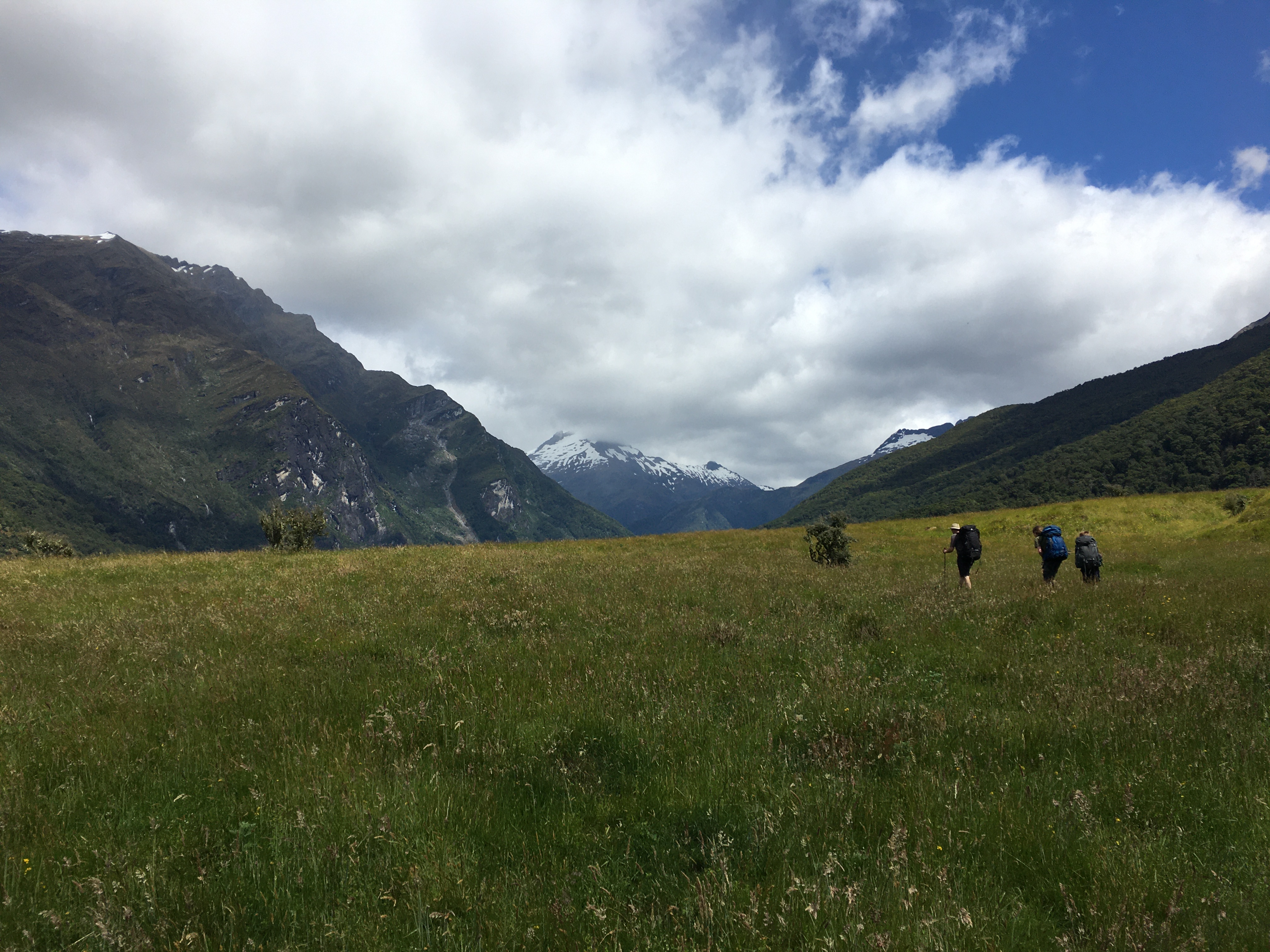
From the mouth of the Wilkin River, we hiked upstream. It was decidedly the least interesting four hours of the trip—the area is grazed, so it was primarily a slog through a cow paddock. The track then turned into the forest and climbed steadily up Siberia Stream to Siberia Hut, where we spent two nights.

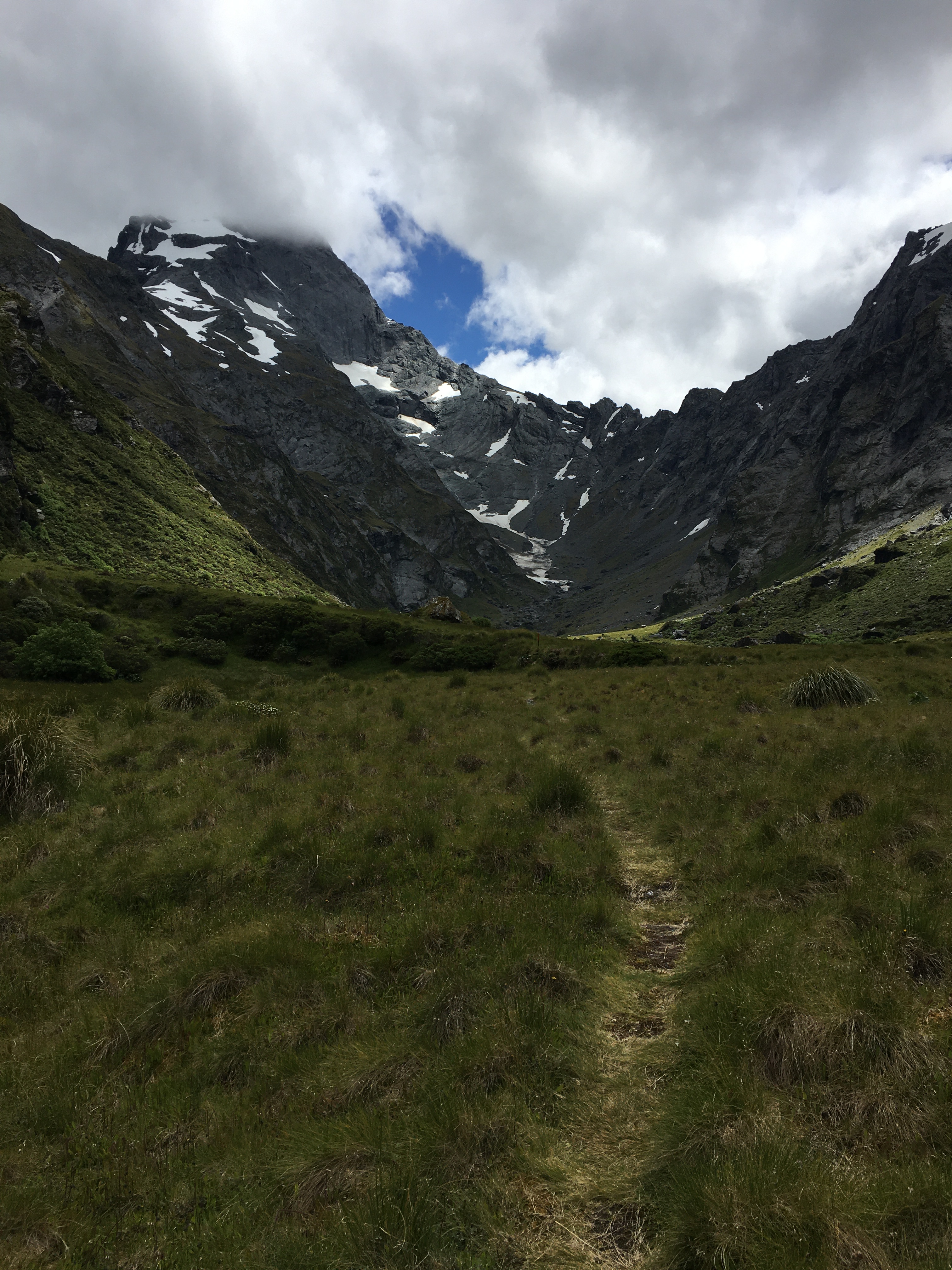
On day two, we took a day trip to Crucible Lake. The track to the lake is quite steep, but worth every step. The lake sits in a basin behind a massive glacial moraine. The glacier above the lake drops chunks of ice into the water, making it look like an enormous punch bowl. Apparently it’s popular to take a dip in the lake, but we were deterred by the ice and the cool morning air. The scale of the landscape is deceptive, and photos don’t come close to capturing it.

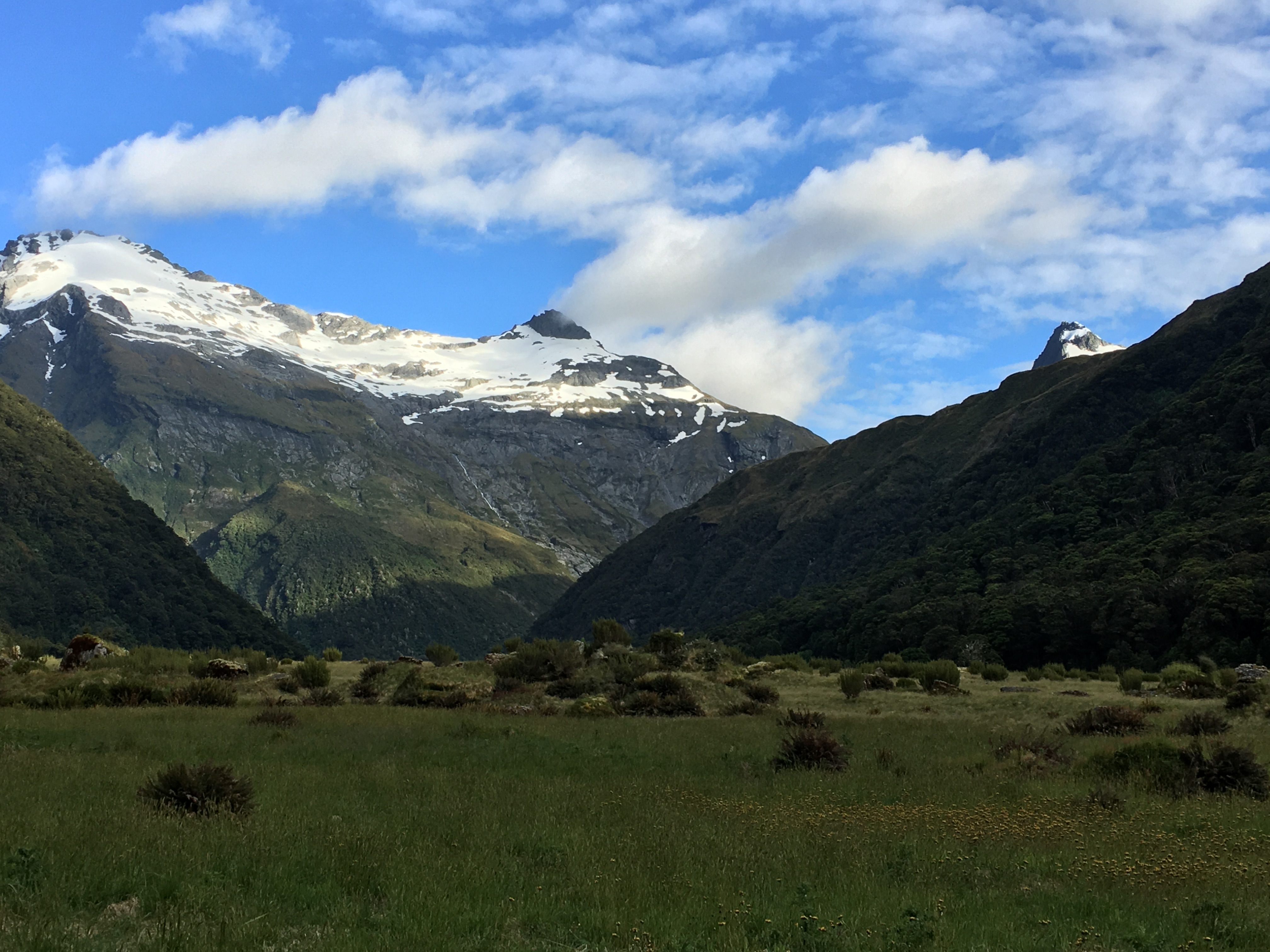
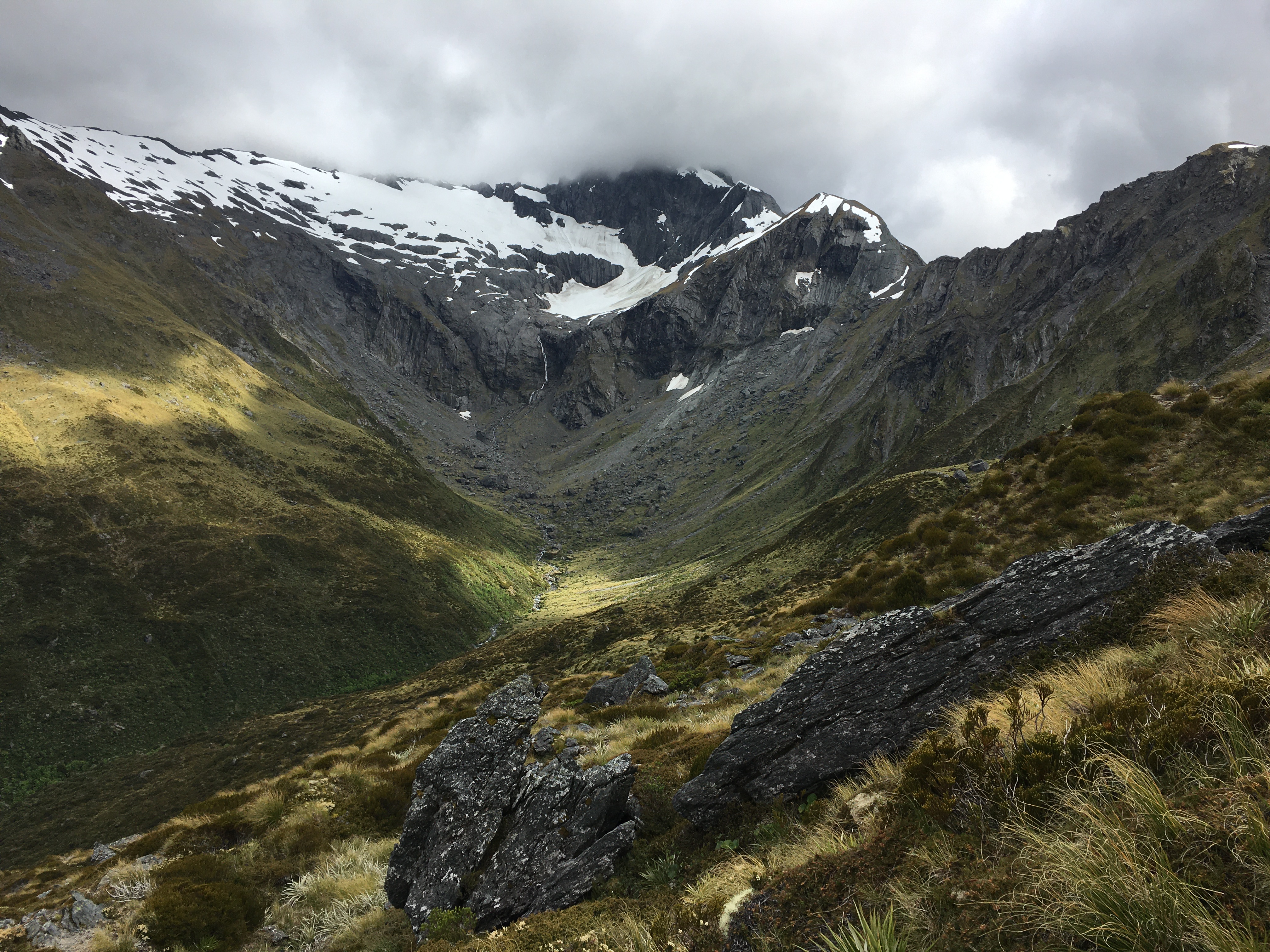
Day 3, Christmas Day, dawned lightly overcast—perfect for the next stage of the hike, over Gillespie Pass. The track climbs steeply over 1000 metres to the pass, first through the forest, and then into alpine scrub and tussock. Mount Awful looms over the pass, and the surrounding landscape is dominated by jagged peaks and glaciers. The taller peaks, including Mount Awful, were shrouded in cloud, but the views were nonetheless spectacular. We even got a slightly white Christmas, hiking through a couple of snow patches near the top of the pass.

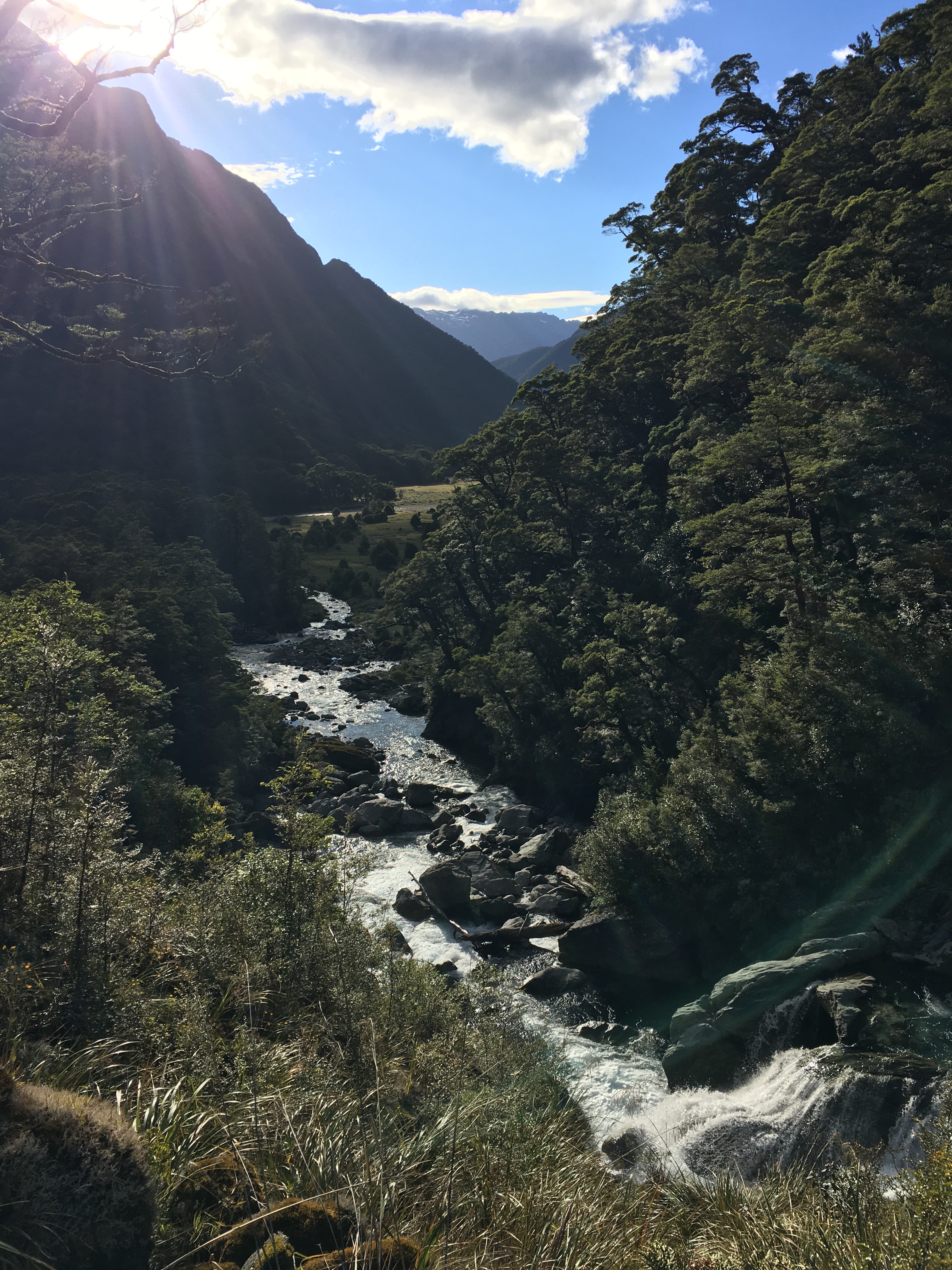
If we thought the way up was steep, the way down proved us wrong—it was even steeper, dropping down a precipitous ridge to the top of the Young River. From there, the nearly flat hike to Young Hut afforded plenty of opportunity to admire the rocky ridges above and the many waterfalls cascading down from them.

Day 4 was a long but relatively gentle hike along the Young River to the Makarora River through the forest. Crossing the thigh-deep Makarora River back to the car was a refreshing end to the trip.

Being a Christmas hike, the trip naturally inspired another bad tramping Christmas song. This year’s song is to the tune of Have Yourself a Merry Little Christmas.

Have yourself a merry tramping Christmas.
Make the trailside gay.
From now on our cars will be so far away.

Here we are as in olden days,
Happy tramping days of yore.
Faithful friends who are dear to us
Sleeping near to us—they snore!

Through the years we all will tramp together
If the joints allow,
Even when we’re eighty, though I don’t know how.
So have yourself a merry tramping Christmas now.

May you all have a lovely holiday filled with your favourite people doing your favourite things!

Christmas Baking Makeover

I grew up in North America, with all the traditional Christmas things—snow, dark days and long nights, crackling fires, Christmas lights, cookies, pies, hot drinks—Norman Rockwell might have painted my childhood Christmases.

Nearly 17 years ago, we moved to New Zealand, to summertime Christmases. Here, strawberries, cherries, and long summer days herald the season. 

I always loved the baking aspect of Christmas in North America—Mum amassed dozens of types of cookies in the freezer in the weeks leading up to Christmas. The kids always got involved in the baking, and we’d gorge on cookies through the holidays.

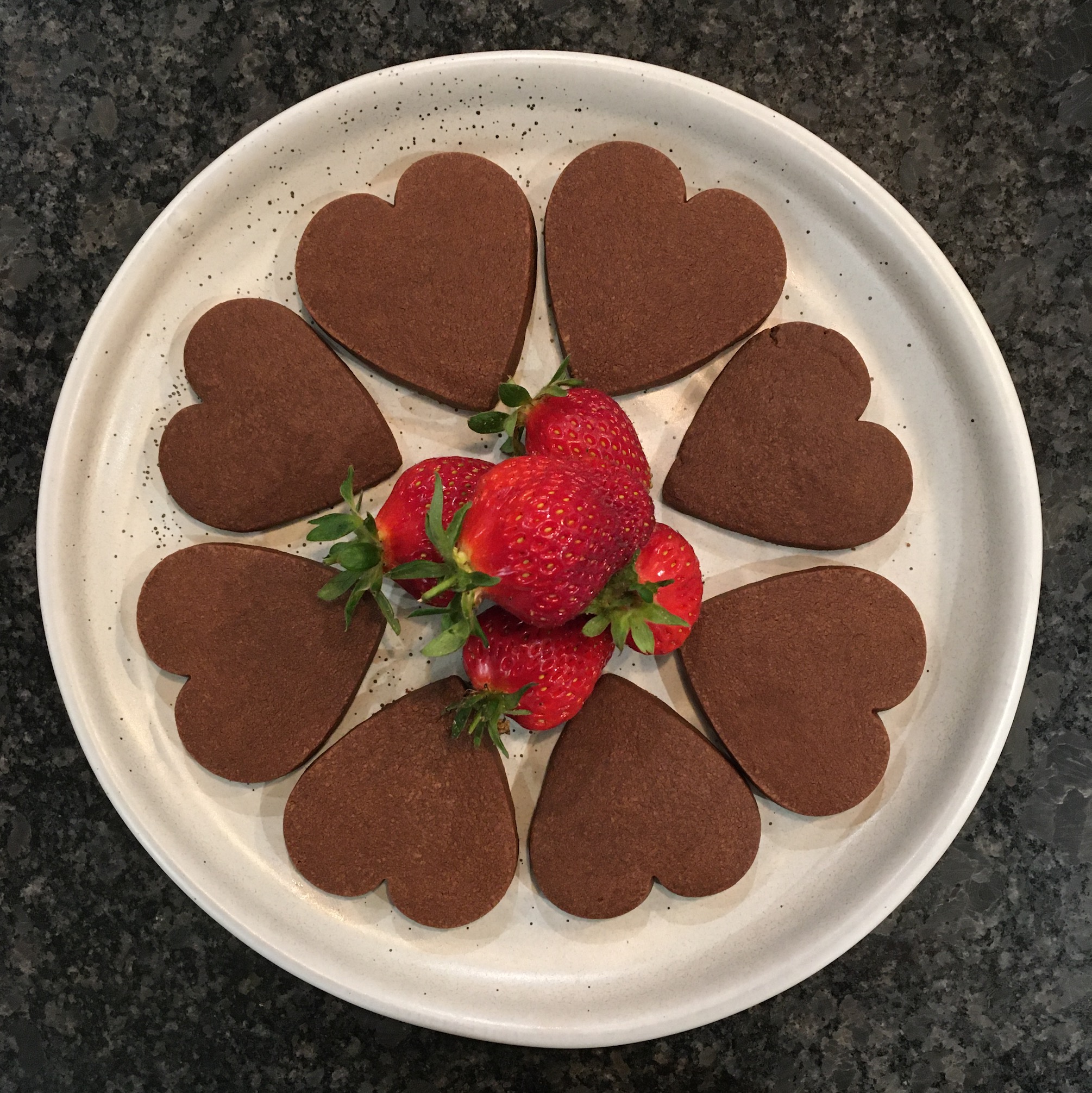
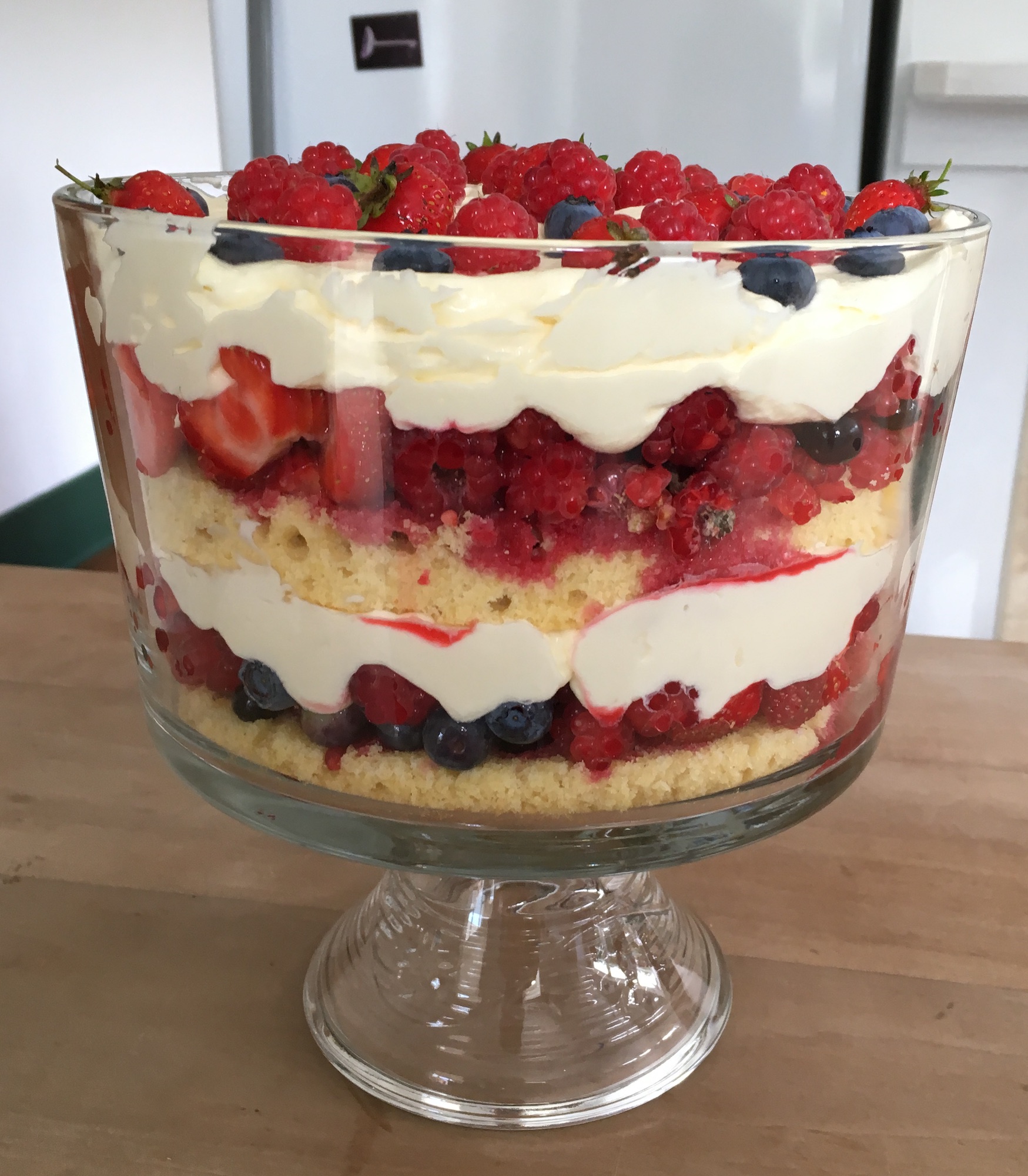
I still love baking, but I struggle to dredge up much enthusiasm for Christmas cookies here. With fresh early summer fruits in season, it seems ridiculous to bake cookies that capitalise on stored foods like dried fruits, nuts and chocolate. What I crave is strawberry tarts, black currant pie, and gooseberry crisp. Or better yet, fresh fruit salad—forget the baking altogether.

Out of a sense of nostalgia, I’ve continued to bake a few Christmas cookies every year, alongside the fruit desserts, but 2021 might be the year that changes.

As everyone has experienced this year, supply chains are disrupted worldwide. It has led to shortages of various items from foods to electric cars. A few weeks ago, most of the brown sugar in New Zealand was recalled, because of lead contamination that occurred during shipping. We all dutifully threw away our brown sugar, and wanted to buy more. Of course, there was none. There’s still none, weeks after the recall.

It looks like a staple of Christmas baking will be unavailable this year.

I admit I’m not terribly upset by it. I’ve been wanting to move more toward using locally produced honey instead of imported sugar, and this looks like the perfect opportunity to break the brown sugar habit. Also, it gives me an excuse not to make Christmas cookies, but to focus instead on enjoying the fruit that is already ripening in the garden.

This might be the year that my baking finally makes the switch to the Southern Hemisphere.

To make it even more tempting to go full Kiwi, Matariki has finally been made an official holiday. The Māori new year happens near the winter solstice in June—the perfect time for eating cookies and enjoying hot chocolate. I may have to start making Matariki cookies instead of Christmas cookies. I will enjoy them so much more at Matariki.

So bring on the fruit, some icy lemonade, and the sunscreen! Hold the brown sugar—I won’t be needing it. Christmas baking is getting a makeover.
The Little Things–Hakatere Conservation Park

As usual, I spent most of the long Labour Day weekend in the vegetable garden. I weeded, prepared garden beds, and planted my cucurbits in trays.

Lake Clearwater with mountains
Lake Clearwater was a mirror in the morning’s still air.

But as they say, all work and no play … I didn’t want to spend the whole holiday weekend sweating in the garden.

So on Monday my husband and I went to Hakatere Conservation Park and sweated on Mount Guy instead.

The Ashburton Lakes region is a glacially formed landscape dotted with lakes and tarns. The land around the wetlands is largely tussock grassland studded with spiny matagauri bushes. An unforgiving, windswept landscape that can feel downright bleak.

That was my impression the first time I visited. Fifteen years ago, I was hired to develop an interpretation plan for what was then a proposed park only. I had the great fortune to tour the area with a Department of Conservation ranger who had worked in the area for decades and had a great love of the landscape. He showed me the little things—not necessarily obvious at first—that set the region apart. Rare insects (including an aquatic moth!), waterfowl and lizards. Unique and diverse plants. Historical use of the land, and massive changes over geologic time. There’s a lot more than meets the eye.

skink
One of the many skinks we saw.

On Monday, we were treated to a glorious day—sunny and calm at first, with a brisk breeze kicking in just when the day began to feel too warm. We parked at Lake Clearwater and hiked the track to the summit of Mount Guy. On our return, we followed the tussocky ridge down to a saddle where we picked up Te Araroa, following the track back to the edge of Lake Clearwater where we completed our large, loopy circuit of the lake.

mountains and river valley
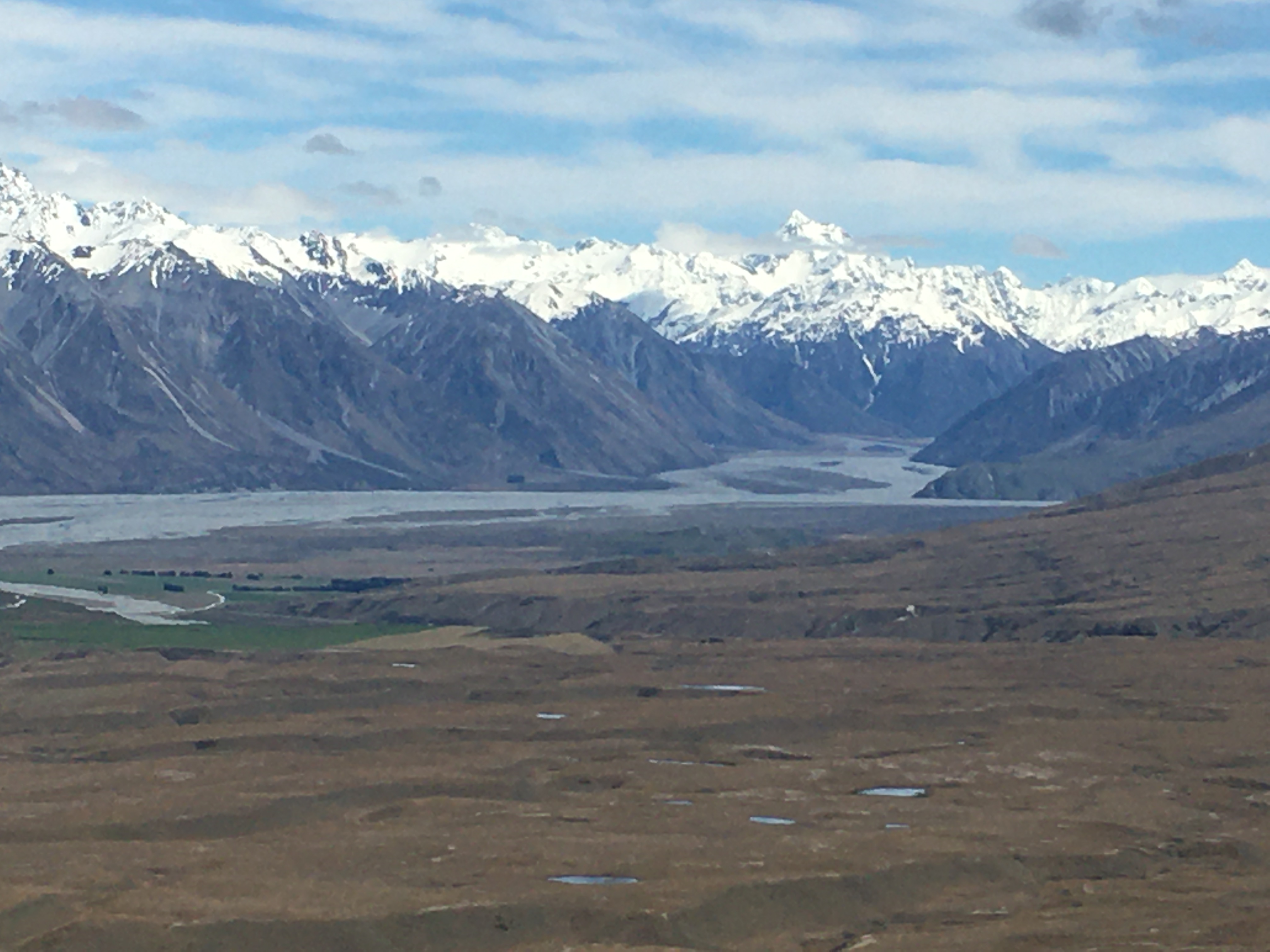
View from near the top of Mount Guy. Mount Sunday is a small mound in the river valley, just to the right of centre in the photo.

The hike afforded stunning views of jagged, snow-capped peaks, and a view of Mount Sunday down in the river valley.

Oddly, out of all the “mountains” in the park, Mount Sunday may be the most famous. The hill was used as the location for Edoras in the Lord of the Rings movies. In the enormity of the surrounding landscape, however, it is an insignificant lump of rock.

Perhaps, like the hidden insects, birds, and plants, it is the little details that are the interesting bits.

Lichens Rule

Not long ago, I spent a glorious sunny day wandering around Cass Field Station while my husband met with some students there. It was nice to take a solo walk and go at my own pace, stopping at whatever plants, bugs or rocks caught my fancy.

Once nice find was this beautiful lichen, Rhizocarpon geographicum.

Lichens are strange organisms comprised of an alga living within a fungus. The alga provides food through photosynthesis and the fungus provides protection and nutrients for the alga.

R. geographicum is an alpine/subalpine lichen and, like many lichens, is sensitive to air pollution, thriving only where the air is clean. It is not, however, a fragile organism.

In 2005, R. geographicum was one of two lichens launched into space. The lichens were exposed to 14.6 days of open space—vacuum, wide temperature fluctuations, intense UV light and cosmic radiation. Upon return, R. geographicum showed little harm from the experience.

Not only is R. geographicum tough, some individuals in the Arctic are estimated to be 8,600 years old, making them the oldest living organisms on Earth. Their longevity and predictable growth rate make them useful tools for determining when glaciers retreated from an area.

But I didn’t know all this about R. geographicum when I found it on the rocks at Cass. I simply admired its beautiful mottled colours and soft texture. 

Nature Red in Tooth and Claw

Photo: Eric Weiss

It’s not often you witness outright thuggery in nature. Predators hunt prey—they have to, because otherwise they starve. Predation is never pretty, but it is what it is. 

Sitting at my desk, procrastinating … er … writing this morning, I saw brutality, pure and simple. 

A pair of magpies was chasing a starling. They caught it and brought it to the ground. Standing over it, they pecked at its eyes. At first, I thought they were trying to kill and eat it. But after a few minutes, they got bored. The starling managed to fly off. The magpies followed, caught it and brought it back, only to repeat the eye pecking routine. Three times while I watched, they allowed the starling to escape, then brought it back to peck at it. Always at the eyes.

Eventually, they bored of the sport. They wandered away from the hapless starling to forage in the lawn nearby. After a few minutes, starling and magpies flew off in opposite directions.

I suppose it shouldn’t come as a surprise. Australian magpies have a reputation as aggressive, intelligent birds that like to play. They brazenly steal food from the chickens, fighting right back when a chicken lunges at them. And I’ve watched as gangs of juvenile magpies have tormented my cat, swooping low over him as a team, trying to get a peck in while he swats at them. And I’ve been on the receiving end of magpie parents defending their nests with noisy dives at my head.

In general, magpies eat invertebrates—they were originally introduced to New Zealand to help control crop pests. Research on their effects on native birds indicates they only rarely kill other birds, and their aggressive pursuit of larger predators like harriers may even provide some protection to smaller birds.

Still, I can’t help thinking magpies are the bullies of the playground. They’re fine as long as you’re not their target. Fascinating for me as an armchair naturalist, but I’m thankful I’m not a small songbird.

Wild West

On a whim, my husband and I spent last weekend on the west coast. We stayed in our favourite west coast town—Hokitika—and hiked in the mountains nearby.

view from Mt Greenland
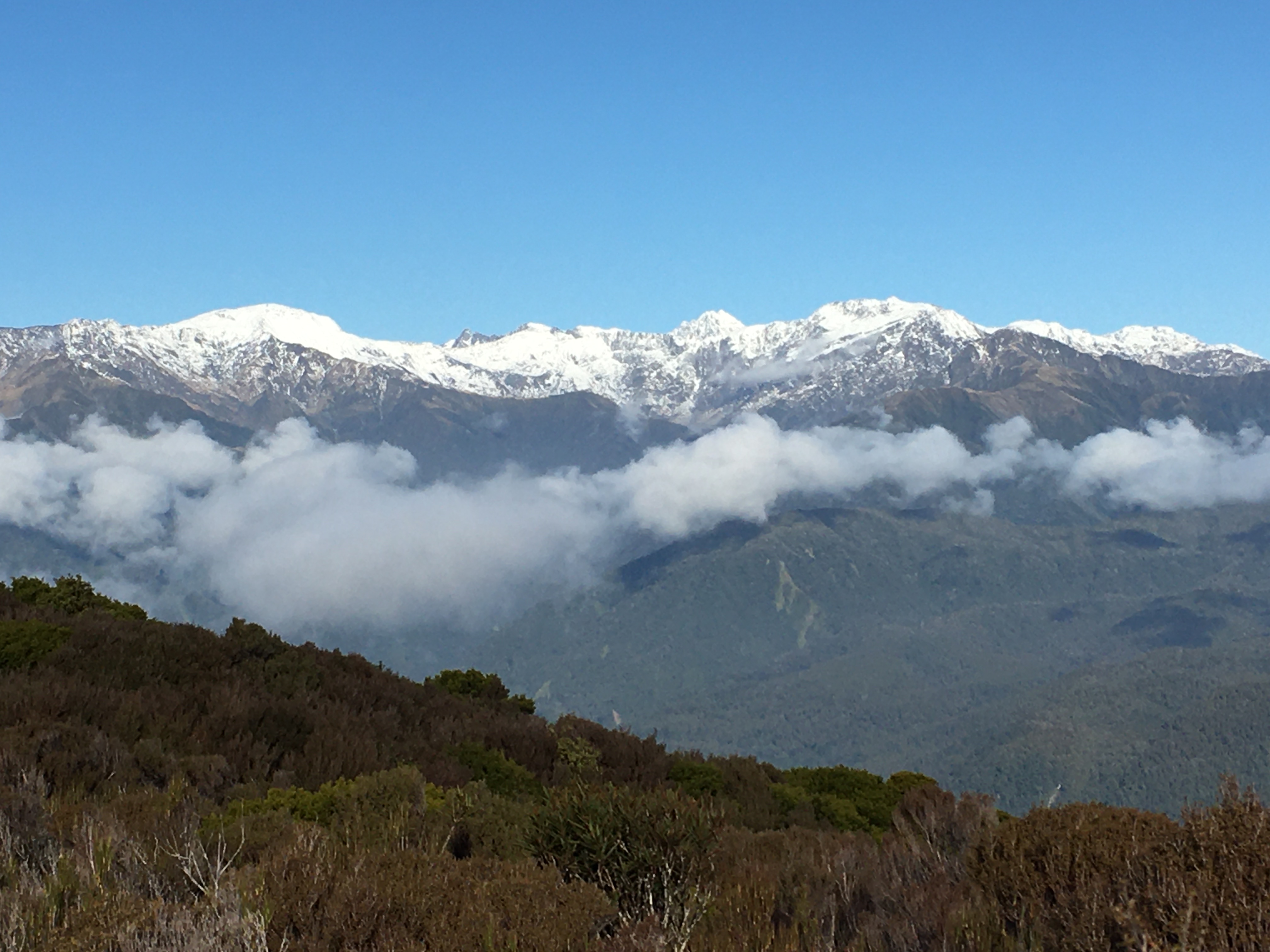
The view from the top of Mt Greenland

Having lived in a rainforest for two and a half years, I know I wouldn’t want to live on the west coast (where rainfall ranges from 2 to 11 metres per year), but I love visiting.

On this visit, we hiked up Mount Greenland. The path up is an abandoned road that used to connect the small gold mining settlement of Veronica to the township of Ross. An article in the West Coast Times in 1888 records Veronica as a promising settlement, complete with a hotel and two stores. Even then, the road from Ross was apparently atrocious—other newspaper accounts from the 1880s colourfully describe knee- and waist-deep mud on the way to Veronica.

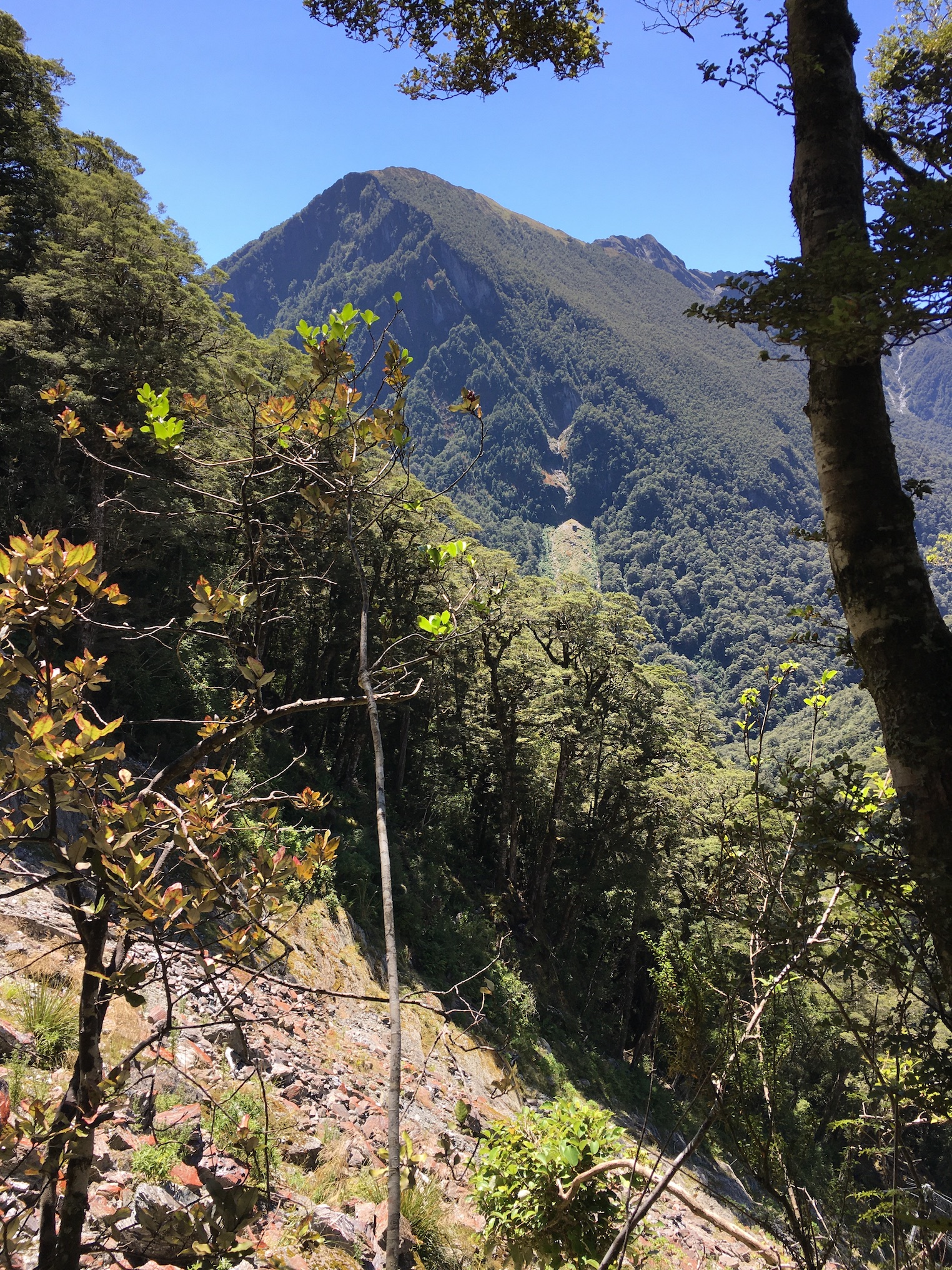
The mine near Veronica was abandoned in 1940, and the rainforest has been reclaiming the road ever since. The day we hiked it was sunny and cool, but even without active precipitation, the road streamed with water in places. There were a few short stretches without washouts, deep puddles or slips, but only a few. Ferns leaned over the edges of the narrow track, so that in spots, even hikers were forced into single file. It is clear some informal maintenance of the track still goes on, but the forest is doing its best to erase it.

rainforest

And this is probably what I appreciate most about the west coast—nature is in charge, and humans maintain only tenuous grip. The settlement of Veronica has all but vanished under vines and tree ferns. The gold rush of the 1800s left no ghost towns—the forest has swallowed them all up. Other west coast townships, like Franz Josef Glacier, Fox Glacier, and Kumara Junction, feel equally under siege by Mother Nature, as though it would only take a few moments of inattention before the trees would creep down the streets, and the vines snake over the houses.

As apocalyptic as that vision is, it gives me hope. Hope that one day, the planet will erase the scars of our fleeting presence here and carry on in a riot of life.