Pest Management: Control

Yesterday I wrote about strategies for preventing pest problems. If you’ve taken all the measures you can to prevent pests, but the pests arrive anyway, there are different questions to ask:

Centipedes are predators of many garden pests.
  1. Do I need to worry? Low levels of pests aren’t a big deal. A few aphids, a caterpillar here or there, the odd bite out of a leaf—these things aren’t going to have a big impact on the quality or quantity of your harvest. Just keep an eye on them to be sure the problem doesn’t get worse.
  2. Can I physically remove them? I’m a huge fan of squishing and hosing pests off plants. For example, I have problems every spring with aphids on my roses. If I do nothing, the plants become completely covered, and the blooms are destroyed. So in spring, I keep an eye on the plants, and once the aphids start reproducing, I hose the plants down once a week, knocking off most of the aphids. Usually I only have to do this about three times before the aphids’ natural enemies build up enough to keep them under control without my help.
  3. Can you disrupt a critical part of your pest’s life cycle? Is there a life stage that can be easily killed, or has specific requirements you can disrupt? For example, I keep a close eye on my brassica seedlings, looking out for cabbage white butterfly eggs on the undersides of the leaves. All it takes is a quick swipe of the thumb across the bottom of each leaf to squash the eggs and eliminate future problems with caterpillars. Another example is my recent problems with slaters in my greenhouses. Discovering that the slaters are congregating between cement blocks stacked beside the greenhouse, I’ve started regularly checking and squashing all the slaters in those blocks. (I could also have moved the blocks, to eliminate the slaters’ shelter, but since the population was quite high, I thought squishing a whole lot of them would be more effective for now. Later I will probably move the blocks to make the area around the greenhouse less attractive to slaters). 
  4. Can I make use of them? Pest-covered plants, grass grubs and slugs all get thrown over the fence to my chickens, who turn them into beautiful eggs for me and save me from the disgusting task of squishing the bugs. 
  5. Can I pull out badly infested plants? If there’s a couple of plants badly infested, but the pests haven’t spread much, rip out those infested plants and destroy the pests on them. You’ll lose a few plants, but you’ll protect the rest of your crop.
Pest-gobbling chickens.

In an IPM system, you don’t consider any sort of chemical control until you’d exhausted all the possibilities above. In practice in my garden, I almost never need anything else. Occasionally, if I’ve missed an aphid infestation on a crop that can’t handle a strong spray of water, I’ll use a soap solution to kill aphids. That’s the extent of my chemical control. But if you do need to resort to chemicals, it’s important to choose the right one. The more specific it is to your pest, the better. Many modern pesticides are narrowly focused, and target specific pests, and that’s great. With a narrow target, the pesticide is less likely to kill beneficial insects or harm people and pets. Stay away from broad spectrum pesticides. Also, if you do use pesticides, be sure to follow the label directions carefully, wear protective gear, and dispose of leftover product and empty containers properly. 

Pest Management: prevention

It’s nearly spring, so naturally my thoughts turn to the subject of pests. Our big pest-related project in the garden this year is bird netting a third of the vegetable garden, so we don’t lose most of our tomatoes and peas to the feathered rats.

Aphids–the one on the right is healthy, the one on the left has been parasitised by a wasp, one of the many natural enemies that keep aphids under control in the garden.

As an entomologist whose research focused on Integrated Pest Management, I always have a lot to say about pests. And it’s an important topic—globally, 30-40% of crop yield is lost to pests (interestingly, this figure didn’t change with the advent of chemical pesticides—insect pests are incredibly quick to evolve pesticide resistance). That’s a lot of wasted food!

For home gardeners, fighting pests is a daily task. Every place I’ve gardened has its own unique pest problems. Growing up in Lancaster Country, Pennsylvania, I remember the rabbits munching through the garden. In State College, Pennsylvania it was flea beetles that shot so many holes through my eggplants’ leaves they never had a chance to grow, and the squash bugs that clustered in masses under the leaves of my zucchinis. In Panama, leaf cutter ants could strip a plant bare in no time. 

In my first garden in New Zealand, aphids and rabbits were my main problems. When we first arrived on the property, there were so many rabbits I wondered if I’d be able to grow anything. A rabbit-proof fence was the first garden project there.

In my current garden, birds are my worst enemy—mostly English sparrows and European blackbirds. They strip seedlings bare, eat tomatoes, pull out onions, and scratch away mulch and soil, leaving plant roots to dry out (never mind the amount of chicken feed they snarf down every day!). 

Fortunately for me (and unfortunately for the pests), my masters degree focused on Integrated Pest Management (IPM), so I’m well-armed when it comes to tackling pest problems.

IPM is often called common sense pest control. In IPM, the goal isn’t to eliminate pests, but to minimise the damage pests cause, while choosing the most environmentally-friendly control methods that do the job.

To successfully use IPM, you must first know your enemy. What conditions does it like? What’s its life cycle? What are its natural enemies? How does it find your plants, and how does it travel? Books and the internet can tell you a lot, but careful observation of the pests in your garden is key. The particular conditions in your garden will affect how pests behave, and where their weaknesses are. If you know exactly where pests are and what they’re doing in your garden, you can begin to tackle them more effectively. For example, I know that in my current garden, there are particular varieties of squash the aphids like. By keeping an eye on those particular plants, I can catch aphid infestations early and deal with them before they spread to more plants.

Bird netting protecting pea seedlings

Once you know your pest’s habits, you can begin to consider control methods. Questions to ask:

  1. Can you time your plantings to avoid the damaging stage of the pest’s life cycle? For example, I don’t grow brassicas during the summer here—I have an early spring crop and a winter crop. By avoiding brassicas in summer, I eliminate bad problems with cabbage white butterflies, which tend to reach damaging levels around Christmas. I still have to be on the lookout for butterfly eggs on my seedlings, but once the plants are growing, they easily stay ahead of the caterpillars.
  2. Can you exclude the pests from your crops during critical time periods? For example, psyllids can transmit disease to potatoes and tomatoes, leading to poor growth and damaged tubers. By covering the plants with a fine mesh cloth, I can keep the psyllids out for most of the summer (until the plants are too big for the covers, by which point the psyllids don’t seem to be much of a problem). I do the same for my peas and lettuces—netting out birds until the plants are large enough to handle losing a few leaves. I also net my berry crops and olives before the fruits start ripening, so the birds don’t pick them before I do.
  3. Can you plant varieties the pests don’t like as much? For example, I plant mostly red varieties of lettuce, because the aphids take longer to discover them than they do the green ones. Usually, by the time the aphids find my red lettuces, they’re bolting and ready to pull out anyway.
  4. Can you plant a ‘trap’ crop that the pests like more than your favourite vegetables? I haven’t done this explicitly, but as I mentioned earlier, there are certain varieties of plants I know are particularly tasty to pests, and I closely monitor them and kill the pests on them before they can spread to other crops. A true trap crop is something you’re willing to pull out entirely when it is infested by your pest, in order to destroy the pest.
  5. Can you prevent pests from finding your crop? Interplanting different crops can help disrupt the spread of pests, because they struggle to find new plants to feed on. It can also help you make the most of the space in your garden. For example, I sometimes plant summer lettuces in the shade of my sweetcorn—not only does the shade help prevent the lettuce from bolting, it also seems to hide the lettuce from aphids.
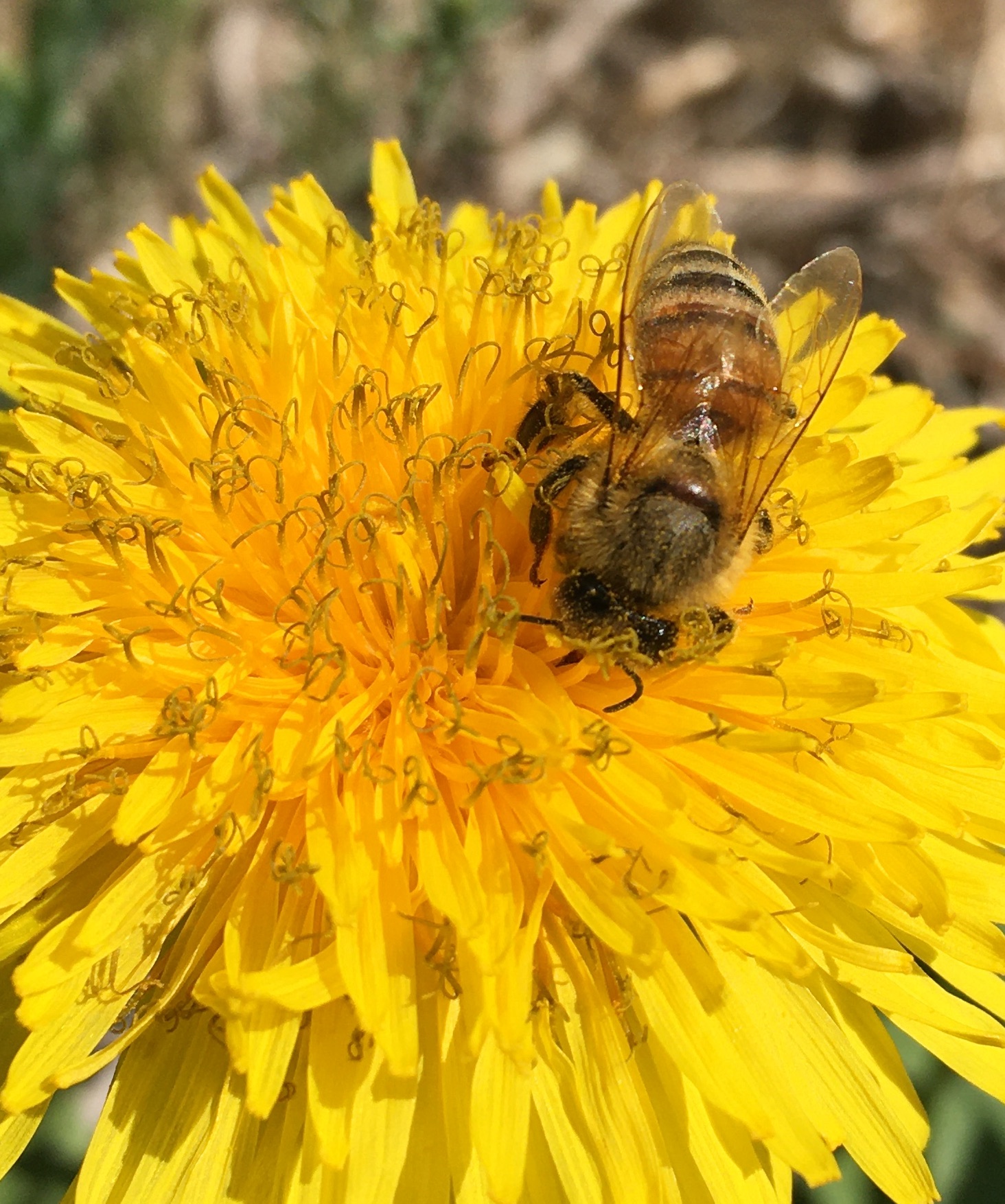
  6. Can I encourage the pests’ natural enemies? Many pest insects are preyed upon or parasitised by the larvae of beetles , flies and wasps. The adults often eat pollen and nectar, so planting herbs and flowers is a great way to encourage many pests’ natural enemies.

All six of the questions above will help you avoid a pest problem in the first place. They are changes in the way you plant or grow your crops that make it less likely you’ll have pest problems. Tomorrow, I’ll look at what you can do once you’ve discovered pests in your garden.

Mt Richardson–a beautiful winter hike

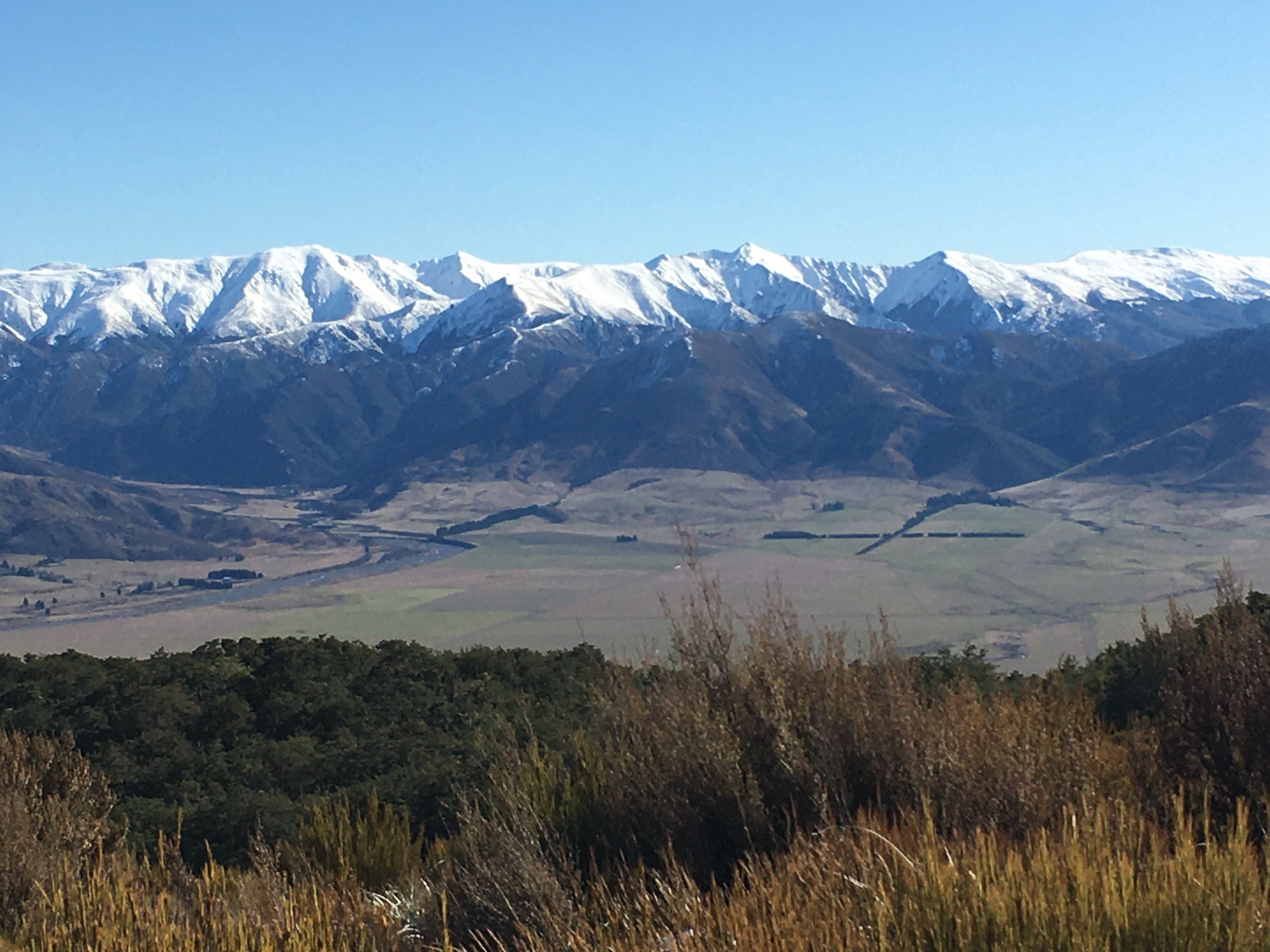
View across Lees Valley from Mt Richardson

Injuries and weather have conspired to keep me out of the mountains for months, but my husband and I finally made it to the hills a few weekends ago.

It wasn’t a big trip—just a little jaunt to the top of Mt Richardson, one of the foothills around Oxford.

At only 1047 metres tall, Mt Richardson doesn’t get above tree line, but a clearing at the top provides a great view of the ‘real’ mountains beyond.

The day we went was sunny and nearly windless. There was snow on the ground, but we ate lunch at the top in our t-shirts, enjoying the stunning panorama spread out around us.

I would say that the only things that diminished the perfection were the mud, the slip that took out a section of track (necessitating a bit of bushwhacking) and the washed-out bridge that meant wading through an icy stream, but those things only added to the fun. 

I look forward to better weather and more outdoor adventures as we head into spring.

Matariki Lights

Photo by Klemen Vrankar on Unsplash

On the eve of Matariki, I woke to an empty house, which meant I didn’t have to tiptoe around being quiet until my husband woke. 

The morning being dark and cold, I decided to start the day with music, and because we’re so close to Matariki and the promise of longer days to come, I searched up music with the word light in the title.

So my day started with Phil Collins’ song, Dance Into the Light, Lorde singing Green Light, Light (My Time Has Come) by Madison Ryann Ward, Nu Aspect’s Light, and One More Light by Linkin Park.

What a great way to start the day, to start the new year, to celebrate all that has passed and all that is to come.

Whatever your plans for celebrating Matariki this weekend, I hope it is full of the light cast by people you love and things that make you happy. 

And as I look forward to the coming growing season, the challenges and opportunities that the coming year has in store, I’m going to try to inject more music into my mornings.

So come on, dance into the light with me. Here’s a little poem I scribbled down on the solstice—it’s equally pertinent for Matariki.

On the darkest day
We turn to the light,
Hope for a ray to warm our cheek.

On the darkest day
We look to the stars,
Imagine constellations
To guide our stumbling steps.

On the darkest day
We light a fire,
Praying the kindling
Is still dry.

On the darkest day
We gather our whānau,
Tell stories of sunlight.

On the darkest day
We find comfort in the night,
In the slow circle of the seasons,
The dance of faraway suns
Across a black sky.

On the darkest day
We recall deeds of light,
Sun-dappled paths,
And warm sand.

On the darkest day,
Even on the darkest day
There is light.

A Perfect Hike–Mount Bealey

A few days ago, my husband, son and I went for a hike up Mount Bealey. This was my husband and my second trip up, but the first was a hastily planned late-autumn post-lockdown get-us-the-f@*k-out-of-the-shed hike, and we ran out of daylight to make it to the summit. This time, we had plenty of time to reach the peak.

The day was absolutely perfect, with early low cloud burning off before we reached the tree line, and just enough breeze at the top to cool off.

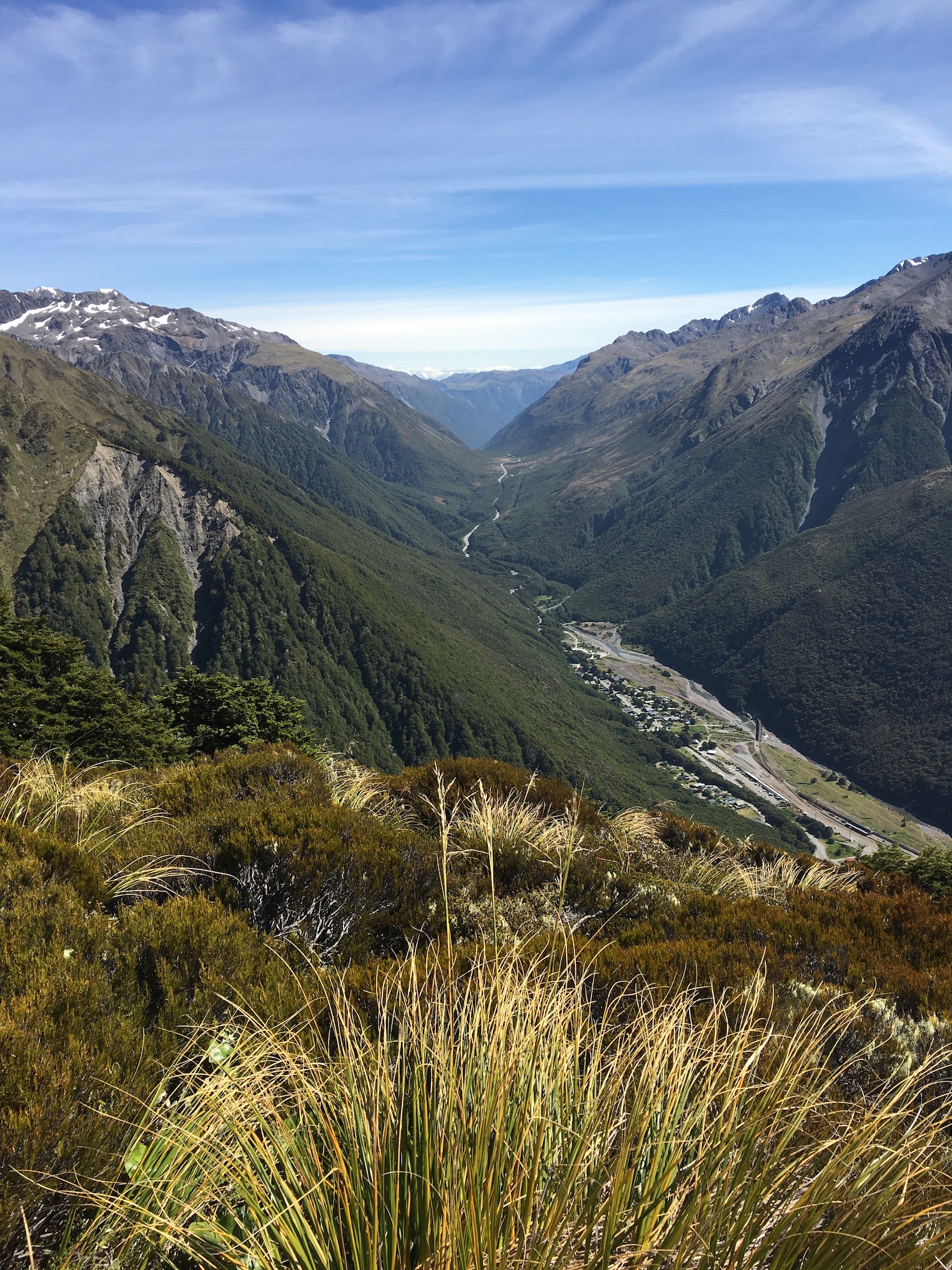
The climb up is fairly steep in places—the track more of a ladder than a trail. But that’s to be expected around Arthur’s Pass, and I prefer an interesting scramble over a steady upward slog anytime. The beech forest is lovely, with tantalising peeks down to the ever-receding village of Arthur’s Pass.

Breaking out above tree line makes the scramble worthwhile, with views of multiple 100-metre-tall waterfalls in the valley below, and the snow-covered peaks above.

We had lunch on the summit and spent a long time simply enjoying the 360-degree landscape of jagged peaks and vertiginous valleys. We had the summit (and in fact most of the track) to ourselves. Not even a kea came to visit us on the peak—no doubt they were hanging out with the hoards of people on top of the more popular Avalanche Peak. 

One of the best things about being on the summit was the chance to see other places we’ve hiked and put them all into a cohesive understanding of the landscape. There is satisfaction in that intimate knowledge of a place—to know the chill of the icy river below as well as having the bird’s-eye perspective of the river’s braided channel from the mountain above.

The trip took us a bit under seven hours, with the long lunch break on top, and we reached the car by 4pm. An ice cream at Arthur’s Pass was the perfect end to a perfect hike.

Panorama of the view to the west from the summit

Christmas Adventure

This year’s pre-Christmas tramp took us to the Lewis Pass area for four days of forests, mountains, and lots of water.

Day 1 was up the Nina Valley Track through beautiful beech forest. We bypassed Nina Hut, planning to camp below Devil’s Den Bivvy. Unfortunately, recent rain had rendered the area below Devil’s Den Biv into a swamp. There was no place to pitch a tent, so we carried on to the biv. Then we had to figure out how to bunk four people in a two-person hut. With three in the biv and one in a tent blocking access to the loo, we managed. It was … cosy.

Day 2, we left the biv in dense fog, hiking down to the Doubtful River on a track that has clearly seen no maintenance for a decade. At times it felt like bush bashing, and there was lots of windfall to clamber over, under and around. 

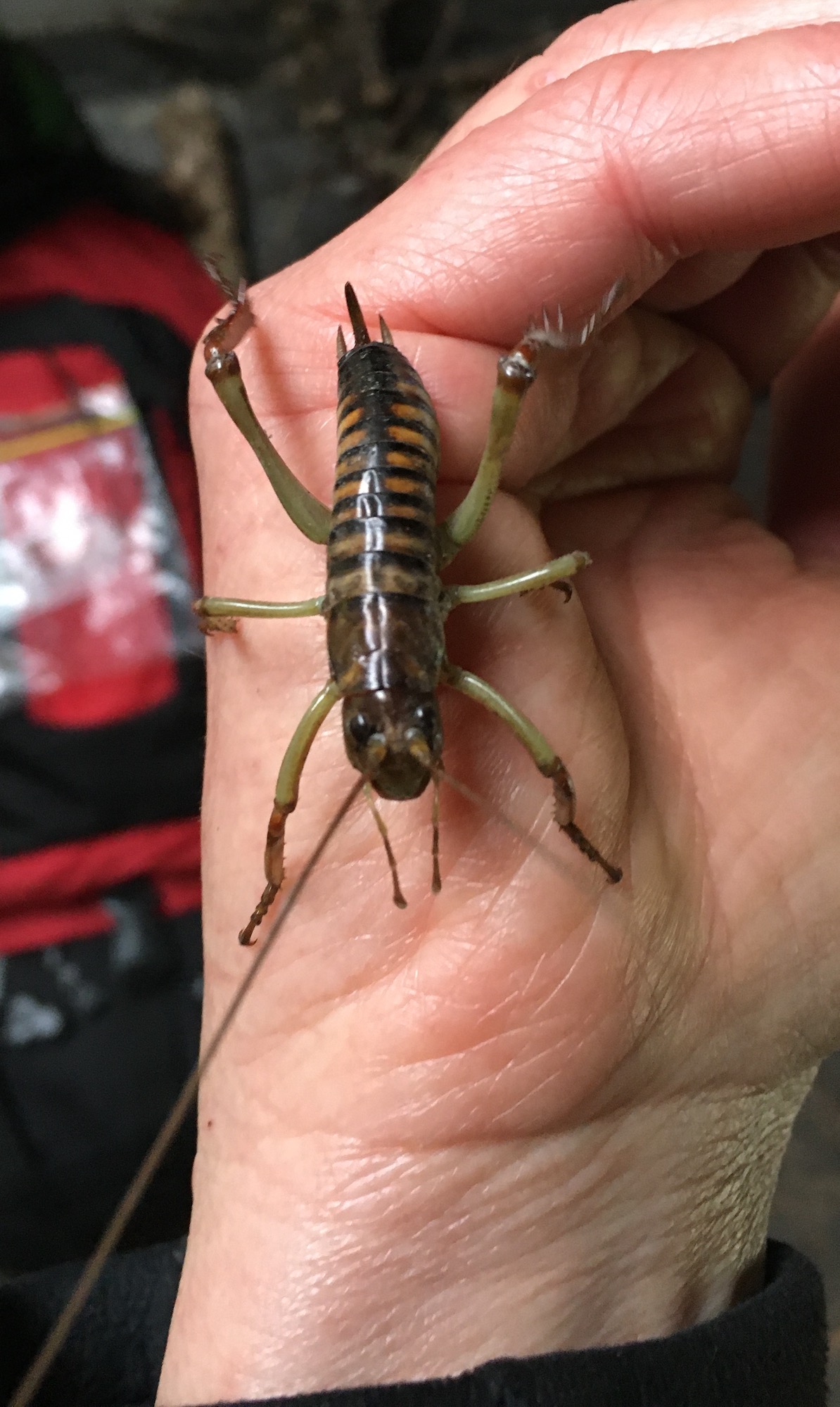
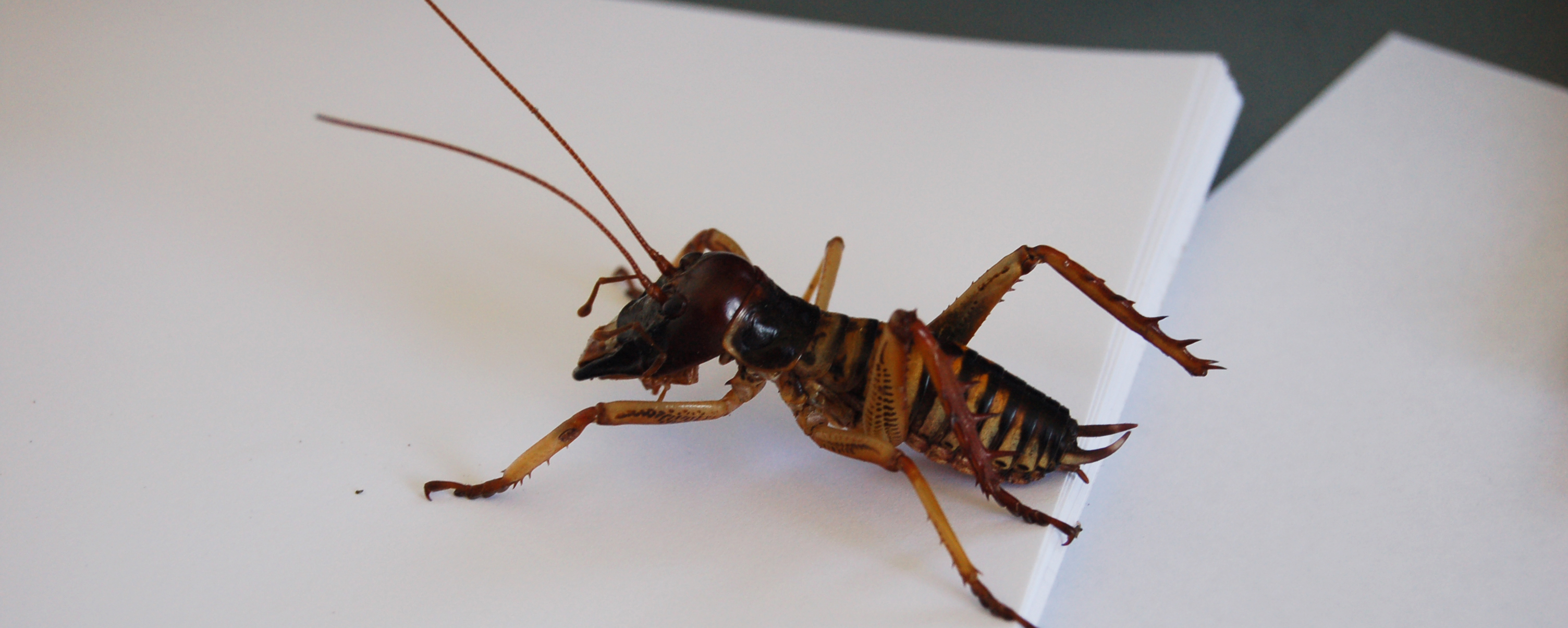
Once at the Doubtful River, a cruisy 40-minute hike took us up to the confluence with the Doubtless River, and shortly thereafter, to the Doubtless Hut, where we had a spacious six bunks to ourselves. Well, almost to ourselves. As we were packing up to leave, we found a beautiful young female Wellington tree wētā in the hut. 

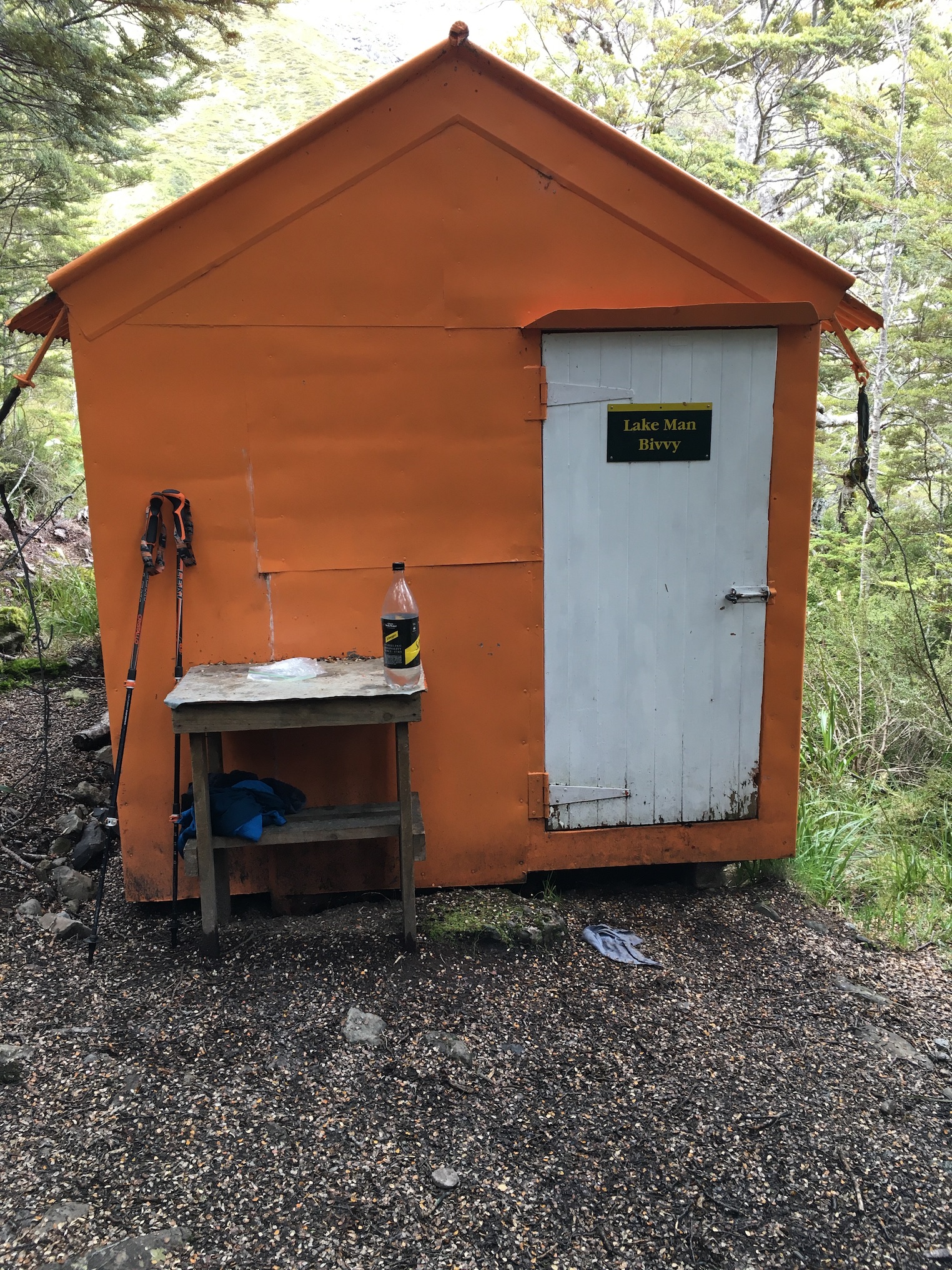
On day 3 we climbed up to Lake Man Biv—another 2-person hut, thankfully with a little more camping space nearby. Lake Man Biv is hobbit-sized. The door is about three-quarters height, and the bunks were so short, even 160-centimetre (5-foot, two-inch) me couldn’t stretch out on them. But in spite of its size, the biv is perfectly appointed, with a small table for cooking (complete with a drawer full of cooking and cleaning supplies) a set of tiny shelves, a fold-down bench, and an empty ammo box for additional seating and mouse-proof storage. Cords along the ceiling provide clothes drying space, and there are even clothes pegs fashioned from beech tree branches. The overall effect is a tidy, fully-functional space, in spite of its size.

After dropping our gear at Lake Man Biv, we hiked up to Lake Man, an alpine lake where we found our summer solstice snow and had a lovely lunch in the sun, surrounded by awesome alpine vegetation and some cool bugs.

After a cosy night in Lake Man Biv, we hiked out via the Doubtful River. The hike ended with a couple of crossings of the thigh-deep Boyle River and a long river-valley slog—easy hiking, but not terribly exciting.

The trip wasn’t our most strenuous ever, but after having spent the better part of the last six weeks sick, first with Covid, then with a nasty, lingering not-Covid, I was seriously out of shape and thankful for the relatively easy hike.

A Kiwi Halloween

October is nearly upon us. For me here in Aotearoa New Zealand, that means springtime planting, flowers, and lots of weeding! But for many of my readers, it means colourful autumn leaves, pumpkins, and the spooky season of Halloween. And for writers of fantasy, like me, it means story inspiration too (even if my witches aren’t always who you might expect …).

When I was a child in the United States, Halloween was one of my favourite holidays. Yes, the candy was a draw (I’ve always had a weakness for candy corn), but what I liked most was the chance to make a costume and then walk around after dark wearing it. 

Halloween imagery is all about darkness and things that go bump in the night. It’s meant to be scary, but I quite enjoy the night and all the creatures that inhabit it. 

As an interpretive naturalist in America, I led a lot of night hikes. ‘Spooky’ owls and bats are old friends I’ve had the privilege to not only observe in the wild, but teach with in classrooms and nature centres in a variety of places.

Spooky enough for Halloween?

And those nocturnal animals can be helpful. When I lived in Panama, there was a sizeable gap between the top of the walls of my mud house and the roof. At night, little bats would swoop into the house through the gap, zipping around snapping up mosquitoes. I used to lie awake at night waiting for their arrival before falling asleep, knowing they were keeping guard against the little blood suckers that wanted to disturb my rest.

New Zealand is blessed with a fabulous array of nocturnal animals. If Halloween had originated here, the icons of the season might be a bit different …

  • Kiwi—Imagine this beach-ball-sized bundle of fluff with a deadly beak spearing hapless hikers in the dark. Maybe there would be vampire kiwi.
  • Kakapō—What could be scarier than a nearly invisible nocturnal parrot with a booming voice that echoes through the night?
  • Wētā—Okay, lots of people already find these giant crickets spooky. And some of them bite. They’d be a perfect candidate for Halloween horror.
  • Owls … maybe not—The morepork and the little owl might need to up their game to be Halloween mascots. Their cute factor is pretty high, and their calls are far from scary. I’d even go so far to say that the morepork’s call is soothing.
  • Bats—Unfortunately, New Zealand’s bats are all endangered, so you’re not likely to encounter them frequently. However, they have some interesting habits that would play out well on the spooky scale. Short-tailed bats don’t hunt from the air like many other bats. Instead they scramble around on the forest floor, using their wings as legs. What’s that rustle in the undergrowth?
  • Moa—Yes, these giant birds are extinct and were probably only partly nocturnal, but maybe their ghosts or skeletons could haunt a New Zealand Halloween. Their diet was mostly plants, but I still wouldn’t want to meet up with a 3.5-metre-tall bird in the dark.

Of course, a Southern Hemisphere Halloween would have to fall in April or May, during the autumn here. We could all dress up as kiwi or moa and eat pavlova …

Welcome to the Light

We have now officially tipped over to the light half of the year. All green and growing things know it, as do the birds and the farmers and gardeners.

And for this first day in which the day is longer than the night, Canterbury’s weather has decided to celebrate—clear skies and warm sunshine with a hint of a cool breeze to remind us where we’ve come from.

A bumble bee drones by as I sit on the porch eating lunch in the sunshine. A guttural croak overhead draws my eye to a white-faced heron gliding like a modern-day pterodactyl to its nest. A jumping spider lurches across the warm pavers at my feet, leaving behind a glittering silk thread that marks her passage. Flies swirl in jerky spirals, describing their micro-territories within a cloud of lekking insects.

Days like today remind me to slow down and feel the motion of the earth.

I pluck a fresh mint leaf and chew on it. The flavour brings back summer memories of Mrs Cassel’s mint tea, sipped from frosty glasses clinking with ice. 

A bellbird whistles from somewhere in the neighbourhood. Enjoying the nectar of someone’s flowering kōwhai, no doubt. I close my eyes and remember the sound of the dawn chorus in Westland National Park.

Days like today remind me that the most memorable things in life never involve the daily grind, but only happen when we step off the treadmill and into the world.

Sitting on the porch of a tramping hut while a weka tries to steal my socks.

Fording an icy river, turquoise from glacial runoff.

Watching jumping spiders’ strange semaphore dance on the windowsill.

Biting into the first tomato of summer, warm from the garden.

Following a starfish’s slow glide across the bottom of a tide pool.

Reaching the top of a mountain to find rank upon rank of peaks stretching out ahead, begging to be summited, drawing you on to new adventures.

So, welcome to the light. Step into the world and enjoy the sunshine.

A Hobbit Adventure

As a writer of fantasy and adventure novels, it’s important to me to get out and have my own adventures. My adventures provide the inspiration and the gritty details for my characters’ escapades. I especially enjoy true wilderness adventures—the less sign of human impact, the better.

view from Mt Isobel
The view from atop snowy Mount Isobel

Of course, not every adventure can be a wilderness experience. Sometimes you want some fun with a little more luxury.

My husband and I recently spent a lovely weekend in Hanmer Springs. While the town is known for its hot pools, we’re not the hot pool type. What we appreciate about Hanmer Springs is the ability to step out the front door of your holiday home, climb a mountain, and end the hike at the pub a few blocks from the holiday home.

It’s hardly a wilderness experience, especially given that Hanmer Springs is surrounded by pine plantations, rather than native bush, but on a winter weekend during the rainiest month on record, it’s just right.

Our main hike for the weekend was up Mount Isobel. This wasn’t our first winter trip to the peak, but it was the first time we’d followed the ridge from the peak in order to descend via Jollies Pass. The last time we were on Mount Isobel, the wind was so fierce, there was only enough time to race to the top, snap a photo or two, and race back down before we froze. This time was entirely different.

It snowed the previous day, so we hiked through a winter wonderland. Light wind and full sun made it a stunning hike. The snow was an easily hikeable fifteen centimetres deep on the ridge—just enough to ensure our feet and lower legs were thoroughly soaked by the end.

There was nowhere dry to stop for lunch, so we ate in short snatches standing up. That was really the only downside to what was a delightful seven-hour hike.

And when your hike ends in Hanmer village, with beer and good food on offer, and a roaring fire at the holiday home to warm your toes, it’s hard to complain about anything. I think of it as a Hobbit adventure—a bit of fun without skipping second breakfast.

Rain, Rain, Go Away …

After a rainy week, the flood has only just begun. It’s been hosing down rain for about the past ten hours, and it’s supposed to continue for the next 24. I was out in the rain a short while ago building a bridge so my chickens can get back to their coop across the lake that’s formed in their paddock. The news is full of pictures of flooded streets and swollen muddy rivers.

Excessive baking!

It’s not entirely unusual weather. Last year I spent a whole week with my year 7/8 maths students doing a lesson on isoclines with weather station data after a particularly spectacular rainstorm dumped 200mm on us in 24 hours. 

But just because we’ve experienced it before doesn’t mean it’s enjoyable. It just means we know how to cope, right?

On Saturday, I baked apple/blackcurrant pie and pumpkin cupcakes, filling the house with delicious warm aromas of cinnamon and fruit. On Sunday, I raided my fabric stash to make a sunny patchwork tote bag—not that I need another tote bag, but that’s irrelevant when it’s raining for the zillionth day in a row.

Yesterday, I banged out over 5,000 words on my current novel, bringing me within 10,000 words of typing The End. 

Today … well, today I’m watching that lake in the chook paddock, in case I have to raise the height of the bridge. But when I’m not rescuing my soggy birds, I’m pottering away at my novel, and tending to marketing and all the other unpleasant aspects of writing. I’ve also drunk endless cups of coffee and tea (and it’s not even lunchtime yet…). No doubt I’ll quit early to make a decadent dinner of comfort food, probably eaten by candlelight (because why not take advantage of short days while you can?).

Crazy tote in progress…

And of course after dinner, when it’s still supposed to be raining, I’ll no doubt curl up with one of the books I picked up in the library yesterday.

So it’s not all bad, though I do look forward to the return of the sun someday.