Poroporo

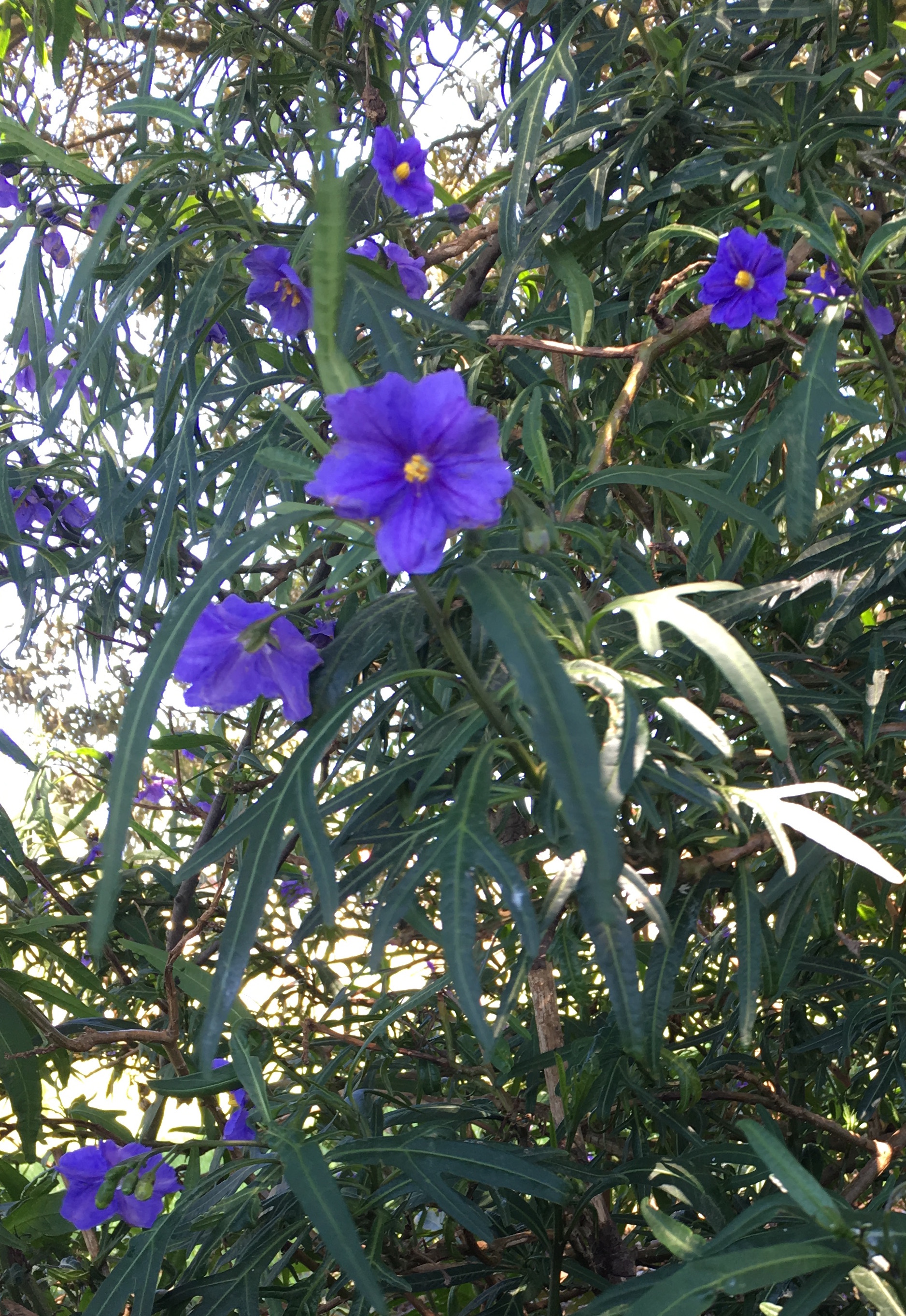
2016-11-22-13-39-04Poroporo (Solanum laciniatum) is a native shrub, and one of our few native plants typically classified as a weed. A few years ago, I noticed a tiny poroporo seedling sprouting under our oak trees—planted, no doubt by some bird roosting (and poohing) in the branches above.

At the time, the chickens were quartered under the trees, so I fenced it with a ring of chicken wire to keep it safe from their scratching.

It has now grown into a huge sprawling bush easily three metres in diameter and as tall as me. It is currently covered in gorgeous purple blooms. Later in the summer, it will drip with teardrop shaped yellow fruits. Weed or not, the plant is eye candy.

Eye candy only—not to be taken internally. Like many of the Solanums, poroporo is poisonous (though apparently the fully ripe fruit is edible…sort of). Fever, sweating, nausea, and abdominal pain are the unfortunate effects of poroporo poisoning.

In spite of its poisonous nature (well, actually because of it), poroporo is grown commercially as a source of steroidal alkaloids used medicinally to make cortico-steroid drugs like birth control and eczema treatments.

A pretty and useful weed!

Dancing in the Moonlight

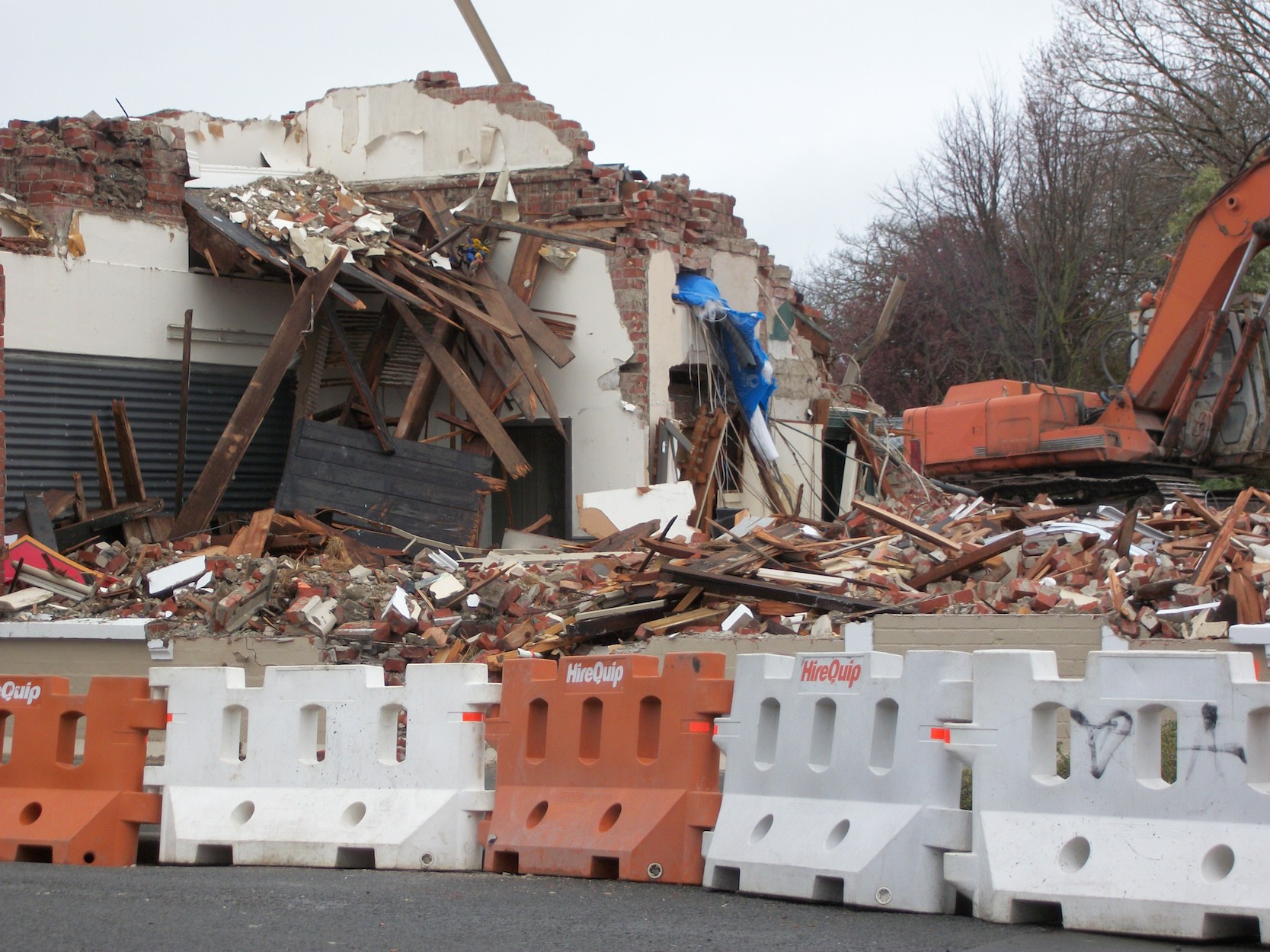
Damage from the 2010 quake.

Damage from the 2010 quake.

It seems strange, on a day we were shaken out of bed by another major earthquake, to blog about food or the garden. But I also feel like I’ve blogged about earthquakes so many times in the last six years, that I have little more to say about the experience.

However, every quake has its own character, and I find each one affects me differently.

This one struck around midnight last night. I must have been half awake, because I remember anticipating it, as though I was listening to it rumble across the plains. It started as they all do, with the jolt of the first shock wave. It built to a powerful roll, then stayed there, rocking the house like ocean swells, for almost two minutes.

I had no need to get out of bed; bed is, after all, one of the safest places to be. But as the shaking continued, my curiosity got the better of me.

It wasn’t enough to experience the quake in bed. I needed to feel it more. To know it better, if it was going to hang around so long. I stood in the bedroom doorway, gazing into the moonlit living room. The door frame swayed under my hand, and I felt as though I were on a ship, a hand on the railing, riding the waves.

There was time to feel each wave as it rolled through the house. Time to anticipate the next roll. I fell into rhythm with the swaying house.

And still the waves came. The house and I moved gracefully with each one, dancing in the moonlight.

And because the quake was distant enough, the S-waves came separately, like the gentle sloshing of a bathtub after you’ve stepped out. Like a long, quiet coda fading into silence.

After the thousands of quakes we’ve experienced in the past six years, we knew that the quake was huge, and farther away than previous ones. We knew that somewhere, people’s lives had just been torn apart. Somewhere, that gentle rocking had been a fierce shaking.

But for me, there had been no fear in that quake. We met, we danced in the moonlight, and then it was gone.

In the morning light, we assessed the damage—there was little. Our water is brown, but that will settle when the aftershocks end. But morning brought the news reports and photos of devastation. My heart goes out to everyone who has lost a home, business or loved one. To everyone stuck in towns surrounded by landslides and broken bridges. To everyone who spent the night shivering on a hilltop listening to the tsunami sirens. To everyone who worked through the night and through the day to clear the mess, help neighbours, and rescue those trapped. To everyone who will spend the next five or ten years clawing their way back to a normal life.

Kia kaha.
Dolphin Stress Relief

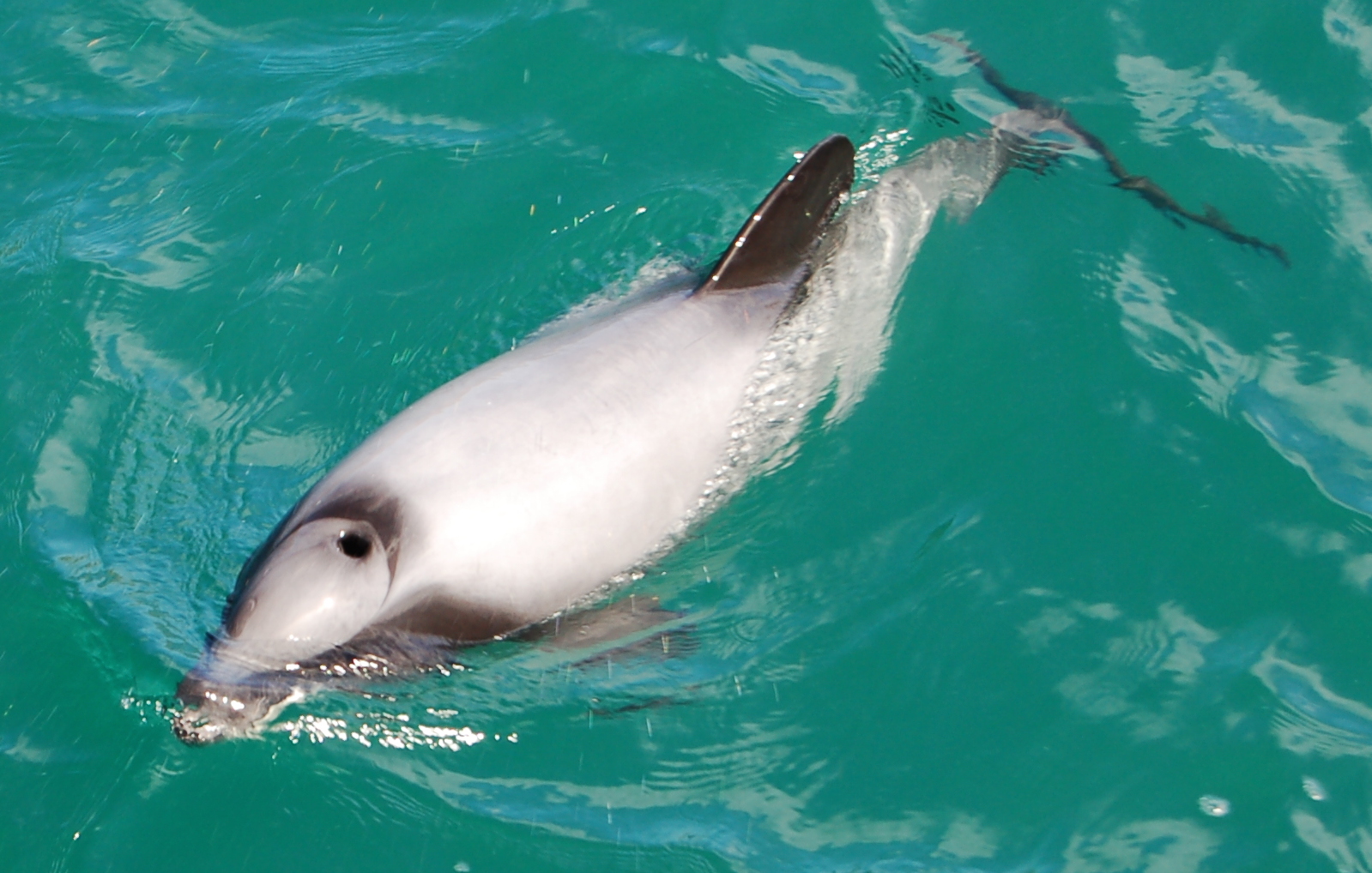
Hectors' dolphin (not today's) in Akaroa Harbour.

Hectors’ dolphin (not today’s) in Akaroa Harbour.

I had a long blog post for today mostly written. I just needed to polish it and find a photo to go with it…

Then we went down to the beach after dinner.

Before we had even crested the dunes, we saw the Hector’s dolphins—a pair of them cavorting just beyond the breakers of an unusually calm sea. By size it was a mother and calf.

What blog post can compete with dolphins?

“You realise this isn’t normal, right?” said my husband to the kids. “Most kids can’t see endangered dolphins on the beach five minutes from home.”

But it is normal for them.

And for that I am so thankful.

We walked the beach, watching the dolphins and picking up colourful stones. The stresses of the day vanished.

I forgot all about that other blog post…

Moody Skies

Looking up the Waiau River bed toward Franz Josef Glacier

Looking up the Waiau River bed toward Franz Josef Glacier

I’ve been to Westland in brilliant weather—when the sky is clear, the sun is shining, and every snowy peak is visible. It is spectacular when that happens.

But the rainfall on the West Coast is measured in metres. Temperate rainforest covers the lower slopes, and the rivers churn, gushing down the steep mountainsides. Sun is not the normal state of affairs. Clear skies are not what make the West Coast what it is.

More often than not, it’s raining on the West Coast. And if it’s not raining, it’s threatening to rain. So, while blue skies are gorgeous, they’re like a false smile, put on for special occasions. The real skies are brooding, veiling the higher peaks in clouds and the lower ones in misty rain (or pounding rain).

And those moody skies are every bit as spectacular as the blue ones, in my book, and more honest. Just as I appreciate when a friend shows their true colours, I appreciate when the West Coast does, too.

Provided I have a good rain coat, that is…

At the Penguin Spa

2016-10-11-14-40-35-cropIt was a week of endangered species for me. After being bitten by a kea on Monday, I was lucky enough on Tuesday to have a chance to see a Fiordland crested penguin / tawaki at Haast School, where I’d spent the morning teaching.

After lunch that day, a trio of Department of Conservation rangers arrived with a juvenile female tawaki that had been rescued off a nearby beach where she had been found emaciated. She was being nursed back to health in preparation for re-release, and the rangers took the opportunity to share her with the local school.

Tawaki are not quite as rare as kea, but they’re shy and tend not to frequent tourist areas like the kea do. This was the first one I had ever seen. There are about 2500 to 3000 breeding pairs remaining, and they’re one of only three penguin species that nest on mainland New Zealand.

Like many of our native birds, they are threatened by stoats, which eat eggs and chicks, and dogs, which can wipe out entire breeding colonies.

The children at Haast School named this particular penguin Ellen, and they had great fun watching Ellen take a warm saltwater bath. The water needed to be warm because Ellen wasn’t preening and waterproofing her feathers properly (because she was too weak to do so). Without waterproof feathers, she got waterlogged in the bath, rather than staying nice and dry as penguins usually do underwater. After her bath, the DOC ranger wrapped her in a fluffy pink towel to dry off, and put a hot water bottle underneath her.

A full spa experience, I would say.

It wasn’t quite the same as seeing a tawaki in the wild would have been, but it was closer than I’m ever likely to get to one of these birds in the wild.

Ellen will spend about four weeks eating and taking spa baths before she’s ready to fend for herself again. I wish her luck.

Cheeky Parrots

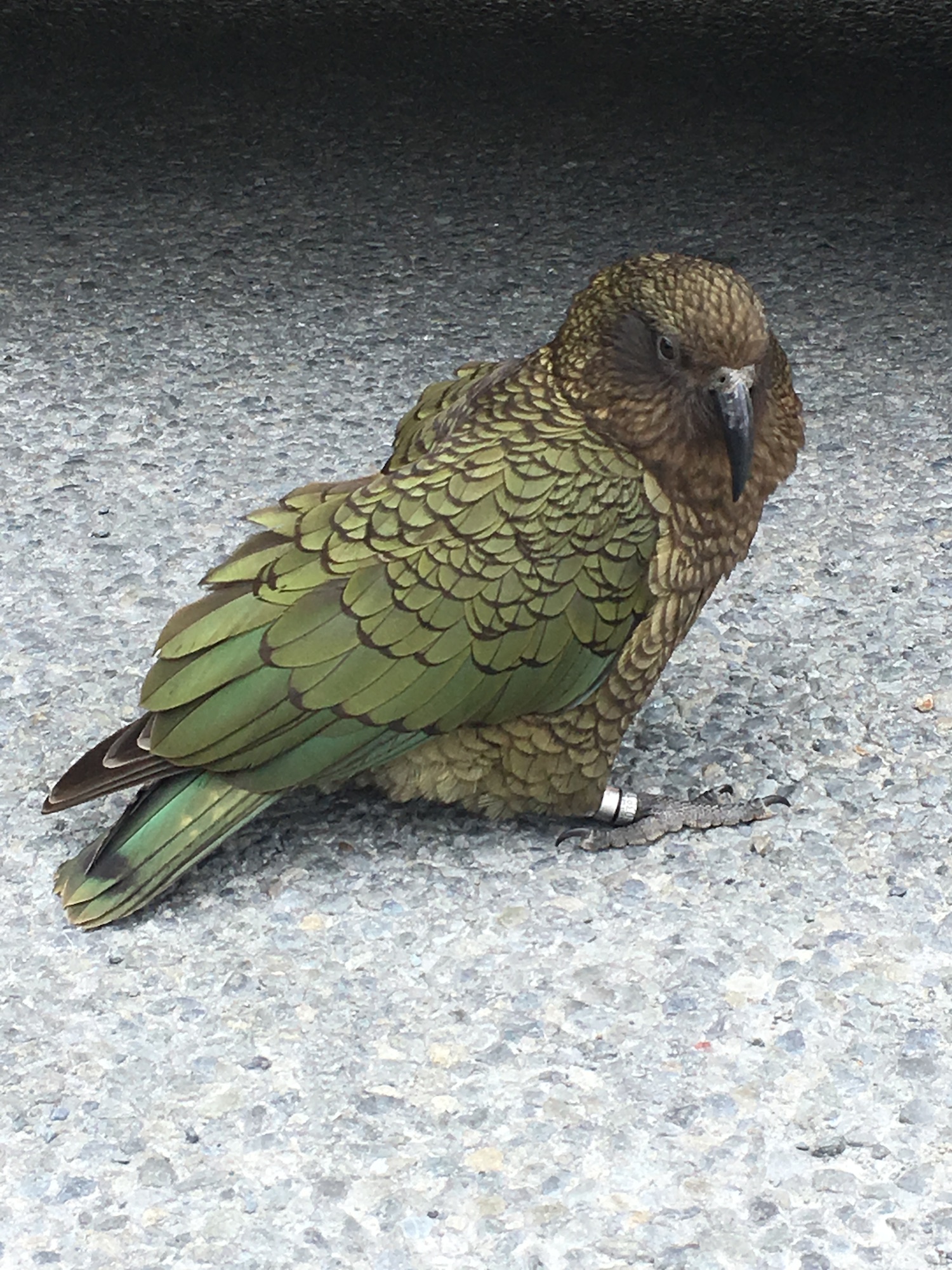
2016-10-10-13-11-37-smIt’s not every day you’re bitten on the bottom by an endangered species.

Yesterday was one of those auspicious days, however. I was travelling through Arthurs Pass, headed to Haast with two colleagues to do a programme at the school there. We stopped to pick up lunch at the Arthurs Pass store, and three kea descended on us.

For those who don’t know, kea are large alpine parrots. Though there are only 2,000 of them left, they are bold and curious animals, unafraid of people. And they’re smart. They understand tourists—how they get so absorbed in taking photos of the parrots that they forget to shut their car doors, or leave a sandwich lying beside them.

They work in gangs—one bird coming in close to pose for pictures, while the others circle in from behind to ransack the vehicle.

We knew this, and had taken appropriate precautions. There were three of us and three of them. We should have been safe.

But, of course, we wanted pictures—you simply can’t not take pictures of them, no matter how many times you’ve seen them. We all crouched down beside the van to snap our photos. That’s when it happened. I was focused on one kea, and another came up behind me and bit me on the bottom. Cheeky bastard!

But I got a photo.

A Delightful Day Hike in Canterbury

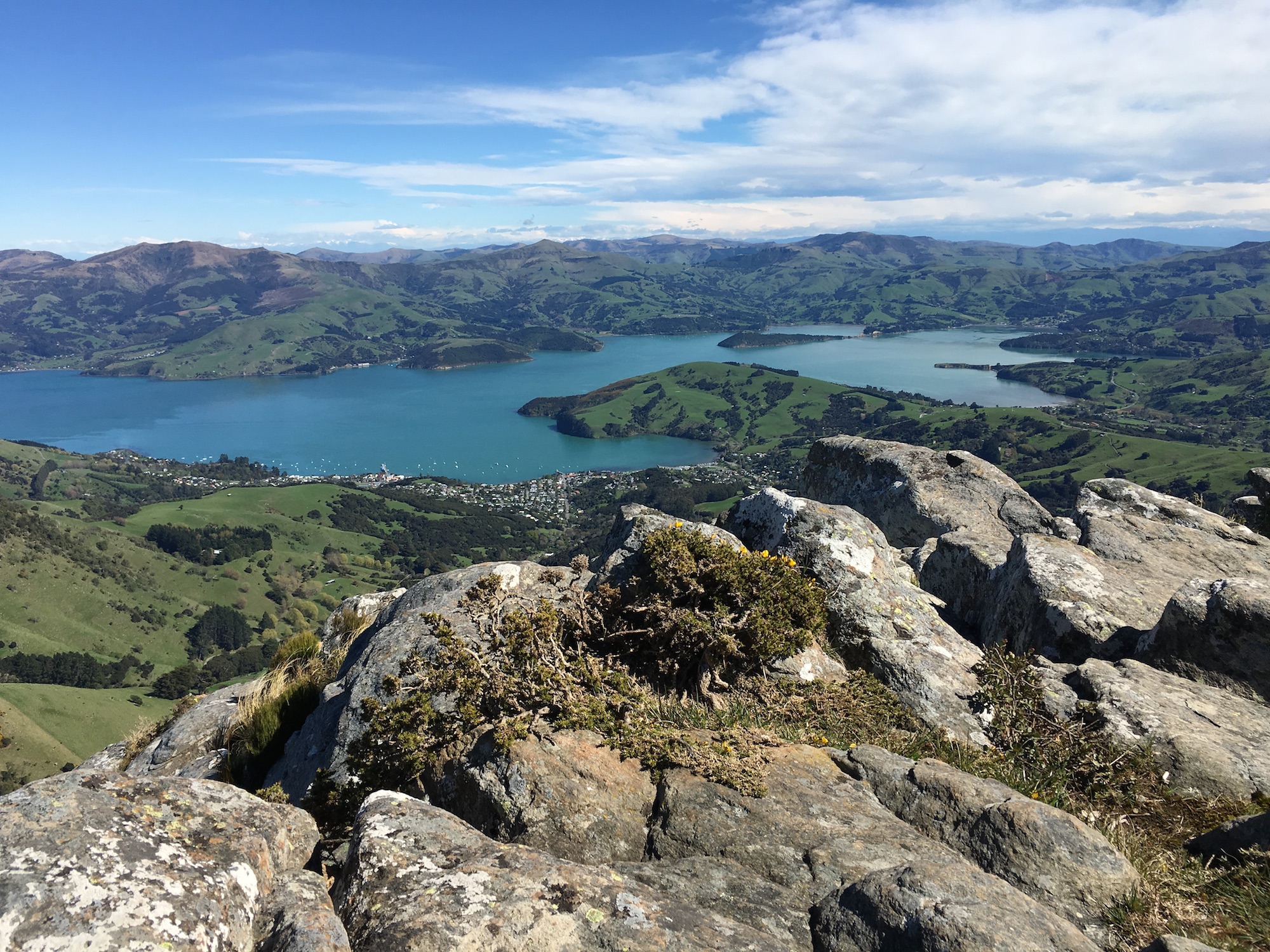
Looking toward Akaroa from Stony Bay Peak.

Looking toward Akaroa from Stony Bay Peak.

With the kids on school holidays, we took the day to go hiking. My daughter chose our destination—the Skyline Circuit, which starts and ends in Akaroa.

It’s an 800m climb to Stony Bay Peak, and down again, and makes a nice day walk.

It’s a typical Banks Peninsula track, climbing mostly through paddocks to a rocky gorse-covered peak. Not exactly a wilderness experience, but varied enough to be interesting, and there are some lovely pockets of native vegetation along the way.

You wouldn’t want to do this walk if the tops were shrouded in cloud—it’s the view from the top that makes the steep climb worthwhile. This morning was clear, and we could see all around the Banks Peninsula and across the plains to the Southern Alps.

Much of the downhill is on Stony Bay Road. I’m not generally fond of hiking roads, but Stony Bay Road isn’t much more than a nice wide gravel path that snakes down through a picturesque patchwork of bush and paddocks.

We ate lunch at the top, and were ready for an afternoon snack by the time we made it back to Akaroa. And, of course, that’s where the beauty of the walk becomes particularly clear—you can end it with a beer and chips at a café in Akaroa (we were even treated to live piano music on the waterfront today).

The clouds rolled in as we left Akaroa, and it was raining by the time we got home, but it was the perfect spring hike.

There and Back Again

Looking up Otira Valley

Looking up Otira Valley

I slowed into the first curve and began to smile. Within a few short kilometres, the smile had widened to a grin that would remain for nearly two hours.

I will never tire of the drive up and over the Southern Alps. Especially the homeward drive, from Kumara on the West Coast to Springfield on the Canterbury Plains. The first time I made the trip was at night under a full moon that sparkled off the river below and made the snowy peaks shine. How could I not fall in love with it?

I love the first half of the drive, up Otira Valley—the belted galloways grazing in the paddocks on the lower slopes, the rainforest crowding in on the road, the long vistas up-valley to snowy peaks in the distance.

And then, when the road becomes steep and the valley closes in, the craggy peaks loom so close, you have to press your face to the window to see the tops.

And the water! Impossibly long falls coursing down forested slopes, spurting from every little dip and fissure along the roadside, and even soaring out over the road on a concrete sluice.

And then there is the road itself—steep, and as curvy as ribbon candy. There’s the cantilevered half-bridge, and the viaduct that soars out into space over an enormous landslide.

There is the lookout at Death’s Corner, where you can stop and be fleeced by a gang of endangered alpine parrots.

And when you reach the top and plunge down the other side, a whole new set of marvels awaits in the dry, brown, tussock-covered mountains of the eastern ranges.

There are the mountains of scree that look like they’ve been dumped by some enormous gravel truck. There are the limestone outcrops standing like a geologic Stonehenge. There are more snowy peaks, rising out of mounds of alpine tussock. There are lakes hemmed in by massive landslides.

Rear view.

Rear view.

Coming home from the West Coast yesterday afternoon, I was still grinning as I drove through the last of the hills. When I glanced in the rear view mirror, I couldn’t help laughing out loud at the sun glinting off a rank of snow-laden peaks behind me.

Even after nearly twelve years here, I continue to live in wonder at my luck—that I am permitted to call this incredible land home.

Bealey Valley, Arthur’s Pass, New Zealand

2016-09-12-13-06-26-smStop.
Soak up the still silence.

Except that it is neither still
Nor silent.

Wind tumbles
The leaves of the trees.

Overhead in the branches, sounds
The pebble-in-a-still-pool languor
Of the bellbird,
The electric zit-zit
Of the rifleman.

Nearby, a small stream
Hisses over the rocks.
And from farther away
Comes the deep rumble
Of the river
Shaking the stone
As it crashes
Headlong
Down the mountain.


Competition Ploughing

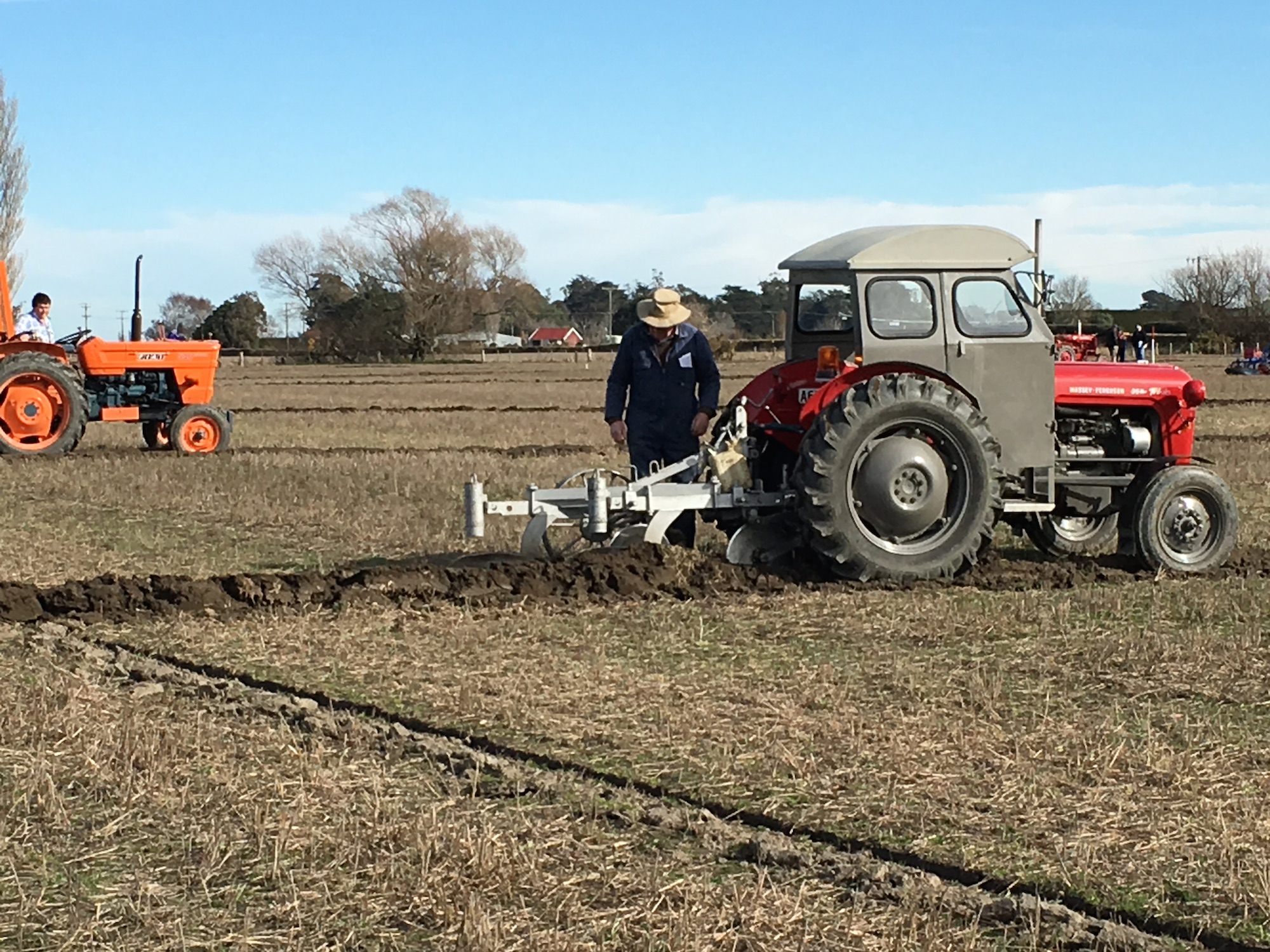
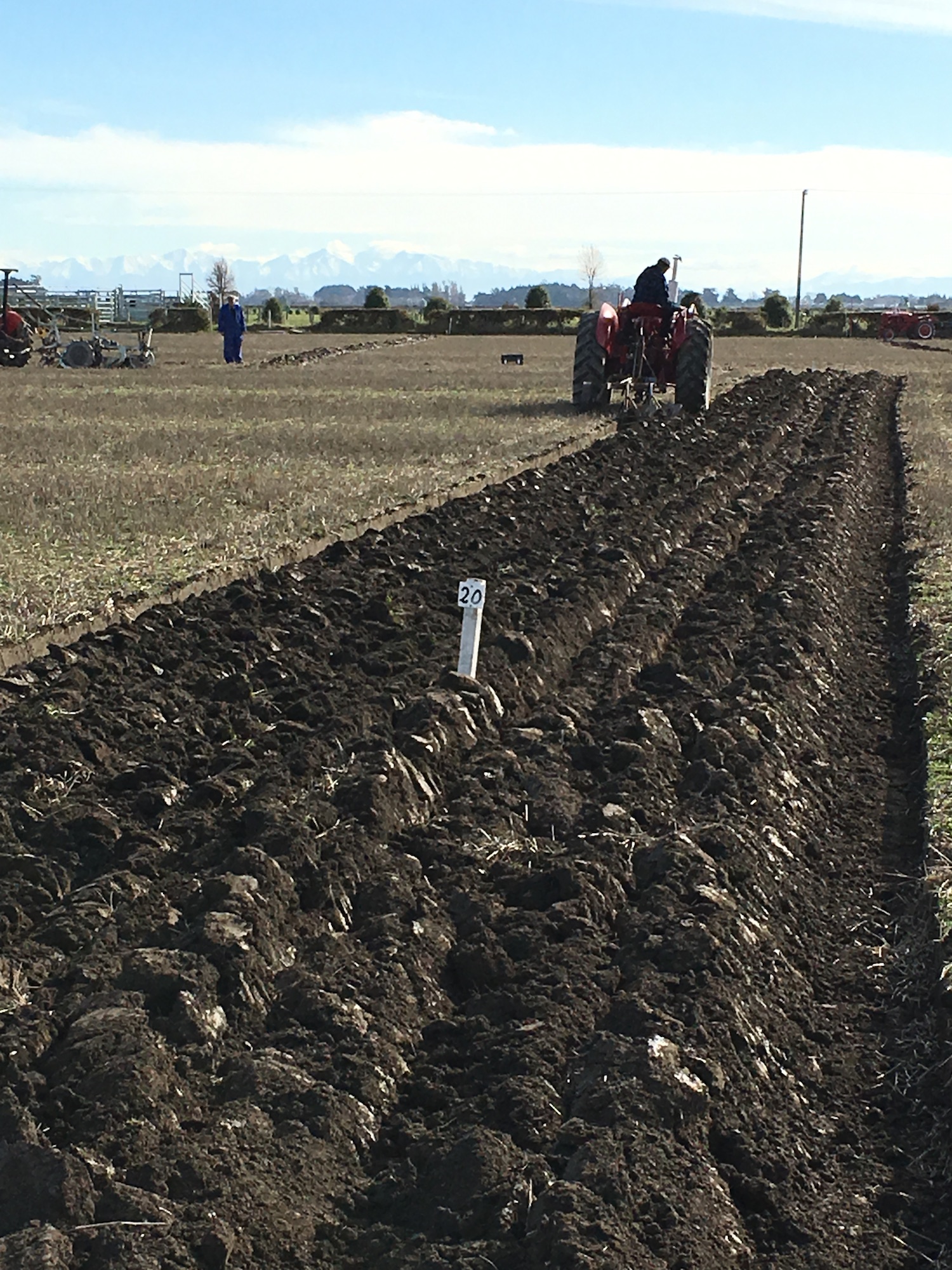
2016-08-20 11.18.35 smThis past weekend was the annual Ellesmere Vintage Club’s Ploughing Match. Our neighbour hosts the event, so we walked down there on Saturday morning to watch the action.

It was slow-motion action. No big thrills or adrenalin. Just the rumble of diesel engines and the smell of freshly turned soil. It was clear the point was a perfectly-turned patch of ground, not speed. There was a lot of starting and stopping, and adjusting of freshly-painted ploughs.

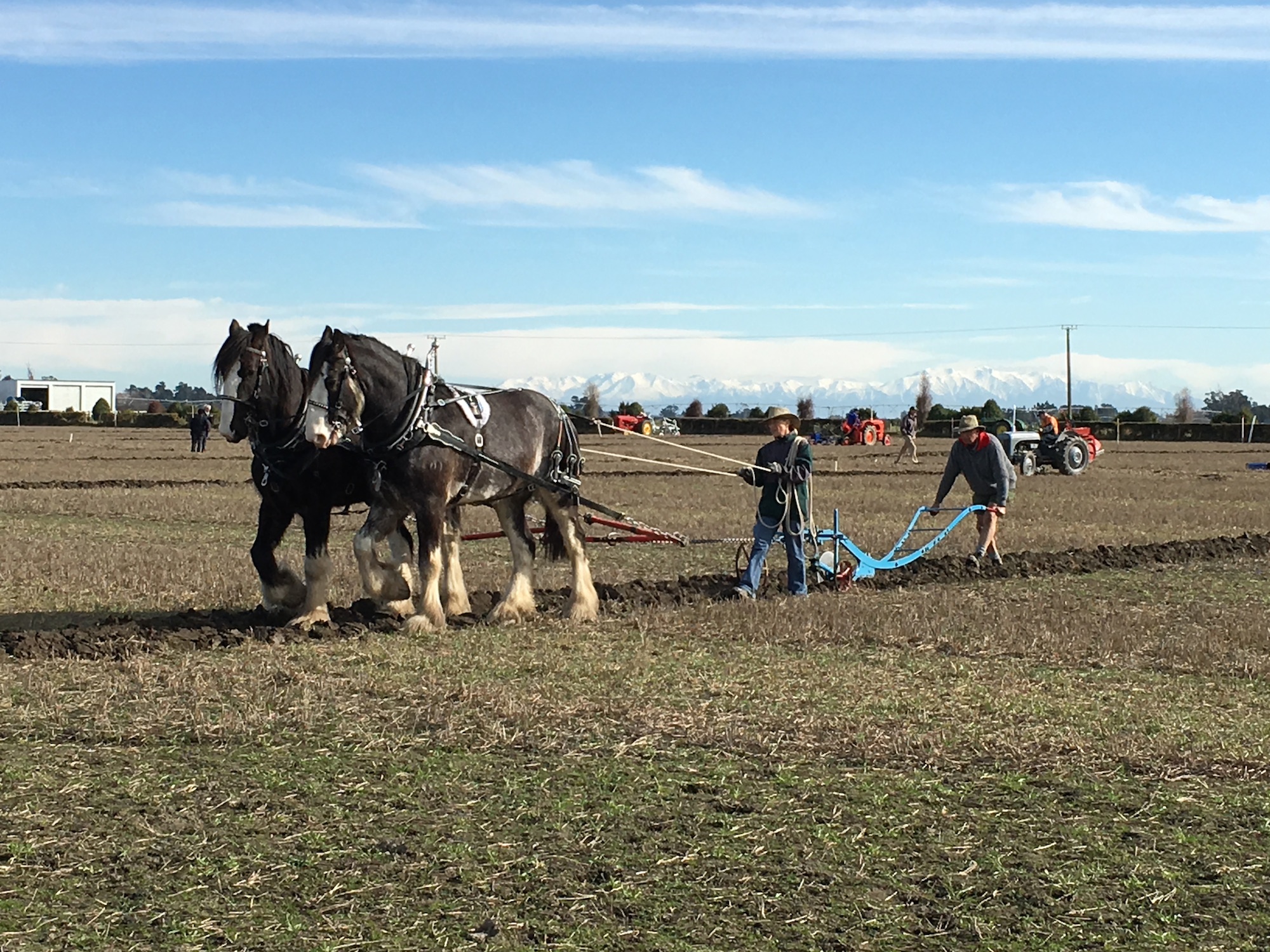
2016-08-20 11.22.21 smA pair of horses joined the 1940s and ’50s era tractors. Watching them work, it’s clear why tractors have taken over on the farm—there was significantly more fiddling to be done by the horse team in order to perfect their rows.

The demographics of the crowd were predictable. Before we arrived, I commented to my daughter that we might be the only women there. Her response was that she would likely be the youngest person there…by about 70 years.

2016-08-20 11.32.18 cropWhile the majority of competitors were as vintage as their tractors, there were a few younger ones. Two or three other children were there, too, though they were sitting in a car playing on an iPad. And there was a small contingent of women. A few wives watched from the sidelines, and a woman drove the horse team.

It was a true small-town event—25 competitors, and perhaps 40 people in total at the event when we were there. Participants were shuttled to the local hall for lunch on two long benches, set back-to-back atop a flatbed trailer.

2016-08-20 11.33.12 smLater, as the event broke up and tractors motored past the house, we laughed—it was hard to tell which vehicles were en route from the competition, and which ones were simply on their way from paddock to paddock. Many of these vintage tractors still get regular use on the farm.

Of course, I have to wonder what will happen as the vintage tractor enthusiasts and their machines age further. Will younger farmers grow nostalgic about tractors from the 60s and 70s as they age? If not, we’ll see a lot fewer than 25 contestants at vintage ploughing matches in future years.