Pest Management: prevention

It’s nearly spring, so naturally my thoughts turn to the subject of pests. Our big pest-related project in the garden this year is bird netting a third of the vegetable garden, so we don’t lose most of our tomatoes and peas to the feathered rats.

Aphids–the one on the right is healthy, the one on the left has been parasitised by a wasp, one of the many natural enemies that keep aphids under control in the garden.

As an entomologist whose research focused on Integrated Pest Management, I always have a lot to say about pests. And it’s an important topic—globally, 30-40% of crop yield is lost to pests (interestingly, this figure didn’t change with the advent of chemical pesticides—insect pests are incredibly quick to evolve pesticide resistance). That’s a lot of wasted food!

For home gardeners, fighting pests is a daily task. Every place I’ve gardened has its own unique pest problems. Growing up in Lancaster Country, Pennsylvania, I remember the rabbits munching through the garden. In State College, Pennsylvania it was flea beetles that shot so many holes through my eggplants’ leaves they never had a chance to grow, and the squash bugs that clustered in masses under the leaves of my zucchinis. In Panama, leaf cutter ants could strip a plant bare in no time. 

In my first garden in New Zealand, aphids and rabbits were my main problems. When we first arrived on the property, there were so many rabbits I wondered if I’d be able to grow anything. A rabbit-proof fence was the first garden project there.

In my current garden, birds are my worst enemy—mostly English sparrows and European blackbirds. They strip seedlings bare, eat tomatoes, pull out onions, and scratch away mulch and soil, leaving plant roots to dry out (never mind the amount of chicken feed they snarf down every day!). 

Fortunately for me (and unfortunately for the pests), my masters degree focused on Integrated Pest Management (IPM), so I’m well-armed when it comes to tackling pest problems.

IPM is often called common sense pest control. In IPM, the goal isn’t to eliminate pests, but to minimise the damage pests cause, while choosing the most environmentally-friendly control methods that do the job.

To successfully use IPM, you must first know your enemy. What conditions does it like? What’s its life cycle? What are its natural enemies? How does it find your plants, and how does it travel? Books and the internet can tell you a lot, but careful observation of the pests in your garden is key. The particular conditions in your garden will affect how pests behave, and where their weaknesses are. If you know exactly where pests are and what they’re doing in your garden, you can begin to tackle them more effectively. For example, I know that in my current garden, there are particular varieties of squash the aphids like. By keeping an eye on those particular plants, I can catch aphid infestations early and deal with them before they spread to more plants.

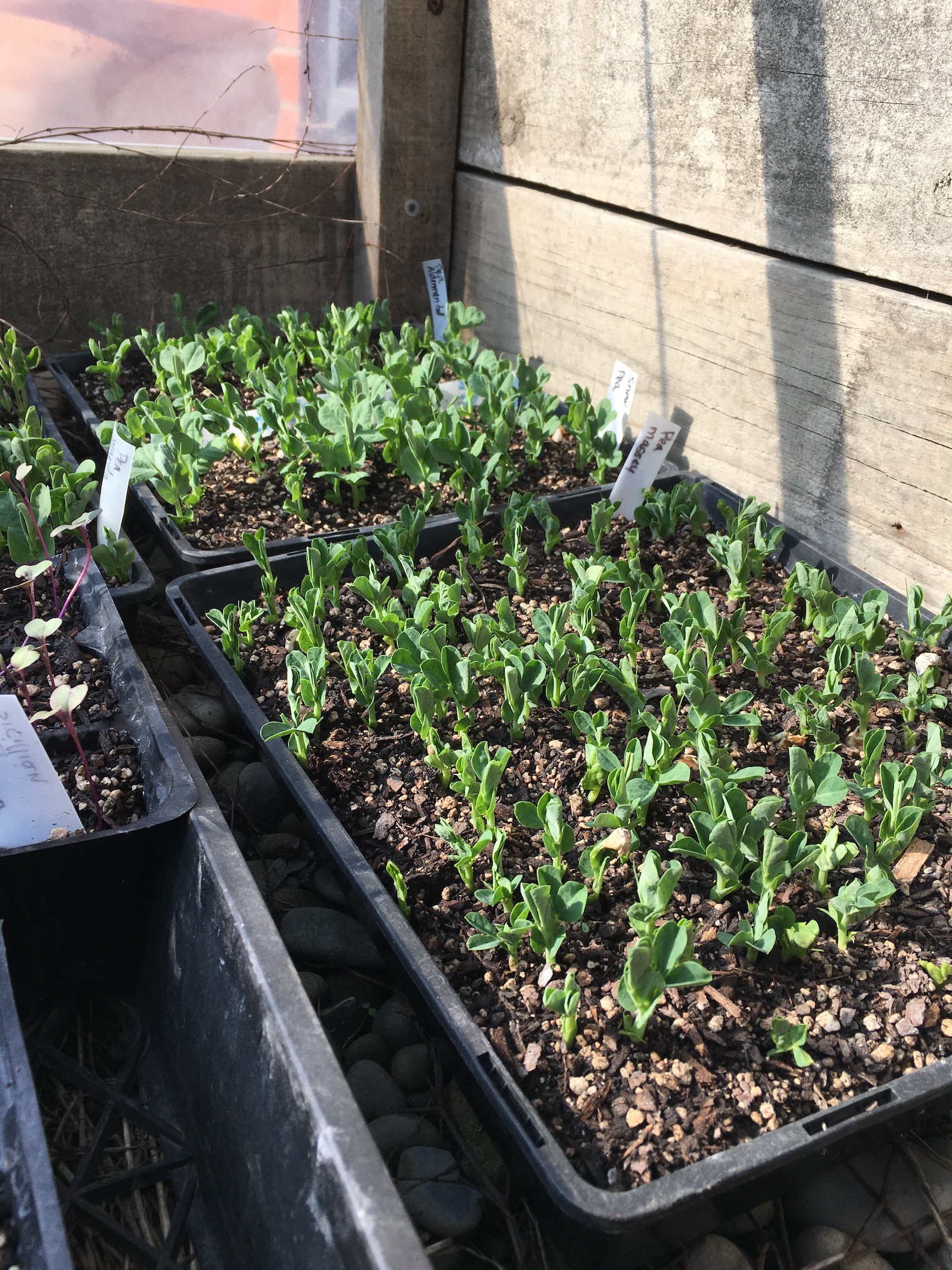
Bird netting protecting pea seedlings

Once you know your pest’s habits, you can begin to consider control methods. Questions to ask:

  1. Can you time your plantings to avoid the damaging stage of the pest’s life cycle? For example, I don’t grow brassicas during the summer here—I have an early spring crop and a winter crop. By avoiding brassicas in summer, I eliminate bad problems with cabbage white butterflies, which tend to reach damaging levels around Christmas. I still have to be on the lookout for butterfly eggs on my seedlings, but once the plants are growing, they easily stay ahead of the caterpillars.
  2. Can you exclude the pests from your crops during critical time periods? For example, psyllids can transmit disease to potatoes and tomatoes, leading to poor growth and damaged tubers. By covering the plants with a fine mesh cloth, I can keep the psyllids out for most of the summer (until the plants are too big for the covers, by which point the psyllids don’t seem to be much of a problem). I do the same for my peas and lettuces—netting out birds until the plants are large enough to handle losing a few leaves. I also net my berry crops and olives before the fruits start ripening, so the birds don’t pick them before I do.
  3. Can you plant varieties the pests don’t like as much? For example, I plant mostly red varieties of lettuce, because the aphids take longer to discover them than they do the green ones. Usually, by the time the aphids find my red lettuces, they’re bolting and ready to pull out anyway.
  4. Can you plant a ‘trap’ crop that the pests like more than your favourite vegetables? I haven’t done this explicitly, but as I mentioned earlier, there are certain varieties of plants I know are particularly tasty to pests, and I closely monitor them and kill the pests on them before they can spread to other crops. A true trap crop is something you’re willing to pull out entirely when it is infested by your pest, in order to destroy the pest.
  5. Can you prevent pests from finding your crop? Interplanting different crops can help disrupt the spread of pests, because they struggle to find new plants to feed on. It can also help you make the most of the space in your garden. For example, I sometimes plant summer lettuces in the shade of my sweetcorn—not only does the shade help prevent the lettuce from bolting, it also seems to hide the lettuce from aphids.
  6. Can I encourage the pests’ natural enemies? Many pest insects are preyed upon or parasitised by the larvae of beetles , flies and wasps. The adults often eat pollen and nectar, so planting herbs and flowers is a great way to encourage many pests’ natural enemies.

All six of the questions above will help you avoid a pest problem in the first place. They are changes in the way you plant or grow your crops that make it less likely you’ll have pest problems. Tomorrow, I’ll look at what you can do once you’ve discovered pests in your garden.
Ready, Set, Plant!

Looking forward to scenes like this in the coming weeks …

My seed order arrived last week, and I’ve stocked up on seed raising mix in preparation for this coming weekend.

The middle of August marks the start of spring planting, even though officially spring is still two weeks away (in spite of this week’s cold and snow).

This weekend I will plant hundreds of vegetable seeds—broccoli, cauliflower, cabbage, lettuces, spinach, onions, peppers, eggplants, herbs—a combination of early crops that can handle the cold and slow-growing late crops that need a long time in the greenhouse or indoors. 

This weekend is always a bit exciting and a bit daunting. Daunting because whatever winter projects I had going are doomed to the back burner until next April. Daunting because of the vast amount of work to get done in the coming months. And exciting because of the pleasure I get out of growing delicious food, and the joy of trying out new varieties of vegetables each year (this year, I’m trying Bartowich Parsley for the first time, a purple snow pea, a new hot pepper, and a couple of new tomato varieties).

I used to get overwhelmed at this time of year by the sheer amount of work ahead, but I’ve learned to manage the work, and more importantly the stress, by creating a weekend-by-weekend to-do list that runs from mid-August through the end of November. The list includes all the annual garden tasks associated with spring—planting seeds, potting up seedlings, preparing garden beds, setting up trellises, cleaning greenhouses, maintaining irrigation lines, fertilising weeding, mulching … With everything on the list, I know I won’t miss any tasks and everything will be done on time.

Obsessive compulsive? Yeah, probably. But it means I can fully enjoy each and every task without stressing about the fact I’m NOT doing something else. 

So from tomorrow, if you need to catch me on the weekend, I’ll be in the garden. 

Do I have to eat it?

Nance is a small yellow fruit popular in Panama. When my husband and I first arrived there, chicha de nance (a drink made from crushed nance fruit) was something we could barely choke down out of politeness to our hosts. The flesh of nance fruits is oily, gritty, acidic, and has a funky cheesy flavour. If you think too much about it, chicha de nance is reminiscent of watery vomit.

So you’ll understand why we didn’t like it.

But during nance season (and for several months afterwards, because people store it in bottles of water—yeah, don’t even think about what grows in those bottles) it’s impossible to avoid nance. Everyone you visit serves chicha de nance. Neighbours give you bottles filled with nance fruit.

You learn to drink it without grimacing. Before long you’re drinking it without even thinking about vomit. It’s a slippery slope from there, and next thing you know, you’re looking forward to nance season and wondering if you can trade some eggs for a bottle of nance from your neighbour.

I’m thinking about nance today as I contemplate the feijoas dripping from our tiny feijoa bushes. This is the plants’ first year producing fruit and I am amazed and a little terrified at their productivity.

I’m terrified because I hate feijoas. I don’t even like the smell. Simply walking past the fruit bowl when there are a few ripe feijoas in there makes me wrinkle my nose in disgust. I find it hard to breathe around them. Eating one makes me shudder—I swallow quickly to avoid tasting it too much.

Fortunately for me this year, my husband has been keeping up with the feijoas—he loves them. But those feijoa bushes are only going to get bigger. Next year I will have no excuses—I’ll have to eat them. 

So I’m thinking about nance. If I could learn to love a fruit that tastes and feels like vomit, surely I can learn to love feijoas, right?

They say a child needs to try a food up to 15 times before they’ll eat it. That’s a lot of feijoas …

There’s No Place Like Home

I’ve been feeling a bit like Dorothy from The Wizard of Oz this week. Having been on a crazy whirlwind of a trip to the U.S. and Scotland, my overwhelming feeling since my return has been, ‘There’s no place like home’.

Don’t get me wrong—I enjoyed my travels. It was great to see family in the U.S. for the first time in six (!) years, and Scotland was new and exciting. I love traveling by train, and enjoyed every minute watching the Scottish countryside roll by. And I’d never set foot in a real castle before, so visiting four of them was a highly educational experience, and something I can’t do in New Zealand. The botanic garden in Glasgow was a real treat as well—I wandered through the massive greenhouses twice, because they were so marvellous.

But I have to admit that the best part of the trip was coming home to my own greenhouse, bursting with vegetables.

Before we left, I set up automatic watering and shut the door, trusting to the automatic window openers to provide enough ventilation if the weather was warm.

Three weeks later, both summer and winter crops had obviously thrived in the warm, humid environment. A bit too humid, actually—the slaters had moved into the tomato plants (and apparently like to eat tomatoes) because it was too moist on the ground.

Aphids thrived, too, while we were gone, but all in all, I was pleased. To arrive home to fresh vegetables was an incredible gift, and it reminded me once again of how blessed we are to live where we do.

So I am happy to be home, pulling weeds, squishing aphids, and doing all the autumnal garden tidying I haven’t yet gotten to. It’s not a vacation, but it is home.

Autumnal Assessment

April is upon us, and it’s time to assess how the garden year went.

In a word, it was disappointing. 

It started off bad, with my seedlings in fungal-infected seed raising mix. That problem was made worse when I contracted Covid and couldn’t move those seedlings into better mix quickly, so they languished for a while. Many were planted out late or small.

And the problems continued once plants were in the garden. Flooding last winter sucked the nitrogen out of the soil in about half the garden, leaving my pumpkins, corn, peppers and eggplants all looking anaemic. To be fair, I harvested pumpkins—enough to enjoy fresh, but not my usual quantity that lasts us all year. We also ate sweet corn, but had none extra to freeze. The peppers and eggplants were so slow to grow this year that they’re only now ripening fruits—just in time to be killed off by winter temperatures.

The tomatoes and peas grew well this year, but were decimated by birds.

The cucumbers and melons were slammed by phytophthora during an early summer wet period—most died, and those that survived grew slowly. The only cucumbers that grew well turned out inedibly bitter, and I tore the plants out of the ground.

On the positive side, the potatoes were great—died off a little earlier than I expected, but produced plenty of tubers, with little trouble in the way of pests and disease. 

The perennial fruits did well overall, too, and the freezer is stuffed with berries for the winter. Even the 3-year-old fruit trees gave us crops this year (small ones, but the trees are still tiny themselves).

So, as usual, there were wins and losses, and now I’m looking forward to how to increase the wins for next year. I spent the past several weekends digging a drainage ditch and soak pit to draw flood water off the garden this winter. Hopefully that will help retain the nutrients I’m hauling to the garden in the form of manure each week. My husband and I have also been discussing improving our bird defences before next spring—permanently netting an area of the garden for the most bird-ravaged crops. I’ve also identified some new varieties of bean that are doing better in the new garden than my standards from the old garden, and I’ll adjust next year’s planting to allow more space for the more vigorous varieties. 

That’s the best part of gardening, really. You always get another chance to do it better. So I head into autumn a little disappointed in last year’s garden, but with high hopes for what next year will bring.

Harvest Days

My hands smell like onions. My fingernails are stained purple. The walls and cabinetry in the kitchen are festooned with colourful splatters and drips. The floor is sticky underfoot.

It must be harvest time.

The garden gushes vegetables in late summer, and the shorter days warn that it’s time to start preserving the bounty before it’s gone.

One of my favourite ways to save summer’s vegetables is in summer soup (which I’ve blogged about nearly every year since 2015). Because soup uses a bit of everything, there’s no need to have vast quantities of any one vegetable. And it doesn’t matter if, say, the sweet peppers bombed or there’s an overabundance of sweet corn. Soup accepts what you’ve got and returns lovely meals all packaged and ready to go on those winter evenings when you come home late from work. It is both forgiving and giving.

So it’s worth a long day in the kitchen to make and bottle (can) a big vat of the stuff.

And while you’re at it, it’s super easy to toss carrot peels, corn cobs, celery tops, and other ‘waste’ from soup making into a large pot to simmer for stock. Run the stock through the canner after the soup, and you’ve got delicious summer flavouring for winter risottos and stews.

So I may have spent fourteen hours in the kitchen on Saturday, but at the end of the day, I had fourteen quarts of soup and six quarts of stock (and another four quarts of pickled onions, because you know, if you’re going to spend all day in the kitchen, you may as well make the most of it.

In the coming weeks, I’ll bring in the pumpkins and potatoes, freeze sweet corn, and string hot peppers for drying. The kitchen will be messy, and I’ll have too much to get done.

But when it’s all over, I’ll be able to relax, at least for a while, until the winter crops need to be weeded …

Enjoying the Shoulder Season

sunflowers
Summer sunflowers are still in full swing.

The end of February marks the end of official summer in New Zealand. The shift to autumn is full of ups and downs. The first half of this week was as hot as it gets here, with temperatures in the low 30s (around 90℉). On Tuesday, it was hot enough that my husband and I headed to the beach for a swim after work, and I didn’t even need my wetsuit—the water and the air were both warm. 

But on Wednesday, a front came through, bringing rain and a decidedly autumnal chill. By Thursday, the porcini were sprouting—a sure sign of autumn.

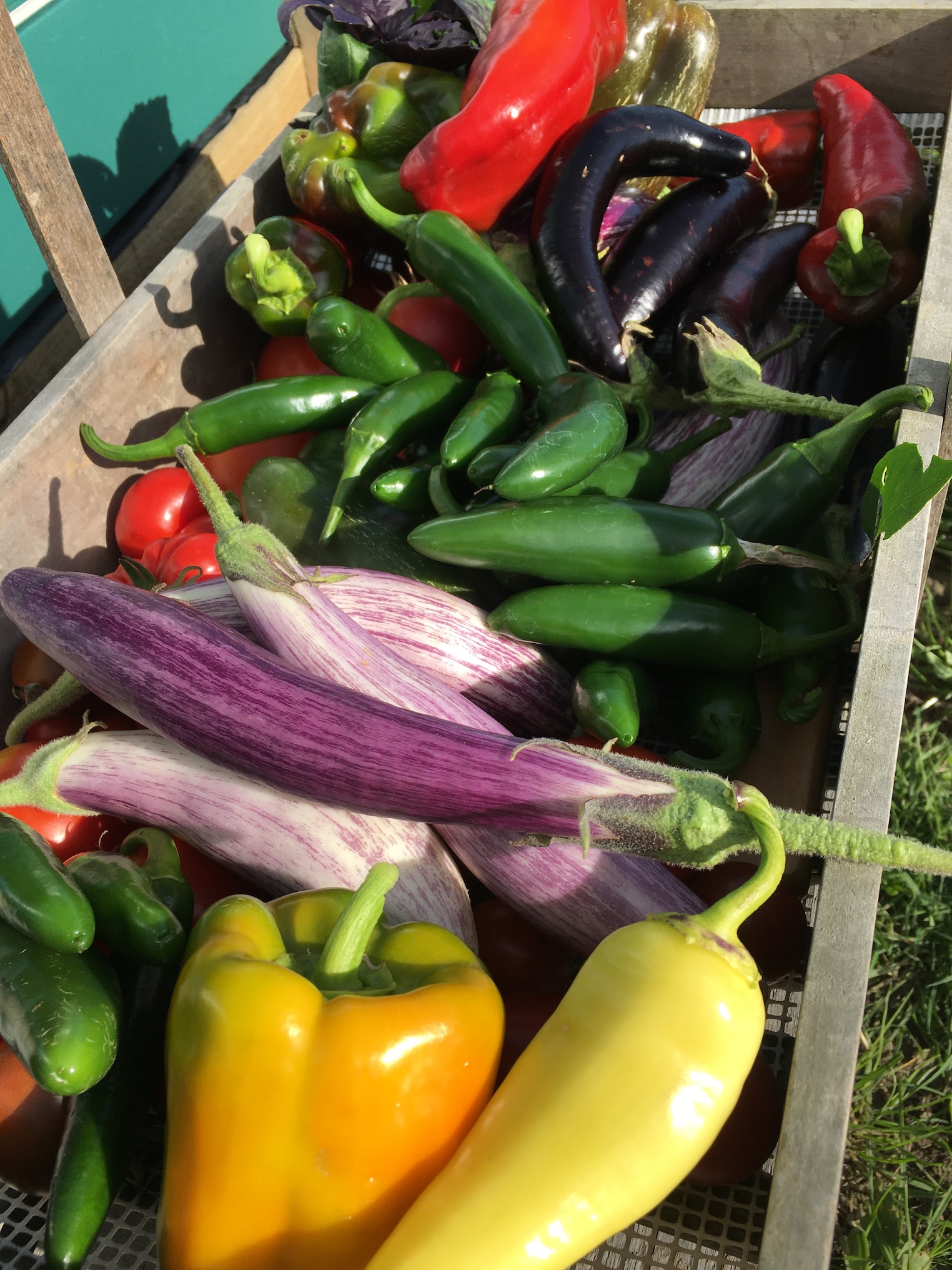
Of course, also on Thursday we harvested plenty of summer vegetables from the garden—zucchini, eggplant, tomatoes, peppers. The transitions between seasons are drawn out, messy affairs. The weather forecast for next week includes more summery weather intermixed with the rain and chill of autumn.

Autumn mushrooms are coming on.

So for now, we get to enjoy the delights of both seasons, harvesting summer’s bounty amidst the treats autumn brings. This weekend, I’ll plant out my winter crops, giving them time to establish during the shoulder season, before summer’s warmth leaves entirely. I’ll also harvest the soy beans and bottle up some summer soup before the vegetables are gone. Summer’s not over yet, but it’s time to start packing up. 

Zucchini and Tomato Tart

We’re in the bountiful days of summer right now. And while I’d like to be sitting in a chaise lounge enjoying that bounty all day, someone’s got to pick it and process it. At the moment, the processing mostly involves making pickles and chutneys, but there’s a lot more to come. Then there’s the necessary watering, weeding, tying up of tomatoes, planting of winter crops (because as John Snow says, winter’s coming)…

zucchini tomato tart

But at the end of each day, we do get to enjoy the fruits of the season. Last night I made one of my favourite mid-summer meals—zucchini and tomato tart.

The beauty of this tart belies its simplicity—just tomato and zucchini, embellished with a little parmesan cheese, garlic and basil. 

Back when I had dairy goats, I’d spread a layer of chevre on the bottom, too, which was divine. It also had the bonus of preventing the crust from getting too soggy. These days, without an unlimited supply of goat cheese, I put up with a soggy crust—the tart is still amazing.

This tart relies on having the best tomato and zucchini possible—it’s not a dish to make with out-of-season vegetables—so if you’re in the Northern Hemisphere, hang in there and enjoy this gem in July and August instead.

Download the recipe here.

The Grumbling Gardener

Like every serious gardener I know, I complain a lot.

The weather’s too hot and dry. It’s too cold and wet.

The winter was too cold. The winter was too mild.

The frost came too early, it came too late.

Aphids have killed this, a fungus has stunted that.

Poor germination, poor pollination, nitrogen deficiency, weed growth, pest birds … I can always find something about the garden that’s not right. Because there is so much that’s out of my control, it can’t possibly all go right.

And like all good gardeners, I hedge my bets.

Sixteen varieties of tomato, nine types of beans, six varieties of pumpkin, four different kinds of broccoli, and three different eggplants is betting on at least one or more of those varieties not surviving, not producing anything. Twelve zucchini plants, twenty-one peppers, and fifty-nine tomato plants is betting that some will die, fruits will be eaten by the birds, and many will underproduce for one reason or another.

So today, after grumbling about dry soil, nutrient-deprived plants and destructive blackbirds, I returned from the garden with more than we could eat, as I did yesterday and the day before, and the day before that. I’m awash in garden largess, in spite of the birds, the aphids, the weather.

I’ve largely ignored rising food costs and the current egg shortage crisis. I don’t worry about what we’ll eat the next time we contract Covid and have to isolate. I plan my main picking for weekdays, when excess can be given away at work. I bottle, dry and freeze as much as I can, squirreling away the extra for the winter (hedging my bets that the winter crops won’t germinate, will be eaten by birds, will be flooded out …).

It is the precarious wealth of the garden, and January is the time when my grumbling is often silenced by the next mouthful of delicious vegetables. I can occasionally walk through the garden in January and be overwhelmed by the abundance.

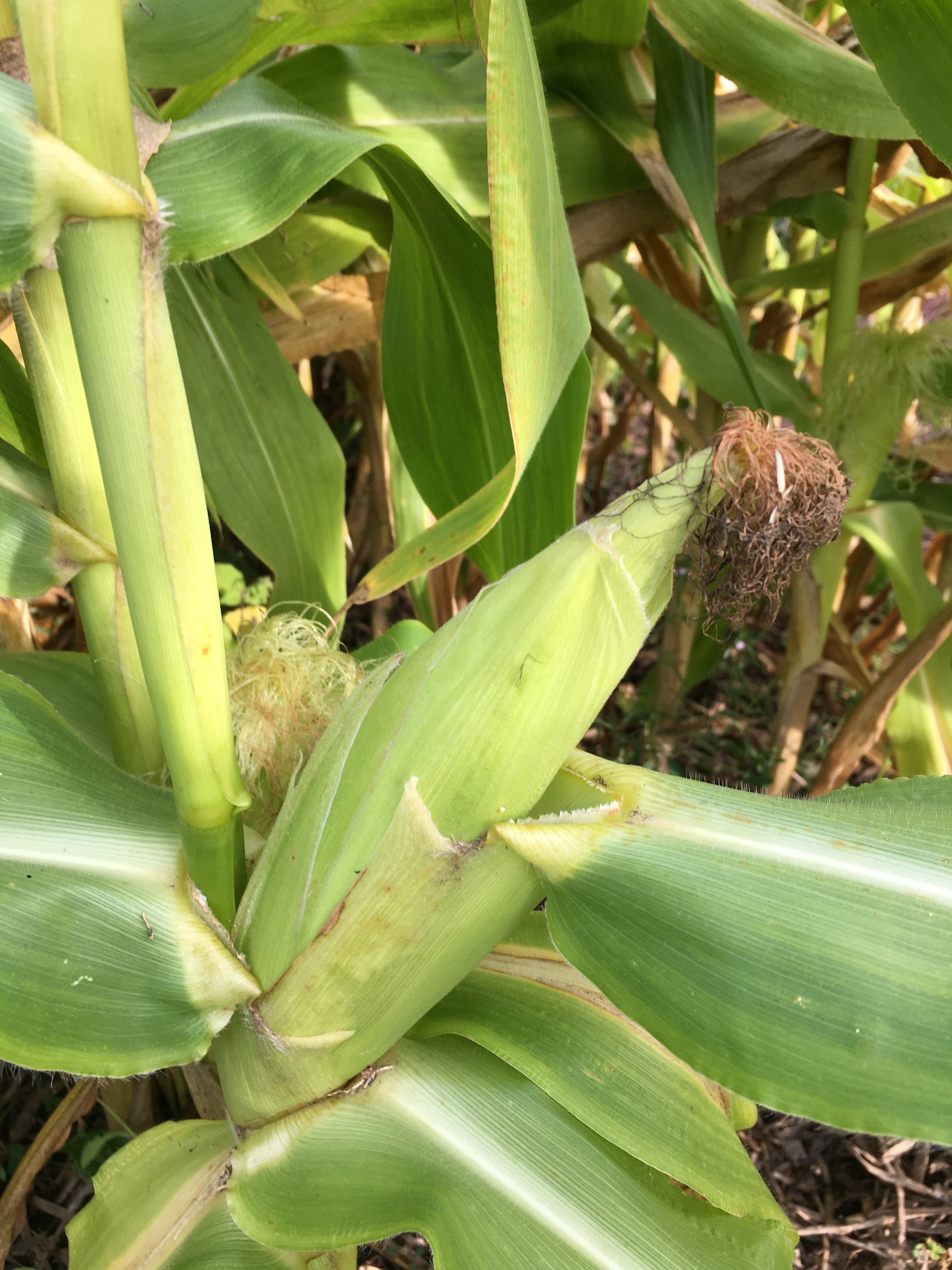
Of course, once I get over that, I’m back to my grumbling. I mean, just look at this photo—the yellowed corn, the stunted pumpkins, the prematurely senescing potatoes …

The Holiday Season Down Under

blackcurrant bushes

It’s been too long since my last post. I have illness to thank again. And simple early summer busyness. The strawberries, gooseberries, raspberries, black currants and red currants are all coming in now, and I’m wondering how on Earth I’m going to pick and process them all!

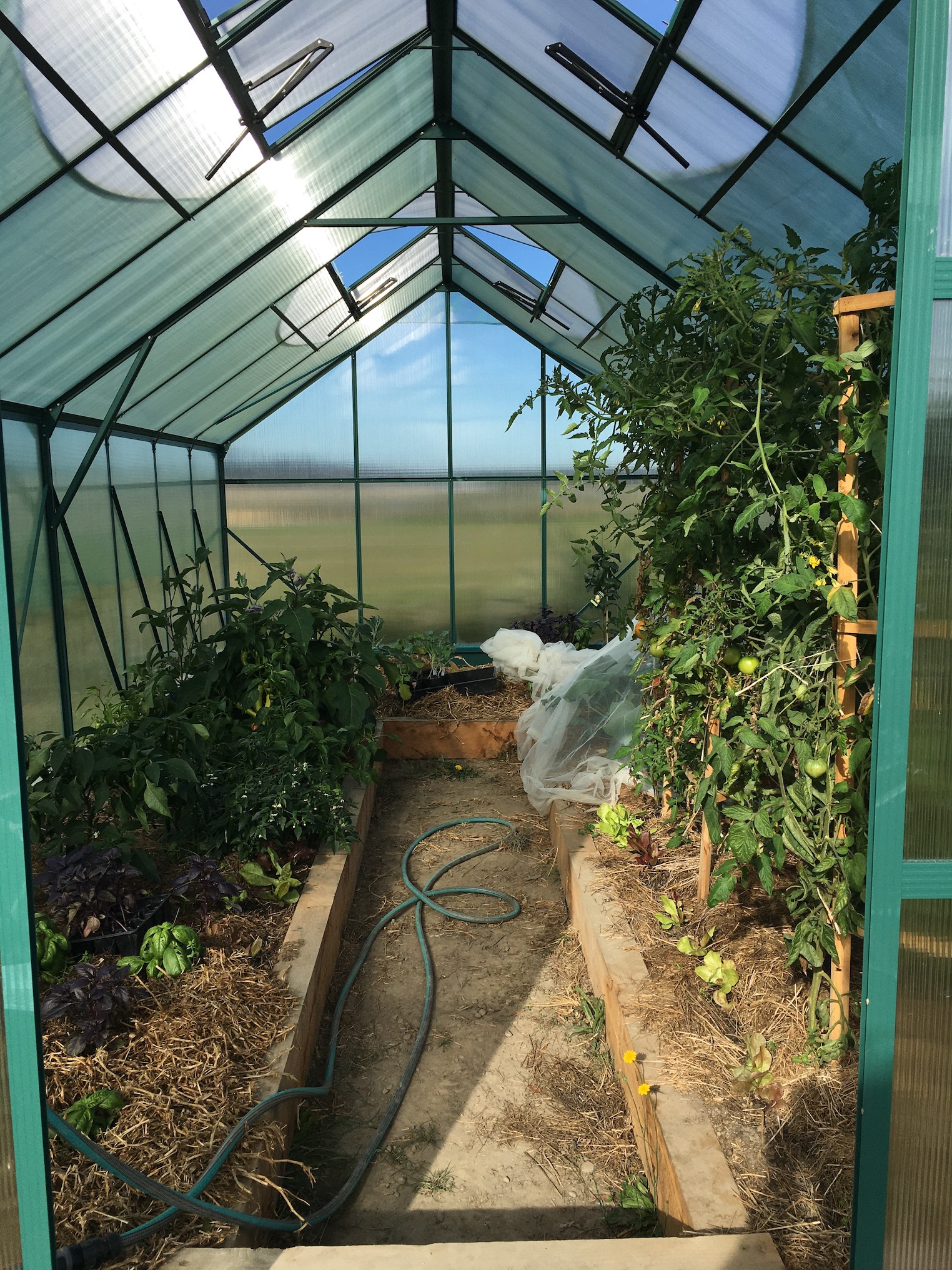
The big garden excitement here at the moment is the new greenhouse that my husband and I gave to each other for Christmas. Yes, we know it was a rather early Christmas gift, but by the time we get the thing set up and ready to go, it’ll be Christmas Day. I’m looking forward to having more garden space under cover for some tender perennial crops and better winter growing.

I’m off to pick berries now and consider what different jams I’m going to be making this weekend! I’ll leave you with a little bit of Christmas doggerel (because I can’t help myself–bad holiday poetry just spills out of my brain at this time of year).

Down here where kiwi birds roam
Santa trades snowy rooftops for foam
Of the incoming tide
As the reindeer all ride
A Sea-Doo till it’s time to go home.

Down here while the barbies heat up
Santa sips pinos gris from a cup.
With sand in his shorts
He’ll play summertime sports
Till the elves tell him it’s time to sup.

Down here where pavlova is king
Santa enjoys his annual fling
Wiggling tired bare feet
In the summertime heat
While we wait for the gifts that he’ll bring.

The base of the new greenhouse. Raised beds to lift plants above winter flooding and provide decent soil for growing. Hopefully we’ll get the top put together this weekend.