Winter Hope

100_3242 copyToday’s wind is bitter, driving icy rain against the windows. Though the heater is on in my office, I’m still shivering—just the sound of the wind and rain makes me cold. It is only the beginning of June. Winter is only just beginning. Three months of dark, cold wet stretch ahead.

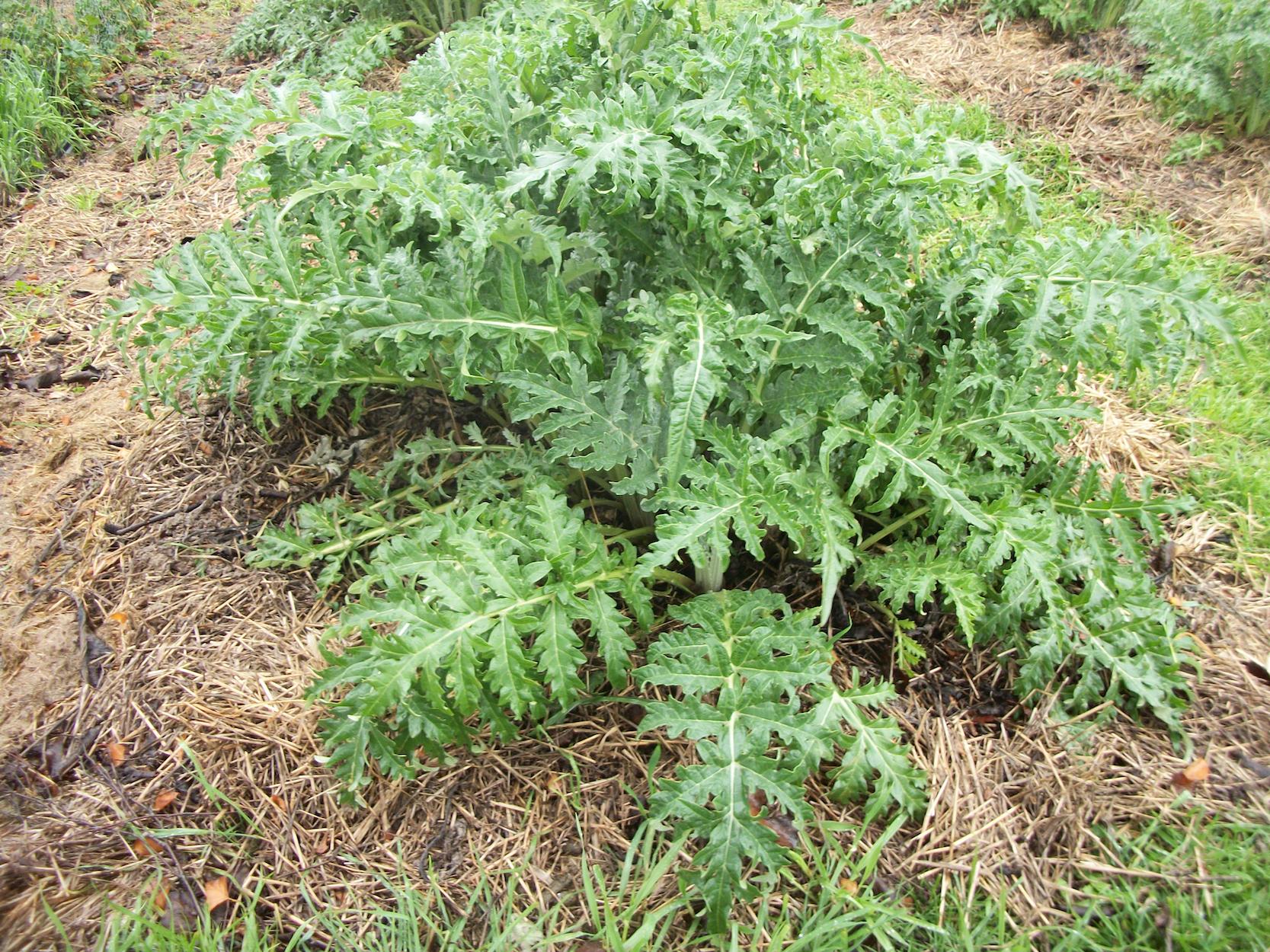
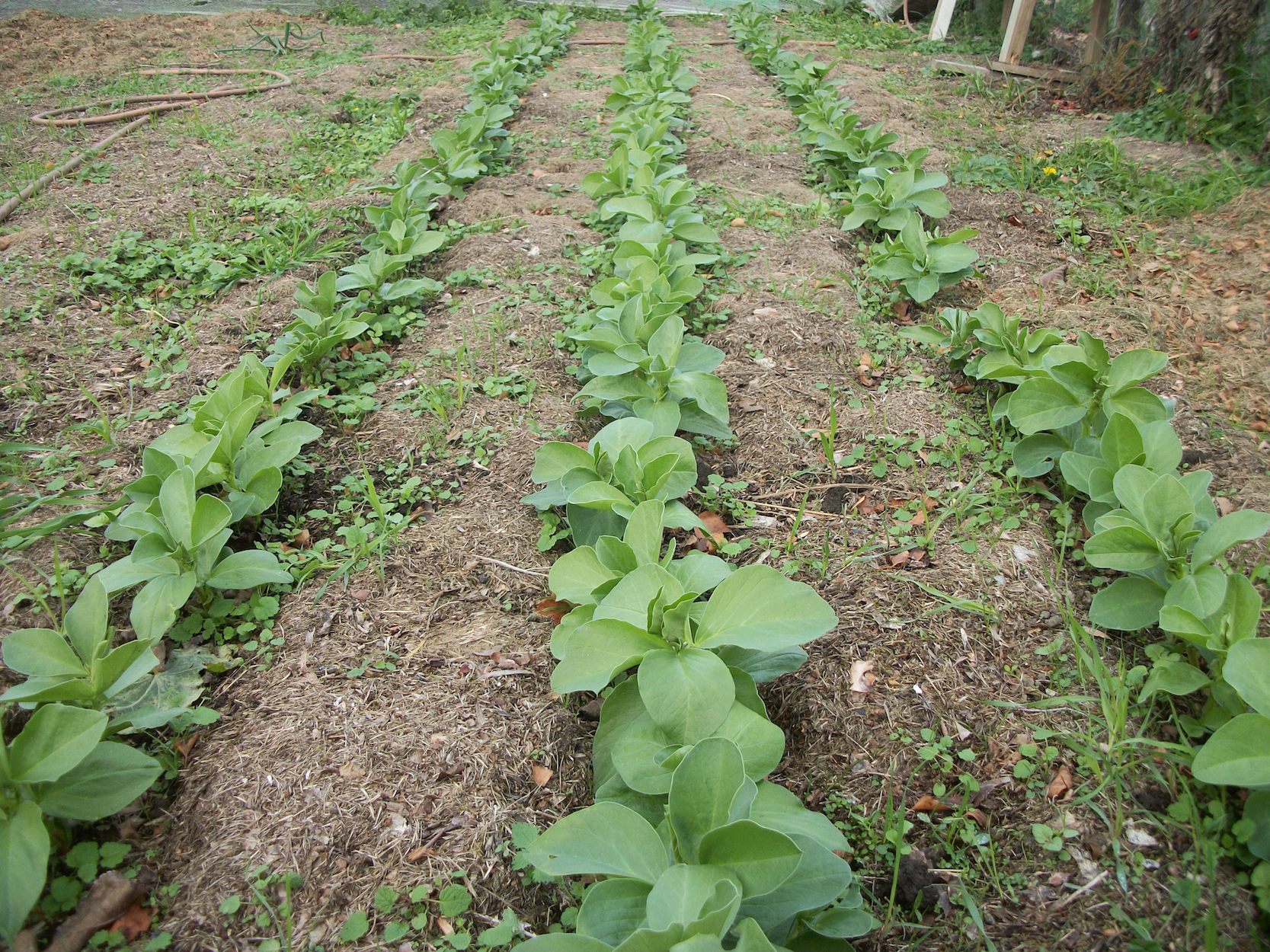
But the garden tells me we’ll see spring before we know it. Though they are bent with frost every morning, the broad beans grow bigger every day. The artichokes are lush, and the broccoli and cabbages flourish with the winter cull of pests. They promise food, light and heat to come.

Satisfying or Sisyphean?

100_3292 copyI have a weed problem. Or maybe I have a weeding problem. I spent the past weekend weeding the artichokes, which are busy putting on their winter growth. I keep them heavily mulched, which prevents most weeds from growing, but twitch (aka couch grass) has no problem coming up through even the deepest mulch.

I would rank twitch as my worst weed. It makes dandelions and thistles seem easy to pull. It grows faster than I can pull it out. It lurks amongst the roots of other plants, ready to spring back the moment I turn my back. It can even drill its way through my potatoes.

My fight against twitch never ends. Twitch grows year round, and if I relax for even a few weeks, it will encroach on the garden. Pockets of it persist, even in areas that are tilled annually and weeded weekly all year. I despair every time I see a blade of twitch poking up from a place I thought twitch-free. Controlling twitch is a never-ending, unrewarding job.

So, why do I sometimes want nothing more than to go out and pull twitch? Sometimes I’ll go out specifically to pull twitch for the sheer satisfaction of it. Especially where it is thick, and the soil is soft, you can pull it up in great branching masses of runners a metre or more long. Every crisp white growing tip I ease from the soil is one less clump of twitch in the garden. There is so much of it out there, that I can’t help but think I’ve gotten it all when I bring up runner after extensive runner.

I know the feeling will not last. In a week, the twitch I missed will be sprouting thick as hair on a dog’s back, and I will wonder if I actually weeded at all.

But for the moment, I have the satisfaction of several wheelbarrow loads of twitch dying on the compost pile, and an artichoke bed that sports more artichokes than weeds.

Eating Native?

veggiesforgrilling2smI’m currently teaching a biodiversity class at my daughter’s school, so I’ve been thinking a lot about biodiversity in New Zealand. Out here on this island in the middle of the Pacific Ocean, living things have had 65 million years to evolve in isolation. Until humans arrived about 700 years ago, most living things here were endemic—found nowhere else on earth. Three and a half metre tall birds and the giant eagles that preyed on them, flightless parrots, frogs that hatch from the egg fully formed, tuatara that died out everywhere else on earth millions of years ago, crickets the size of mice…

Humans changed things dramatically and rapidly. We brought thousands of other organisms with us, some on purpose, many by accident. Many of those organisms flourished here, at the expense of native organisms. Today, there are few New Zealand ecosystems untouched by the invasion of humans and other non-natives. Some of the most successful invaders have been plants—today there are more introduced plants here than there are natives, and more arrive all the time, in spite of efforts to prevent them.

Many of those invading plants were brought to New Zealand on purpose to provide food, shelter, or medicine. In fact, I can’t think of a single native plant currently cultivated for food, except one seaweed. There are certainly a few edible native plants, but they are few, and they are more of a survival food than something you’d want to eat every day.

No surprise. The crops we eat today have been cultivated for thousands of years—selected by countless generations of farmers to be bigger, tastier, and easier to grow. With only 700 years of history in New Zealand, there’s hardly been time to develop native crops.

The human migrants to New Zealand brought their crops with them instead. Familiar corn and carrots, potatoes and peas. But it’s not just in New Zealand that people mostly eat food native to other regions. People have been carrying their food with them for as long as we’ve travelled, until it’s sometimes hard to know where a food originally came from—classic Italian tomato sauce is made from a plant native to the Americas, the American “wheat belt” has its origins thousands of years ago in Turkey, and cassava domesticated in Brazil is now a staple food throughout tropical areas worldwide. Few people anywhere in the world eat native.

While I would love to be able to magically bring back the moa, Haast eagles, huia, and host of other incredible New Zealand endemic organisms that humans have wiped out here, I will admit I’m terribly fond of my non-native tomatoes, cucumbers, potatoes, eggplants, etc. I am thankful those non-natives are here, and I need not subsist on seaweed and ferns. Does it feel somewhat disingenuous to passionately support the conservation of our native biodiversity while I plant my non-native vegetable garden? Yes, but I’m only human, after all, doing what humans have done for 10,000 years.
Guest Post–Figs

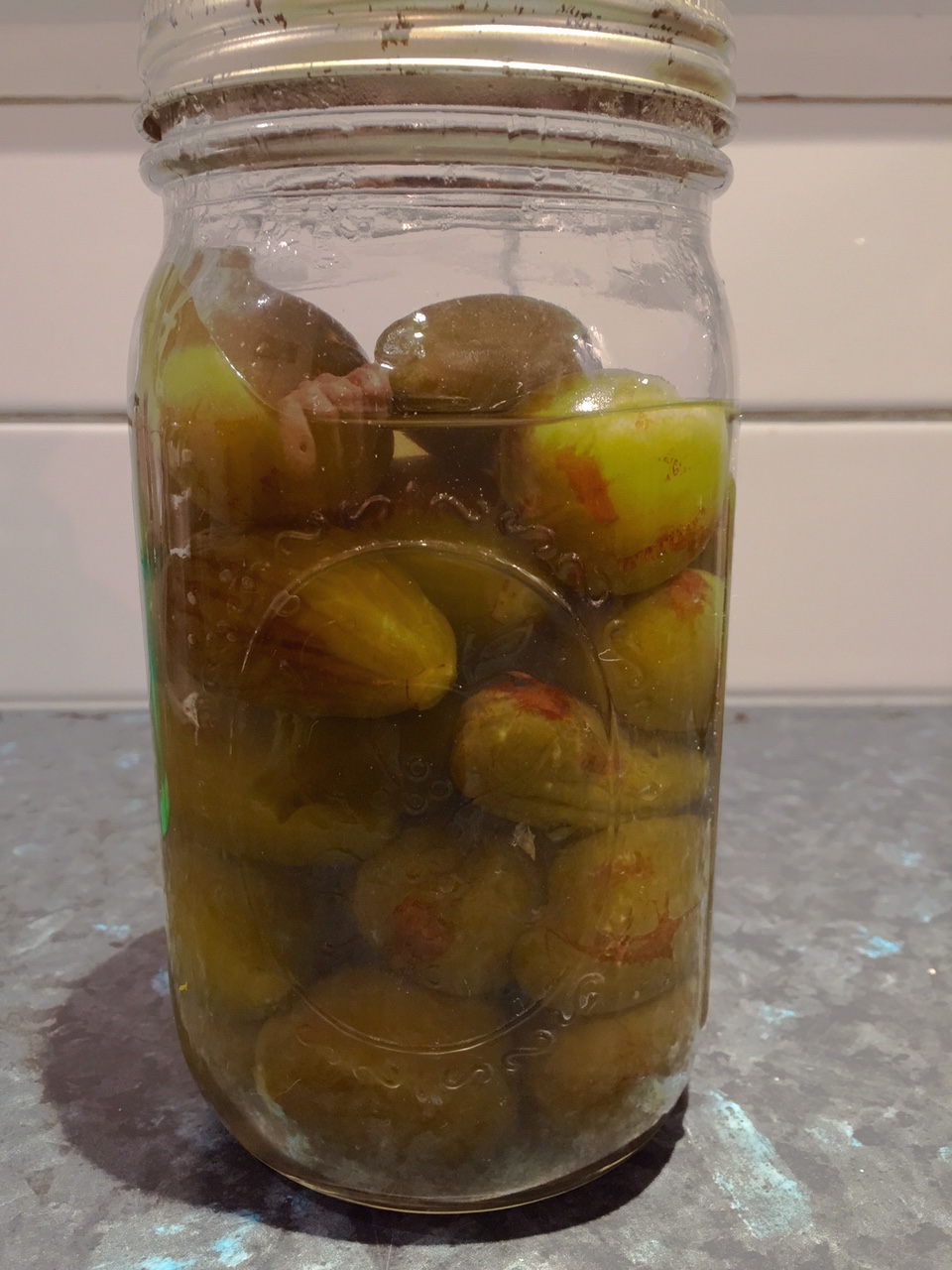
FigsToday’s post is a guest post written by my 11 year-old daughter about the figs she picked and processed today:

Last week I ate a fig for the first time ever. We have one fig tree. It started looking the most decimated of all the small fruit trees, but now it’s the only one that has given us fruit.

I noticed the figs were being eaten by birds so decided to pick one and try it. It tasted sweet and somewhat like Neptune’s necklace (a seaweed), but unlike Neptune’s necklace, it was quite tasty.

Today we picked the rest of the figs because the tree was getting frosted. We then boiled them and put them in a syrup. They are meant to be let sit for three weeks, but now they taste like somewhere between a fig and a sweet gherkin.

Taking Stock

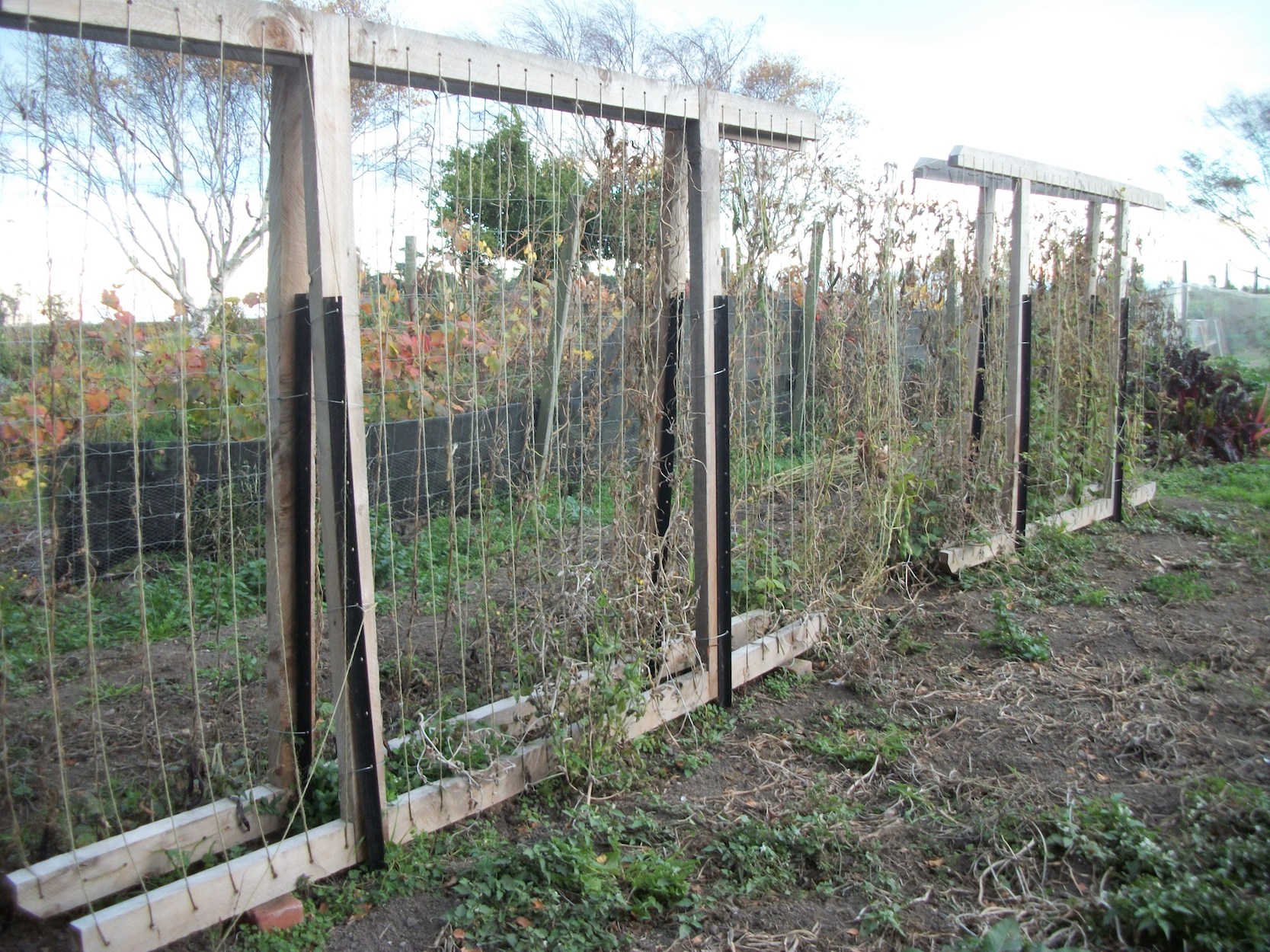
New trellises

New trellises

The new year’s seed catalogue will be out in six weeks, and all the summer crops are in, so it’s time to take stock of how the last year’s garden went.

Water was a constant problem this past summer—lack of it, that is. My irrigation system held up pretty well, though. I added some extra taps along the irrigation line at the edge of the garden, and this reduced the length of hose I had to drag around. The drip irrigation line for my eggplants and peppers is aging, though. I might need to make a new one for next year.

Birds were a terrible problem this past summer, destroying crops they’d never before bothered and never letting up all summer. Usually I only have to protect the peas and lettuce from them, and then only for a few weeks in early spring. This year I fought the birds all summer. It might have been the drought—there certainly wasn’t much food for the birds elsewhere in the yard—or it might be that the birds’ populations are up. Whatever it is, I’m going to have to more aggressively protect the garden next year.

The new trellises Ian made me were perfect for peas and beans, but not so great for tomatoes. The jute I used holds up beautifully for tomatoes in the greenhouse, but in the high wind of the open garden, it broke. I’ll try the new trellises again next year, but strung with high tensile wire instead of jute.

Summer squashes were a bust this year, not through any fault of mine, but because tree roots have again invaded the garden, and they sucked the squash bed dry. The same thing happened to a row of strawberries. We’ll have to get a trencher and cut the roots back before spring.

Peas did beautifully this past year. The heirloom blue peas I planted for the first time were vigorous, stunning to look at, and produced right through summer. Unfortunately, the peas themselves turn an unappealing grey when cooked. I’ll plant them again, for sure, but I’ll have to look for some recipes in which I don’t mind grey peas.

Pumpkins were a bit of a disappointment. Not that we don’t have lots of pumpkins, but we have fewer than I’d hoped. They were in the driest corner of the garden. That corner is always a problem. Perhaps I’ll have to set up some extra irrigation for that spot next year. I planted several new varieties of pumpkin last year, and was very impressed with Baby Bear—as cute and compact as Wee Be Little, which I’ve grown for years, but with better flavour.

The Delicious tomatoes continue to impress me. I think next year I’ll plant more of them than I do Brandywines—they’re almost as tasty, and grow much better here.

These and dozens of other notes are scribbled in my garden journal. I’m sure I’ll make more mistakes next year, but at least I won’t repeat the same ones!

First Frost

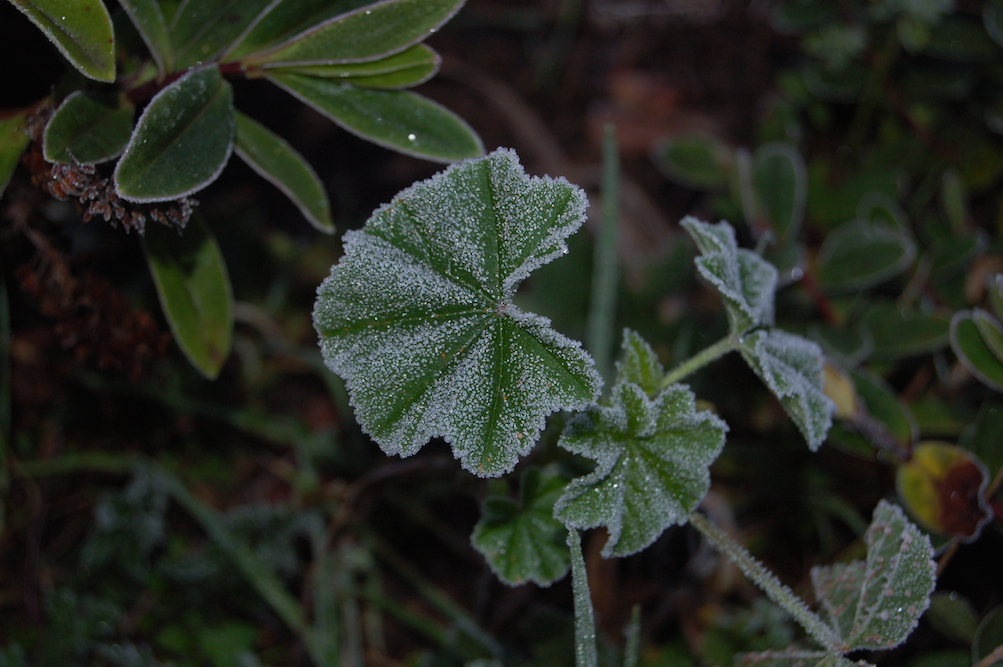
DSC_0006 copyThe grass sparkled in the beam from my headlamp this morning and crunched underfoot—our long-overdue first frost. After such a hot summer, we should have expected a warm autumn, but I was beginning to wonder if it would ever frost; it usually occurs near the end of April.

Of course, even without a frost it’s been too cool for the summer crops outside the greenhouse; they gave up weeks ago. So we’ve been eating as though it has already frosted, but there’s something decisive about the first frost.

First frost gives me permission to haul out the sewing machine after a summer’s interruption to crafts. It encourages me to pull out a good book. It gives me leave to contemplate steaming pots of soup and chunky vegetable stews for dinner. It is a milestone in the year. A time for taking stock, reflecting on the summer’s crops, and enjoying a brief break from most garden chores. Though the garden looks wasted and sad after the first frost, it is a time to savour, like every other event and milestone in the garden year.

Be a Greenhouse Maker

100_2519smThis afternoon when I went out to the greenhouse for tomatoes, I got to thinking about the protection that a greenhouse offers. The more I thought about it, the more I realised that we all use greenhouses, and the best of us create them.

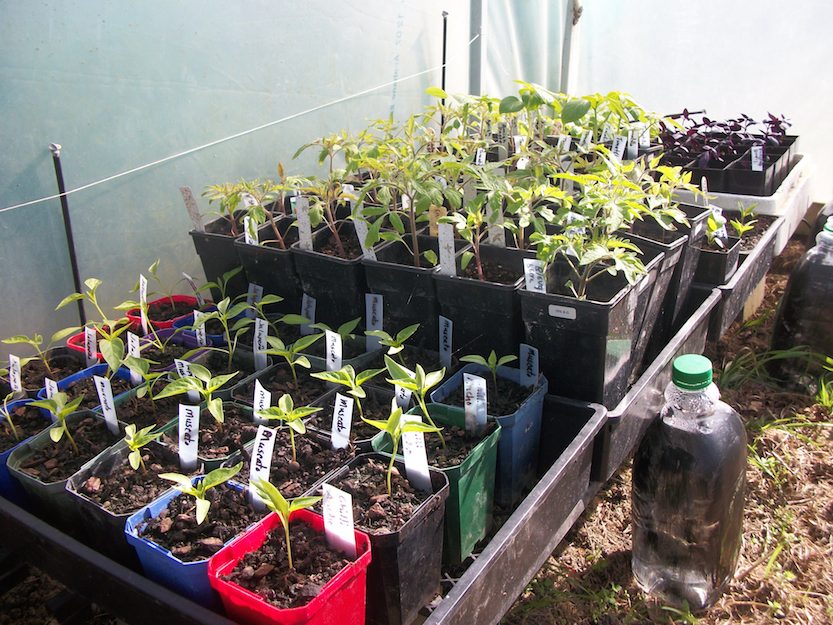
The greenhouse is a refuge for those tropical plants we love so much—tomatoes, peppers, and basil. My unheated tunnel can’t protect the plants from a hard freeze, but it protects them from frost and gives them just enough extra warmth to ripen up those last autumn fruits. It also protects tender seedlings from fickle spring weather.

Not everyone has a greenhouse for vegetables, but we all make use of metaphorical greenhouses.

We provide greenhouses for our kids. We try to protect them just enough to give them extra time to grow and mature until they’re ready to brave the elements alone. We provide them a refuge—a place where they are loved, accepted, and safe from emotional and physical harm.

But it’s not just children who need metaphorical greenhouses. We adults need them, too. Yesterday, my son interviewed me for a school assignment about the factors that help us to be resilient in the face of adversity. It struck me that a large part of being resilient is having a refuge, a “greenhouse” that will take the edge off harsh conditions.

We can make greenhouses for others. When the earthquakes struck in Christchurch, neighbours created greenhouses for one another by pitching in wherever they could—shovelling liquefaction, sharing food, and offering shoulders to cry on. My husband has provided a greenhouse of unwavering support as I muddle through my current emotionally fraught career change.

We can make greenhouses for ourselves, too—places (physical or mental) where we allow ourselves to rest, where we cultivate things that bring us comfort.

When we make greenhouses for our kids, our friends, and ourselves, we all take shelter in them. So go ahead, be a greenhouse maker.


An Orderly Work Space

My "new" 125 year-old garden shed.

My “new” 125 year-old garden shed.

With my husband’s new shop all but finished, he’s been shifting all his tools from the old shop. The shift prompted the shuffling and rearranging of not just his tools, but also my gardening tools and supplies, and my teaching resources and crafts in my office. A shelf unit from my office went to the new shop, and a cupboard went to the “new” garden shed (the old shop). I got new cupboards for the office that are a better fit for the space, and we all spent the entire weekend rearranging and organising stuff in all three work spaces. Cleaned out things we don’t use anymore, discovered things we thought we’d lost, and arranged work spaces so that the tools and materials we need are easy to find and convenient to use.

After nearly ten years saying we were going to do this reorganisation (and being sidetracked by more important issues like leaking roofs, rotted house piles, and disintegrating weatherboards), I’m thrilled to see our work spaces coming together the way we’d like them to. There is still a lot of work to do to finish the job, but I can already see I’m going to appreciate having my seed-starting trays and pots in an enclosed space so they don’t blow off the shelves every time we have a storm. I’m going to enjoy having my garden tools neatly hung on the wall, and my pots and potting mix arranged for efficiency, not just stashed wherever I could make them fit.

Makes me want to go out and plant something, just for the pleasure of using a well ordered shed.

Buried Treasure

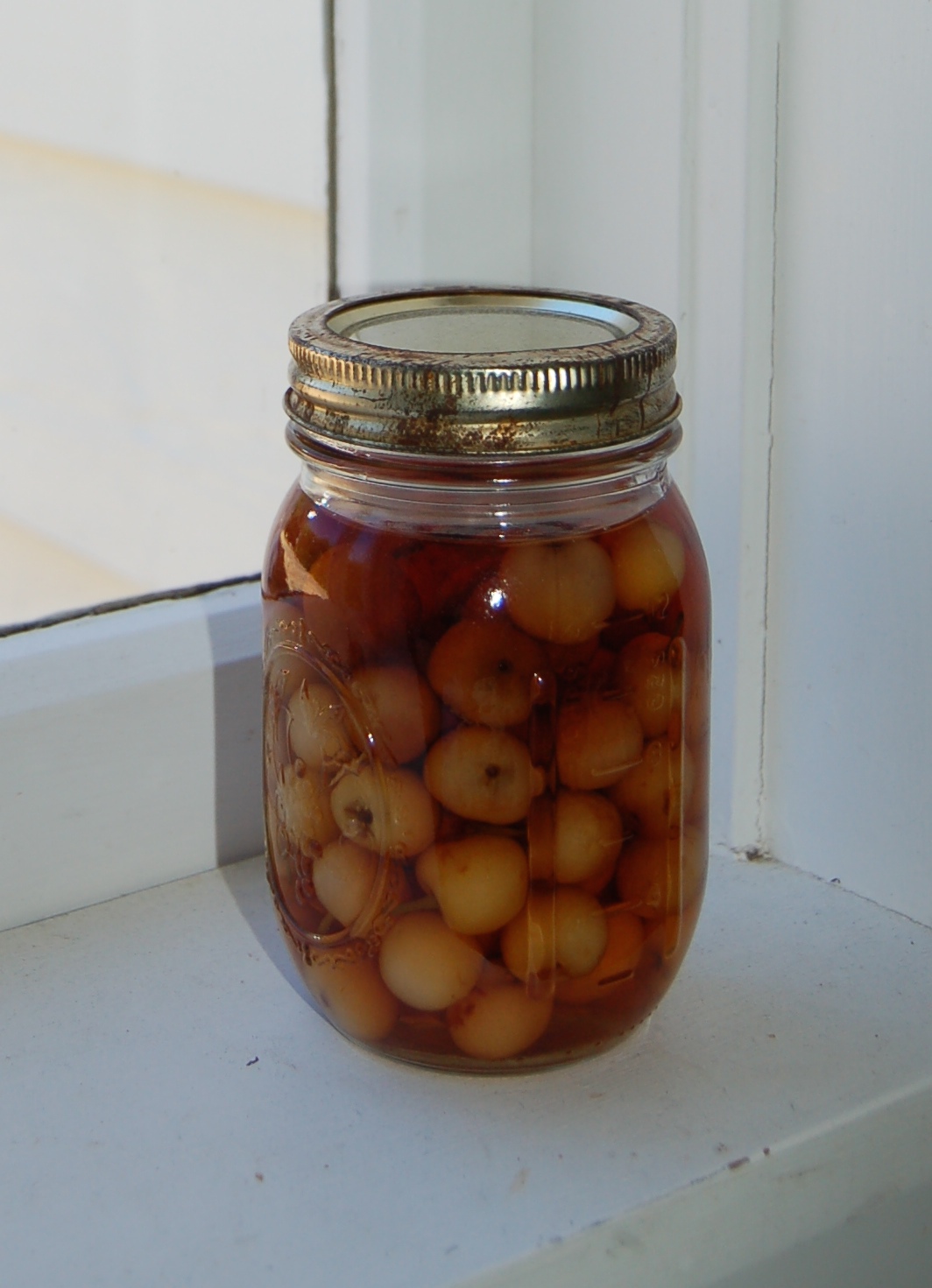
brandiedcherriesonwindowsillcropLong about now, the summer bounty is over, the winter crops aren’t yet producing, and we start eating the foods we preserved over summer.

Long about now, we remember the brandied cherries.

We don’t make many (we don’t eat many)—one pint jar full. On top of a scoop of vanilla ice cream, accompanying a chocolate brownie, or all on their own, they are a decadent treat. Like much of the summer bounty stored up, they feel like buried treasure when we remember them on a cold, rainy day.

Carrots

DSC_0037smI eat them almost every night in dinner, and usually with lunch, and often in between meals, too. Nothing satisfies my munchies like the sweet juicy crunch of a carrot. I know I’d automatically reach for cake over carrots, if I could get it, but cake is like riding the crest of a big wave on your boogie board—a thrill while it lasts, but pretty soon you’re going to be washed up on the sand. Cake’s sugar crash can be brutal, but carrots are both satisfying and sustaining.

I could go on about carrots’ nutritional values—how they contain lots of vitamin A, C, and K, how they are low in calories and high in fibre. But frankly, I don’t care. They are delicious and satisfy my snacking cravings; who cares about the rest?

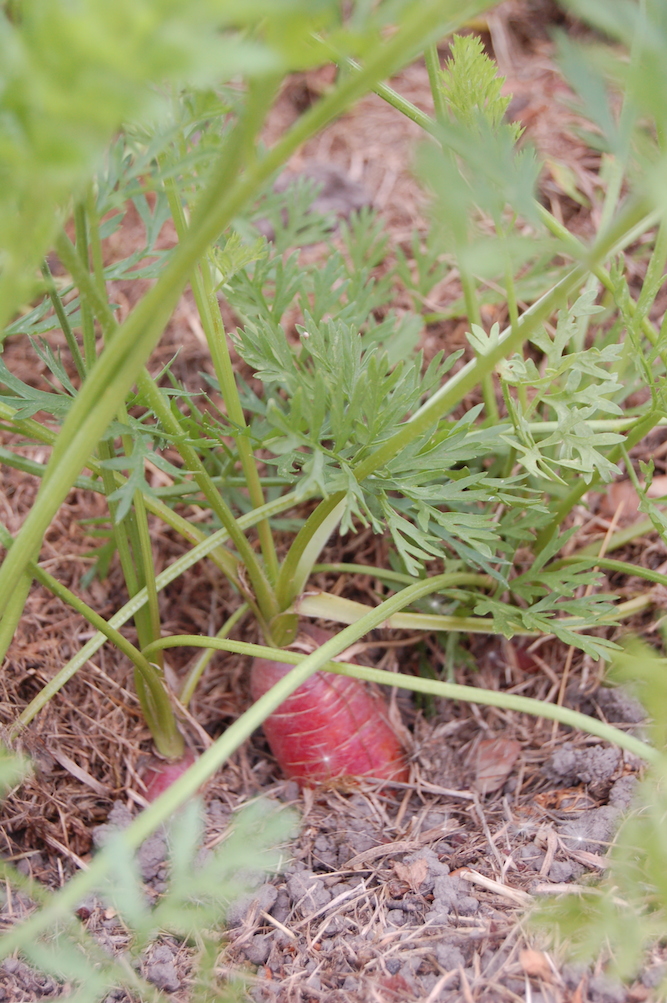
I grow a lot of carrots, but never enough to get us through the year. My favourite variety is Touchon, a sweet orange carrot that grows beautifully in my garden. I also plant Purple Dragon, Solar Yellow, and Nutri-Red, just for fun and variety.

I love braised carrots, roasted carrots, grilled carrots, carrots in soup, carrots in my macaroni and cheese, and carrots in salad. But mostly I love carrot sticks, eaten any time of day or night, whenever I’m feeling a little peckish.