It Ain’t Over ‘Til the Magpie Sings

Photo: Eric Weiss

Photo: Eric Weiss

We’ve had more than our fair share of beautiful warm winter days this year. Though we’ve had some very cold nights, the days have been sunny, and we’ve gotten only a fraction of the rain we normally do over winter.

So you could have been forgiven for thinking, back in July, that winter was over. In fact, my daughter argued that it was spring a month ago.

I knew better. Winter would assert itself again.

It did so this past weekend, with icy winds bringing sleet, snow and rain. We huddled by the fire, venturing outdoors only to take extra food to the animals and split more firewood.

But in between icy squalls, at 4:00 am two days ago, I heard it—the certain sign that winter is on its way out.

A magpie.

Magpies are noisy all year long, but when spring is almost upon us, their noise changes. They start their wardle-oodle-ardling at four in the morning, and carry on until the sun rises. They feel what we know only because of the calendar—spring is just around the corner.

When the magpies start calling, I get restless. I wake when they do, and their call urges me out of bed.

Wardle-oodle-ardle!

Get up! Get up! Get ready!

            But it’s dark and raining!

Wardle-oodle-ardle!

Get up! Get up! Get ready!

            But it’s cold! Can’t I stay in bed?

Wardle-oodle-ardle!

Get up! Get up! Get ready!

Wardle-oodle-ardle!

Get up! Get up! Get ready!

Spring is coming!
Vandalizing the Cookbooks

100_3564I was taught never to write in books.

In high school when I was reading the classics for English class, the comments scribbled in the margins by previous students irritated me.

I even hesitated writing my name inside the front cover of books.

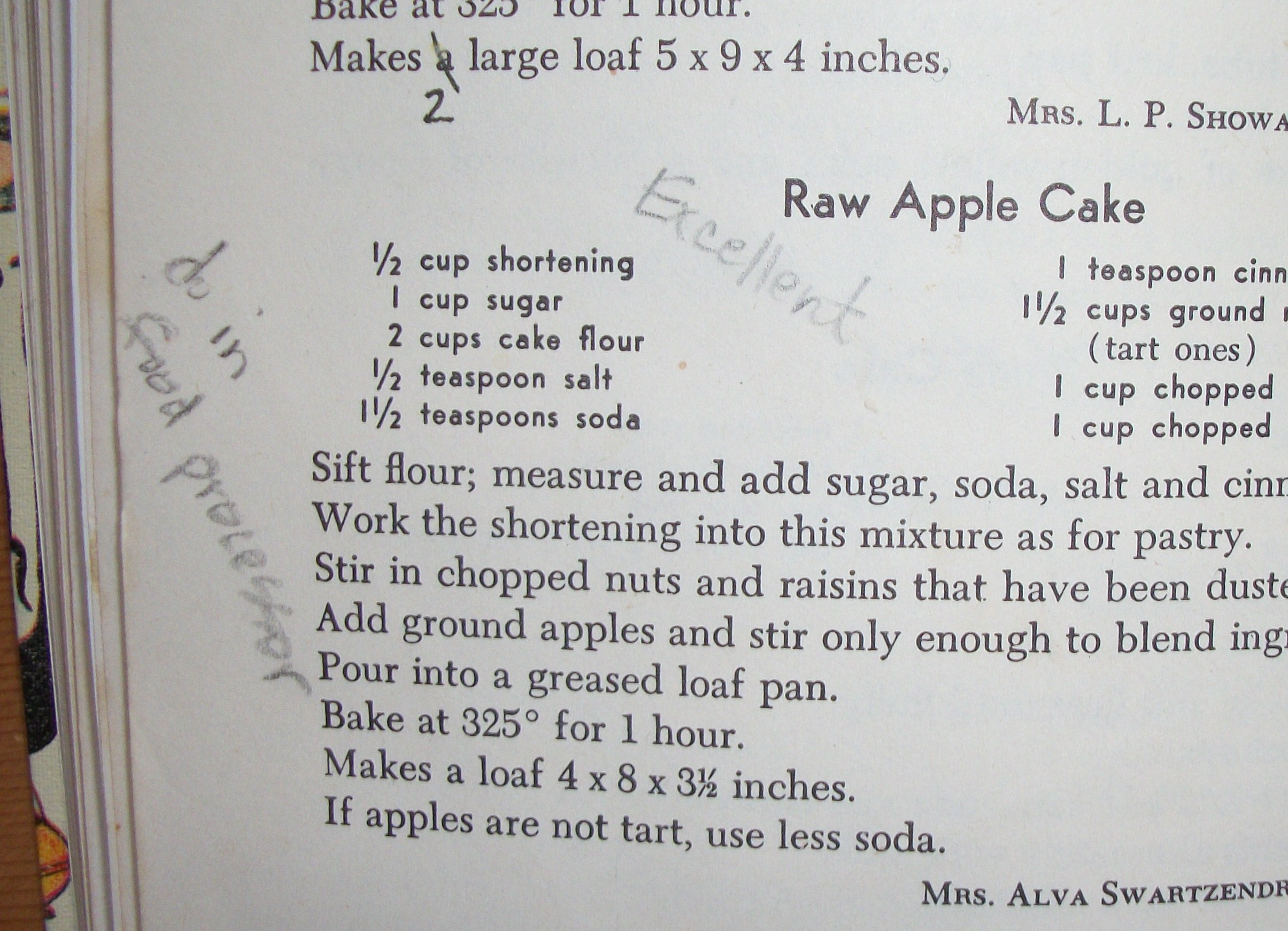
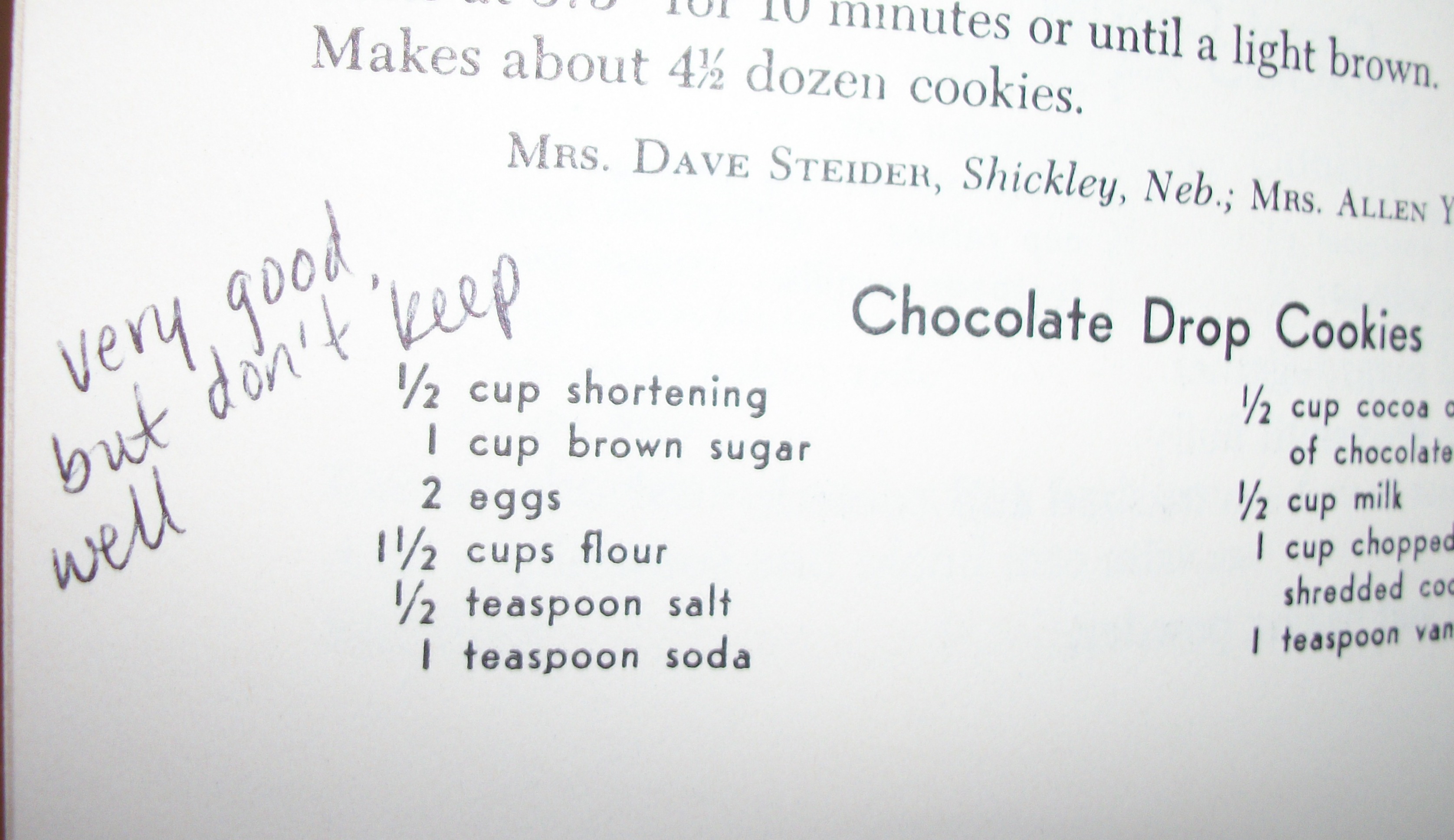
I still don’t generally write in books, but when it comes to cookbooks, I’ve realized that writing in them is necessary.

100_3566How else will I remember if a recipe is worth making again?

How else will I remember that this scone recipe is too wet, and requires an extra ¼ cup of flour, or that that cake recipe is better with half the sugar than called for? Or that the pumpkin pie recipe in the Mennonite Community Cookbook is much better than the one in Fanny Farmer?

100_3562My cookbooks are full of my scribbles in the margins, my temperature and weight conversions for American recipes that don’t provide the metric counterparts. The notes help me improve a recipe every time I make it, and remember what I’ve done when I’ve finally perfected a recipe.

Soft Pretzels

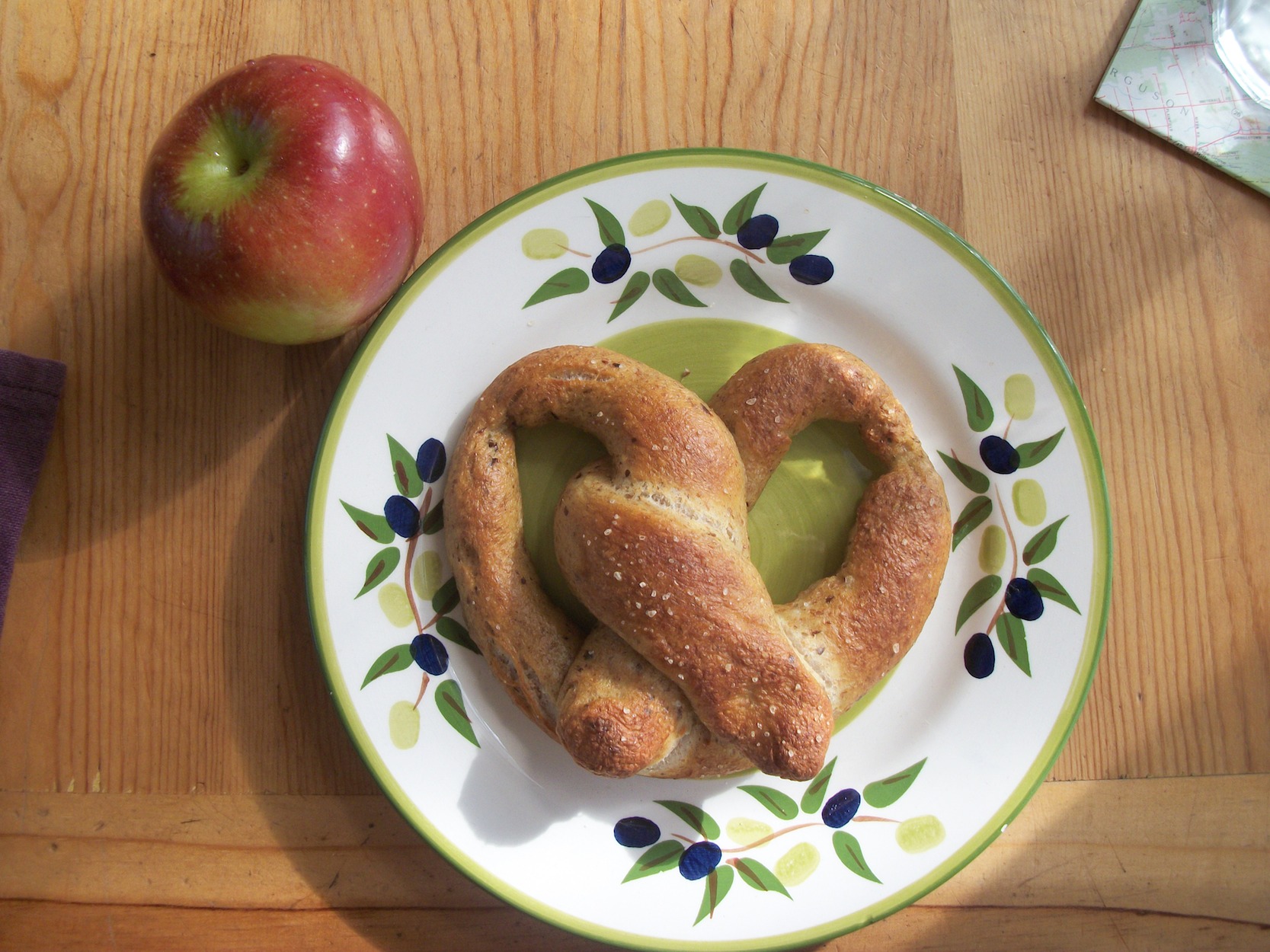
100_3556 smHaving grown up in central Pennsylvania, I consider pretzels their own food group.

So it was a great disappointment to discover that there are NO pretzels in New Zealand. Oh, you can get small bags of expensive, imported pretzels, but the variety and quality are very poor.

And soft pretzels—the pinnacle of pretzel evolution—are nonexistent.

Thankfully, soft pretzels are easy and fun to make!

I make soft pretzels from a light whole wheat bread dough—any relatively light dough will work fine.

Once your dough has finished its first rise, divide it into 100g (3.5 oz) pieces. Roll each piece into a long snake, then twist into a pretzel shape and place on a well-greased baking sheet (You can make other shapes, but keep them compact or they will break apart when handled). Cover and let them rise until about doubled in bulk.

Now comes the part that turns them into pretzels.

Bring to a boil a mixture of 4 cups of water and 5 tsp baking soda (I use a large pot and need to double this amount to get a reasonable depth of water). Drop the pretzels carefully into the water (you may only be able to put 1 or 2 into the water at a time—my big pot fits 3) and allow them to boil for about 1 minute, until they float to the surface (I gently turn them over once they’ve reached the surface so that both sides boil relatively evenly). With a large slotted spoon, take them out and place them back on the greased baking sheets.

Sprinkle with coarse salt and bake at 230°C (450°F) for 12 minutes or until nicely browned.

Eat them hot, slathered in mild mustard!

Sunflowers

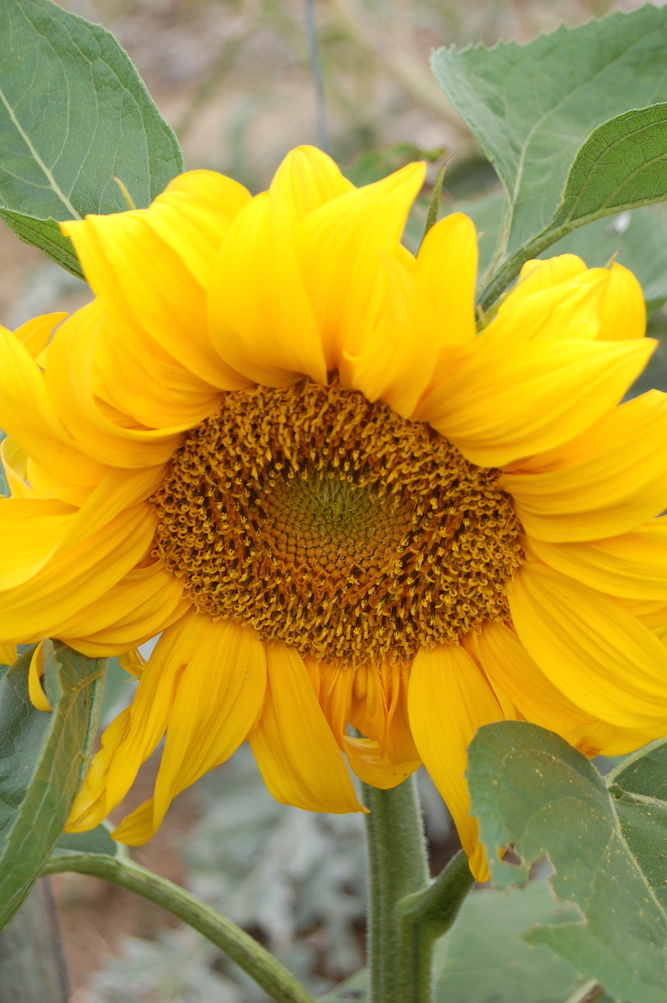
DSC_0009 smMany vegetable plants are attractive. Many have pretty flowers—okra (a hibiscus), scarlet runners, peas. None is more showy than the sunflower. Indeed, sunflowers are in the ornamentals section of the seed catalogue, not the vegetable section. There are plenty of sunflowers that don’t produce big meaty seeds for eating, but those that do are no less ornamental.

We eat sunflower seeds in a variety of ways. They are delicious sprinkled on top of a casserole or galette. They add nutty flavours to granola and veggie burgers. And they make a great snack!

We don’t grow nearly enough sunflowers to satisfy our appetite for sunflower seeds, but it’s always worth growing them, even if it’s only to enjoy the flowers!

Stomach bugs!

100_3544 smIt has been many years since a stomach bug has hit our family, but I’ll admit I expected this one, after we brought a very green friend home from school earlier in the week. He didn’t quite vomit in the car, but it was a close thing.

So when I got the text at 10 am that my son was vomiting in the sick bay at school, and could I come get him please, I was disappointed, but not surprised.

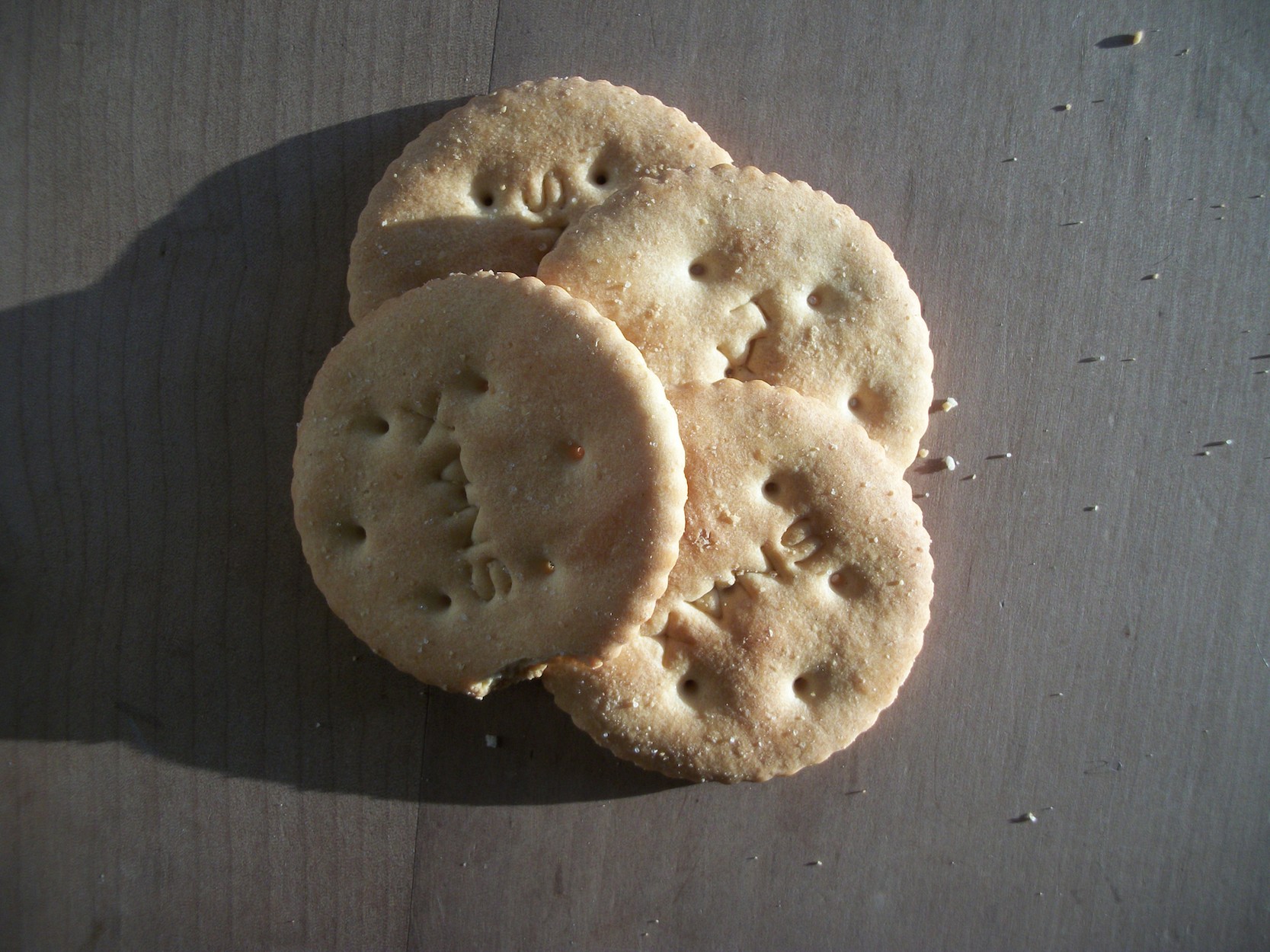
But of course, that begs the question, What do I serve for dinner? It’s no problem for the sick boy—he’ll get miso broth with plain crackers, if he eats at all. But I was planning on burgers slathered in ketchup and jalapeño peppers. The rest of us feel fine now, but we were just as exposed to this bug as my son, and at the same time. There’s a good chance we’re going to start vomiting in the next 12 hours, too. Do we really want burgers and hot peppers in our stomachs when we do?

I think not.

I’m thinking that something bland and easy to digest is probably the wiser choice for dinner. We’ll save those jalapeños for some other day.

5-minute Beets

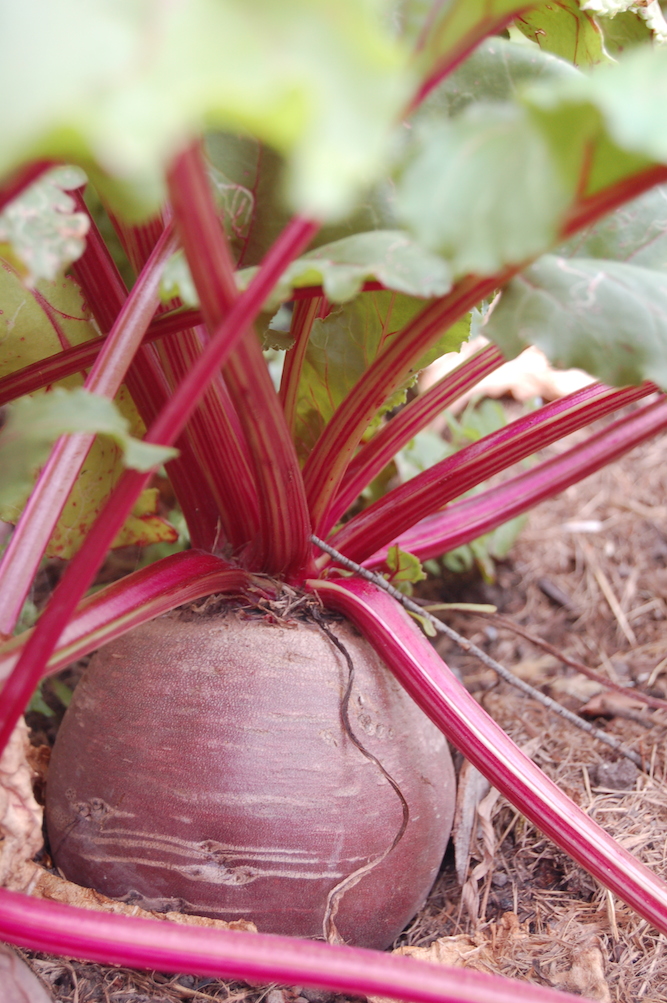
DSC_0036smIt took years to get our son to eat beets.

No. That’s not true.

He ate beets for years before he liked them.

Red beet eggs, nope.

Roasted beets, uh uh.

Grilled beets, no.

5-minute beets, OH YES!

This recipe comes straight from Vegetarian Cooking for Everyone, by Deborah Madison (one of my favourite cookbooks), and I’ve never been tempted to alter it in any way. It is absolutely perfect!

4 beets (about 500g/1lb)

1 Tbsp butter

Salt and pepper

Lemon juice or vinegar to taste

2 Tbsp chopped parsley, tarragon, dill or other herb

Grate the beets coarsely. Melt the butter in a skillet, add the beets, and toss them with ½ tsp salt and pepper to taste. Add ¼ cup water, then cover and cook over medium heat until the beets are tender. Remove the lid and raise the heat to boil off any excess water. Adjust salt, season with a splash of lemon juice or vinegar (I use balsamic), and toss with the herb.

Extra meals, extra time

Stop and smell the roses...or at least weed them.

Stop and smell the roses…or at least weed them.

My husband is away for two weeks. Before he left, we made sure there were meals ready-made in the freezer, so that my job as sole parent would be easier, particularly on those nights when extracurricular activities meant we didn’t get home until late. I also made sure that, over the weekend, I made extra burgers, so we had another quick meal in the fridge.

As I considered the meals available and our schedule for this week, I realised that I don’t need to cook at all this week.

Which, of course, begs the question, what do I do with that extra hour of my day?

The weather has been lovely, so I’ve been spending those pre-dinner hours outside—washing the car, weeding the flower beds, tidying downed branches in the yard…

It almost feels like cheating, and I have to remind myself that I did put in the hours to make the meals we’re eating this week—I just did it ahead of time.

Though I enjoy cooking, and have no problem spending an hour or more preparing our evening meal each day, the break is nice. The car and the yard are looking much nicer for it!

Sweet potato oven fries

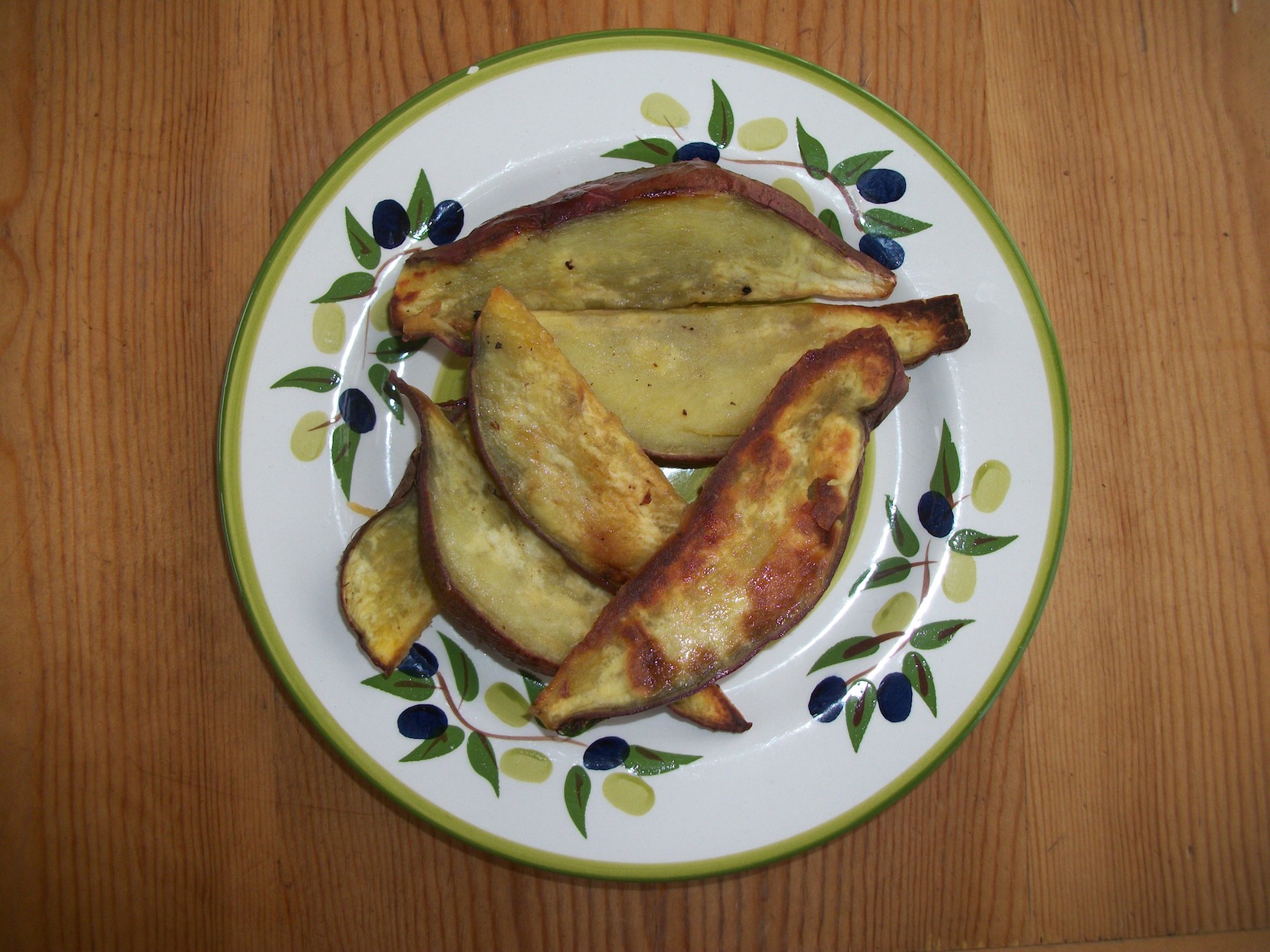
100_3540 smI made lentil burgers for dinner last night and served them on Mum’s Fluffy Buns. I wanted a side dish, but I wasn’t in the mood for ordinary fries, so I made sweet potato (called kumara here) fries instead. I cut the sweet potatoes into wedges about 1 cm (1/2 inch) thick, tossed them in a shallow baking dish with olive oil, salt and black pepper, and baked them at 190°C (375°F) for about 30 minutes, until they were browning and the thin edges were crispy.

Easy as! And delicious, too!

The Gardeners’ Level of Hell

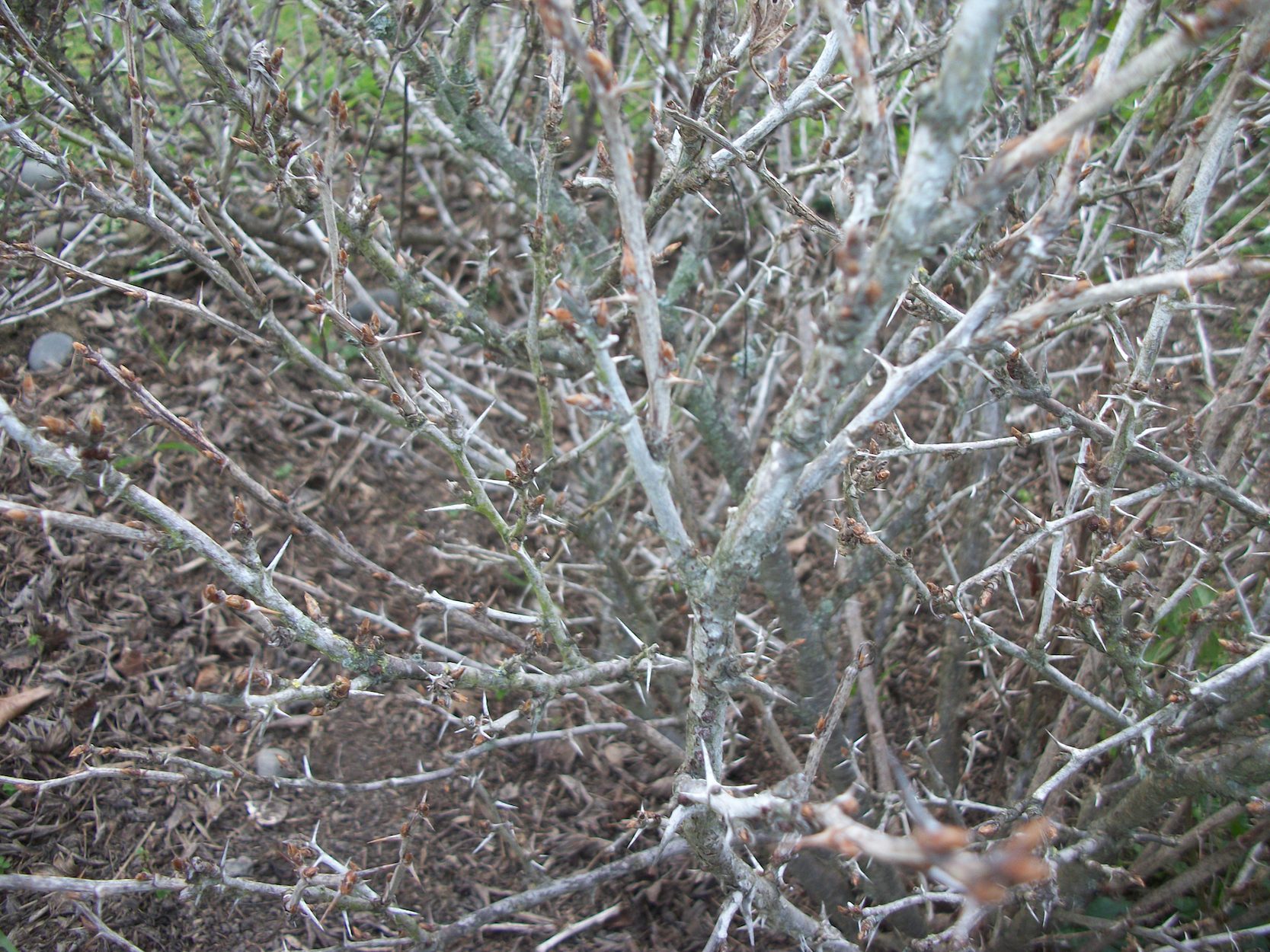
gooseberryplantsmI used to imagine that there was a special level of Hell for bad gardeners in which one was forced to weed thistles out of raspberry bushes for all eternity. I’ve since revised my idea of that level of Hell; I’m now convinced it involves weeding those thistles out from under gooseberry bushes. The combination of prickly plants with tap roots (that will grow back in less than a week) and vicious spines gouging eyes, face, and arms is as good as anything Dante conjured.

I spent an hour of my afternoon in this hell, and have the scars to prove it. But the gooseberry bed looks very nice now—neatly weeded and mulched!

Moose on the Loose!

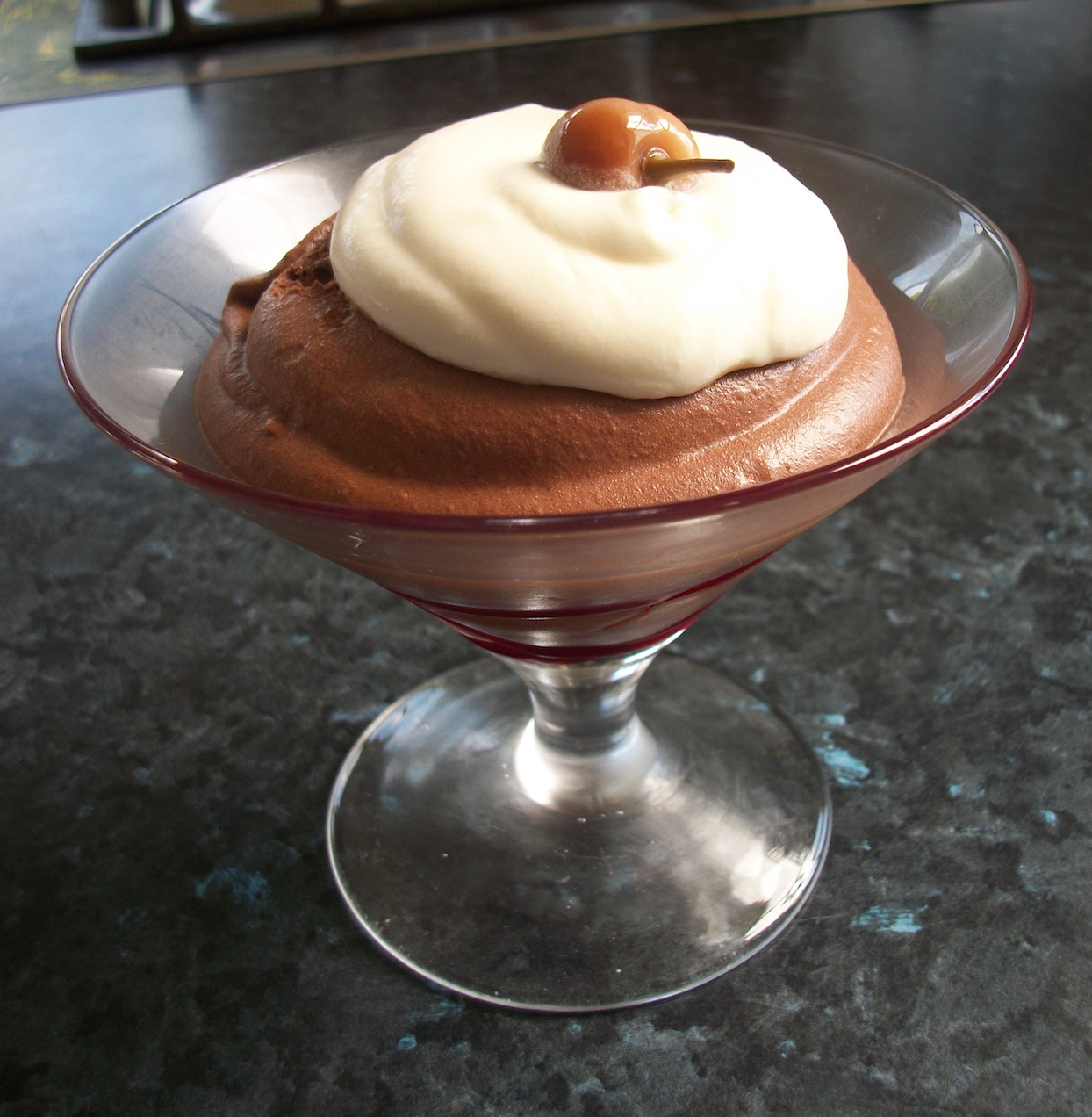
100_3526 smWell, not moose, but mousse. Chocolate mousse!

A friend mentioned mousse the other day, and I couldn’t get it out of my head, so I picked up some lovely dark chocolate and some cream and made mousse this morning.

While I was making it, I remembered why I don’t make mousse very often. Though it’s not necessarily difficult, it dirties an inordinate number of mixing bowls, and involves a lot of whisking!

Still, I enjoy making mousse, just for the chance to play with foams. There are three separate foams in the mousse recipe I use.

First is a cooked egg yolk foam. This robust foam is the first to be mixed into the melted chocolate. Next is a stabilised egg white foam, gently folded in. Then finally comes the delicate cream foam (mixed in, and dolloped on top for serving!).

The result is a divinely fluffy and rich mousse.

A foam is simply a film of proteins surrounding pockets of air. Foams are important in food—the structure of a foam changes the flavour and feel of food, and has a profound impact on how we experience it. Ice cream, fruit smoothies, cakes, soufflés, whipped cream, beer, and fancy coffees rely on foam to make them what they are.

So go ahead and enjoy some foam today, in whatever form you like it!