Walnut Acorn Cookies

I was perusing my favourite cookie cookbook, The Gourmet Cookie Book, the other day, looking for inspiration, and decided to make a recipe I hadn’t tried yet. I’m not sure why I’d overlooked these cookies before. Maybe because they look like a lot of work, dipped in chocolate and nuts.

I had no idea what I was missing.

These buttery, nutty nuggets are not only cute and delicious, they’re really not much work to make.

And they seem to get better as they age (though I know they won’t last long—they’re too tasty).

They’re made with English walnuts, but as I was savouring one with a cup of tea this morning, I thought they’d be spectacular with black walnuts. Unfortunately, I can’t test the theory, since black walnuts aren’t available here. I’ll have to let my readers in North America tell me.

Here’s the recipe as I made it. I made a few adjustments from the original, because I like whole grains in my baked goods.

For dough:
1 cup plain (all-purpose) flour
1 cup wholemeal (whole wheat) flour
1/2 tsp baking powder
3/4 tsp salt
220 g (1 cup) butter, melted and cooled
3/4 cup packed brown sugar
1 tsp vanilla
1 cup finely chopped walnuts

For decoration:
225 g (8 oz) dark chocolate, melted*
1/2 cup finely chopped walnuts

Sift together flours, baking powder and salt. Beat together butter, brown sugar and vanilla with an electric mixer until pale and fluffy. Mix in the flour mixture on low speed, then stir in the walnuts. 

Form 2 tsp of dough into an egg shape and arrange them 2.5 cm (1 inch) apart on ungreased baking sheets.

Bake at 190℃ (375℉) for about 10 minutes, until lightly browned on the bottom. Cool on a wire rack.

Once cool, dip the end of each cookie in melted chocolate and then in chopped walnuts. (It helps to have the chocolate and walnuts in the smallest possible bowl they’ll fit in, so they’re deep enough for dipping.) Set on a sheet of baking paper to set.

* I found the proportions off on the recipe—using 2 tsp of dough gave larger cookies than the recipe called for (or maybe my idea of 2 tsp is different … I ended up with 3 dozen instead of the 4 dozen the recipe said it made), so I used less chocolate—only 100 g. But I had just barely enough walnuts for coating.

Pumpkin Cinnamon Buns

Winter has definitely arrived this weekend, with squally rain, and chilly winds. The mountain passes have been closed by snow, and no doubt we’ll see some stunning snowy peaks when the clouds finally lift.

In response, I’ve been craving dense, high calorie food (never mind the fact I’ve been indoors most of the weekend and don’t need high calorie food in any way). 

Yesterday, I was contemplating today’s breakfast, and imagined pumpkin spice sticky buns. Was there such a thing? And if not, could I invent it?

The answer was, yes! I found several variations online. In my usual fashion, I mixed and matched, picking aspects I liked from a number of recipes to come up with my own take on the dish. 

The outcome was quite tasty. Here’s my recipe.

Dough:
3/4 cup milk, warmed to about 43℃ (110℉)
1/4 cup granulated sugar
2 1/4 tsp yeast
1 cup pureed pumpkin
1/4 cup butter, melted
1 egg
2 cups high grade (bread) flour
2 cups wholemeal (whole wheat) flour
1 Tbsp cinnamon
1 tsp cloves
1 tsp ginger
1 tsp allspice
3/4 tsp salt

Filling:
2/3 cup brown sugar
1 1/2 Tbs cinnamon
1/4 cup butter, softened
2/3 cup chopped walnuts

Glaze:
1/2 cup icing (confectioner’s) sugar
2-3 tsp fresh lemon juice

To make the dough, combine milk, granulated sugar and yeast in a small bowl and let sit until foamy. Combine pumpkin, melted butter and egg in a medium bowl. Combine flours, spices and salt in a large bowl.

Combine the yeast mixture with the pumpkin mixture and beat until smooth. Pour this mix into the flour, and stir until a dough forms. Turn the dough out onto a lightly floured surface and knead for about 10 minutes, until smooth and elastic. Allow to rise in a greased, covered bowl for 1-2 hours, until doubled in bulk.

Roll the dough into a large rectangle, about 35 x 40 cm (14 x 16 in). Spread the dough with the softened butter, leaving a narrow strip of dough on one of the shorter sides free of butter. Combine the brown sugar and cinnamon, and sprinkle over the butter. Sprinkle walnuts on top.

Starting at the buttery short edge, roll the dough into a log, pressing the unbuttered edge firmly to seal. With a sharp knife, slice the log into 12 rounds.
Place the rounds in a well-greased baking tin 23 x 33 cm (9 x 13 in)*, cover with a damp towel, and let rise about 30 minutes.**

Bake at 180℃ (350℉) for 25 minutes, until nicely browned.

Make the glaze by mixing lemon juice, a little at a time, into the icing sugar until the mixture is thick and pourable. Drizzle over the still-warm buns.

*Knowing this recipe makes enough for 2 breakfasts for my husband and me, I divided my rolls, arranging them into two 25 cm (11 in) round pans. I slipped one pan into the freezer, to bake another week.

**If you want to have these for breakfast, cover the pan with plastic wrap and refrigerate overnight. Allow to stand on the kitchen bench for about 30 minutes to warm up before baking.

A week later … PS: the buns I put in the freezer for a week were every bit as delicious as the ones baked right away. I moved them to the fridge the night before, then let them sit out for 45 minutes before baking. They took about 5 minutes longer in the oven than the first batch, but otherwise, you’d never know they had been frozen. Yum!

Winter Gardening

It’s not quite winter here yet. There are a few more days until it officially starts. And the weather has been unusually warm. 

It’s a far cry from gardening in Minnesota, where I used to hack my parsnips out of the frozen ground in November and December, and the garden spent much of the winter under a blanket of snow.

Here, the garden is reduced and slow growing in winter, but there’s plenty happening.

We’re still picking tomatoes, peppers and eggplants from the greenhouses, though many of the plants are looking pretty sad. They will almost certainly give up in the next month.

The winter broccoli, cauliflower and cabbage are doing nicely. We’ve been enjoying plenty of these cool-weather crops over the past few weeks, and they will continue to give through winter. The leeks are gorgeous and ready to pick. They’ll provide onion flavour in dinners after the stored onions are gone, and before the first spring onions are ready in October. 

Leafy greens like Beet Erbette and Silverbeet (Swiss Chard) are in their prime through winter—they’ve been largely ignored through summer while so many other crops were available, but now they offer fresh greens to add to the frozen and bottled vegetables in winter dinners.

Weeds are slow growing in winter, and the vegetables require little work. Much of the vegetable garden is tucked up under mulch or green manures all winter.

But there’s a fair bit of maintenance to be done over winter. Perennial crops like berries and fruit trees need pruning, and winter is a good time to tackle the really pernicious weeds like twitch (couch grass), because the soil is soft and wet. Winter is also a great time to top up mulch and add compost to the soil, to mend fences and bird nets, to shift plants.

The beauty of winter gardening is that the urgency of the spring and summer gardening seasons is gone—there isn’t so much to do that you can’t enjoy a rainy day indoors, but you have a perfect excuse to be outdoors on those glorious sunny winter days.

And speaking of glorious sunny days … I think it’s time to get out of the office and into the garden.

Autumnal Harvest

The weather has turned decidedly autumnal, so while the sun is still summer-hot, the air has gotten chillier, and the weather more unsettled.

And it means I’ve gone into my annual squirrel mode—harvesting and preserving summer’s bounty so we can enjoy it all winter.

Last Saturday was summer soup day. Long time readers of my blog will know this is a key part of my gardening year. When the children were young, it was a whole-family event, with everyone pitching in to pick and chop vegetables. It’s become a more solitary activity for me in recent years, but no less important in my annual calendar. 

With just my husband and me at home now, I always think I’ll make less soup. And this year, I was a little worried I wouldn’t have enough vegetables for a big batch, because January and February were so cold and wet, the heat-loving vegetables sulked.

I should have known better.

I needed both my 20-litre and 18-litre pots to cook the soup, plus the 12 litre pot for making vegetable stock from the vegetable off-cuts. In the end, I made 23 quarts of soup and 13 pints of stock. That’s Monday dinners for almost six months, plus stock to flavour 13 more meals. Not bad for 13 hours of work.

The day after summer soup day, I tackled the sweet corn. I usually sow three plantings of sweet corn, two weeks apart, in the spring. The first two plantings were desperate to be picked, so I harvested 63 ears of corn. Blanched and cut off the cob, it yielded 5.3 kilograms of corn, which went into the freezer. That’s a year’s supply of sweet corn for us, to be used in casseroles, stews, and side dishes. 

I had hoped to also freeze some soy on Sunday, but I’d waited too long to harvest, and about half the beans were too mature. So we’ll save the majority of this year’s soy as dry beans instead.

And speaking of dry beans, in the last fortnight, I’ve harvested my Borlotti and Black Turtle beans, and have started harvesting the climbing beans: Blue Shackamaxon, Bicolour Peans, Bird’s Egg, and Cherokee Cornfield. The harvest of the climbers will go on for the next month as the plants continue to grow and put out new pods while the older ones mature. Not quite as neat and tidy as the bush beans, which all mature at the same time, but in the end, I’ll get more beans from the same amount of garden space off the climbers than the bush beans.

I’ve also now harvested most of the potatoes, which did beautifully this year, with the cool rain. The spuds are tucked away in a dark corner of the laundry room, and should last through much of the winter.

There are still more vegetables to squirrel away in the next few weeks: pumpkins, hopefully more tomatoes, more basil (in the form of pesto), and the rest of the beans and potatoes. As I do every year, I mourn the end of summer’s bounty, but I look forward to the ease of winter meals that come from the freezer or pantry instead of directly from the garden. There is something delightful about knowing that the hard work has been done, and the food is tucked away, ready to be eaten.

Oven Fried Zucchini Sticks

Many years ago, I posted a blog titled 50 Ways to Eat Zucchini. Since then, I’ve gotten much better about my zucchini planting—I plant half as many as I used to. Of course, that still means we have too many. We’re currently giving away 5 to 10 kg of zucchini a week, eating it in every dinner and baking it into desserts.

I don’t mind having too much zucchini. It’s a versatile vegetable that can be grated into all kinds of dishes (chilli, pasta sauce, enchiladas, burgers …) or featured in beautiful slabs or rounds (zucchini and tomato tart, grilled zucchini, frittata …).

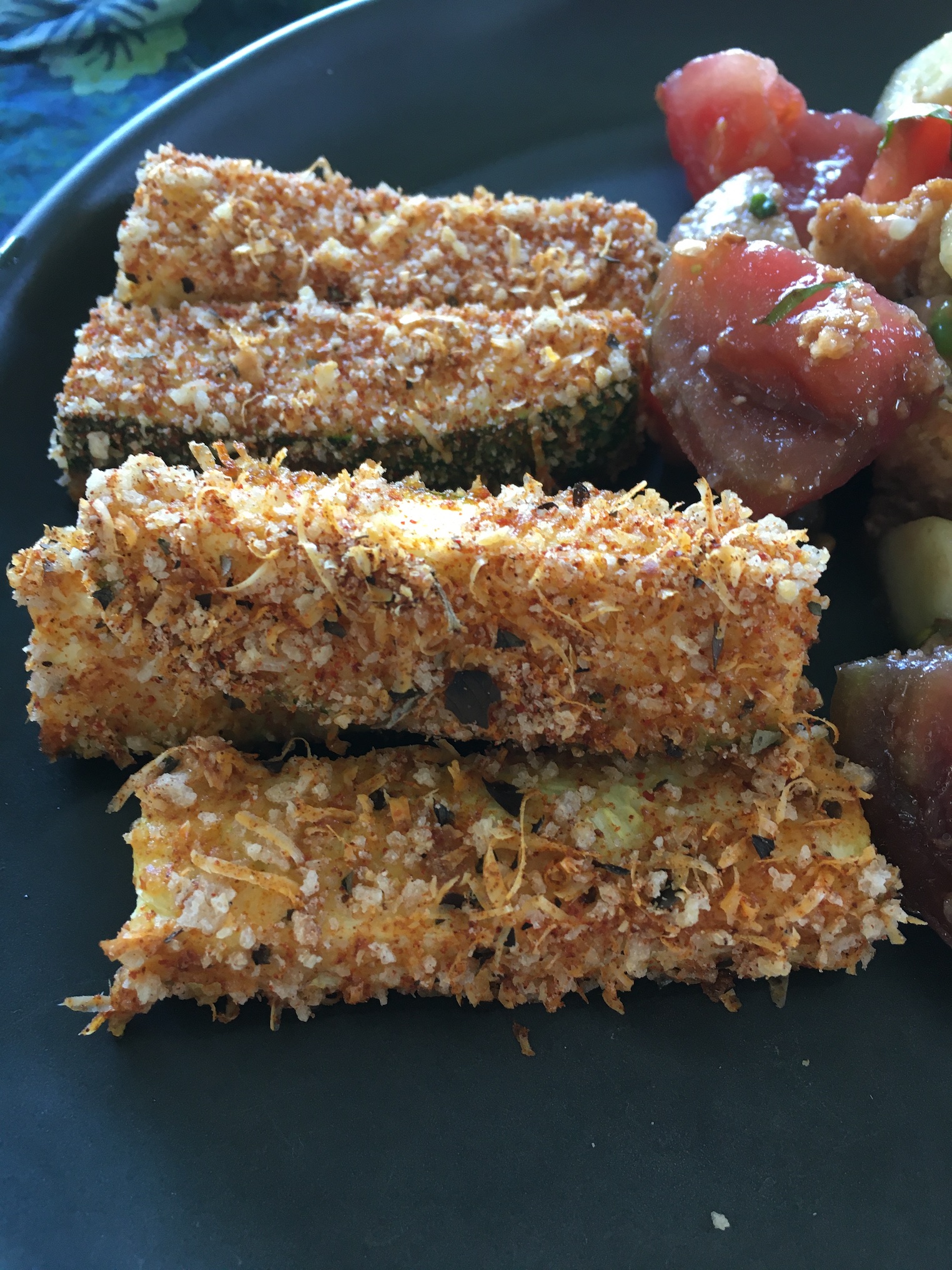
One of my favourite ways to eat zucchini is as breaded, oven fried sticks. These tasty ‘fries’ take a little work, but are well worth the effort. I fill a large jelly roll pan with them, and they vanish, even when it’s just my husband and me for dinner.

I don’t have a set recipe, but here’s an approximation of what I do:

2 small to medium sized zucchini
1 egg
1 cup bread crumbs
3/4 tsp salt
1/2 cup grated Parmesan cheese
2 tsp paprika
1/4 tsp chipotle
1/2 tsp smoked paprika
1 tsp dry oregano
small handful of fresh parsley or basil, finely chopped

Cut the zucchini into thick sticks, about the length and thickness of a finger. Whisk the egg in a small bowl. Combine all other ingredients in a separate bowl. Generously oil a large baking sheet.

Dredge each zucchini stick in the egg, then the breadcrumb mixture and set on the pan.

Bake for about 20 minutes at 200℃, until browned and cooked through.

Serve hot, with your favourite dip, if desired. We love chipotle mayonnaise with them, but they really need no further embellishment—they’re delicious as is.

Cake Season, 2025

Those of you who have followed my blog for years will know that the first three months of the year are birthday months in my family. For years, I called it crazy cake season, because I would obsess over birthday cakes all month, and spend literally weeks designing and making crazy birthday cakes.

Like the octopus:

The geode:

The peripatus:

An alpine botanical scene:

And many others.

But now that the kids are adults, the crazy cake season is far less crazy. It still involves cake, of course, but the cakes are more subdued and geared toward adult tastes.

This year, my daughter said ‘surprise me’ when I asked about her cake preferences.

So, faced with a kitchen full of beautiful ripe peaches from our trees, I made her a three-tiered peach upside down cake using my favourite upside down cake recipe, from King Arthur Flour’s Whole Grain Baking book. 

The cake recipe is meant for nectarines, but I’ve also made variations of it with pears, lemons, peaches, and plums, and it’s fabulous.

I recommend reducing the sugar in the batter, because it can be overly sweet, with the gooey fruity sugar that soaks in from the topping. I also adjust the spicing to suit the fruit and my own tastes. And I always use more fruit than the recipe suggests. 🙂

Here’s the original recipe:

Topping:
3 Tbs butter (43 g), melted
1/2 cup brown sugar
1/4 tsp nutmeg
1/4 tsp cinnamon
2 large nectarines
2 tsp lemon juice

Batter:
1 3/4 cups whole wheat flour
1 3/4 tsp baking powder
1/4 tsp salt
4 Tbs (57 g) butter, softened
3/4 cup brown sugar (I use 1/2 cup)
2 large eggs
1 tsp vanilla or almond extract
1/2 cup milk

To make the topping: Place the melted butter in an ungreased 8-in (20 cm) square baking pan, tilting to coat the bottom evenly. Mix together the brown sugar and spices, and sprinkle evenly over the butter. Slice the fruit (either peeled or unpeeled is fine) 1/4-inch (half a centimetre) thick and arrange the slices in the pan on top of the sugar and butter. Sprinkle with lemon juice. Set aside.

To make the batter: Whisk together the flour, baking powder and salt in a small bowl. Cream together the butter and sugar in a large bowl until light in colour and fluffy. Beat in the eggs, one at a time, and the vanilla. Stir in half the flour mixture, then the milk. Add the remaining flour mixture, stirring until the batter is evenly moistened. Gently pour the batter over the fruit in the pan.

Bake at 375℉ (190℃) for 45 minutes or until the cake begins to pull away from the sides of the pan and a cake tester inserted into the centre comes out clean. Allow to cool 5 minutes in the pan. Then invert the pan onto a serving platter and let sit for 1 minute before removing the pan. Serve warm, with whipped cream or ice cream, if desired.

We enjoyed our peach upside down cake with homemade peach ice cream, made by my husband.

In Praise of the Sauerkraut Crock

There are certain pieces of kitchen equipment that don’t get used often—the milk frother, the crinkle cut knife, the herb scissors … Most of these items are really unnecessary, and some don’t work very well, so they’re only pulled out on rare occasions when you feel like faffing around with something.

Other equipment is absolutely essential, but serves a specific purpose.

The sauerkraut crock is one of those.

This heavy, straight-sided 3-gallon stoneware crock is the perfect vessel for fermenting cabbage. It holds a large amount of cabbage, and is easy to pack and empty. With straight sides, weighting the cabbage while it ferments is easy to do, and we’ve made a custom ‘chaser’ for this very purpose.

For six weeks of the year, the sauerkraut crock is full of bubbling cabbage.

For the remaining forty-six weeks, it sits in the corner of the living room—a dubious decoration in an otherwise unused corner. It’s pretty much useless for anything else in the kitchen—it’s heavy, bulky, and an inconvenient shape. The custom chaser, too, is of limited use—it gets tucked into the unreachable cabinets above the refrigerator. 

By the time I pull the crock out again, it’s full of dust and dead insects.

You might think it’s not worth keeping around. And for many items I use maybe once a year, I’d agree.

The milk frother, crinkle cut knife and herb scissors … when they break, I won’t replace them. The sauerkraut crock, I will.

Because I can’t imagine not making sauerkraut, and the crock is the only tool that will do for the job.

Sorrel Salad

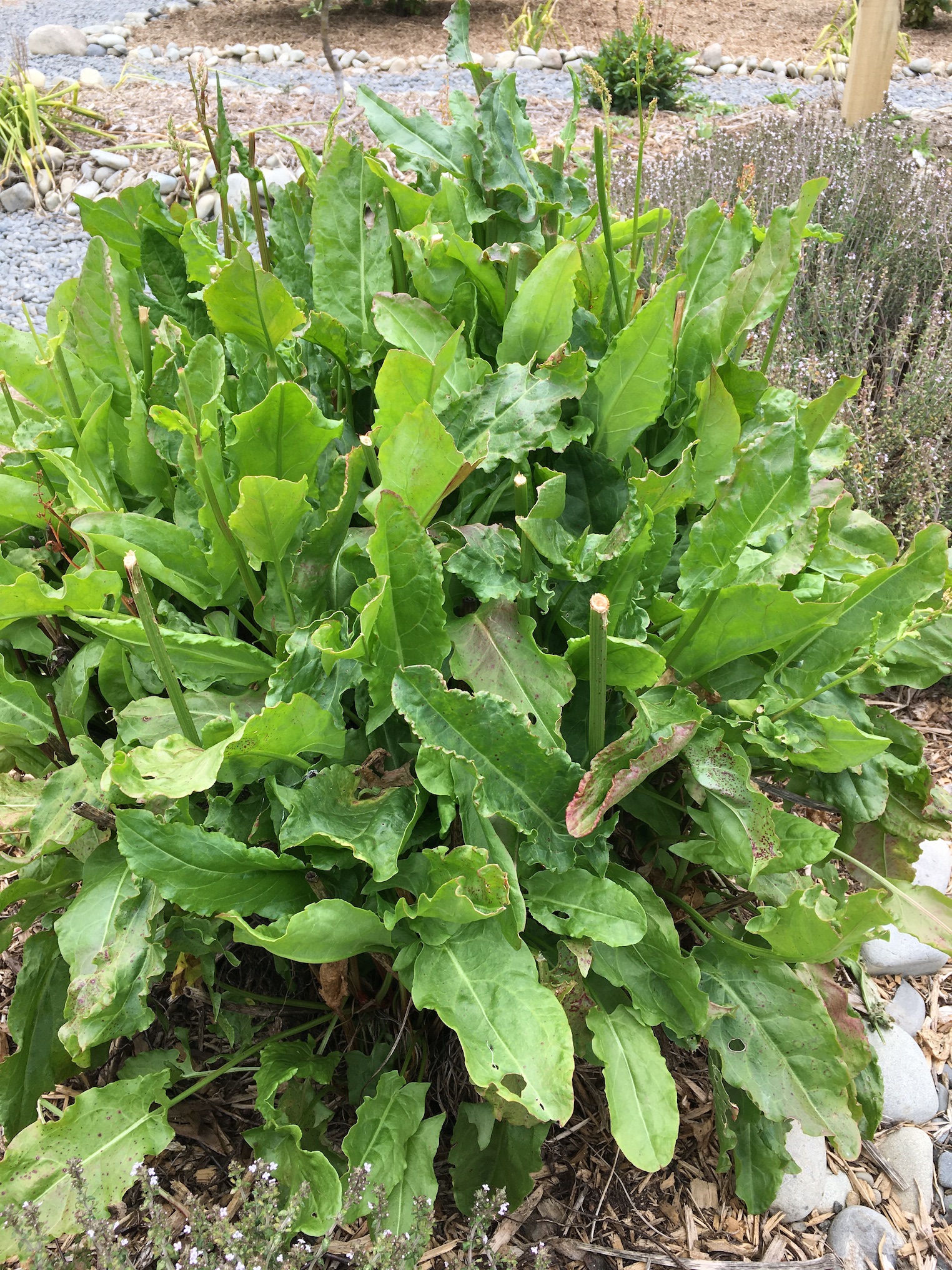
I love sorrel, with its succulent texture and bright sour flavour, but I don’t often think to use it. I occasionally use it to fill out early spring salads, when the lettuces aren’t quite big enough to make a full salad, and that’s generally about it. 

But last night I wanted a salad to go with quiche. The spring lettuces are long since bolted, and the fall lettuces are still baby seedlings, so I turned to sorrel, this time to make the bulk of the salad.

I got inspiration from a few different sorrel salad recipes, but then simply used what I had on hand. The result was a spectacular salad—one I will definitely make again.

Here’s my ‘recipe’, for what it’s worth:

1 handful sorrel leaves, chopped into thin strips (maybe 2 cups, chopped)
1/4 cup walnut pieces, toasted in a 190C oven until aromatic and beginning to darken
6 small olives, chopped (I used my own olives, and they are quite small. If you’re using big commercial ones, you probably don’t need more than 2 or 3)
6 cherry tomatoes, cut in quarters (I would have used a lot more tomatoes, but this was all I had)
1 Tbs olive oil
1 Tbs balsamic vinegar
1 small clove of garlic, crushed
dash of salt

Whisk together the oil, vinegar, crushed garlic and salt in a small bowl.

Place all the other ingredients in a bowl, and toss with the dressing. If you want a little less knock-your-socks-off fresh garlic flavour, strain the garlic out of the dressing first.

Holiday Traditions

At this time of year, I love chatting with others about their holiday traditions. Every family’s traditions are unique—a combination of family history, ancestry, and geography all mashed together with individual preferences.

Trifle has mostly replaced cookies as my Christmas baking of choice.

And they evolve over time. The Christmas traditions I grew up with are not the ones I practise today. They took a dramatic shift twenty years ago when we moved to New Zealand from Minnesota—northern hemisphere traditions make no seasonal sense here, where Christmas and the summer school holidays coincide.

So my husband and I adapted. Like most Kiwis, our holidays involve travel—we have a tradition of a family backpacking trip the week before Christmas. I always carry a little stuffed reindeer, strapped to the top of my pack, as our holiday hike mascot. We pack Christmas cookies, and usually include one ‘fancy’ camp meal (especially if the tramp extends over Christmas Day).

Our Christmas tree isn’t a pine tree—a cut tree would last about three minutes in the summer heat and wind. Instead, we make our ‘tree’ each year out of whatever materials we have on hand. Making, then decorating the tree is usually a whole-family event.

The LEGO tree of 2019 was one of my favourites, with a motor powering moving parts.

Our big Christmas meal (if we’re not on the trail) is on Christmas Eve—calzones full of vegetables from the garden. We make extras, and enjoy the leftovers for lunch on Christmas Day.

The big day is meant to be a day of relaxation for everyone, so Christmas breakfast sticky buns are made the night before, and rise in the fridge overnight, to be popped into the oven in the morning. After a lunch of leftover calzones, dinner is a big salad accompanied by cheese and bread. Simple as. No slaving in the kitchen on a beautiful summer day.

Boxing Day is beach day for us—along with most of the population of New Zealand—a day to relax with the family and celebrate summertime.

It’s a long way from the hot cocoa, turkey dinners, and carolling of Christmases in my youth, but our traditions do what all good holiday traditions do—they provide opportunities to spend time with family while enjoying seasonal delights.

So happy holidays to you all, and may you enjoy your own traditions, whatever they are! Add a comment with your own traditions!

The (not quite) Perfect Icing, Part 2

I took another step on my quest for the perfect carrot cake icing on Sunday. This variation on cream cheese icing is made into a fluffy confection with the addition of quite a lot of cream, slowly beaten into the already fluffy cream cheese. 

I had my doubts. I’m not overly fond of a straight whipped cream topping. Would the cream cheese flavour come through enough? Would there be enough tart zing to it to offset the sweet?

The answer was no. 

Don’t get me wrong, this icing is GOOD! There’s enough cream cheesy goodness to give it body and depth of flavour. And the addition of cream means it gets away with having half as much sugar as other cream cheese frostings. The texture is divine—smooth and creamy, with a lightness you don’t often get in a cream cheese frosting. It’s delightful on the lemon and blackberry cupcakes I used it on. 

But is it the perfect carrot cake icing? Not quite.

So, the first icing was great on flavour, lousy on texture. This one is amazing for texture, not right for flavour. I can work with that. Trial number three will be a fusion of the two, hoping for that perfect balance.

It’s a tough job, but somebody’s got to do it. 😉

Meanwhile, I do recommend frosting #2. I think it would be spectacular on chocolate cake, and absolutely stunning rolled up in a bûche de Noël. Here’s the recipe if you want to give it a go:

170 g cream cheese
3/4 cup icing sugar (confectioner’s sugar), sifted
1 1/2 tsp vanilla
1 cup heavy cream

Beat the cream cheese until fluffy. Add the sugar and vanilla and beat until smooth. With the mixer on low, slowly pour in the cream. Then turn the mixer on high and beat until stiff peaks form.

Because of the quantity of cream in this frosting, I recommend storing cakes with this frosting in the fridge.