Fruity Experiments

The freezer is packed with early summer fruits—raspberries, gooseberries, red currants, and black currants. Seriously, if we don’t make a good effort to eat it, we’ll still have fruit left when summer rolls around again.

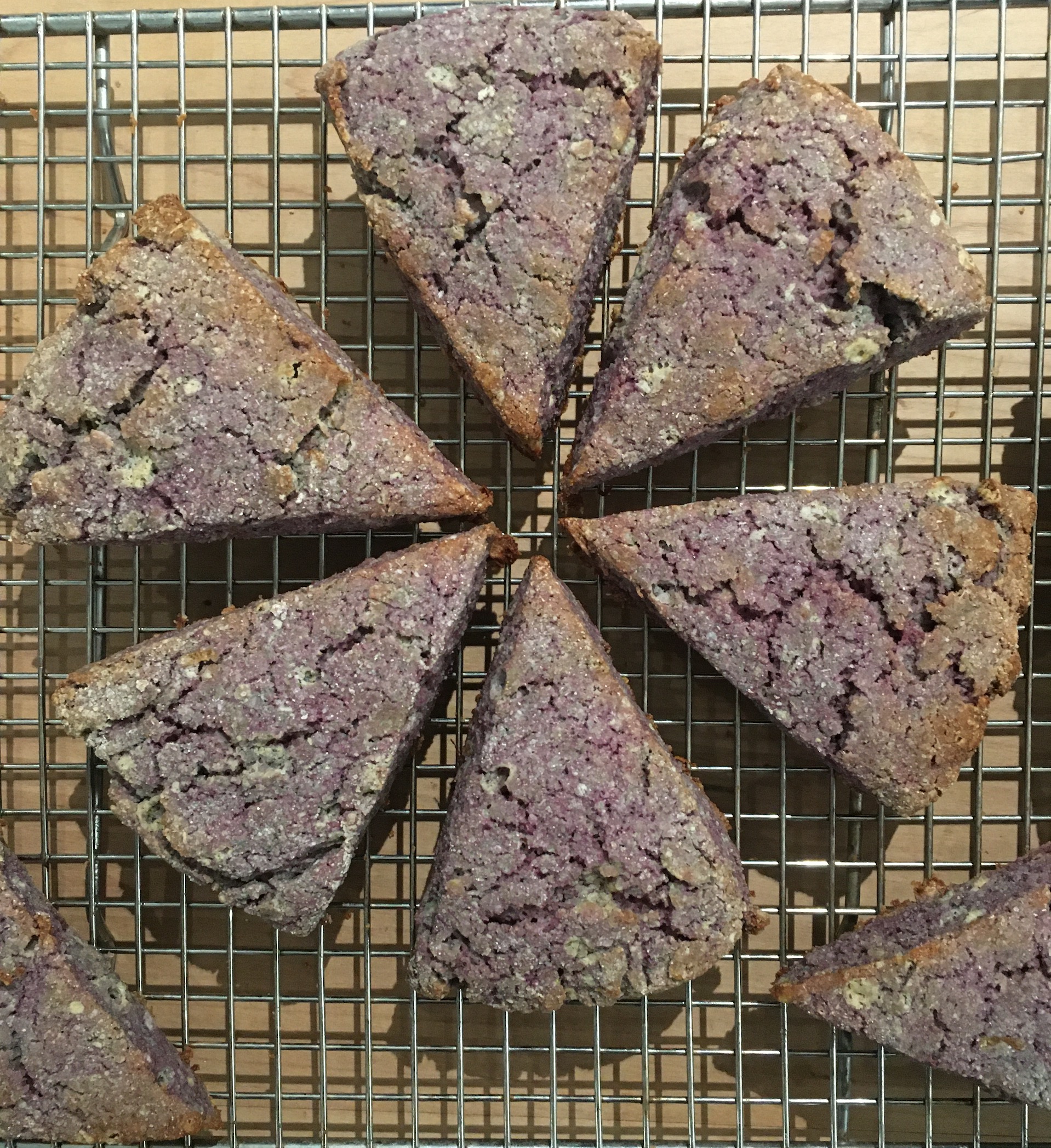
Black currant scones before baking–colour unusual, but okay…

So I’ve been experimenting with new and interesting ways to incorporate fruit into baked goods.

Two weeks ago I made a cookie bar that is supposed to be filled with chocolate fudge. I filled it with black currant puree instead, making a wonderful tart-sweet flavour bomb.

There was thawed black currant puree left over from the bars, so for Sunday breakfast I took my favourite lemon barley scone recipe (which I’ll have to blog about someday …) and substituted black currant puree for the liquid ingredients. The results were … mixed.

The flavour was good, but of course I love black currant, so I expected that. The colour, on the other hand, was more of a conversation piece than a bonus—dingy purple. The scones didn’t rise as well as they usually do either, and the texture was heavier than I would have liked.

So I’d say the scone experiment was inconclusive and needs more testing.

Black currant scones after baking–colour a bit disturbing…

I also made raspberry crisp and lemon pound cake studded with red currants over the past two weeks, and these were resounding successes. They, too, require replication.

And there’s plenty more fruit for additional studies! I don’t think it will be too much of a hardship to work our way through the frozen fruit.

Lazy Lemon Cake

Sometimes you want cake, but don’t want to work for it.

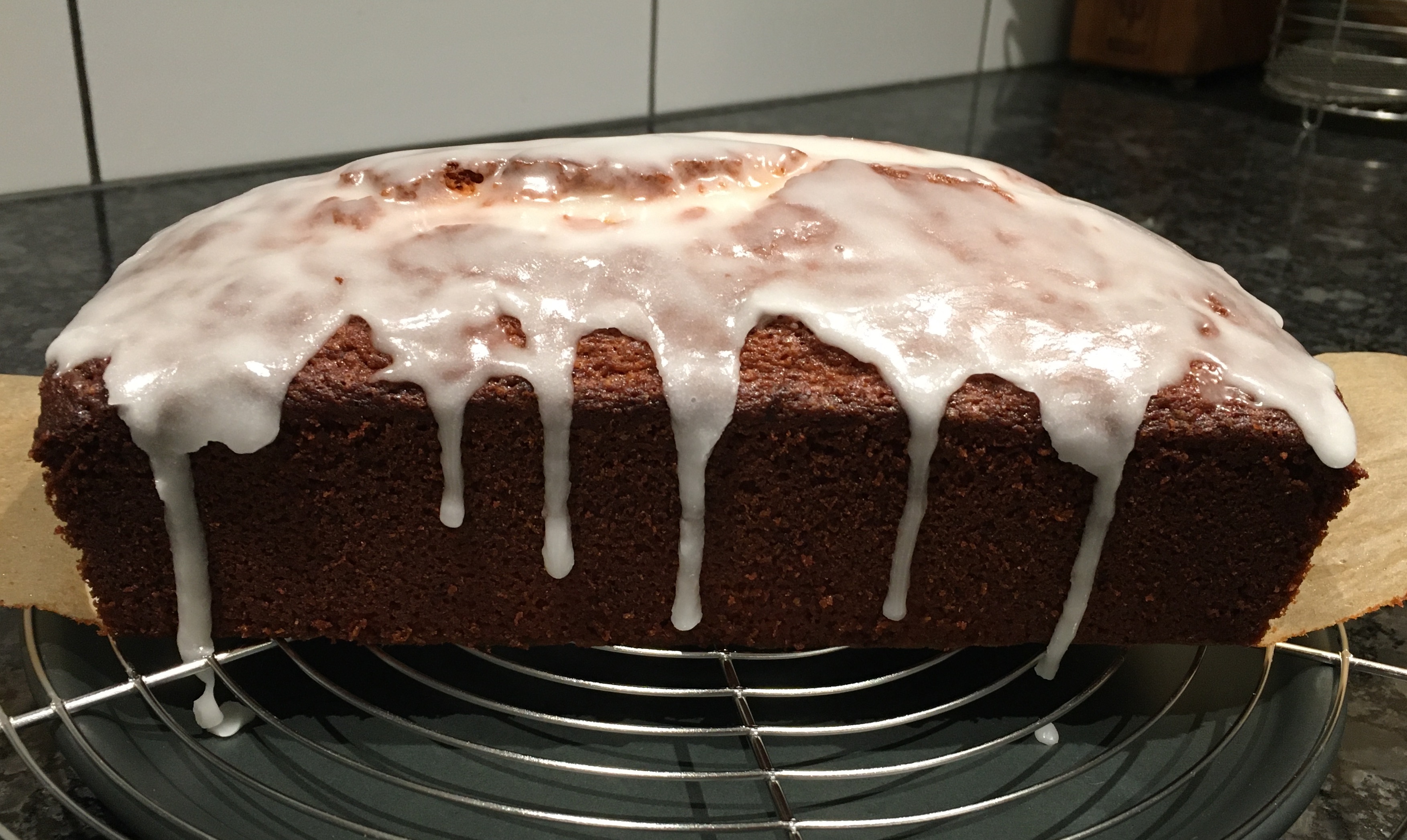
A head cold this past week has left me craving cake, but without the energy to do much baking. Consoling myself with cookbooks from the library, I came across a recipe for Greek Lemon-Yoghurt Loaf Cake that was so easy, I couldn’t resist. Nothing else really caught my eye in the Great British Bake Off cookbook this came from, but I think this one is a keeper.

Here’s the recipe, in case you’re feeling lazy …

150 g plain flour
2 tsp baking powder
pinch of salt
50 g ground almonds
200 g caster sugar
finely grated zest of 1 lemon
3 medium eggs (I used 2 large)
125 ml Greek-style yoghurt
125 ml mild light olive oil (I used a mix of canola and extra-virgin olive oil, because I didn’t have light olive oil)

for the glaze:
125 g icing sugar, sifted
finely grated zest of 1 lemon
1 – 1 1/2 tbsp Greek-style yoghurt

Sift the flour, baking powder, salt and almonds into a mixing bowl (tip in any almonds remaining in the sieve). Stir in the sugar and lemon zest.

Combine the eggs, yoghurt and oil in a measuring jug and beat well with a fork. Pour into the flour mixture and stir until well combined.

Pour into a greased loaf pan lined with a strip of baking paper. Bake at 180℃ for 55-65 minutes until golden brown. When the cake is ready, cool in the pan for 5 minutes, then run a knife around the edges of the pan and lift the cake out by the lining paper and allow to cool on a rack.

Make the glaze by sifting the icing sugar into a bowl. Mix in the lemon zest and then add just enough yoghurt to make a smooth, shiny glaze with the consistency of double cream. While the cake is still hot, spoon the glaze over the top.

I have lots of ideas for variations on this cake—using a blackcurrant glaze, replacing half the flour with barley flour, stirring in frozen blackcurrants … it’s a recipe that invites you to make it again and again. 

Cheese and Quince Tart

Our quince tree gave its first harvest ever this year, which is exciting. I picked them today, and my husband went looking for some new (to us) recipes that use quince.

He came across Tarta de Queso y Membrillo con Almíbar de Cardamomo—Cheese and Quince Tart with Cardamom Syrup. How could I resist? 

It’s been a while since I followed a recipe in Spanish, so there was an added level of adventure for me making this recipe. I don’t think I ever bought or used azúcar flor (icing sugar) when we lived in Panama, so I had to look that one up.

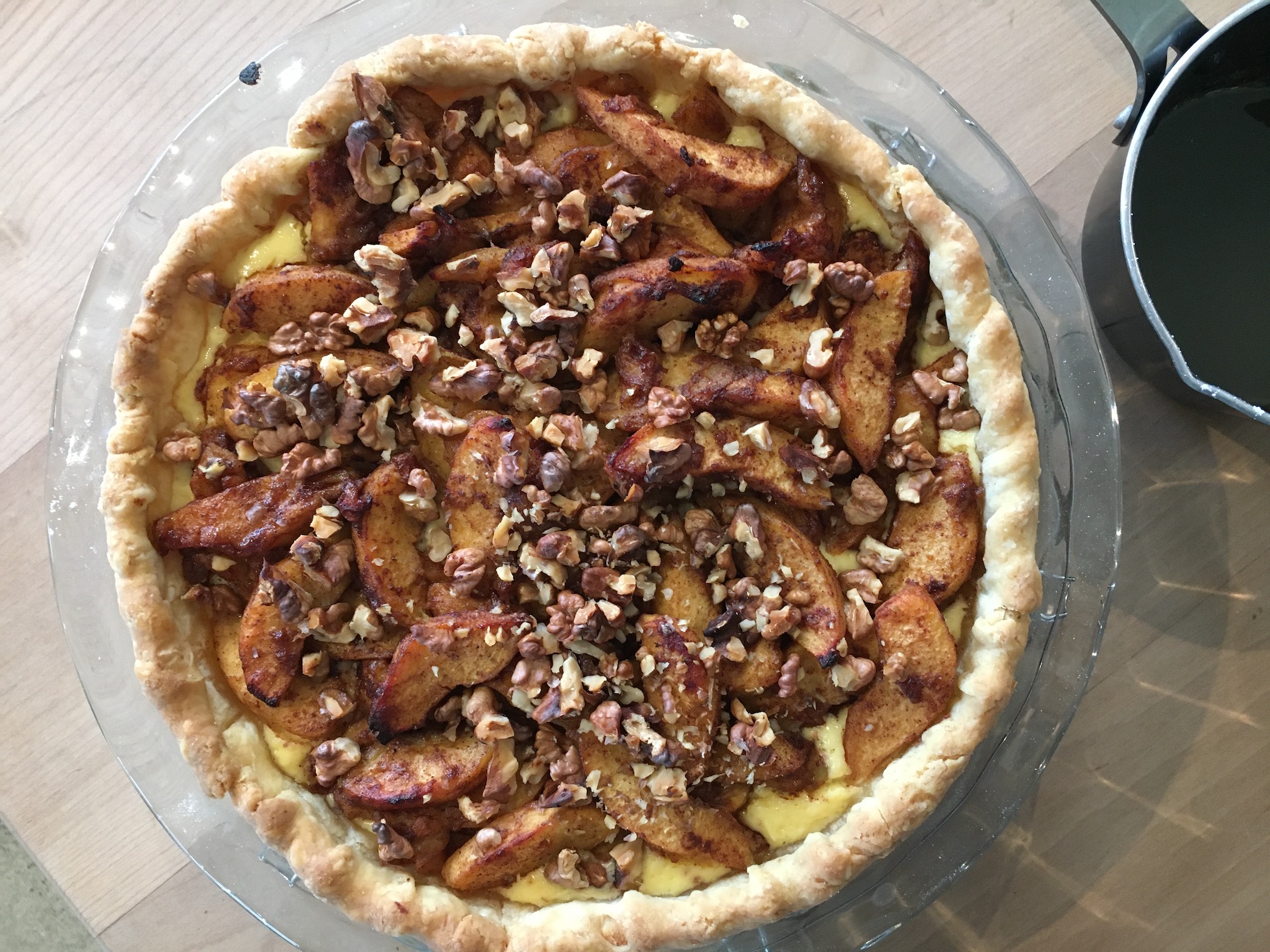
Even in your native language, this is not a tart you whip out quickly—nothing using quince is, and this has lots of different things to prepare—but it is delicious! It’s essentially cheesecake with caramelised quince in a pie crust. What’s not to like?

I modified the recipe slightly—here’s my version, in English.

Cheese layer:
1 package cream cheese
1/2 cup unsweetened yogurt
2 Tbs honey
1 egg
1 Tbs fresh lemon juice

Quince layer:
3 large or 6 small quince
1/4 cup brown sugar
25 g butter
1 Tbs cinnamon

Enough pie dough for 1 crust (see my pie dough recipe here)

1/2 cup chopped walnuts

Cardamom syrup:
3/4 cup icing sugar
3 Tbs fresh lemon juice
3 cardamom pods

Make your pie crust and refrigerate until needed.

Mix the ingredients for the cheese layer with a handheld mixer until well combined. Set aside.

Peel, core, and thinly slice the quince (you should have 7-8 cups of fruit). Place the quince, butter and brown sugar in a large skillet and cook on low heat for about 10 minutes, until the quince has softened. Stir in the cinnamon.

Roll out the pie dough and line a pie or tart pan with it. Pour the cheese mixture evenly over the bottom of the crust. Layer the caramelised quince on top, and sprinkle with chopped walnuts.

Bake at 190℃ for 40-45 minutes.

While the pie is baking, make the sugar syrup. Place the icing sugar, lemon juice and cardamom pods in a small saucepan and boil gently for 8 minutes. Remove from the heat and let cool. Drizzle over the pie when serving.

The recipe I used said to serve the tart warm, which is how we ate it this evening. But I’m looking forward to a second piece tomorrow, because I think it’ll be even better cold. 

Next time I make this (because there will no doubt be a next time), I’ll crush the cardamom pods so that the syrup is more strongly flavoured. I also think it would be even more spectacular with a cup of ugni berries (Chilean guava) tossed into the quince mixture.

If you don’t have quince, this tart would be lovely made with apple or pear, too.

Crazy Cake #2, 2023

My husband’s birthday cake request this year was simple—make something I’d never made before.

Little did I know how difficult that would be—let’s face it, I’ve made a lot of cakes. I pored over my cookbooks and googled ‘unusual cakes’. So many of the cakes I came across were simply variations on a theme. An ordinary butter cake, but with unusual ingredients—rose water and pistachios, beetroot and sour cream, tomato soup. 

I considered some of those cakes—they would certainly be different from my usual cakes. But to really comply with his request, I felt I had to do something outside my comfort zone.

So I went for a chocolate mousse cake—there is no flour in this cake, nor are there ground nuts to replace the flour. 

No.

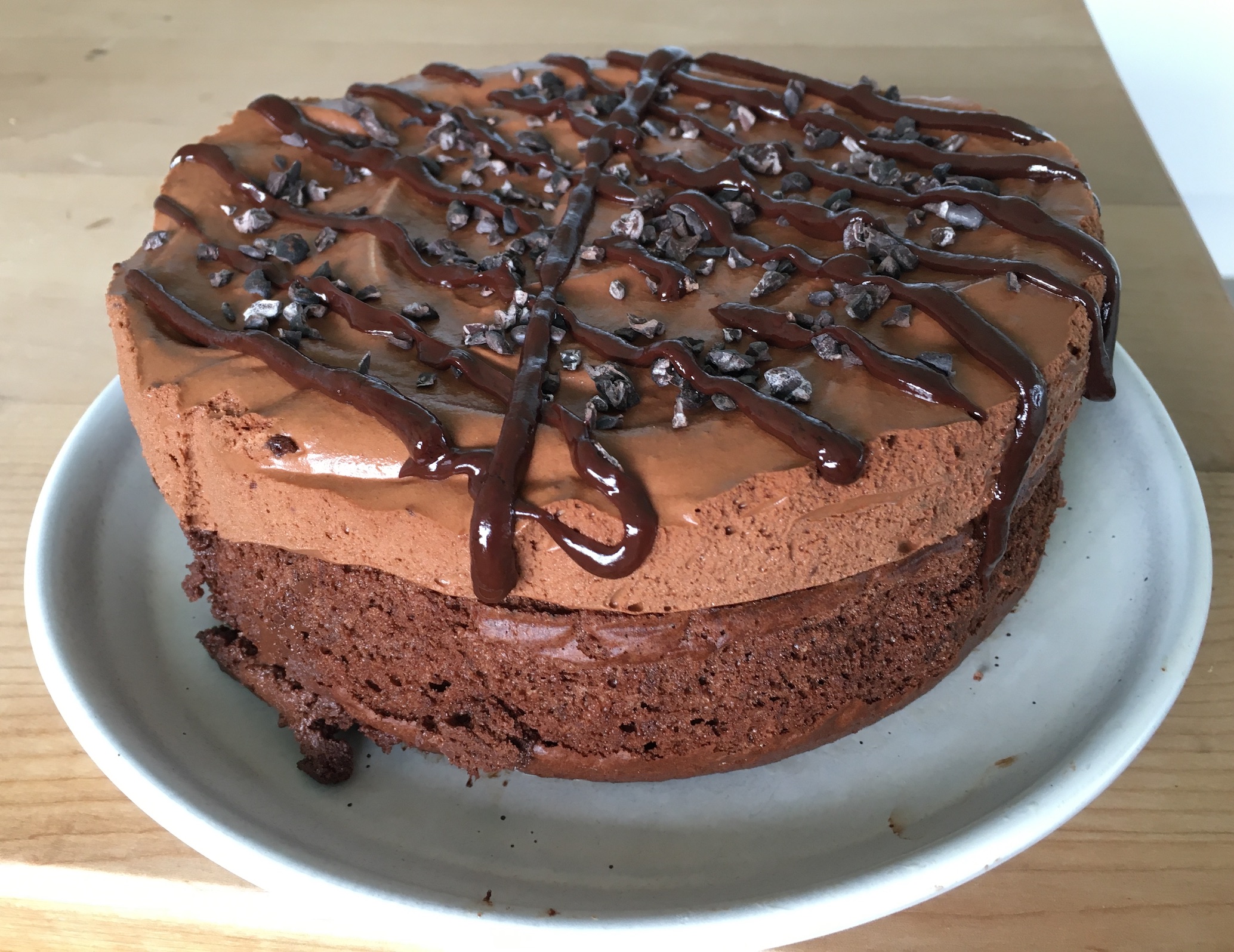
This cake is a chocolate souffle with chocolate mousse on top, garnished with cocoa nibs and ganache. Eggs, chocolate, and sugar constitute the bulk of the cake (and honestly, there’s not much sugar—it’s mostly eggs and chocolate).

It’s not the prettiest cake I’ve made, by a long shot, and I would definitely do it differently next time to avoid some of the unnecessary faffing around in the recipe. 

It is rich. If you like chocolate—I mean really like chocolate—it’s definitely a cake for you. I’m not certain it’s my kind of cake, though. It’s more fluffy candy bar than cake, and while I like chocolate cake, this is a bit much for me. I like a bit of flour, some nuts—something to cut the chocolate a bit, something to give a cake a little more substance.

That said, I am happily doing my part to get rid of this cake, and I’m glad I gave it a go. Next year, though, if he makes the same request, I’m going for the zillion-layer apple spice cake in which each layer is about 5 mm thick and the filling is essentially apple butter. 

Crazy Cake Season 2023

Crazy Cake seasons have become far less crazy, now that the kids are out of the house. Last year, my daughter didn’t ask for anything specific, but this year she slyly said, “I’ll be happy with any cake … but a peripatus would be cool.”

Behold, the velvet worm cake!

Naturally, I made a red velvet cake for the body. The legs are walnut shortbread cookies, usually shaped into crescents, but in this case shaped into peripatus legs. The antennae are cinnamon sticks. I covered the whole thing with light blue cream cheese frosting, and then piped dots of coloured white chocolate on top. The moss is coloured coconut.

It’s not the most biologically accurate peripatus–I couldn’t fit all 30 legs on (I couldn’t even fit in all the legs into the inner loops of its body)–but the extra legs I made gave me something to snack on as I decorated the cake.

Zucchini and Tomato Tart

We’re in the bountiful days of summer right now. And while I’d like to be sitting in a chaise lounge enjoying that bounty all day, someone’s got to pick it and process it. At the moment, the processing mostly involves making pickles and chutneys, but there’s a lot more to come. Then there’s the necessary watering, weeding, tying up of tomatoes, planting of winter crops (because as John Snow says, winter’s coming)…

zucchini tomato tart

But at the end of each day, we do get to enjoy the fruits of the season. Last night I made one of my favourite mid-summer meals—zucchini and tomato tart.

The beauty of this tart belies its simplicity—just tomato and zucchini, embellished with a little parmesan cheese, garlic and basil. 

Back when I had dairy goats, I’d spread a layer of chevre on the bottom, too, which was divine. It also had the bonus of preventing the crust from getting too soggy. These days, without an unlimited supply of goat cheese, I put up with a soggy crust—the tart is still amazing.

This tart relies on having the best tomato and zucchini possible—it’s not a dish to make with out-of-season vegetables—so if you’re in the Northern Hemisphere, hang in there and enjoy this gem in July and August instead.

Download the recipe here.

Black Currant Icing

bowl of black currant icing

I made chocolate cupcakes yesterday and wanted to make use of some of the last of the fresh back currants in them. Instead of tossing a handful of black currants into the batter (which would have been lovely), I used the fruit to make a black currant icing—tart, sweet, and shockingly pink! 

You could do this with frozen currants, too, and it’s not difficult. The result is worth the bit of extra work.

100 g softened butter
3/4 cup fresh black currants
1 cup icing sugar

Place the black currants in a sauce pan and cook until soft—3-5 minutes. Press them through a sieve to remove seeds and skins. Set the puree aside to cool to room temperature.

Beat the butter until fluffy. Add 3 tablespoons of the black currant puree and beat until uniformly mixed. Sift the sugar over the butter mixture and beat until smooth. Adjust by adding more sugar or puree until the icing is spreading consistency.

Salad Trifecta

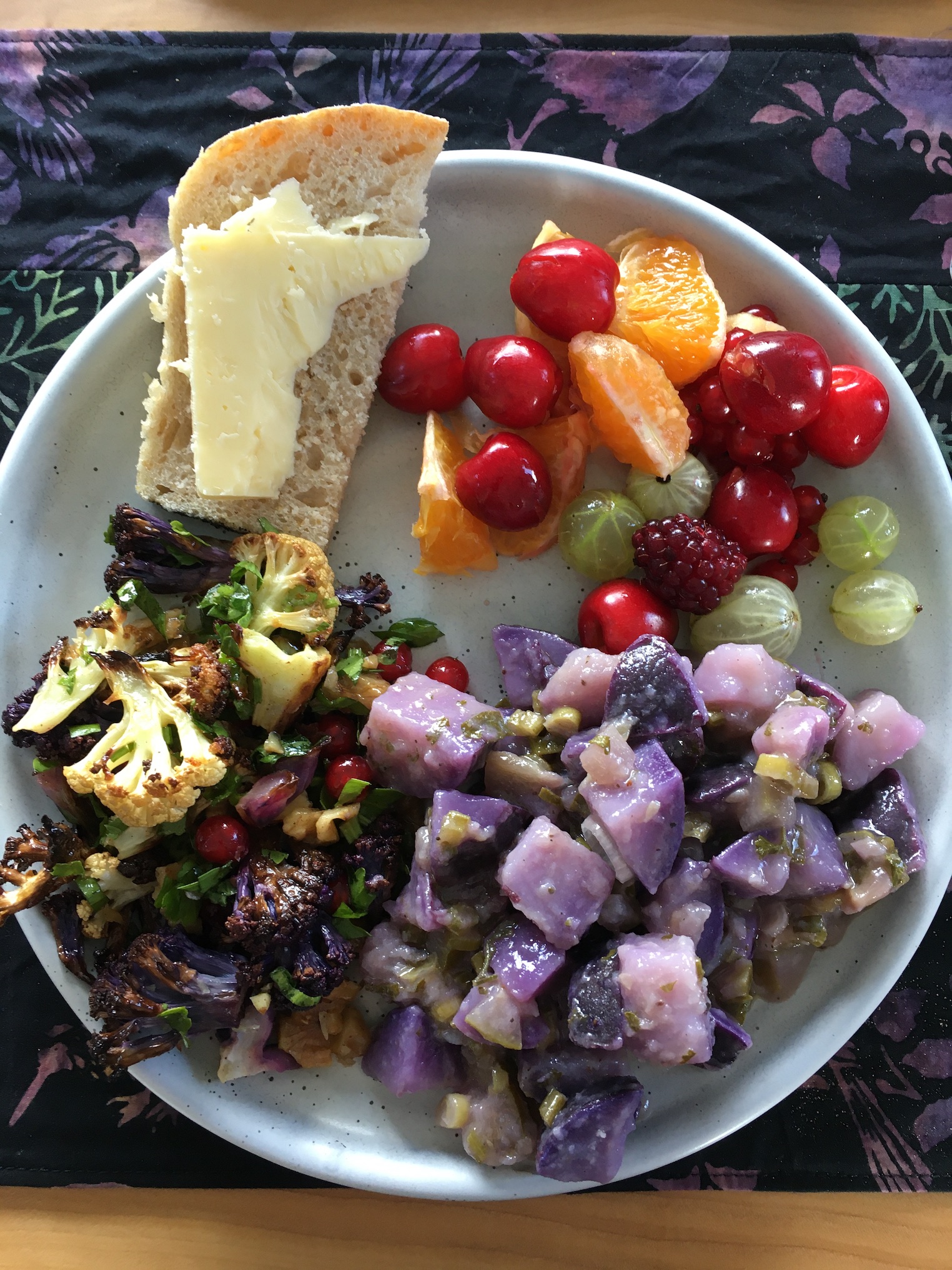
Holiday cooking is always special. And with the holidays falling during the summer here, it’s easy to create stunning meals without a trip to the grocery store.

For Christmas Day, I made homemade linguini, and my husband topped it with a delicious selection of garden vegetables—a fabulous, festive meal.

But Boxing Day’s dinner sort of blew Christmas Day out of the water.

It was a simple meal. Just three salads.

A potato salad made with purple potatoes, sparked up with celery, spring onion, parsley, and homemade pickles.

An Ottolenghi-inspired roasted cauliflower salad made with purple and white cauliflower and toasted walnuts. A dressing of vinegar, oil, maple syrup, cinnamon and allspice added complexity to the flavours, and fresh red currants added crunch and zing.

A fruit salad made with the many fruits gushing from the garden these days.

The overall effect was a riot of colour and flavour. Best of all, nearly everything came from the garden. Holiday meals don’t get much better than that.

Biscuit Stars (a.k.a. Starry Scones)

It’s been a long time since I blogged about biscuit stars (or Starry Scones, as I call them here in NZ, since ‘biscuits’ are cookies here). It’s been a while since I made them, too.

I was feeling whimsical on Sunday morning, though, and whipped one up for breakfast. As usual, it turned out beautifully and took minimal effort. It struck me as the perfect ‘fancy’ breakfast for the coming busy holiday season.

Try making one of these yourself—everyone will ooh and aah over your amazing culinary skills, and you never have to let on that it’s dead easy (I won’t tell …). 

Here’s the recipe. Enjoy!

Accidentally Perfect

I didn’t set out to make a spectacular cake.

lemon cake with blackcurrant puree

I actually set out to whip out something simple and quick—a Covid cake—because I had little energy for baking last week as I recovered from the virus.

So I chose a tried and true recipe. My favourite lemon cake is a recipe I came up with years ago when my daughter asked for a lemon birthday cake. It draws on components of a good lemon scone recipe, an orange cake recipe, and a coconut cake recipe. 

It’s a recipe I’ve honed over the years, and one I could probably make in my sleep.

And this iteration of it was one of the best cakes I’ve ever made.

The butter was at the perfect temperature to whip up light and fluffy. And maybe I gave it a little extra time with the mixer, because I was bored of Covid isolation. And because I wasn’t up for much work, I added a little extra liquid to the batter to make the egg whites easier to fold in.

The recipe always makes a cake with good texture, but this one was a step up from the usual. Whether it was perfectly whipped butter or a wetter batter, something worked in my favour, and the finished cake’s texture was positively sublime—soft and fluffy, but with body like a good butter cake should have.

When it came time for a topping, I took the lazy way out. I topped and filled the cake with black currant puree I happened to have in the fridge. No measuring, and no additions to it—I simply spread it between the layers and poured it over the top. The puree spread out thickly, dripping down the sides and drying to a shiny, soft, fruity layer. Not only did it look great (and appropriately bloody-looking for Halloween), but the tart, unsugared black currant was the perfect foil for the sweet cake underneath.

It was a cake I could have served to anyone.

Unfortunately, because we were in isolation, only my husband and I got to enjoy this perfect cake, but I’ll definitely be trying to replicate it in the future.