Dreaming Big

100_3861 cropDon’t count your chickens before they’re hatched.

And don’t count your apples before they’re in the basket.

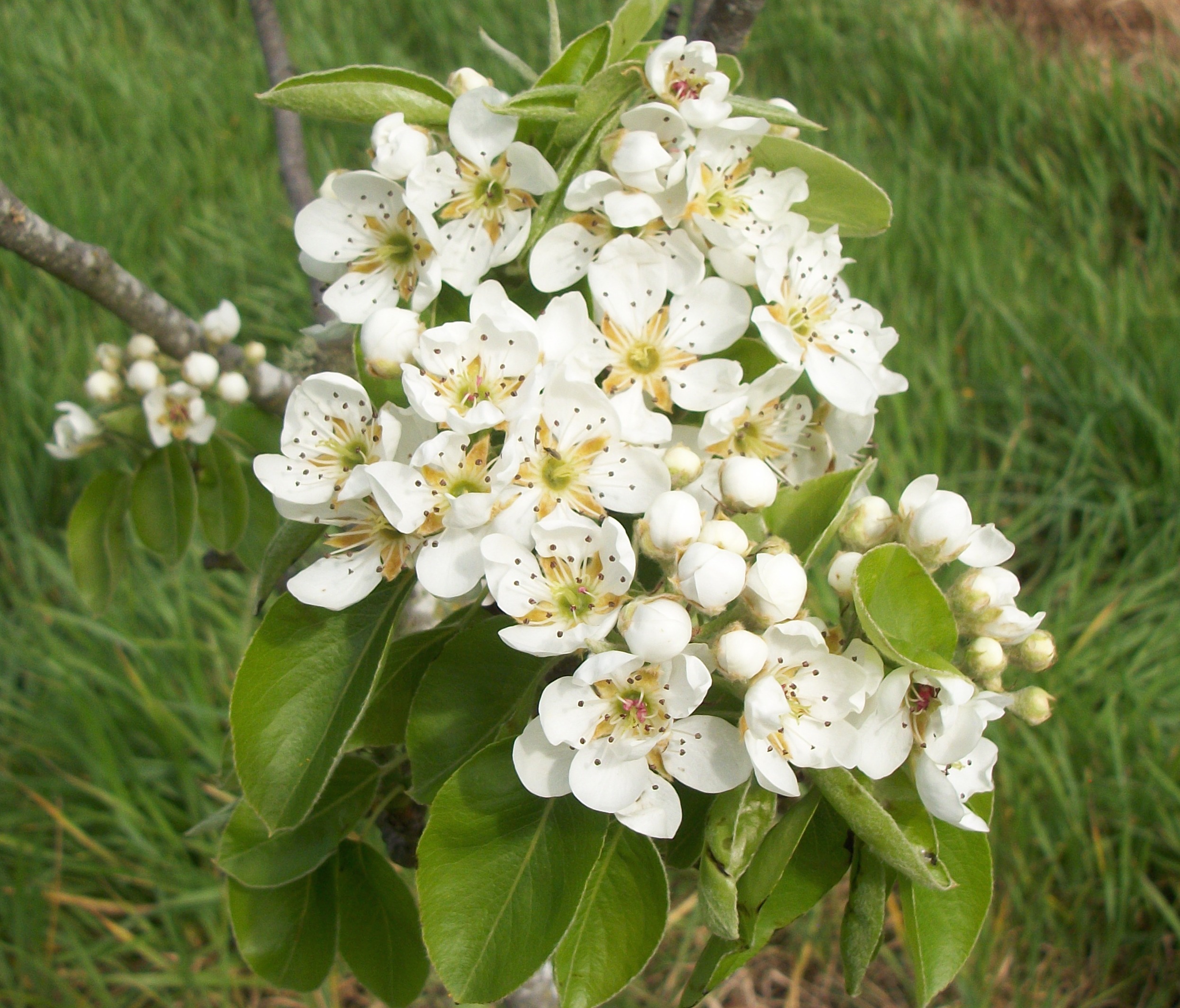
But it’s lovely this time of year to think what you’re going to do with that fruit if ALL the flowers end up producing a fruit. All the fruit trees were flush with flowers this spring—apples, pears, peaches, cherries…

But it’s a long time between October and April. Anything could happen, and it usually does.

Some of those flowers won’t get pollinated and will drop from the tree once they’re done blooming.

A storm will blow some of the pollinated flowers off the tree.

The tree will naturally prune some of its own fruit, because it simply cannot support so many.

Birds will snatch the small fruits as they ripen, and possums will eat the larger fruits.

A hail storm will damage or destroy more fruit.

Before you know it, there will be, not bushels of apples, but maybe a few. Enough for a couple of pies, some apple crisp. Not the larder-filling bounty that spring promised.

That’s okay. I’ll still count my apples by the flowers each spring. I’ll imagine the applesauce and the pies, the crisp bites of tart flesh, and it will be just as if they were actually here.

Trench Warfare

IMG_3951 smWe have precious few trees on our property, maybe a dozen in total, all clinging to the fence lines, out of the way.

Except that they’re not out of the way, really. Though they only cast brief shade on the vegetable garden, their roots encroach well into the garden. I know exactly where a tree has stretched its toes out by the swath of dead and dying vegetables, and the parched earth that accompanies them. Last year, I lost most of my zucchinis and an entire row of strawberries to the trees’ depredations.

I can pull some of the roots out when I’m weeding, but many invade deep in the soil.

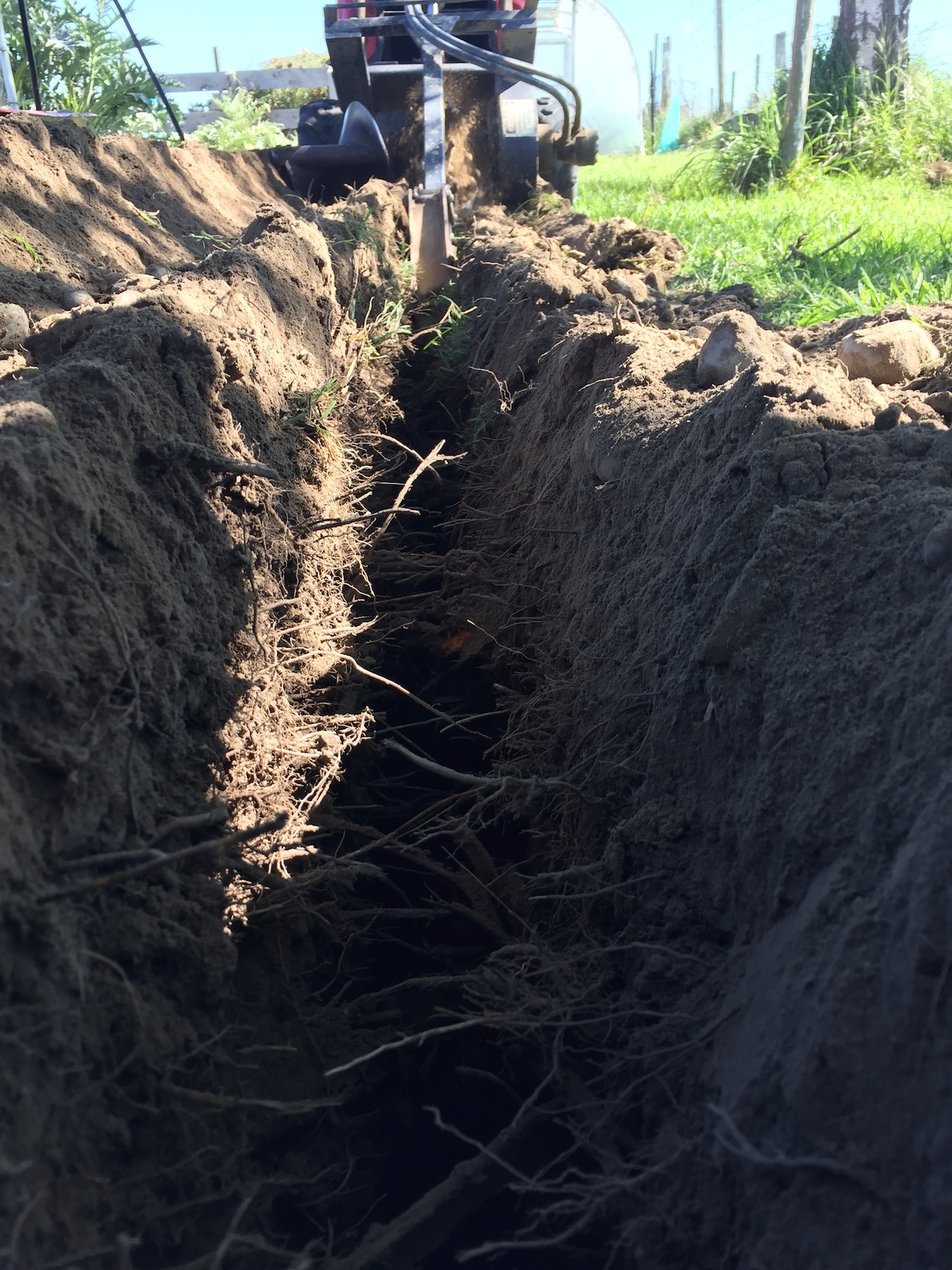
So we resort to trench warfare to keep them out.

Every three or four years, we hire a trencher from the local equipment hire place (well, okay, my husband hires the trencher—I stay away from loud petrol-powered machines as much as possible), and dig a metre-deep trench all around the garden.

It makes an enormous difference to the vegetables—I can almost hear them breathe a sigh of relief when the tree roots are cut. The roots grow back, eventually, but the trench gives us a few years to garden without competition.


Milk the goat

DelilahmilkingI can’t believe I’ve been milking nearly three weeks now and haven’t blogged about it.

After her disastrous kidding, my goat Ixcacao was given an antibiotic to prevent infection of her much-invaded uterus. That meant that I had to throw out her milk until the withholding period was over. So, though I’ve been milking, we haven’t had goat milk until this week.

I milk in a sheltered spot behind our large shed, where a previous owner conveniently built a head-lock for his beef cattle. We added a platform, a feed tray, and a roof to create a sturdy milking stand protected from the worst of the weather.

I milk twice a day for the first half of the milking season. 5.30 am and 4 pm. There are usually a few days of awkwardness after kidding, when doe and kids don’t want to be separated, but once everyone is into the routine, milking runs smoothly.

I enjoy milking, especially the early morning milking, which happens in the dark for the early and late part of the season. There is something soothing and centring about milking.

When it goes well…

“Watching you milk is just scary,” said my husband the other day. “You’re so fast at it.”

Milking is not the stress-free experience for him as it is for me. I forget sometimes what a steep learning curve it was for me the first time I was faced with goats with udders tight as drums who had never been milked. There was a lot of cursing, and more than a few tears. And there was a lot of spilled milk.

But with practice, the goats and I got much better at it. As I got quicker, they had more patience with me. I learned how to tell when they were about to kick, and how to prevent them from stepping in the milk. I learned the particular foibles of each goat—how to get them to stand still, whether their milk squirted from the teat at an angle, how to work with small teats or teats with small holes, how to manage an udder that sagged almost to the ground.

Instead of a test of wills, milking became a partnership between me and each goat. And so it became almost effortless.

Almost.

I still lose a pot of milk to a misplaced foot now and again, and ‘breaking in’ a new goat is never a smooth process.

But usually, if something goes wrong, I can fall back on some advice I read when I was first learning how to milk—relax and just milk the damn goat. It’s good advice, whether you’re milking goats, or taking on any other challenge.

Grasp the Nettle

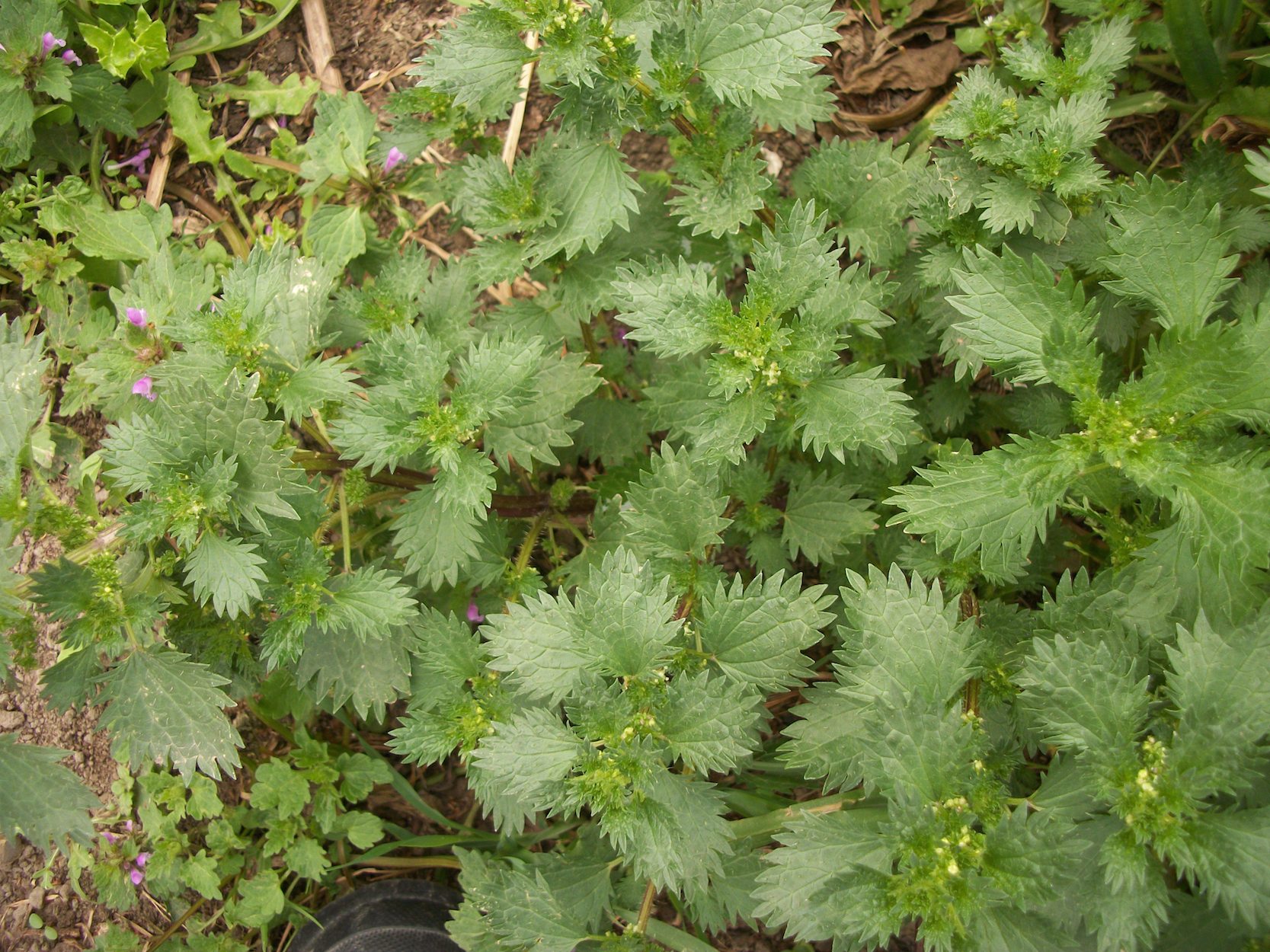
100_3950 smMy garden is blessed and cursed with an abundance of nettles. Blessed because they are the larval food plants for two attractive native butterflies—the red and the yellow admiral. I love watching the butterflies flit around the garden!

Blessed because nettles only thrive in good soil, and mine are the most vibrant and robust nettles anywhere.

Cursed because…well…they’re nettles. Careful as I may be, I can’t avoid being stung on a regular basis.

But like all problems, meeting them head-on is the best tactic. As they say, grasp the nettle. A nettle that brushes gently against your skin as you’re trying to avoid it will almost always sting. But grab a nettle firmly, even with bare hands, and you can usually pull it out without pain.

It really is a good metaphor for life (even if most people have no idea what it means).

And so I dive into the nettles of life like I dive into the ones in the garden—grappling them bare-handed and pulling them out with a quick, confident tug.

At least, that’s the theory, anyway…

To Pasteurize or Not To Pasteurize

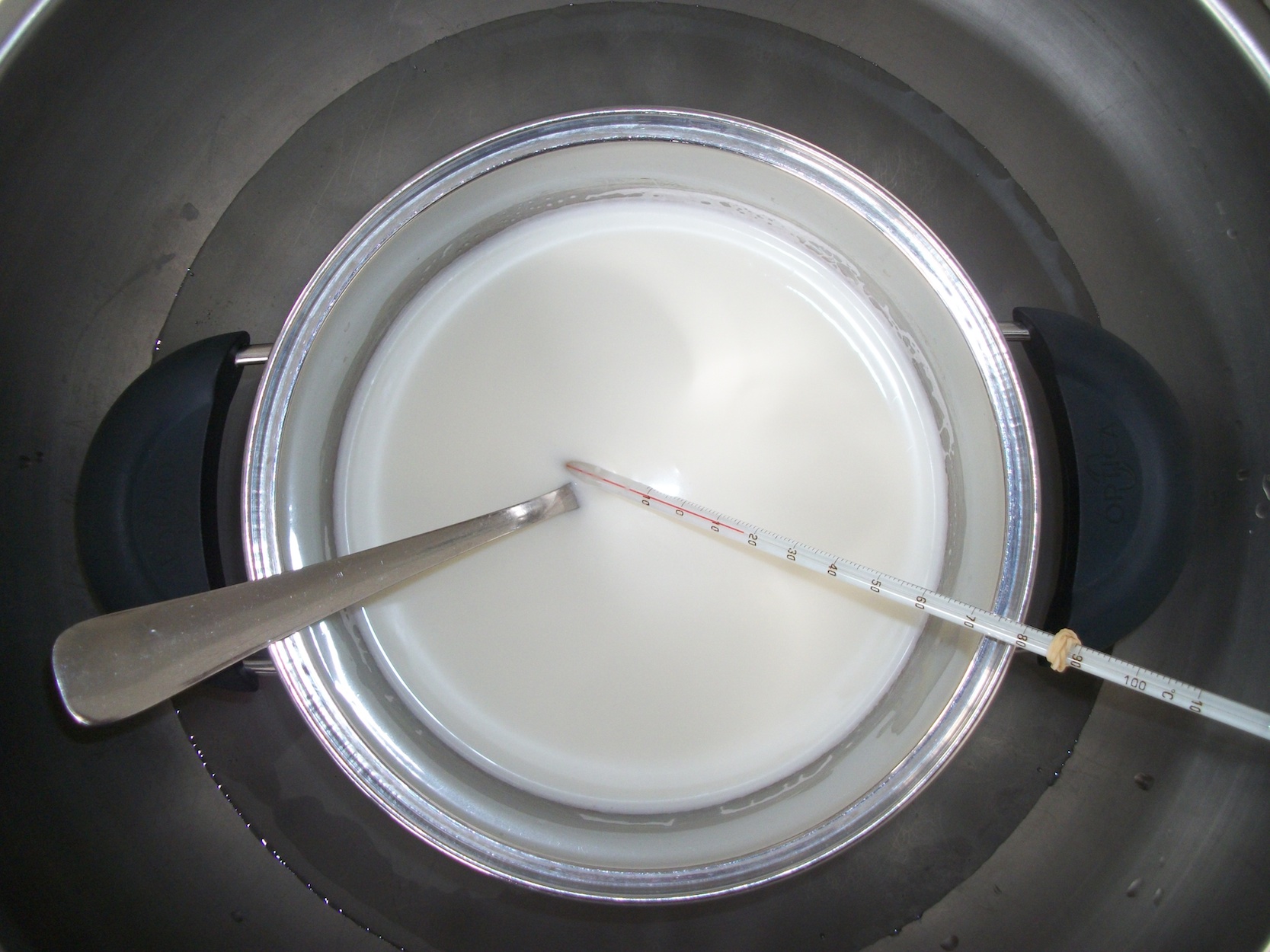
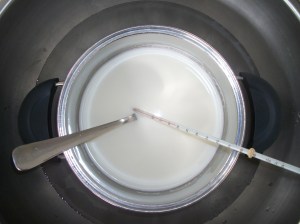
100_3960 smThis is the question, when you have your own milk-producing livestock. Pasteurization is the process of heating the milk to reduce the number of pathogens and increase the milk’s shelf-life. There are many different techniques for doing this, but they all involve raising the milk to a certain temperature and holding it there for a specific length of time (the higher the temperature, the shorter the time).

I have a number of friends and acquaintances who produce their own milk—some pasteurize, some don’t. There are certainly some strong opinions out there on both sides of the question:

“People have been drinking unpasteurized milk for thousands of years.”

“Yes, but people have been dying of diseases in unpasteurized milk for just as long. Raw milk is the perfect growth medium for all sorts of diseases.”

“It ruins the flavour of the milk.”

“I can’t taste the difference.”

“Cheese from unpasteurized milk is better.”

“I enjoy cheese from pasteurized milk just as much.”

“Unpasteurized milk is more easily digested.”

“I have no problem digesting pasteurized milk.”

“Pasteurization kills all the good bacteria and destroys nutrients in the milk.”

“It also allows milk to be kept for longer, and kills bad bacteria, too.”

The arguments go on and on.

So, what’s the truth?

Truth is that both sides have some valid points, and some points on which they grossly exaggerate or mislead. Yes, you can drink unpasteurized milk your whole life and never get sick. You can also drink pasteurized milk your whole life and never get sick.

I pasteurize.

Why?

Because I know exactly how clean I’m able to keep my milk while I’m milking. I know, from what’s left on my filter afterwards, that a few hairs, a little dirt, some dried skin flakes, the odd bug falls into the milk while I’m milking. Would bacteria from those things make us sick? Probably not. Does the idea of that stuff in my milk make me sick? Yep. Does the idea of drinking something that is the modified sweat of an animal that doesn’t even groom itself make me a little queasy? Yep.

So I pasteurize. For my peace of mind. For my sense of cleanliness.

But I gladly accept some of my non-pasteurizing neighbour’s milk when she has excess, and if for some reason I’m not able to pasteurize, I still use the milk. I don’t fret about it. Life is far too short to worry about whether your milk is pasteurized or not.

Relax and enjoy the cheese!
Mint

100_3952smMint doesn’t like the dry soil of my herb garden…so it’s only a minor weed there.

And as weeds go, mint is a wonderful one—delicious in all sorts of drinks and dishes, both sweet and savoury.

My all-time favourite way to use mint is in Mrs. Cassel’s mint tea. Mrs. Cassel was a friend of my grandmother, and I remember nothing about her except for her tea recipe—orange juice and mint tea, well-sweetened and served over ice—summer in a glass!

In winter, a hot cup of mint tea is a great pick-me-up, especially when you have a cold.

Mint leaves, cut into strips, perk up any salad, and of course are essential to tabbouli and many other Mediterranean dishes.

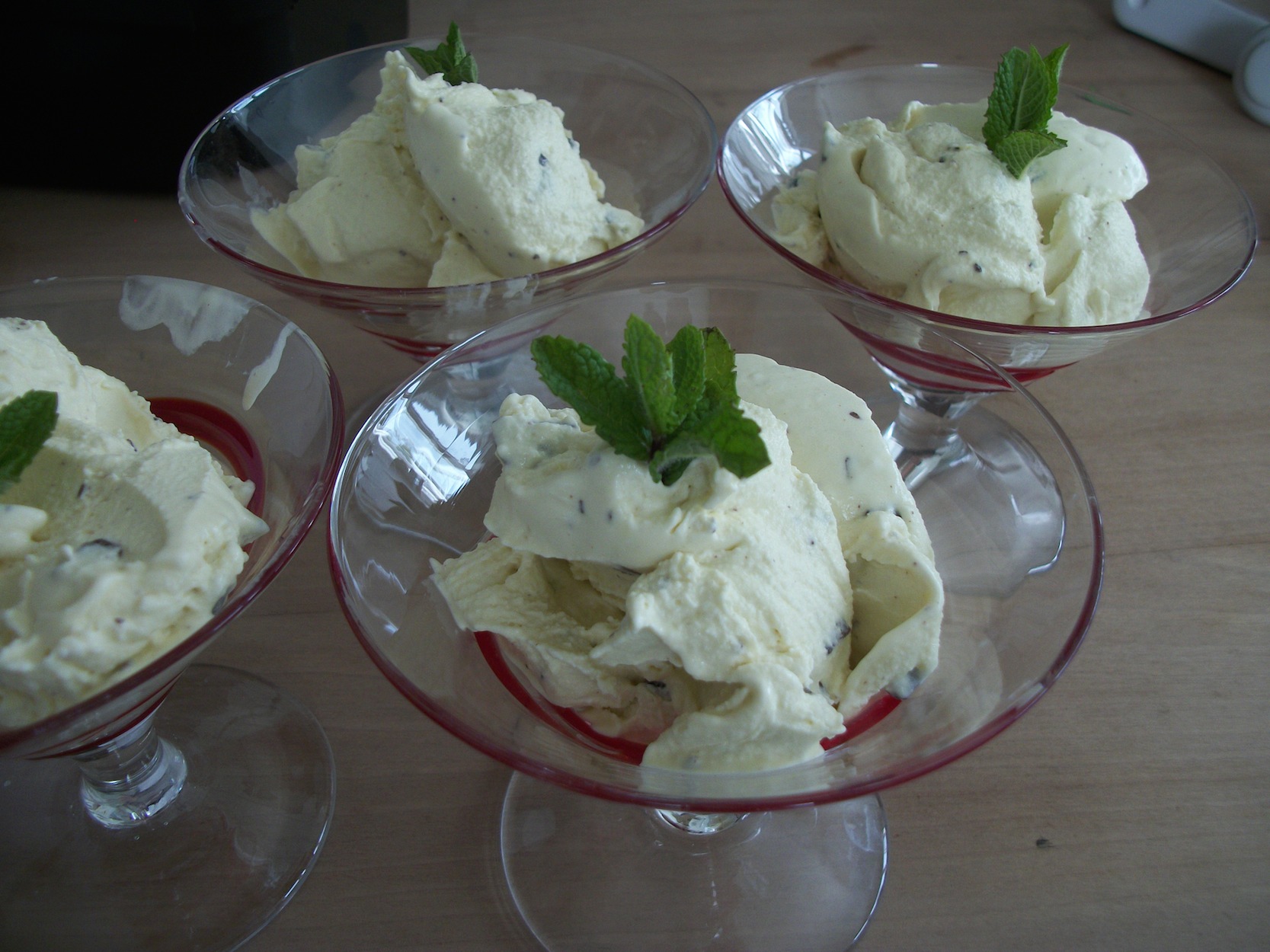
And the most important use of mint—homemade mint chocolate chip ice cream! Special thanks to my husband and daughter who made this treat yesterday!

Pak Choi

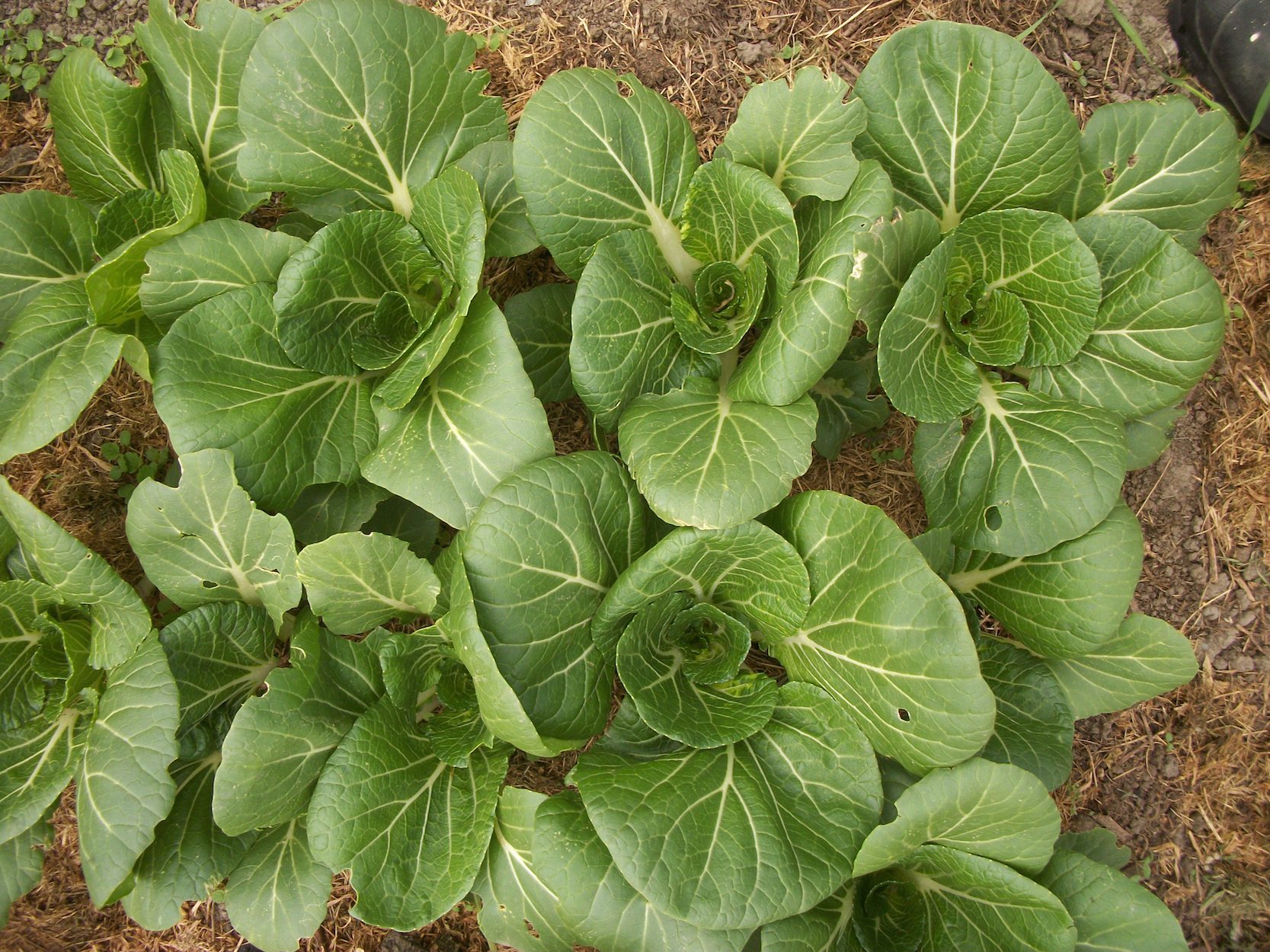
100_3943 smPak Choi, also known as Bok Choi or Chinese cabbage, is another of the early brassicas we enjoy in springtime.

Pak choi is best as an ingredient in stir fries. Lighly fried, it is crunchy and nutty, a bit like cabbage. It also imparts a glossy sheen to all the vegetables in a stir fry.

Pak choi’s origins go back at least 2000 years in China, and it is usually used with oriental spices. But pak choi is versatile. We also use it in pasta and even on pizza (where it is odd, but not bad).

Like most brassicas, pak choi doesn’t like heat or drought, and bolts once things heat up in summer. So we enjoy it while it lasts!

Broccoli raab

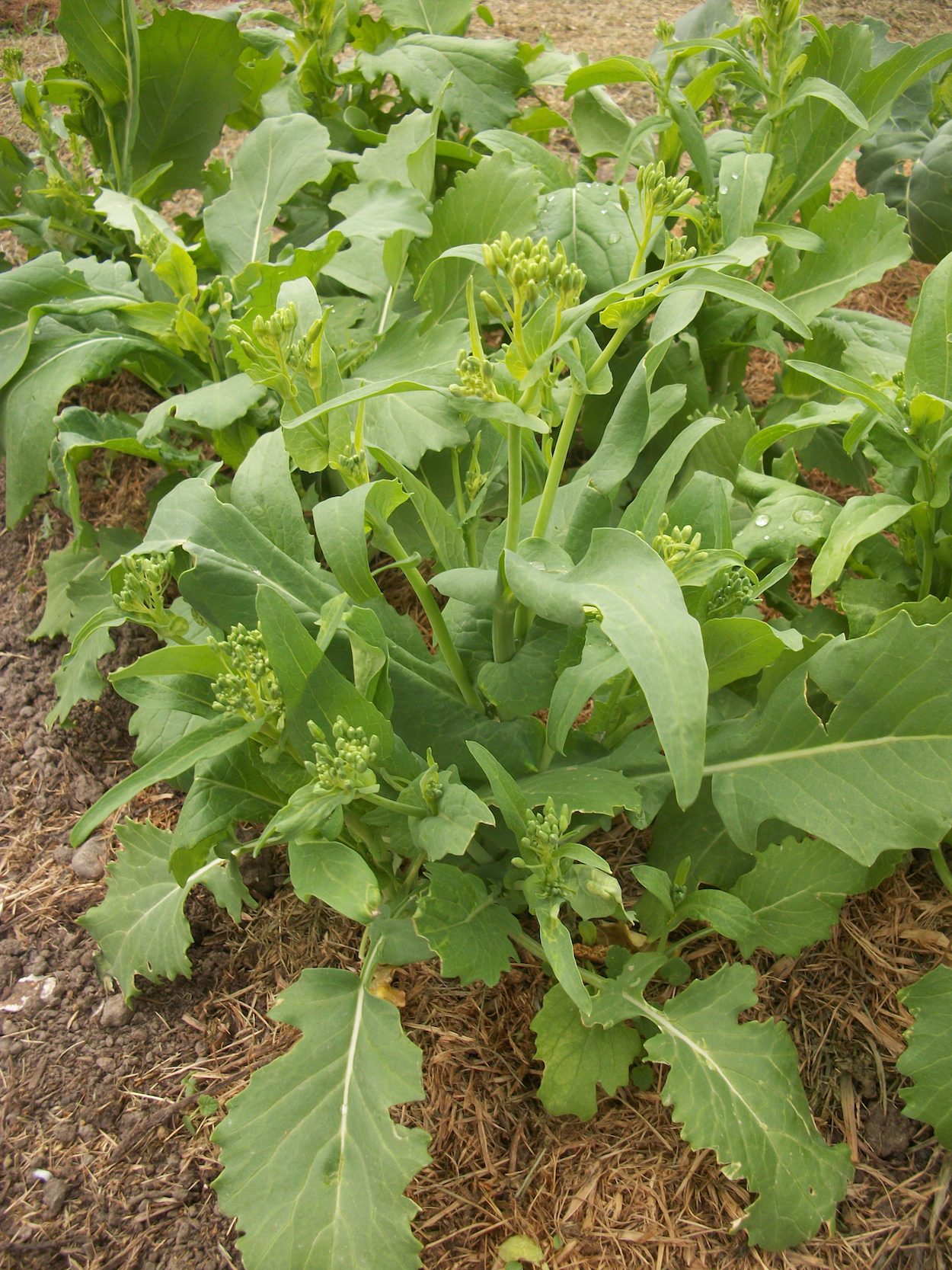
100_3940 smOne of my favourite spring vegetables is broccoli raab. Not so much because it is the best vegetable, but because it produces so early, before any of the other brassicas are ready.

Broccoli raab looks like mini-broccoli, though it is more closely related to turnip than to broccoli. Broccoli raab is eaten “lock, stock and barrel”—leaves, stem and flower buds. As one of the earliest spring vegetables at our house, it gets used in everything from stir fry to pasta to pizza to gratins.

It is more bitter and pungent than broccoli (more like turnip greens), and a little goes a long way in a dish. I plant just a small amount of broccoli raab, and by the time the other brassicas are producing, it has bolted and is ready to pull out. A perfect little filler crop that adds kick to springtime meals!

Trellis Trials

Trellis with jute

Trellis with jute

As a gardener, I’m always trying out new things, always trying to make my gardening easier and more productive.

Last year, I tried out a new trellis, and it worked pretty well. This year, I’m testing variations on last year’s trellis.

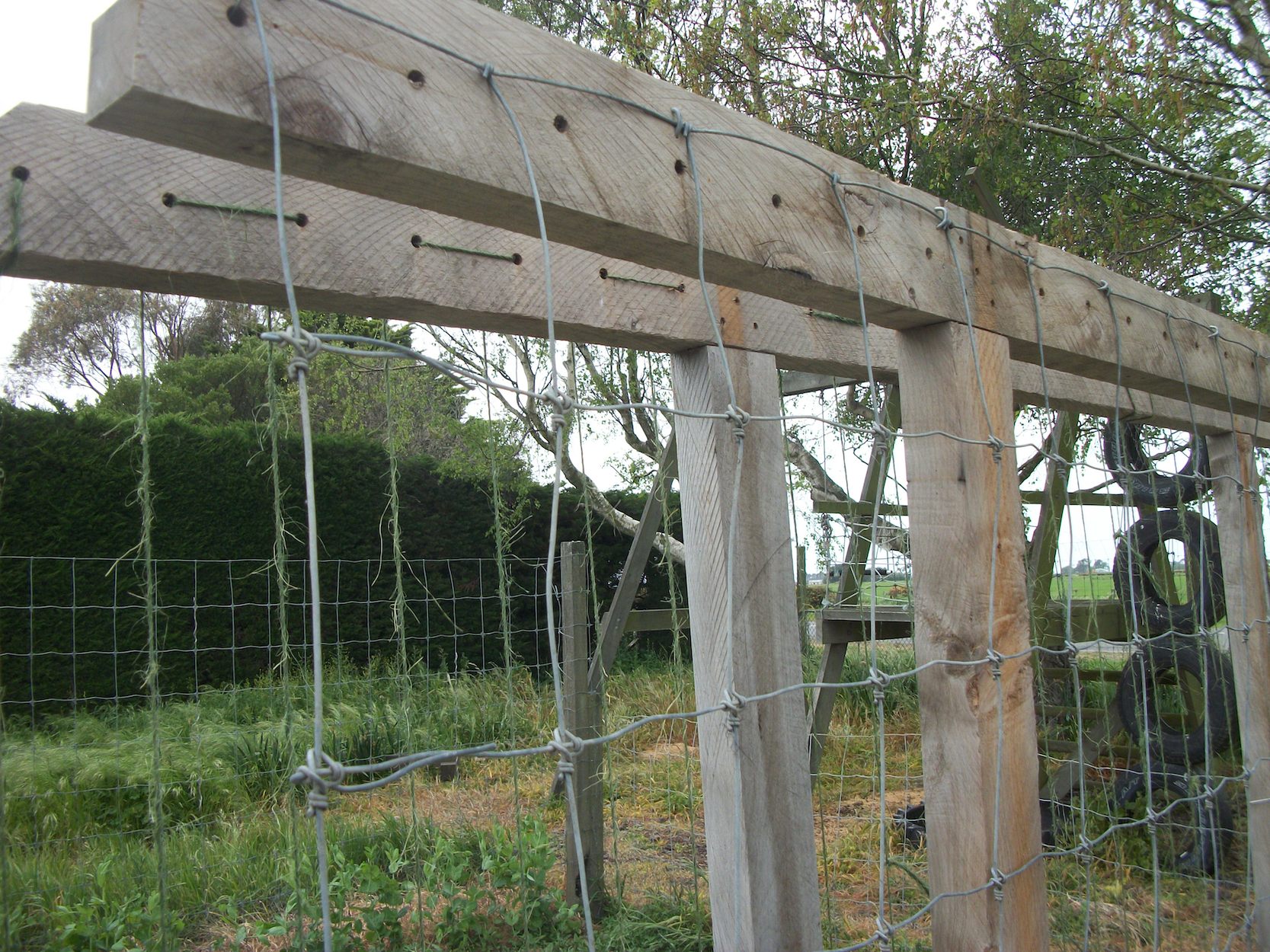
Trellis with fencing

Trellis with fencing

The trellis is a wood frame composed of two supports and a top and bottom bar. Holes in the top and bottom bar allow me to string the trellis with jute. Last year, the jute worked well for peas and beans, but wasn’t strong enough for tomatoes. It was also a bit of a pain to string and clean up at the end of the year.

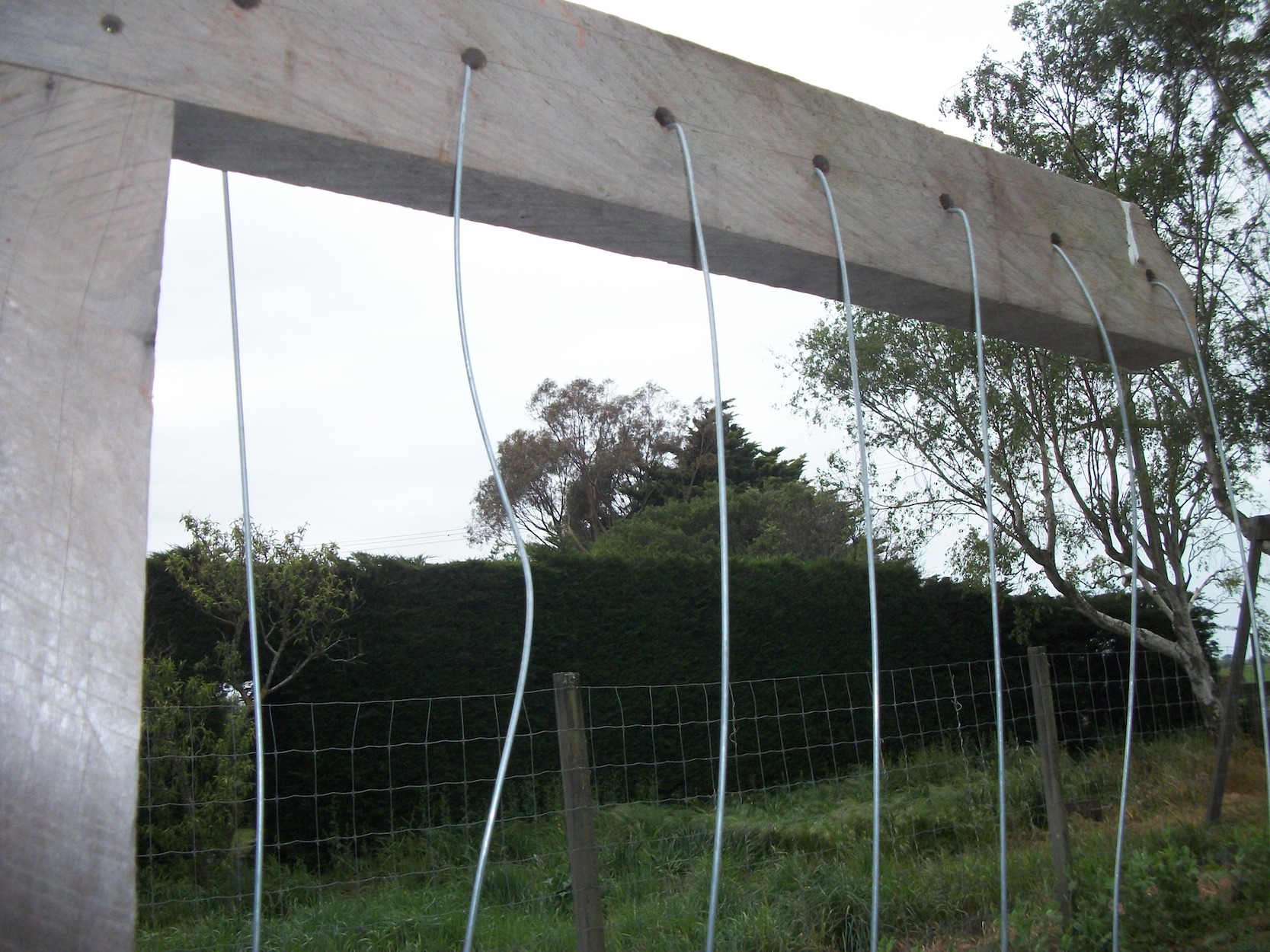
Trellis with wire

Trellis with wire

So this year, I’ve strung some of them with jute again, but I’ve also stapled deer fencing to one of them, and strung the tomato trellis with high-tensile wire (both of which were left over from other projects). Neither fencing nor wire looks as nice as the jute, but I’m hoping they are stronger, and they have the bonus that they won’t need to be replaced every year, saving me time and money in future years.

Underbed Boxes

100_3901 smIn springtime, I set up a temporary shelf unit in my office on which I start seeds. The office is warm and sunny, and I find that seeds sprout faster and more evenly in there than in the greenhouse.

The problem is that the office was never meant to act as a greenhouse. The floor is easily damaged by water. When I first started growing plants in there, I put down a sheet of plastic underneath the shelves. That helped, but sometimes water got underneath it, then sat and damaged the floor.

Last year, my husband made us a new bed with drawers in the bottom of it. We had no more need for the underbed boxes we used for extra blankets, and they were relegated to the shed, where they sat empty.

Until I had a brilliant idea.

Those underbed boxes were the perfect size for my plant shelves. They’re fully waterproof, so water no longer gets even close to the floor. And when the shelves overflow, I can use a box directly on the floor for more plants.

And the cat approves of them too—a box in a sunbeam!