In Praise of a Cooking Spouse

I painted the living room today. There were lots of other things on my to-do list, but they didn’t happen. After a 40-minute trip to Leeston for a new paint tray, because the roller handle I bought yesterday (to replace the one that broke last week) was the wrong size for our paint trays, and then a 2 ½ hour trip to the city because the white paint I was sold last week wasn’t actually white paint (it was dark base, which looks white in the can, but actually doesn’t cover anything), I finally managed to make some headway on the job. Then I remembered I was supposed to milk my neighbour’s goats, so I dashed around cleaning up, grabbed my milk pot, and headed over…only to discover that it’s NEXT week she needs me to milk for her. At this point, it was 6:30 pm, the living room was still unfinished, and I hadn’t even thought about making dinner yet. I was ready to have beer and pretzels and call that a meal.

“Can I make you a nice meal?”

My marvellous spouse allowed me to continue painting while he grilled vegetables and polenta (and even poured me a glass of wine, never mind how the trim painting gets a little wobbly…).

I cook most weekday evenings, just because I’m the first one home. On weekends, we usually cook together. So it was delightful to have someone cook for me. What a wonderful gift!

The Pickle Lady

dilled beans7 smWhenever I think of my great grandmother Sturgis, I think of pickles. Now, she died when I was just a young child, so I’m certain my memory of her is wildly inaccurate, so I offer my sincere apologies to anyone who knew her. What I remember about her is hundreds and hundreds of jars of pickles—way more than an elderly married couple ever needed or could possibly consume. I remember a basement lined with shelves laden with dusty jars of all types of pickle–chunks, bread and butter slices, whole sweet pickles, dill spears… I imagine her an avid gardener who just couldn’t bring herself to rip out those cucumber plants once she’d put up enough pickles for the year. I know the temptation. The cucumbers are there. Pickles are good. You wouldn’t want those cucumbers to go to waste, would you? Pretty soon, the pantry shelves are groaning under the weight of pickle jars, you’re buying vinegar by the case, and you’re sending every guest home with a selection of half a dozen types of pickle. Before you know it, you’re known as “The Pickle Lady”. Neighbourhood children sneak around the house, daring each other to peek through the windows for a glimpse of the reinforced steel shelving stacked with pickles. Guests feign cucumber allergies. Family members drop hints about obsessive compulsive disorders their “friends” have. Your husband threatens to move out unless you remove the stacks of pickle jars from the bedroom.

This is why I only plant pickling cucumbers every other year. I can easily make two years’ supply of pickles with one planting (and still have cucumbers left over for the neighbours who like to make their own pickles). And it reduces the risk of becoming The Pickle Lady.

Of course, other vegetables can be pickled…

If you can’t beat ‘em…

Weeds. Gardeners hate them.

But weeds are just plants. And the weeds in my garden here in New Zealand are almost identical to the weeds I had in my garden in Pennsylvania, and the one in Minnesota, and even my garden in Panama.

So what are these weeds? They’re the plants that European colonists couldn’t do without. Food, medicine, pest control—it’s all there in those common garden weeds. Back when my husband and I lived and worked at residential camps and couldn’t have a garden, we used to forage for weeds to supplement the nutritionally suspect camp food we were served. Dandelions were one of our favourite early spring salad greens. Picked at the right time (before the flowers emerge), they are nutty and pleasantly bitter.

I took a walk around my garden today, and found the makings of a lovely meal among the weeds.

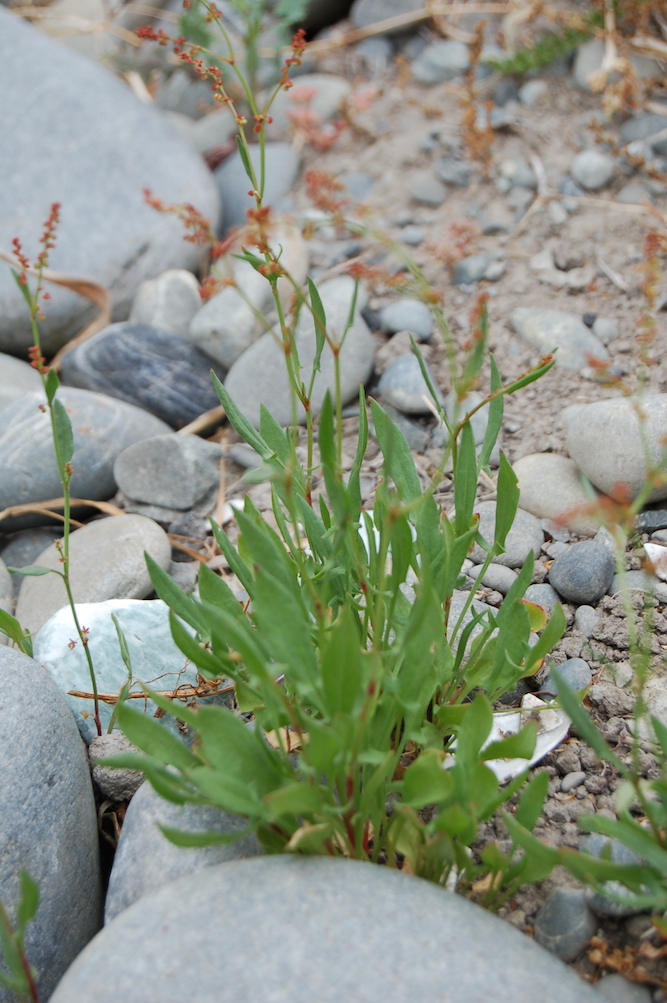
You'll be happy to eat pernicious sheep sorrel, just so the @#$&* things don't resprout.

You’ll be happy to eat pernicious sheep sorrel, just so the @#$&* things don’t resprout.

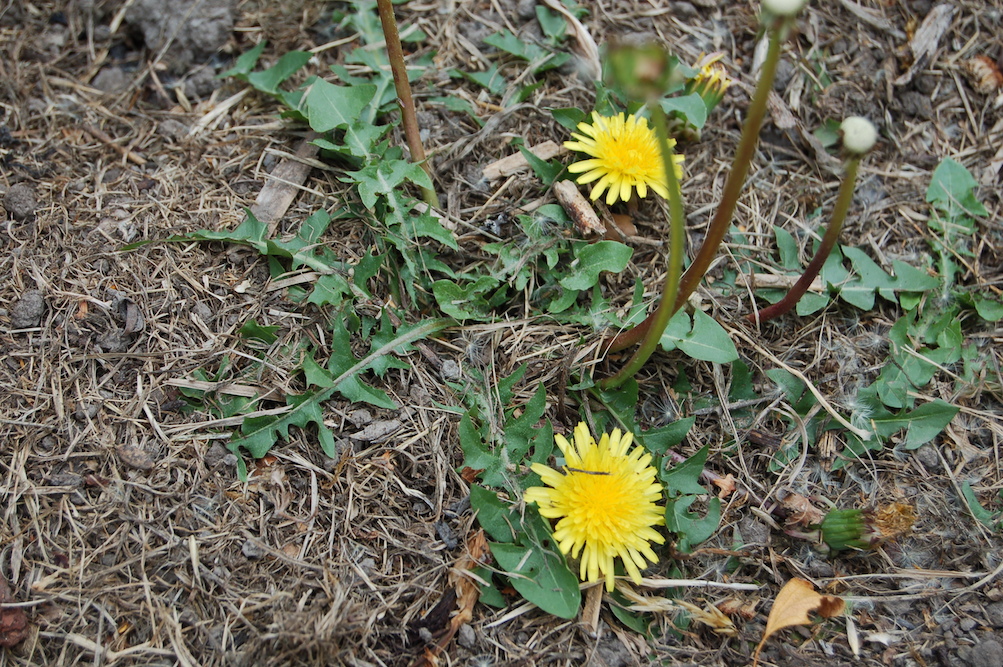
Dandelion greens make a delicious, nutty early spring green. Pick them before they flower or they'll be bitter.

Dandelion greens make a delicious, nutty early spring green. Pick them before they flower or they’ll be bitter.

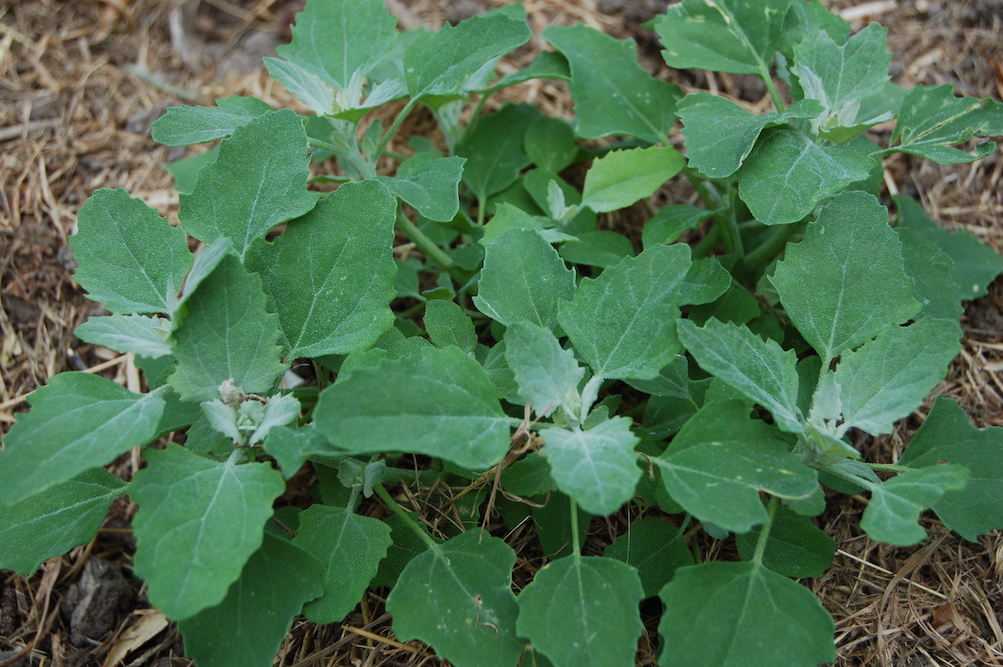
Lambs quarters, or henbit is a nice salad green all summer. The chickens love it, too.

Lambs quarters, or henbit is a nice salad green all summer. The chickens love it, too.

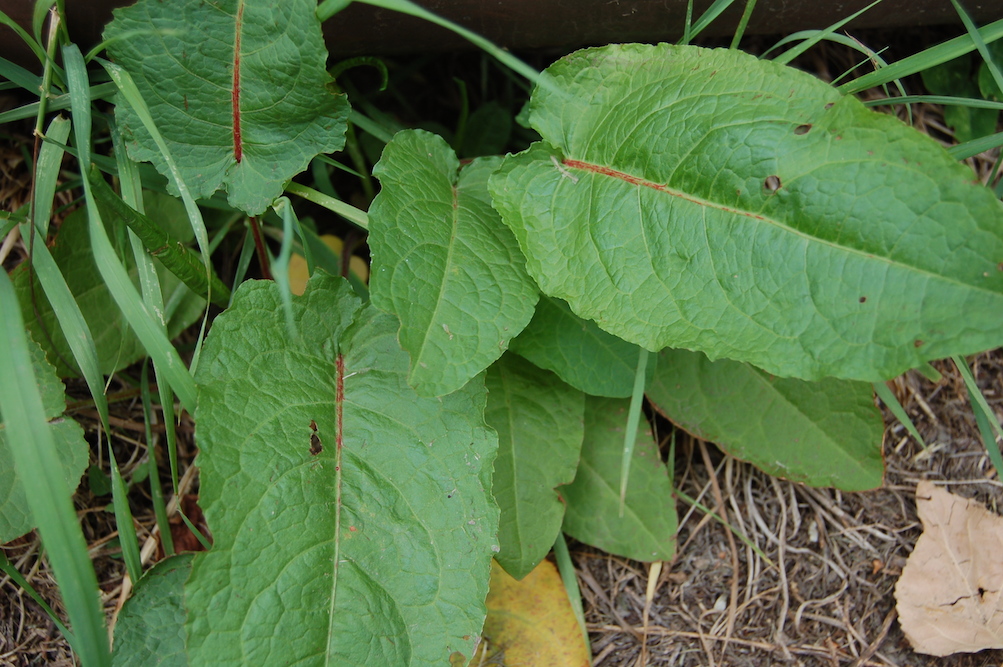
Cook up some dock greens as a side dish.

Cook up some dock greens as a side dish.

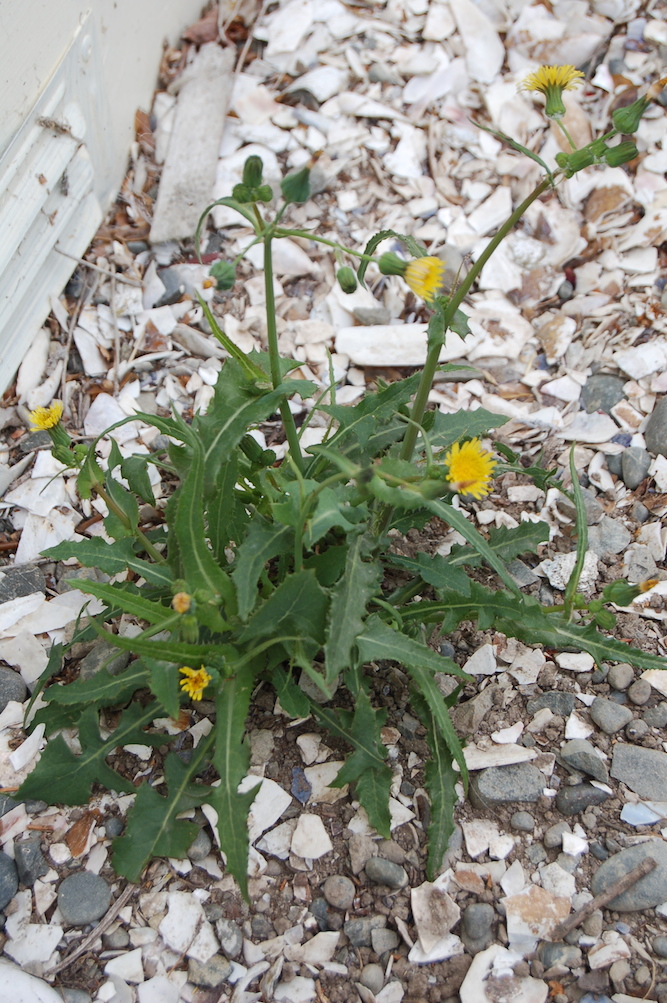
Even prickly sow thistle can be cooked and eaten.

Even prickly sow thistle can be cooked and eaten.


So next time you pull out a handful of weeds, remember—if you can’t beat ‘em, just eat ‘em!

Coffee

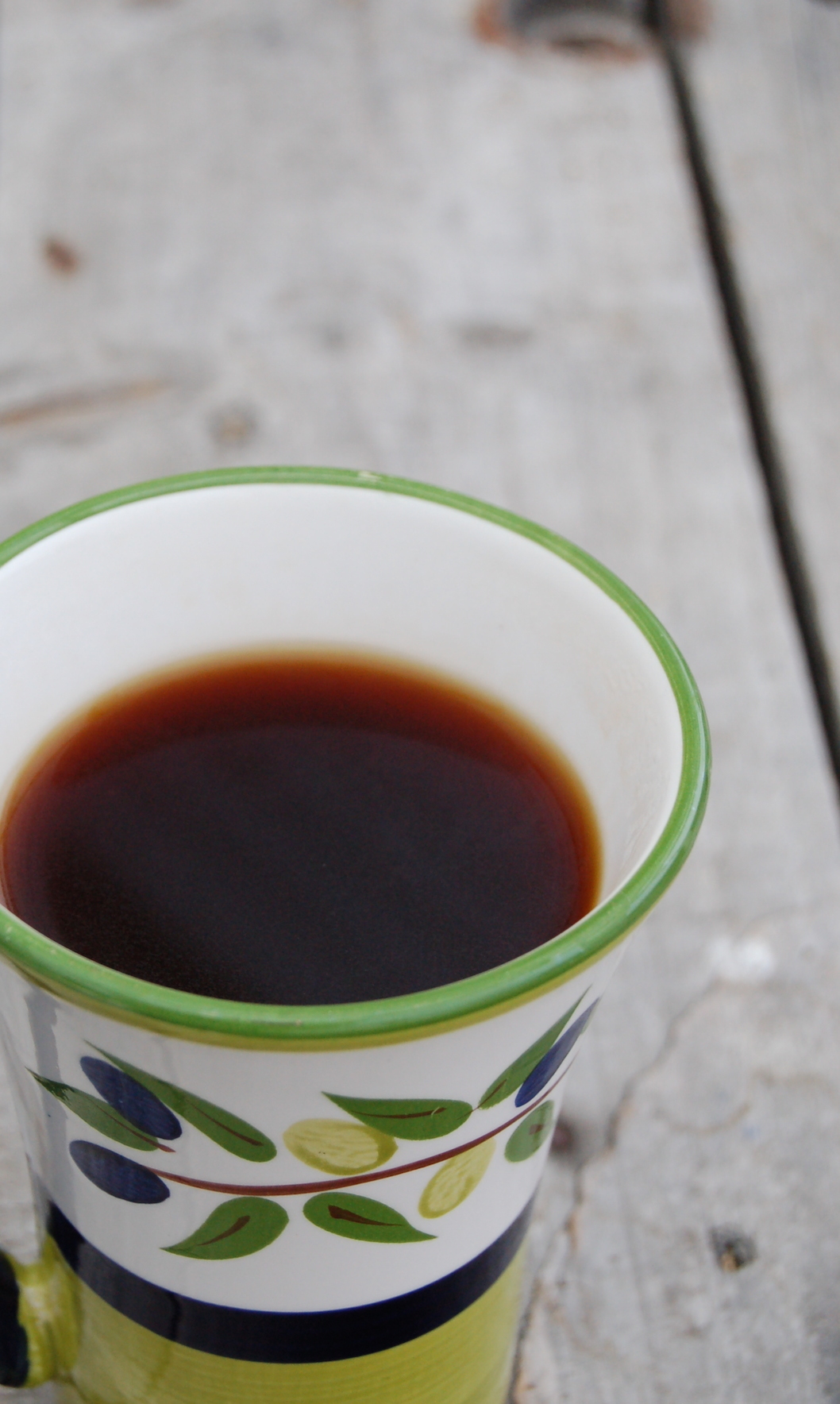
Coffee3 crop2 smI don’t know what his real name was; everyone called him Tio Chon (Uncle Chon). And everyone knew Tio Chon—he made the best coffee in El Valle.

When I say made here, I really mean it. He grew the beans, roasted them and ground them. He mixed his coffee with an ethereal combination of spices—anise, cloves, a hint of cinnamon, and who knows what else (he sold his coffee, but wouldn’t divulge his secret spice mix). I don’t like “flavoured’ coffee, but Tio Chon’s was truly magical.

Coffee was an important drink in Panama, though we didn’t agree with Panamanians on how it should be prepared. Coffee in Panama is almost saturated with sugar. Indeed, it’s so sweet, it attracts ants, which die in the hot liquid and float on the surface of every cup. You learn to strain them out with your teeth, and always toss the last ant-laden splash on the ground.

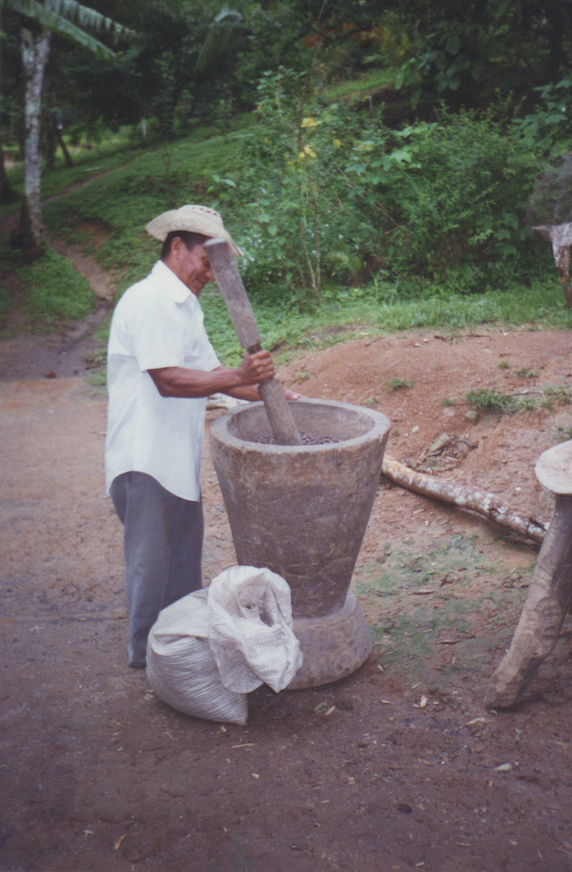
Julian grinding coffee.

Julian grinding coffee.

Our landlord and friend, Julian, was a frequent evening visitor. He always accepted a cup of coffee, and he always laughed at me when I added the sugar. “More! More!” he would say. “I don’t know how you drink it without sugar. It’s so plain!” (he actually used the Spanish word simple here, for which there isn’t a good English translation—plain, boring, flavourless, without character, lacking pizzazz—the word encompasses all these ideas). Julian was amused by our cultural differences.

Coffee illuminated some of those differences. The farmers we worked with believed that you shouldn’t drink a cold drink when you are hot—it would make you sick, they said. So instead of taking water to the fields, they took coffee, which they considered a refreshing drink after hot work. I accepted the coffee, but carried a water bottle with me, too.

Though we tend to think of coffee as an adult beverage, in Panama everyone drinks it, adults and children alike. And, surprisingly, kids don’t tend to drink hot chocolate. I only had hot chocolate once, prepared for me by our neighbour, Maria, from her own cacao pods. It was oily and bitter; it’s no wonder the kids prefer coffee.

I learned to drink coffee in Panama, and I can’t drink it without thinking of the people and places we left behind there—the laughter and conversation always accompanied by a cuppa. Coffee is one of the few links left to that incredible time and place.

Eating Out

We almost never eat out. It’s a 45 minute drive to anywhere other than a fish and chips shop, and with so much food coming out of the garden, we feel obligated to eat as much of it as possible every day. It’s also hard to eat out because we eat so well at home. Restaurant salads are never as fresh as ours. Eating out, we’re tempted by out-of-season foods, which are always disappointing. And there’s always so much waste at a restaurant (at home, any extras can be fed to the chickens or the goats)

So it was an unusual day today. We dropped the kids at summer camp, and since we were so close already, we had lunch in Akaroa before a swim at Le Bons Bay. We trolled the street (there’s really only one) looking for a good spot. Lots of fish in Akaroa—salmon, mussels, and various other edible sea creatures. There is surprisingly little vegetarian food on offer. What’s available are the standard Kiwi vegetarian options—frittata with kumara and feta cheese, pizza, panini with brie and a few vegetables, plain tomato pasta, and what we ended up with—cheese toasties and hot chips (that’s a toasted cheese sandwich with French fries for you Americans).

We don’t have a toastie maker at home—the clamshell like device that grills a sandwich on both sides at the same time, and makes a very different sort of sandwich than toasted cheese sandwiches on a griddle. We also never deep-fat fry our potatoes, so a toastie with chips is something of an exotic treat for us. Today’s toasties weren’t the best I’ve had, but they were gooey on the inside and crisp on the outside, and the chips were hot and salty. A nice treat.

Of course, we were required to eat extra zucchini at dinner because of it…

Drought

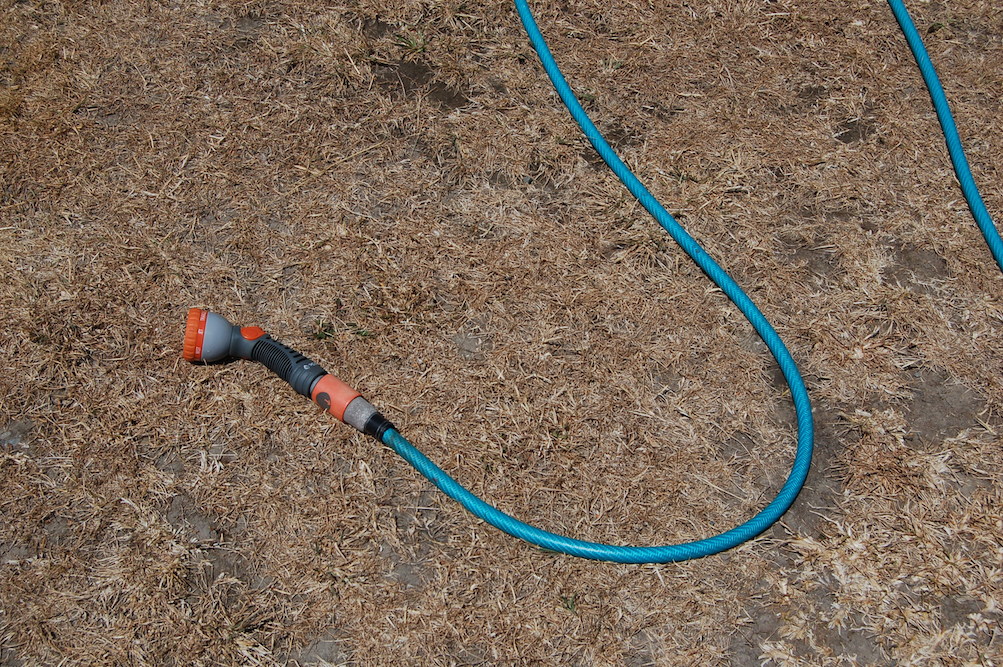
DSC_0011 smIn Christchurch, the City Council and the media are only just now recognising what we gardeners and farmers have known for two months. It’s dry. And hot.

It’s the fate of those who grow plants and raise livestock to grow grimmer and grimmer as everyone else trips off to the beach for yet another perfect summer day.

The grass has been dead for at least a month, new plantings have succumbed despite our efforts to water them, and even well established shrubs are showing stress. The poplars—large trees that have been here for forever—are shedding leaves.

Every day begins and ends with watering—food crops are the first priority, then new plantings, then (maybe) established plants. We are thankful for every drop of water that spills over from the neighbour’s irrigator.

Still, not everything will make it, even if it starts raining tomorrow (which it won’t). The ground is hot dust, so dry the water pools on the surface rather than soaking in. So we choose what to water and what not to water, what will live and what will die. We haul extra food to the livestock, because they have little to eat in the paddock. We watch the sky for clouds and sniff the air for smoke (header fires aren’t uncommon out here, and they can spread rapidly). We rescue what we can…then shrug and head to the beach with everyone else.

Vampires Beware!

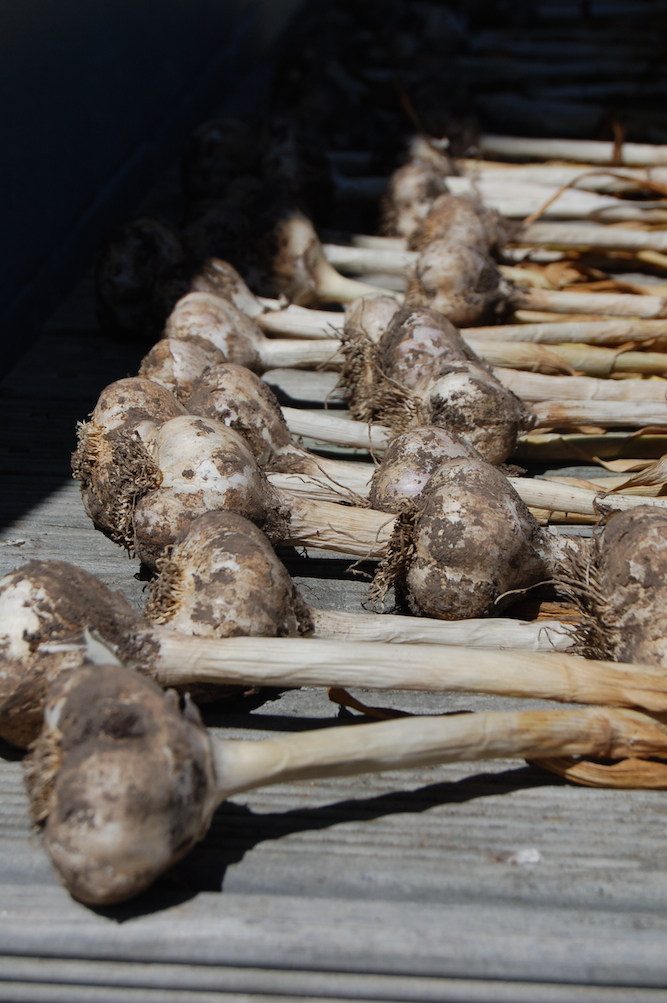
Garlic1smI harvested the garlic a few days ago. The only blessing in the drought we’re experiencing is that the garlic has dried down enough and should store well this year. It’s been curing in the sun, and today I braided it into ropes that will hang in the shed until we need them.

My favourite garlicky dish is Skordalia—Greek garlic sauce. Easy to make, and excellent as a dip for fresh vegetables! We made it last year with purple potatoes, and the vivid colour was a huge hit. Here is the skordalia recipe from Greek Cooking for the Gods, by Eva Zane.

6 cloves of garlic, minced

2 cups mashed potatoes

½ tsp salt

1 cup olive oil

½ cup cider vinegar

Place the garlic, potatoes, and salt in a blender on high speed until smooth. Slowly add the oil, alternating with vinegar, and blend until smooth. Chill for several hours before serving.

Zucchini!

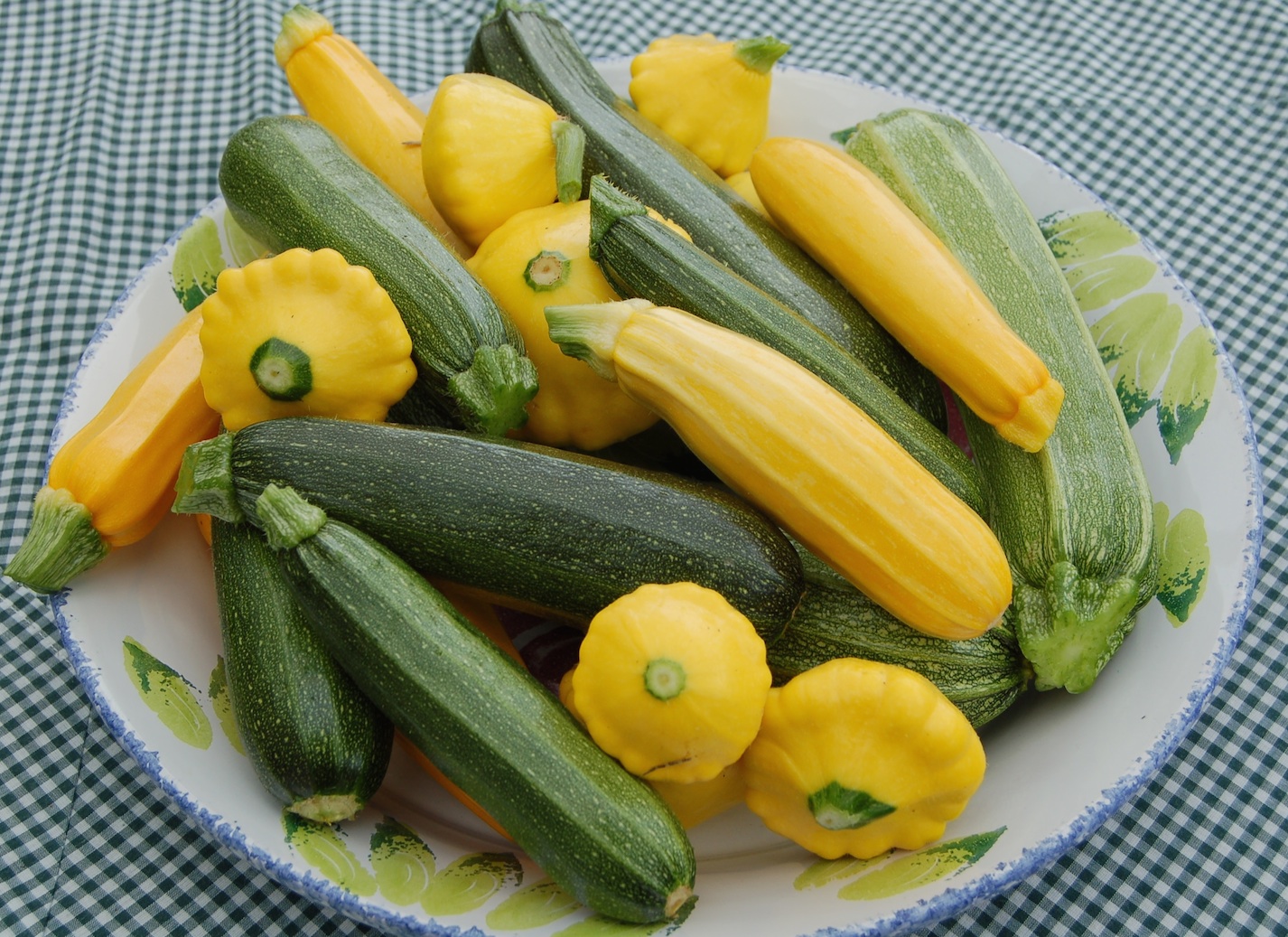
Zucchini4cropsmThe question of what to do with too much zucchini is one that has plagued humankind for millennia. The modern zucchini’s ancestors came from Central and South America, and were part of the local diet as far back as 5500 B.C. (I wonder how you say, “Zucchini, again?” in ancient Mayan?)

Europeans knew a good thing when they saw it, and within 50 years of European invasion of Central America, zucchinis (well, their ancestors, anyway) were being cultivated in Europe. The vegetable we grow today as zucchini was developed in Italy in the 19th century (hence the Italian name we use for it), and it has been overwhelming home gardeners all over the world ever since.

The good news about zucchini is that you really can’t eat too much. It is low in calories (only 18 per half cup), and is full of nutrients like beta-carotene, folic acid, and vitamins C and E. Of course, there really is only so much zucchini one can eat, and because I plant several varieties, we reach the point of zucchini saturation pretty quickly. The overflow goes to the goats, who eat it happily for a while, and then they, too, get tired of it. Eventually, some zucchinis are forgotten in the garden, and grow into giants. My biggest last year was nearly a metre long. I thought that was pretty impressive, until I learned that the longest zucchini ever grown measured 2.39 metres (7 ft 10.3 in)! Now there’s something to aspire to this year!

In the meantime, it’s zucchini for dinner again tonight!

Strawberries

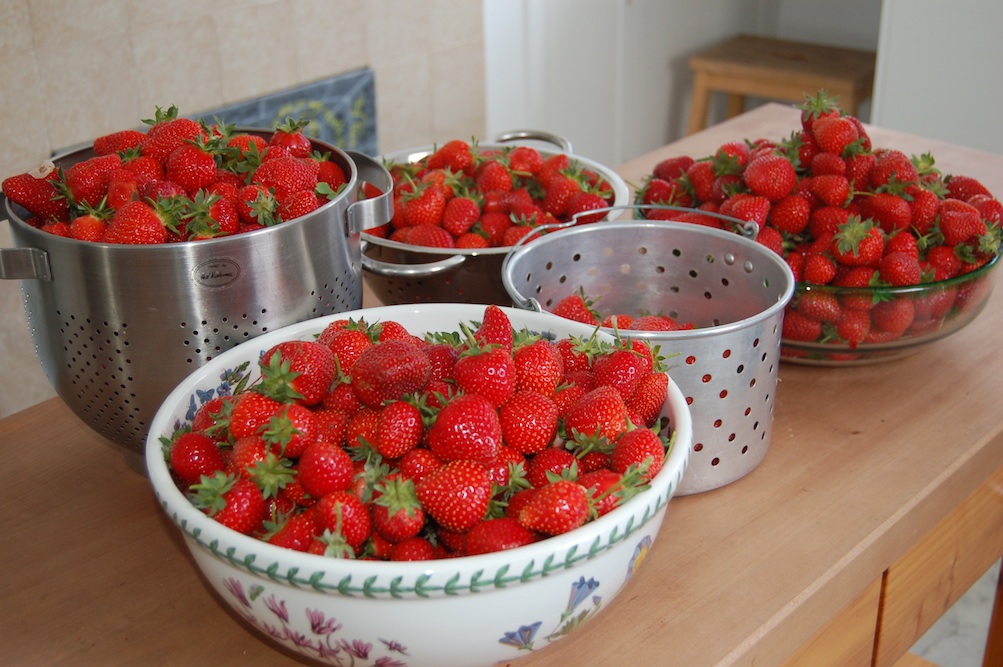
DSC_0003smI have always had an insatiable appetite for strawberries. At some point as a kid, I took over my mother’s strawberry patch—weeding, picking, selling, and eating large quantities of berries every spring. Here at Crazy Corner Farm, I also have a large strawberry patch. The original idea was that strawberries would be my cash crop—I’d sell lots of berries and support my gardening habit that way. It worked fine for a while…until I realised that, actually, we could consume every one of our berries without any problem at all, even when I was bringing in several kilograms every two days. I still sell some, and I give away plenty (they make spectacular Christmas gifts—who doesn’t want a punnet of strawberries?), but mostly we eat them.

The hardy, large-fruited strawberry we know today took many years to develop. Wild strawberries were cultivated in Europe as early as the 1300s, but it wasn’t until two New World species (Fragaria virginiana and Fragaria chiloensis) were imported to Europe that modern varieties were bred. The French accidentally pollinated the Chilean strawberry with the Virginia strawberry, and voila! They got a berry that was large, like the Chilean one, and hardy, like the Virginia one. Well, actually, it wasn’t that easy. After the French did it accidentally, the English spent many years crossing and recrossing these two species to develop a large, hardy strawberry. When these plants were shipped to America, most didn’t survive the colder North American winters, so more crosses had to be made.

Even then, strawberries wouldn’t grow everywhere and had incomplete flowers (only male or female parts), so they needed different varieties to cross pollinate them. It wasn’t until 1851 that James Wilson, from New York, developed a variety that was productive in almost any soil, and had perfect flowers, so it could be grown by itself. The commercial strawberry industry was born.

Since then, hundreds of varieties have been produced, some by professionals, many by amateur breeders who just loved strawberries.

I initially planted several different varieties in my strawberry patch. Those original plants are long dead, but have cross bred and sent out runners, so that today I have an intriguing mix of varieties. I can still identify some—Yolo and Strawberry Sundae are distinctive and easy to pick out. Many plants, though, have a mix of characteristics, and some even produce berries more like their wild ancestors. Every year, I nurture the ones I like and selectively weed out the ones that aren’t so great. Amateur strawberry growers all over the world do the same, I’m sure, giving us a wonderful range of sweet, tart, large, small, white-fleshed, red-fleshed, pointy and round berries. So many different types, I want to eat them all!

Best pie ever

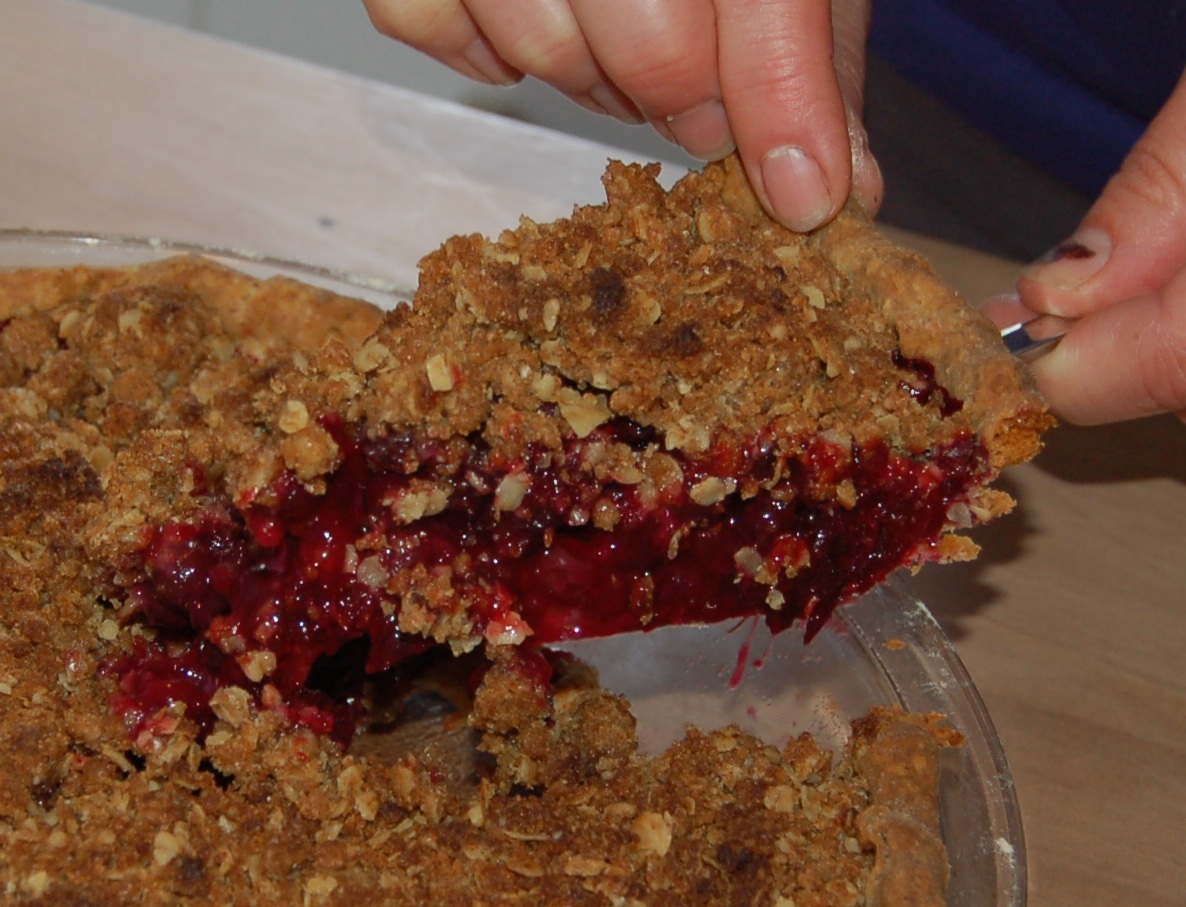
DSC_0011cropWe had an overabundance of blackcurrants this year, and in looking for interesting (and easy) things to do with them, I found some lovely pie recipes. I mixed and matched them, and came up with this divine concoction. So flavourful, you only need a little slice…so good you’ll want a big one!

I’ve been making it the day after making quiche for dinner—I make twice as much pastry dough as I need for the quiche, and put half in the fridge. With pre-prepared dough, the pie can then be assembled in minutes.

4 cups blackcurrants (fresh or frozen, thawed)

½ cup granulated sugar

2 Tbsp. all-purpose flour

Pastry for 9-inch pie

Wash and drain blackcurrants and remove stems. Mix with sugar and flour. Pour into the pie shell and top with pastry or streusel topping (see below).

Bake at 200°C (400°F) for 30 minutes, then reduce the heat to 180°C (350°F) and bake for another 25-30 minutes. Cool completely, and serve with whipped cream or vanilla ice cream.

Streusel:

5 Tbsp. melted butter

2/3 cup quick-cooking rolled oats (traditionally chopped nuts, but ‘easy’ is the whole idea here)

½ cup packed brown sugar

2/3 cup whole wheat flour

1 tsp. cinnamon

Mix ingredients with a fork until it resembles coarse crumbs.