Love, Life, and Fart Jokes

Thank you to the World Busker’s Festival for allowing me to forget for a few hours what was happening in my homeland today. The fart jokes, the sexual innuendo (which my son now gets…oh dear), and lots of flaming torches being juggled at altitude were exactly what I needed.

It reminded me that daily life will go on these next four years. What that daily life looks like, and how it will change remains to be seen. The possibilities fill me with anxiety.

But there will also be love, life, and fart jokes. I, for one, will be clinging to those, and sharing as much of all three as I can, to help us all through what promises to be a rocky four years.

So, here’s your light-hearted interlude for today:

What do you call a person who never farts in public?

A private tutor.

Postcard From New Zealand

2016-01-22 14.08.29 smWe spent the day yesterday at the beach (along with the entire population of Canterbury and half a million tourists, judging by the crowds). It was a stellar beach day–hot and sunny. Perhaps a bit too windy at times, but heat and wind are almost inseparable here, so we just go with it. We managed to slip away from the crowds for a while by clambering over the rocks to Little Okains Bay. The water was cold, the sand was hot, the rock pools teemed with cool creatures, and the scenery was stunning, as usual.

The entire day was a full-colour glossy tourism ad for New Zealand. And it was just one of many similar days we’ve experienced recently.

I’m not saying that every day is a vacation–I put in 11-hour workdays (painstaking editing) all last week, and I pull a lot of weeds and have to clean the house and the chicken coop every week–but New Zealand does vacationing well.

All day, I kept coming back to one, glorious, humbling, beautiful thought–this is my home. My family and I are so blessed to have been welcomed into this amazing country. A place where we can stand on the top of a mountain one weekend, and swim in the ocean the next weekend. A place where Christmas/summer vacation lingers through the entire month of January; even once many people are back at work, the vacation mindset remains. A place that embraces a weird and wonderful mix of people from all over the world.

New Zealand has its problems–no human society doesn’t–but I feel honoured to be allowed to make my home here in such an incredibly beautiful place among such incredibly beautiful people.

So you all my Kiwi readers–thank you.

And to all my overseas readers–having a great time. Wish you were here.

Noddy’s Flycap

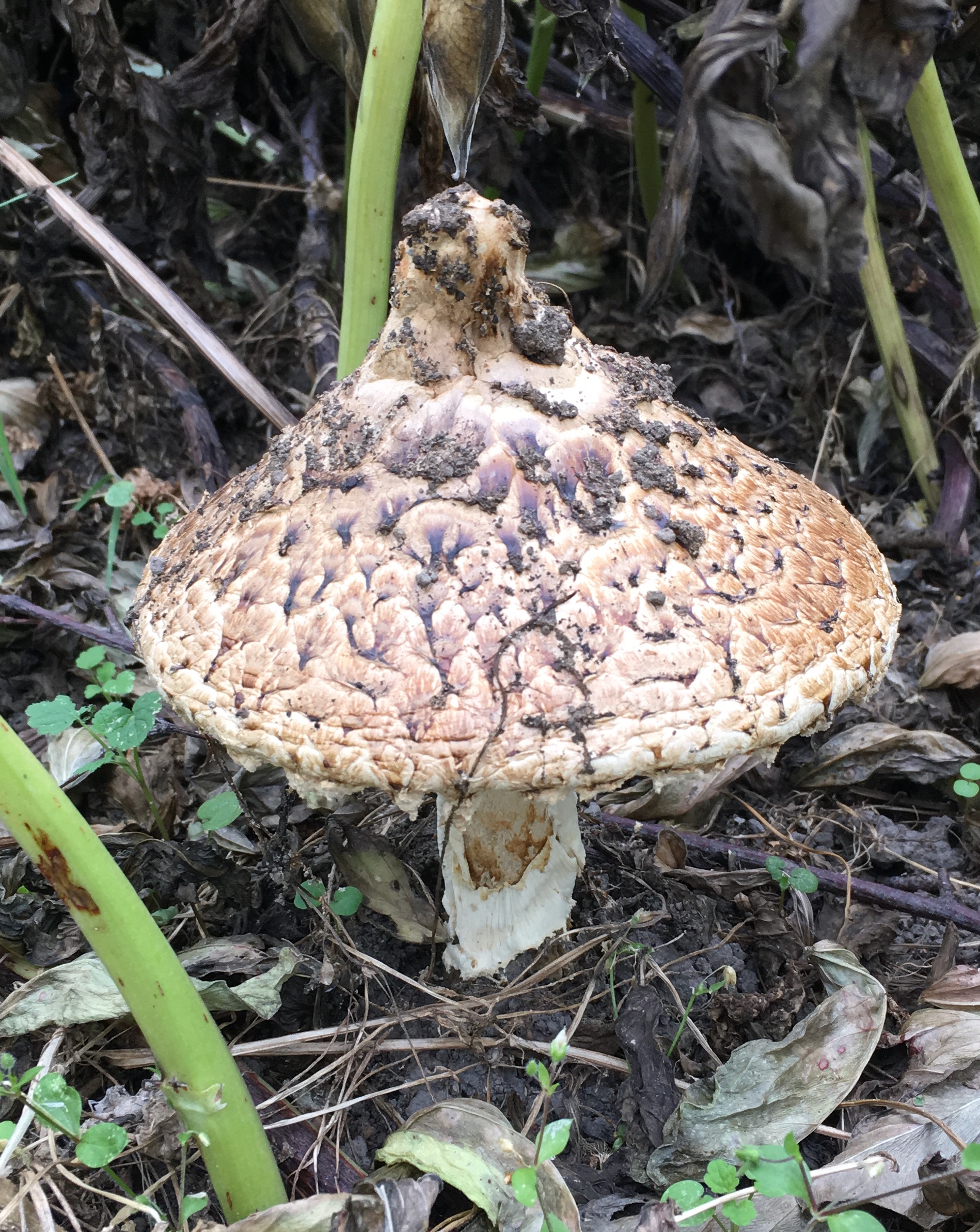
img_2955-cropI was working in the garden this morning, and came across this stunning mushroom in the middle of the broad beans.

My first reaction was, “Oh, my! Fairies must have visited the garden.” I wondered if nature was trying to tell me I needed a little whimsy among the vegetables. I began to consider the possibilities. A few fanciful carvings on my trellises? Gargoyles atop the fence posts?

My next reaction was, “I’ve got to show this to my husband.” (He researches mycorrhizal fungi, and this looked to me a bit like an Amanita, which are usually mycorrhizal). He saw it, and said, “Oh!…Oh!…that’s a…no, wait…I won’t say anything until I’m sure…this could be important.”

He did some research and confirmed the mushroom as Noddy’s flycap–Amanita sp. 2–an unusual fungus recorded only from New Zealand, but thought to be introduced, as it is generally found among non-native vegetation. It has never been recorded this far south, and we’ve never seen it on our property before.

Geoff Ridley has written a nice blog post about this fungus and its odd distribution and mysterious origin.

And so, perhaps nature was, instead, telling me to keep my eyes open for scientific wonders, even in my own back yard.

And then, I learned that Noddy’s flycap is named for the Enid Blyton character, Noddy (and his pointy hat).

And at this point, the symbolism of this strange fungus in my garden got really weird. A whimsical-looking fungus of unknown origin, and not known to be present here, named after a character in a middle grade novel?

The message was loud and clear–this fungus has to show up in my next book. Excuse me while I go scribble down some ideas…

Get Outside—See Cool Stuff

The swarm--apologies for the image quality; I'm allergic to bee stings.

The swarm–apologies for the image quality; I’m allergic to bee stings.

I’m trying to make myself go out for a walk at lunchtime every day. I’ll admit that I can be a bit of a slave driver when I’m working, and I don’t always manage it. I have a tendency to simply work through lunch, and then suddenly discover it’s late afternoon.

In truth, the walks available to me from my front door aren’t necessarily all that inspiring—endless agricultural fields in every direction.

But you can’t experience anything if you don’t first go out. Yesterday, I took the most boring of the boring walks from my house—the one that doesn’t offer so much as a mailbox for the first kilometre. Don’t ask why I chose that way—maybe I wanted to clear my mind, as I’d been doing intense editing all morning.

On this most boring of walks, I happened to see something awesome—a honey bee swarm.

We are blessed with many nearby apiaries, and I always have a plentiful supply of bees to pollinate my garden vegetables, but even so, it’s unusual to spot a swarm. This one was hanging in a drooping mass off the neighbour’s fence.

Bees swarm to create a new colony. It’s usually the old queen who leaves her hive with a large portion of the workers. A new queen will hatch in her absence and take over the old hive.

The swarming bees leave the hive and gather nearby while scout bees search for a new hive location. This is what I saw—the resting swarm. It likely flew away to a new home within a few hours. Where those bees are now, I don’t know, but I hope they found a nice place nearby from which to visit my garden.

So, my most boring walk was amazing. That reminds me, I still haven’t gotten out for a walk today. Time to step away from the desk and get outside. Who knows what I might see?

Proof We’re Lame

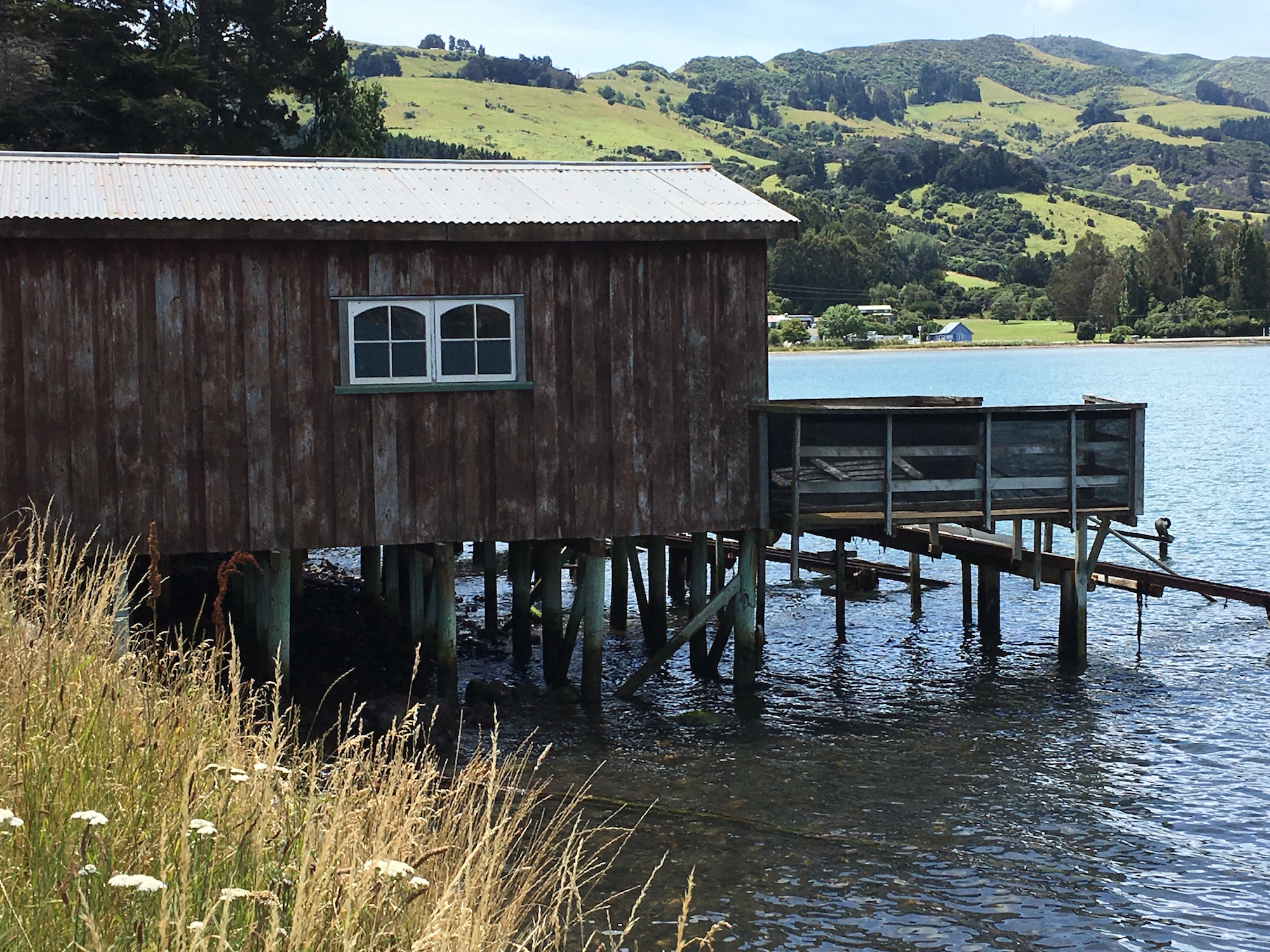
A boat shed in Duvauchelle

A boat shed in Duvauchelle

It was Mum and Dad’s annual day out today. We dropped the kids off at summer camp in the morning, then had the whole day together with no other obligations.

Yeah! Party time!

Or not.

We brought our wetsuits and snorkels, thinking we might do some snorkelling…

But it was cloudy and chilly.

We drove into Akaroa to visit a couple of art galleries and have lunch on the waterfront…

But a cruise ship had just disgorged 2,000 tourists into the town, and it was so crowded, we left.

We ended up having toasties, chips, and a beer on the deck at the pub in Duvauchelle, watching the wading birds and a luckless pair of hitchhikers. Then we went for a short walk and came home.

Lame, lame, lame.

It was a lovely day, but we could have done all that with the kids. In fact, our summer outings with the kids are usually more exciting than that.

Truth is, I wasn’t surprised. It happens most every year. We have a week with no kids in the house, and what do we do? We go to work, we weed the garden and mow the lawn. Sometimes we might go so far as to rent a movie.

No all-night dancing, no dinners out—just the normal routine, with less washing up needed afterward.

Is that lame? Perhaps. I like to think of it as an indication that our daily life is pretty darned good. I like to think of it as an indication that we enjoy spending time with our kids, and our kids don’t stop us from doing the things we enjoy.

So tomorrow, I’ll have a nice long work day (I have lots of editing to do!), and when my husband comes home from work, we’ll make a delicious dinner. We’ll spend the evening sitting on the couch reading, and then we’ll do it all again the next day. Not really too hard to take.


The View from the Compost

img_2929-smI finished turning the compost today—a back-breaking, exhausting job I don’t particularly enjoy. After I added each layer, I climbed on top of the pile to even it out and water it. From my two-metre high perch, I had a lovely view. I admired the neighbour’s seed radishes—wide stripes of white and pink flowers marking the two varieties he is crossing this year. It looked more like a curtain than an agricultural field.

Then I turned to admire my own garden. Well, actually I just turned. I’ll admit that I was a little surprised I found the view so nice.

The early January vegetable garden is always gorgeous—everything is at its peak lushness. I expected to find that attractive. But surveying the entire “production” side of the property from my perch, I was pleased to note that the whole place looked surprisingly lush. The berry beds are dense and tidy. The extra vegetables planted in my “overflow beds” (because 300 m2 (3230 ft2) of vegetables naturally wasn’t enough) are growing well, too. The artichokes look a little sad, and the grass paths are brown, but that is to be expected in the heat of summer.

The overall effect was one of lush productivity. I spent a little extra time on top of the compost pile to enjoy the view. It made today’s brutal job a little bit nicer.

The Backcountry Hut Experience

Black Hill Hut

Black Hill Hut

The hut nestles amidst scrubby sub-alpine vegetation. As you emerge from the trees onto a rocky hillside, you see it across the valley. Dark beech forest laps at the hut on one side, and cliffs rise on the other. A kea calls. A stream rushes far below. You are not the first at the hut—a thin wisp of smoke rises from the chimney. You smile and look forward to warming your hands and drying your socks by the fire.

As each hiker arrives at the hut, they are greeted by those already resident.

“G’day. Did you come of from Sharplin Falls this morning?”

“Going to Woolshed Hut tomorrow, or all the way out?”

“Where are you from?”

“Oh, you’re from Southbridge. My mother lives there. Do you know her?”

“Is this your first visit to New Zealand?”

“Do you do much tramping?”

As afternoon wears on, the hut fills up. Locals, tourists, couples, solo hikers, and families with kids. A dozen or more strangers bunking together, cooking and eating together. There are no cell phones to divide you. You are all present in this place together. You share matches, hot water, chocolate, and reading material. As the evening wears on, a bottle of scotch might be passed around. You talk about your homes, previous travels, and your current aches and injuries. You tell stories. You laugh. You wish each other good night.

In the morning, some carry on downhill while you toil up Others, you know you will see again at the next hut. You bid them all a cheerful farewell, feeling like old friends.


When I first came to New Zealand, I found the idea of backcountry huts a bit odd. I didn’t have to hike with a tent? I’d just bunk with other hikers in a hut provided at just the right spot? I was used to hiking in the US, and for me backpacking (tramping) meant getting away from other people and setting up my tent in a place of complete solitude. I was dubious.

Twelve years and many backcountry huts later, I’m sold on the hut system. Not only is it lovely to not have to carry a tent, I’ve come to enjoy the social aspect of the hut experience.

That’s not to say I enjoy listening to half a dozen strangers snore next to me all night, or that I don’t sometimes wish my hut mates were less talkative, but on the whole, the people I’ve met and the things I’ve learned—about other places, other cultures, and sometimes even about my own neighbours—far outweigh the negatives.

Inspiration for Dinner

2017-01-03-16-33-01“What’s for dinner?”

The daily question I ask my self, and am asked by my kids.

Sometimes I know the answer ahead of time.

Sometimes I have no idea. Maybe I’ve eaten an afternoon snack and am not hungry enough to think about dinner. Maybe I’ve been running around all day and haven’t had a chance to consider what I’m going to make. Maybe I simply don’t feel like cooking. The afternoon wears on, and still I don’t know what’s for dinner.

I don’t panic. At five o’clock, I take a colander and a knife to the garden. I stroll among the plants. What looks good? What needs to be picked? What’s newly ready to harvest?

By the time I return to the kitchen, the colander is stuffed with vegetables, and my mind is full of inspiration.

What’s for dinner?

I don’t know. Let’s cook up some fresh inspiration from the garden!

End of the Pickle Drought

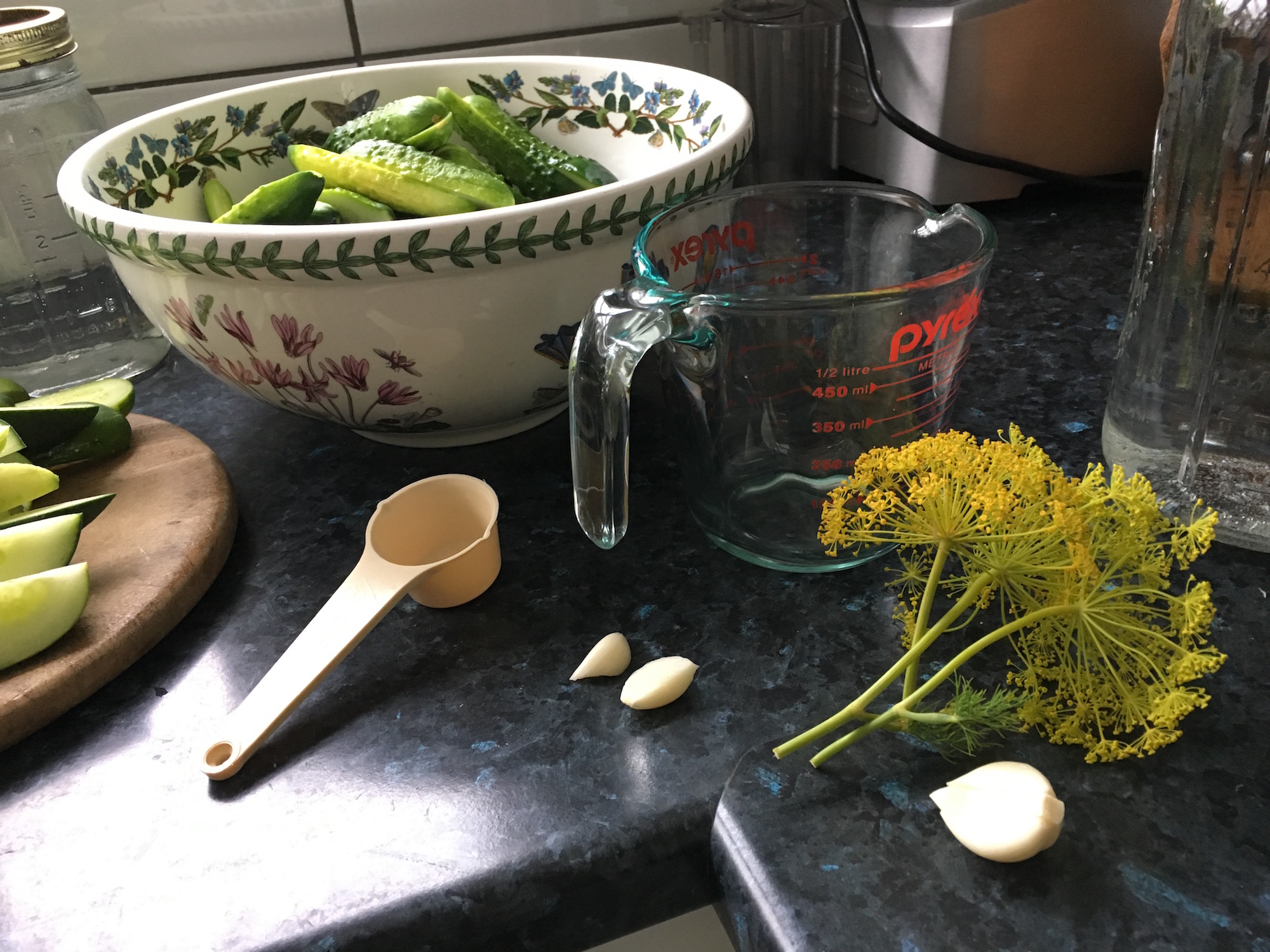
2017-01-02-08-03-25-smI grow pickling cucumbers every other year, in order to avoid becoming the Pickle Lady. Last year’s crop, however, was killed by frost, and we’ve been out of pickles for some time.

This year, the stars have aligned, and I have a beautiful crop of cucumbers coming on. As a bonus, the dill didn’t get completely wiped out by aphids (as it often does), so it’s perfectly timed with the cucumbers. There will be plenty of dill seed heads to flavour the pickles this year.

So it was with joy that I picked the first cucumbers yesterday. There weren’t enough to make a proper batch of pickles—there’s no point in heating up the canner unless I can fill it at least once—but I was fine with that. In fact, I was quite pleased there weren’t more. It meant I could make a batch of fresh pickles to put in the fridge and eat right away. After a long pickle drought, they’re going to taste fabulous!

Mountain neinei

2016-12-28-11-03-04-smMountain neinei (Dracophyllum traversii) is a tree Dr. Seuss would have been proud to call his own. Sparsely branched, with the leaves concentrated in tufts on the ends of the branches and bright red flower spikes on top, it would look right at home in Yertle the Turtle or The Cat in the Hat.

Aside from its goofy look, mountain neinei is an interesting plant. It is endemic to New Zealand (found nowhere else in the world), and inhabits ridgelines from about Arthur’s Pass north. We saw this one (and many others) on the way up Avalanche Peak near Arthur’s Pass last week. Though it is small (no more than 10 metres tall), it can live for up to 600 years, making it New Zealand’s longest-lived small tree.

It’s a useful plant, too. The leaves are used in weaving, the stems have been used to make walking sticks, and there is even an example of a flute made from mountain neinei.

It’s such a neat plant, it makes you want to speak in rhyme.

The ridge was quite steep,
And the day was too hot,
But the neinei were flowering.
We saw quite a lot.

Up rocks we scrambled.
The forest got smaller,
It looked like the top,
But the mountain was taller.

2016-12-28-13-24-57-smHigher and higher
We climbed and we huffed.
Till we reached the peak,
We really were puffed.

Spectacular views
And black jagged rock
Were our reward
For this strenuous walk.