Building Castles

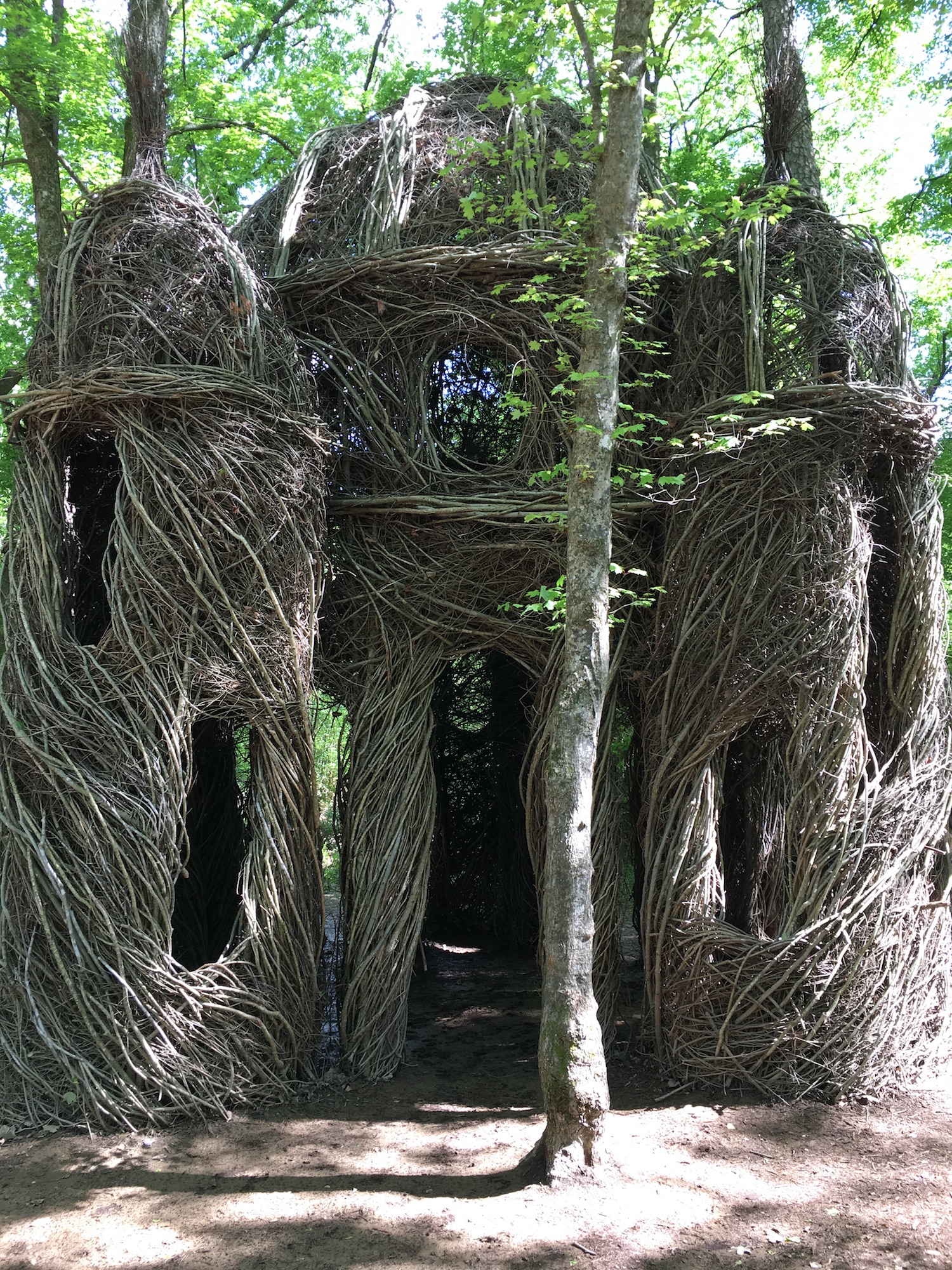
Patrick Dougherty is a North Carolina artist who builds amazing structures from tree saplings and sticks. His works are remarkably detailed. They evoke movement with their swirling lines and often skewed shapes. They provoke thought and reflection. Most of them invite you in, to experience them inside and out. And, by nature, they are ephemeral.

I can’t help but think we’re all building stick castles. We take the materials around us–the stuff life has dealt us–and build a structure we call ‘me’. Every ‘me’ is different and detailed, and many are wonky. Every ‘me’ is in motion–ever changing as we add new materials to our structure. Hopefully our ‘me’ invites people in for a more personal experience. And, ultimately, our structures are ephemeral.

Dougherty began building his stick structures with material that happened to be available in North Carolina. When he first started building structures in other places, he brought his materials with him. Over the years, he’s discovered that suitable materials can be found nearly everywhere, and he now finds what he needs close to where he’s working.

Likewise, we start off building our ‘me’ structures with the materials around us, and as we grow, hopefully we learn what we need to create strong selves. Hopefully we learn how to find those things, no matter where life takes us. The older we get, the more refined our technique, the more efficient and skilled we are at finding materials and building ‘me’. It doesn’t mean we aren’t wonky anymore–it means the wonkiness is perhaps more deliberate, planned, and stronger than it was before.

Dougherty builds about one structure a month, and he accepts that his artworks will only last two to four years. But though the artwork itself doesn’t last, its impact lingers in the hearts and minds of those who have experienced it. May our own ‘me’ castles do the same.

A New Jumping Spider

I met a new spider today–Phidippus whitmani. This one appears not to have a common name, though a related species is known as the red velvet jumping spider.

Yesterday, I noted that the red-spotted newt uses warning colouration to tell predators it is toxic. This jumping spider uses the same sort of colouration, but in this case, the warning is a lie.

Like other members of its genus, this spider protects itself by pretending to be a velvet ant with a powerful sting. Unfortunately for this spider, who had to put up with my attentions, I wasn’t fooled, and instead was quite taken by his fuzzy red velvet.

Red-spotted Newt

I was pleased to see today one of my favourite North American animals, the red-spotted newt (Notophthalmus viridescens). These colourful little salamanders have a complex life cycle that includes an aquatic larval stage, a terrestrial juvenile (eft) stage, and an aquatic adult. The terrestrial efts, like this one, are brightly coloured.

Like most bright colours in animals, the red skin and spots of the red-spotted newt are a warning. The red-spotted newt has toxic skin secretions that protect it from predators. This toxic defence gives red-spotted newts the ability to live in permanent bodies of water with fish in them, unlike many other salamanders which fall prey to fish, and rely on temporary pools.


Wool Sower Gall

Visiting America is always a rewarding experience from a naturalist’s point of view. Though New Zealand has some spectacular wildlife, it simply doesn’t have the sort of diversity one finds in North America.

This visit’s best find so far has been the wool sower gall.

This spectacular fuzzy ball, found on the twigs of white oak trees, is caused by the tiny wasp, Callirhytis seminator. The structure of the gall is reminiscent of a fluffy seed head of a plant. Small ‘seeds’ inside the fluffy exterior house wasp larvae.

Galls are fascinating structures. They are made by the plant in response to chemicals produced by an insect or mite. Galls are incredibly diverse in structure and location on the plant, but all provide food and protection to the insects or mites as they grow and develop. Essentially, the insect has hijacked the plant’s biology to create a perfect home with a built-in food source.

Gall-making evolved several times in different groups of insects and mites; it’s clearly a successful survival strategy.

But the plants aren’t entirely defenceless. In response to the gall insects, many plants produce chemicals that attract predators to eat the damaging insects.

In turn, some gall-inducing insects can turn off these chemical defences in their host plants. Host and insect are constantly evolving, each trying to get the better of the other. The galls are a spectacular result of their arms race.

Completing the Cycle

Back in early December last year, I posted an update on the preying mantids on my rosemary bushes that I’ve been following since mid-winter, when they were eggs.

Well, I haven’t forgotten them, and I’m pleased to report that they are all grown up now, and laying eggs of their own.

On the one hand, I’m thrilled (as I am every year) to watch the entire life cycle play out in the garden.

On the other hand, I’m getting a little worried.

Last winter, I didn’t prune the rosemary bushes because the bees depend on their flowers in late winter. Then in the spring I couldn’t prune them because the preying mantids hatched out. All summer I waited and watched the mantids grow. The rosemary plants grew, too, engulfing a bench on one side, and the path on the other.

And now the mantids are laying their eggs on the very branches I need to prune off…

We may soon see just how big rosemary can grow here.

To Burn or Not To Burn

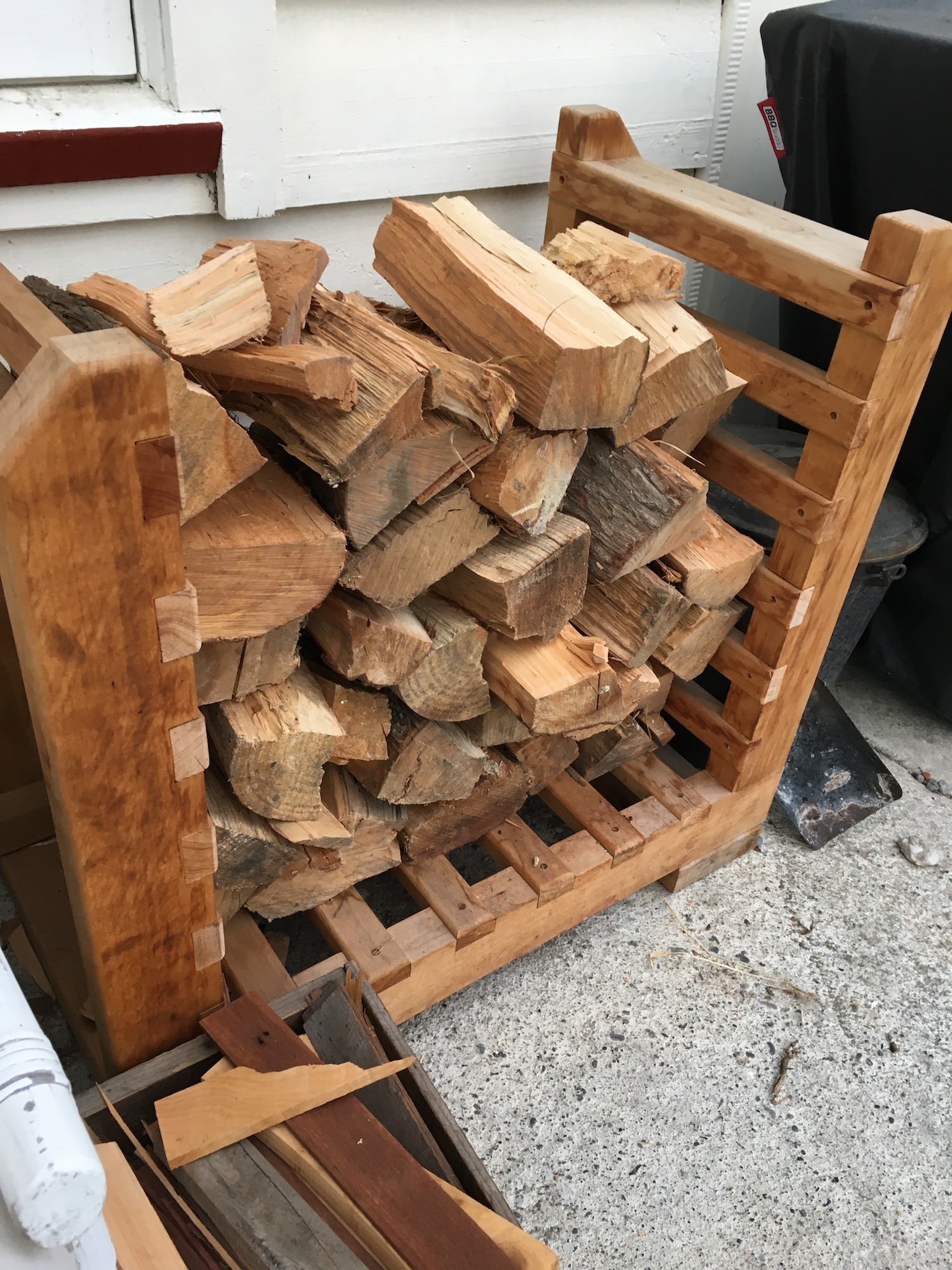
The firewood stands ready to go.

That is the question, on a night like tonight. If we light the fire, it will be the first fire of the season–always a bit momentous, because it’s an admission that summer is over.

Technically, we don’t need a fire tonight. It’s cool, but not terribly cold. We’ve had colder nights already this autumn, and never even considered lighting a fire.

But it’s been raining most of the day. The temperature has been inching downward since morning, and the wind has been picking up. It’s thoroughly unpleasant outdoors this evening.

It’s emotionally cold.

It’s not that I’m not thankful for the rain–we really need it. It’s not that I don’t enjoy hearing it on the roof and against the windows.

But it would sound even better accompanied by the sound of a crackling fire.

It’s not so much a need for warmth, but a need for hygge. A need for comfort.

And so, as a fresh gust of wind rattles the window, I think I’ll close this blog post, put on a pot for tea, and build a fire.

Mushroom Season

With the arrival of rain and cooler temperatures, the mushrooms have come out. Many fungi fruit in autumn, but this year seems particularly spectacular on our property. I can only guess that, after three years of drought, the fungi are taking advantage of weather that’s finally moist.

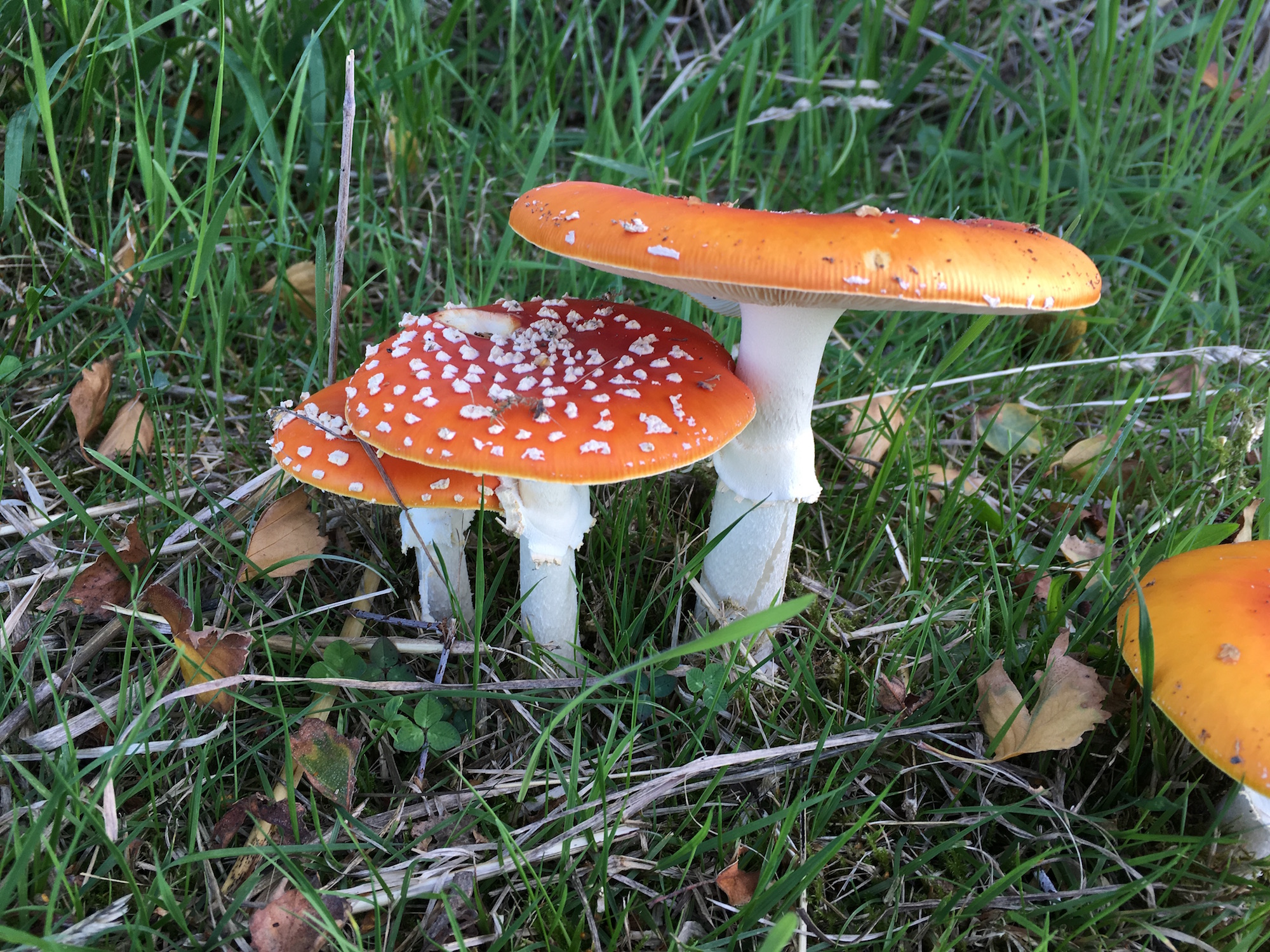
The most visually striking ones are naturally the Amanita muscaria–their bright red caps have reached epic sizes this year, and they’ve sprung up in profusion under the birch trees. They’re accompanied this year by three other species of mushroom with large brown caps (Paxillus involutus, Leccinum scabrum and a Russula).

Puffballs dot the lawn, and an assortment of smaller mushrooms have joined them.

The best find so far has been the presence of seven Noddy’s flycaps in the vegetable garden. I blogged about this mysterious fungus several months ago when the first sporocarp popped up. To find this many all at once is quite unusual.

There is another full week of rain in the forecast, and I’m looking forward to what new gems might spring up. There is also the exciting possibility of slime moulds in this weather.

So forgive me if I walk around with my eyes on the ground this week. I’d hate to miss the show.

Water Perspective

“The weather’s been shocking! Where did our sunshine go?”

“I don’t know. All this rain is horrible.”

I listened to this conversation with a mixture of amusement and sadness. Amusement, because, though we’ve had seven days of off-and-on drizzle, it’s not been that bad. It’s not been cold or windy, just overcast with some light rain now and then.

Sadness because the conversation revealed how disconnected the speakers were from the desperate state of Canterbury at the moment. Three years of drought have left our streams dry, our groundwater depleted, and our land tinder-dry. The soil is dry as dust for as far down as you want to dig. This rain hasn’t even begun to bring us back to the soil moisture we should have. It has wet the top few centimetres of soil, no more.

The truth is, we need weeks and weeks of steady rain, just to bring us to where we should be at this time of year, then we need a nice wet winter to top us up.

Beachgoers have been spoiled with three years of clear skies and record high temperatures, but if it continues, there will be dire consequences for the region–a region that depends upon irrigated agriculture to fuel the economy. Not to mention the higher water bills, more frequent wildfires, rising electricity costs (because much of our power comes from hydro lakes), and fewer recreational opportunities.

While those of us involved in growing plants and raising livestock understand this intuitively, the majority of folks, living in town and paying little attention to more than the immediate weather conditions, are completely unaware.

It can’t be good, this lack of awareness. Our planet is facing such catastrophic climate change, that a lack of awareness of larger patterns in weather and climate can only lead to continued lack of action to address the issue, a continued blindness to the changes that to me are so clear and convincing.

Until we all understand that having nothing but beautiful beach days isn’t good, our fight against climate change is going to languish.

Winter Cat

The cat has decided it’s winter. We’ve had a few chilly nights, and some drizzly, overcast days, but the daytime temperatures have been pleasant, even in the rain.

The cat, however, thinks it’s time to hibernate.

He has distinct winter and summer behaviours. In summer, he spends day and night outdoors, coming inside only to eat or for the purpose of irritating us by demanding to come in and go out every three minutes.

In winter, he spends his days sleeping on my daughter’s bed or in my office, and his nights in front of the fireplace, going out only briefly so that he can demand to be let back in again once we’re comfortably engaged in something else.

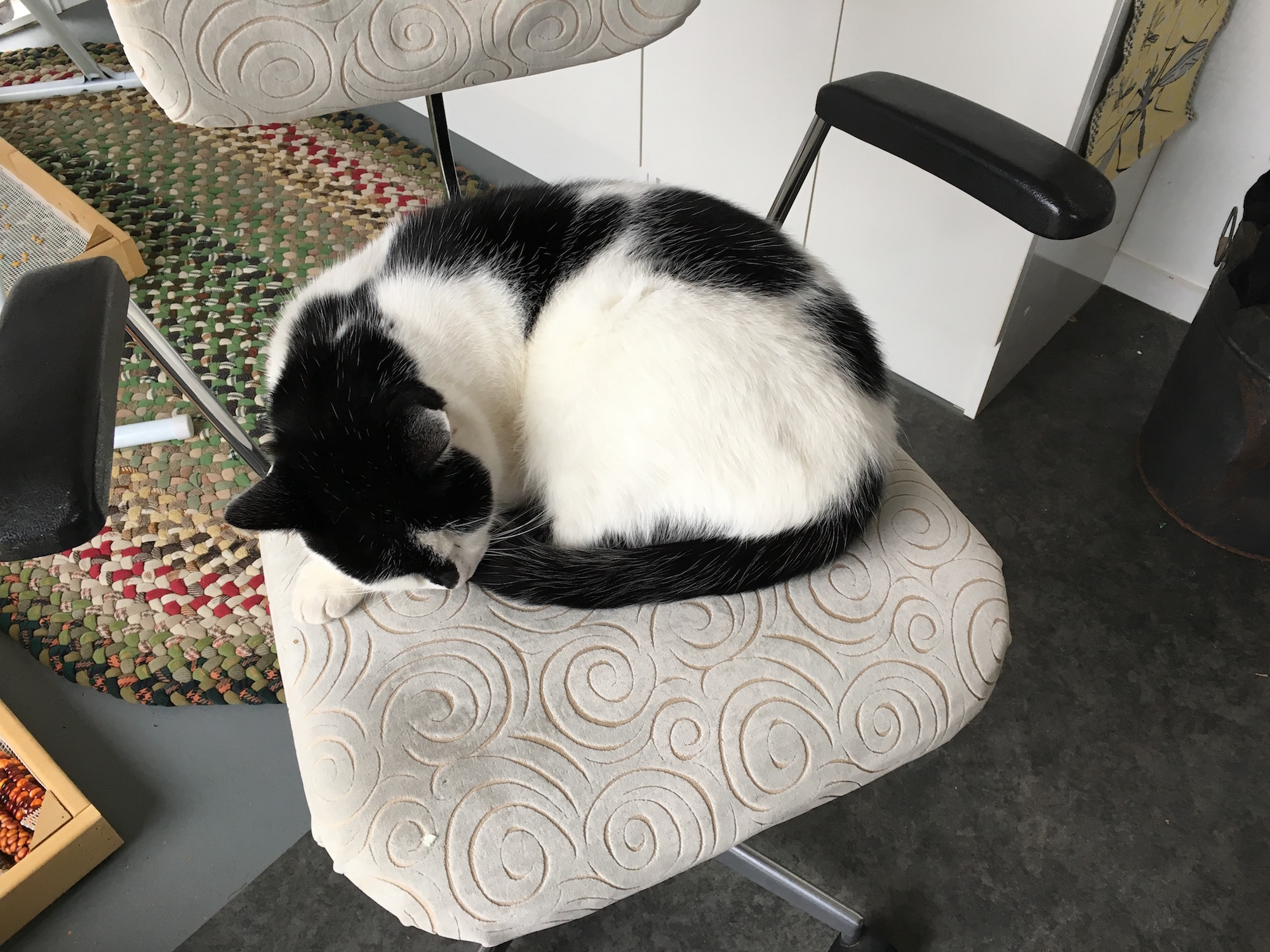
The past few days, he’s been spending time on the couch and, last night, he stretched out in front of the fireplace, though there was no fire. Today, he claimed my office chair before I had a chance to sit down.

Never mind that it’s still warm enough to have the doors and windows open. Never mind we’re still eating summer vegetables from the garden. Never mind that autumn has hardly begun. The cat says it’s winter.

Escape the Heat

2017-03-02-15-12-14I love my office. The northeast and northwest walls are formed almost entirely by large sliding glass doors. I have sunlight in the office all day. On warm days I can throw open the doors and enjoy feeling like I’m working outdoors.

In winter, I rarely have to run my heater–even ten minutes of sunshine can heat up the room. The insulated and windowless south-facing walls keep the room cosy and draught-free, even in howling storms.

That’s all great…for most of the year…but when the outside temperature climbs above 30°C (86°F), all that sunshine becomes too much. No matter how nice the breeze through those open doors, sitting in the sun becomes unbearable. My attention starts to wander. My brain become sluggish. My hourly word count plummets. At some point I have to either give up work for the day or take it elsewhere.

A pool of shade, a grassy seat, and a clipboard, and I’m back in business. It’s officially autumn here, but it’s still hot enough to need to escape the heat. I’m looking forward to cooler days when I can appreciate my office again.