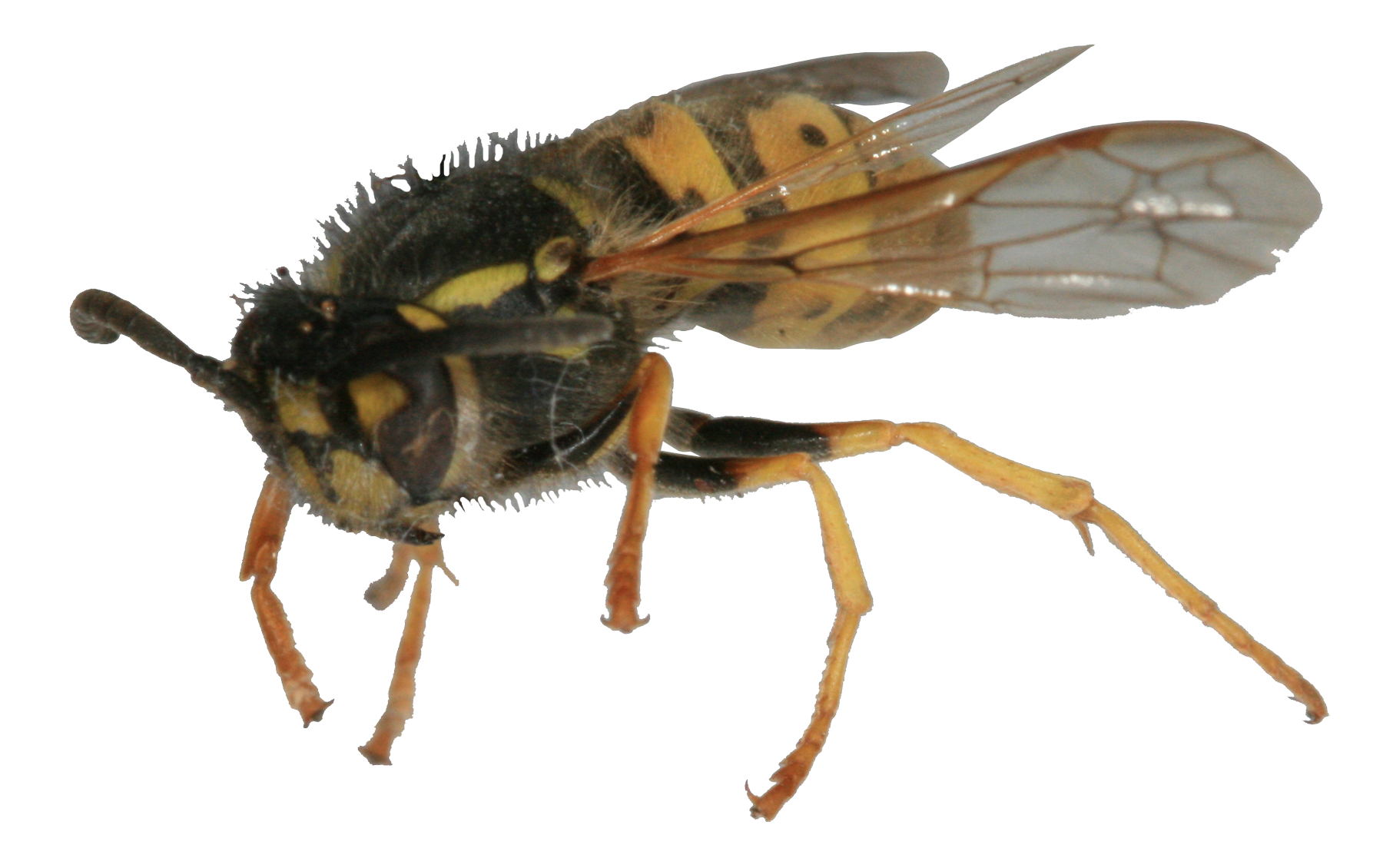
German Wasps

GermanWaspCanning fruit or tomatoes always brings them around—the German wasps can’t resist the sweet/tart smell of chutney, tomato sauce, or apples. And of course, their numbers are highest in late summer/early autumn when we’re doing lots of canning.

Today, they flitted around the kitchen most of the afternoon, licking up applesauce from the benchtops, and generally being a nuisance.

German wasps are opportunistic feeders—they’ll eat most anything, from fruit, to dead animals, to live insects. In the house, they not only go for whatever’s cooking on the stove, but they catch houseflies in mid-air, chomping them messily on the windowsills and leaving cast off fly legs and wings all over the place.

Though they are a nuisance indoors, and can prove deadly to people like me, with allergies to their stings, they do their worst damage in our native forests where they rampage like a pack of hungry teenage boys.

As flexible scavengers whose numbers can grow to an estimated 10,000 wasps per hectare in beech forest, their impact can be devastating. They compete for food with native birds, lizards, and bats. They also eat native insects and even baby birds.

Almost every year, we have a wasp nest somewhere on the property. I haven’t found this year’s yet, though by the number of wasps enjoying my applesauce today, I know there’s a nest somewhere nearby. When I find it, I’ll destroy it—from an environmental perspective, and from a personal safety perspective it needs to be done.

But I admit I will do so with a twinge of guilt. Troublesome as they are, I have great respect for wasps. These beautiful animals are the ultimate efficient eating machine. They are no-nonsense foragers who go out and get the job done so well that they’ve been able to invade diverse habitats throughout the world. I may not like the consequences of that, but I can admire an animal flexible enough to thrive almost anywhere.
Cat Games

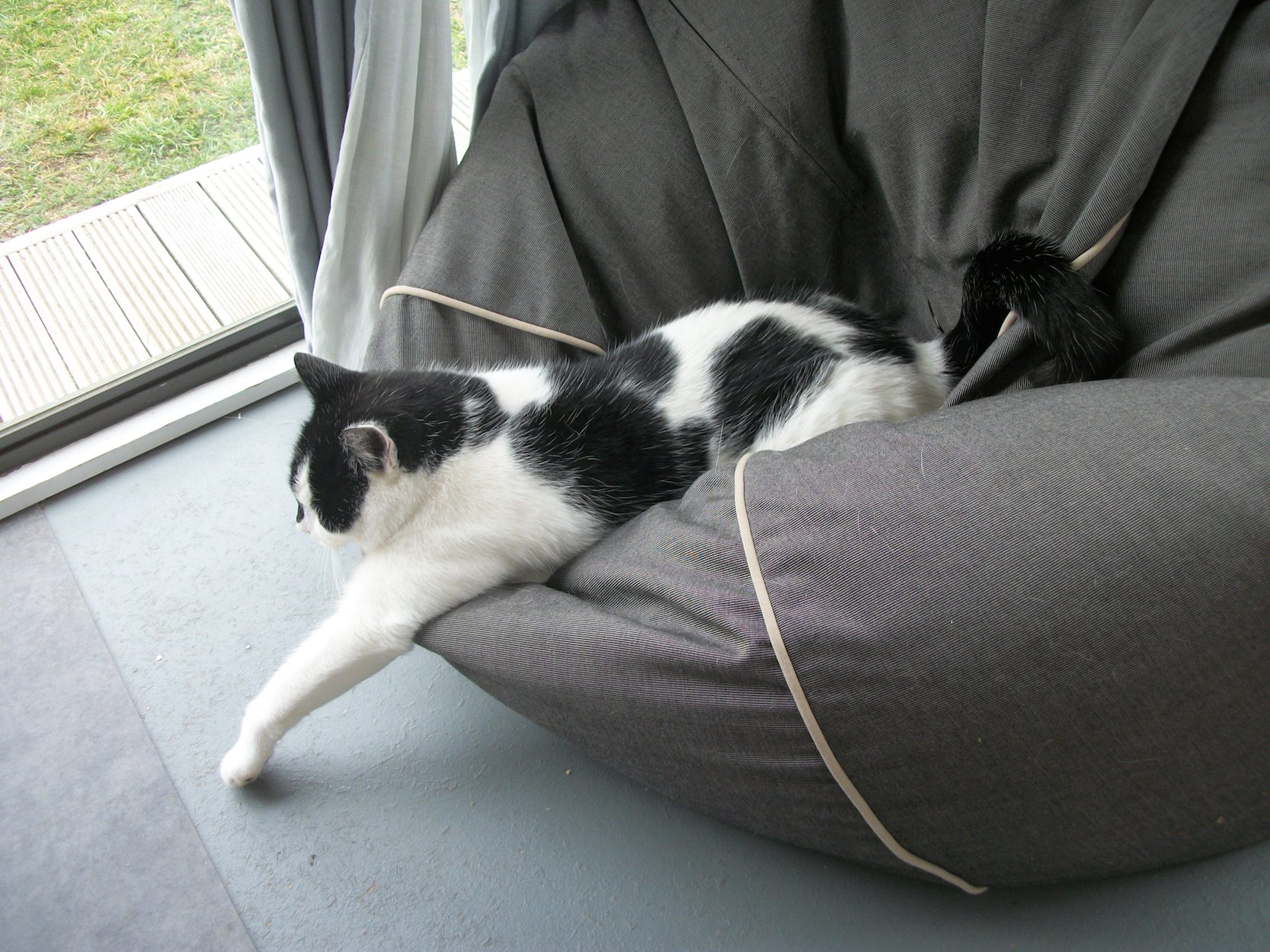
Exhausted after a hard night's hunting.

Exhausted after a hard night’s hunting.

The routine is the same every morning. About 5 am, the cat starts howling at the bedroom window. I eventually roll out of bed, grumbling at him, but knowing I need to get up anyway. On my way through the house to the bathroom, I let him in. He has a snack while I get ready to milk the goats. He comes back outside when I go out.

I set up grain and milk pail at the milking stand, then head out to let the chickens out for the day and feed them.

The cat is there, in the tall grass half way to the chicken coop. His black and white body stands out stark on even the darkest morning. He crouches as I go past on the way to the chickens. When I come back, he pounces. I can almost hear him saying,

“Boo! HAHAHA! Gotcha!”

I head to the paddock to bring out the first goat. As the goat trots up the hill toward the milking stand, the cat bounds across the goat’s path, back arched, leaping menacingly as he goes, as though he is going to bring down an animal ten times his size.

Or he might lie in wait for the goat’s return to the paddock, leaping out from behind the corner of the shed.

Sometimes, he gets more than he bargains for. If it’s Artemis he threatens, it goes badly for him. She has a vendetta against the cat, and lunges at him every chance she gets. If I’m not right there, ready to grab her collar and hold her back, she’ll chase the cat all over the yard to show him who’s boss.

In truth, I think the cat enjoys being chased by the goat. He enjoys pretending to attack me in the dark as I feed the other animals and do the milking.

By the time I’m finished with the milking, the cat is done playing. He trots back indoors with me, has another snack, then finds a cosy place to curl up and sleep for the day.

Windfall

2016-03-10 21.13.23 smToday.

Thirty degrees C.

120 kph wind.

Dust clouds so thick I couldn’t see the back fence 20 metres away.

So I knew there would be carnage by day’s end.

Picking yellow summer squash for dinner, I was having trouble finding them, because they were completely coated in dust.

I studiously avoided looking at the fruit trees—I couldn’t face what I knew I’d find while the wind still howled.

Later in the evening, my husband and kids went out and surveyed the damage. Remember back in November when I posted the picture of all those apple blossoms? I knew it was too good to be true.

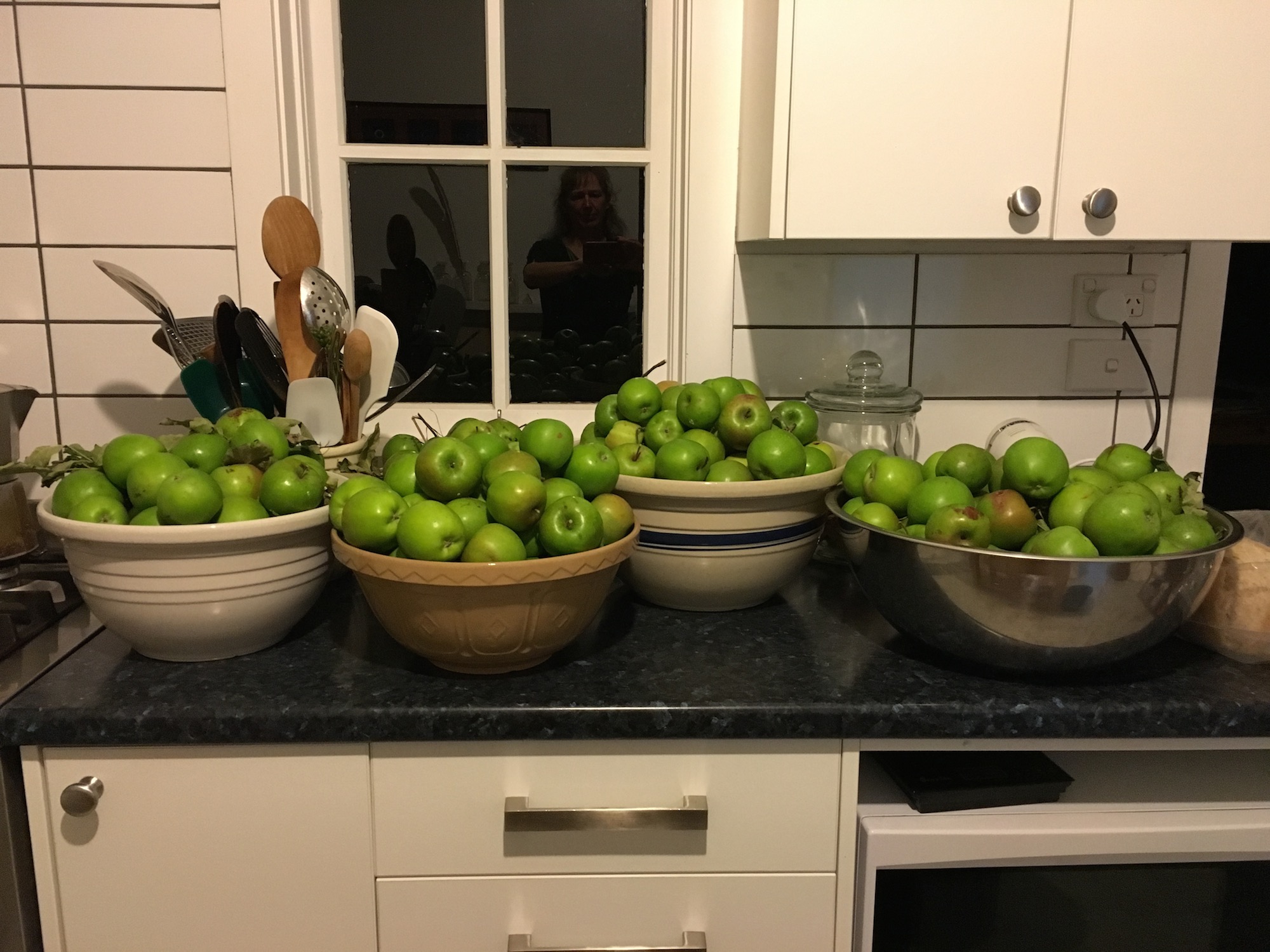
Every fruit was stripped off of every tree. They collected them all, tossed the bad ones on the compost, and brought the rest inside.

None are quite ripe, but we’ll make the best of them—applesauce and pie this weekend, for sure!

The Midges!

A male midge, with feathery antennae.

A male midge, with feathery antennae.

It was like a scene from an Alfred Hitchcock film. The sliding glass doors of my office were swarming with midges, commonly called lakeflies here (because they lay their eggs in nearby Te Waihora/Lake Ellesmere, and rise off the lake in huge swarms in summer). By their density (at least 1 per square centimetre), and the size of the doors, I estimated that there were at least 90,000 on the doors alone, not counting the ones swarming around looking for landing space.

I had been working late in the office, with the lights on, and they were attracted to the light. I turned off the light, took a deep breath (breathing in midges is horrible), and bolted out the door, slamming it closed behind me.

A female midge, with thread-like antennae.

A female midge, with thread-like antennae.

There were about a hundred on my ceiling in the morning. I reckon that was pretty good, given how many were knocking on the door.

I actually don’t mind the midges much. They don’t bite, and their appearances are brief, if dramatic.

But the question is, what are they all doing in those great big swarms? Well, the swarms are great big mating displays called leks. Male midges (they are the ones with feathery antennae), fly around in large swarms trying to attract the eye of a female. The females drop by the lek, pick out their favourite male, and mate with him. The resulting eggs are laid in slow-moving bodies of water (or sometimes on wet car parks, where I imagine they don’t live long).

The larvae of our particular midges are called bloodworms. They are one of the few insects that have haemoglobin in their blood. That’s what gives our blood its red colour, and it does the same to the midge larvae. The haemoglobin allows the midge larvae to live in low-oxygen, stagnant water, because it can capture and store oxygen, just as it does in our blood.

Midge larvae are a critical part of the food chain in many terrestrial aquatic ecosystems, feeding fish and other insects. They also must be important food on land, too. The spiders and songbirds certainly enjoy them when they swarm.

Still, in spite of their harmlessness and their ecological importance, I think Hitchcock could have had made a great movie of them.

Happy International Women’s Day!

Girls can have adventures, too.

Girls can have adventures, too.

It’s only fitting that today I celebrate two women who influenced my view of the world and a woman’s place in it—Dian Fossey and Jane Goodall.

These two women were my heroes growing up. They defied everything society taught me a woman should be. They were bold, courageous, and smart. They spent their days scrambling through the rainforest wearing khakis, with their hair pulled back into a no-nonsense ponytail. They believed passionately in their work, and Fossey even died for it.

I devoured every article about them in National Geographic and International Wildlife magazines. I watched every documentary on their work. I wanted to grow up just like them.

They taught me the value of patience. They taught me to sit still and observe. Watching how they studied apes, I learned to leave the butterfly net and jam jars at home—I could learn more by joining my subjects in their world than by bringing them into mine.

And when, as a teen-ager on a job shadow day, I was told by a burly wildlife manager, “We don’t like girls,” Fossey and Goodall were standing behind me. “Ha! I’d like to see him try to stop you! Hold your ground, girl!”

I know I am not alone. I am not the only girl who has taken strength from the women who have gone before them. I am not the only girl who might have caved in to dismissive career counsellors and teachers, to the stereotypes they saw on TV every day, to the expectation that even a ‘tomboy’ would eventually grow up into a ‘real’ girl. A generation of girls watched Fossey and Goodall and took notes.

I never did study big mammals like I wanted to, but not because of my gender—I found my skills and interests ultimately led me elsewhere. But Fossey and Goodall are still my heroes.

Thank you, ladies. For your groundbreaking research, and for being you. You have made a difference in more lives than you know.

The Journey

DSC_0006smGive thanks for the air
The water
The soil
The vegetables in the garden
The fabric
And the needle
And the thread

Take time
To watch bees
To drink tea
To listen
To laugh at bad jokes
To write awful poetry
To admire weeds
And talk over the back fence

Do not be in a hurry
To get where you are going.
One day
You will find yourself there.
Perhaps unexpectedly.
And then it will be too late
To enjoy the journey.


Summer Soup 2016

2016-03-06 19.55.54 smEight pm, and I feel like I’ve hardly stepped outdoors today.

I remember the air was still and warm early this morning. I milked by the light of the stars and a sliver of a crescent moon.

I remember the cool drips of water in the freshly watered vegetable garden just after breakfast.

But, aside from a hurried trip to the goat paddock with an armload of corn husks or carrot tops, I haven’t been outside since eight am.

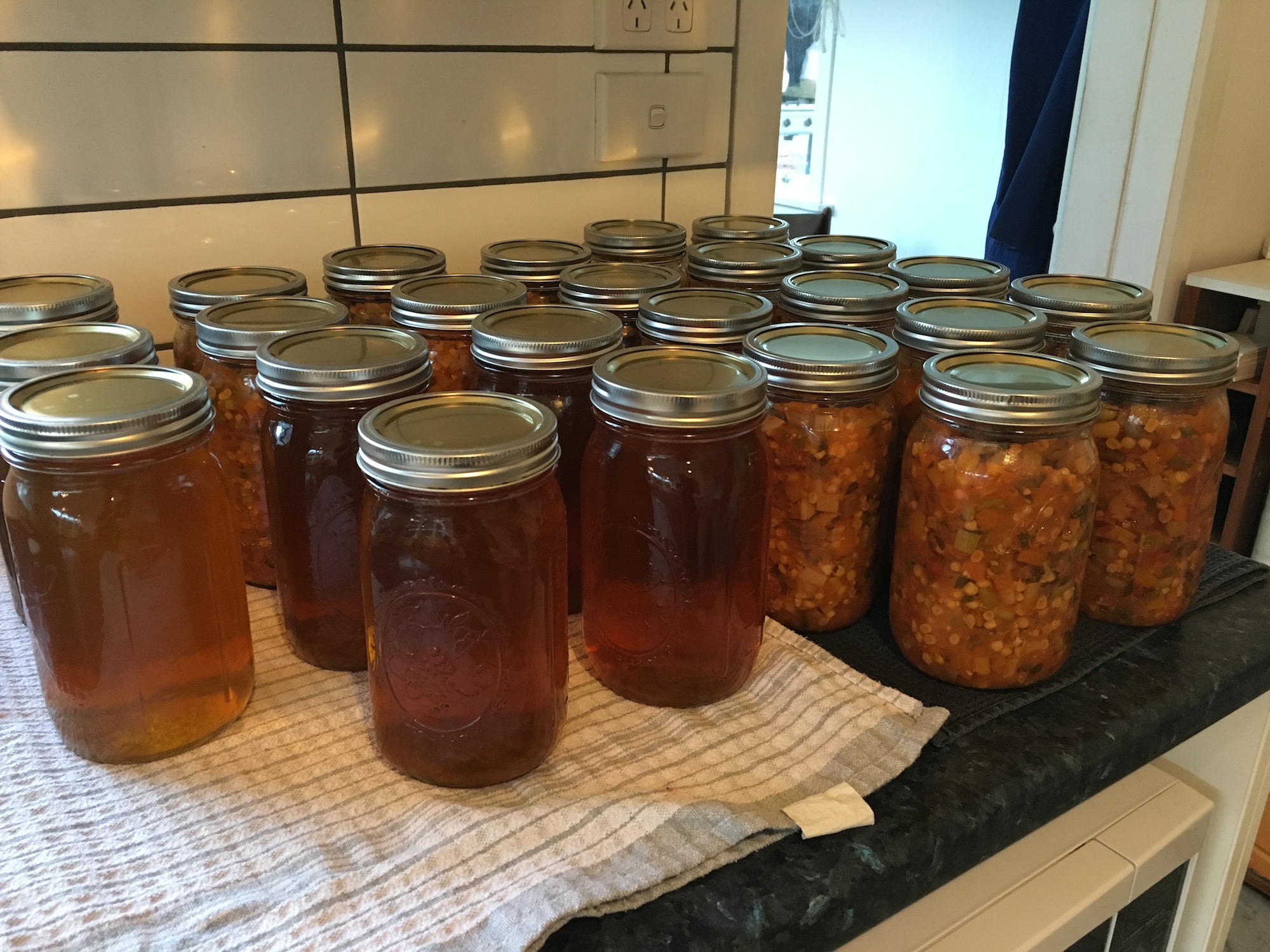
Just after breakfast, the whole family got to work making the year’s Summer Soup (which I’ve blogged about before). We spent the morning chopping vegetables and making up the soup together, then I settled in alone for the long slog at the pressure canner.

It was a hot day to be in the kitchen canning soup. I thought it was just that I had four burners and the oven going much of the afternoon, but when my daughter walked through the kitchen looking wilted, I realised it was just a hot day.

That was the closest I got to knowing what it was like out there.

But I’ll appreciate this lovely summer day spent indoors—over and over again all winter. The final tally for the day was nineteen quarts of soup and six quarts of vegetable stock. That’s a lot of summer, stored up to cheer us on a cold winter evening.

Ballistic Plants

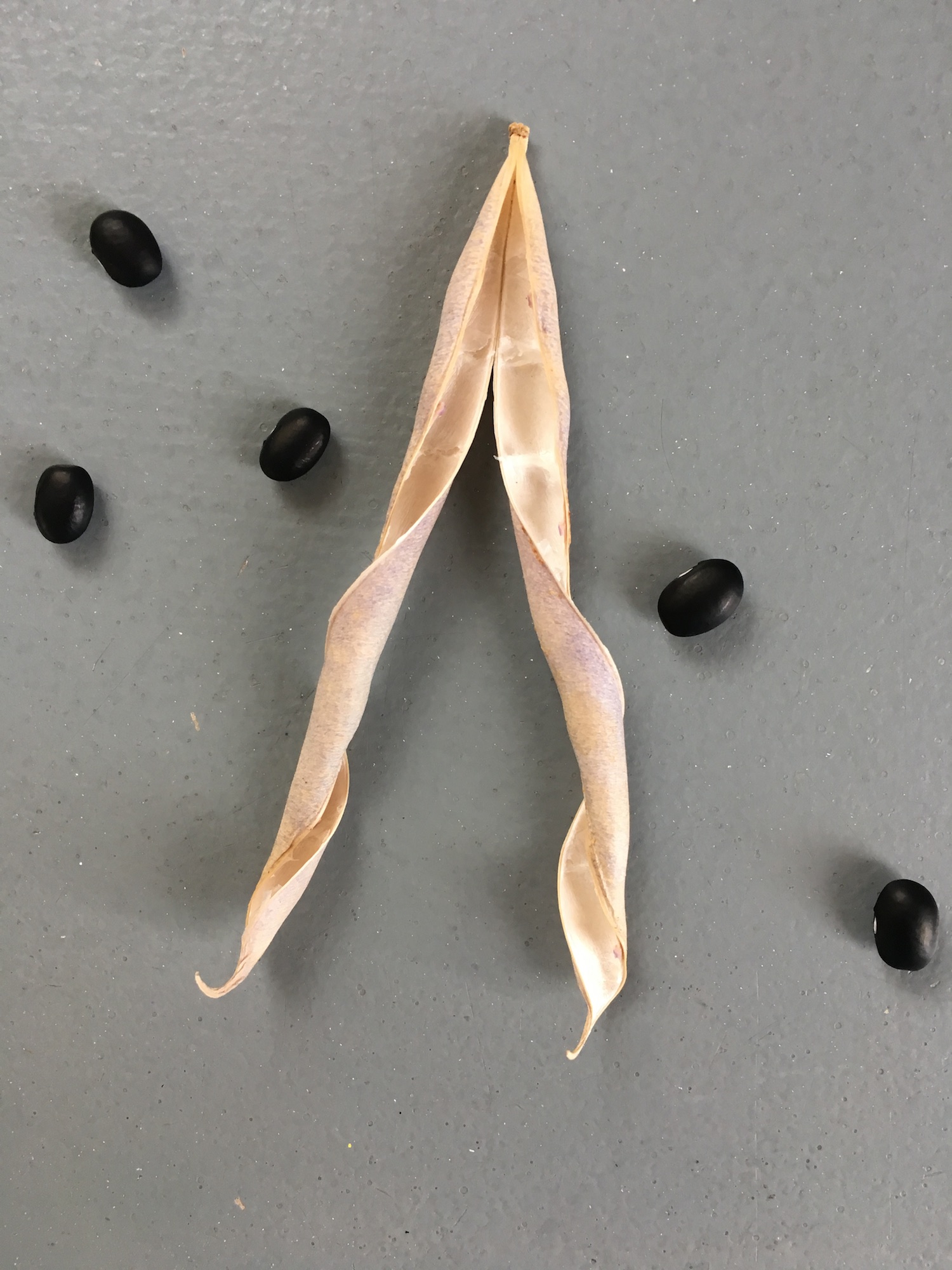
2016-03-05 19.16.53 smI only just harvested the black beans before they all exploded in the garden. It was the hot sun Thursday and Friday that did it. Friday afternoon, when I realised how dry the beans were, I raced to pick as many as I could, and was able to bring in the last of them this morning, with only a few losses.

Though it can be a pain for harvesting, I love plants with explosive seeds. As much as the explosion and shower of seeds, I like the empty pod afterwards. The tension that caused the explosion is gone, and the empty pod twists into attractive little corkscrews.

We have a weed in the yard with seeds so explosive, my daughter and I have dubbed it the seed-in-your-eye plant. It’s real name is bitter cress (Cardamine hirsuta). It’s common in the flower beds around the house, and has a habit of detonating just as a hapless weeder grabs hold of it (hence the seeds in the eye).

My favourite explosive plant is touch-me-not. Where I grew up, touch-me-nots sprang up in any moist hollow. As soon as they started flowering in summer, I’d start searching for ripe seed pods. I’d give each seed pod a gentle squeeze—if the pod was ready, it would burst under my fingers, sending yellow seeds scattering, and turning into a curly work of art. I loved the feel of the deforming fruit.

Sadly, my own children only have beans and bitter cress to detonate here. Now, if I can just convince them that shelling dry beans by detonating them is great fun…


Thorns

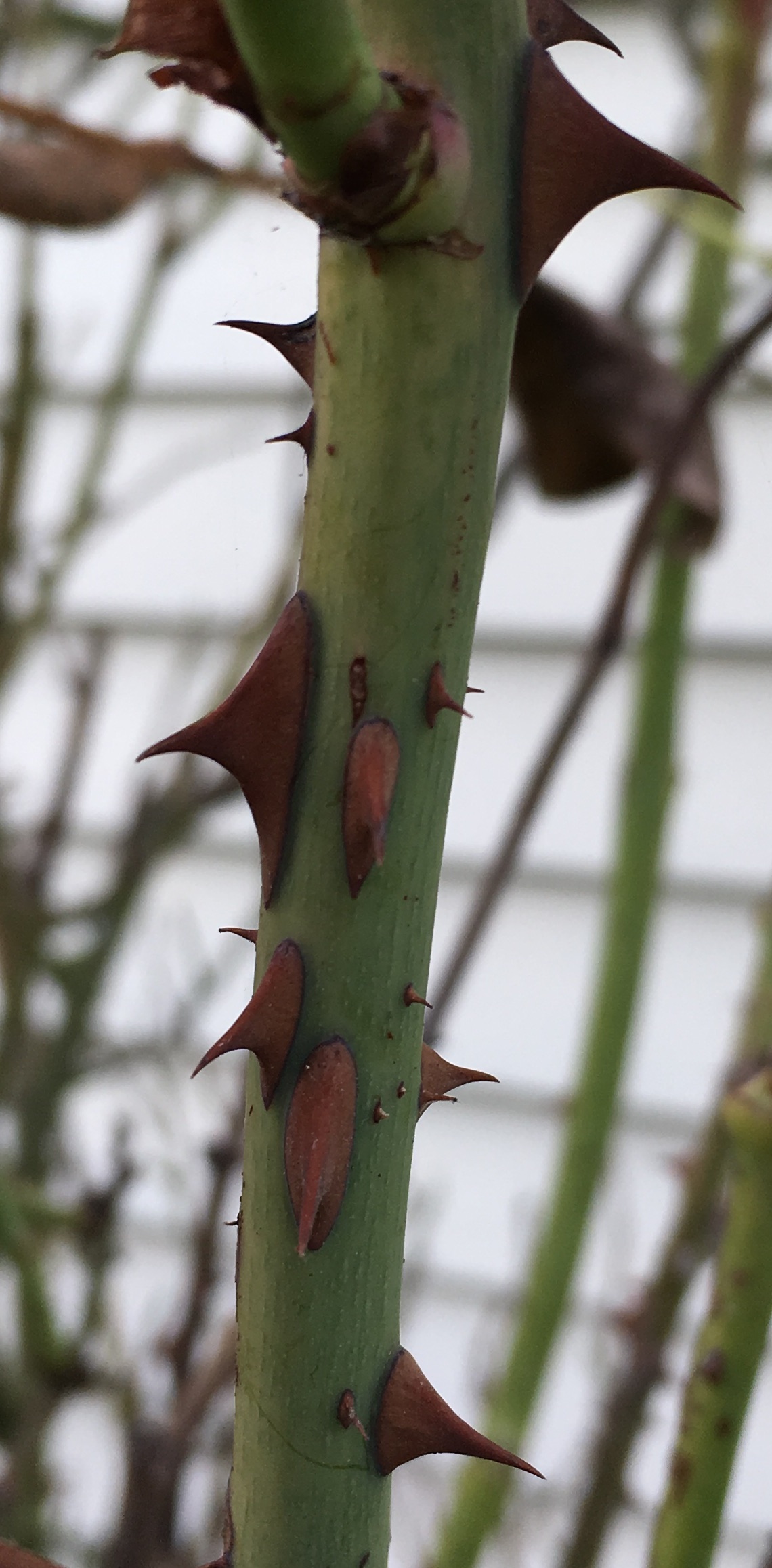
2016-03-04 18.40.25 cropYoung rose
Be careful.
Grow those thorns.
Protect yourself.

But

Don’t grow too many.
Let your beauty shine

Sometimes.

Leave vulnerable spaces.

Not everyone
Wants to eat your leaves.

Some

Come only to admire
Or to know you better.

Let them in.

Invasion of the Cabbage Whites

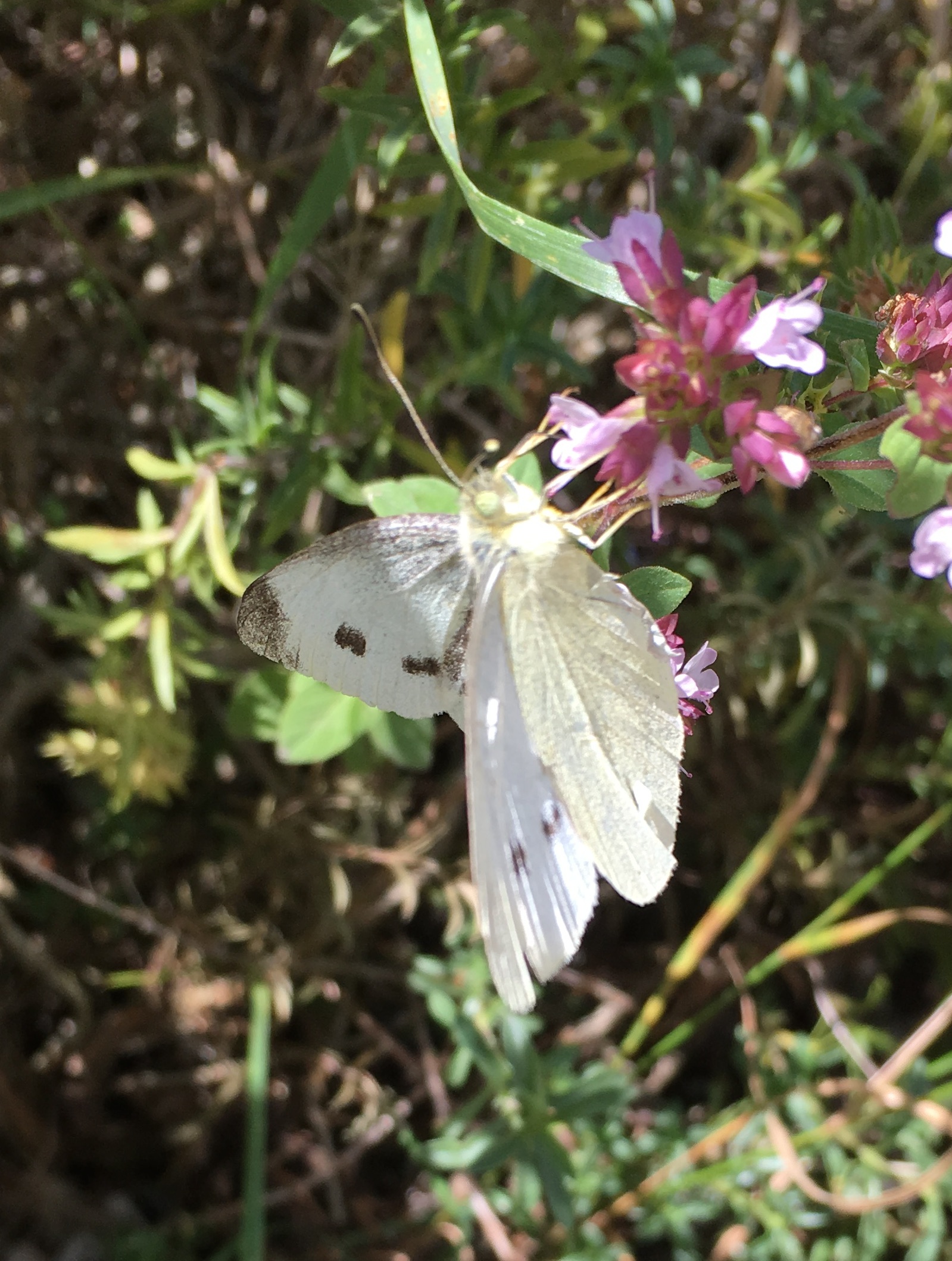
2016-03-02 14.24.23The small cabbage white butterfly (Pieris rapae) is the bane of gardeners’ existence all over the world. Native to Europe, Asia and North Africa, the butterfly is now found throughout most of North America, Hawaii, Australia and New Zealand.

In my little corner of New Zealand, the butterfly is especially common, presumably because of the huge numbers of commercial brassica crops grown here. In late summer, the roadsides shimmer with the butterflies, and their tattered wings flutter like flags in my car’s grille.

These butterflies are the reason broccoli is a seasonal crop for us. Broccoli can be grown year-round here, but mid- to late-summer broccoli becomes infested with caterpillars. For a few years, I dutifully treated my broccoli with Bt (an organic bacterial toxin that selectively kills caterpillars), but I eventually stopped bothering.

By mid-summer, there is so much other food coming out of the garden that, truth is, we don’t need the broccoli. And having a broccoli-free part of the year helps bring variety to our diets, and makes broccoli more special when it is available in winter and spring.

Sour grapes? Not at all! Just learning to work with the local wildlife instead of against it. Makes life easier for everyone!