Walking Wellington

2016-06-03 10.22.20I spent the weekend in Wellington at a convention, but I have to admit that the best part of the weekend was walking around the city.

I could never live in Wellington—I’m just not a city gal, and it would kill me—but I love to visit. Yes, I enjoy Te Papa, and the Carter Observatory, the World of Wearable Arts show, and all the other indoor attractions. But mostly I like going there to walk.

And I have to think I’m not the only one who enjoys walking in Wellington. The streets are full of people walking—to and from work, during lunch breaks, to shops, to the bus stop…

You can walk along the waterfront, or through the residential neighbourhoods with their many finial posts, through the parks or the botanic garden, or along bustling Cuba Street. You can even walk to the airport, if you’ve got time and inclination—the city is compact enough that nearly everything is within a reasonable walk.

Well, reasonable by my standards.

Of course, when Wellington’s weather turns, it’s not a place you want to walk. I’ve been drenched by wind whipped waves on the waterfront, even when it’s not raining. But on a good day walking Wellington is a delight.

This past weekend’s weather was crisp and clear, with almost no wind. Perfect. I did about 10 hours of walking from Friday to Sunday, and would have happily done twice that much, had my schedule allowed.

So, if you’re planning a trip to windy Wellington, be sure to pack your walking shoes.

A Fondness for Finials

2016-06-05 10.31.13 smWellington is a city rich in finial posts.

And…um…what’s a finial post?

Finial posts are the ornamentation found on the gable ends of roofs. Roof finials have been used for millennia all over the world. They originally served the purpose of capping the point of a roof, where the tiles come together (think of the fancy post on top of a Japanese pagoda). You need something to cover the unavoidable hole where all the tiles meet. Many roof finials still serve this purpose, but they are also ornamental.

2016-06-05 10.29.42 smGable finial posts were popular in the New Zealand villas built between about 1880 and the beginning of World War I. They were just one of the many ornamentations (inspired by the new steam-powered woodworking tools of the time) used in these houses. The style (including the finial posts) was also popular during this time in America and England. Folklore in the eastern U.S. suggests that finial posts were not just attractive, but also prevented witches from landing their broomsticks on the roof.

At this point most of you are wondering why on earth I even notice finial posts. My appreciation of finial posts started when we did a major repair on our own house—a tiny villa built around 1880. The front gable was rotting and in need of replacement. It had been repaired in the past, and in one of the repairs the finial post had been sawn off at the roofline. This is a common fate of finial posts on old villas—re-roofing is much easier without finial posts in the way.

When we repaired our house, my husband insisted on restoring the house’s finial post, and this started a whole-family appreciation of finial posts. Now we can’t go anywhere without noticing good finial posts, or noticing when they’ve been removed.

And so, while in Wellington this weekend, I took several long walks, simply to admire the finial posts.

Of course, the question I have is, with so many finial posts in Wellington, do witches need to land at the airport instead?

Sunrise, Sunset

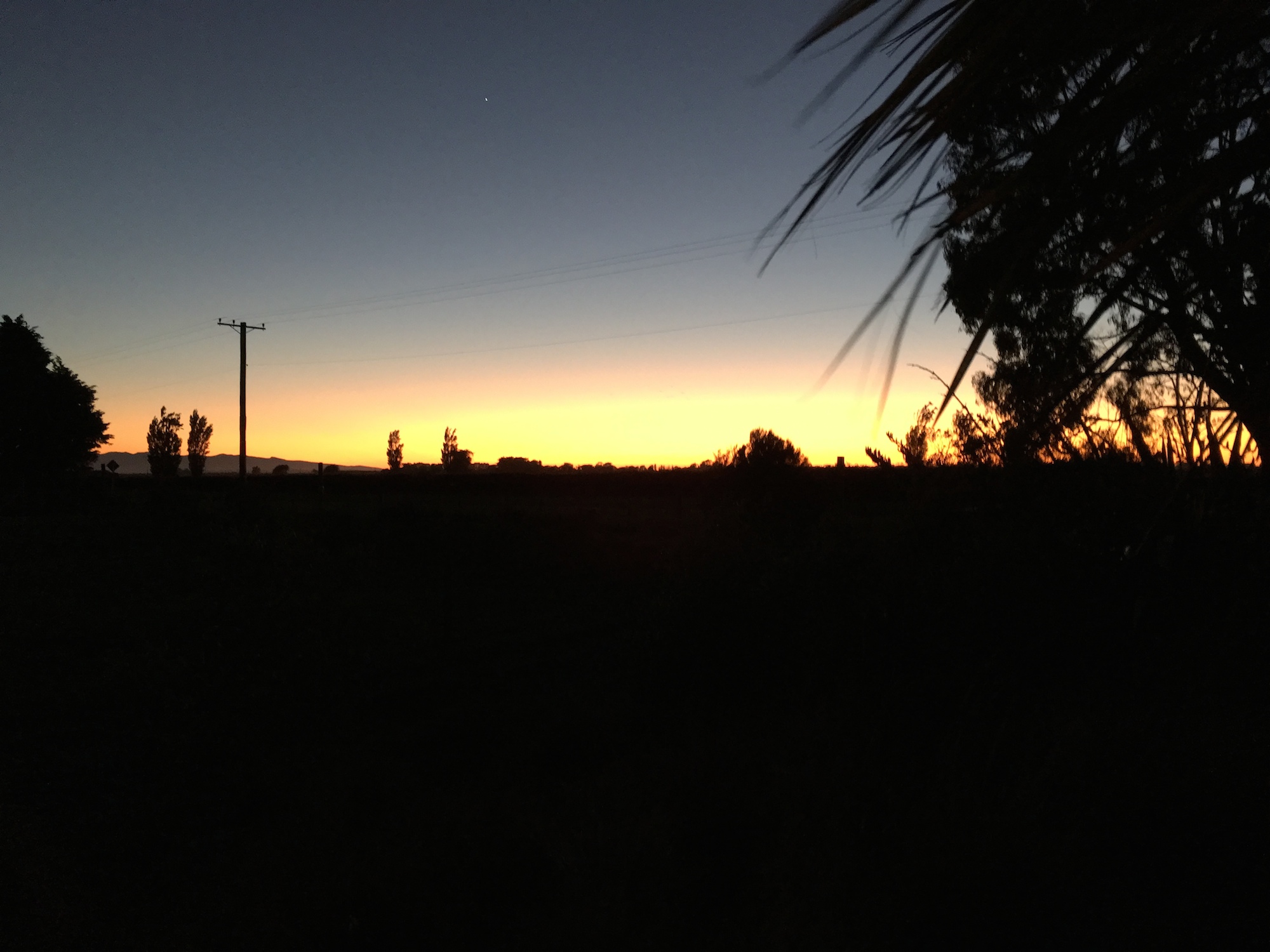
2016-02-04 05.55.27 smOne of the best things about living in the temperate zone is the long sunrises and sunsets we get much of the year.

When we lived in Panama, the sun would leap into the sky in the morning, and dive out of it in the evening, with little in the way of lingering twilight. It was like flicking on and off a light.

The more gradual appearance and disappearance of the sun in the temperate zone is far more picturesque, and there are few places on earth more picturesque than New Zealand when it comes to sunrise and sunset. Between mountains and wild weather, you can’t beat it.


Throwback Thursday: Jujuná

d1scans011 smLiving in Panama was sometimes like living in a never-ending episode of David Attenborough’s Life on Earth.

The invertebrates alone were enough there to keep me intrigued for a lifetime—tarantulas, whip scorpions, solifugids, scorpions, grasshoppers, mantids, butterflies, bioluminescent click beetles…every day was an entomological adventure.

And the snakes! Coral snakes, fer-de-lances, palm vipers, vine snakes, boa constrictors…never a dull moment.

And don’t even get me going on the frogs, birds, and lizards—I could spend a week waxing lyrical about the hummingbirds alone.

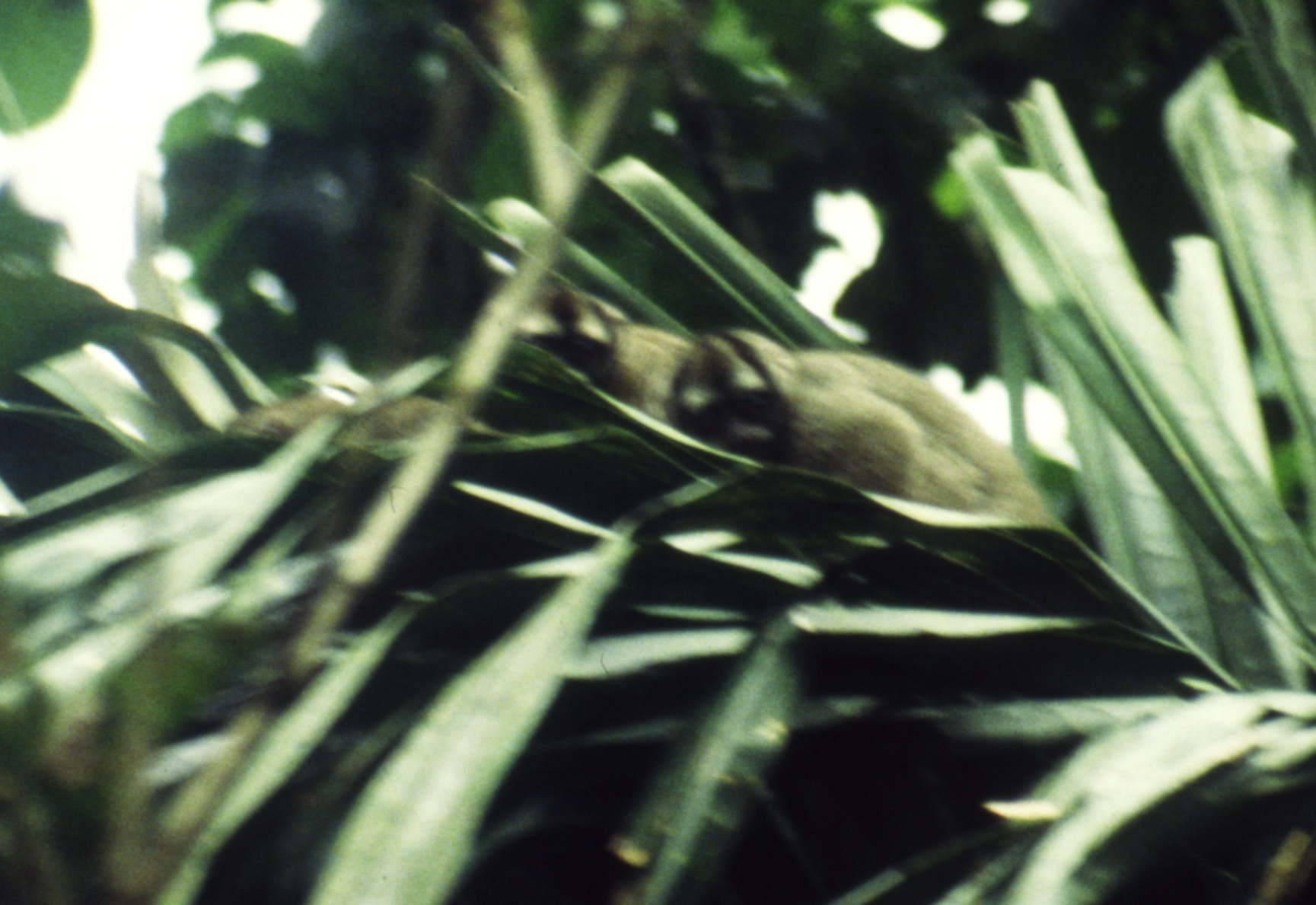
In the rainforest, we could see howler monkeys, spider monkeys, cotton-top tamarins, agouti, and jaguarundi, among other mammals. And even in our far-from-pristine village, where all the forested land was managed by the local farmers, we had mammals—sloths, squirrels, rats the size of small dogs, and one of my favourites—the jujuná or night monkey. We didn’t see them often. As their name implies, they’re nocturnal. The only nocturnal monkey, as it turns out. Its secretive habits are probably why it manages to live where other monkeys don’t.

Night monkeys are interesting, not just because of their unusual nighttime habits, but also because they are one of the few primates other than humans who contract malaria, making them important in medical research on the disease.

Night monkeys live in small family groups. The individuals in this photo are probably a mated pair and their young (the little one is on the left—you can just see its back). Though we seldom saw them, it was fun to know they were there.

Confessions of a Packrat

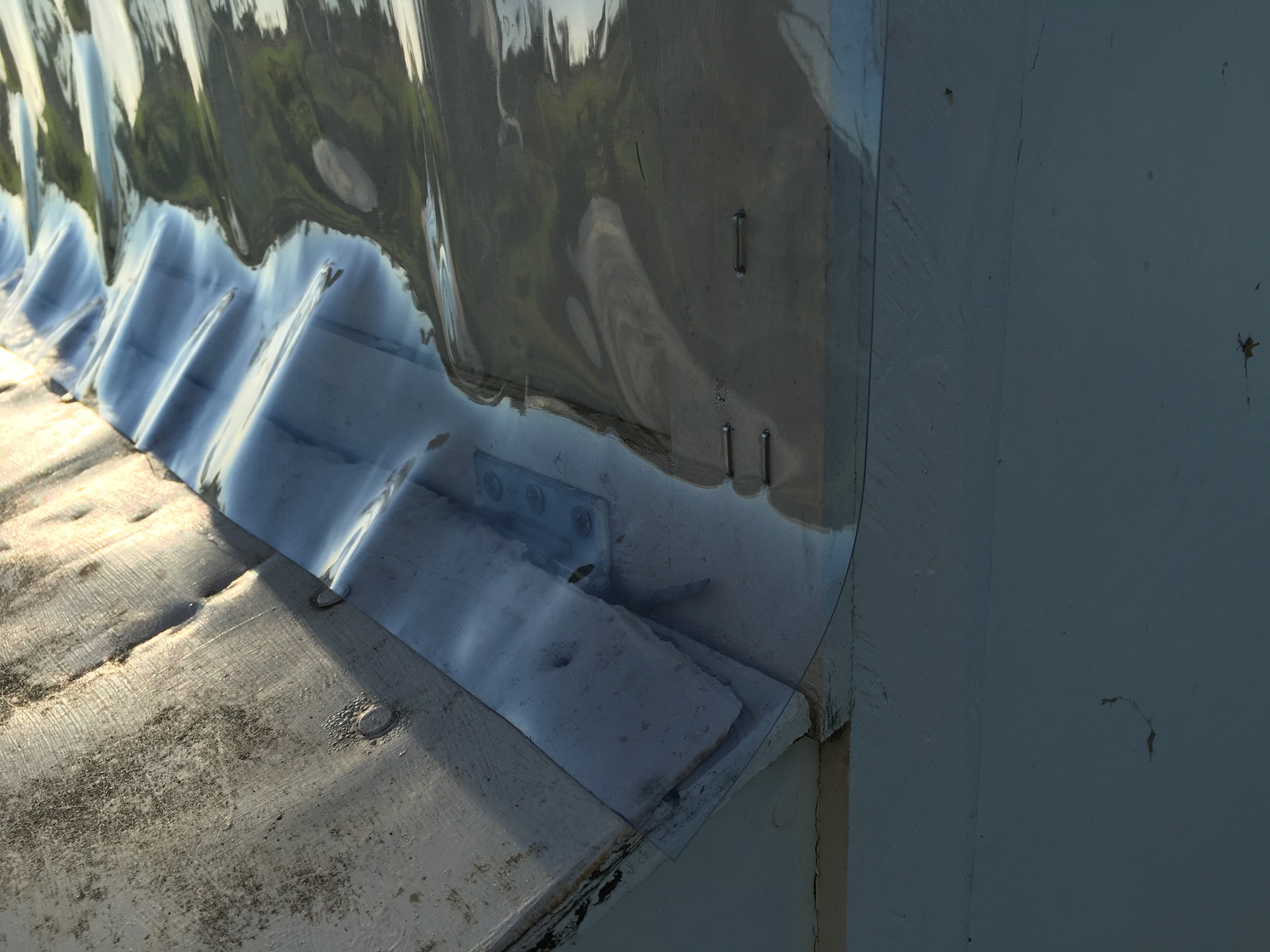
2016-06-01 15.19.52 HDRWhen the kids were young, we used to regularly visit Creative Junk, a place that sells all manner of industrial off cuts, overruns, and misprints, along with household ‘junk’ like plastic tubs, fabric scraps, broken tiles, and empty jars. It was a great place to get cheap materials for the kids’ creations (you know, those 3-year-old constructions of dubious artistic merit—the ones that end up in the rubbish a couple of days later).

On one of those trips, I scored a roll of heavy clear vinyl for myself. I didn’t know what I’d use it for, but it struck me as a handy thing to have.

That vinyl has sat unused in my office for eight years. It’s always a little too heavy or a little too small for anything I might want it for. More than once I considered tossing it (or donating it back to Creative Junk). But getting rid of it required more work than just leaving it in the back of the cupboard, so it just stayed there.

This past weekend, I noticed that rain was getting into the chicken coop. A crack at the back of the hinged lid over the nesting boxes had gotten wider with age, and was now letting water stream right into the nesting boxes.

I needed something to block the crack without preventing the nest box lid from lifting. Something waterproof, stiff enough to not blow in the wind, but flexible enough to bend with the lid.

My roll of vinyl was exactly the material for the job.

I worried the piece wouldn’t be long enough, but found it was exactly the right length, and exactly twice as wide as I needed, so after cutting it, I had a piece to put on the coop, and a perfect replacement, if the first doesn’t hold up long-term.

And this, of course, is the reason I have a cupboard full of little bits of this and that in my office; and a pile of leftover bits of spouting, flashing, and pipe out behind the shed; and a stack of not-entirely-rotted fenceposts; and three rolls of used deer fencing; and an old bed frame; and…

Eventually, nearly everything comes in handy. Nearly everything can be reused, often more than once. There are half a dozen boards under my firewood right now, keeping it off the wet ground, that are on their third lifetime—they were once a porch roof, then a tree house, and now protect the firewood. Between uses, they were slated for the rubbish, but ended up being reused before we got around to hiring a trailer to take them to the tip.

I’ve grumbled more than once about the lack of rubbish pick-up here, but I often think it does more good than harm. The more difficult it is to get rid of things, the more creative we become in reusing them.

That’s got to be good—for our finances, and for the environment.

Fabulous Fennel

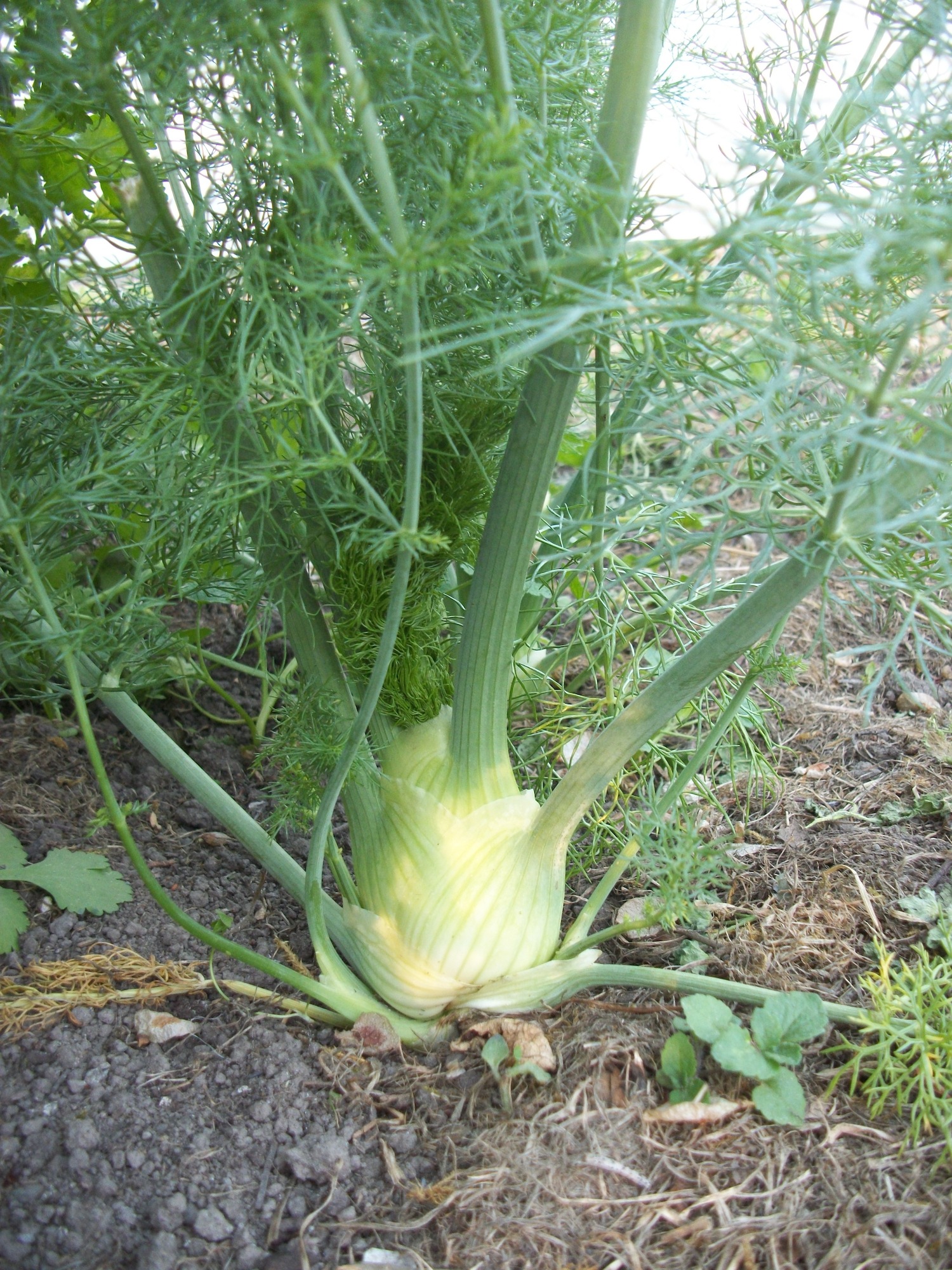
100_4031 smThere’s not a lot coming out of the garden at the moment. The summer crops are pretty well finished (though we’re still scrounging the odd pepper or eggplant from the tunnel house), and the winter crops barely had a chance, with the hot dry weather we’ve had until last week. But among the few crops that are available right now is fennel.

This little-used vegetable is versatile and delicious in the kitchen, and attractive and useful in the garden. Leaves, seeds, and bulb are all edible.

Fennel grows year-round here, though the cooler months are when we appreciate it most. I plant it in both spring and autumn, but it seeds in readily, and we eat as many volunteer fennel as we do planted ones.

Fennel has a mild anise flavour that goes well with many other vegetables. When raw, the flavour is refreshing and numbing.

Raw fennel, sliced thin, makes a crisp and refreshing addition to salads. Or it can make a salad all on its own.

It can be braised and eaten as a side dish, or chopped and added to stews or casseroles. It goes particularly well with potatoes in a cheesy gratin, and makes a delightful risotto.

Fennel leaves can be added to salads and stews, even if the bulbs aren’t ready to harvest.

The ground seeds make a zesty addition to burgers, chai, and cookies, too! Or just crunch a few between your teeth after a meal to sweeten your breath.

In the garden, fennel’s big yellow flower heads attract all sorts of beneficial insects that help keep pests in check, and when the plants get too big and rangy, I can feed them to the goats, who love fennel as much as I do.

Promise of Spring

2016-05-27 12.53.09Tomorrow’s forecast is rather wintery, but I’ve been fortified today. The preying mantises must know their time is short—that one of these storms is going to do them in for good—because over the past couple of days, they’ve been laying eggs all over the place.

There are new clusters on the fence posts, on the rosemary, and even on my office deck.

Though the adults will succumb to the weather, their eggs will rest snug all winter in their cosy egg capsules—a promise of the spring to come.


Pass Me a Brick, Hold the Mayo

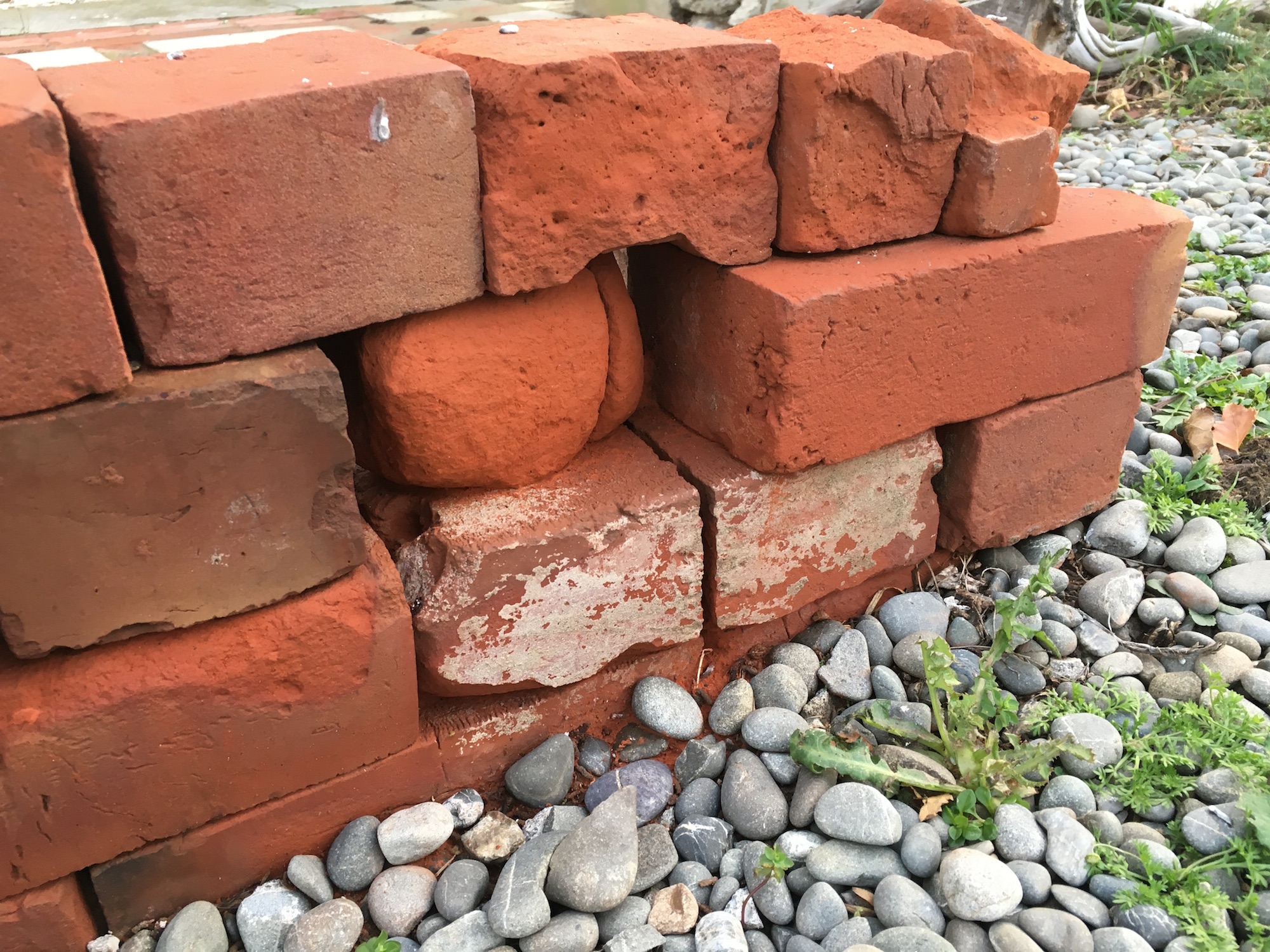
The one in the middle used to fill its space...

The one in the middle used to fill its space…

I’ve mentioned the pest birds at our property more than once in this blog. Today I was musing on them again, as I watched a whole flock of them descend upon our brick fire pit.

Yes, our fire pit.

It was the bricks they were after.

Whether for the grit or the nutrients, I don’t know, but I’m inclined to think the latter. The clay for the bricks came from some other location, so it’s bound to contain nutrients our property doesn’t.

As it turns out, this is a worldwide issue with sparrows and finches—they love bricks and mortar. It’s not a particular problem for us—the fire pit isn’t exactly an essential structure. The only bricks that really matter on our property are the ones in the chimney, and the birds don’t seem to like those.

In fact, they’re quite selective about the bricks they eat. Perhaps they go for the softest ones, or perhaps there are subtle differences in the nutrient levels in different bricks. The birds aren’t telling, and as far as I can tell, no one has ever felt the need to study the issue in detail.

Regardless, they’ve foolishly chosen to focus on a brick in the centre of the fire pit. One of these days, they’re going to break through it, and the bricks on top are going to fall on their heads.

A very slow form of pest control?

Stalking the Wild Tardigrade

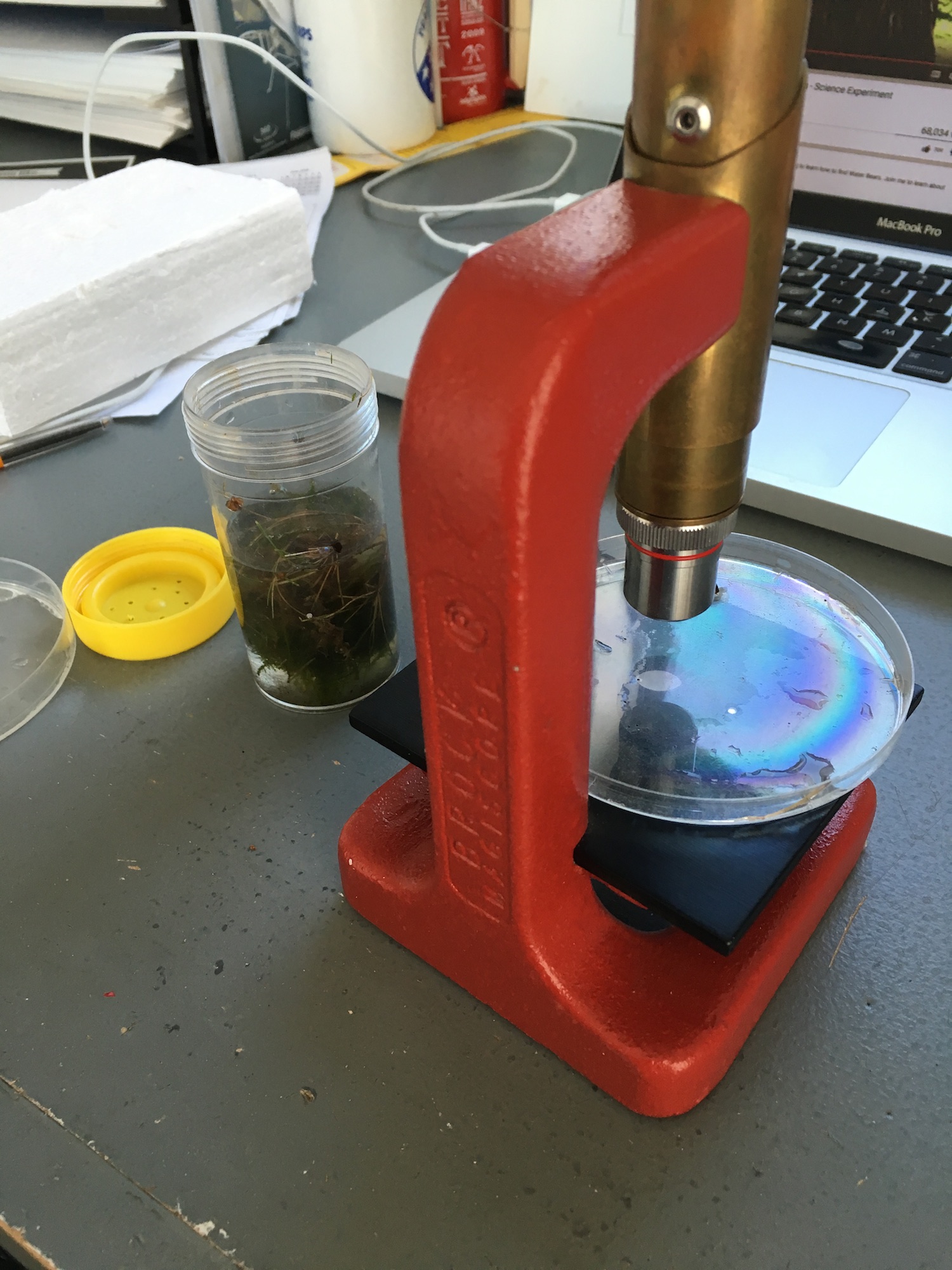
2016-05-25 14.50.00The recent rain has got me thinking about tardigrades. Tardigrades are, of course, one of the most awesome creatures of the animal kingdom–able to survive freezing, desiccation, radiation, intense pressure, and the vacuum of outer space, just to name a few. I mentioned them in a sci-fi short story I wrote over the summer, and have been meaning to go looking for them ever since.

Well, the moss is nice and wet now, so I figured it would be a good time to find some. I collected some moss, soaked it, squeezed out the water and, voila!

I found springtails,

And mites,

And paramecia,

And nematodes,

And some things that looked and acted like microscopic leeches…

But no tardigrades.

I peered down the microscope until my eyes crossed. I squeezed out more water from my moss.

No joy.

No tardigrades.

Of course, that just makes them all the more exciting. Now I have a challenge—stalking the wild tardigrade.

Stay tuned…

Sew Lovely It’s Raining

2016-05-24 16.22.48One of the best things about finally getting some rain is the excuse to spend my weekends and evenings sewing, rather than working in the garden. Not that I don’t enjoy working in the garden, but I enjoy sewing, too.

And with all the nice weather, the sewing projects have been piling up.

2016-05-24 14.07.14With the help of the wet weather this past weekend, I managed to complete a garden holster (to hold the hand tools I’m always losing among the weeds), and a new set of curtains for the office.

Next up are some new clothes for me—some jeans, a couple of shirts, and probably a new jersey…

Here’s hoping for more rain!