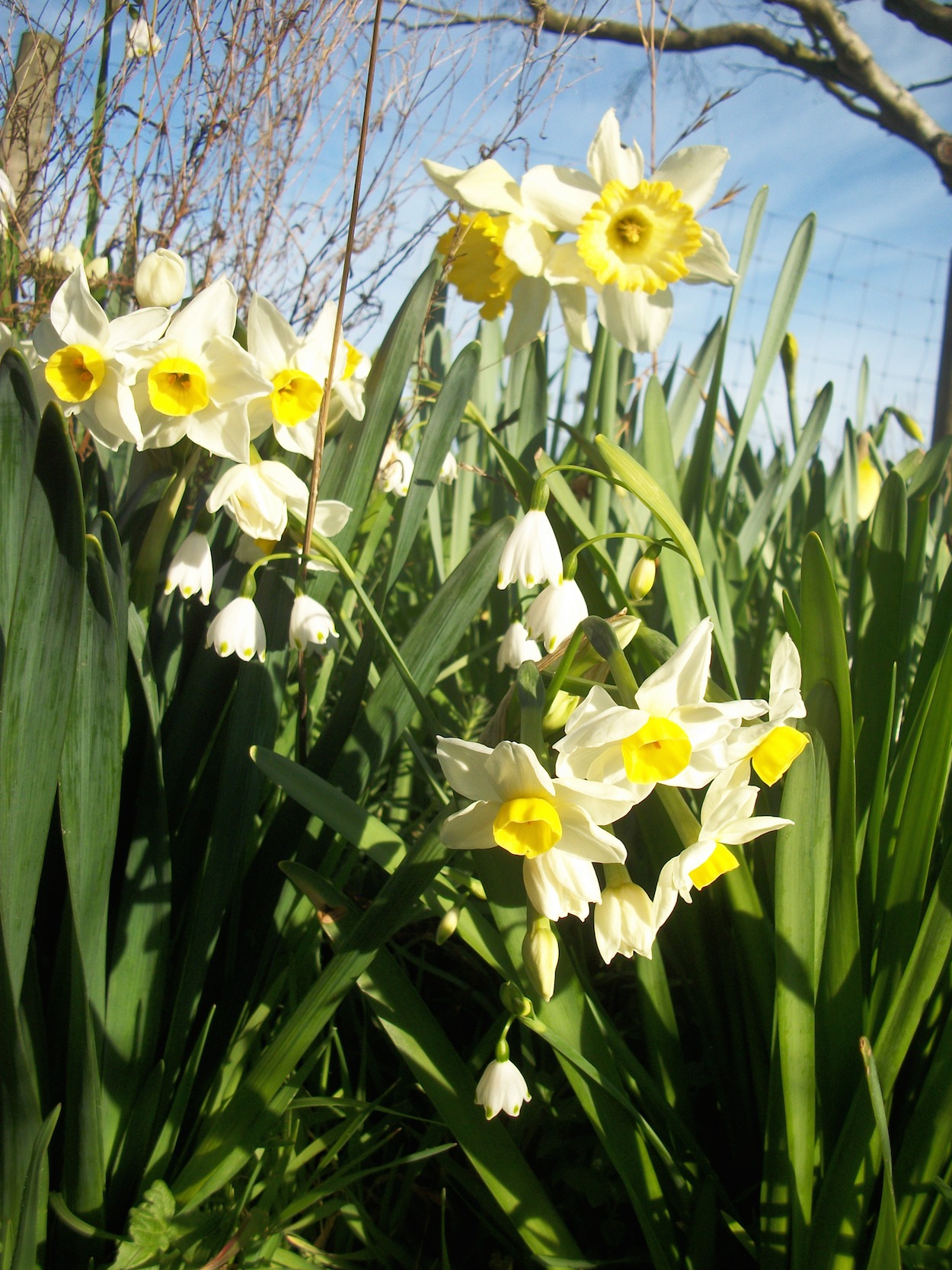
 Day and night balanced
Poised to tip the world into
Darkness or sunlight.
Author: Robinne Weiss
North African Salted Lemons

Salty lemons and sweet lemon curd…mmmmm.
My husband brought home a grocery bag full of lemons yesterday—a gift from a colleague with a prolific lemon tree.
When life gives you this many lemons, you have to be more creative than lemonade.
The first thing I did was make lemon curd, which is one of my favourite uses of lemon.
But when I was done with that, you couldn’t tell I’d taken any lemons out of the bag.
So I searched around and found a few recipes for salt-preserved lemons.
I was intrigued. We’ve been using more and more lemon in our savoury cooking, and salted lemons should be perfect for that.
It is perhaps the most bizarre recipe I’ve ever made.
Cut the lemons lengthwise into quarters, but not all the way through, so they fan out like a flower. Sprinkle salt on the fanned quarters, then juice them before stuffing the juiced lemon into a jar and pouring the salty lemon juice over it. Repeat with as many lemons as will fit in the jar. Let sit in a warm place for a month, then store in the fridge for up to a year, pulling out lemons as needed.
I’m very curious how they taste, and how we will end up using them.
And now I’m on to baking lemon cake and lemon scones, because I still have half a bag of lemons left…
Making Music
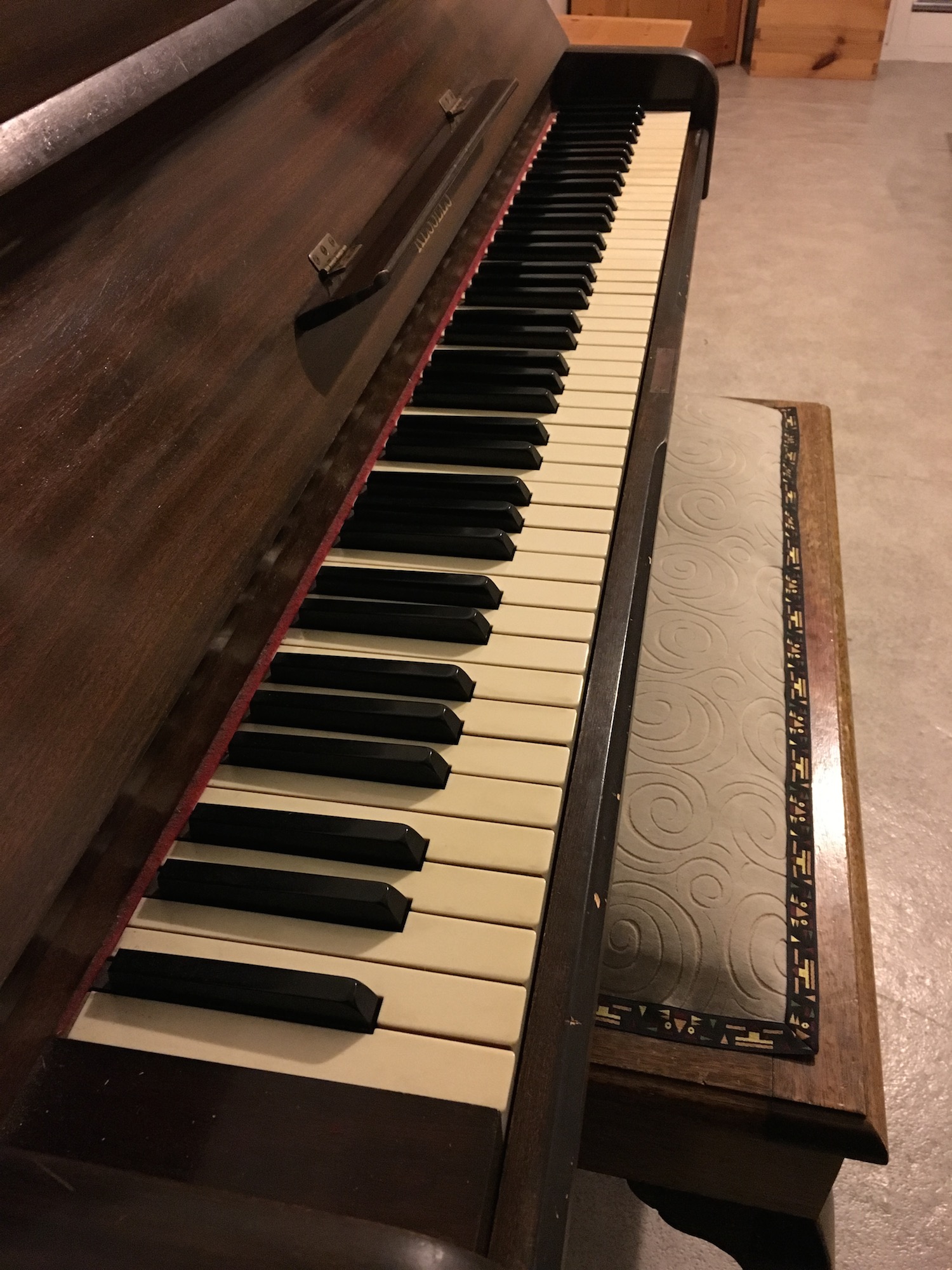 I attended another high school music programme this evening and was struck once again at how important making music is to human culture.
Not listening to music, though that is nice, too.
Making music.
I have always loved music—classical, rock, country, folk, hip-hop, jazz—doesn’t matter what it is. If I could live my life inside a musical, I would. In fact, some days you could be forgiven for thinking I do, the number of times my husband or I break out in song.
Young people seem to understand this need to make music—kids sing on the playground when they’re younger, and gather with friends and a few guitars when they’re teens.
They make up songs about their high school teachers. The one we heard tonight was loving; some of the ones I remember singing with my friends in high school were not so kind.
They beat drums, tap silverware on the table, clap their hands and do beat boxing. They write music, they play music, they make it their own. They use it to say the things they cannot speak. They use it to be the people they want to be.
And somewhere along the line, they stop making music.
Somewhere along the line, music becomes something that ‘professionals’ do.
They start to believe that making music is embarrassing, a waste of time.
They start to believe that music must be performed for an audience.
Gatherings no longer include the guitars. Beat boxing gets rolled eyes instead of an on-the-fly rap to go with it. Show tunes no longer feature in everyday conversation.
Oh, there are adults who still do this, for sure. But usually they have a reason for doing it—they’re in a band, or music is part of their work. The average adult with 2.5 kids, a mortgage, and a job doesn’t.
It is a loss.
A loss, not just to the individual, but to society as a whole. We lose our ability to express the things we cannot say. We forget to be the people we want to be. Celebrities become demi-gods, because we forget that we can all make music—we don’t need a recording contract, a gig, an audience, or even an ounce of musical ability. We can make music because we are human. We need to make music to remain so.
Literary Peanut Butter
 I don’t normally get into endorsing products, but I feel compelled to comment on this one.
Pic’s Peanut Butter has recently started showing up in our local supermarkets. Shopping for a family for whom peanut butter is a major food group, I was immediately attracted to the large jars Pic’s came in. Glancing at the label, I found it was made with Australian peanuts by a small company in Nelson. That appealed to my social and environmental conscience, and I thought I had to try it.
It wasn’t until we had the first jar sitting on the kitchen table that one of the kids noticed the nutrition information. After the usual list of energy, protein, fat, carbohydrates, fibre, and sodium was…
Poems: quantity per 100 g—1.
And, sure enough, on the inside of the label was a poem. It wasn’t about peanuts; it was just a poem. There purely for our enjoyment.
 And not all jars have the same poem, we have discovered. It’s a mystery until you’ve used enough peanut butter to be able to read the inside of the label (because we’re not nearly patient enough to wait until the jar is empty and soak the label off).
The poem is reason enough to spend a little extra for this peanut butter (though it is delicious peanut butter, too, and worth the money).
It is the sort of creativity I like about small businesses—the sort of creativity that is all too rare in this day of giant multi-national corporations that stamp out cookie-cutter products for the lowest cost possible in order to maximise profit to shareholders. It recognises that peanut butter is not just peanut butter, and consumers aren’t just units sold. It recognises the humanity of those making the peanut butter, and those eating it. It recognises that whimsy and wonder are critical parts of what it means to be human.
Okay, maybe the folks at Pic’s didn’t think all that when they were trying to work out how to make their peanut butter stand out among the cheaper products on the shelf. Maybe they just wanted to sell more peanut butter. Maybe they just have a desperate poet on staff who can’t publish otherwise. Either way, they’ve created something joyful from an ordinary food, and I, for one, am happy to support that.
Still Life with Poems
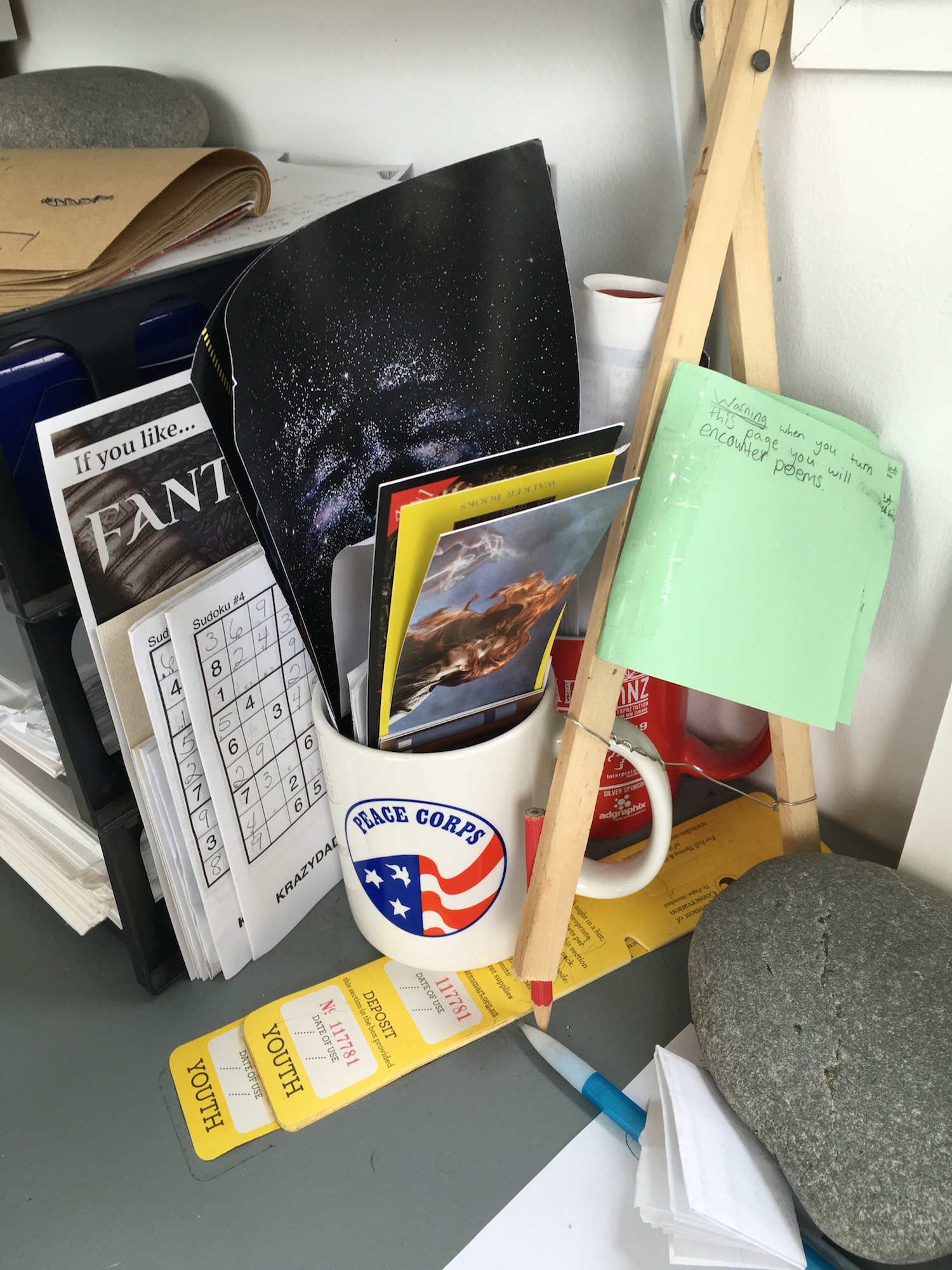 I picked up my phone today, and it automatically opened the camera, which I had used last. This is the picture it framed—a corner of my desk—and it struck me as a curious slice of my life and personality. In the picture are:
- A flier from the library with a list of fantasy authors they recommend.
- A couple of half-finished Sudokus—lunchtime brain breaks.
- A Peace Corps mug—still flying those colours after 21 years. It’s a rare day I don’t think about our time in Panama. That mug is filled with more fliers for books I’d like to read.
- A mug from the Some Like it Hot Conference—from another past life when I was Secretary of Interpretation Network New Zealand. That mug is stuffed with notes to myself—names and addresses I want to remember, ideas for birthday and Christmas gifts, web sites of interest, the odd poem.
- A gift from my daughter—a hand-made compass, complete with a book of poetry attached.
- A rock from our beach—part paper weight, part touchstone, grounding me in this place.
- A pencil—my favourite writing tool.
- A folded wad of paper to stabilise my computer stand, which wobbles on uneven legs.
- A stack of Department of Conservation hut tickets from a trip that I intended to take my ecology students on, but which was cancelled due to weather.
- A scrap of paper awaiting the day’s to-do list.
There you have it. The messy corner of my brain, where poems vie with the day’s to-do list, and numbers and words mix, and good intentions meet reality, and maybe
today’s to-do list
becomes
tomorrow’s poetry.
Sprouts
 It had been years since I grew sprouts. There wasn’t really a reason for my neglect of these easy-to-grow vegetables. I just didn’t do it.
But I was inspired by a poor winter garden and a glossy seed catalogue to try sprouts again. I ordered alfalfa and radishes for sprouting.
The alfalfa is what I remembered—earthy, a bit grassy. Good on a sandwich.
The radishes? They are fabulous! In a salad, on a sandwich, or in a stir-fry they add a crunchy zing. Just like…well…radishes, except they’re ready to eat in a week, and require no cleaning or slicing.
I’m sold. I’m sure, when the spring vegetables start to come in, I’ll forget all about sprouts, but for the moment, I’m making sure we have a regular supply of them.
Saturday Stories: Girl on the Plane/Boy on the Plane
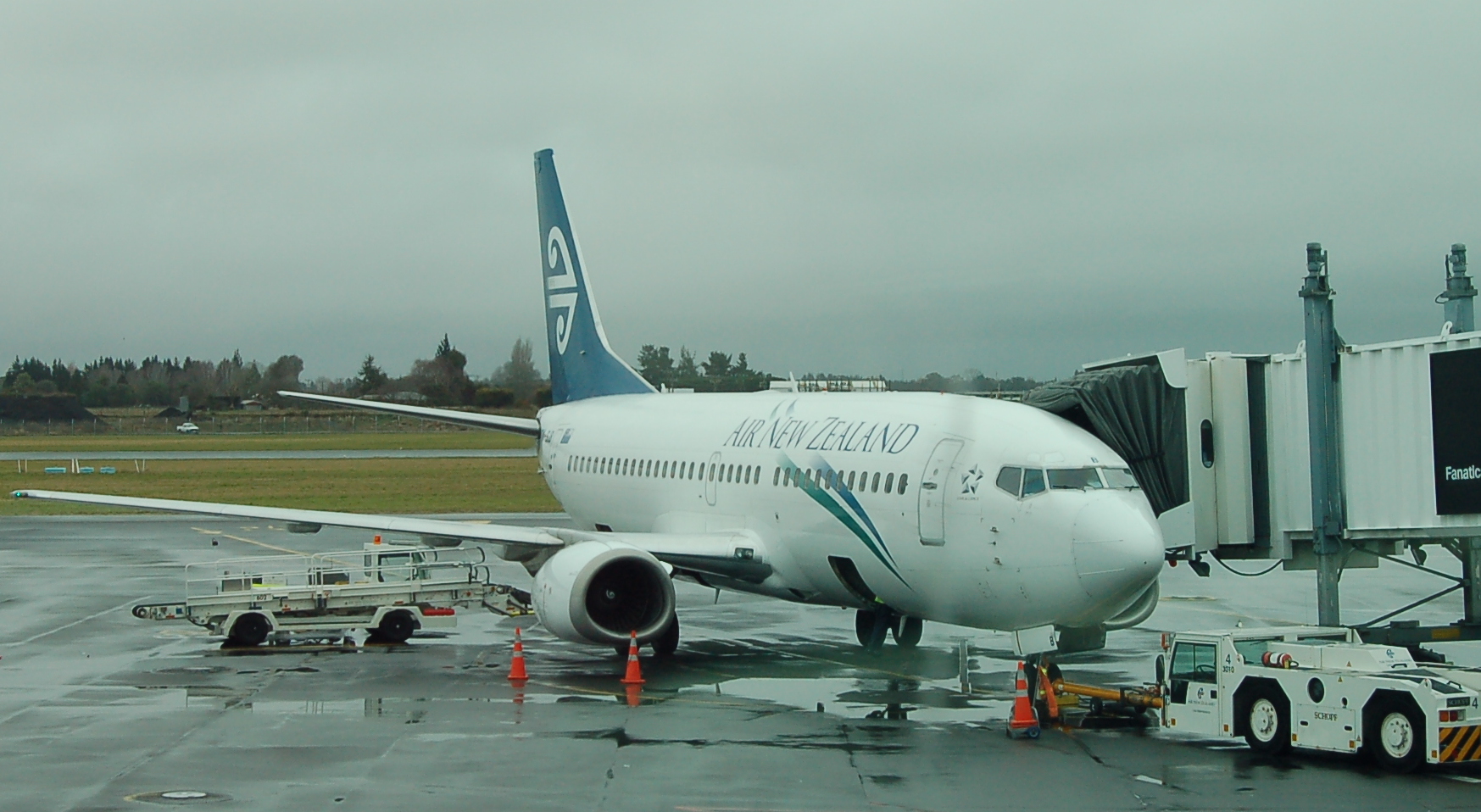 Belinda took her seat on the plane—12A—a window seat. She had just finished her Masters degree in aerospace engineering. Graduating top of her class, she’d had her pick of jobs. In the end, she’d chosen Lockheed Martin, not just because of the job, but also because it was located in Colorado.
A man sat down next to her. She smiled, and they shared a greeting as he buckled himself in.
Belinda grinned as the plane accelerated down the runway. For the first time in her life, she was leaving the Midwest. She was finally pursuing her dreams for real. Her first real job! She was already envisioning the trajectory of her career—as carefully calculated as the trajectory of the space craft she intended to design and launch some day.
Belinda had always been obsessed with space. She had asked for a star chart for her sixth birthday, and created a scale model of the solar system as a science project in first grade. She excelled in math and physics in high school. She had been accepted at MIT, but her parents couldn’t afford the tuition. Instead, she had attended Iowa State University, where she had earned a full scholarship for both her undergraduate and graduate degrees.
As the plane reached cruising altitude, Belinda relaxed into her seat and watched the patchwork of Iowa farmland pass below. She couldn’t wait to see the mountains of Colorado. She would learn to ski, and maybe rock climb, too.
Her thoughts were interrupted by the man next to her. He was older than she—in her eyes, ancient, though he was probably only in his mid-fifties. He was well-dressed and unexceptional-looking.
“You headed to the ski fields?” he asked.
“No. Well, eventually I hope. I’m moving to Colorado.”
“Ah! Is there a special someone waiting for you there?”
“Um…No. I’m starting a new job there.”
“Don’t tell me…Elementary school teacher. I know they’re always short of teachers. I’m sure you’ll do great.”
“Actually, aeronautical engineer at Lockheed Martin.”
“Oh!” The man frowned. “Well, what made you choose that?”
The way he said that, it sounded like he was asking why she’d bought fried cricket clusters at the Iowa State Fair instead of French fries.
“I’ve always been interested in space. I used to make space ships out of Legos and calculate their trajectories to Mars.”
The man laughed. “And what does your boyfriend think of that?”
“Um…I don’t have one.”
“Oh. Married, then?”
“No.” Was he hitting on her? Surely he was way too old for that. “I’m not particularly interested in having a boyfriend or getting married.”
“Really? Now, that can’t possibly be true—a pretty girl like you? What makes you say you’re not interested in marriage? What about kids? Surely you want kids!”
“No husband, no kids. I’ve got other plans for my life—a career that doesn’t really fit in with a family.”
He laughed and Belinda realised he didn’t believe her. He was probably some crazy religious guy, like the one who had accosted her mother once in the mall, praising her for producing children because “God has called mankind to go forth and multiply.” He probably had a poor, harried wife at home with a dozen kids underfoot.
“And you? Are you married?” she asked to turn the conversation away from herself.
“Aw, me? Nah. Married to my business.”
_____________________
Jeff took his seat on the plane—12A—a window seat. He had just finished his Masters degree in aerospace engineering. Graduating top of his class, he’d had his pick of jobs. In the end, he’d chosen Lockheed Martin, not just because of the job, but also because it was located in Colorado.
A man sat down next to him. He smiled, and they shared a greeting as he buckled himself in.
Jeff grinned as the plane accelerated down the runway. For the first time in his life, he was leaving the Midwest. He was finally pursuing his dreams for real. His first real job! He was already envisioning the trajectory of his career—as carefully calculated as the trajectory of the space craft he intended to design and launch some day.
Jeff had always been obsessed with space. He had asked for a star chart for his sixth birthday, and created a scale model of the solar system as a science project in first grade. He excelled in math and physics in high school. He had been accepted at MIT, but his parents couldn’t afford the tuition. Instead, he had attended Iowa State University, where he had earned a full scholarship for both his undergraduate and graduate degrees.
As the plane reached cruising altitude, Jeff relaxed into his seat and watched the patchwork of Iowa farmland pass below. He couldn’t wait to see the mountains of Colorado. He would learn to ski, and maybe rock climb, too.
His thoughts were interrupted by the man next to him. He was older than Jeff—in Jeff’s eyes, ancient, though he was probably only in his mid-fifties. He was well-dressed and unexceptional-looking.
“You headed to the ski fields?” the man asked.
“No. Well, eventually I hope. I’m moving to Colorado.”
“Ah! Is there a special someone waiting for you there?”
“Um…No. I’m starting a new job there.”
“Don’t tell me…Elementary school teacher. I know they’re always short of teachers. I’m sure you’ll do great.”
“Actually, aeronautical engineer at Lockheed Martin.”
“Oh!” The man frowned. “Well, what made you choose that?”
The way he said that, it sounded like he was asking why Jeff had bought fried cricket clusters at the Iowa State Fair instead of French fries.
“I’ve always been interested in space. I used to make space ships out of Legos and calculate their trajectories to Mars.”
The man laughed. “And what does your girlfriend think of that?”
“Um…I don’t have one.”
“Oh. Married, then?”
“No.” Was he hitting on him? Surely he was way too old for that. “I’m not particularly interested in having a girlfriend or getting married.”
“Really? Now, that can’t possibly be true—a handsome guy like you? What makes you say you’re not interested in marriage? What about kids? Surely you want kids!”
“No wife, no kids. I’ve got other plans for my life—a career that doesn’t really fit in with a family.”
He laughed and Jeff realised he didn’t believe him. He was probably some crazy religious guy, like the one who had accosted his mother once in the mall, praising her for producing children because “God has called mankind to go forth and multiply.” He probably had a poor, harried wife at home with a dozen kids underfoot.
“And you? Are you married?” Jeff asked to turn the conversation away from himself.
“Aw, me? Nah. Married to my business.”
Walk Away
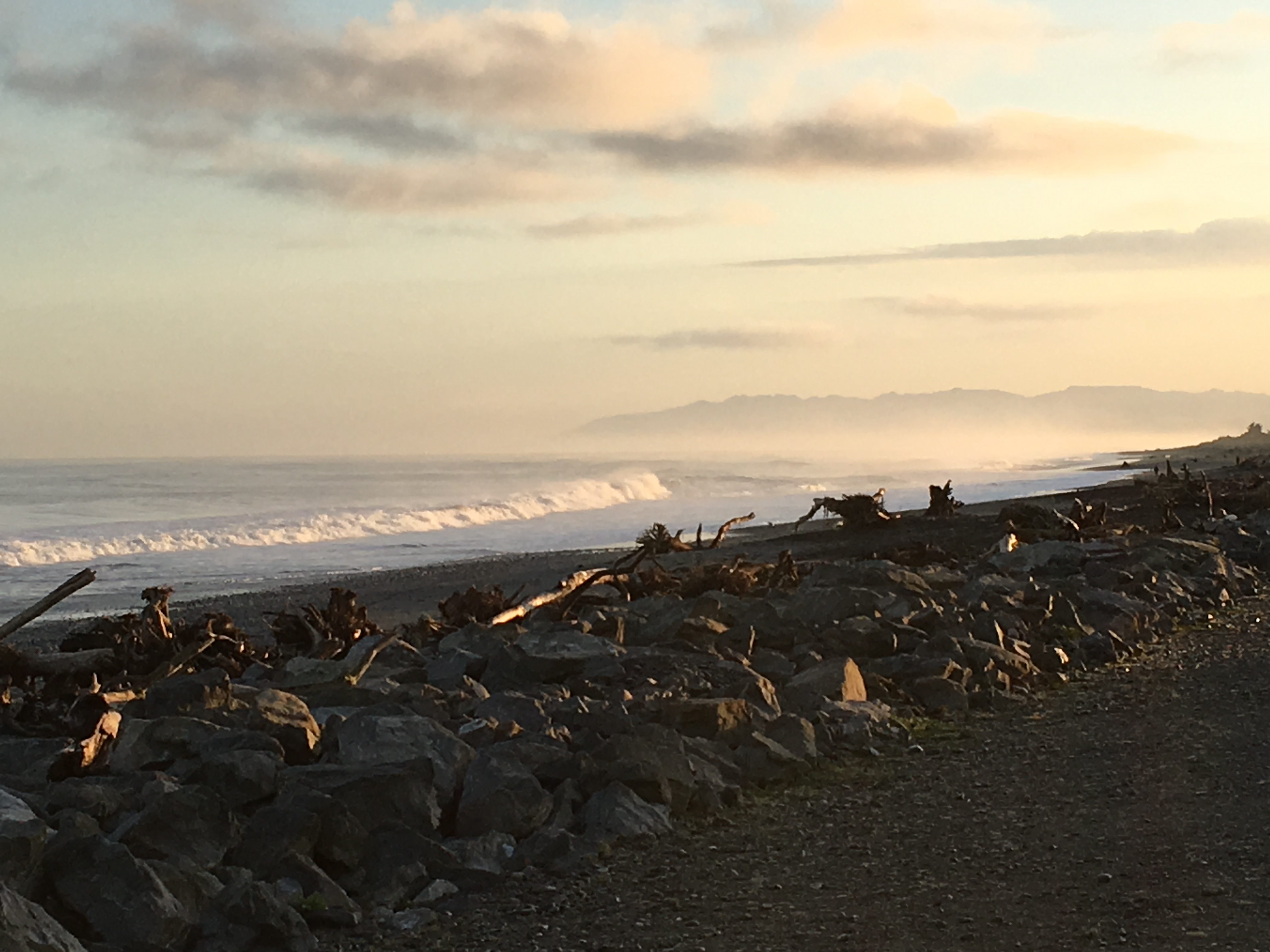 Working for yourself, you have to develop discipline. You’ve got to be able to knuckle down and do what needs to be done, as though there were a boss standing over your shoulder. You’ve got to clock in at work, and spend the day there.
But sometimes the best way to get something done is to walk away from it.
I spent the first three days of this week on the West Coast, doing some educational programmes for schools. The programmes took up the mornings, but by early afternoon, I was done.
Each afternoon, I thought to myself, “Right. I need to get some writing done now. I need to make use of my time.” And each afternoon, I sat at the computer for a few minutes, then went outside for a long walk.
I hardly wrote a word, and yet…
Those long walks were perhaps a more productive use of my time. I was in places I don’t get to go to very frequently, enjoying an environment wildly different from my office. A different part of my brain was being stimulated on those walks—a part that was more thoughtful, perhaps. More open to emotion and suggestion.
That part of my mind started churning with thoughts and ideas about a novel I wrote last year. I hadn’t thought about the story for months. Though I liked the book, its sequel wasn’t going well, and I had set it aside while I wrote something entirely different. Every time I considered working on it, I felt I was up against a wall. Something wasn’t quite right about my main character. I had missed something, and wasn’t sure what it was.
But as I walked the beach, my character walked with me. She told me about her dreams and aspirations. She told me about her childhood, and about what made her become the person she is. She explained to me why she can’t do what I’ve asked her to do in the second book, and why and how she will rebel against my expectations.
I scribbled pages of notes from our ‘conversation’, and I’m looking forward to getting back to her story and finishing it the way it should be finished.
So my ‘wasted’ time was not wasted after all. Had I sat in my hotel room and forced myself to put words on the page, I would never have found the right words for the page.
Sometimes the best thing you can do is walk away.
There and Back Again
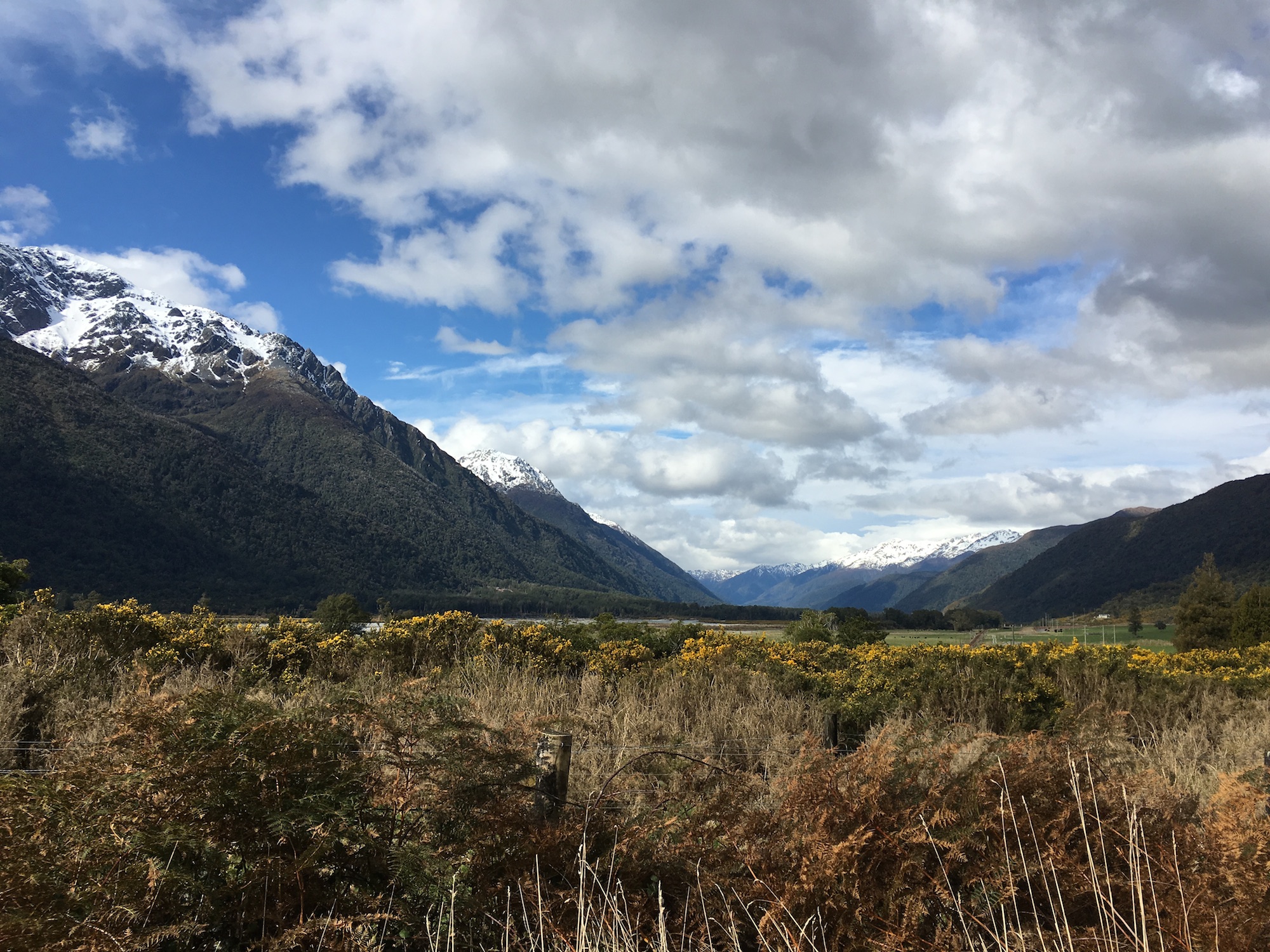
Looking up Otira Valley
I slowed into the first curve and began to smile. Within a few short kilometres, the smile had widened to a grin that would remain for nearly two hours.
I will never tire of the drive up and over the Southern Alps. Especially the homeward drive, from Kumara on the West Coast to Springfield on the Canterbury Plains. The first time I made the trip was at night under a full moon that sparkled off the river below and made the snowy peaks shine. How could I not fall in love with it?
I love the first half of the drive, up Otira Valley—the belted galloways grazing in the paddocks on the lower slopes, the rainforest crowding in on the road, the long vistas up-valley to snowy peaks in the distance.
And then, when the road becomes steep and the valley closes in, the craggy peaks loom so close, you have to press your face to the window to see the tops.
And the water! Impossibly long falls coursing down forested slopes, spurting from every little dip and fissure along the roadside, and even soaring out over the road on a concrete sluice.
And then there is the road itself—steep, and as curvy as ribbon candy. There’s the cantilevered half-bridge, and the viaduct that soars out into space over an enormous landslide.
There is the lookout at Death’s Corner, where you can stop and be fleeced by a gang of endangered alpine parrots.
And when you reach the top and plunge down the other side, a whole new set of marvels awaits in the dry, brown, tussock-covered mountains of the eastern ranges.
There are the mountains of scree that look like they’ve been dumped by some enormous gravel truck. There are the limestone outcrops standing like a geologic Stonehenge. There are more snowy peaks, rising out of mounds of alpine tussock. There are lakes hemmed in by massive landslides.
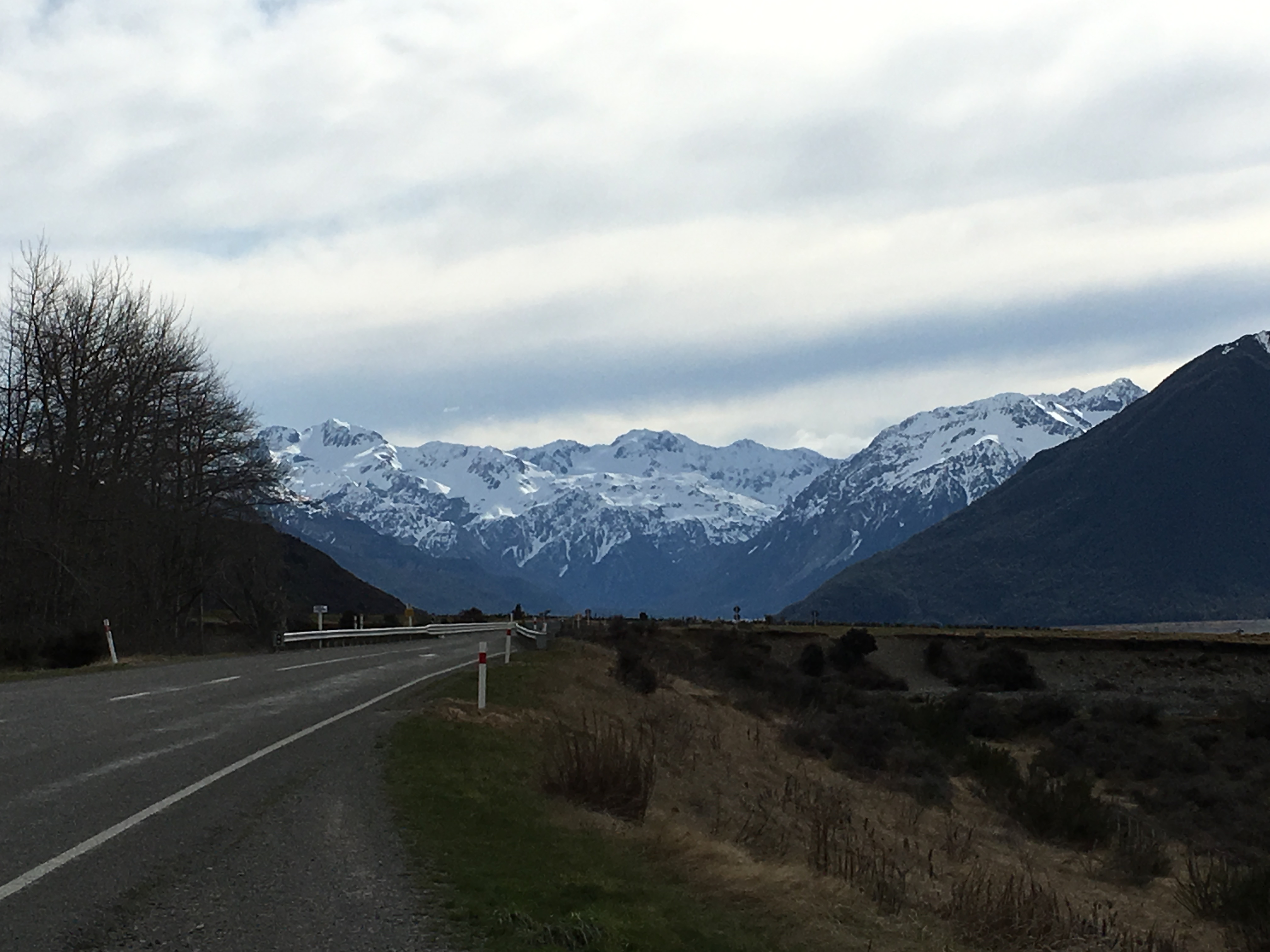
Rear view.
Coming home from the West Coast yesterday afternoon, I was still grinning as I drove through the last of the hills. When I glanced in the rear view mirror, I couldn’t help laughing out loud at the sun glinting off a rank of snow-laden peaks behind me.
Even after nearly twelve years here, I continue to live in wonder at my luck—that I am permitted to call this incredible land home.
Bealey Valley, Arthur’s Pass, New Zealand
 Stop.
Stop.
Soak up the still silence.
Except that it is neither still
Nor silent.
Wind tumbles
The leaves of the trees.
Overhead in the branches, sounds
The pebble-in-a-still-pool languor
Of the bellbird,
The electric zit-zit
Of the rifleman.
Nearby, a small stream
Hisses over the rocks.
And from farther away
Comes the deep rumble
Of the river
Shaking the stone
As it crashes
Headlong
Down the mountain.
 Robinne Weiss