Bugs in Your Food

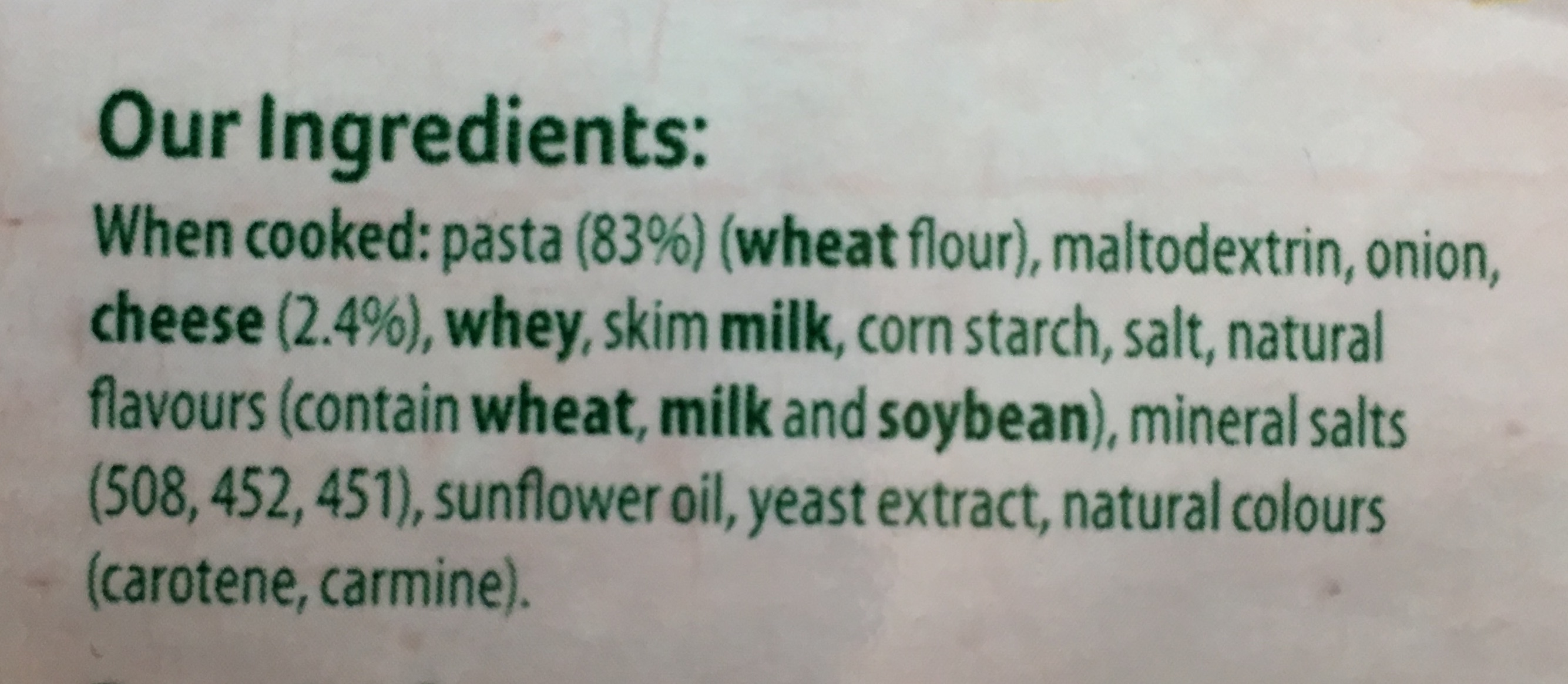
2016-12-18-06-46-58Can you find the insects in this ingredient list?

Yep, that’s it, at the very end—carmine—an all-natural food-safe red colouring made from the crushed bodies of the cochineal scale insect (Dactylopius coccus).

I don’t buy much processed food, so I rarely eat carmine, but I was excited to find it listed as an ingredient in the packaged macaroni and cheese I recently bought for a backpacking trip.

The cochineal scale is native to Central and South America, and lives on prickly pear cactus. It has been used as a dye since at least the 15th century, when it was used primarily to colour textiles. For three hundred years, it was one of our only red food-safe dyes. In the late 19th century, synthetic dyes began to replace carmine.

Until the 1820s, Mexico was the sole commercial supplier of carmine to the world, despite efforts to grow the insect elsewhere. At least one of those attempts ended in an environmental disaster. The British tried to establish carmine production in Australia to supply red dye for military uniforms in the 1700s. The insects died, but the cactuses thrived and eventually took over 259,000 square kilometres (100,000 square miles) of the country before being brought under control in the 1920s by the introduction of a moth that eats the cactus.

Carmine production is labour intensive. The insects need to be protected from predators and severe weather, then have to be brushed off the plants by hand at harvest. The insects are dried, crushed, and mixed with various substances to make a range of colours from bright red, to pink, to purple. It takes 80,000-100,000 insects to produce 1 kg of carmine.

Concerns over the safety of synthetic food colouring has led to a resurgence in the use of carmine in recent years, and it’s not unusual (though still not common) to find it included on the ingredient lists of food packages. In fact, you might be surprised how many products on the supermarket shelf contain carmine. Though it is more expensive than synthetic red dyes, it shows up in various cosmetics, candies, alcoholic drinks, fruit juices, sauces, cheese, meat, preserves, and desserts. In the US, the ingredient list is required to say ‘cochineal extract’ or ‘carmine’. In the EU, it might be labelled additive E120, and here in New Zealand, it is usually listed as colouring 120.

After Dinner Stroll

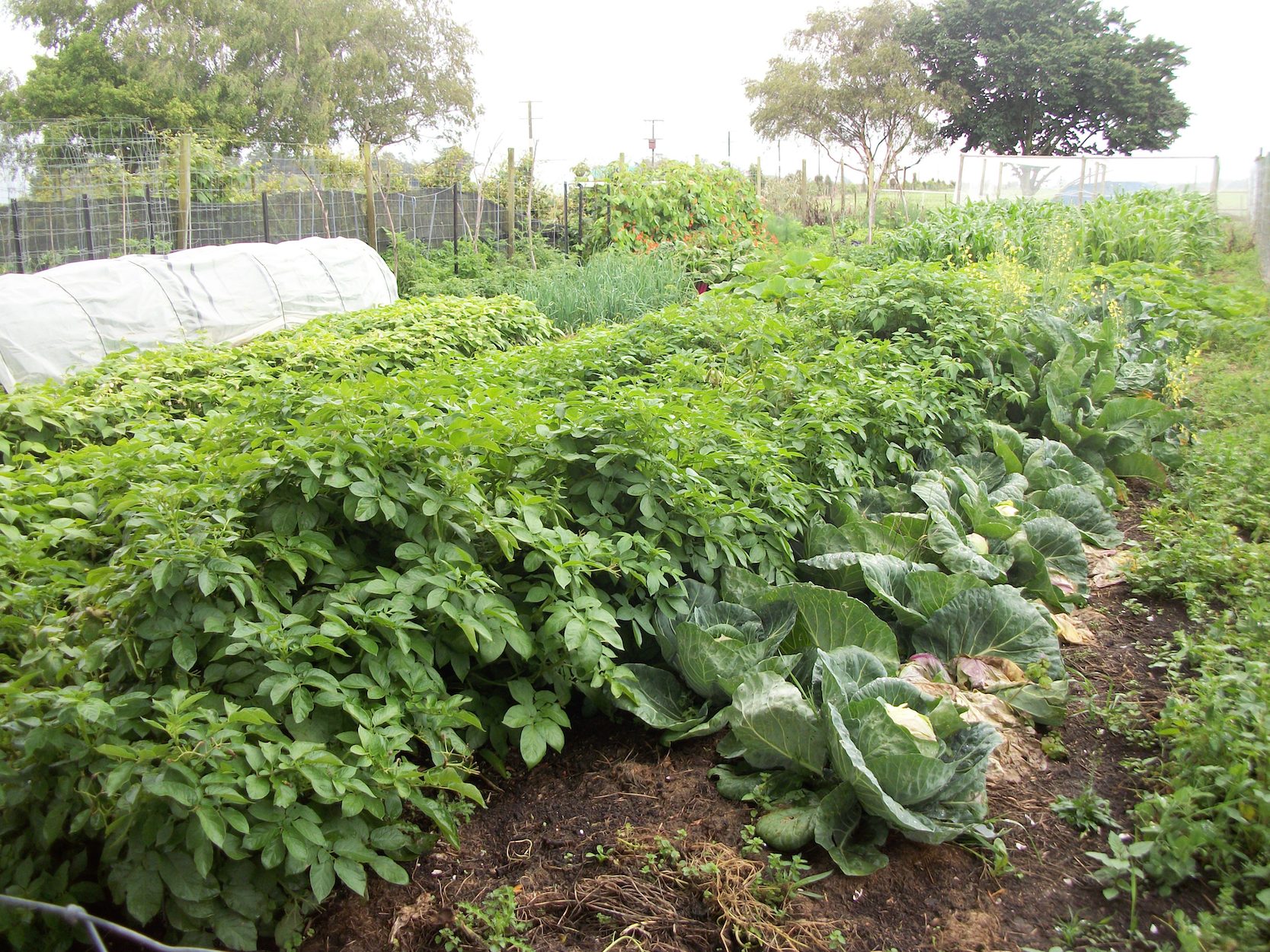
2016-12-19-19-04-24-smI am alone at home this evening. After dinner (eaten at the picnic table while reading a book), I went for a stroll around the property. Part of my path wound through the tall grass between the hedge and the vegetable garden.

Setting aside my normal reaction (This is so overgrown! I’ve got to get out here and cut this down), I did what my ten year-old self would have done, and lay down in the grass, holding still until I began to notice things.

I noticed that the ground was delightfully warm against my back.

I noticed that some of the grass was still in flower—anthers nodding in the wind—and other grass had already gone to seed and been stripped by the birds.

I noticed that the smaller flies meandered around among the grass stalks while the larger flies zipped overhead.

I saw a velvet mite gliding up and down a stalk of grass.

I noticed that a house sparrow nearby was chirping at just the right frequency to be irritating to my ears.

I noticed that the clouds weren’t moving across the sky as I thought, but rather were simply growing and coalescing in place.

Next thing I knew, I was starting awake, with the clouds, the grass, the birds, and the insects all still doing their thing around me.

Through Fresh Eyes

100_2137-smAll week I weeded and tidied the yard in preparation for a pizza party on Friday night. I tried to make the sad, tired parts of the yard look less decrepit and free the nicer spots from their mantle of early summer weeds.

It’s a Sisyphean task—by Friday, the spots I had weeded on Monday were already sporting fresh weed growth.

So as the first guests arrived, I fretted over the shabby state of the yard and garden. As I looked around, I saw weeds, flowers that needed deadheading, outdoor furniture that should have been hosed off…

But no one noticed my weeds, aside from those guests studying particular ones (it was a party of ecologists, after all, and they were thrilled to find their research subjects ‘in the wild’).

Instead, they saw the musical instruments, the blooming flowers, the fish in the pond, the cat playing with a grass stalk, the places for playing and relaxing. They saw all the things we love about the yard, and never noticed the twitch sprouting in the paths and the flecks of bird poo on the deck chairs.

“This is awesome!” cried one guest as he beat out a rhythm on the outdoor drum set.

“It all looks so fresh…like it’s all new,” said another.

Throughout the evening kids and adults alike wandered around, feeding goats, playing outdoor instruments, grazing on raspberries, sitting on the benches tucked here and there, climbing trees, playing lawn games, and feasting on produce from the garden, baked in the new bread oven. Everyone smiled. Everyone relaxed.

It was good to see the property through their eyes for the evening. I focus so closely on the work that needs to be done, that sometimes I forget that, even with weeds or grass that needs mowing, the place is a haven. Sometimes I forget to put away the to-do list and just enjoy the place. I struggle to stop and smell the roses without also noticing they need to be pruned.

So thank you to all the guests who joined us Friday night. You gave me a fresh perspective and gave me permission to slack off a little this weekend—to just be here.

You have got to be kidding me…

2016-12-16-15-35-55It frosted Saturday morning. Yeah. It was 30C Friday afternoon, and by Saturday morning it was 2C. It was back up to 30 degrees by Saturday afternoon, and today we went to the pool.

I didn’t even think to check the garden Saturday morning. It never frosts this late in the year. That’s the seasonal equivalent of frost on June 16th, for those of you in the Northern Hemisphere. Even in St. Paul, Minnesota, it never frosted that late. It was a rude surprise when I went out to the garden in the afternoon to pick some vegetables and found the pumpkins and beans blackened.

The plants will survive—it was a light frost and the growing tips of the plants weren’t hit—but it will knock the pumpkins back significantly. They were already behind, because the first planting didn’t germinate, and these plants were my second try at them this year. A frost this late might be the difference between mature pumpkins when the first autumn frost hits or pumpkins that still need a few weeks of growth to reach the right stage for storage.

Unfortunately, the only thing to do at this point is shrug and be thankful the other frost-tender crops weren’t damaged…after the obligatory grumpy farmer complaints are through.

Poem on Moose

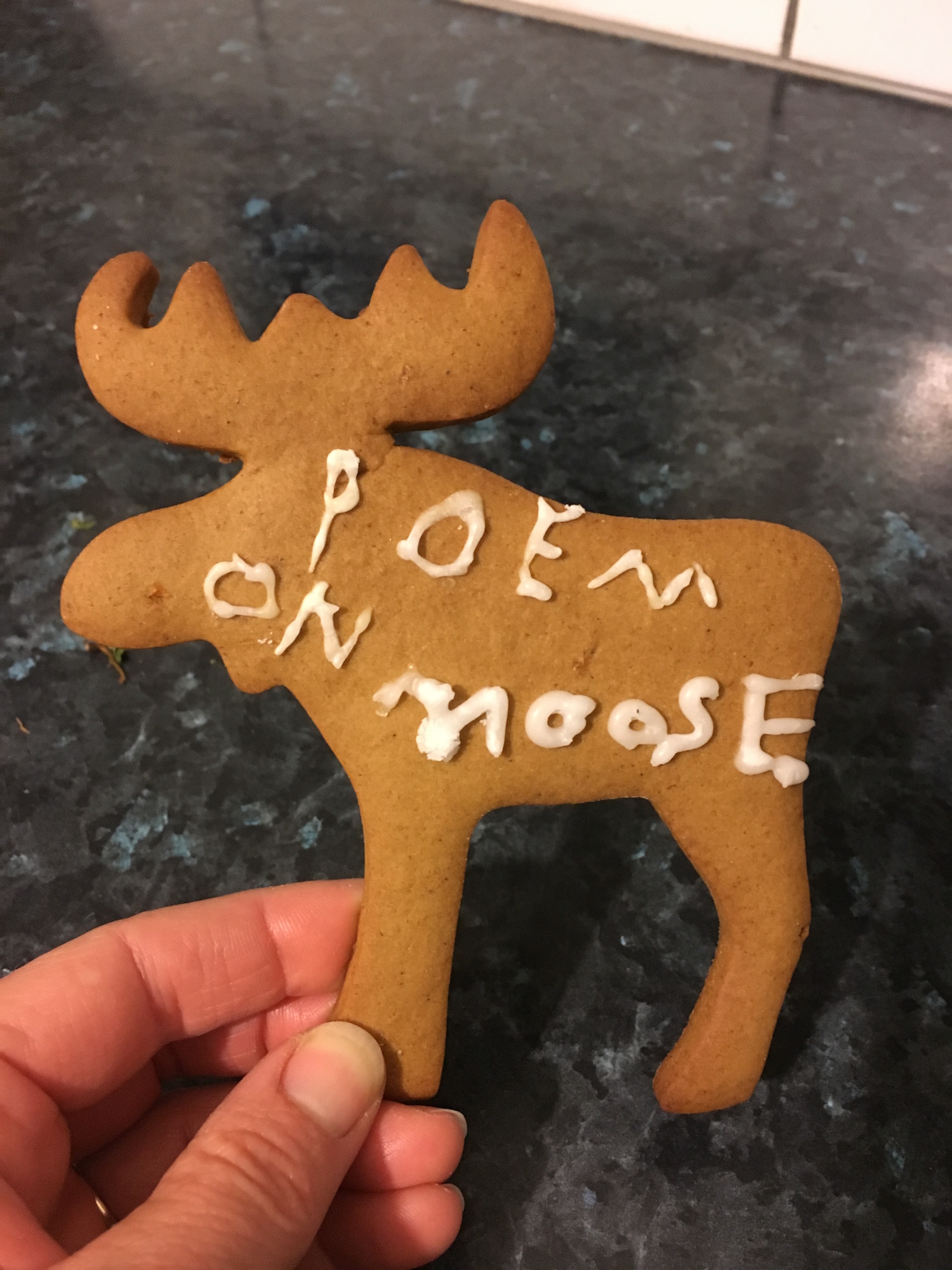
What happens when I let my daughter decorate Christmas cookies.

What happens when I let my daughter decorate Christmas cookies.

Literary ungulate
In gingerbread.

This poem is either
On a moose,
Or on moose,
Or both.

Your palmate antlers,
Distinctive,
Tell me you’re a bull.
They beg to be bitten off.

Then you would be a cow
Only your drooping nose
And your beard
Giving away your moosy nature.

But why a poem
On a moose
(Or on moose)?

I do not recommend
Writing poems on moose
(or is it mooses?)
Unless they are of the gingerbread variety.
The icing tickles
And moose (meece?) snort when they laugh.

But if you try,
I suggest a stepladder.

I’d Rather Be Weeding

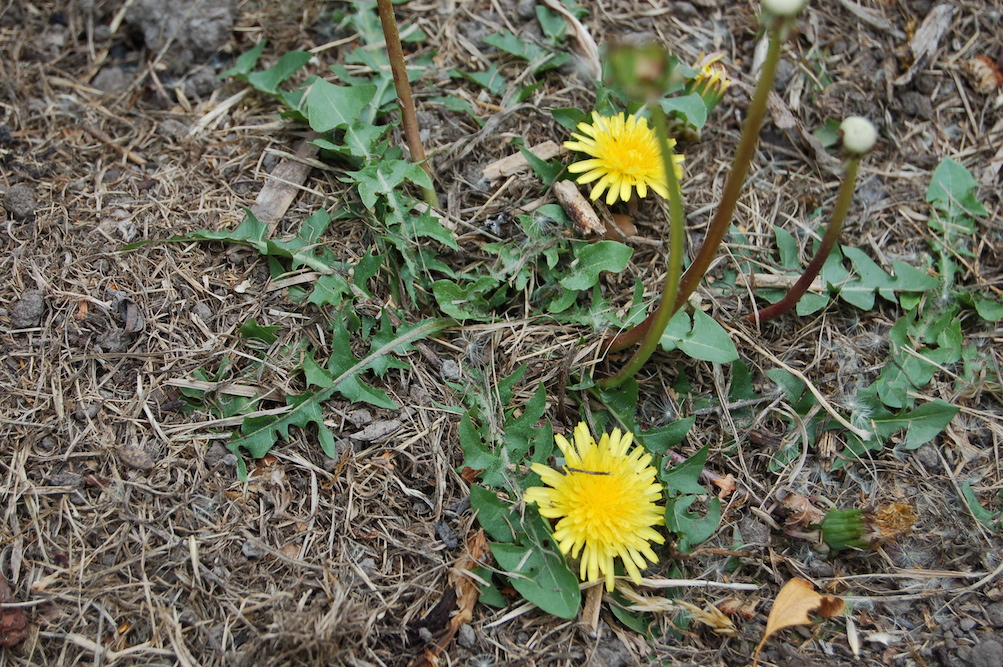
dandelion-smWhen I tell people we grow almost all our own vegetables, I get a lot of comments like, “Wow! That’s impressive!”

I shrug—I think if they really knew, they wouldn’t be impressed.

Truth is, I think I grow so many vegetables because I’m just not cut out for the modern world.

I drove into town today for groceries and to finish (do) my Christmas shopping. I had already put the job off for several days while I found other, more important things to do in the garden. Then I timed my arrival in town with the opening of the shops, so the crowds would be less. I came armed with multiple lists—a list of destinations, and a list of items to be purchased at each location. I ticked them off, one by one, feeling the stress level mount as the morning wore on.

Noon came and went, and I was still working through my lists. The crowds grew. I got stuck in traffic. I didn’t stop for anything to eat or drink, lest the whole trip take longer.

I finally made it home just before 2 pm, exhausted, irritable, and completely stressed.

A little lunch and an hour of hard physical labour in the garden restored me.

Growing our food means I don’t have to go for groceries as frequently. I don’t have to deal with parking, stores, financial transactions, deciding what to buy of the endless array of products on the shelf. Sure, it may take four months to get a tomato, but at least I don’t have to go to the store to get it.

Perfection

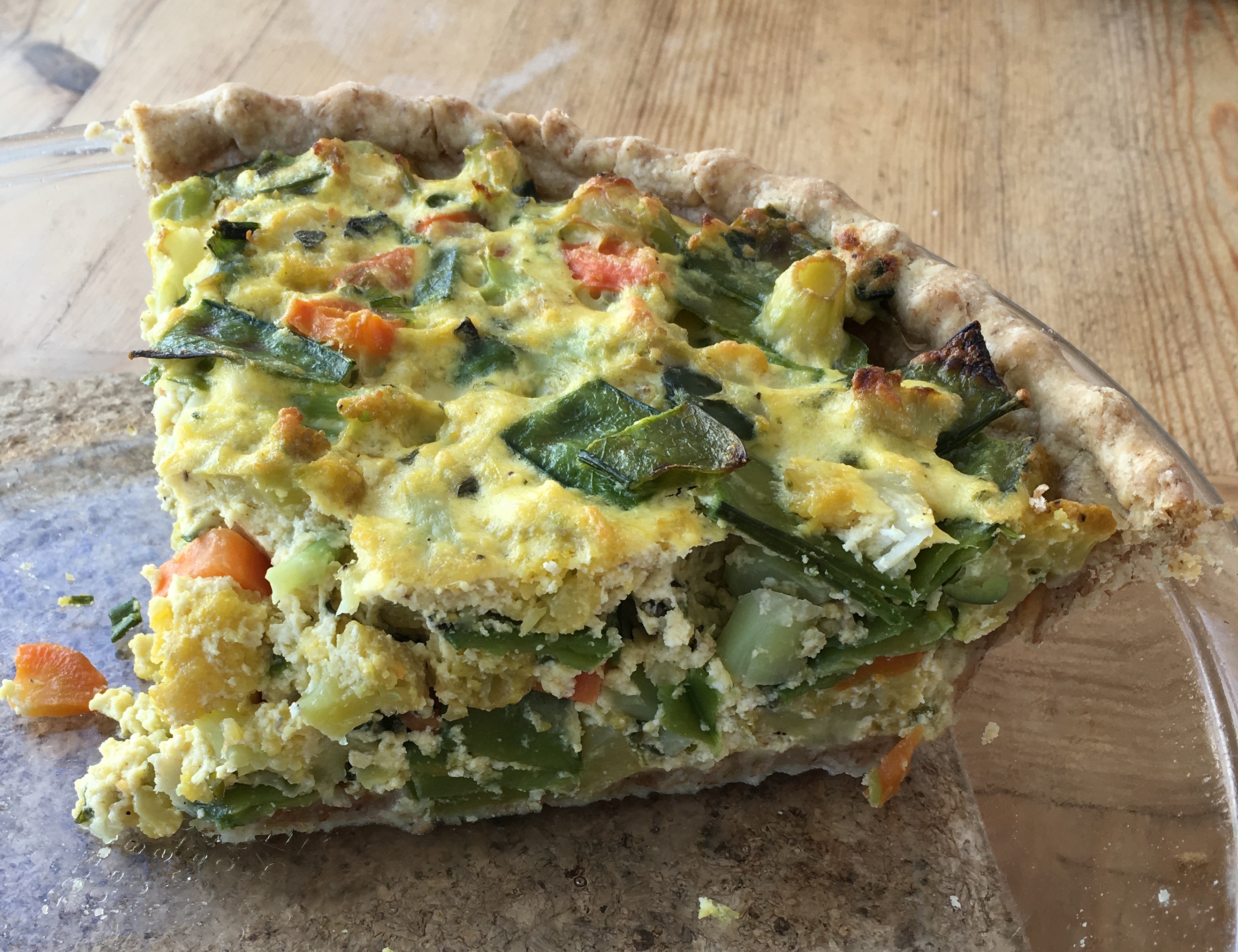
2016-12-13-18-36-33-cropAfter decades of work, I finally did it.

I made a perfect pie crust.

A flaky melt-in-your-mouth crust that made this excellent ricotta and vegetable pie seem like just a prelude to the crust. Not a hint of toughness, not a moment over-baked or under-baked. Even the bottom, that tends toward sogginess, was perfect.

That’s it, now—I’ve accomplished that and can tick it off my list. I never need to make another. I’ve done it right, and that’s that. My last pie crust.

Well, okay, I like pie…a lot. I probably will make another crust. And another. And another.

And, if I’m being honest, this perfect crust came about in part because I was being a bit lazy.

My pie crust recipe (designed to create an American pie crust with NZ ingredients), is supposed to be made with 125 grams each of butter and Olivani. But today there was a 150 gram chunk of butter in the fridge. I didn’t feel like cutting off a 25 gram sliver, so I just used it, and reduced the Olivani to 100 grams.

The other part of the perfection of this crust was a 45-minute chill in the fridge after rolling it out and putting it in the pan. That chill was necessary, simply because I was cooking alone today, and it took 45 minutes to pick, prepare and cook the vegetables after I finished the crust.

I really wasn’t aiming for perfection (my usual crust is actually pretty good, so I tend not to mess with the recipe much), I just stumbled upon it by accident.

I have, however, made a note on my recipe to increase the butter to 150 grams and chill for 45 minutes…

Takahē PDA

2016-12-11-11-49-22On a family trip to Wellington this weekend, we visited Zealandia, a predator-fenced wildlife sanctuary. A number of endangered native birds, reptiles, amphibians and insects have been introduced to the sanctuary, and many have done well there. Among the birds we saw were kākā, saddlebacks, and kākāriki. But my favourites of the day were a pair of geriatric takahē. Takahē are beautifully coloured, stocky birds about the size of a large chicken. They were thought extinct until 1948 when they were rediscovered in a remote area of the Murchison Mountains. In spite of protected habitat and a captive breeding programme, takahē remain critically endangered, with a population of around 300.

This pair were once part of the captive breeding programme, but at over 20 years old, they are no longer able to produce viable eggs. They were transferred to Zealandia to live out their retirement where they can be ambassadors for their species. They were certainly doing their job this weekend.

When we were there, the takahē were hanging out in a grassy clearing, feeding leisurely and basking in the sun. As we watched, the male walked over to join the female and groom her—a cute public display of affection. They talked to each other quietly as they fed, and completely ignored the half-dozen people standing around watching. They looked content and relaxed—just like a retired couple should.

I hope this unique bird can hold on, and flourish once again, if only in predator-free sanctuaries and offshore islands. It would be sad to lose it…again.

Christmas-lite

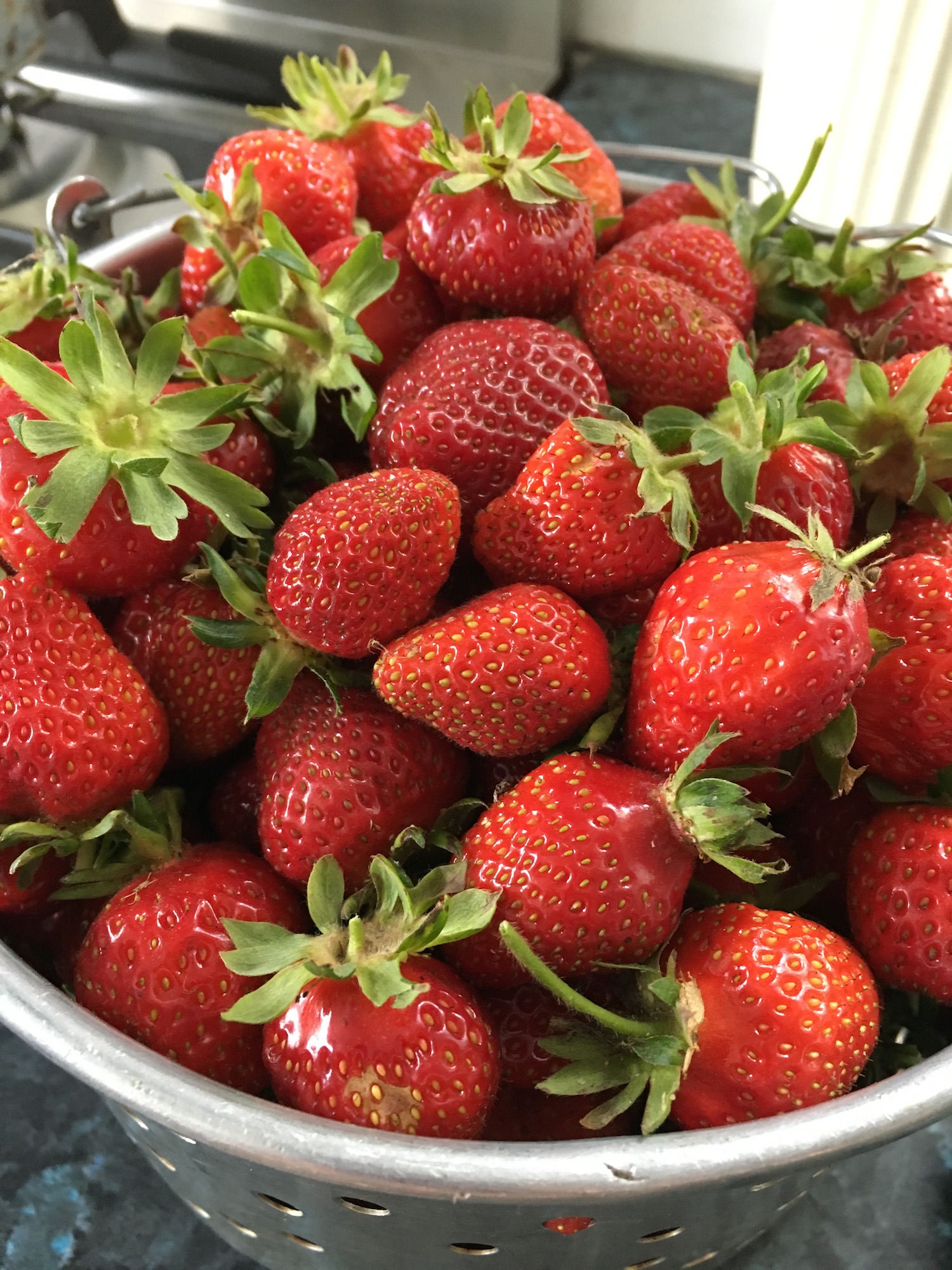
2016-11-30-17-31-25-smIt’s beginning to look a lot like Christmas…

Strawberries, gooseberries, black currants, red currants, cherries, and peas—ah! The signs of Christmas! They’re red and green, just like those in the Northern Hemisphere, but the greens are brighter than pine tree green, and the reds more succulent than holly berries.

They are just as festive as the colours up north, though in a different way. While you look inward, gathering around the hearth on long dark evenings, we look outward, sitting with friends on the beach on long summer days. You dream of white snow, we dream of white sand. You have visions of sugar plums dancing in your heads, we have visions of fresh strawberries dancing in ours. While you sing ‘let it snow’, we sing ‘let us go’ (to the beach).

Now and again I miss the cosy dark of Christmas in the north. And every year, I wish summer gardening, Christmas, and the end of the school year didn’t happen simultaneously. But I’ve grown to appreciate the summer Christmas. I appreciate not having to plan Christmas dinner, but letting it spring from whatever is abundant in the garden. I appreciate being able to sit outside on the porch in the sun after gifts have been opened. I appreciate the barefoot, short-sleeved, nature of Christmas here.

It’s like Christmas-lite.

Penultimate

2016-12-07-07-53-28My daughter’s last day of school for the year was Thursday, so on Wednesday I wished her a happy penultimate last day of school.

We like words in our house, and penultimate is one of the best, in its own right. But, of course, it lends itself to so much fun…

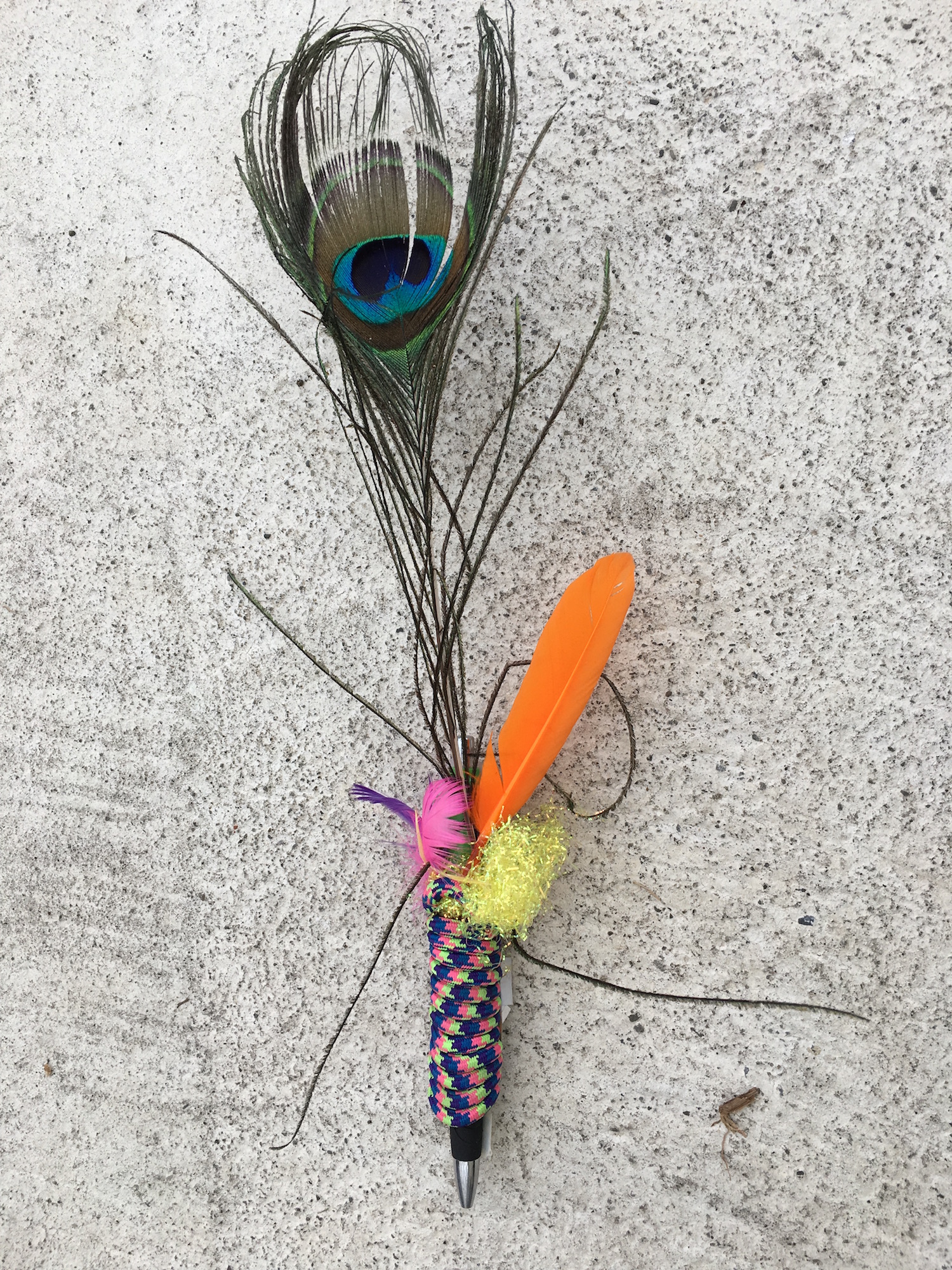
So on the penultimate day of school, my daughter made and took the Pen-Ultimate.

We all thought it was awesome.

Unfortunately, she said her classmates didn’t really get it.

*sigh*

We’re raising complete geeks.

*grins madly*