Christmas Aspirations

2016-12-25-17-10-50-smAnother Christmas down. Another Christmas in which I feel like I received far better than I gave.

It’s a double-edged sword, at this time of year, to have a husband who is so good at gifts. He puts me to shame every year.

This year it was the two hand-made wooden vegetable baskets (the ones he whipped out in the last couple of days since he finished work for the year) that made me feel wholly inadequate as a gift giver. Add to that the lovely and thoughtful garden tools and kitchen equipment he bought, and I feel like I need to go back and try again on my gifts for him.

I’m not really complaining—how could I possibly complain about a husband who makes gorgeous baskets for me? But I think I need to start preparing for Christmas a whole lot earlier in order to even come close to matching his gift-giving. It is truly something to aspire to.

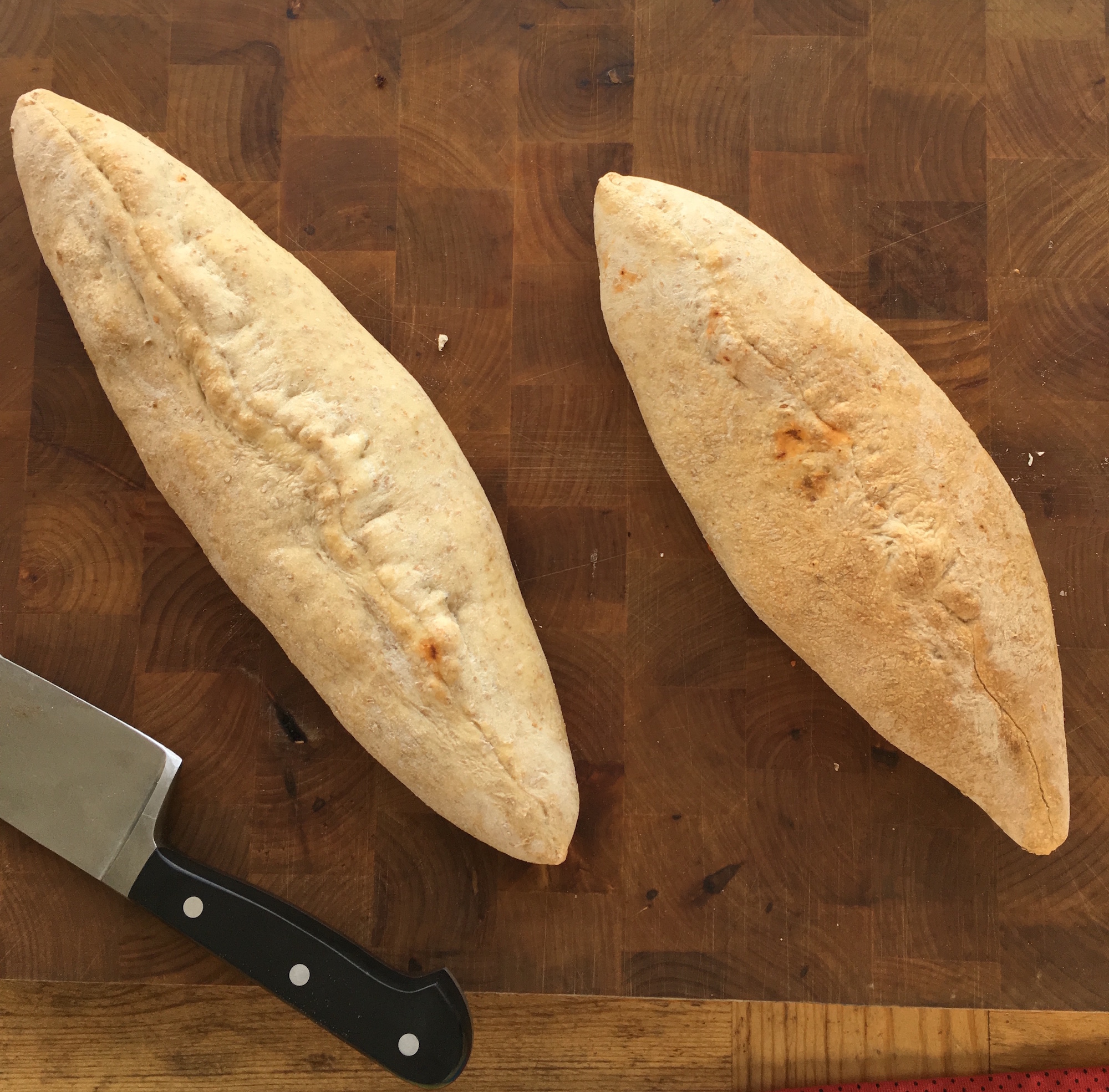
The Christmas Calzone

2016-12-24-19-21-34-smGrowing up, Christmas eating was strictly traditional stuff—lots of cookies, turkey, mashed potatoes, cranberry sauce, a token vegetable, and lots of gravy. I remember Christmas day as being a frenzy of cooking, starting with my mother putting the turkey in the oven in the wee hours of the morning, so that by 10 am the whole house smelled like turkey. It truly was glorious from a kid’s perspective.

At Crazy Corner Farm, Christmas eating is about as far from traditional as it gets. Except that it has become our Christmas tradition, and as such, it is traditional.

Our big holiday meal is on Christmas eve. With all the wonderful vegetables from the garden, we make calzones. We enjoy them with a fresh salad, or fruit from the garden.

In the evening, my husband makes up sticky buns and puts them in the refrigerator to rise overnight. I pop them into the oven in the morning before I go out to feed the animals, and they’re ready for breakfast by the time everyone else is awake.

We feast on sticky buns throughout the morning, then have leftover calzones for lunch. We hardly need an evening meal Christmas day, so our tradition is a big salad, broad beans, and the first of the season’s new potatoes.

All very low-key and relaxing, yet wonderfully decadent.

Christmas eve eve…

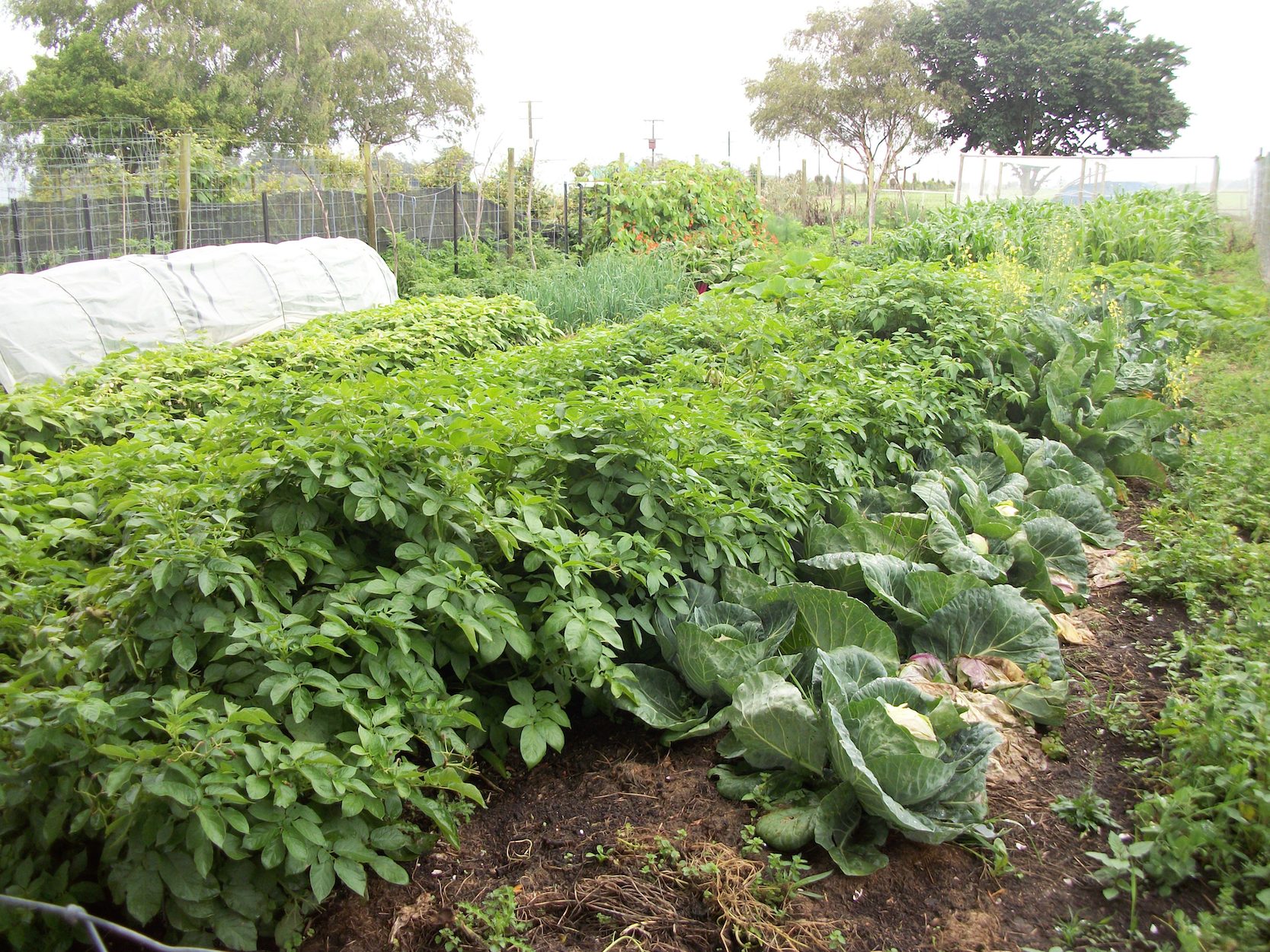
img_2742Surprisingly, a day of calm. It was overcast and rainy. The garden is reasonably well weeded. The berries and peas were picked yesterday.

Tomorrow I will clean the house (because Santa doesn’t visit dirty houses—I’m sure my mother taught me that one), and the peas and berries will need to be picked again, but today there was remarkably little on the to-do list. I’m not sure what happened, because usually the lead up to Christmas is a frenzy, just so I can feel free to take the whole of Christmas day off.

So, I gave myself an early gift—a day of sewing. I managed two new desperately needed t-shirts for myself, and did the finishing by hand while listening to a recording of my far-away family reading A Christmas Carol. Then I picked roses, and played a game with my daughter.

Such a lovely, relaxing day, I hardly need Christmas at all…

Fabulous Flax

2016-12-14-13-33-57-smAbout two weeks ago, a paddock we drive past nearly every day suddenly turned the unmistakable blue of flax. Not New Zealand flax, but linen flax.

At first, I thought it must be something else, because the plants were short—only about knee height. I’d never seen linen flax so short.

I also didn’t think linen flax was grown in New Zealand any more. During WWII, linen flax was introduced and promoted for wartime needs. The first planting was in 1939, and within several years, there were seventeen processing plants in the South Island. But by 1948, it was all over. As far as I can tell, there is no flax grown commercially for fibre anymore in New Zealand.

But flax seed and flax seed oil are a different matter. And, naturally, the varieties grown are shorter and bushier (with more flowers/seeds per plant) than the varieties grown for fibre production. The largest New Zealand processor of flax seeds is just down the road in Ashburton, so it makes sense that one of our neighbours might plant flax.

I hope they find it an economically viable crop—it’s one of the most beautiful crops I’ve ever seen. For the past two weeks, it has been a sea of blue on sunny days (the flowers close when it’s cool or wet). A wonderful addition to the colourful array of crops grown around us.

Think Like an Entomologist

2016-12-21-12-45-56We went to the beach today. It was the perfect beach day—hot, and not too much wind (not at the beach, at least). The waves were big and great for body surfing and boogie boarding, and as usual, we ran into friends who also happened to be there, and had a good catch-up.

But the very best part of the beach today was the bees.

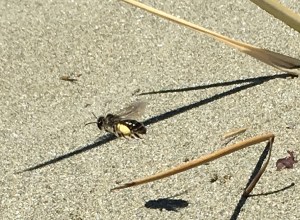
Thousands of native bees on the dunes just above high tide line. Swarming in the air, just 30 cm off the soil surface. I couldn’t help but watch, and I was rewarded with a fantastic show.

The bees almost all had loaded pollen baskets, and at first I wondered if they were feeding on something on the sand, because they would dip down to the surface, take a few steps, then fly away. I watched dozens of bees do this, but still couldn’t tell what they might be collecting.
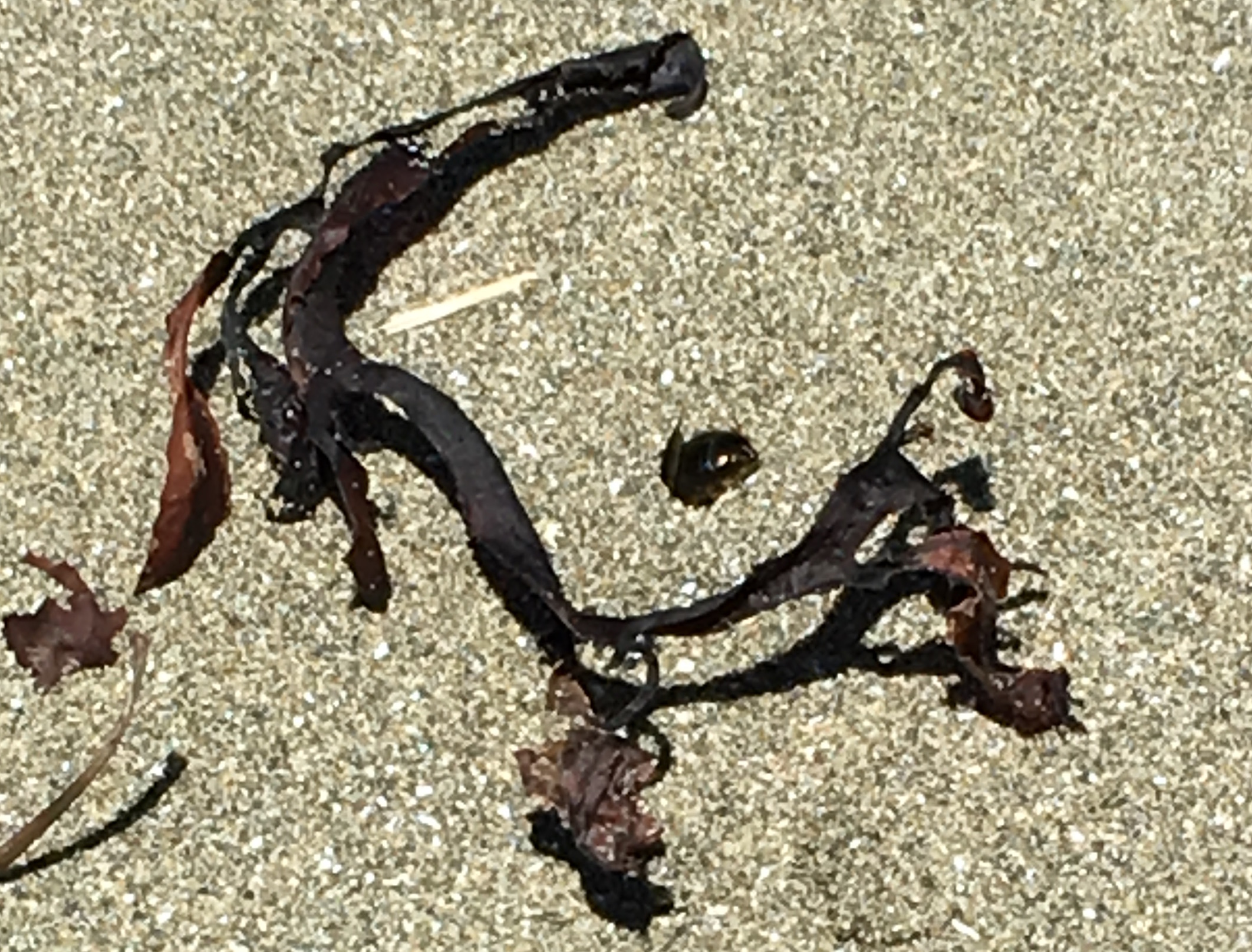
2016-12-21-12-48-28Then I saw it. A bee landed, then quick as a flash, dove head first into the loose sand. It took her only a moment, and she had vanished, leaving nothing but a slight divot in the sand to show where she’d gone.

Then I knew. They were burrowing into the sand, provisioning nests for their larvae. They had dug the burrows earlier, and the brief touchdowns on the sand were to locate the right burrow. I watched for a long time, and saw several bees dive into their burrows. I even saw one go part way, decide she had the wrong spot, and scramble back to the surface to try again.

Then I saw another insect in the crowd—a wasp. It, too, was hovering over the sand and dropping down now and again to the surface. I surmised that it was a parasite, looking for the hidden bee burrows. I guessed it would enter a burrow and lay an egg on the bee larva, and the wasp larva would eat the bee.

These were all guesses based on my observations. I really didn’t know if there were dune-nesting bees here, or if they were parasitised by wasps.

At home, I was able to confirm my observations. My bees were the native Leioproctus metallicus, and they are parasitised by a gasteruptid wasp that lays its own eggs in the bee burrows.

I was pleased to have pieced together this puzzle by watching bees on the beach. (The only part I couldn’t see was that the bees try to fool the wasps by digging many burrows, not all of which contain larvae.) Entomologist Tom Eisner once wrote, “There is a saying that ‘5 minutes in the library can save you weeks in the laboratory,’ which has considerable merit. I prefer the naturalist’s version, which says that ‘weeks in the field can save you minutes in the library.'”

I’m with Eisner on that one. Watching those bees and trying to piece together what was happening was pure magic.

Bugs in Your Food

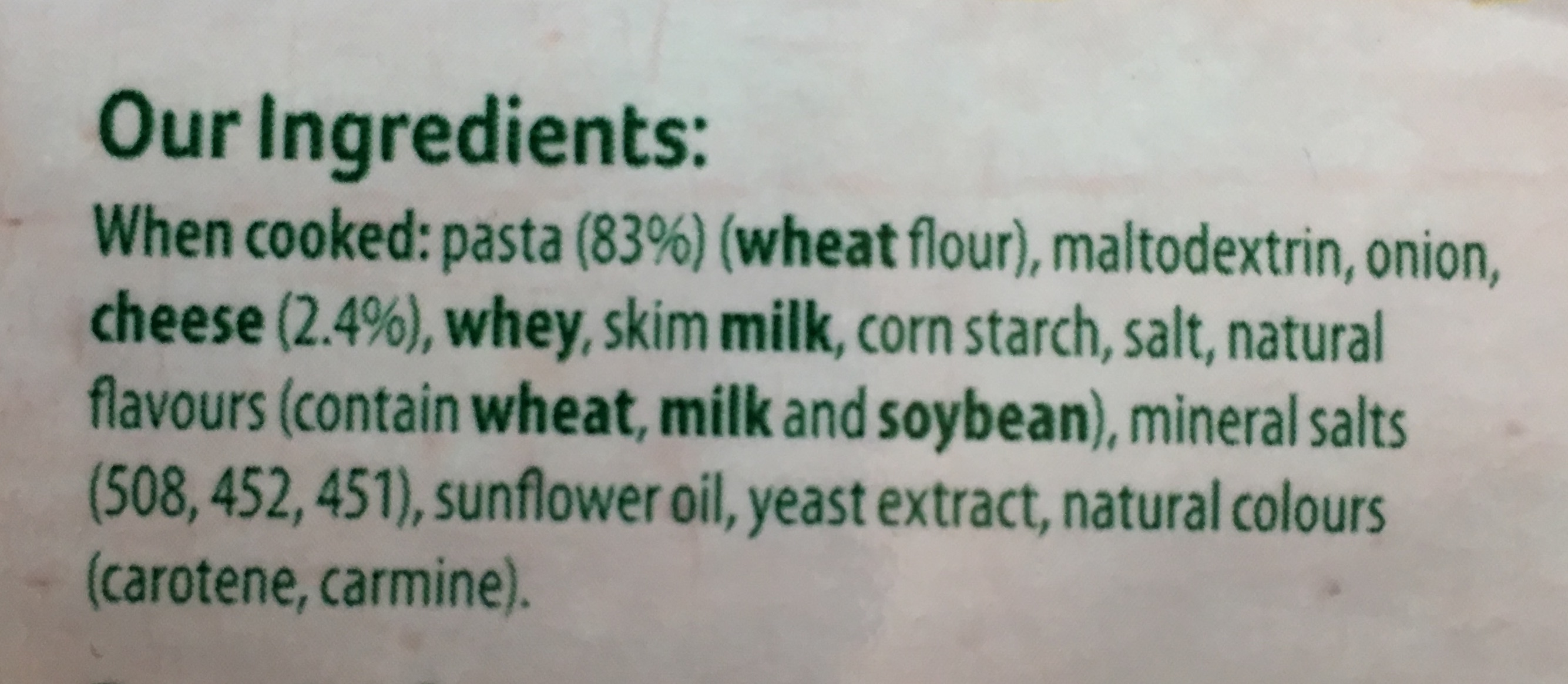
2016-12-18-06-46-58Can you find the insects in this ingredient list?

Yep, that’s it, at the very end—carmine—an all-natural food-safe red colouring made from the crushed bodies of the cochineal scale insect (Dactylopius coccus).

I don’t buy much processed food, so I rarely eat carmine, but I was excited to find it listed as an ingredient in the packaged macaroni and cheese I recently bought for a backpacking trip.

The cochineal scale is native to Central and South America, and lives on prickly pear cactus. It has been used as a dye since at least the 15th century, when it was used primarily to colour textiles. For three hundred years, it was one of our only red food-safe dyes. In the late 19th century, synthetic dyes began to replace carmine.

Until the 1820s, Mexico was the sole commercial supplier of carmine to the world, despite efforts to grow the insect elsewhere. At least one of those attempts ended in an environmental disaster. The British tried to establish carmine production in Australia to supply red dye for military uniforms in the 1700s. The insects died, but the cactuses thrived and eventually took over 259,000 square kilometres (100,000 square miles) of the country before being brought under control in the 1920s by the introduction of a moth that eats the cactus.

Carmine production is labour intensive. The insects need to be protected from predators and severe weather, then have to be brushed off the plants by hand at harvest. The insects are dried, crushed, and mixed with various substances to make a range of colours from bright red, to pink, to purple. It takes 80,000-100,000 insects to produce 1 kg of carmine.

Concerns over the safety of synthetic food colouring has led to a resurgence in the use of carmine in recent years, and it’s not unusual (though still not common) to find it included on the ingredient lists of food packages. In fact, you might be surprised how many products on the supermarket shelf contain carmine. Though it is more expensive than synthetic red dyes, it shows up in various cosmetics, candies, alcoholic drinks, fruit juices, sauces, cheese, meat, preserves, and desserts. In the US, the ingredient list is required to say ‘cochineal extract’ or ‘carmine’. In the EU, it might be labelled additive E120, and here in New Zealand, it is usually listed as colouring 120.

After Dinner Stroll

2016-12-19-19-04-24-smI am alone at home this evening. After dinner (eaten at the picnic table while reading a book), I went for a stroll around the property. Part of my path wound through the tall grass between the hedge and the vegetable garden.

Setting aside my normal reaction (This is so overgrown! I’ve got to get out here and cut this down), I did what my ten year-old self would have done, and lay down in the grass, holding still until I began to notice things.

I noticed that the ground was delightfully warm against my back.

I noticed that some of the grass was still in flower—anthers nodding in the wind—and other grass had already gone to seed and been stripped by the birds.

I noticed that the smaller flies meandered around among the grass stalks while the larger flies zipped overhead.

I saw a velvet mite gliding up and down a stalk of grass.

I noticed that a house sparrow nearby was chirping at just the right frequency to be irritating to my ears.

I noticed that the clouds weren’t moving across the sky as I thought, but rather were simply growing and coalescing in place.

Next thing I knew, I was starting awake, with the clouds, the grass, the birds, and the insects all still doing their thing around me.

Through Fresh Eyes

100_2137-smAll week I weeded and tidied the yard in preparation for a pizza party on Friday night. I tried to make the sad, tired parts of the yard look less decrepit and free the nicer spots from their mantle of early summer weeds.

It’s a Sisyphean task—by Friday, the spots I had weeded on Monday were already sporting fresh weed growth.

So as the first guests arrived, I fretted over the shabby state of the yard and garden. As I looked around, I saw weeds, flowers that needed deadheading, outdoor furniture that should have been hosed off…

But no one noticed my weeds, aside from those guests studying particular ones (it was a party of ecologists, after all, and they were thrilled to find their research subjects ‘in the wild’).

Instead, they saw the musical instruments, the blooming flowers, the fish in the pond, the cat playing with a grass stalk, the places for playing and relaxing. They saw all the things we love about the yard, and never noticed the twitch sprouting in the paths and the flecks of bird poo on the deck chairs.

“This is awesome!” cried one guest as he beat out a rhythm on the outdoor drum set.

“It all looks so fresh…like it’s all new,” said another.

Throughout the evening kids and adults alike wandered around, feeding goats, playing outdoor instruments, grazing on raspberries, sitting on the benches tucked here and there, climbing trees, playing lawn games, and feasting on produce from the garden, baked in the new bread oven. Everyone smiled. Everyone relaxed.

It was good to see the property through their eyes for the evening. I focus so closely on the work that needs to be done, that sometimes I forget that, even with weeds or grass that needs mowing, the place is a haven. Sometimes I forget to put away the to-do list and just enjoy the place. I struggle to stop and smell the roses without also noticing they need to be pruned.

So thank you to all the guests who joined us Friday night. You gave me a fresh perspective and gave me permission to slack off a little this weekend—to just be here.

You have got to be kidding me…

2016-12-16-15-35-55It frosted Saturday morning. Yeah. It was 30C Friday afternoon, and by Saturday morning it was 2C. It was back up to 30 degrees by Saturday afternoon, and today we went to the pool.

I didn’t even think to check the garden Saturday morning. It never frosts this late in the year. That’s the seasonal equivalent of frost on June 16th, for those of you in the Northern Hemisphere. Even in St. Paul, Minnesota, it never frosted that late. It was a rude surprise when I went out to the garden in the afternoon to pick some vegetables and found the pumpkins and beans blackened.

The plants will survive—it was a light frost and the growing tips of the plants weren’t hit—but it will knock the pumpkins back significantly. They were already behind, because the first planting didn’t germinate, and these plants were my second try at them this year. A frost this late might be the difference between mature pumpkins when the first autumn frost hits or pumpkins that still need a few weeks of growth to reach the right stage for storage.

Unfortunately, the only thing to do at this point is shrug and be thankful the other frost-tender crops weren’t damaged…after the obligatory grumpy farmer complaints are through.

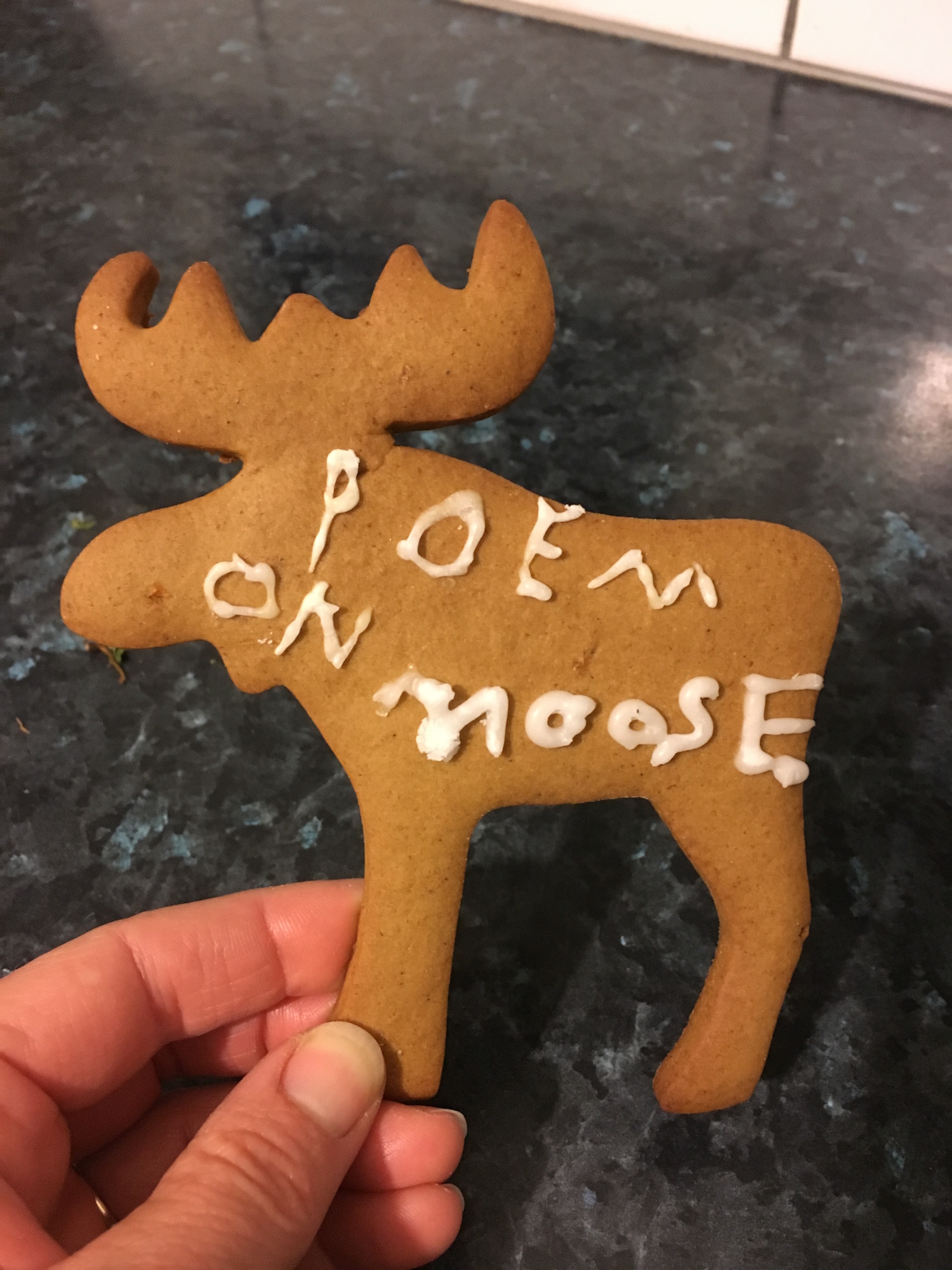
Poem on Moose

What happens when I let my daughter decorate Christmas cookies.

What happens when I let my daughter decorate Christmas cookies.

Literary ungulate
In gingerbread.

This poem is either
On a moose,
Or on moose,
Or both.

Your palmate antlers,
Distinctive,
Tell me you’re a bull.
They beg to be bitten off.

Then you would be a cow
Only your drooping nose
And your beard
Giving away your moosy nature.

But why a poem
On a moose
(Or on moose)?

I do not recommend
Writing poems on moose
(or is it mooses?)
Unless they are of the gingerbread variety.
The icing tickles
And moose (meece?) snort when they laugh.

But if you try,
I suggest a stepladder.