Trimming the Hedge

Hmm...do you think we could have some more?

Hmm…do you think we could have some more?

We trimmed the hedge today, a job we love so much, we’ve been putting it off since November last year. It’s a day’s hard labour for both of us (with the kids pitching in as long as they get to hang out on top of the hedge).

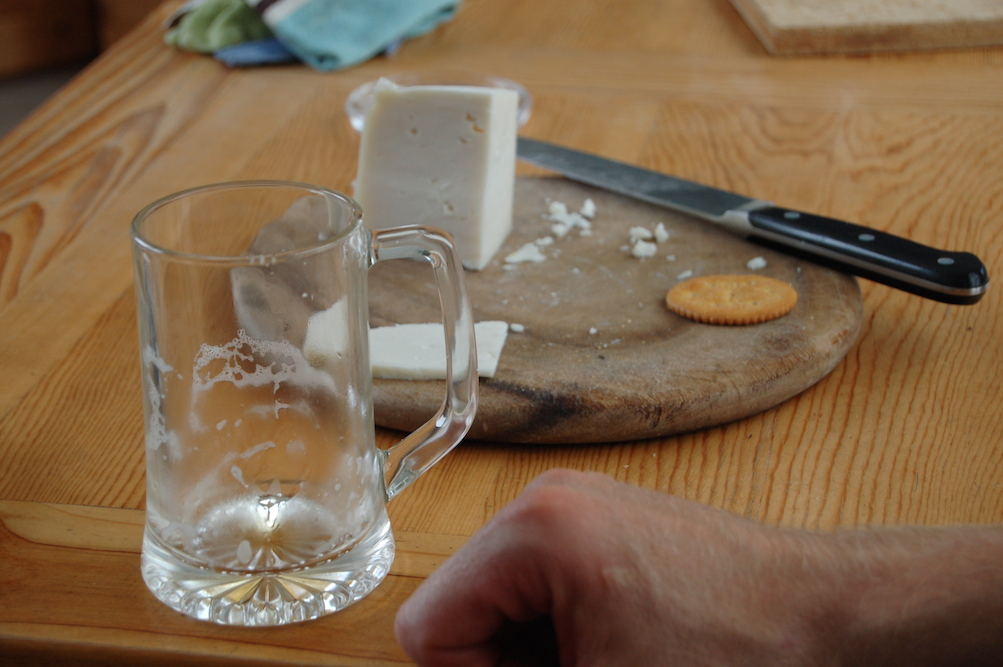
The only good part about trimming the hedge is the well-deserved beer at the end of the day. A homebrew and crackers with my favourite home made goat cheese, Bishop’s Corner. Almost worth trimming the hedge just for the excuse.

Starfish for lunch?

Eye candy only.

Eye candy only.

As I was casting about for a blog idea for today, I remembered the rock pool hopping I did with my daughter yesterday. She is doing a school project on echinoderms (starfish, sea cucumbers, sea urchins), and we went looking for them. I know sea cucumbers are eaten in some Asian countries, and sea urchins (kina) are a traditional Maori food, and I was curious whether starfish were edible. The short answer is that apparently some people eat their gonads, but the rest of them is poisonous. Of course! I should have recognised that by their bright colours—those warning colours that so many animals use to advertise their toxicity.

Their poisons include tetrodotoxin, the same neurotoxin found in the infamous puffer fish, and saponins that can cause red blood cells to burst.

And that, of course, explains how these easily spotted, slow moving denizens of shallow rock pools avoid being eaten by the gulls, herons, and oystercatchers that prowl the shore.

So next time you’re at the beach, take your lunch with you and leave the starfish alone.

The Price of Food

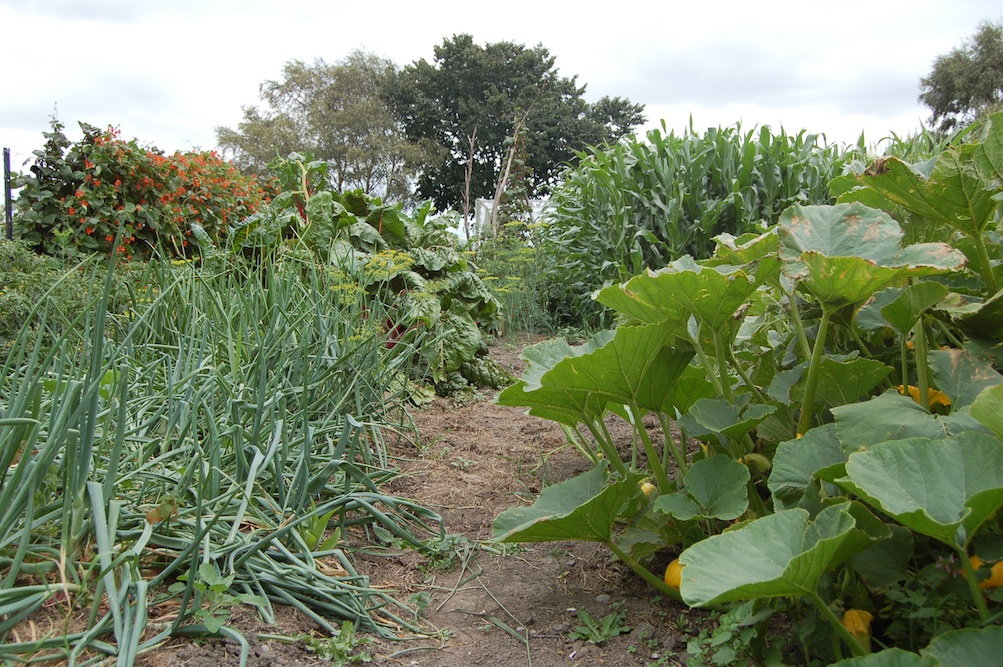
DSC_0022I went for groceries today. Because of other errands, I ended up at a different store than usual—a more upscale store. I wasn’t surprised, but I was appalled at how much I spent on my normal shopping run. It got me thinking about what I spend on food, both in cash and in time. I did a few back-of-the-envelope calculations, and found that I spend about $5,500 per year on food I don’t grow myself. I then calculated that I spend 980 hours per year producing food (not counting cooking). At my professional charge out rate, that’s nearly $69,000 of my time. I never grumble about how much time I spend on gardening, yet in cash value, I spend twelve times more in the garden than I do in the grocery store.

Why do I not mind spending a fortune in the garden? I value local food, self-sufficiency, and quality ingredients. Paying more at the store might get you more local food, but it doesn’t guarantee higher quality, and leaves you just as dependant on others for food. But spending more time in the garden provides high quality local produce, and doesn’t rely on an uninterrupted supply chain. Besides, who wouldn’t rather be in the garden than in the grocery store? So I’m willing to pay a little more in order to “shop” in the garden.

Old Farmers

My winter goat feed was delivered yesterday afternoon by the same father/son pair who delivers it every year. “Dad” isn’t a day under 90, and his son is in his late 60s. I always leap to help when they arrive. They would happily unload all the hay and stack it in the shed for me, but I can’t watch these two elderly gentlemen hauling hay bales while I do nothing.

Truth is, many of the neighbouring farmers could trade their tractors in for walkers. They work until their bodies give out, or until an accident or death claims them.

You might wonder why. Most of these guys are sitting on a fortune of land. They could sell out and retire in style instead of working themselves to death.

Paths wide enough for a walker?

Paths wide enough for a walker?

I understand, though. Will I give up gardening as long as I can drag myself to the garden? No. It’s who I am. Even injury can’t keep me away—I’ve been known to do my gardening on hands and knees when a back injury prevented me from standing. Farmers are the same. Farming isn’t a job; it’s an identity. To retire is to lose oneself. The 90 year-old who delivers my hay every year is cheerful and spry for his age. He will always be a farmer. One day he’ll stop working, but not until he stops breathing.

Gardeners make good neighbours

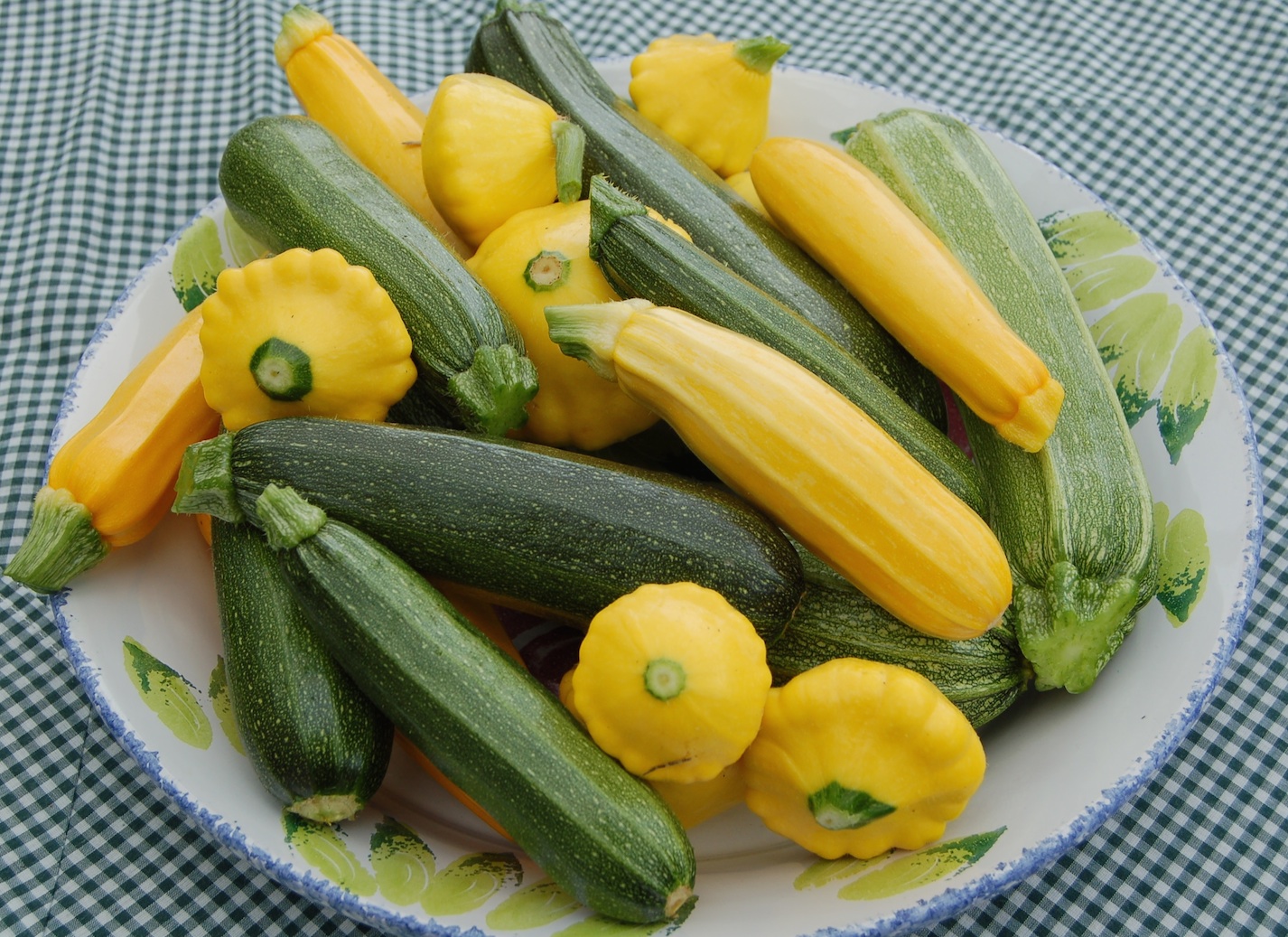
Anyone need zucchini?

Anyone need zucchini?

In our little rural community, there is a thriving barter economy, driven in large part by gardeners. Everyone’s garden is different, so everyone has different resources to trade, and different needs. I might have an excess of green beans, and can trade them for my neighbour’s excess tomatoes. This exchange of vegetables isn’t always explicit or immediate. I might provide eggplant today, and my neighbour might bring me broccoli in six months. It’s also not confined to the exchange of vegetables. A neighbour took care of my animals while I was on vacation over winter. In return, I provided her with vegetable seedlings in spring. I’ve exchanged cheese for olives, honey and peaches; and vegetables for hay and the loan of tools.

I’ve even exchanged cheese for dental work. My dentist is an avid gardener, and we exchange vegetables at every visit. I also occasionally bring him a block of goat cheese. A few years ago, he took a cheese making class and realized how much work it is to make. The next time I brought him cheese, he offered a free filling in recognition for the time he knew it took to make the cheese. He deemed it a good trade—though it would have cost me $300, the filling only took him 15 minutes to do, whereas I’d spent 5 hours on the cheese. Both of us left happy.

This free exchange of whatever each of us has in abundance makes for a supportive community. The old communist slogan, “From each according to his abilities, to each according to his needs” really does fit the “garden economy”. It makes me think that, if everyone could just grow a little patch of vegetables, the world would be a better place.

New Site/Old Site

Sorry to everyone who has been reading my blog. My old site, hosted by Startlogic, has been completely destroyed by the lovely support staff at Startlogic. You can see the text only from the February 4-13 posts, there, but nothing else. I will slowly re-post past posts here, as I have time, and will do all future posting here. Come July when my hosting plan with Startlogic expires, the old site will expire with it.

Favourite kitchen tools–Brisingr

DSC_0011 smWe all have our favourite tools—the ones that fit the hand perfectly, or make a job easy. I have quite a few favourite tools in the kitchen. One of them is “Brisingr”, a knife so impressive, the kids named it after the sword in the fantasy series by Christopher Paolini. Brisingr is a handy and effective knife for big round vegetables like cabbage and pumpkins (Indeed, I once cut up 3 commercial cases of pumpkins in one session for a school event. The knife needed sharpening afterwards, but it made the job quick and painless). It’s also a fantastic pizza knife. Best of all, it just looks good. Hanging on the wall, poised to cut, or lying next to an expertly sliced pizza, it calls out, “Back off, lesser knives! I’m here to get the job done”.

Do you have a favourite kitchen tool?

Leftover Cake

DSC_0006 cropAfter the Desolation of Smaug, I felt a need to redeem myself in the cake department. I also had some almond paste and some dark chocolate left over from the kids’ birthday cakes, so yesterday I created this beauty—as delicious as it looks. It’s a devils food cake, filled with almond paste, and covered with a chocolate ganache. Marvellously decadent!

Kiss me Nicholas

basil greenFor Valentine’s Day, I thought I’d write about one of my favourite romantic foods—basil, also known as bacia-nicola or kiss me Nicholas in Italian. Like most herbs, basil’s lore is mixed, being associated with both love and hate, but for today, let’s focus on love. What I like about basil is not that it will make a woman love you, as sage is supposed to do (if you thread the leaves onto the woman’s hair and bury it under her doorstep), or that it is an aphrodisiac, as saffron is said to be. What I like is that it is said to “attract husbands to wives”. Isn’t that nice?

Now let it be said that there is no scientific evidence whatsoever that basil attracts husbands to their wives. The two main aromatic chemicals in basil are methyl chavicol, and eugenol. Methyl chavicol is produced commercially for use in perfumes, flavourings and herbal supplements, and apparently doesn’t attract anything. Eugenol is also used in perfumes and flavourings, and also as an antiseptic and anaesthetic, particularly in dentistry. The only things eugenol is known to attract are male orchid bees (who use the chemical to make pheromones), and female cucumber beetles.

Alas, there is no scientific evidence that feeding my husband pesto will attract him to me. But I can’t help believing there is just a little truth in basil lore. After all, they say the way to a man’s heart is through his stomach. If I feed my husband a delicious meal full of basil (and what meal full of basil wouldn’t be delicious?), it stands to reason he might be attracted to me.

So I’ll go all out with the basil today, because it can’t hurt, right?


Salt

SaltsmIt preserves and flavours almost all our food. It’s been traded commercially for over 2600 years. It features in the language of nearly all cultures—you are “worth your salt”, you are “the salt of the earth”, you take things “with a grain of salt”, you “rub salt in a wound”.

Central as it is, it is one of those ingredients we don’t produce ourselves. During summer, our meals often consist entirely of products we’ve produced…except for the salt.

My daughter was determined to rectify that. Last week, she declared she was going to make salt. We popped out to the beach and snatched a bucket of sea water from a large and violent surf. She poured the water into a pan and set it on the porch. Within two days, she had a pan of salt…and, due to a dust storm, dirt. She tried again, this time protecting the pan from dust with a sheet of Perspex, propped up to allow air circulation.

The result was delightful, and surprising to us all. From a jelly roll pan full of seawater, she harvested about half a cup of salt. Even with the cover, some was too dirty to use, but the rest is beautiful. We enjoyed it on our corn on the cob last night, and it was everything a gourmet salt should be—a full-bodied taste of the sea. And so easy to harvest!

Half of New Zealand’s salt is produced just a few hours north of Christchurch at Lake Grassmere. The industrial scale process of harvesting 70,000 tonnes of sea salt each year is little different from our tiny experiment in a baking pan. Like we did, the process at Lake Grassmere relies on summer sun and strong, drying nor’west winds. We buy a lot of salt from Lake Grassmere, for cheese making, preserving, and cooking. But we might be buying less from now on. There’s something wonderful about harvesting this most basic of ingredients, this gift from the sea.