Granola

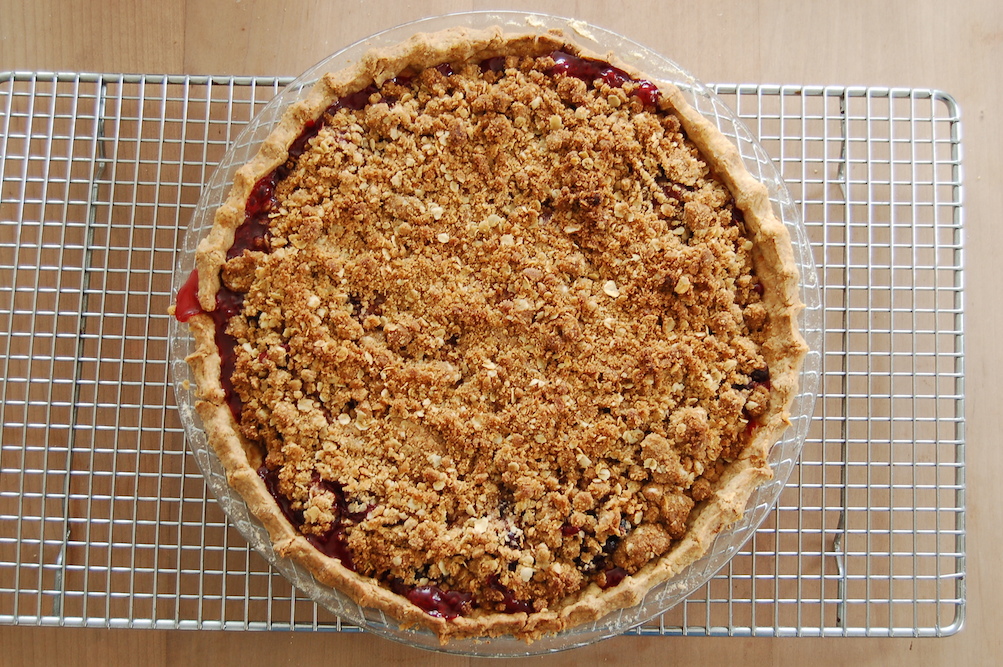
granola2 smThe kids laugh at me, because I eat the same breakfast almost every day. It’s not that I don’t appreciate breakfast, but I guess I’ve found what works for me. Why change? True, I’d rather be eating pancakes, scones and muffins every day for breakfast, but who has time to bake every morning? I usually eat breakfast standing up in the kitchen while I pasteurize milk, make lunch, and wash dishes, so it’s got to be something easy.

Homemade granola fits the bill perfectly. Top it with unsweetened yogurt or whole goat milk, and just a little bowl can get me through the whole morning. It took me years to come up with the perfect granola. It was the addition of puffed grain that made the difference for me—before, I always felt my granola was too heavy, like I may as well have been munching on the grain I feed the goats.

So here it is, my daily breakfast granola. This recipe makes a lot—keeps me going for weeks, but it stays fresh in a tightly closed container.

6 cups old fashioned rolled oats

4 cups puffed wheat (unsweetened)

1 cup sunflower seeds

1 cup barley flakes (rolled barley)

1 cup rye flakes (rolled rye)

1 cup shredded or flaked coconut (unsweetened)

1 cup walnuts, chopped

¼ cup vegetable oil

½ cup honey

1 cup dates, chopped

1 cup raisins

Mix oats, puffed wheat, sunflower seeds, barley, rye, coconut and walnuts in a large bowl. Combine oil and honey, and microwave for 30 seconds (I measure them directly into a glass measuring cup that I can microwave in), no need to actually mix them, just warm them. Pour oil and honey over the grains and mix well. Spread into two jelly roll pans and bake at 180°C (350°F) for about 30 minutes, stirring every 5 minutes or so, until the grains are lightly browned. When the pans come out of the oven, while still hot, sprinkle dried fruits on top. When completely cool, store in an airtight container.

City Mouse, Country Mouse

See a beautiful goat kid? Beauty belies the truth: manually pulled from her mother, bottle fed because she was two weak to stand, then put down at 3 months old because of an injury.

See a beautiful goat kid? Beauty belies the truth: manually pulled from her mother, bottle fed because she was too weak to stand, then put down at 3 months old because of an injury.

I glanced down at my shirt as I got out of the car. Damn. Frayed on the hem, and stained with something dark—blood, probably. I sighed. Once again I would be the worst dressed parent at school—the country mouse among city mice.

It was easy when the kids were at the local rural school. Most of the parents showed up in manure-splattered gumboots and dirty coveralls there. But now that the kids are at school in the city, I feel a vast cultural divide between myself and the other parents.

They walk in wearing impeccable make-up, high heels, and dry clean-only clothes. They sport jewellery and labour-intensive hairstyles. Meanwhile, I’ve thrown on my least decrepit pair of blue jeans, hiking boots, and a t-shirt of dubious cleanliness. If I’m lucky, I’ve combed the hay out of my hair.

When these city parents find out I live on a lifestyle block in the country, they wax lyrical about how someday they want to live “the good life” in the country. I look at them dubiously. Those high heels wouldn’t work well in a muddy paddock. If they persist, I describe for them my daily routine, beginning at 5 most mornings. I enumerate the hours of hard labour in the garden, the DIY vetting (not for the faint of heart) that comes with owning livestock, the never ending struggle to maintain a rotting 125 year-old house.

It’s worse when city folk come to visit. Of course, other than at kidding time (see Worst Hostess of the Year), when visitors arrive, work stops. We make sure the garden is weeded, the grass trim, and the usual mess of half-finished projects is cleaned up before visitors come. We serve the fruits of our labour—homemade cheeses, fresh fruit and vegetables. We relax with a glass of wine. Visitors get the impression it is always like this.

The truth is much dirtier and sweatier, and it’s visible in our clothing. No matter how careful I am, eventually I find myself trimming hooves, treating an abscess, or tying up tomatoes in my “city” clothes. I sweat every day. I am regularly splattered with blood—my own or a goat’s. None of my shoes is reliably without manure on the soles.

So while the city folk see only the romance of rural subsistence farming, we live the reality. Are there moments of romance? Yes. In the silence of early morning milking. In the evening strolls around the property, when the day’s work is done. In the daily sweep through the vegetable garden to pick dinner. In the frolicking play of goat kids in the paddock. But it takes long, hard work to create those moments of romance, and the romance probably isn’t worth it unless you also enjoy the work. And, of course, if you don’t mind being the worst dressed parent at school.
Cheese Magic

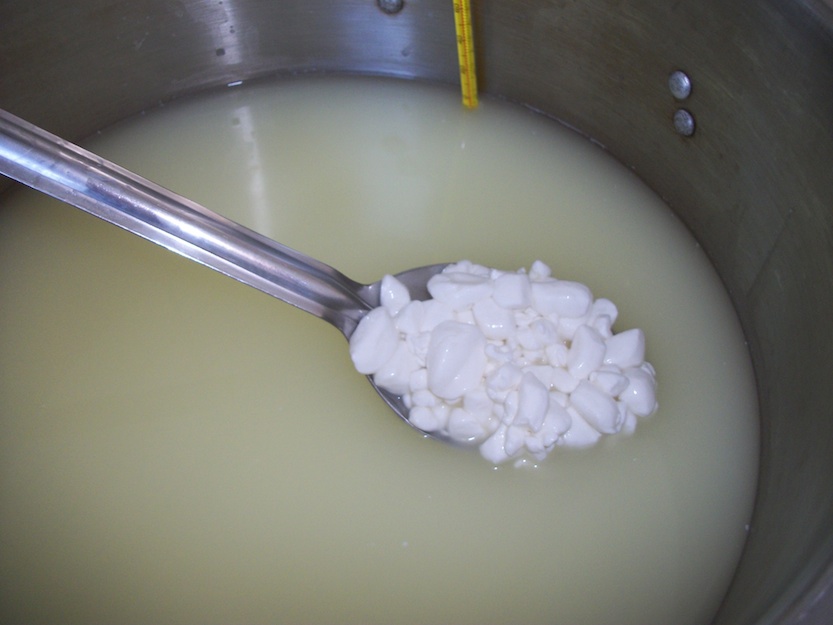
Curds and whey

Curds and whey

To be honest, until I had dairy goats, I don’t think I knew at all how cheese was made. Oh, I knew it was made from milk, but beyond that, I had no clue. I loved cheese, and I ate quite a lot of it, but how it came to be on the supermarket shelves, I didn’t know.

Truth is, cheese making is magic.

Well, OK, not really. It’s a simple matter of coagulating proteins, and the whole process is governed by the laws of chemistry. But it feels like magic.

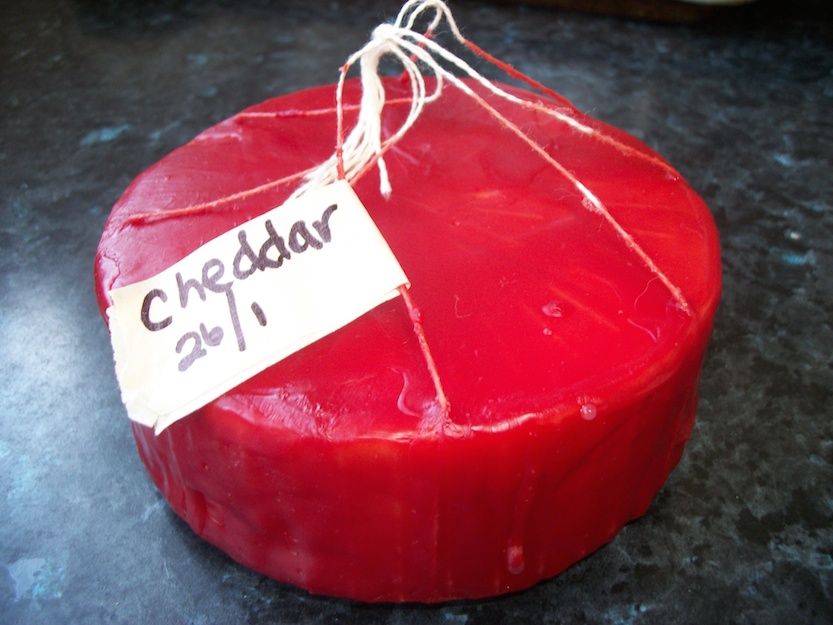
Slow and painstaking magic, that is. Ignore for a moment the six months of planning and animal husbandry required to produce the milk itself, and let’s focus on the actual cheese making process. The process to make a simple farmhouse cheddar, one of the least time-intensive hard cheeses I make, usually starts at about 6.15 am. Two hours of heating the milk and adding cultures and rennet, and the first of the magic happens—liquid milk becomes a solid mass of cheese curds. I carefully cut the curd into small cubes, marvelling at its beautiful silky firm texture. Then I tediously stir for almost an hour and a half while I heat the milk to expel liquid from the curds. The curds finally go into the press at about 10 am. The “green” cheese doesn’t come out of the press until 11 pm. A week later, once the surface of the cheese has dried, it is waxed, and left to age for at least 4 weeks.

cheddarsmSo, the fastest of cheeses is almost 5 weeks in the making. Other cheeses require much more active processing, and a much longer aging period (parmesan needs a minimum of 10 months, and is best after a year). Some cheeses aren’t waxed, and need daily or weekly washing for their entire aging period to avoid mould.

But once a cheese is ready, the second bit of magic happens, and it is my favourite part of cheese making–opening a new cheese. Only at this point do I know for certain how the cheese making months before actually went. Is it the right texture? Is it properly salted? Has it aged enough? Was I able to prevent unwanted mould growth? The whole family is drawn to the opening of a cheese. Everyone gets a slice, and weighs in on how good it is. This magical moment, standing around in the kitchen with the family is worth all the tedious stirring and waiting.

More Cake!

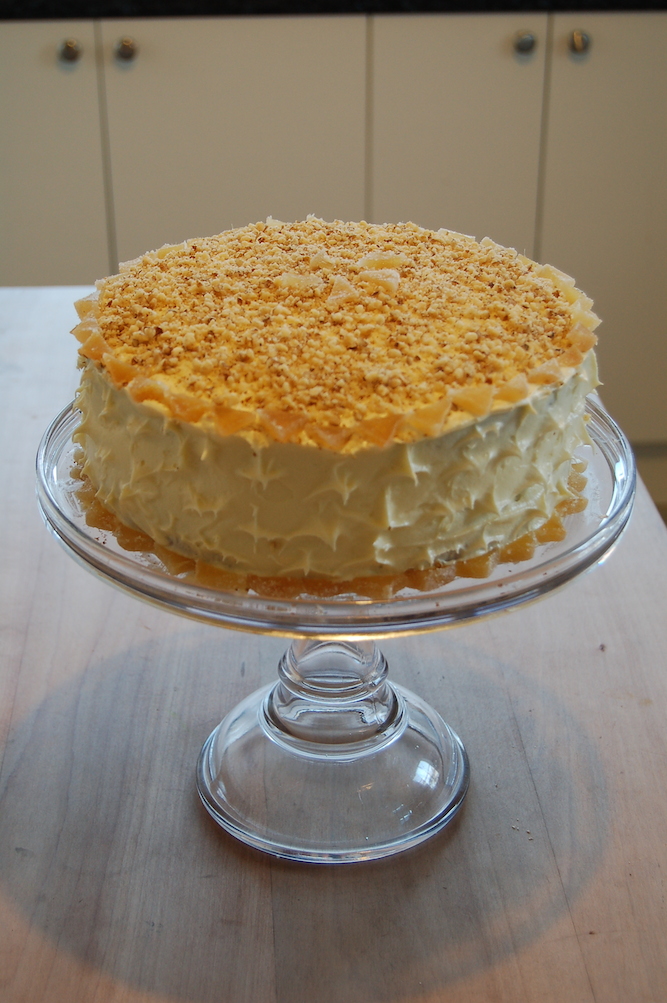
DSC_0008 copyLast but not least! Ian’s cake ends my obsession with cake each year (well, OK, I obsess about cake most of the year, it’s true). Though I enjoy making the kids’ cakes, turning food to fantasy, I appreciate the opportunity to focus as much on flavour as presentation on Ian’s. (No, he didn’t ask for Smaug, or a Hobbit hole, or an ork, or anything else…) For many years, he requested cheesecake, but lately he’s been asking for carrot cake. It almost seems like a cop out to make such a simple cake for a birthday cake, but carrot cake dresses up well. Of prime importance to Ian is the cream cheese frosting. He’s not a fan of sicky sweet frosting, so the tart cheesiness of cream cheese frosting is perfect. I’ve been tweaking a recipe that calls for four cups of confectioner’s sugar, and have it down to 1 ½ cups. That’s about half a cup more than is necessary for flavour, but on a warm summer day, I needed the extra sugar to stiffen the icing.

In fact, in the cake, too, I reduced the sugar by half. It’s not that I worry about too much sugar in our food—we’re already on the low end of sugar consumption, so I don’t fret about the occasional treats. But I find too much sugar dulls the other flavours in cakes and other baked goods. Lightening up on the sweeteners allows the subtle flavours of nuts, fruit, and whole grain flours to shine through. This is especially important in a cake like carrot cake—so full of complex flavours it would be a crime to smother them with too much sugar.

I suppose that’s what my kitchen philosophy comes down to. A lot of people think I’m some sort of health nut, but the truth is I just enjoy flavours. Fresh ingredients, a light touch with sugar and salt, few highly processed foods…these choices are all about flavour.

So, let them eat cake!

The French Potager

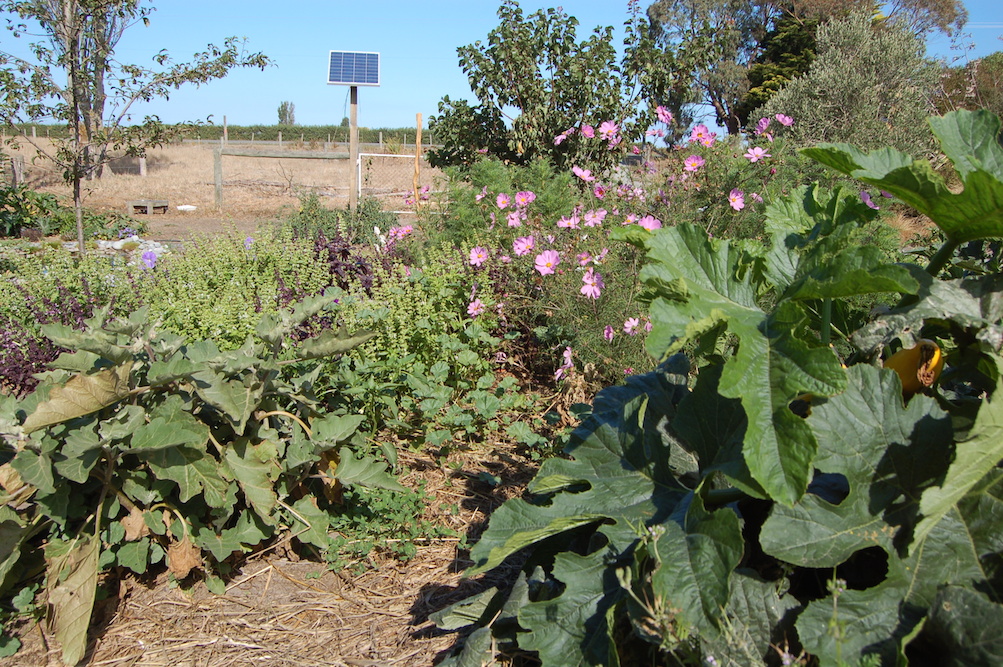
Zucchini, eggplant, basil and cosmos nestle happily together.

Zucchini, eggplant, basil and cosmos nestle happily together.

I love the idea of the French potager—the small garden densely planted with a mix of flowers, herbs, and vegetables. When we lived in St. Paul, Minnesota with a yard the size of a postage stamp, we had a delightful potager in raised beds near the house, and flowing down rocky terraces to the sidewalk. Showy okra flowers competed with cosmos and marigolds for the most beautiful plant award. Eggplants nestled next to thyme, corn formed a backdrop for zinnias, and colourful lettuces marched in a neat border around the whole arrangement.

Now that we have more than enough space, the vegetables are segregated and confined to the vegetable garden, where I can be sure they are well watered and mulched, and I don’t worry about a few spent, ugly plants hanging around. I’ve also found that here in the land of pernicious twitch (couch grass), planting perennials and annuals together is usually a recipe for disaster—annuals don’t compete well with twitch, and the perennials harbour fragments of twitch among their roots, providing an endless source of the weed.

But this spring, Ian was looking for temporary plantings for his new pond garden—plants he wouldn’t mind killing off along with the weeds in the fall when he plants the perennials he wants there. He picked up a few flats of annual flowers, took all my leftover vegetable plants, and created a delightful potager bursting with colour, fragrance and flavour. It’s a lovely reminder that you don’t need a “vegetable garden” to grow food, and that vegetable plants are beautiful, too.

There Will Be No Blog Today…

DSC_0001 copy4.26 pm.

I sit, finally, to blog.

Do I blog of the cheese I made this morning, pressing on the kitchen counter? Do I describe the magical beauty of liquid milk congealing to a smooth, firm solid? The hours of tedious stirring? The firm, almost live feel of a new cheese?

Do I blog of the ten quarts of tomatoes, onions, peppers, tomatillos and spices I boiled down into ketchup today? Do I write of the bees that swarmed the kitchen when the vinegar was added, inexorably drawn to the sharp, spicy smell?

Do I blog of the corn and soybeans still awaiting me in the garden? Of the hours of steaming pots, and dirty dishes that still await me today?

No. I am weary of the kitchen. I am sick of its tantalizing fragrances and its steamy dishwater. I am irritated by the bees, who, once inside, can’t find their way out, and force me to watch every step for fear of ending my day with a trip to the hospital.

So there will be no blog post today, of the lingering smell of cloves and allspice, no detailed description of the art of cheese, no reminiscing of childhood afternoons shelling soy with my sister.

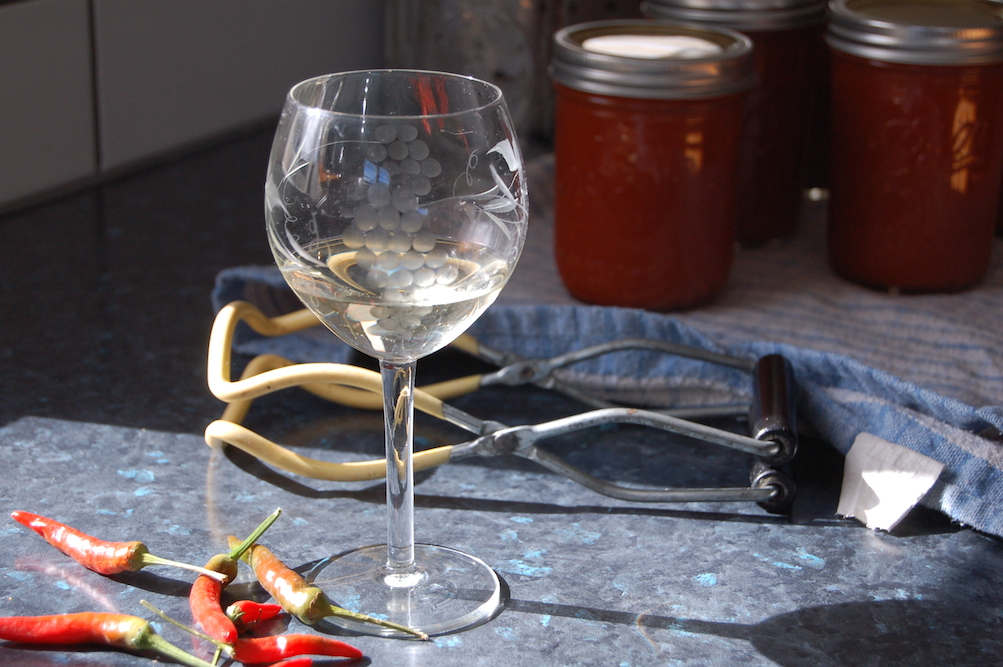
No. Instead, there will be 15 minutes of rest. A glass of wine. And then back into the fray.

The Exuberant Kitchen

messykitchensmMy kitchen is a mess.

The stove, and the wall behind it is splattered with tomato sauce. The floor is littered with bits of onion skin, lost basil leaves, and sesame seeds. The backsplash behind the sink is splattered with dirt.

It’s not that I don’t clean. In fact, I’m a bit obsessed with cleaning. I’ve been accused (rightly, I’m afraid) of preferring to stay home and mop the floors rather than go out on a Friday night.

But I can clean constantly, and still have a messy kitchen, because the kitchen is in near-constant use. It’s a working space, and I’ve learned to accept it as such. Right now there is a vat of pasta sauce boiling down on the stove, and an hour ago, the kitchen was the scene of a massive vegetable preparation operation. There will necessarily be dirt, vegetables and tomato sauce everywhere. Earlier, it was being used for pasteurising the morning’s milk and for making mayonaise. Later, it will be covered in flour as I roll out homemade pasta.

Flipping through a Home and Garden magazine, you could be forgiven for thinking that kitchens are meant to be gleaming, spotless backdrops for perfect flower arangements. Ours, however, is usually a grubby setting for a pile of dirty dishes.

Our kitchen works hard. All five burners on our stove are regularly going at once, and some days, I swear we wash every pot, bowl and spoon twice. A space hosting so much activity can only be truly clean for brief moments—say, between midnight and 2 am on every fouth Tuesday.

But a kitchen like ours is also a scene of laughter, life, and love. It is steeped in delicious odours, and tantalizing flavours. It is where the produce of the garden is transformed into the fuel for our bodies and the treats for our celebrations. It’s not a messy kitchen, it’s an exuberant one.

The Caprine Composter


Caprine Composters at work on tough corn stalks.

Caprine Composters at work on tough corn stalks.

There are dozens of ways to compost. There are barrels that rotate, rocket-shaped bins with handy doors on the bottom for extracting the finished compost, clever bokashi buckets, and worm bins. Then, of course, there are the non-commercial composting systems like sheet or pit composting, and my personal favourite, throw-it-in-a-pile-and-ignore-it composting.

None of these systems works well for large, woody items, though—small branches, corn stalks and the like. These things linger (or don’t even fit) in most composting systems.

For these woody items, I prefer the Caprine Composting System. This effective and efficient composter takes large woody plant material, and reduces it to convenient, pelletised fertiliser in just 24 hours. No tedious chopping and waiting on your part, just throw it over the fence, and the Caprine Composter does the rest!

Bonus! The Caprine Composter is adorable, too!

Bonus! The Caprine Composter is adorable, too!

Comes in fashionable and discrete colours like white, brown and black. No assembly required.

Caution! The Caprine composter is highly efficient, and can compost valuable trees, shrubs, and other plants if not properly operated and restrained. Read all instructions before operation. Use with care!


Cultural Icons

fishnchipssmWhat does it take to become a Kiwi? An appreciation for the uses of number 8 wire? The ability to pronounce Whangaparaoa without stumbling? Knowing the culturally acceptable way to pass a mob of sheep on the road? Understanding that a statement like “I wonder if you should move your car out of the way?” actually means “MOVE YOUR F#*&%^ CAR OUT OF THE WAY!” An ability to converse coherently about rugby?

All these things are certainly important. Equally important is an understanding of New Zealand food icons.

Food is central to cultural identity. Apple pie and hot dogs are quintessentially American, a Panamanian festival wouldn’t be complete without ojaldre, and Costa Ricans would lose their sense of self without black beans.

Wherever I’ve travelled, I’ve tried to experience the local, iconic foods so as to fully experience the culture. I try not to let my own dietary choices prevent me from these experiences, so among other things, I’ve eaten spicy chicken salteñas from a street vendor in Bolivia, and titi (muttonbird) traditionally caught and preserved by local Maori. These experiences haven’t always been positive—the spicy salteña tasted a lot worse coming back up an hour later in a public park—but they’ve always taught me something.

Modern Kiwi culture is culinarily represented by pavlova (a meringue topped with fresh fruit), kiwi fruit, and fish and chips. Determined that our kids not be culturally and socially handicapped by vegetarianism, we’ve made a point of occasionally picking up fish and chips at our local shop. We don’t do it often—maybe 3 times a year—so it’s a rare treat for the kids (as greasy, salty fried food probably should be), but it has worked. Though they still speak with an American accent, and have no interest in rugby, they can connect with their peers over the cultural icon of fish and chips. And I can think of no better way to fit in than around the dinner table.