Tamariki Book Festival

I have started and not finished about a dozen blog posts in the past three weeks. The reason? I’ve been organising the Tamariki Book Festival, which is on tomorrow in the TSB Space at TÅ«ranga in Christchurch.

A fabulous lineup of local authors who write everything from picture books to young adult novels will be running activities and selling books. It’s a great way to kick off the school holidays!

I hope to see you there, and I promise I’ll get back to regular blogging once I’ve had a good long sleep.

Tamariki Book Festival!

I’m thrilled to announce that the Tamariki Book Festival is back again this year after a 3-year Covid hiatus. This year, we’re running it in conjunction with KidsFest, and once again we’re holding the festival in lovely TÅ«ranga, Christchurch’s central library.

Tamariki Book Festival brings children’s authors and illustrators together in a fun festival atmosphere. Kids of all ages can meet authors; do crafts, games and other fun activities; and discover new books.

We’ve got some fabulous authors and illustrators lined up. We’d love for you to join us:

Saturday 1 July, 11 am – 4 pm
TSB Space, Tūranga
Christchurch

Entrance is free and no registration is required. However, if you register, we’ll send you a reminder so you don’t miss the date.

Fruity Experiments

The freezer is packed with early summer fruits—raspberries, gooseberries, red currants, and black currants. Seriously, if we don’t make a good effort to eat it, we’ll still have fruit left when summer rolls around again.

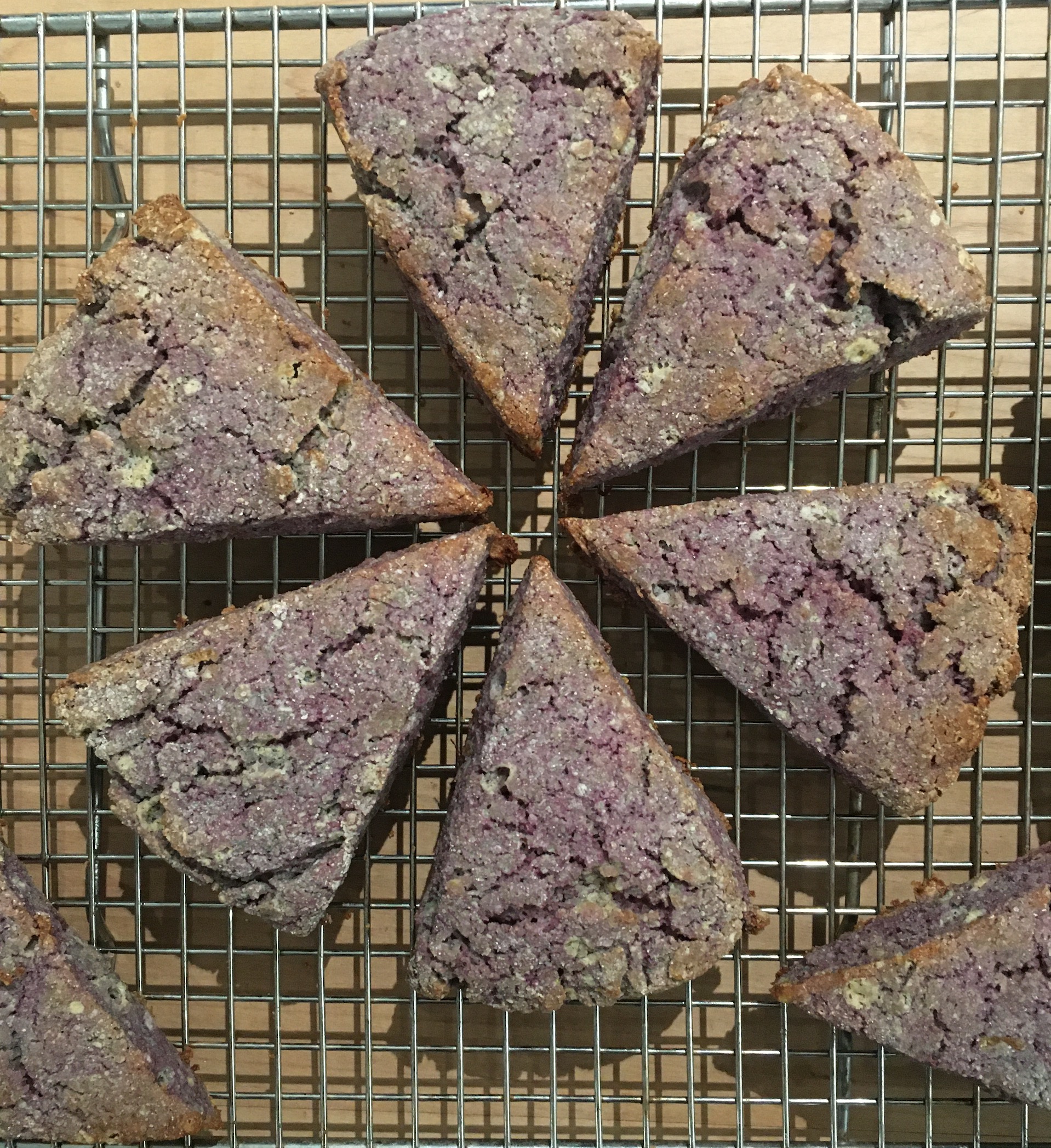
Black currant scones before baking–colour unusual, but okay…

So I’ve been experimenting with new and interesting ways to incorporate fruit into baked goods.

Two weeks ago I made a cookie bar that is supposed to be filled with chocolate fudge. I filled it with black currant puree instead, making a wonderful tart-sweet flavour bomb.

There was thawed black currant puree left over from the bars, so for Sunday breakfast I took my favourite lemon barley scone recipe (which I’ll have to blog about someday …) and substituted black currant puree for the liquid ingredients. The results were … mixed.

The flavour was good, but of course I love black currant, so I expected that. The colour, on the other hand, was more of a conversation piece than a bonus—dingy purple. The scones didn’t rise as well as they usually do either, and the texture was heavier than I would have liked.

So I’d say the scone experiment was inconclusive and needs more testing.

Black currant scones after baking–colour a bit disturbing…

I also made raspberry crisp and lemon pound cake studded with red currants over the past two weeks, and these were resounding successes. They, too, require replication.

And there’s plenty more fruit for additional studies! I don’t think it will be too much of a hardship to work our way through the frozen fruit.

Do I have to eat it?

Nance is a small yellow fruit popular in Panama. When my husband and I first arrived there, chicha de nance (a drink made from crushed nance fruit) was something we could barely choke down out of politeness to our hosts. The flesh of nance fruits is oily, gritty, acidic, and has a funky cheesy flavour. If you think too much about it, chicha de nance is reminiscent of watery vomit.

So you’ll understand why we didn’t like it.

But during nance season (and for several months afterwards, because people store it in bottles of water—yeah, don’t even think about what grows in those bottles) it’s impossible to avoid nance. Everyone you visit serves chicha de nance. Neighbours give you bottles filled with nance fruit.

You learn to drink it without grimacing. Before long you’re drinking it without even thinking about vomit. It’s a slippery slope from there, and next thing you know, you’re looking forward to nance season and wondering if you can trade some eggs for a bottle of nance from your neighbour.

I’m thinking about nance today as I contemplate the feijoas dripping from our tiny feijoa bushes. This is the plants’ first year producing fruit and I am amazed and a little terrified at their productivity.

I’m terrified because I hate feijoas. I don’t even like the smell. Simply walking past the fruit bowl when there are a few ripe feijoas in there makes me wrinkle my nose in disgust. I find it hard to breathe around them. Eating one makes me shudder—I swallow quickly to avoid tasting it too much.

Fortunately for me this year, my husband has been keeping up with the feijoas—he loves them. But those feijoa bushes are only going to get bigger. Next year I will have no excuses—I’ll have to eat them. 

So I’m thinking about nance. If I could learn to love a fruit that tastes and feels like vomit, surely I can learn to love feijoas, right?

They say a child needs to try a food up to 15 times before they’ll eat it. That’s a lot of feijoas …

Lazy Lemon Cake

Sometimes you want cake, but don’t want to work for it.

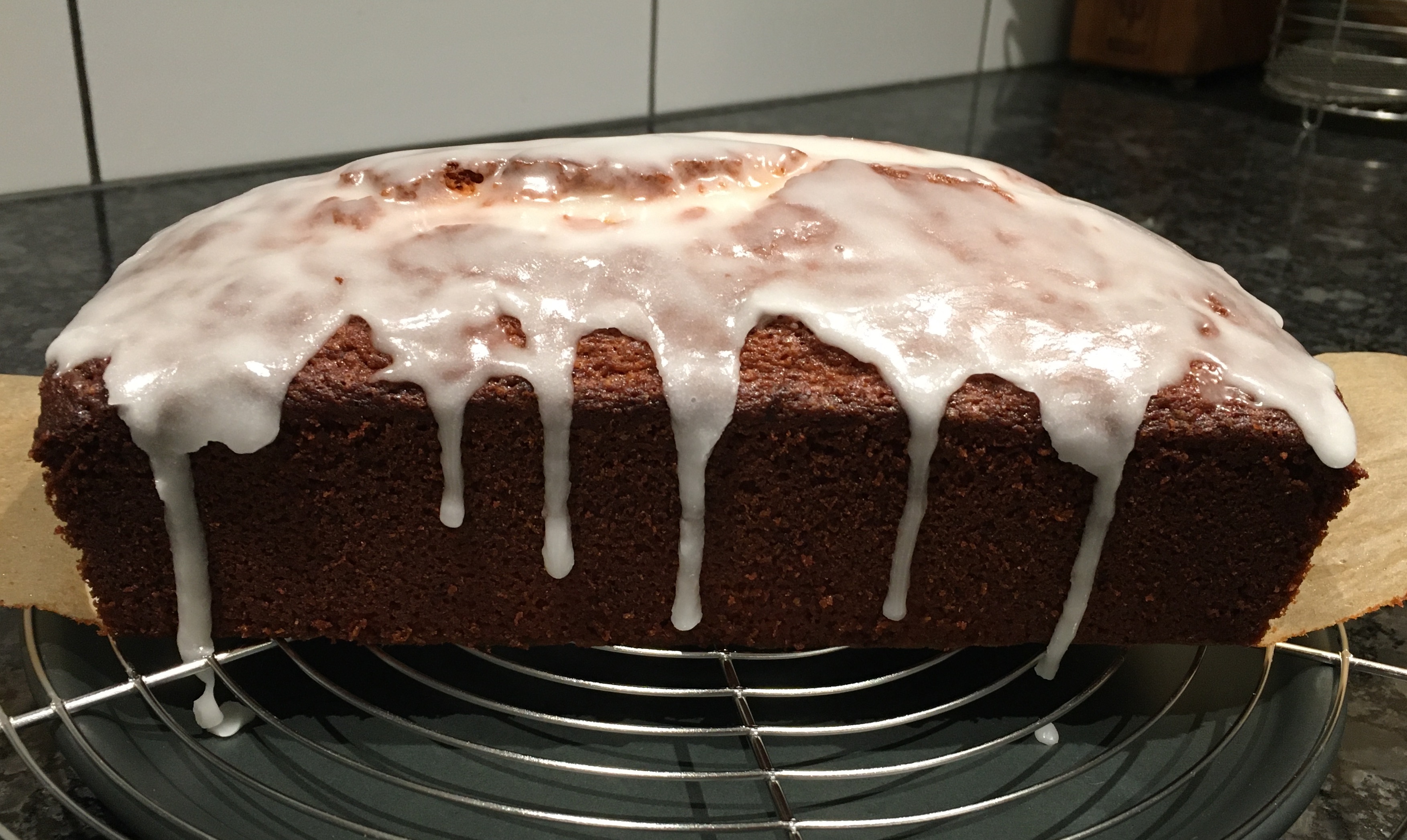
A head cold this past week has left me craving cake, but without the energy to do much baking. Consoling myself with cookbooks from the library, I came across a recipe for Greek Lemon-Yoghurt Loaf Cake that was so easy, I couldn’t resist. Nothing else really caught my eye in the Great British Bake Off cookbook this came from, but I think this one is a keeper.

Here’s the recipe, in case you’re feeling lazy …

150 g plain flour
2 tsp baking powder
pinch of salt
50 g ground almonds
200 g caster sugar
finely grated zest of 1 lemon
3 medium eggs (I used 2 large)
125 ml Greek-style yoghurt
125 ml mild light olive oil (I used a mix of canola and extra-virgin olive oil, because I didn’t have light olive oil)

for the glaze:
125 g icing sugar, sifted
finely grated zest of 1 lemon
1 – 1 1/2 tbsp Greek-style yoghurt

Sift the flour, baking powder, salt and almonds into a mixing bowl (tip in any almonds remaining in the sieve). Stir in the sugar and lemon zest.

Combine the eggs, yoghurt and oil in a measuring jug and beat well with a fork. Pour into the flour mixture and stir until well combined.

Pour into a greased loaf pan lined with a strip of baking paper. Bake at 180℃ for 55-65 minutes until golden brown. When the cake is ready, cool in the pan for 5 minutes, then run a knife around the edges of the pan and lift the cake out by the lining paper and allow to cool on a rack.

Make the glaze by sifting the icing sugar into a bowl. Mix in the lemon zest and then add just enough yoghurt to make a smooth, shiny glaze with the consistency of double cream. While the cake is still hot, spoon the glaze over the top.

I have lots of ideas for variations on this cake—using a blackcurrant glaze, replacing half the flour with barley flour, stirring in frozen blackcurrants … it’s a recipe that invites you to make it again and again. 

Cover Reveal–Fatemaker

I’m thrilled to be able to show you the cover of Fatemaker, the third and final book of the Fatecarver trilogy! Fatemaker will be released later this year. A huge thanks to the awesome Jenn Rackham for the covers of this series!

There’s still time to read books 1 and 2 before Fatemaker is released. Get them here.

There’s No Place Like Home

I’ve been feeling a bit like Dorothy from The Wizard of Oz this week. Having been on a crazy whirlwind of a trip to the U.S. and Scotland, my overwhelming feeling since my return has been, ‘There’s no place like home’.

Don’t get me wrong—I enjoyed my travels. It was great to see family in the U.S. for the first time in six (!) years, and Scotland was new and exciting. I love traveling by train, and enjoyed every minute watching the Scottish countryside roll by. And I’d never set foot in a real castle before, so visiting four of them was a highly educational experience, and something I can’t do in New Zealand. The botanic garden in Glasgow was a real treat as well—I wandered through the massive greenhouses twice, because they were so marvellous.

But I have to admit that the best part of the trip was coming home to my own greenhouse, bursting with vegetables.

Before we left, I set up automatic watering and shut the door, trusting to the automatic window openers to provide enough ventilation if the weather was warm.

Three weeks later, both summer and winter crops had obviously thrived in the warm, humid environment. A bit too humid, actually—the slaters had moved into the tomato plants (and apparently like to eat tomatoes) because it was too moist on the ground.

Aphids thrived, too, while we were gone, but all in all, I was pleased. To arrive home to fresh vegetables was an incredible gift, and it reminded me once again of how blessed we are to live where we do.

So I am happy to be home, pulling weeds, squishing aphids, and doing all the autumnal garden tidying I haven’t yet gotten to. It’s not a vacation, but it is home.