Onion Excess

onionsWhat does one do with 270 onions? That’s in addition to the 50 shallots and 50 purple onions ready to harvest.
Onions can be hit and miss for me. They’re so susceptible to birds, dry weather, excess heat, and weed competition when they’re young, that some years I get lucky and some years I don’t.

This year I got lucky.

We won’t be able to eat all these onions before they start sprouting. Long about October, they’ll know it’s spring and want to grow.

I’ll dehydrate some to use in backpacking food. I’ll be generous in my onion use all year. Perhaps I’ll introduce my kids to fried onion rings…oh, that’s dangerous!

And, like all good gardeners, I’ll give some away. My greatest pleasure as a gardener is having excess to give to friends, neighbours and strangers. I never plan on it, but it almost always happens with a few crops each year. Nothing beats sharing food.

Mullein

2016-02-07 10.22.37Today we discovered a new weed in our yard—that brings the total tally of weed species on the property to 57. The new plant is mullein (Verbascum thapsus), a native to Europe, and a common weed all over the world. Our specimen was young–just a tiny floret, but during its second year, mullein can send up a flower stalk almost 2 metres tall.

Like many garden weeds, mullein was almost certainly brought to New Zealand on purpose in the early 1800s. It seems to have been used for nearly everything by various peoples at various times in history.

The Romans used the flower stalk dipped in tallow as a torch.

It has been used since ancient times as a remedy for coughs and asthma (in people and livestock), either by drinking a tea made of leaves or flowers, or by smoking the leaves.

It either ensured conception or prevented it, depending upon what place and time you lived.

It’s fuzzy leaves, rubbed on the cheeks, impart a rosy hue, like rouge. Preparations made from the leaves can also soften the skin.

A yellow hair dye can be made from the flowers.

A green dye can be made from the leaves (probably best not to use this on your hair—it’s apparently permanent).

It was supposedly used by witches and warlocks, and was considered a charm against demons.

Its fuzzy leaves can be used as a thermal lining in your shoes.

And, of course, as any Boy Scout knows, it makes fine toilet paper!

Just remember to keep track of which leaves you’ve used as toilet paper, so you don’t use them for tea…;)

Garden Companion

DSC_0033 smI was tying up tomatoes this morning.

I plant most of my tomatoes along one long edge of the vegetable garden. That edge is made of 1.8 metre deer fencing (a remnant from a previous owner who ran greyhounds and divided the property into six long narrow runs for the dogs). On the fence, I’ve run black wind block cloth to give the tomatoes a little sheltered heat island. I train the plants right up the fence.

So, anyway, I was tying up tomatoes when I heard a rustling on the other side of the fence. I assumed a chicken had gotten out, as one of them has developed an annoying habit of getting out of the chicken paddock to eat raspberries.

But then a furry white paw shot through a hole in the wind block cloth to snatch at my fingers.

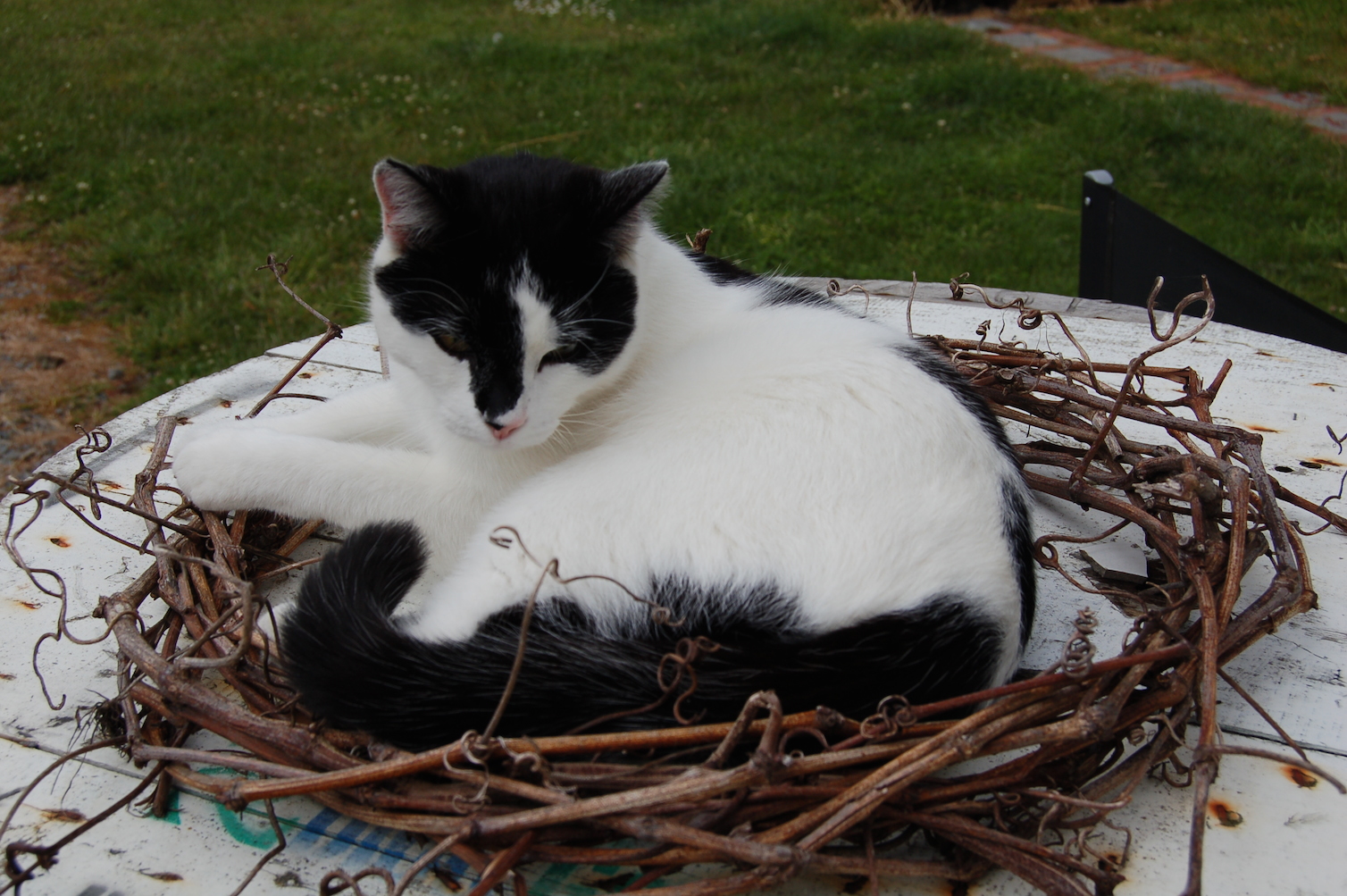
It was the cat, intrigued by the rustling on the other side of the fence.

When he got bored of attacking me across the fence, he lay against it for a while. When I finished the tomatoes, he followed me to another part of the garden, and lay down in the path to watch me while I worked.

I don’t know why the cat sometimes does this—acts more like a dog than a cat. Most of the time he ignores me in the garden, but now and again, he follows me around as though he doesn’t want to be out of sight.

Must be my annual staff performance review…

Boletes! Cepes! Porcini!

2016-02-05 18.22.23 smIt’s that time of year again. A little rain last week, and we’ve got porcini mushrooms (aka Cepes, Boletus edulis), collected from a location that will remain undisclosed, lest others beat us to them.

The wonderful, earthy flavour of these wild mushrooms makes any dish special. Bored with the “usual” meals, I decided to make Friday’s dinner a Fun Friday sort of meal.

2016-02-05 18.28.40 smInspired by the mushroom packets in Yotam Ottolenghi’s book Plenty, I put together these divine little parcels that turned dinner into Christmas morning.


The following quantities made nine packets.


600 g small boiling potatoes, cooked

500 g fresh green beans,

125 g fresh oyster mushrooms

1 medium fresh porcini mushroom

½ cup chopped cutting celery

½ cup chopped fresh parsley

¼ cup chopped fresh oregano

1 Tbsp chopped fresh thyme

½ cup olive oil

1/3 cup half and half

Salt and black pepper to taste


Chop the vegetables and mushrooms into small cubes. Gently mix all ingredients in a large bowl. Place portions of the mix in the centre of large squares of baking parchment. Scrunch up the edges of the parchment and tie with cotton string. Place parcels on a baking sheet.

Bake at 200˚C (400˚F) for 20 minutes. Remove from the oven and allow to sit for a minute before serving.

That Gunk on Your Car

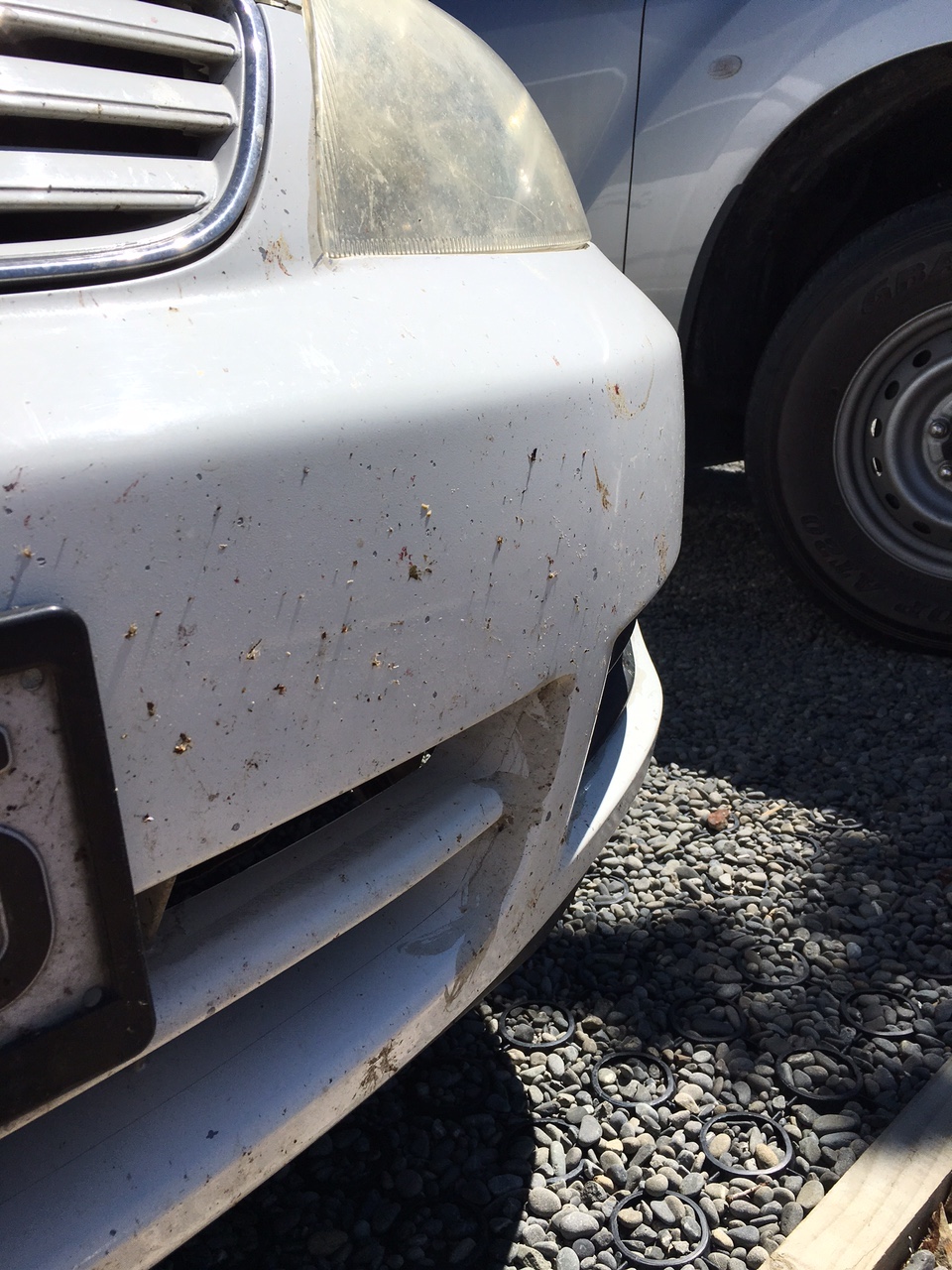
IMG_0514Back in 1997, entomologist Mark Hostetler published the book That Gunk on Your Car, a serious and funny identification guide to the flattened bodies you might find on your front bumper in the southeastern U.S.

I think there needs to be a companion book to Mark’s—The Ecology of That Gunk on Your Car.

Why?

This morning, I sat and watched sparrows descend upon cars in a carpark, picking off splatted insects. How these birds discovered that cars are a great source of protein, I don’t know, but they were certainly enthusiastic. They flitted into crevices to pick out tasty bits—a gooey abdomen here, a crunchy thorax there.

It made me wonder how important car-splat insects were in their diet. Birds inhabiting an urban environment are likely to have difficulty finding insects to eat—the bodies carried in by cars could be incredibly important to them. What other species make use of car-splats? How much nutrient flow is there between rural and urban areas, just on the front ends of cars? Do these nutrients affect the populations of urban pests like sparrows? How does a good mass-transit system affect the flow of nutrients into the urban environment?

So many questions, so few answers! How little we really know about the world around us!

Jewellery

2016-02-01 15.47.45I don’t wear jewellery.

No earrings—they irritate my ears—the last time I wore them was at my sister’s wedding twenty-three years ago, and that was the first time in years.

No necklaces or bracelets—they hang down and catch on things as I’m working.

And rings are hopeless. I lost the stone from my engagement ring twice—knocked out by some violent motion—before I gave up on wearing that. I even regularly threaten to remove my wedding band, as it catches in tools and branches.

Frankly, no jewellery stands a chance of survival on me.

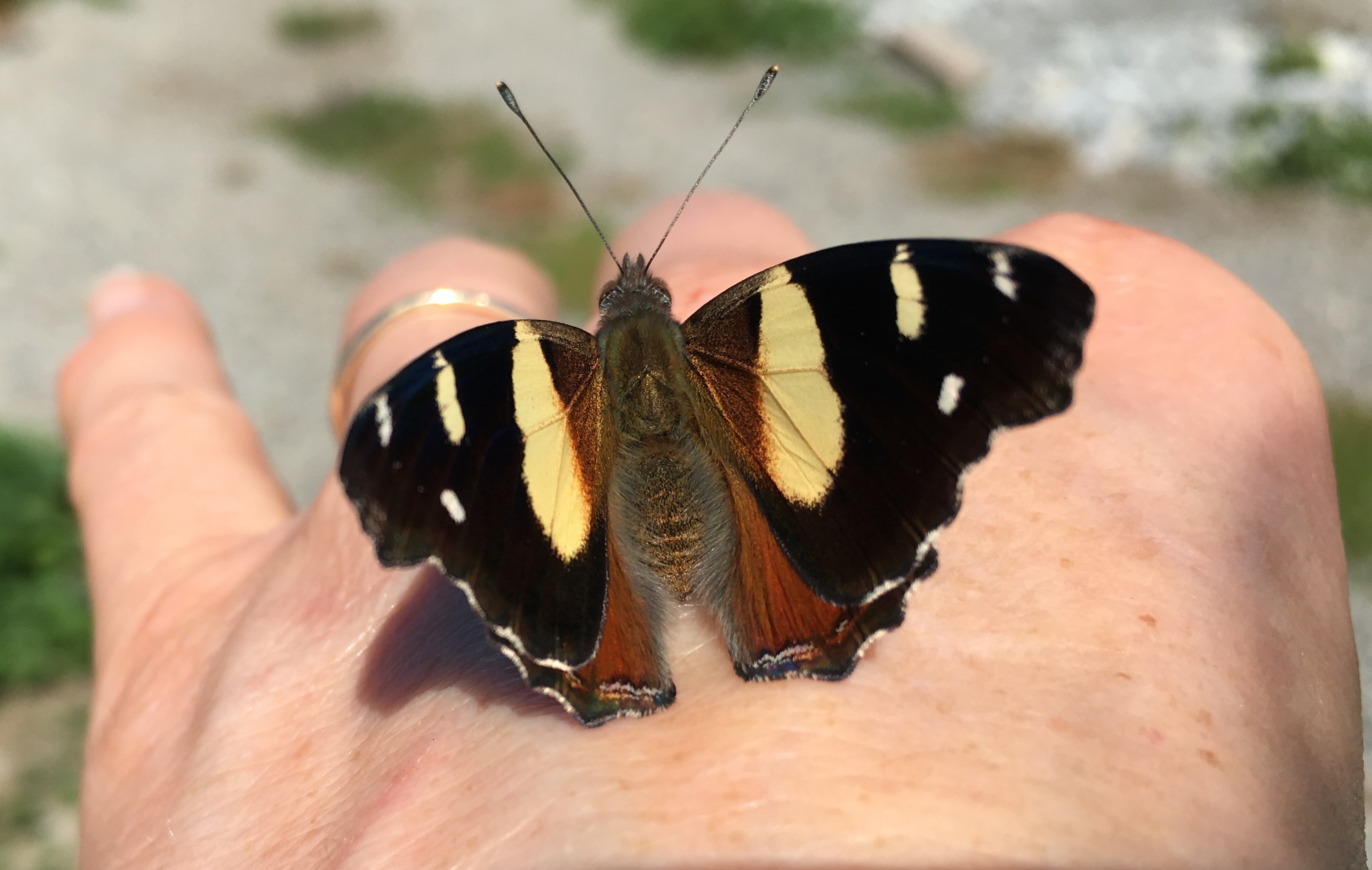
But when this gorgeous ornament (a yellow admiral) landed on my hand today, I stopped what I was doing. I ignored my work for as long as it was content to stay there. This sort of jewellery, I’ll wear.

Damselflies

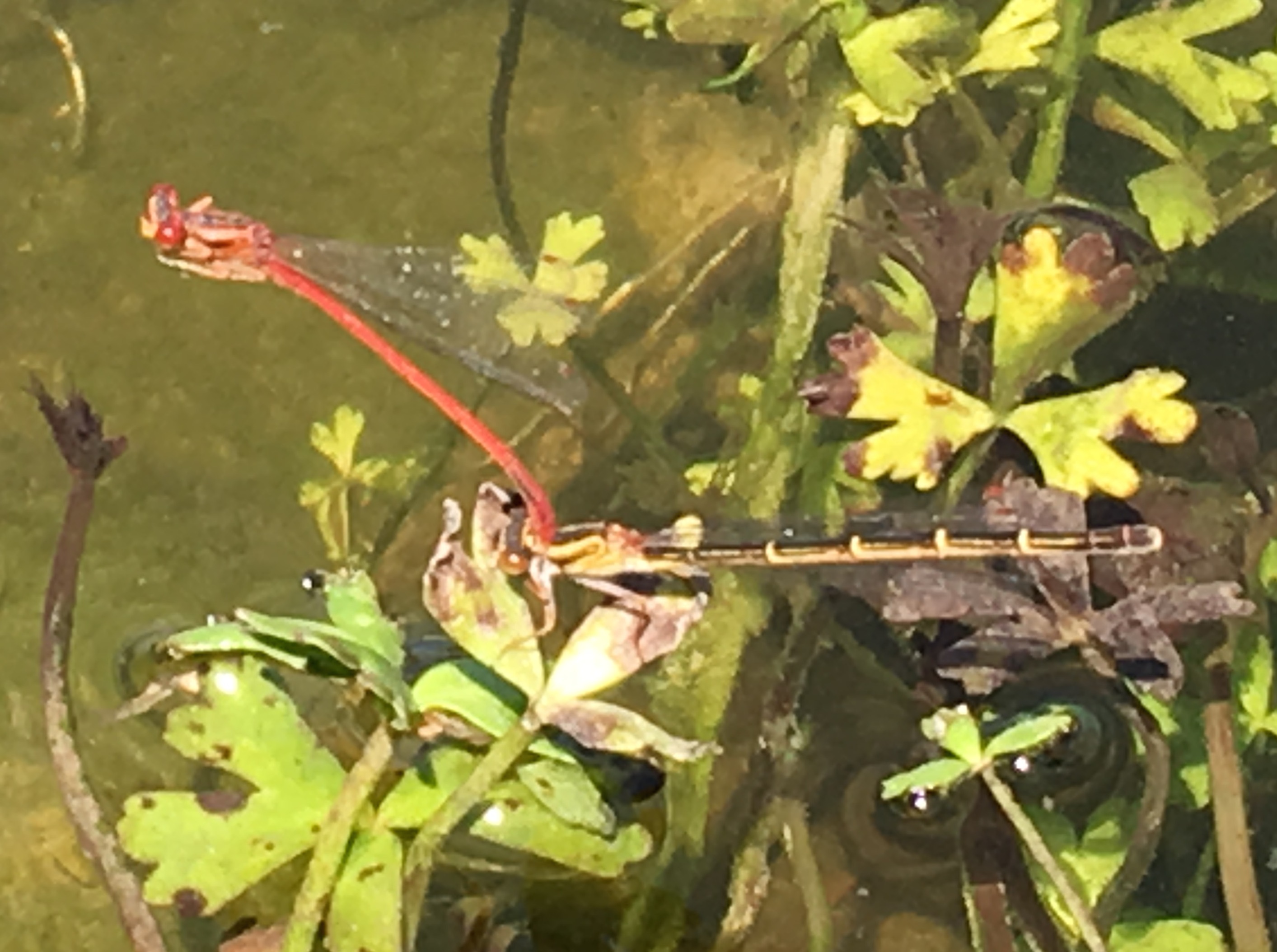
2016-01-31 13.44.27 cropTwo years ago, my husband did what he’d been threatening to do for years—he dug a pond. At some point, I’ll write a blog post on the pond itself, but today I want to talk about the damselflies that live there.

I took a break from my work this morning and spent a few minutes sitting beside the pond. It was swarming with red damselflies (Xanthocnemis zealandica). They were mostly males jockeying for the best territories—chasing and dive bombing each other, all short jabs of snapping wings.

2016-01-31 13.44.40 cropThe females were there, too. Every one I saw was being guarded by a male as she flitted from plant to plant, dipping her abdomen into the water to lay her eggs in the plant’s submerged stem. Damselfly mate guarding is awkward at best—the male grasps the female behind the head with claspers on the end of his abdomen and discourages other males from mating with “his” female. Both insects must beat their wings to keep the pair aloft, and as I watched them, it wasn’t at all clear to me who chooses the spots to stop and lay eggs.

When a pair stops, the male often supports himself entirely with his claspers, tucking in wings and legs and forming a bizarre appendage to the female as she gets down to business. She appears completely oblivious of her escort, resting after laying each egg, as if to say, “If you want to cling there in that ridiculous pose, that’s fine by me, but you’re not going to rush me.”

The eggs these girls lay will hatch in a week or two, and the nymphs will spend nearly a year living in the pond, eating other aquatic invertebrates with a hinged, extrusible mouth that is the stuff of horror movies, before emerging from the water as adults.

I sat and watched the spectacle for a while, and just as I was about to leave, I was treated to the sight of the other damselfly resident in this part of New Zealand—the blue damselfly (Austrolestes colensonis)—a large neon-blue insect that makes the red damselfly look dull.

Unfortunately, he didn’t stick around for a photograph, but I’ll be looking for his nymphs in the water later in the year.

Science education at its best

Physarum cinereum

Physarum cinereum

About eight months ago, my daughter did a school project on slime moulds. Along with internet research on slime moulds, she searched for live slime moulds in various habitats, and even tried keeping one as a pet. Unfortunately, the weather was particularly dry and warm, so slime moulds were scarce, and her pet died. We considered the project somewhat of a failure.

Except that she has been tuned in to slime moulds ever since, so when she noticed a funny grey substance covering blades of grass in the yard a few days ago, she was primed for it. She brought it inside to look at under the microscope, and correctly identified it as Physarum cinereum, a type of slime mould.

She posted a photo and her identification on Nature Watch NZ, and had her identification verified by several scientists.

Today, she found a similar slime mould, but this one was a mustard yellow colour. In form it was very like Physarum cinereum, but altogether the wrong colour.

She pulled out her iPad to search for it online. No luck…

But…

While she was searching, the sample under the microscope changed colour, from yellow to grey. Based on her knowledge of slime mould biology, she reckoned the grey colour must be spores. She has posted her new photo and identification to Nature Watch NZ, and is waiting to see what the experts think.

Could I ever have devised a better science lesson? Not in a million years. She made an observation, used her research skills and prior knowledge to make sense of what she saw, and got corroboration from an expert.

The resources available to kids (and bigger kids, too) these days are amazing—the opportunities to engage directly with the scientific community, find current information about things (no more 20 year-old World Book Encyclopaedias), and record their observations are so far beyond what I had as a child, it still feels a bit like magic to me.

But of course none of that is possible if we don’t nurture our children’s curiosity and teach them how to use the tools available to them. None of it is possible if we don’t give our kids time to watch the world go by, time to get bored and lie down in the grass. Tom Eisner (famous entomologist, for those who don’t know him) wrote in his book For Love of Insects, “How is it, I am often asked, that I make discoveries? I always feel a bit awkward about answering the question, because I do not have a particular method. The truth is that I spend a fair amount of time looking around.”

So go on. Get out there. Look around. Who knows what you might discover.