 It preserves and flavours almost all our food. It’s been traded commercially for over 2600 years. It features in the language of nearly all cultures—you are “worth your salt”, you are “the salt of the earth”, you take things “with a grain of salt”, you “rub salt in a wound”.
Central as it is, it is one of those ingredients we don’t produce ourselves. During summer, our meals often consist entirely of products we’ve produced…except for the salt.
My daughter was determined to rectify that. Last week, she declared she was going to make salt. We popped out to the beach and snatched a bucket of sea water from a large and violent surf. She poured the water into a pan and set it on the porch. Within two days, she had a pan of salt…and, due to a dust storm, dirt. She tried again, this time protecting the pan from dust with a sheet of Perspex, propped up to allow air circulation.
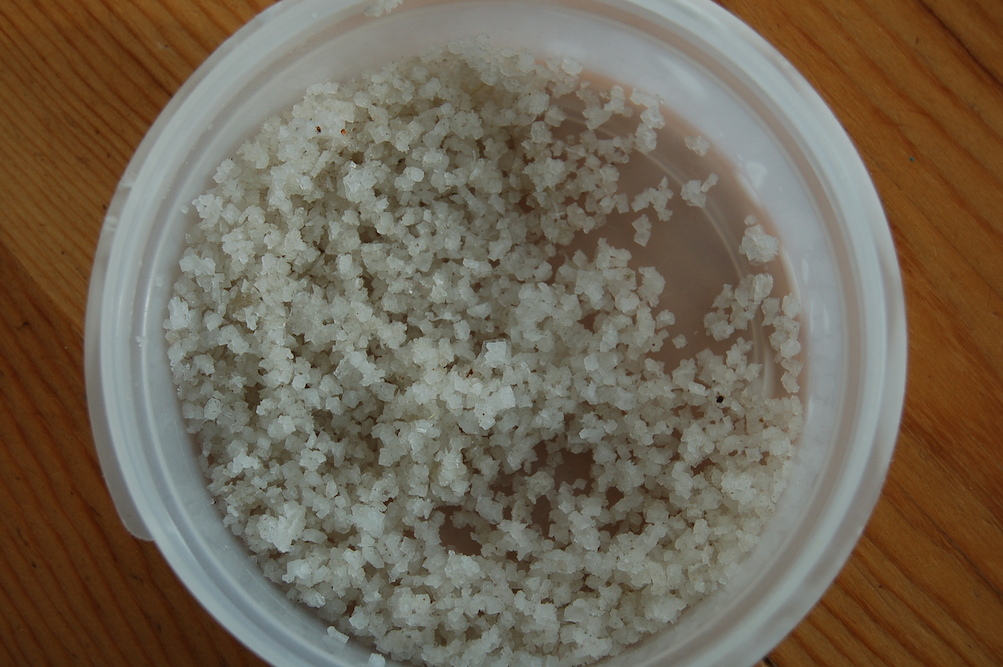
The result was delightful, and surprising to us all. From a jelly roll pan full of seawater, she harvested about half a cup of salt. Even with the cover, some was too dirty to use, but the rest is beautiful. We enjoyed it on our corn on the cob last night, and it was everything a gourmet salt should be—a full-bodied taste of the sea. And so easy to harvest!
Half of New Zealand’s salt is produced just a few hours north of Christchurch at Lake Grassmere. The industrial scale process of harvesting 70,000 tonnes of sea salt each year is little different from our tiny experiment in a baking pan. Like we did, the process at Lake Grassmere relies on summer sun and strong, drying nor’west winds. We buy a lot of salt from Lake Grassmere, for cheese making, preserving, and cooking. But we might be buying less from now on. There’s something wonderful about harvesting this most basic of ingredients, this gift from the sea.
Discover more from Robinne Weiss
Subscribe to get the latest posts sent to your email.
 Robinne Weiss