 The modern food system, with international trade and refrigerated transport, ensures that fresh tomatoes, cucumbers and other summer crops are always available, even in Maine in February. Want eggplant parmesan for New Year’s dinner? A special cucumber salad for Valentine’s day? Even in Maine, it’s no problem—you’ll find the ingredients in the supermarket.
A gardener’s food year is more seasonal. Some might say having year round supplies of summer fruits and vegetables is a great thing, and I don’t deny its appeal. But there is something to be said for seasonality. Nothing tastes sweeter than the first strawberry of the year, when you’ve been dreaming of strawberries for months. Nothing is more poignant than the last tomato, knowing it heralds winter, and eight months wait for the next juicy bite. Absence makes the heart grow fonder. Vegetables herald, define, celebrate, and farewell seasons and annual events.
It’s difficult to capture the essence of seasonality in the garden. There is the early spring scrounge for anything still alive and edible, while you madly plan and plant for the future. There is the overwhelming abundance of summer, when the question shifts from “what is there to eat?” to “what needs to be eaten?” There is the frantic preserving of late summer, when you realise it all has to end. There is the calm of autumn, when the larder is full, and you know you can curl up like a chipmunk in your well-provisioned nest when the winter winds blow.
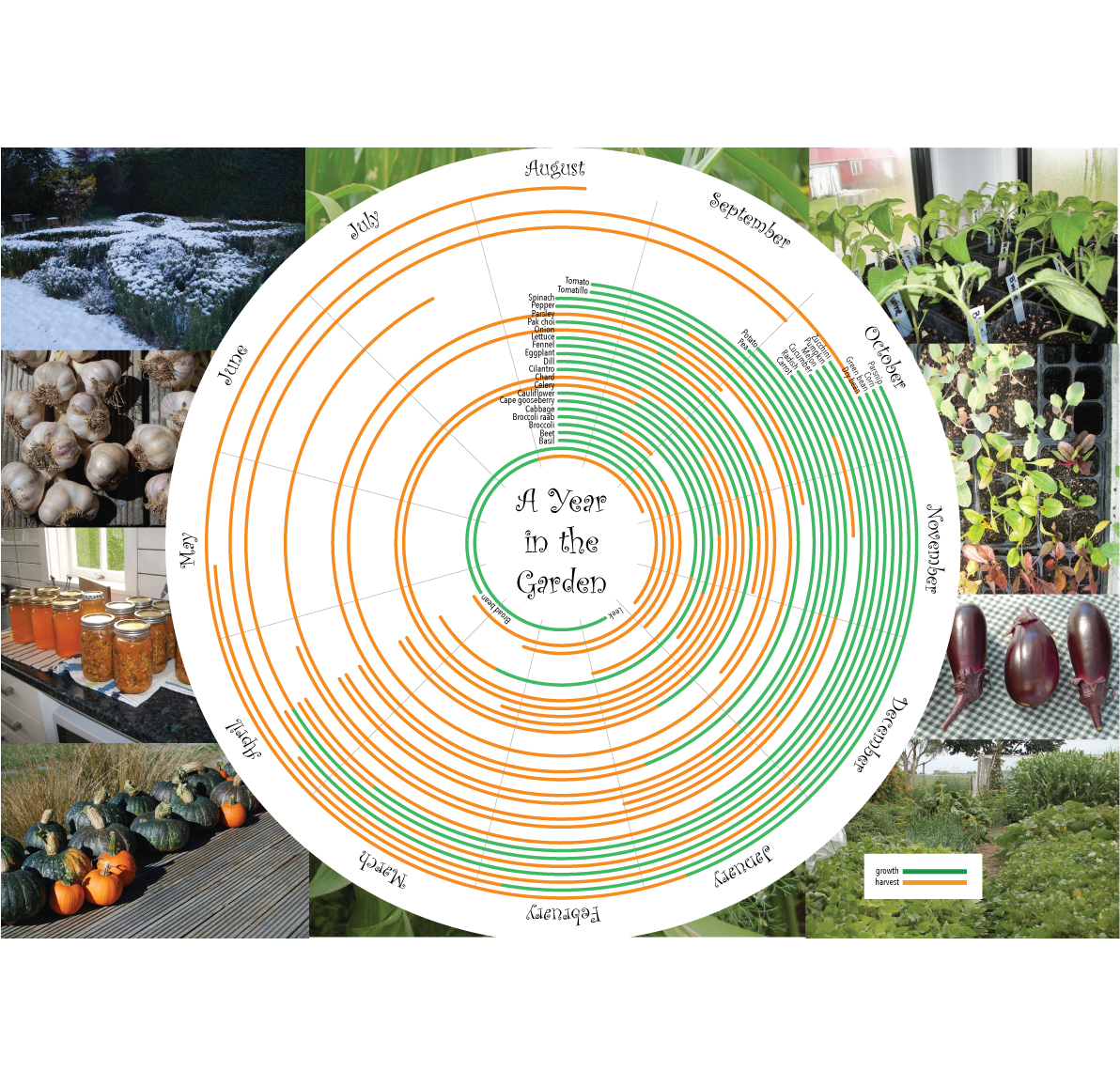
I tried to capture some of the garden year’s seasonality in this little graphic. It includes most of the annual crops we grow, though some are lumped together and others left out to minimise clutter. None of the perennial crops are included. But I hope it gives you an idea of what’s in and coming out of the garden at different times of year.
Special thanks to Ian for writing the R code to create this nifty little graphic.
Discover more from Robinne Weiss
Subscribe to get the latest posts sent to your email.
 Robinne Weiss