Salt-preserved Green Beans

I always struggle with what to do with too many green beans. I can (bottle) some, but none of us really like the taste of canned beans, and their mushy texture leaves a lot to be desired. I don’t freeze any, because freezer space is at a premium, and I prefer to fill it with sweet corn and peas instead.

So this past summer, I preserved some green beans in salt. The recipe I used claimed that the flavour and texture of salt-preserved beans is far superior to canned or frozen.

I pulled out the crock of salted beans the other day to test them out.

At first glance, they didn’t win any beauty contests, especially the yellow wax beans, which came out of the salt a sort of dead-flesh colour.

I rinsed them and soaked them for two hours, as directed, and then tossed them into a green bean and potato charcharis.

Cooked into a flavourful Indian dish, the beans most definitely had better flavour and texture than canned beans. Almost as good as fresh, even.

Unfortunately, they were so excessively salty, they made the dish almost inedible. Even my salty-olive-loving family couldn’t choke them down. Most of the dish ended up on the compost pile, and I expect an epidemic of high blood pressure in the local sparrow and mouse population who dine at chez-compost.

There are still some beans left. I’ll try using them again—small quantities in otherwise unsalted stews or soups might work well (sort of like a salty ham hock in bean soup). Maybe.

But I’m thinking I’ll just give away the extra green beans next year.
Happy New (Garden) Year!

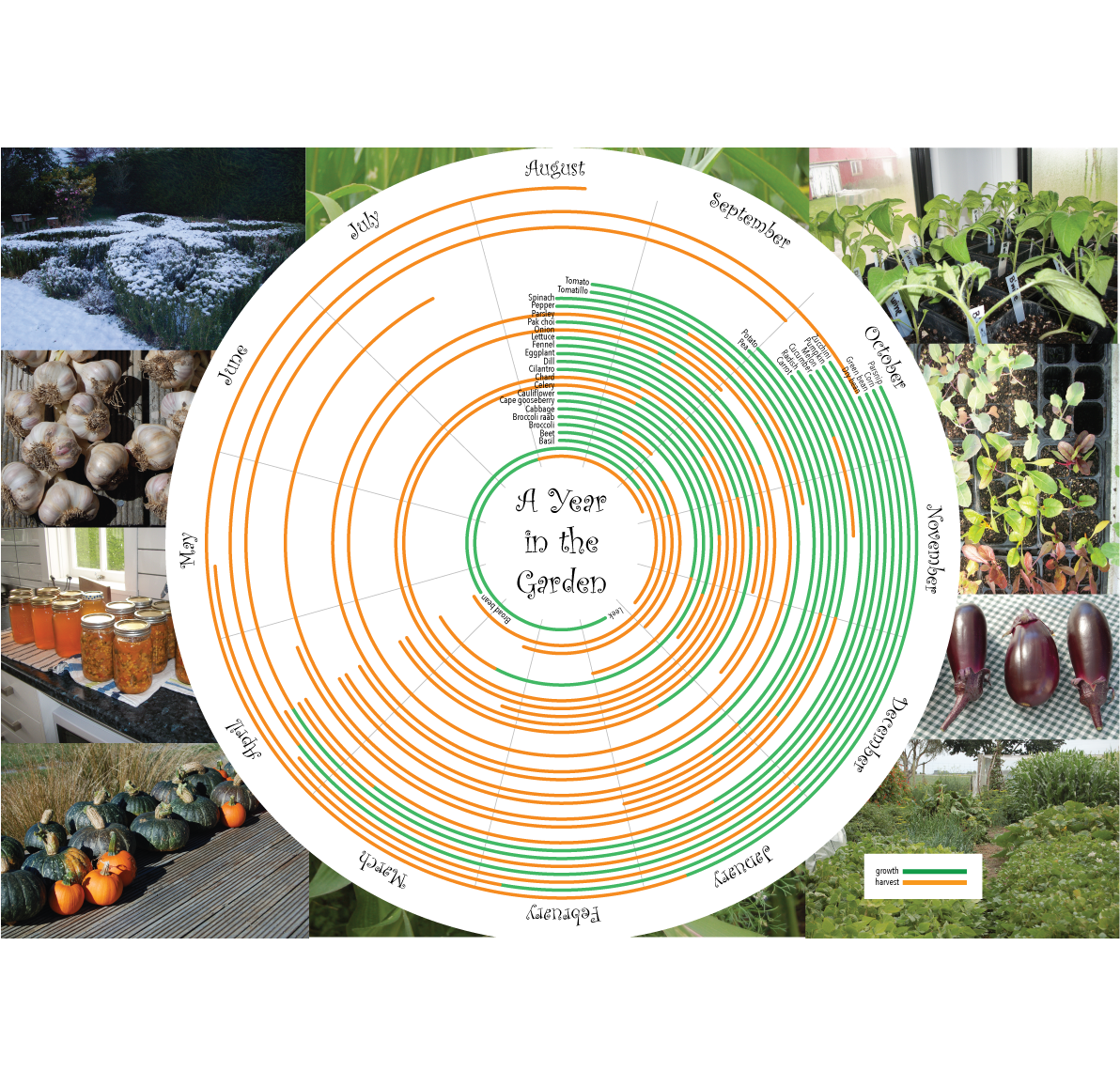
I love the month of July; it’s the beginning of the garden year in my mind, because it’s the month I plan the garden and order my seeds. It’s been a few years since I blogged about my garden year, so I figured it was time to do it again. I unearthed this little graphic my husband helped me create a few years back, showing my annual planting and harvesting schedule. It has changed a little since then, and I notice some crops, like garlic, are missing from it, but it’s still a fairly good indication of my year in the garden.

I struggled the first few years here. Coming from the Northern Hemisphere, I had no idea when I should plant things. And the idea of growing vegetables over winter was foreign to me, too.; gardening in Minnesota and Pennsylvania is sharply seasonal. It’s seasonal here, too, but much less dramatically so.

Instead of growing a ton of spinach over the summer and freezing it for winter, I learned to simply plant small quantities regularly throughout the year, for a perpetual supply of fresh greens. Same with lettuce, chard, broccoli, cabbage, and cauliflower.

Today my garden year ebbs and flows, but there is never a down time in the garden. There is always something to plant, weed or pick. The end of last year overlaps with the beginning of this year, so while I plan my seed order, I’m harvesting the lettuces, broccoli, leeks and other late crops planted in the autumn, and I’m weeding the garlic and broad beans that will be harvested in the coming spring and summer.

Sometimes I miss the complete downtime of gardening in Minnesota—the winter lull when there’s no need to go out and weed in the cold. But only sometimes. The never-ending garden year here has its perks in garden-fresh vegetables year-round.

To the Beach

While all you folks in the Northern Hemisphere are flocking to be beach for a swim and some sun and sand, we are shivering down here in the dark days of winter. But that doesn’t mean we don’t go to the beach.

Research from England has found that people living by the coast have better physical and mental health than those living inland. I can certainly understand that.

Growing up three hours’ drive from the beach, I visited the ocean about once a year. My husband, raised in the midwestern US, doesn’t remember seeing the ocean until age twelve or thirteen.

Today, we live a mere four kilometres from the beach. When the wind is calm, we can hear the surf. When the wind is high, we can smell the sea. Even without research to back us up, we’ve learned to head to the beach when we’re stressed.

Our beach isn’t a white-sand swimming beach—it’s made of cobbles, and the waves pound viciously on the shore. It’s not a place to swim, nor really a place to sit for very long (those rocks get uncomfortable fast). It’s a place to walk. A place to search for wave-polished rocks in glittering colours. A place to watch sea birds, dolphins, and the occasional seal. A place to leave all the stress of daily life behind (I challenge anyone to remain stressed while watching dolphins cavorting in the waves).

Researchers point to the calming blue colour, the hypnotic sound of waves, and the cultural context of the beach to explain its calming effect. But for me its influence is more profound. Our beach is usually free of other people—on a busy day you might see four others. From the beach, it is difficult to see any sign of humans at all—the odd bit of flotsam, but not even much of that. On our beach, the world is reduced to sky, water, and rock, shared only with wildlife. It’s easy to imagine the world is in better shape than it is. It’s easy to believe the vast ocean will endure, in spite of human stupidity. It’s easy to think those rare Hector’s dolphins, which we see nearly every time we visit the beach, are actually common. For the space of time we inhabit the beach, all is right in the world.

It doesn’t last, of course, but it’s good to have that escape so close at hand.

Beautiful Brawny Barnacles

My daughter and I went for a walk on the beach after school yesterday. It was chilly, but calm, with a clear mid-winter sky and dolphins in the surf.

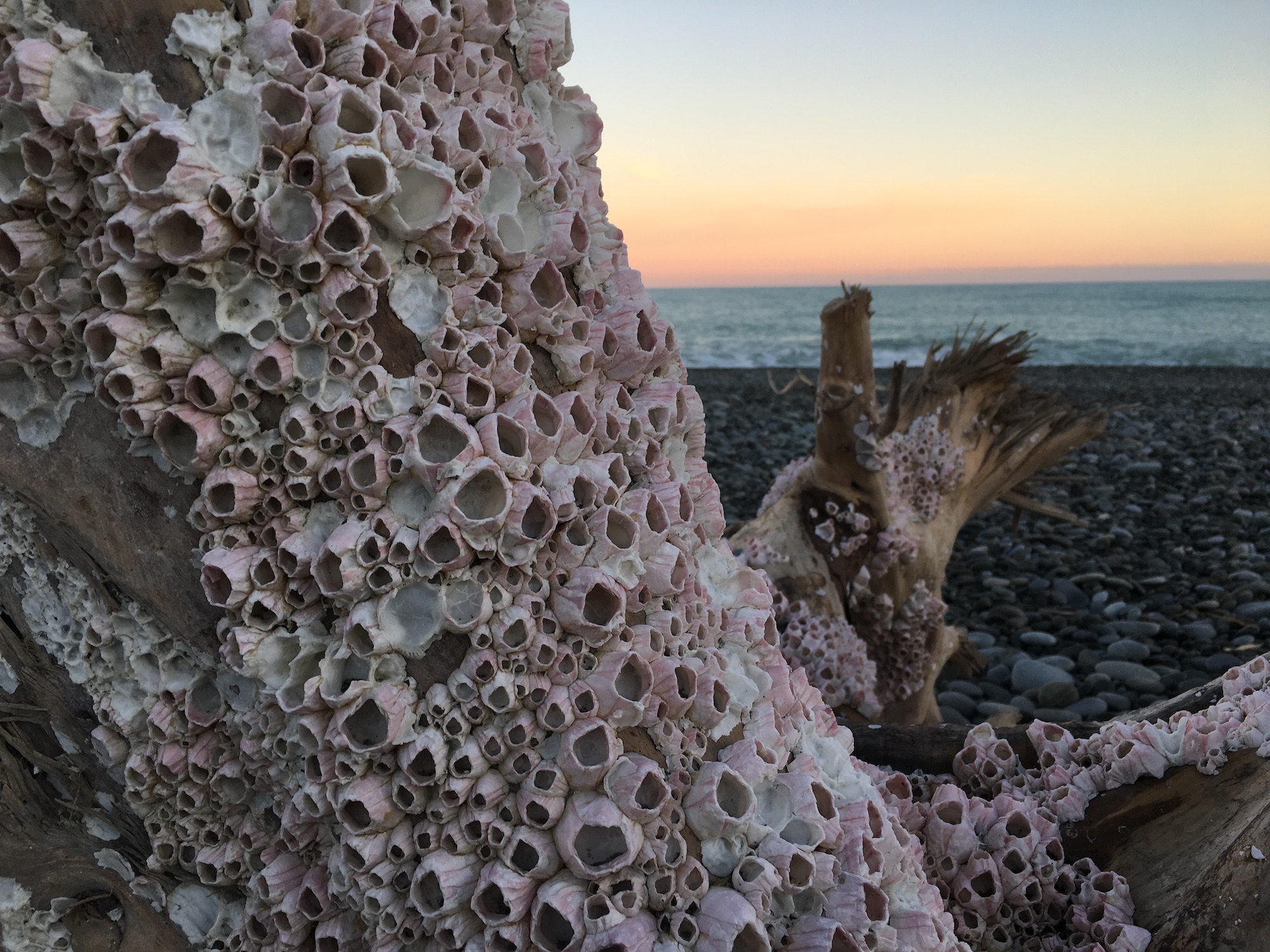
Washed up on the beach was a large tree stump crusted with barnacles whose colours mirrored the evening sky. The size and profusion of barnacles indicate the tree was lodged in the water for a long time before it was hurled onto our beach.

Barnacles are strange creatures. They’re crustaceans—kin to crabs, shrimp, and lobsters—but they don’t look anything like their relatives. Barnacles have given up the ability to move on their own (after a brief mobile larval stage), and instead settle down in places where the water moves around them—intertidal zones, the backs of whales and the bottoms of ships are popular barnacle real estate. Instead of having to wander in search of food, moving water carries lunch to the barnacles, and they filter it out of the water with feathery appendages called cirri.

Staying put in places where waves pound day in and day out isn’t easy. Barnacles produce a ‘glue’ that’s one of the strongest natural adhesives around. With a tensile strength of 35 N/mm2 (5000 psi), it rivals the best commercial epoxies. In a strange quirk of biology, the glue is produced by a gland at the base of the barnacle’s antennae, and so the animal is glued head-first to the substrate. Once glued to its home, the barnacle forms a ring of plates around its body to protect it (this is all that is left of the barnacles pictured here—the animals themselves have died).

There are costs to gluing oneself in place. Unlike other sessile animals like corals who release their eggs and sperm into the water for fertilisation, most barnacles rely on internal fertilisation. To reach their neighbours and manage this feat, the hermaphroditic (both male and female) animals have penises that can be 8 times the length of their bodies. Until recently, researchers thought this was the only way barnacles could reproduce, but in 2013, a study found that at least one species of barnacle (with a particularly short penis) can capture sperm from the water if it’s too far from its neighbours.

Barnacles are of human importance. They encrust ships, leading to increased drag and fuel costs. But their habit of attaching themselves to all sorts of debris can also be used forensically to track marine wildlife like whales and turtles, items from shipwrecks and airplane crashes, and marine debris. Additionally, barnacles are considered culinary delicacies in Spain, Portugal and Chile.

Beautiful and brawny, weird and wonderful, barnacles always make me smile.

Here Comes the Sun

After weeks of grey, unending drizzle, we’re finally seeing a bit of sun. Mushrooms abound in the yard, revelling in the dank mist we’ve been swimming through for a fortnight. We are all eagerly awaiting passing of the solstice and the lengthening of the days.

Though it is still pretty dark and drear, and the days will still be short for some time, there are signs of the spring to come.

Lambing has started. This is the time of year when the neighbours grow noisy, with lambs and ewes calling to one another day and night.

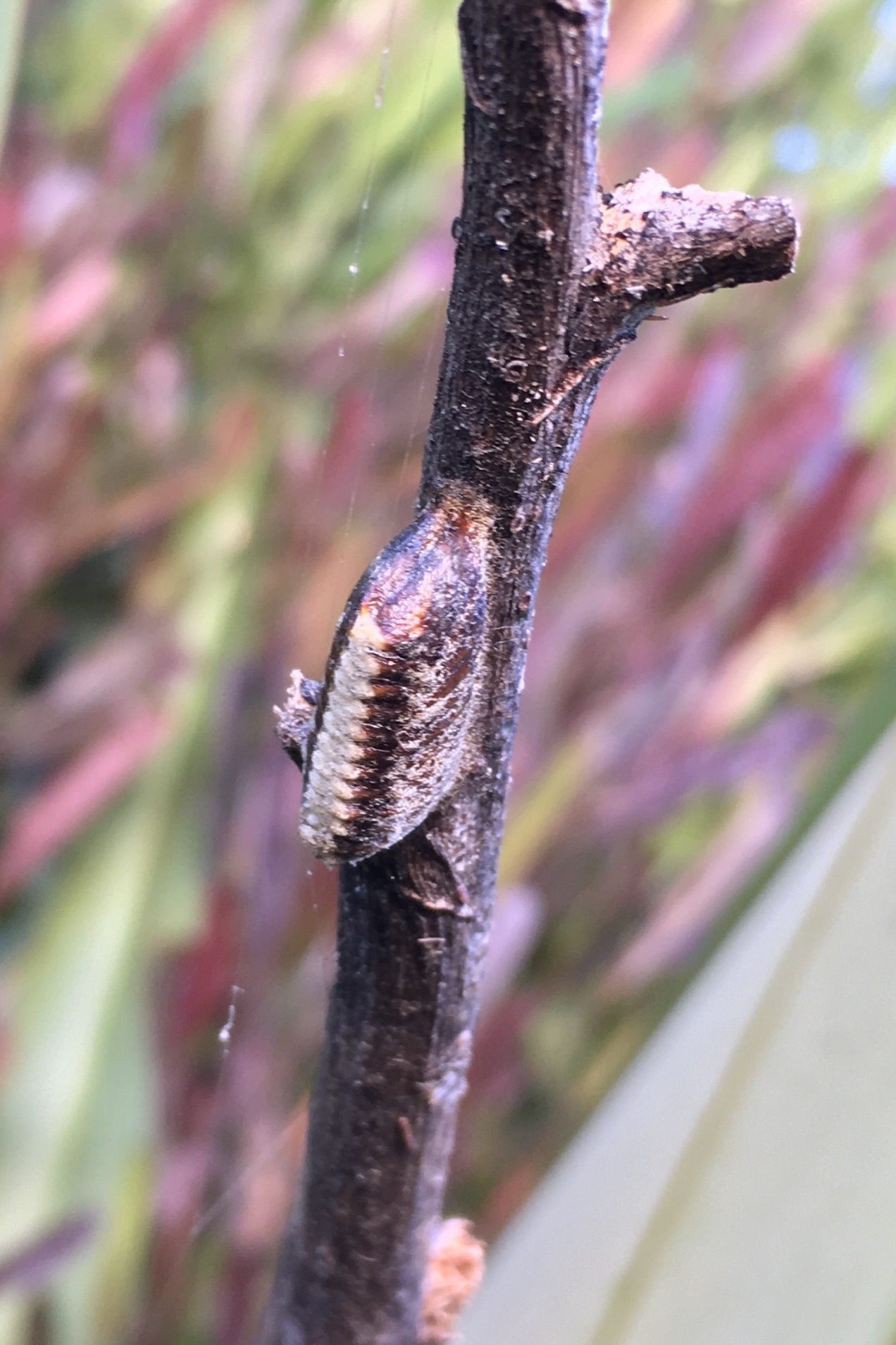
The preying mantids are gone, but their egg cases are dotted around the yard, promising a healthy population of my favourite predators come spring.

The daffodils and snowdrops are coming up, and I’ve even seen them blooming in other people’s yards.

And tomorrow is the solstice. Friday, the sun will remain above the horizon fractionally longer than it did the previous day. We’ll be on the upswing.

Pumpkin Pancakes

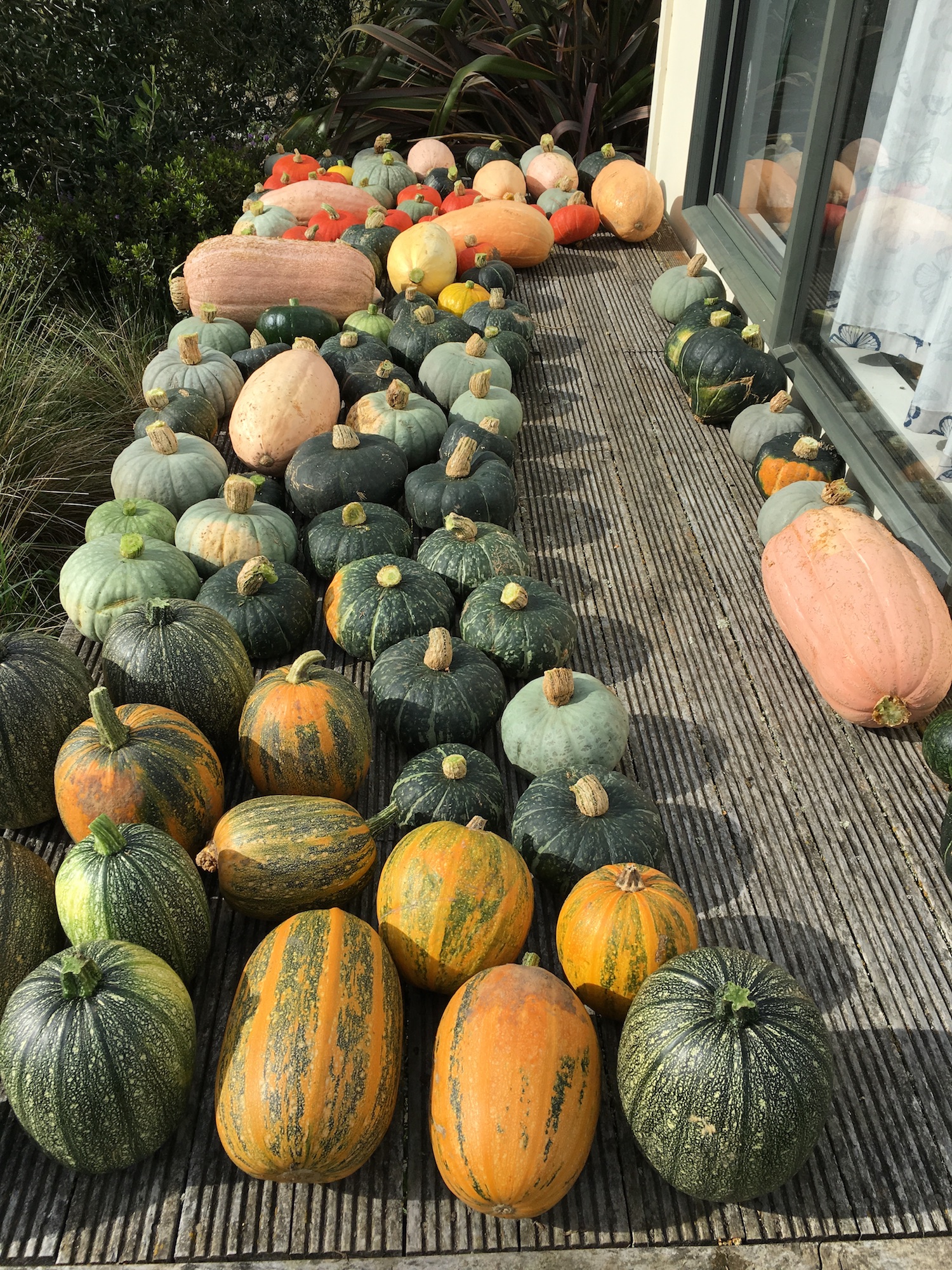
Now that winter has set in, we’ve turned our culinary sights from eggplant and courgettes to pumpkin, pumpkin, and pumpkin. I blogged about our excellent pumpkin harvest earlier this year. That post was written mid-way through the harvest–ultimately we picked nearly 200 pumpkins and other winter squash.

So w’re eating a lot of pumpkin. That’s not a problem.

Yesterday I made lovely pumpkin pancakes for breakfast. They were moist, dense, and spicy—excellent with maple syrup or redcurrant jam.

To make these delicious pancakes, start with a double batch of my World Famous Pancake Recipe. Add 2 tsp cinnamon and 1/2 tsp cloves to the dry ingredients. Add 1 1/2 cups pureed pumpkin (or other winter squash—I used kabocha squash) to the wet ingredients.

If your pumpkin is dry, you may need to increase the milk to achieve the right batter consistency.

We found these pancakes didn’t store/reheat as well as regular pancakes—they became quite fragile upon reheating (though they were still delicious).

In Praise of Parsnip

The rangy rosette of a parsnip plant.

A bit like carrots, but sweeter and starchier, parsnips are wonderful winter vegetables.

I’m not certain when I first ate parsnip, but I know I’ve eaten a lot of it. When I was breastfeeding my son, nearly everything I ate gave him colic (It took eight weeks of 24-hour-a-day screaming for me to work this out … longest eight weeks of my life). Parsnips were one of the few safe vegetables, so I ate parsnips. Lots and lots of parsnips. But I never got sick of them. Their comforting, earthy flavour only grew on me the more I ate.

I try to grow parsnips every year, but I’m not always successful. Parsnip seed has a short shelf-life, and germination can be poor, even with seed that isn’t officially past it’s ‘plant by’ date. I buy a new packet of seed every year, whether I’ve used all of the old seeds or not. Even so, I don’t always have luck germinating it, because parsnip doesn’t like to be transplanted, and needs to be seeded directly into the garden beds. In my garden, that means the seeds tend to dry out, in spite of my best efforts. It also leaves tender seedlings at the mercy of birds and slugs, which seem to enjoy parsnip as much as I do.

But this past summer the parsnips did well, like many other crops that appreciated the unusually warm, wet weather. The parsnip I picked for dinner yesterday was 15 cm in diameter at the crown, but still tender and delicious. And there are plenty more out there to harvest.

Parsnips are sweeter after the first frost, so they’re a great autumn and winter food. They store well in the ground, so there’s no need to fill your fridge with them at harvest time. When we lived in Minnesota, I used to use a pickaxe to chip them out of the frozen ground through the winter.

Parsnips make wonderful additions to stews and casseroles. Their flavours meld well with potato, carrot, and celeriac. They compliment beans and pulses. They’re great vehicles for butter and cheese. Back when I was subsisting on little beyond parsnips, we used to mash them (like mashed potatoes), braise them, and roast them, in addition to using them in stew and soup.

It’s no wonder these versatile vegetables have been cultivated since long before Roman times. They’re a great winter staple—a vegetable you can eat again and again and still enjoy.

Autumnal Haiku

Yesterday was a gorgeous autumn day. It inspired a few haiku:

Rats tap out poems
On the ceiling at night while
Cats dream of sparrows.

***

Summer slips off to
Warmer climes, leaving autumn
To face winter’s scorn.

***

Summer cashes in,
Trades green for gold to spend on
Ice blocks and snow cones.

Home Fires Burning

Cat enjoying a good book by the fire.

I woke yesterday morning shivering under the summer quilt on the bed after a restless night listening to icy rain on the roof.

Time to switch to winter mode, I suppose.

I lit the first fire of the season.

It wasn’t long before the cat joined me by the fire. Then my daughter, then my husband, then my son…Nothing like a hearth to draw everyone together.

I think about the angst over today’s youth, separated from face-to-face interactions by their devices, and I think that perhaps what we all need are small, poorly insulated houses heated by inefficient wood burners. In a big, centrally heated house, it’s easy for everyone to retreat to their own rooms—shut the door, pull out the phone and troll the internet. But in our house, the only comfortable room in the winter is the 3×4 m living room. A teen who retreats to their room and shuts the door pretty quickly returns to warm up by the fire.

Yes, we may all sit here doing our own thing, but by gathering around the fire together, we share what we’re doing with each other. Someone might share a good line from the book they’re reading, or show a dumb cat video they thought was funny, or ask for help on a maths problem. Simply by virtue of proximity, we connect in other ways.

I will admit that on winter mornings, crawling out of a warm bed into the freezing air to light the fire, I dream of luxuries like heat pumps. And sometimes it would be really nice to have some space to myself, rather than do my knitting cheek-by-jowl with a teenager practicing a new juggling trick. But on the whole, I suspect the benefits outweigh the drawbacks. We humans are hardwired to sit around the fire talking to one another. Our ways of relating to one another, passing on wisdom and culture, and finding our place in a community evolved around the fire.

So, again this winter, I will keep the home fires burning.

Making the Most of It

August adventure day at Rakaia Gorge

August is always a month of frustration for me. On the one hand, I’m excited, because spring planting starts, and though the weather might not be the best, there is the promise of spring on its way.

But with the promise of spring on its way is the threat of winter being over. I look at the gardening tasks ahead, feeling overwhelmed and wanting to get cracking on them. But I look back at winter and feel I haven’t accomplished nearly enough while the cold weather lasted. All those sewing projects that I meant to get to, that extra writing I had hoped to do in the long dark evenings, the photographs I meant to print and put into the family photo album…August reminds me that the time for finishing indoor projects is running short.

It’s not that I didn’t do anything over winter. I was busy sewing, knitting, and writing. But there simply aren’t enough winter days for me to accomplish everything on the to-do list. When August comes round, I have to resign myself to not getting things done. I have to prioritise. That photo album? It’s been three years since I’ve put a picture in it. Looks like it’ll have to wait one more year. The jacket I wanted to make for myself will take backseat to the one my son has asked for–he needs it more. The pair of socks I started knitting last winter…well, I still have hope I’ll finish that project.

Half of me is ready for spring. Eager for warm sunny days to whip the garden into shape. The other half of me wants a succession of rainy weekends so I can finish all those winter projects.

The only reasonable thing I can do is make the most of whatever the weather gives me in August. If it rains, I’ll dive into the sewing with gusto. And as soon as the sun comes out, I’ll don gardening gloves and head outside. And if the weather is so fine, it begs for an adventure, I’ll leave everything on the to-do lists for another day.