Saturday Stories: The New Ngu

photo: Fabrice Stoger

photo: Fabrice Stoger

Inspired by a game of bananagrams with my daughter, in which I spelled the word gnu.

What’s that called?

That? It’s a gnu.

A new what?

A gnu, but it has a new name.

A new name?

Yeah, I used to know it.

What? The new name?

Yeah, I knew the new gnu name, but I’ve forgotten it.

Huh?

Wildebeest!

What?

It’s a gnu.

A new what?

Mosquitoes, Disease, and Environmental Change

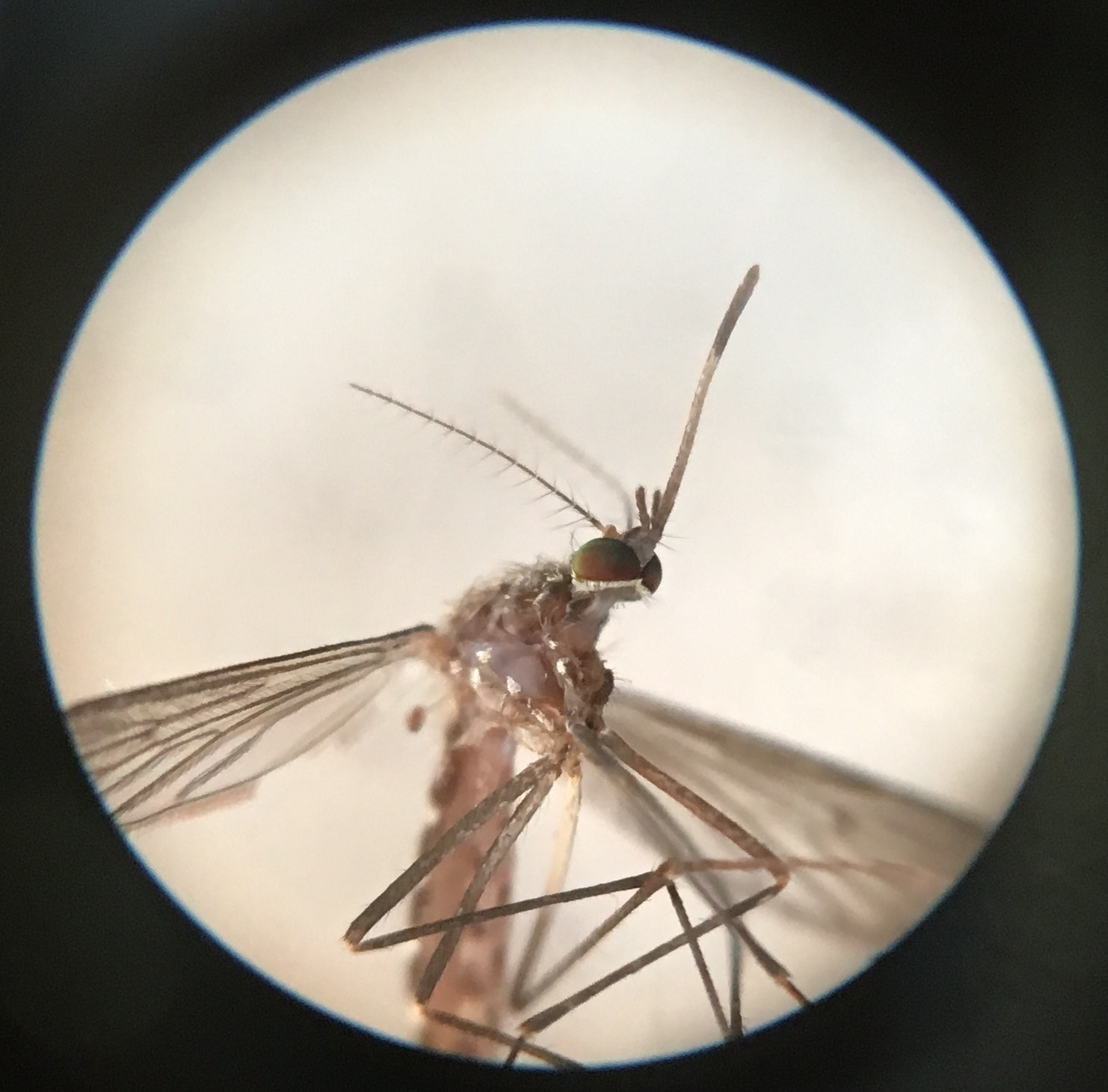
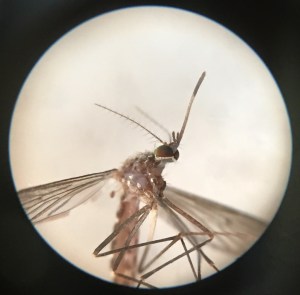
2016-05-02 07.38.34With Te Waihora/Lake Ellesmere just a few kilometres away, we’ve always had mosquitoes at our house. But since we installed a small pond, the mosquito population of our property has gone up (in spite of the fish, which do eat a lot of them).

Though mosquito identification is not my forte, most of the mosquitoes appear to be Culex pervigilans, the common house mosquito, or vigilant mosquito. Like most of our mosquitoes, this species is endemic to New Zealand.

Because of the isolated nature of New Zealand, few of the world’s nasty mosquito-borne diseases have ever arrived here, and no human diseases have managed to arrive and spread. But that doesn’t mean they couldn’t, if given the opportunity.

Whataroa virus is an Australian bird virus, which may also produce flu-like symptoms in people. In New Zealand, it has been found only in the area around the small West Coast community of Whataroa. It was first detected in 1962, and recent surveys show it has not increased in prevalence since then. In New Zealand, it is vectored by Culex pervigilans, which is common throughout the country.

So why hasn’t it spread?

Well, we don’t know for certain, but to get a clue, it’s worth looking at why other mosquito-borne viruses spread. Most emerging diseases come on the heels of environmental change—when the habitat changes, mosquito populations may increase (many mosquitoes do well in disturbed habitats), or the virus’ other hosts may increase or move around, spreading the virus. Environmental changes can be natural, like seasonal flooding; or human-induced, like cutting native forest (or digging a pond…).

Which brings us back to Whataroa, which hasn’t changed much at all over the past 50 years. There’s been no great increase in mosquito habitat, and little development that would favour the non-native blackbirds and thrushes that appear to be the reservoir for the virus. So the Whataroa virus has simply languished in place.

If the Whataroa virus had arrived at another location, it might have already spread far and wide (as avian malaria has done over the past 40 years). If a developer had come into Whataroa and built golf courses or fancy subdivisions, it might have spread. When the next big Alpine Fault quake happens, the resulting destruction will likely create new disturbed habitat for mosquitoes, blackbirds, and thrushes, and Whataroa virus might spread with them.

All sorts of variables determine whether and when a mosquito-borne disease becomes a problem. Some of these are known, and under our control, but many are either not understood or are out of our control. Sometimes, the only thing we can do is to react when trouble strikes.

Which is, of course, my excuse for swatting this mosquito when it landed on my arm this morning.

Rocket Spider

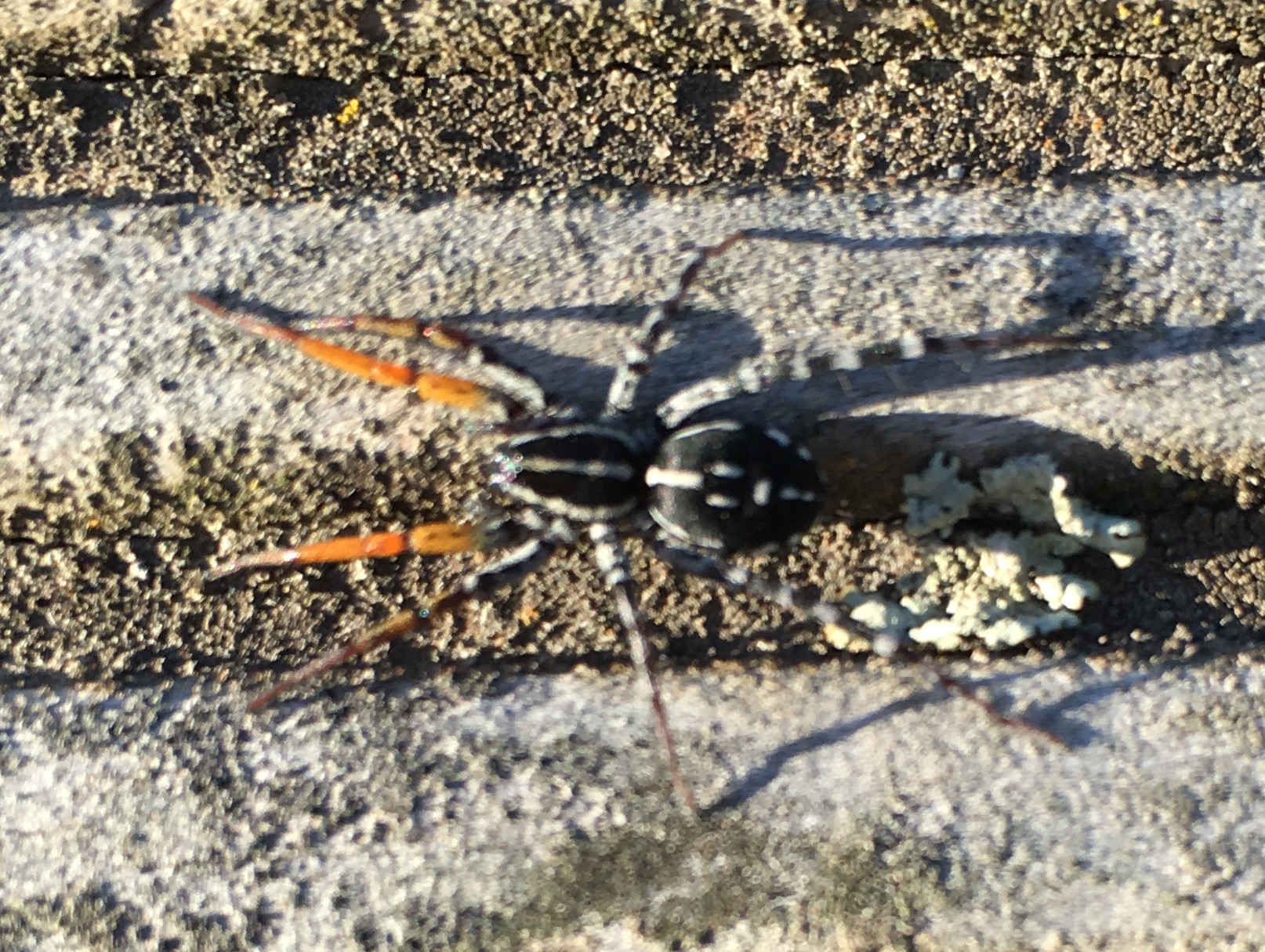
2016-05-01 15.49.10One of my favourite spiders here is an Australian invader. Officially known as the Australian ground spider Nyssus coloripes (formerly Supunna picta), but at Crazy Corner Farm, we invented a more colourful name, the rocket spider.

Rocket spiders have colourful orange front legs and white spots down their sides, making them stand out wherever they are.

They are in a group of spiders known as the fleet-footed spiders, and they are most definitely that. They are active daytime hunters, and race around as though they are rocket-propelled.

There is a female rocket spider who lives in my office. She’s been there for the better part of a year now, and zips over my bookshelves, desk, and walls as I work. She’s not shy—I sometimes have to shoo her off the keyboard, and once she skittered across my face.

I’m sure the rocket spider finds plenty of flies to eat in my office, but these spiders have unusual tastes. Though rocket spiders don’t build webs to catch food, I’ve seen them in the webs of Australian orb weavers—eating the orb weaver.

It’s a spider eat spider world, after all.

Phalanx of Gulls

2016-04-18 14.50.46 cropThey normally announce their presence with raucous calls, but these were silent but for the faint hiss of feather on feather as they beat their wings. It was the hiss that made me look up, and I was surprised to see so many gulls being so quiet. Several hundred flew low overhead.

On their way from one freshly ploughed field to another, I suppose there was no need for conversation.

One lone gull cawed once. And the rustling wings moved on.

Step on a Hedgehog

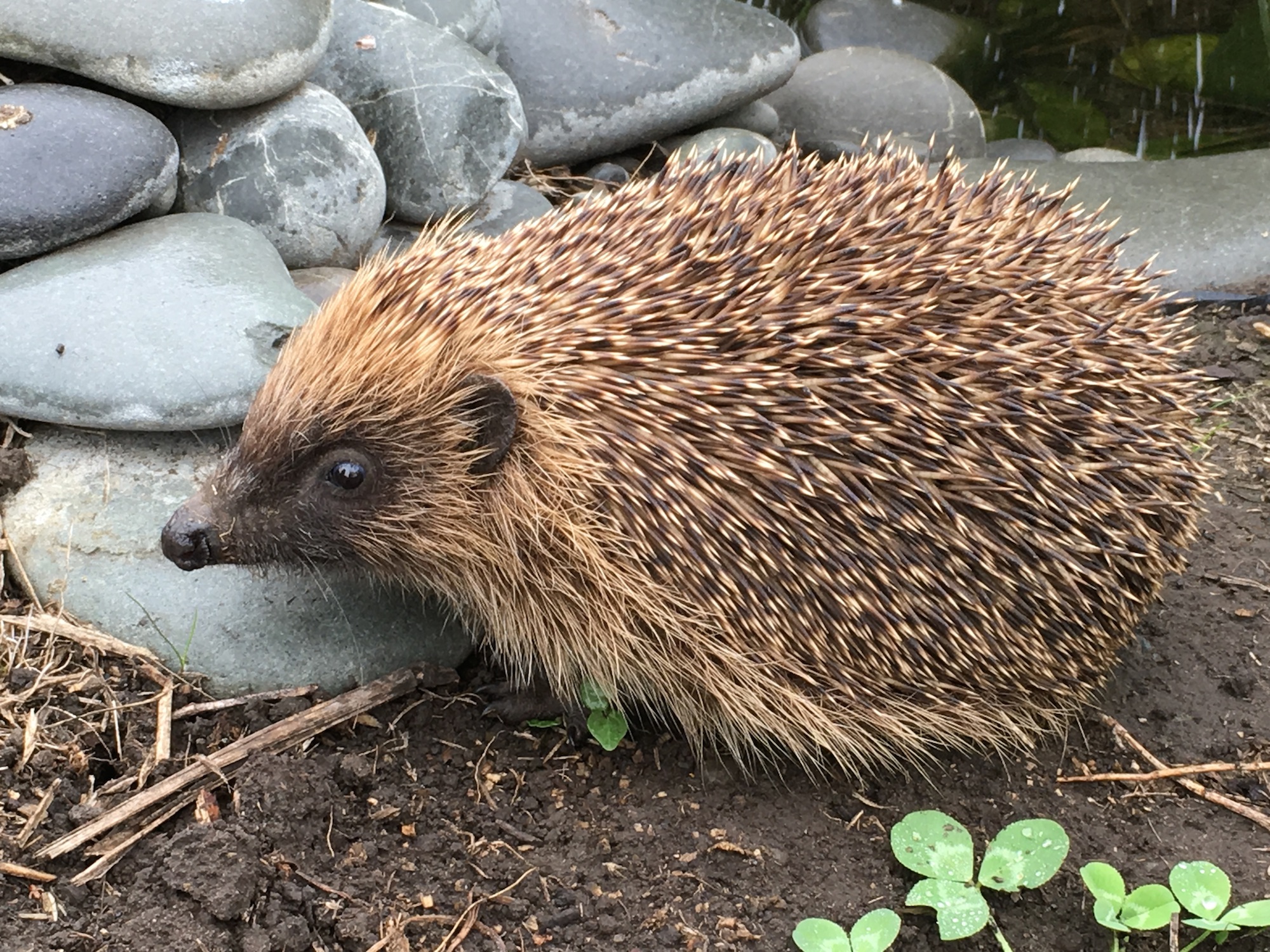
2016-01-26 18.07.41 smMy daughter came to me frustrated yesterday evening.

“What is fear?”

Knowing she had just been out in the dark, I asked her if she was frustrated because she was afraid of the dark.

“No, I’ve gotten over my fear of the dark. Now I’m afraid of hedgehogs.”

“Ah. You’re afraid of stepping on them in the dark.”

She nodded.

“Well, you learned that from your father, who worries about stepping on hedgehogs in the dark. But I’ve actually stepped on hedgehogs in the dark.” I shrugged. “It’s not so bad—for me or for the hedgie. You tend to feel it before you put all your weight on it, and you pull back before you hurt it.”

She looked relieved.

It got me thinking about the nature of fear, how easily it is taught, and how difficult it can be to overcome.

Teaching children about insects, I see fear all the time. The fear that another living thing might harm us (and sometimes the fear that we might harm another living thing). Much of my teaching is aimed at overcoming those fears.

And in saying ‘overcoming,’ I don’t mean eliminating those fears—that’s the work of decades, not of an hour.

I know that, because I experience those fears, myself—they are deeply rooted in our culture, and I was taught them just like everyone else was. But I have confidence in spite of the fear. Part of that comes from knowing that the worst that can happen is really not all that bad (for most things). I have been bitten, clawed, and stung by songbirds, parrots, raptors, rabbits, rodents, snakes and all manner of insects and spiders, and have survived it all. More importantly, I’ve learned that if I understand the animal and move with confidence and care, I am unlikely to be hurt (or to hurt the animal).

So I don’t try to make children unafraid of insects; instead, I teach them how to move with confidence and care, even if they don’t feel the confidence yet. I teach them how to hold an insect safely. If I think they’re ready for it, I give them an insect that is likely to bite them—a tiny nip they might actually feel, if they’re paying attention. They might cry out, “Oh! It bit me!” They might fling the insect off their hand. But chances are good, they’ll pick it up again, because the worst has happened, and it wasn’t so bad. The act of taking the risk once makes it easier to do it again. Confidence grows. The fear may still be there, but it is diminished by understanding and experience.

I hope my daughter does step on a hedgehog in the dark. She will stumble in her effort to not squash it. She’ll cry out in surprise, and then laugh as the offended hedgehog lumbers away. When she goes out in the dark next, she’ll walk with more confidence. And because the fear will probably still be there, she’ll feel incredibly brave in doing so.

The Shark


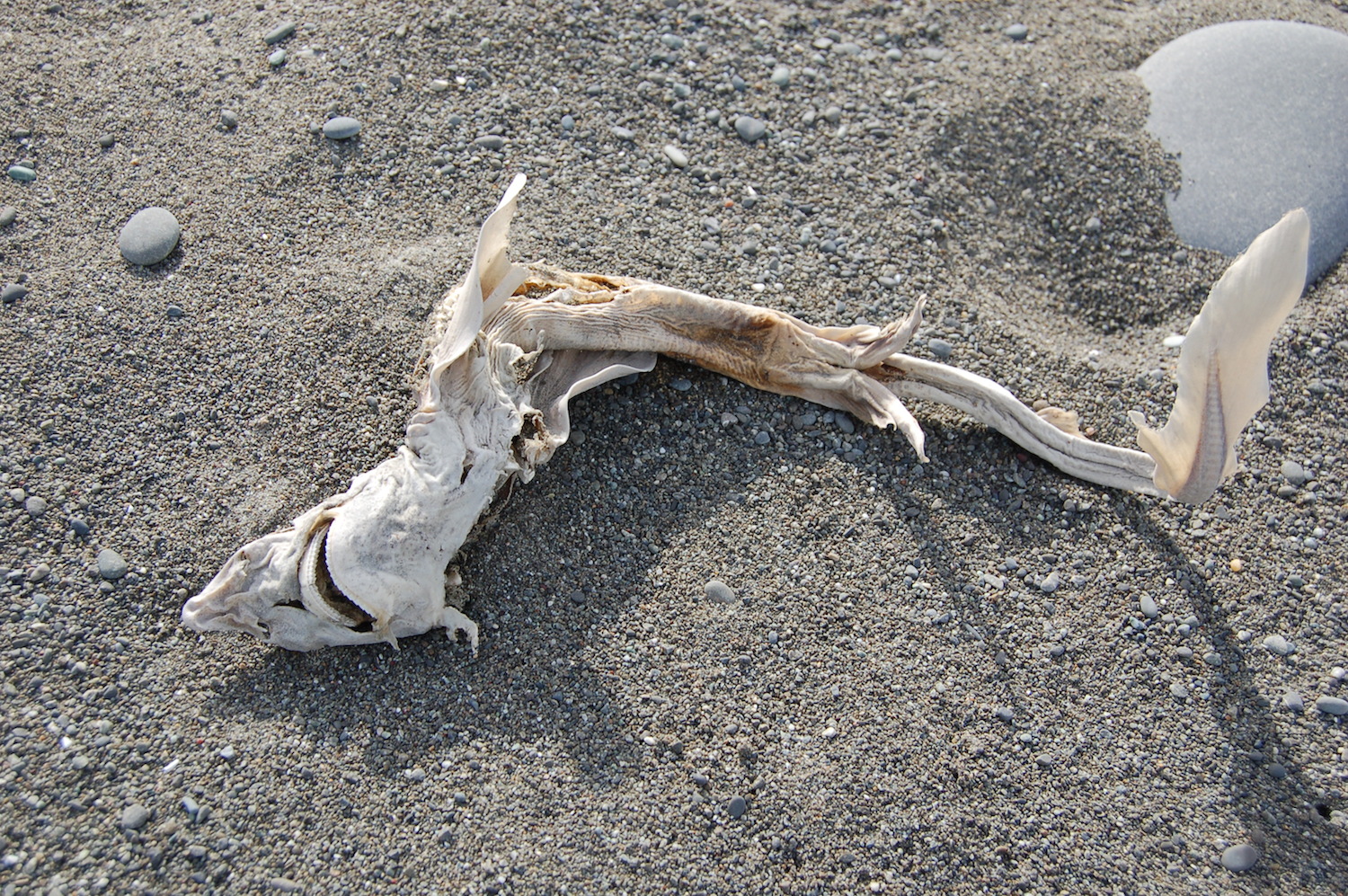
DSC_0035 smThe desiccated body grimaced.
Mouth agape
Spine twisted
As though frozen in mid-thrash.
Fins, resistant to shrivelling, looked too big
For the small form
Once so sleek and streamlined
Once the terror
Of small fish in the surf.
Brought to this ignominious end
By the bright tip of a hook
Hidden in some tasty morsel.
Rejected
By the fisherman who reeled him in.