Homeland

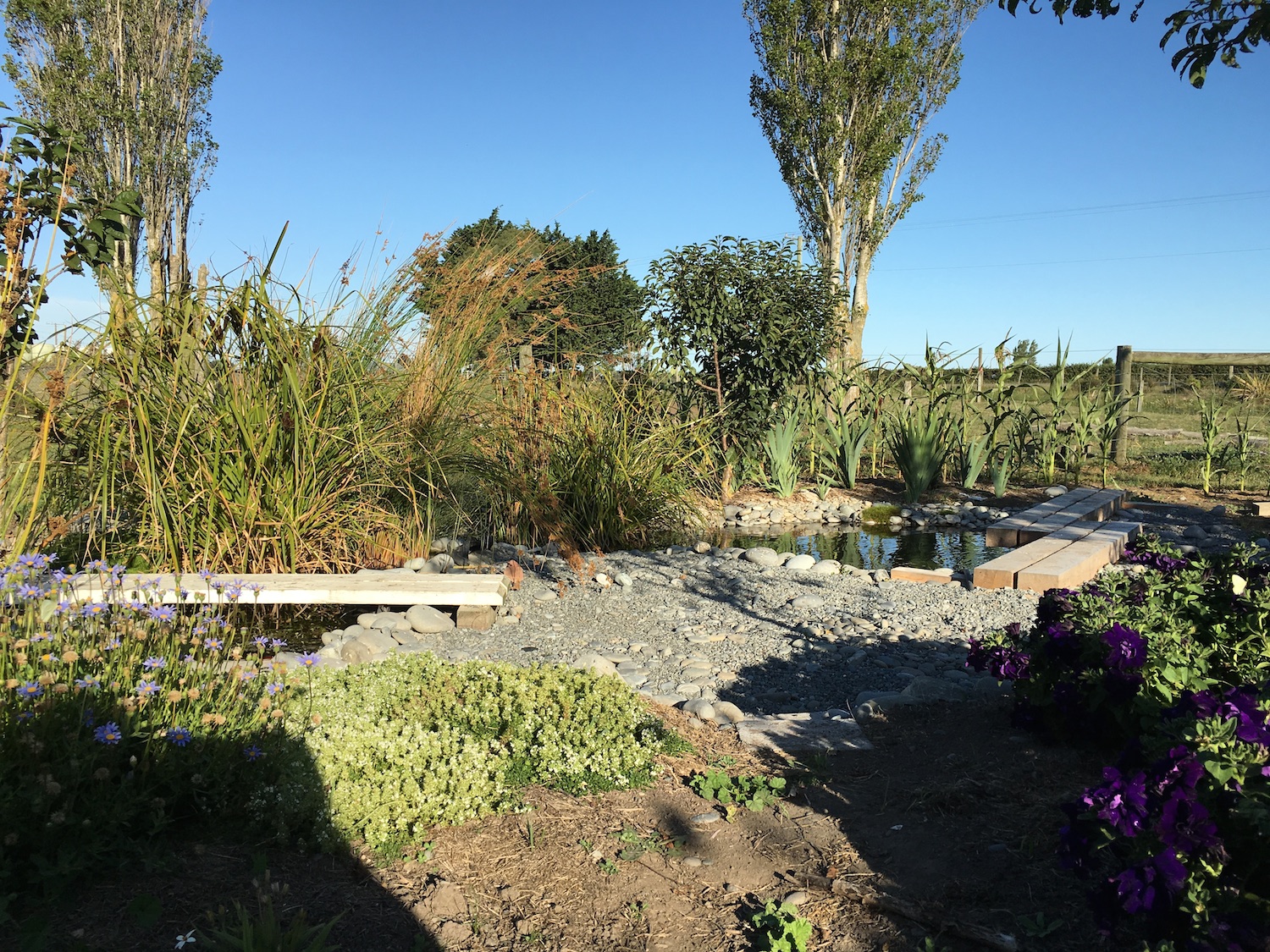
Lovely, but doesn't make me feel at home.

Lovely, but doesn’t make me feel at home.

When Europeans settled new lands, they had a habit of bringing all their favourite plants and animals with them. The result has been a plague of invasive exotic species all over the world. It’s easy to dismiss these settlers to as misguided imperialists, and I’ve done so myself.

But being a stranger in a strange land more than once in my life, I have to admit that I understand the desire to bring a little of the homeland to a new land.

Autumn is when I feel it most.

Most native New Zealand trees are evergreen. There are no native autumn colours, no piles of native leaves to be raked and jumped in. No smell of wet leaves carpeting the ground on crisp autumn mornings.

Last year my daughter and I found a lovely little path along a stream on one of our city walks. Dropping down to the stream edge from the street, I was first struck by the fact that all the trees were non-native oaks and maples. Then I was struck by the smell, and the rustle of fallen leaves on the path, and the glow of yellow that suffused everything. The familiarity of that little stretch of path lifted a weight I didn’t know I carried—the weight of being away from home. For the three minutes it took us to stroll through that little patch of Northern Hemisphere trees, I was in my element. The illusion came to an end all too quickly as we stepped back out onto the street.

So, while I still advocate native plantings, and whittle away at the non-natives on our own property as our young native trees grow, I don’t pass judgement on those early Europeans. They carried a weight in their hearts greater than mine—once they were here, there was no going back for most of them. Never to return to their homeland, they needed to bring a piece of it here. I can sympathise.
Orange Pore Fungus—a storybook mushroom

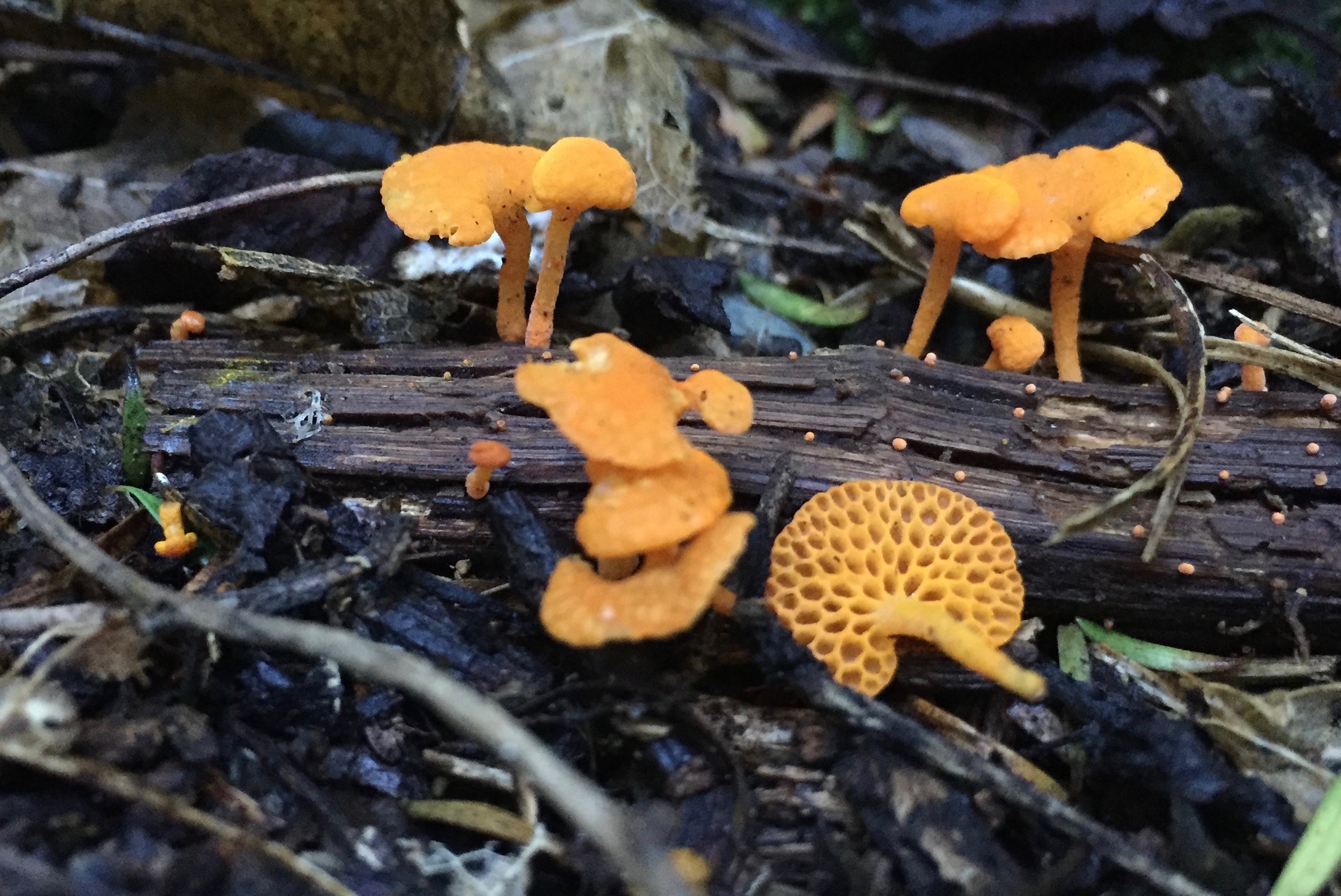
IMG_5266As my husband and I were hiking on Sunday, we came across a beautiful little fungus along the trail. Pebbly orange caps with a honeycomb underside. I was enchanted—they were storybook mushrooms that would have nestled neatly into any fairy tale.

But when my husband posted the sighting to NatureWatch NZ, the dirty truth came out.

These storybook fungi are Favolaschia calocera, the orange pore fungus, an invasive weed, and our sighting was the first in Hinewai Reserve.

The orange pore fungus is a curious organism. It appears to be native to Madagascar, though there is some speculation that it might also be native in parts of Asia.

It was first recorded in New Zealand in 1969, and has since spread throughout the North Island and much of the South Island. It has also recently been found in Australia, Thailand, China, Kenya, Reunion Island, and Norfolk Island. Its success probably shouldn’t be surprising—it’s a generalist, invading just about any dead wood available, unlike many other species that have specific tastes. It is also able to produce spores without mating, so it’s very quick to reproduce. It is so successful in New Zealand that mycologists are concerned that it could be displacing native fungi.

But it hasn’t stopped in New Zealand. In 1999, the orange pore fungus was first noted in Italy near the busy port of Genoa. Genetic studies of the Italian fungus indicate that it probably came from New Zealand on imported timber.

This storybook fungus is straight out of a fairy tale, all right—but the tale was written by the brothers Grimm.

Ballistic Plants

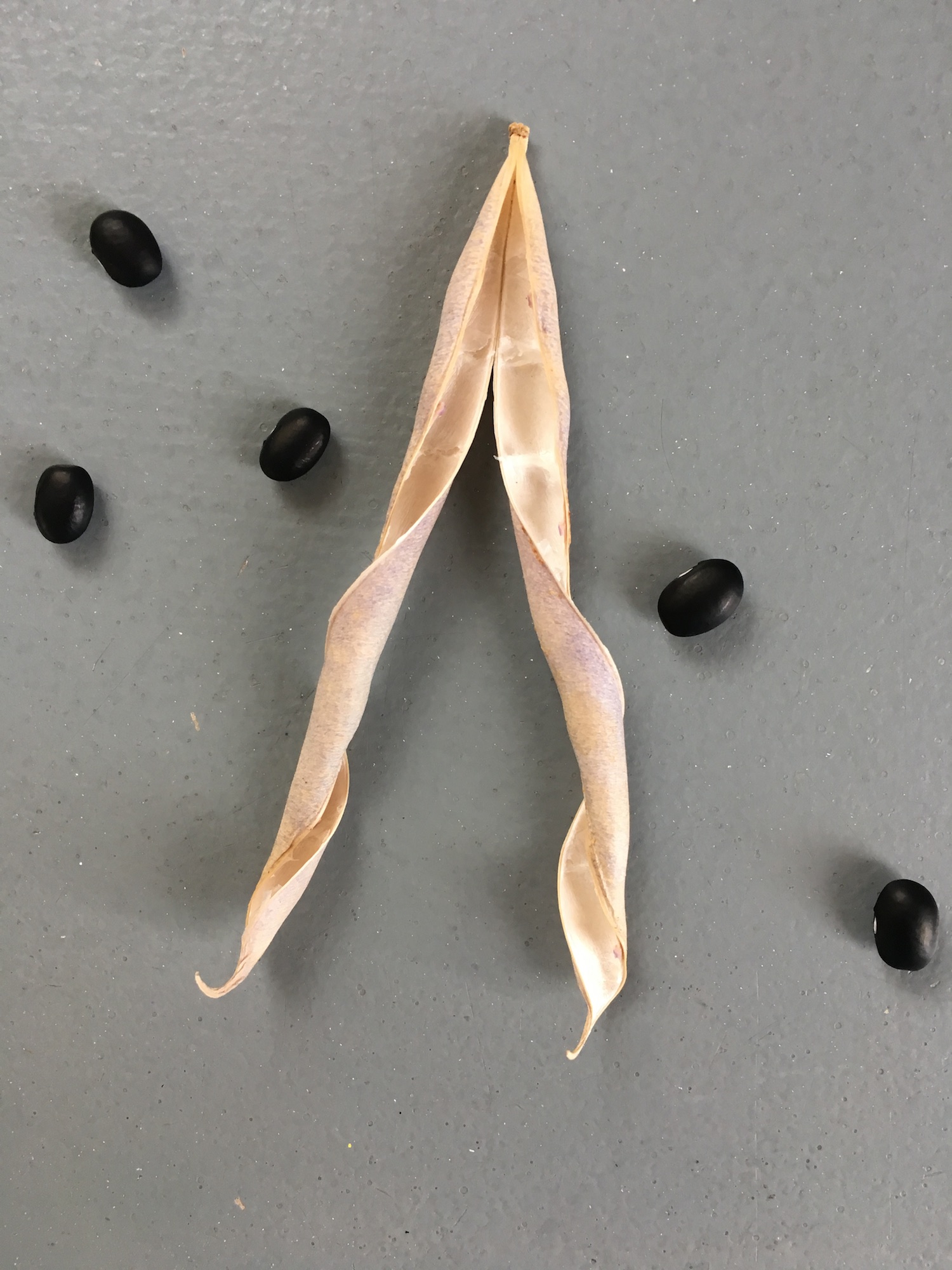
2016-03-05 19.16.53 smI only just harvested the black beans before they all exploded in the garden. It was the hot sun Thursday and Friday that did it. Friday afternoon, when I realised how dry the beans were, I raced to pick as many as I could, and was able to bring in the last of them this morning, with only a few losses.

Though it can be a pain for harvesting, I love plants with explosive seeds. As much as the explosion and shower of seeds, I like the empty pod afterwards. The tension that caused the explosion is gone, and the empty pod twists into attractive little corkscrews.

We have a weed in the yard with seeds so explosive, my daughter and I have dubbed it the seed-in-your-eye plant. It’s real name is bitter cress (Cardamine hirsuta). It’s common in the flower beds around the house, and has a habit of detonating just as a hapless weeder grabs hold of it (hence the seeds in the eye).

My favourite explosive plant is touch-me-not. Where I grew up, touch-me-nots sprang up in any moist hollow. As soon as they started flowering in summer, I’d start searching for ripe seed pods. I’d give each seed pod a gentle squeeze—if the pod was ready, it would burst under my fingers, sending yellow seeds scattering, and turning into a curly work of art. I loved the feel of the deforming fruit.

Sadly, my own children only have beans and bitter cress to detonate here. Now, if I can just convince them that shelling dry beans by detonating them is great fun…


Water gardens

2016-02-15 18.46.03 smMy husband always wanted a water garden. In our pre-children days when we rented, he put a tiny fountain in a half-barrel, but it didn’t really satisfy him.

Within minutes of moving in here, he was scheming a “real” water garden.

It took about eight years for him to get to it. It was necessarily lower on the to-do list than re-piling the house, replacing weatherboards, remodelling the kitchen and bathroom, creating a third bedroom, and a host of other tasks.

And then when he started it, it took a lot of planning, digging, refilling, and digging again to get the basic structure right.

Then there were countless trips to the beach to collect the rocks to line it and complete the landscaping around it.

Then two years to kill off the twitch around it so he could even think about planting perennials there.

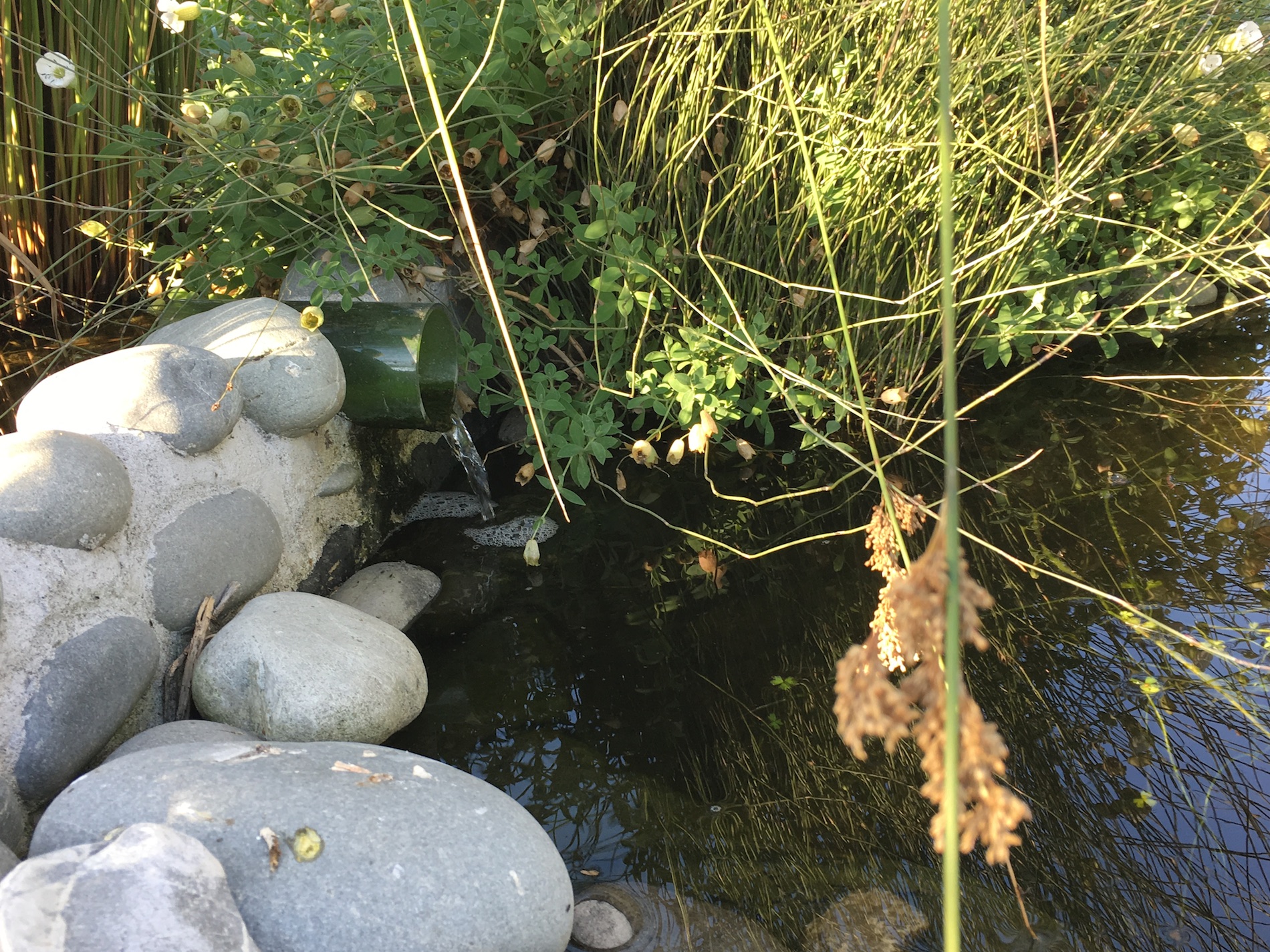
2016-02-15 18.48.44 smAdd dozens of broken wine bottles in his attempts to create the little waterfalls coming down the hill toward the pond.

A solar pump to keep the water flowing, nine goldfish (now blossomed to a standing population somewhere around 40), two bridges, and a whole lot of plants, and it’s looking quite settled into place.

We all enjoy the garden. I could sit for hours watching the fish and the invertebrates in the water. The birds love to bathe in it, and the cat loves to prey on the birds bathing in it (he likes to drink from it too—must taste fishy). Herons come and snare fish, and the plovers hang out around it in springtime.

The pond garden has become something of a potager, too, with fruit trees, herbs, vegetables, and annual flowers nestled together with an eclectic mix of native and non-native perennials. A lovely change from the rank grass that filled the space for the first eight years we lived here!

Mullein

2016-02-07 10.22.37Today we discovered a new weed in our yard—that brings the total tally of weed species on the property to 57. The new plant is mullein (Verbascum thapsus), a native to Europe, and a common weed all over the world. Our specimen was young–just a tiny floret, but during its second year, mullein can send up a flower stalk almost 2 metres tall.

Like many garden weeds, mullein was almost certainly brought to New Zealand on purpose in the early 1800s. It seems to have been used for nearly everything by various peoples at various times in history.

The Romans used the flower stalk dipped in tallow as a torch.

It has been used since ancient times as a remedy for coughs and asthma (in people and livestock), either by drinking a tea made of leaves or flowers, or by smoking the leaves.

It either ensured conception or prevented it, depending upon what place and time you lived.

It’s fuzzy leaves, rubbed on the cheeks, impart a rosy hue, like rouge. Preparations made from the leaves can also soften the skin.

A yellow hair dye can be made from the flowers.

A green dye can be made from the leaves (probably best not to use this on your hair—it’s apparently permanent).

It was supposedly used by witches and warlocks, and was considered a charm against demons.

Its fuzzy leaves can be used as a thermal lining in your shoes.

And, of course, as any Boy Scout knows, it makes fine toilet paper!

Just remember to keep track of which leaves you’ve used as toilet paper, so you don’t use them for tea…;)

Respite

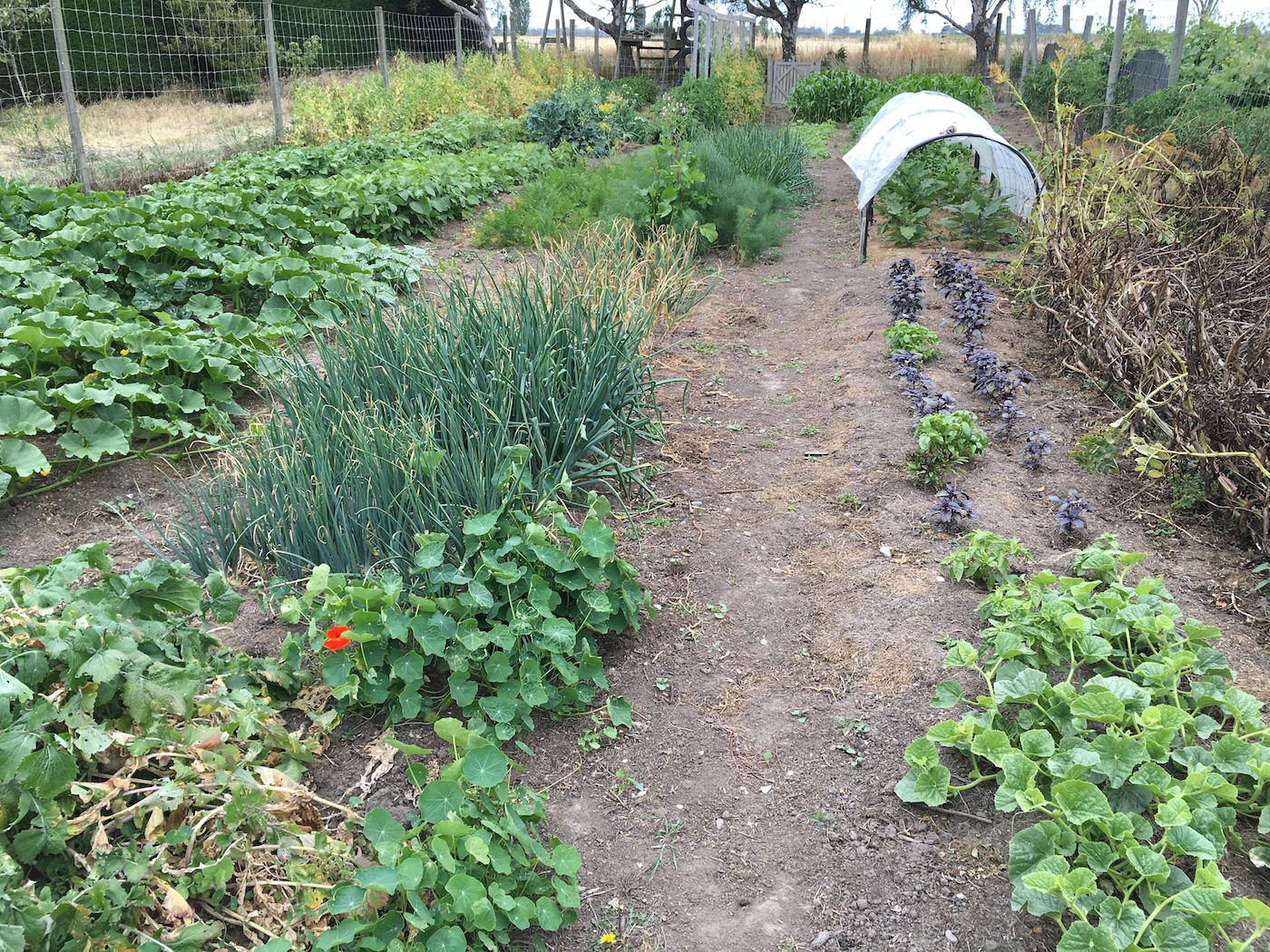
Before the rain...

Before the rain…

A week ago, I was looking at a garden struggling to stay alive, even with my regular watering and mulching. Relentless days of hot sun and no rain to speak of since early spring—things were grim.

Then, last Friday night it rained. Saturday was cloudy and rainy. Sunday, Monday and Tuesday were cloudy and misty. Four days of relief.

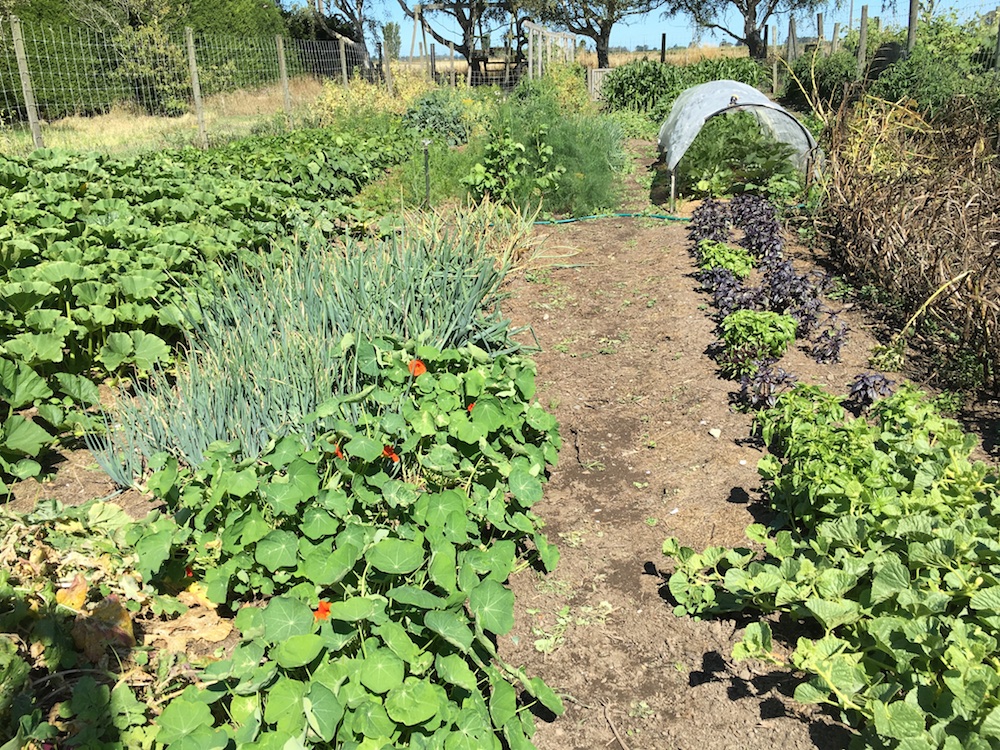
After the rain.

After the rain.

The garden responded. Many plants doubled in size in the past week. Zucchinis matured, pumpkin runners snaked into neighbouring beds, peas began a second flowering.

It will dry out again. The rain wasn’t nearly enough to make up for the drought. Already this afternoon, the temperature is back in the low 30s (nearly 90˚F).

But I’m thankful for the respite. It made all the difference to this week’s garden, and it will continue making a difference for weeks.

Sometimes that’s all we need—a vacation, a respite, a little time for recuperation, time to grow and fortify ourselves before we are plunged back into a struggle.

And now that it’s rained, my respite from weeding is over. The weeds responded as much as the crops did, and it’s back to the grindstone for me.

But I will do so with more cheer, knowing that the plants have had a break, too.

Solanaceae

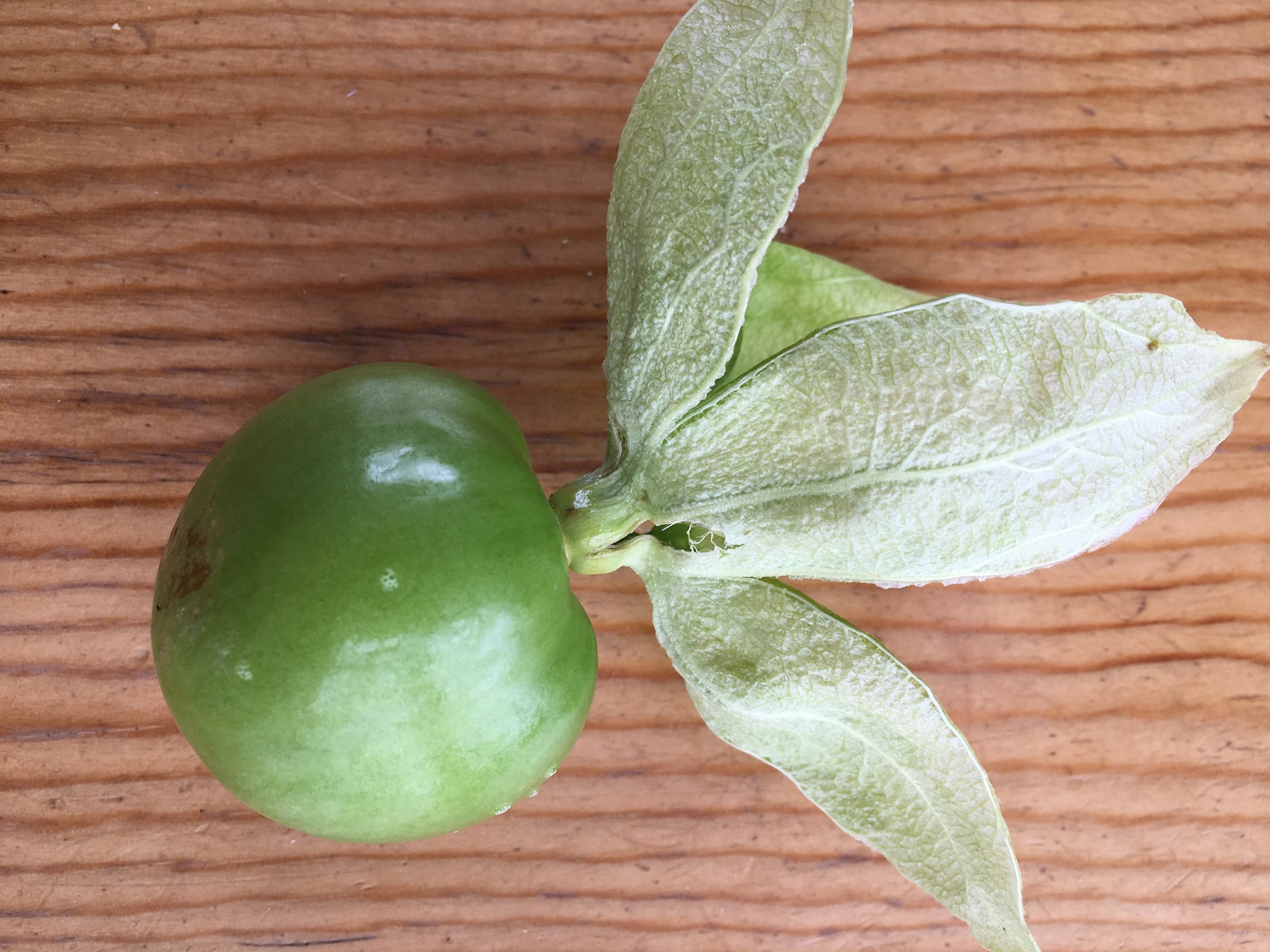
Tomatillo

Tomatillo

Solanaceae—one of my favourite families of plants.

There are more than a few members of this family in the vegetable garden:

Tomatoes, potatoes, eggplants, cape gooseberries, capsicum (peppers), and tomatillos are all solanaceous plants.

Nicotiana

Nicotiana

But they don’t end there. In the flower garden there are petunias and nicotiana, among the perennial fruits are gogi berries, and in the native garden there is poro poro.

And, of course, growing as weeds everywhere are black and hairy nightshade (these don’t get my favourite plant vote).

This diverse and sometimes tasty group of plants also includes many containing medicinal, poisonous or psychoactive chemicals (tobacco, mandrake, and deadly nightshade among them). Indeed, it’s best to be careful with the Solanaceae—even the edible ones contain poisons in the non-edible portions of the plants, or, as in the case of green potatoes, even in the edible parts. Solanine is the culprit in green potatoes—it causes diarrhoea, vomiting and hallucinations, and its bitter taste prevents herbivores from eating the potatoes. Other chemicals in the Solanaceae can have the opposite effect—reducing nausea in chemotherapy patients, and reversing the effects of poisoning by certain pesticides and chemical warfare agents.

And we’re still discovering more uses for these pharmacologically rich plants.

What’s not to like?

Look for the Good

100_3873I’m not always successful at it, but I do try to find pleasure and beauty in everything, even the day-to-day chores.

It’s not necessarily easy. The laundry doesn’t present a perfect rainbow every day.

But knowing that it can…well, that goes a long way.

2016-01-10 15.59.26 HDR smIn the garden, there is a weed (okay, there are many hundreds of weeds, but there’s one in particular…). I know I need to pull it—it will soon set seed and cause me grief. But it is a lovely English daisy—a perfect mound of spoon-shaped leaves with dainty white and yellow flowers dancing above it. I smile as I carefully weed around it. I will get rid of it…eventually.

The drag of getting up at 5am to milk is a small payment for the peace and silence of a sunrise.

The ache in my back in the morning reminds me that I did something yesterday.

The brown film I scrub off the bathtub means we all spent the week outdoors.

The failed project teaches me.


I still grumble sometimes.

I still sometimes wish for a day off.

But it helps, to look for the good. It’s usually there, if only I look.

In Praise of Thistles

2016-01-09 16.58.01 smI hate thistles.

California thistles infest my garden. Their underground runners are impossible to remove, and every time I pull one, two spring up in its place.

Leave them laying on the ground once you’ve pulled them and they either re-root and have to be pulled again, or they dry into vicious prickly brown masses, ready to stab any exposed flesh in the garden.

But thistles have another side.

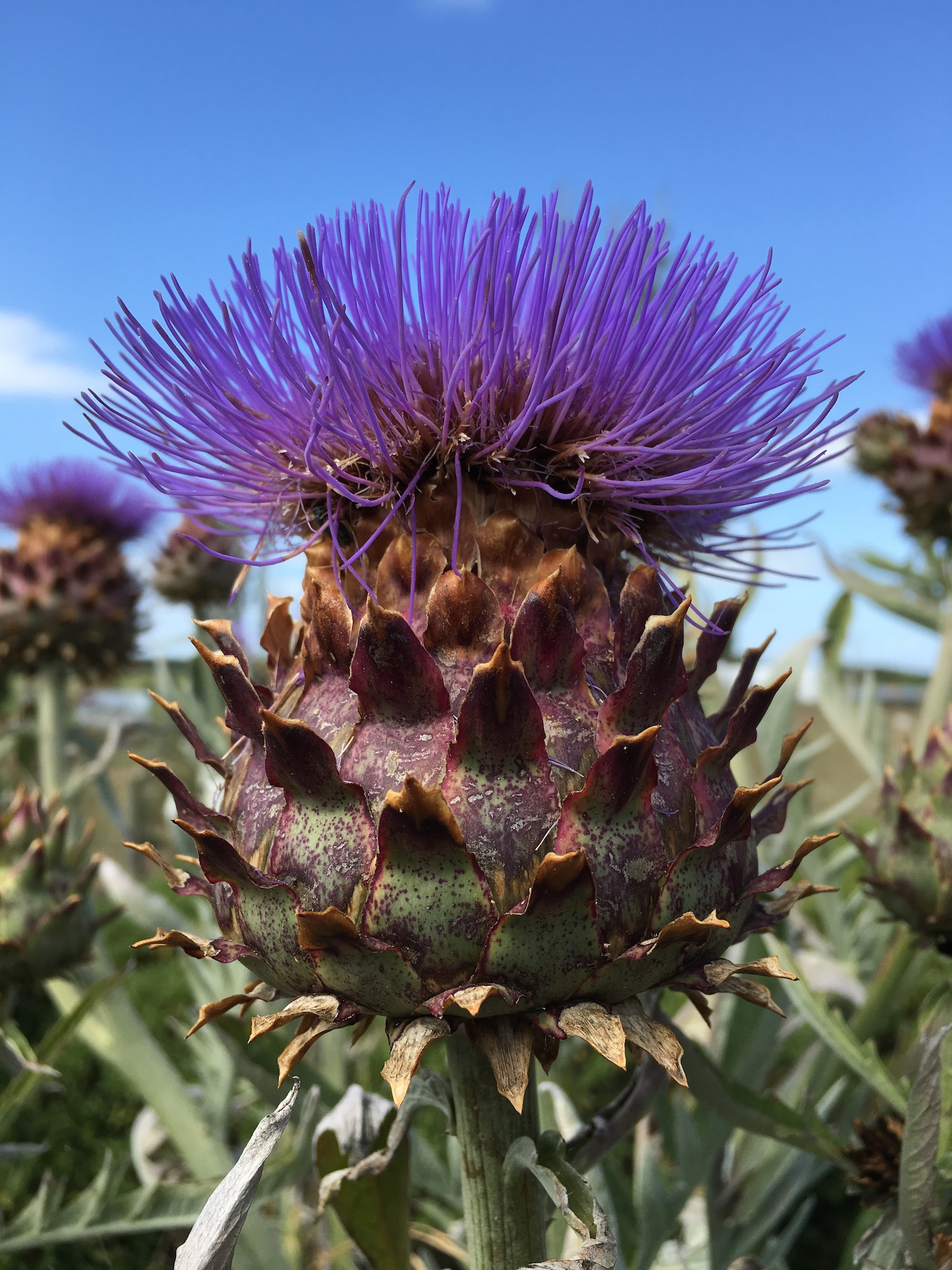
Artichokes (a thistle) provide us delicious food in early spring, when little else is available in the garden.

Cardoons (the artichoke’s poor wild cousin) produce stunning fist-sized purple blooms. Even the @!#!*&$*!%# California thistles have beautiful flowers if I don’t manage to pull them quickly enough. Those flowers attract bees by the dozen, and I love to watch the bees tumbling around in the giant flowers.

At this time of year, I’ve usually managed to get on top of the California thistles and prevented them from flowering, but the cardoon—a centrepiece of the flower garden—puts on a gorgeous display. Standing two metres tall and topped with dozens of giant purple flowers, you can be forgiven for forgetting that the plant is a thistle.

Just don’t make me try to pull that thing out…

Mulch

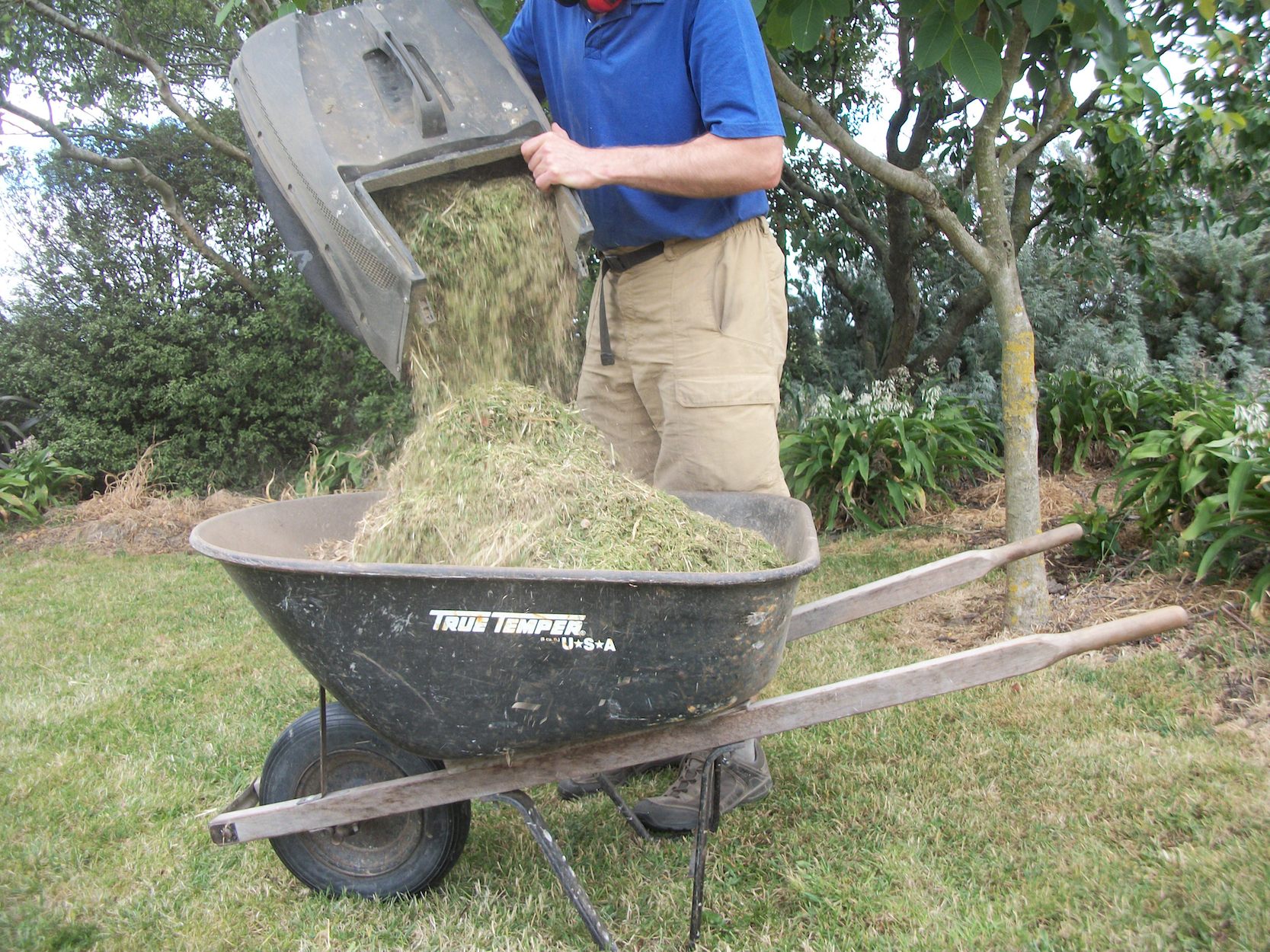
100_4203 smIn a drought, I can’t not blog about mulch at least once. Even in a normal summer, I don’t think I could grow vegetables without mulch—it’s just too dry and the sun is too intense.

We mulch with grass clippings, and the mulch serves a number of purposes. First, it disposes of the grass clippings, which would otherwise end up sitting clumped on the lawn, or fill up the already overflowing compost bins.

But the mulch is more than that. It holds moisture in the soil, so I don’t need to water as frequently. It also suppresses weeds, which is absolutely essential for my sanity—without it, I’d be spending every waking moment just weeding from September to April.

Grass clippings are particularly nice because they aren’t as attractive to slugs as the alternatives (pea straw or barley straw), they have a fine texture that can be gently nestled around even small plants, and they don’t blow away like other mulches do.

The only problem lies in getting enough for all our needs in early summer. It takes a lot of mowing to mulch all our garden beds!