I’d Rather Be Weeding

dandelion-smWhen I tell people we grow almost all our own vegetables, I get a lot of comments like, “Wow! That’s impressive!”

I shrug—I think if they really knew, they wouldn’t be impressed.

Truth is, I think I grow so many vegetables because I’m just not cut out for the modern world.

I drove into town today for groceries and to finish (do) my Christmas shopping. I had already put the job off for several days while I found other, more important things to do in the garden. Then I timed my arrival in town with the opening of the shops, so the crowds would be less. I came armed with multiple lists—a list of destinations, and a list of items to be purchased at each location. I ticked them off, one by one, feeling the stress level mount as the morning wore on.

Noon came and went, and I was still working through my lists. The crowds grew. I got stuck in traffic. I didn’t stop for anything to eat or drink, lest the whole trip take longer.

I finally made it home just before 2 pm, exhausted, irritable, and completely stressed.

A little lunch and an hour of hard physical labour in the garden restored me.

Growing our food means I don’t have to go for groceries as frequently. I don’t have to deal with parking, stores, financial transactions, deciding what to buy of the endless array of products on the shelf. Sure, it may take four months to get a tomato, but at least I don’t have to go to the store to get it.

This Old House: Gifts from the Past

2016-12-09-10-46-51Most of the time, I think it would be wonderful to have a brand new house on a property that’s never had a house on it. To not be fighting a hundred and thirty years of other’s landscaping decisions and poor house maintenance would be a delight.

But then, sometimes the property’s history is a bonus.

When we moved in over eleven years ago, most of the property was overgrown with weeds. Even the garden beds around the house were choked with grass and yarrow. We slowly hacked away at the jungle, finding many surprises along the way—beautiful old roses, dahlias, peonies, daffodils, and a host of other flowers hidden away in the weeds. We transplanted the floundering plants to new, weed-free garden beds as we re-landscaped the property.

We thought we had discovered all the lost plants, but strange things have shown up over the years.

Several years after we had cleared and replanted the area between the house and the hedge, a day lily sprang up there. We had never seen a day lily on the property before. The following year, a winter-flowering iris popped its head up there, too. Again, a flower we haven’t seen anywhere before.

Other flowers have since appeared in unexpected places, long after the areas had been re-landscaped—mostly bulbs, as though the bulb sat dormant for years until conditions were better. Either that or they’ve been growing, not flowering, and somehow escaping my notice.

Either way, they’re like gifts from past gardeners.

A Rose

R Weiss roses Christchuch Botanic Gardens

R Weiss
roses
Christchuch Botanic Gardens

A rose, by any other name
Would still have thorns and be a pain.

Black spot, chafers, aphids, too,
Spider mites and powdery mildew.

Japanese beetles, leafcutter bees
It’s rife with pests and disease.

So go ahead, forget the rose
Plant a flower with fewer foes.

Sunflower, Daisy, there’s really a passel
Of flowers easy to grow without hassle.

No pruning, no spraying, no disease or thorns
For none of these things a gardener mourns.

Or better yet, just live with the weeds
They grow by themselves, and spread their own seeds.

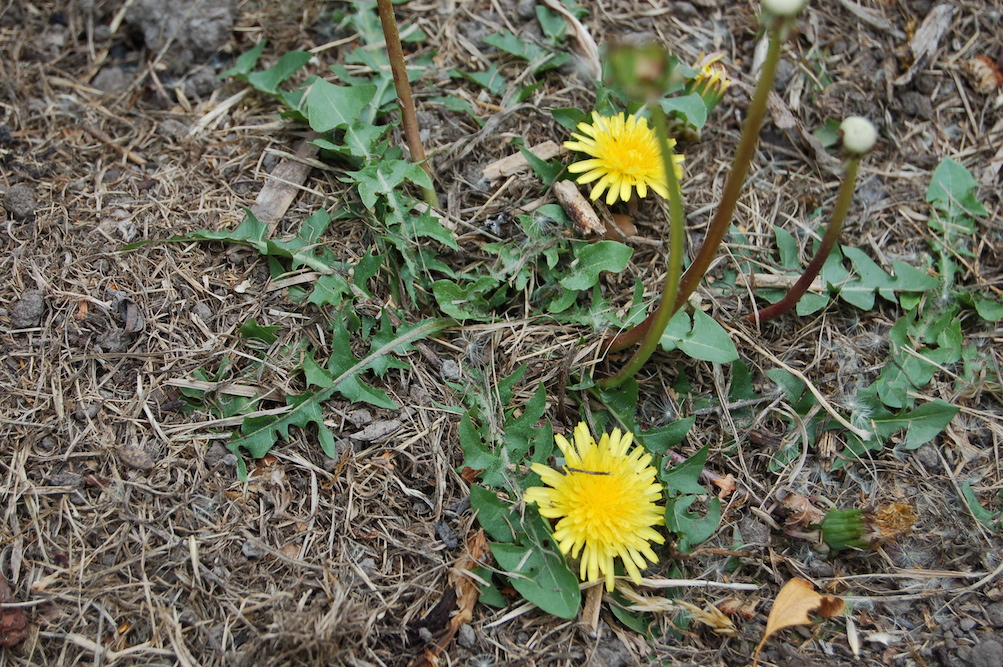
Dandelion, yarrow, catsear and cress
All grow on their own and let the gardener rest.

What’s the price of a weed?

2016-11-08-16-14-49This is an important question at our house, with lots of weeds and two teens looking to make some extra money.

I decided to take a mathematical approach to this question.

Crop loss and control costs for weeds in New Zealand are estimated to be about $1.2 billion per year. Add another $1.3 billion for biodiversity losses, and the total bill for weeds comes to $2.5 billion per year.

So what should I be spending on weeds? Let’s do a few calculations.

New Zealand has a land area of 268,021 km2. That’s 26,802,100 hectares.

Our property is 0.6 hectares.

So our property is 0.00000002 of the land area of New Zealand.

Multiplying New Zealand’s total weed bill of $2.5 billion by 0.00000002, I should be paying about $50 a year to control weeds on my property.

My husband set the price of a 20 litre bucket of weeds at $2 (and I agreed to pay triple price for each bucket of pure thistles—hazard pay and all). That $50 is only going to pay for 25 buckets of weeds (or only 8 buckets of thistles).

Darn. I’m seriously being over-charged for weed control…

Poroporo

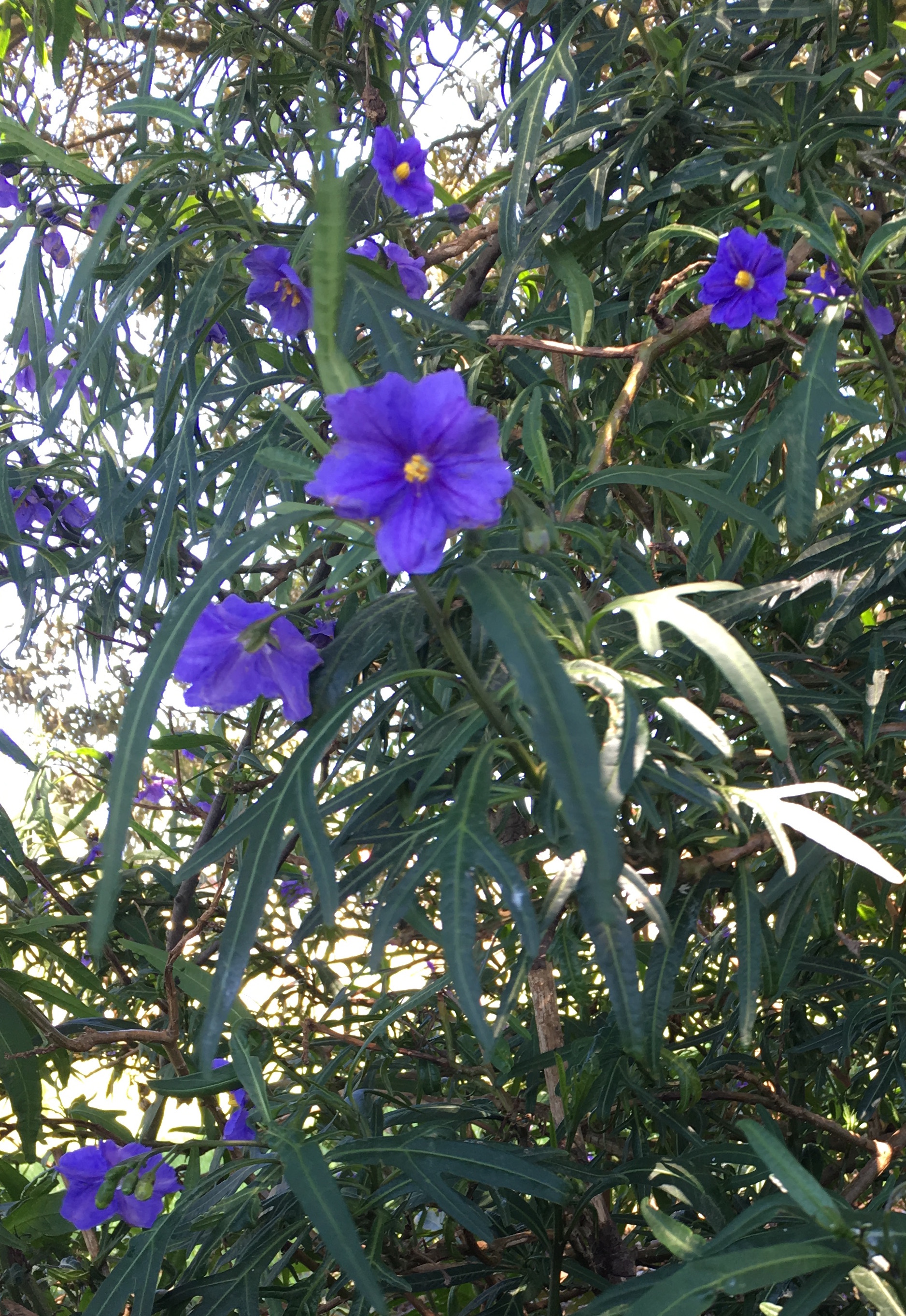
2016-11-22-13-39-04Poroporo (Solanum laciniatum) is a native shrub, and one of our few native plants typically classified as a weed. A few years ago, I noticed a tiny poroporo seedling sprouting under our oak trees—planted, no doubt by some bird roosting (and poohing) in the branches above.

At the time, the chickens were quartered under the trees, so I fenced it with a ring of chicken wire to keep it safe from their scratching.

It has now grown into a huge sprawling bush easily three metres in diameter and as tall as me. It is currently covered in gorgeous purple blooms. Later in the summer, it will drip with teardrop shaped yellow fruits. Weed or not, the plant is eye candy.

Eye candy only—not to be taken internally. Like many of the Solanums, poroporo is poisonous (though apparently the fully ripe fruit is edible…sort of). Fever, sweating, nausea, and abdominal pain are the unfortunate effects of poroporo poisoning.

In spite of its poisonous nature (well, actually because of it), poroporo is grown commercially as a source of steroidal alkaloids used medicinally to make cortico-steroid drugs like birth control and eczema treatments.

A pretty and useful weed!

Fantasy Gardener

2016-11-20-19-24-32What if gardening magazines were written like fantasy novels?

The day was hot. Sun glared from a bleached sky, and heat shimmered off the soil.

Robinne squinted into the sun, eyeing her enemies, calculating the risks. They were arrayed in their thousands—rank upon rank of weeds as far as the eye could see. Their green shoots groped for the sky, smothering her unwary crops. She knew their roots ran deep.

This would be no mere skirmish, no quick-strike street fight. This would be a war beyond reckoning.

Sweat beaded on Robinne’s brow as she considered her strategy. She pulled on her gloves and patted the secateurs hanging at her side for reassurance. She could do this. She had to do this. She was the garden’s only hope.

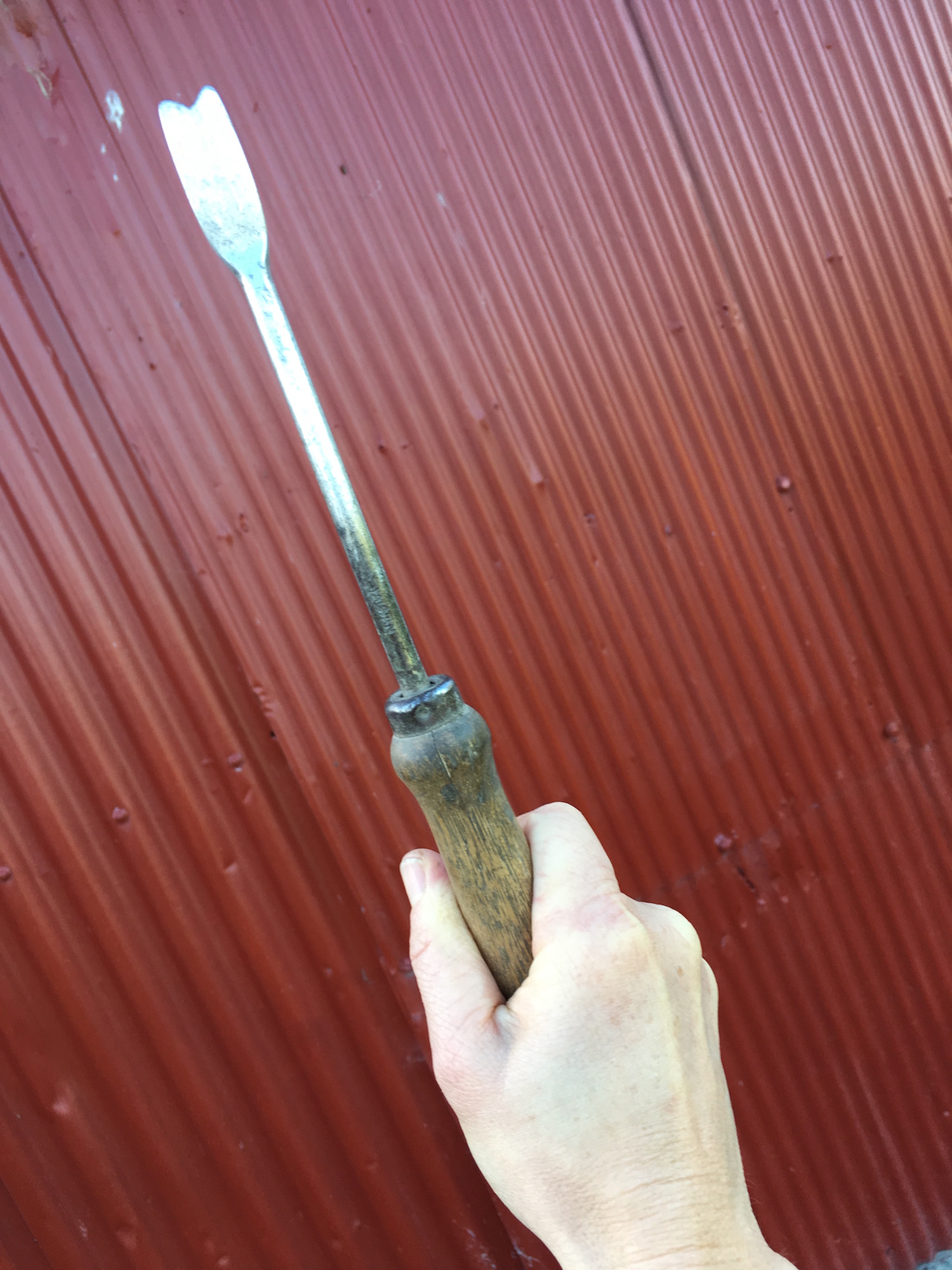
Robinne drew out her weeding tool, Weedlebuzzer—an ancient weapon, handed down through generations of warrior gardeners. The weeding tool thrummed in her hand, eager to get to work. Robinne smiled grimly, opened the gate, and stepped into the garden.

Ripgut Brome

2016-11-08-16-14-49Ripgut brome. How can you not be curious about a plant named ripgut brome?

I was certainly curious, after it took over my yard this spring. I’ve hauled countless wheelbarrow loads of ripgut brome to the compost pile, and I’m still finding it everywhere.

Ripgut brome (Bromus diandrus) is an annual grass native to the Mediterranean region. It probably arrived in New Zealand as a contaminant in grain, or in the wool of imported sheep. It’s a tall, sprawling plant, and seems to spring up overnight to suddenly form a dense thicket anywhere that isn’t regularly mown or grazed.

The leaves of ripgut brome are rough, and feel like sandpaper on bare legs and arms. They leave countless, fine scratches like paper cuts on the unwary weeder.

But the worst part of ripgut brome is the seed. Sharp, and covered in little hooks, the seeds catch and burrow into animals’ fur, eyes, skin, feet and intestines (I assume that’s where the name ripgut comes from).

And like all good weeds, it produces copious seeds (over 3000 per plant), aggressively outcompetes other plants, and is drought tolerant. It has also evolved herbicide resistance in some areas.

There’s only one thing for it on our property—to pull it up before the seeds mature. The good news is, that it’s got a shallow root system, so it’s not difficult to pull. The bad news is that it covers almost every inch of our acre and a half.

Sisyphus had it easy…

The Best Laid Plans…

2016-11-05-16-46-35-smBack in mid-August, I blogged about the to-do lists that get me through spring. I make a list and stick to it. That way, everything gets done.

But what if the plants don’t pay attention to the list?

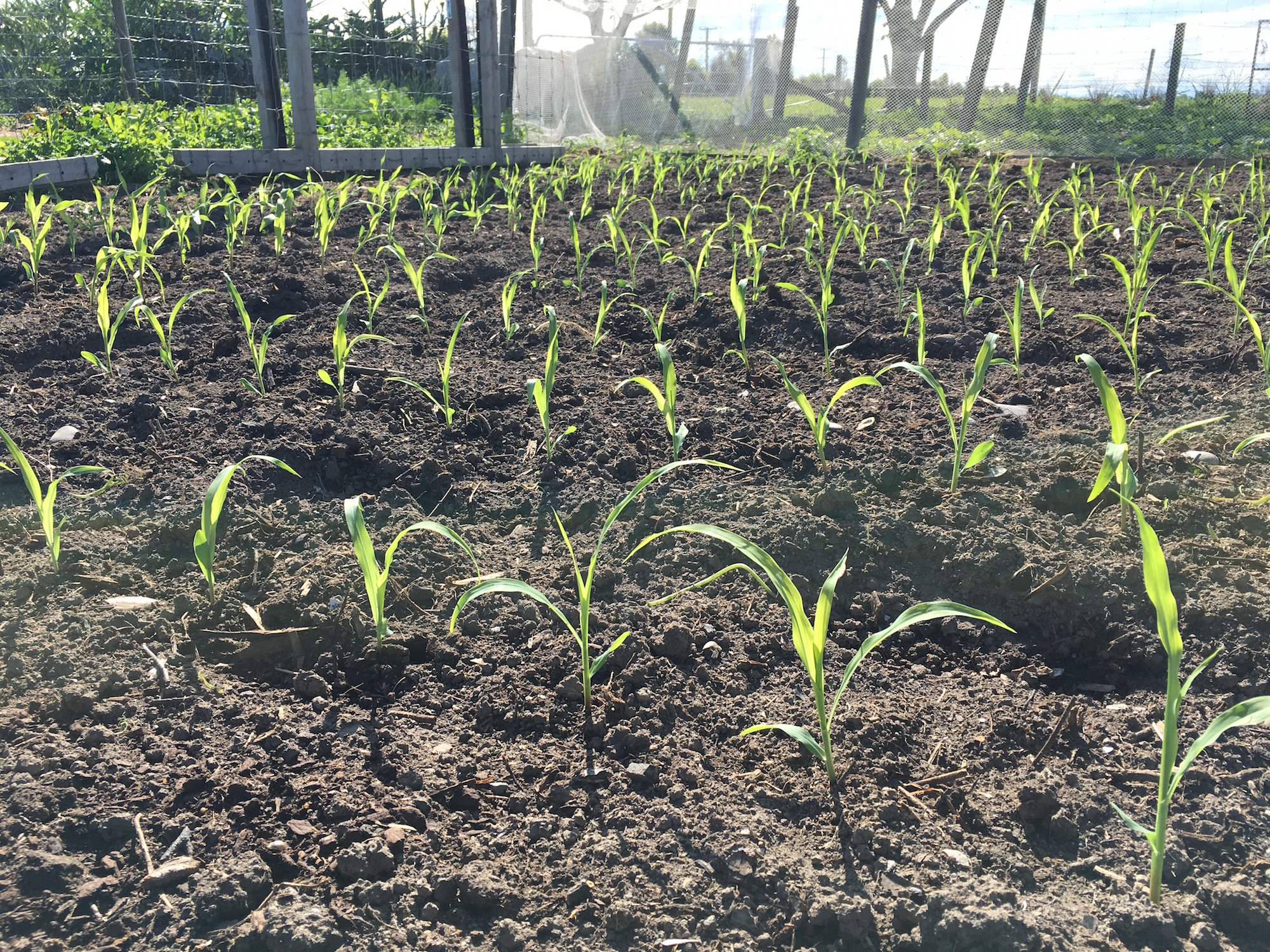
I try to maintain consistency from year to year, and I document planting dates, plant-out dates, potting-up dates. So I know that if I plant my first batch of corn in trays on the 15th of October, it will be just ready to plant out on Canterbury weekend (around the 15th of November).

But this year, the corn was ready to plant out by the 30th of October.

The corn bed wasn’t ready yet. It’s always the last one I prepare, because it’s usually the last one to be planted out. I took the trays of corn seedlings out of my office, so they would have chilly nights to slow down their growth.

It didn’t help. The corn kept growing at a ridiculous rate.

I considered planting the corn in the beds designated for pumpkins, because they were ready. But that would have meant planting pumpkins in the same beds they were in last year. I had a lot of pest problems in those beds last year—I’d be foolish to plant the same crop there again this year.

Last weekend I got frantic. If I didn’t get the corn out to the garden in the next week, it would die in those trays.

Wednesday, I quit work at 2 pm and started preparing the beds. I got them weeded, and the soil turned. Then I realised I was going to need to turn the compost pile in order to get compost for those beds.

Turning the compost pile usually takes at least two weekends of back-breaking work.

This morning, I started on the compost pile around 6.30 am. By the time I’d turned a third of it into the empty compost bay, I was completely exhausted. And I’d only managed to get five wheelbarrow loads of compost for the corn (I really wanted nine).

So I compromised. Five loads of compost would have to be enough. I turned it in, raked the soil smooth and called the beds done. The corn was all in the ground before lunch. Whew!

Of course, it’s a week early. I have learned the hard way not to plant out too early here. My garden sits in a frost pocket. Chances are, the corn will get nipped by frost, but it was either that or watch them die in trays. Crossing my fingers and hoping for warm weather!

A New Gardening Lexicon

A nice tidy rolag.

A nice tidy rolag.

I’ve noticed that the world of extreme gardening doesn’t have a very good vocabulary. There just aren’t the words to express the particular situations, actions, and states one experiences.

So I’ve developed my own gardening lexicon, to try to fill that gap in the English language. Here are a few of my words:

Chook—verb. To toss something to the chickens. E.g.: Just chook those weeds—they like them.

Chookable—adjective. Suitable for the chickens to eat. E.g.: Those weeds are chookable.

Dinger—noun. A rock in the soil, accidentally struck by a gardening tool.

Goat—verb. To toss something to the goats. E.g.: Goat these branches—they like them.

Goatable—adjective. Suitable for the goats to eat. E.g.: Those branches are goatable.

Grunter—noun. A weed that requires significant effort (and usually a tool) to pull.

Hum-dinger—noun. A particularly large rock in the soil, accidentally struck by a gardening tool.

Pop bead—noun. Insect pest. Name comes from the sound it makes when squished between the fingers.

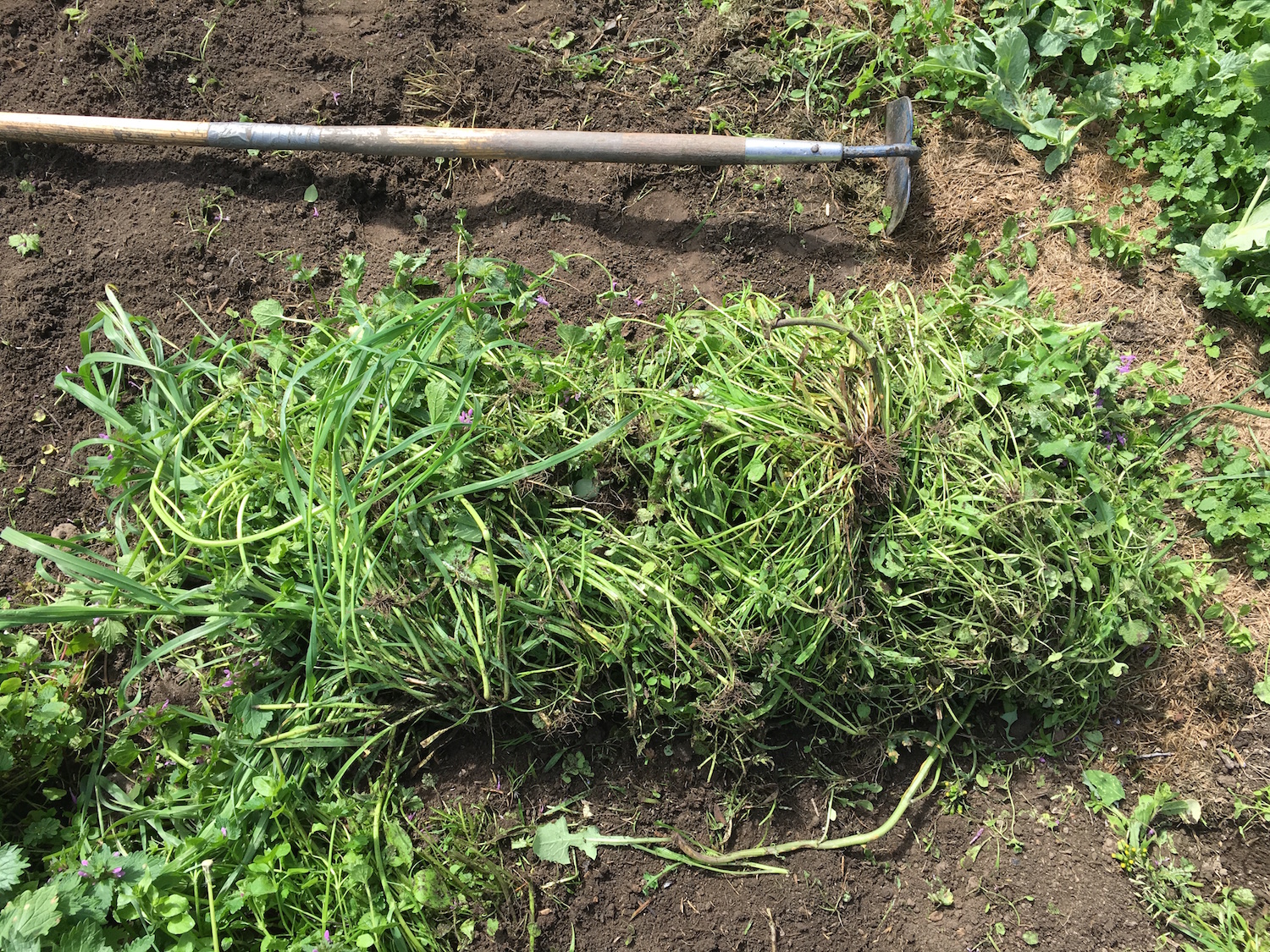
Rolag—noun. A term borrowed from weaving. Weeds that have been hoed into a tidy roll, ready to be lifted into the wheelbarrow or thrown on the compost heap.

Squeaker—noun. A nest of mice, when overturned accidentally by a shovel or spading fork.

Superman tree—noun. A tree or shrub that looks difficult to cut, but is actually easy to cut, making the cutter feel like Superman. (See also Wonder Woman weed)

Twitch light—noun. Couch grass with unusually fine runners.

Twitch-on-steroids—noun. Couch grass with unusually thick runners.

Twitch-headed—adjective. Having weeded so much that you see weeds when you close your eyes.

Wonder Woman weed—noun. A weed that looks like a grunter, but is actually easy to pull out, and makes the weeder feel like Wonder Woman. (See also Superman tree)


Orb Weavers

2016-10-24-13-39-42Weeding can be tedious, miserable work. Hard on the back, hard on the hands, and downright painful in much of my garden, where nettles and thistles grow exuberantly.

But there are some perks. Weeding brings you close to the vegetation, and gives you a chance to see things you might otherwise miss.

Today I was treated to two native orb weaver spiders—two of my favourite native spiders here.

The first was a bright green, round-bottomed Colaranea viriditas—the green orbweb spider. These little gems are supposedly quite common, but the bright green ‘leaf’ on their backs must do an excellent job of camouflaging them, because I count myself lucky when I see one. Unfortunately, my camera was nowhere close, and this one scurried away before I could catch it.

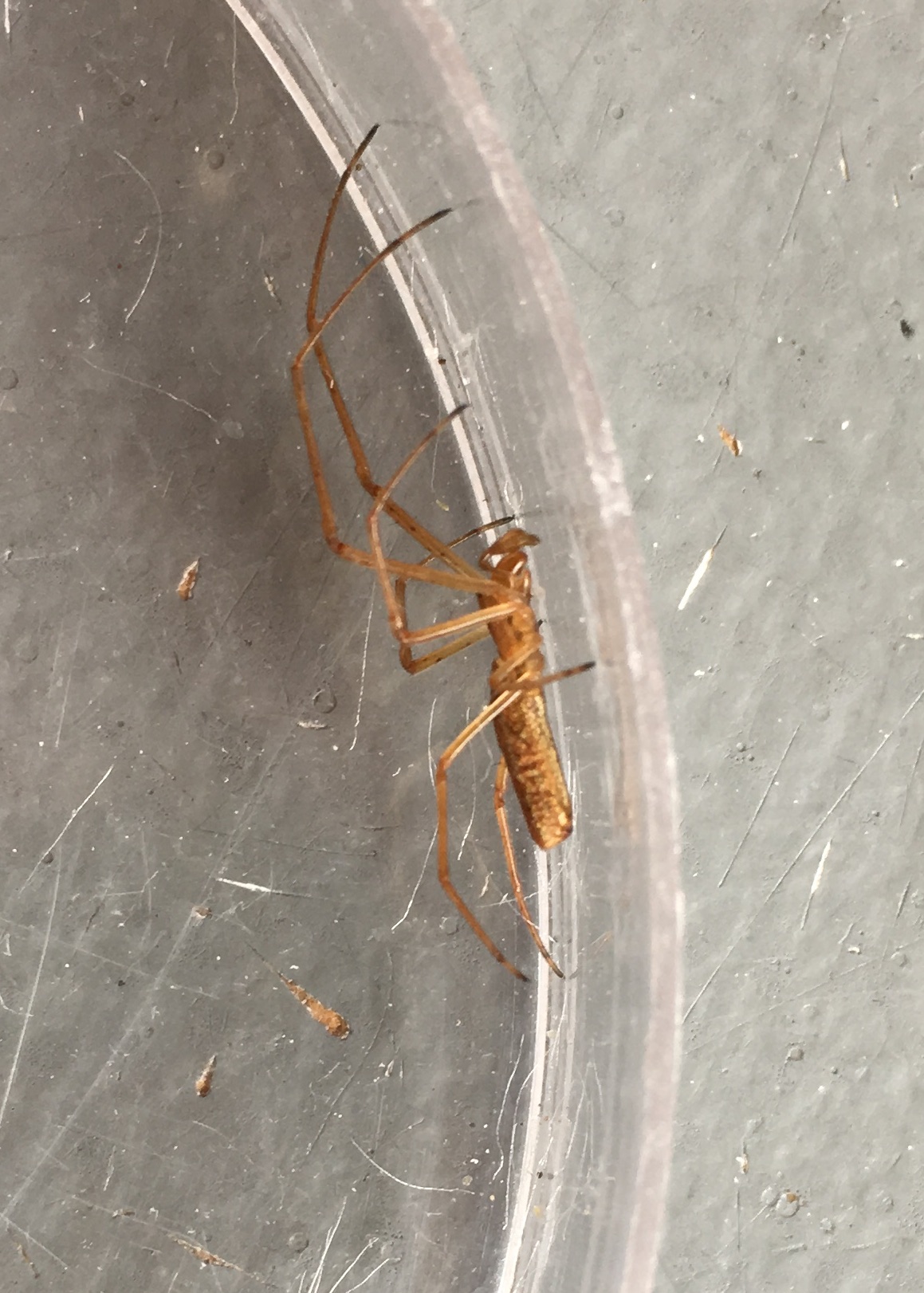
The second orb weaver I saw today is an expert at camouflage. You would be hard pressed to recognise it as a spider at all most of the time. This spider is in the family Tetragnatha—the big-jawed spiders. Tetragnathids have long thin bodies, and sit with their legs stretched out to the front and back, making the spider look like a small twig (I had to poke the one pictured here so it would stand up and look like a spider for the photo).

Tetragnathids are usually associated with wet areas, so I’m not sure what they’re doing in my dry yard, but they’re certainly common here. Though they’re hard to see, you can’t swing a sweep net in the tall grass without coming up with a few of them.

Both these spiders catch flying insects in webs shaped like the classic Halloween spider web—orb webs. Is it a coincidence that I saw them both today, a week before Halloween? Maybe they’re practicing for their big night.

Or maybe it was just my lucky day.