Biscuit Stars

100_3639 smYesterday, I came across a lovely looking chocolate bread online that used the technique of cutting and twisting the dough to create pretty patterns.

I thought it would work in biscuit dough, too, so this morning I gave it a try.

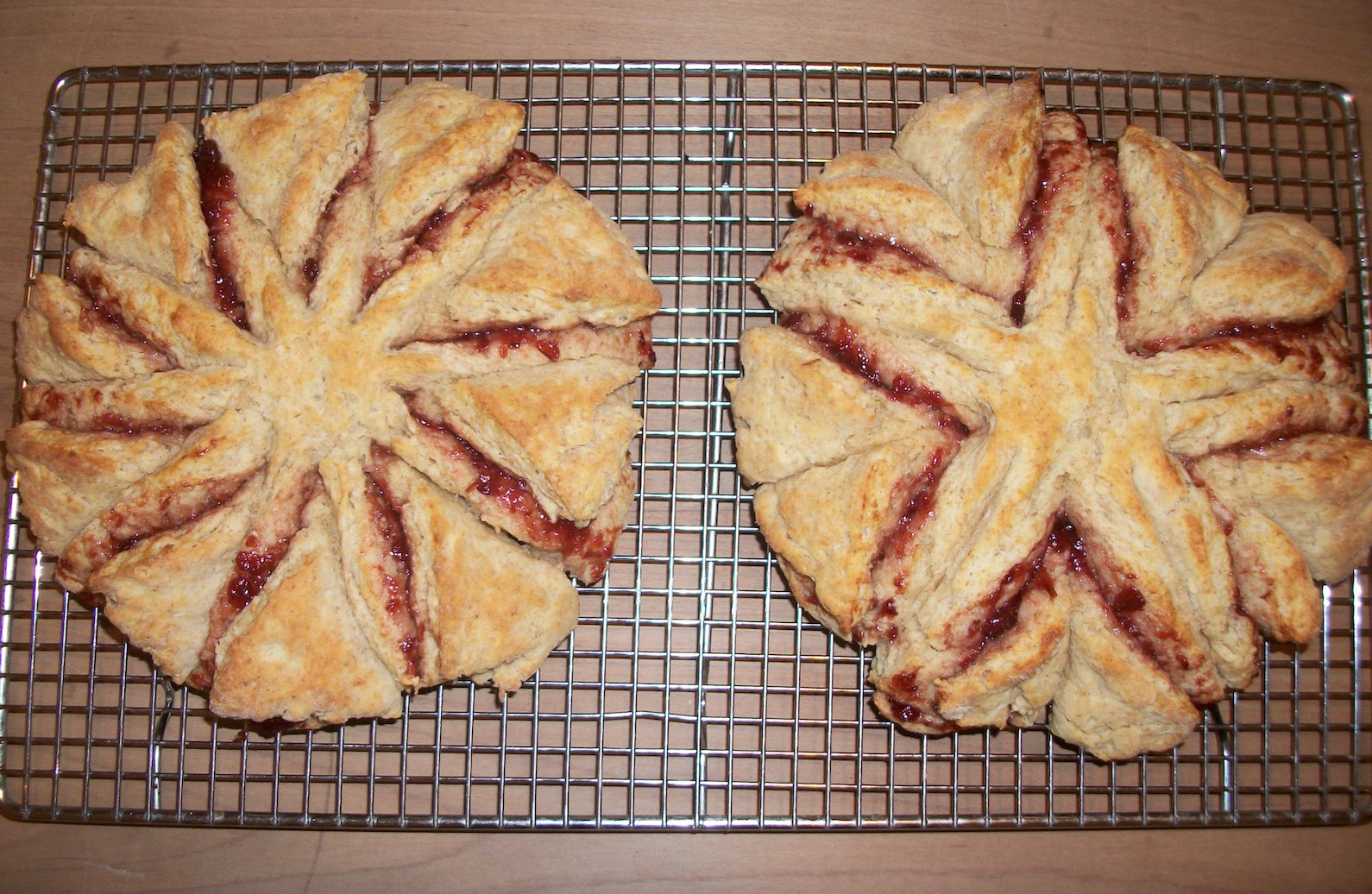
I made my usual rolled biscuit dough, then divided the dough into quarters. I rolled out one quarter into a round about 20 cm (8 in) in diameter and 1 cm (1/2 in) thick and placed it on an ungreased baking sheet. Then I spread jam generously over the entire round, and topped it with another quarter of dough rolled out to the same size, pressing gently to bind them together. With a knife, I cut the stacked round into 10 wedges, leaving the centre uncut. Then I gently flipped each wedge over, to give it a twist.

Then I did the same with the other two quarters of dough. For the round on the left, I flipped each wedge in the same direction. For the round on the right, I flipped adjacent wedges toward each other.

I baked them at 190°C (375°F) for about 20 minutes.

The results were pretty and yummy, too!
Mushroom Leek Tart

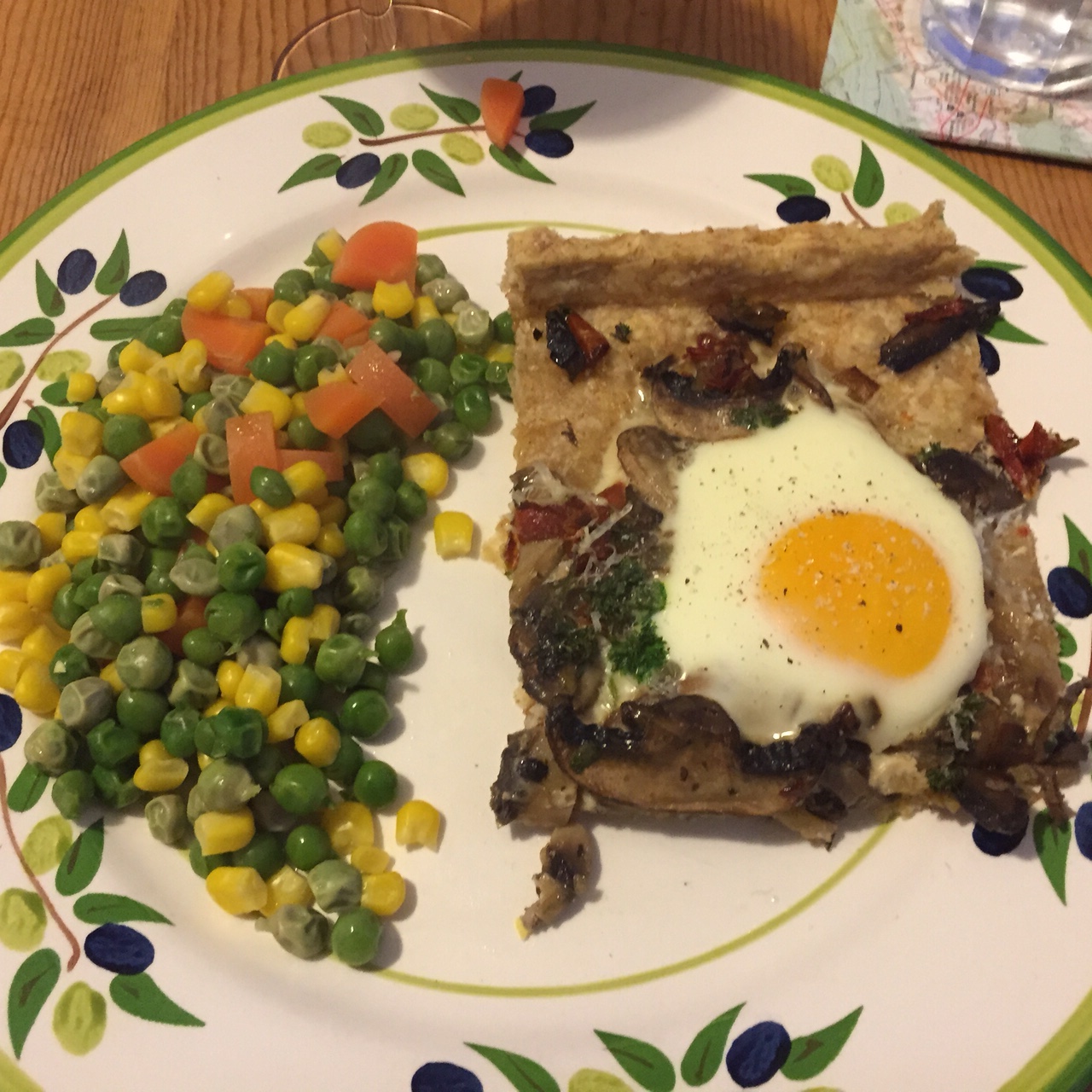
IMG_3455Driving home today with a kilo of mushrooms in the car, I devised the following mushroom and egg tart for dinner.

It was delicious!

Approx. 1 kg fresh mushrooms, sliced (I used buttons and portabellas)

10-15 g dried porcini, soaked 30 min in hot water

4 small leeks, sliced

small handful dried tomato, chopped roughly

Fresh thyme, rosemary, and parsley to taste

½ c. grated parmesan cheese

8 med eggs

salt and pepper to taste

Sauté leeks, mushrooms, tomatoes, rosemary and thyme over medium heat until well-cooked, and the mushroom liquid has evaporated. Add salt and pepper to taste.

Make pastry for a double crust pie. Roll it out in one large sheet and line a jelly roll pan with it.

Sprinkle half the cheese over the crust. Then spread the mushroom mixture evenly over the cheese. Top with the remaining cheese.

Crack the eggs onto the tart, one at a time, arranging them neatly across the tart.*

Bake 20 minutes at 190°C (375°F). Allow to cool for 5-10 minutes before serving.

*If I made this again, I’d bake the tart for 10 minutes, then add the eggs—20 minutes is a bit too long for the eggs.

Java Cat

drinkingcatIt’s another Throwback Thursday…

I ran across this photo of our cat, back when he was still cute, having a little taste from my coffee cup.

I don’t think he liked what he tasted; nowadays, he sniffs tentatively from a few inches away, then turns away in disgust. It’s what he does to most of our food. How a family of vegetarians ended up with a strictly carnivorous pet, I don’t know, but the positive result is that the cat rarely jumps onto the kitchen counters or tries snatch food from unattended plates. His only kitchen crime is sitting on the dining table in order to look out the window.

That does not mean he is well-behaved–oh, no–the Malevolent Beast from Hell has many evil habits, but at least stealing food isn’t one of them.

Fakin’ Bacon

Bac-UnFor many years we resisted the vegetarian meat substitutes. TVP always tasted like tough cardboard to me, and I’d never had a vegetarian sausage that I wanted to finish eating. Besides, who really needed meat anyway with all the variety in the vegetable world? To try to get a meat fix by eating some highly processed vegetable just didn’t seem right.

But after a trip to China, where the art of meat substitutes is, apparently truly an art (they go to great lengths to make the substitute taste, feel, and even look like the real deal (down to gristle, and skin), Ian decided he wanted to try making some of those substitutes, just for the fun of it. The gluten-phobic should probably read no further, because these meat substitutes use wheat protein (gluten) to replace the meat protein.

I was highly suspicious, as Ian worked with the stretchy, slimy mass of gluten, and still wasn’t sure, even once the fake meat was made and ready to be prepared for a meal. But to my surprise, I ended up quite enjoying the stuff.

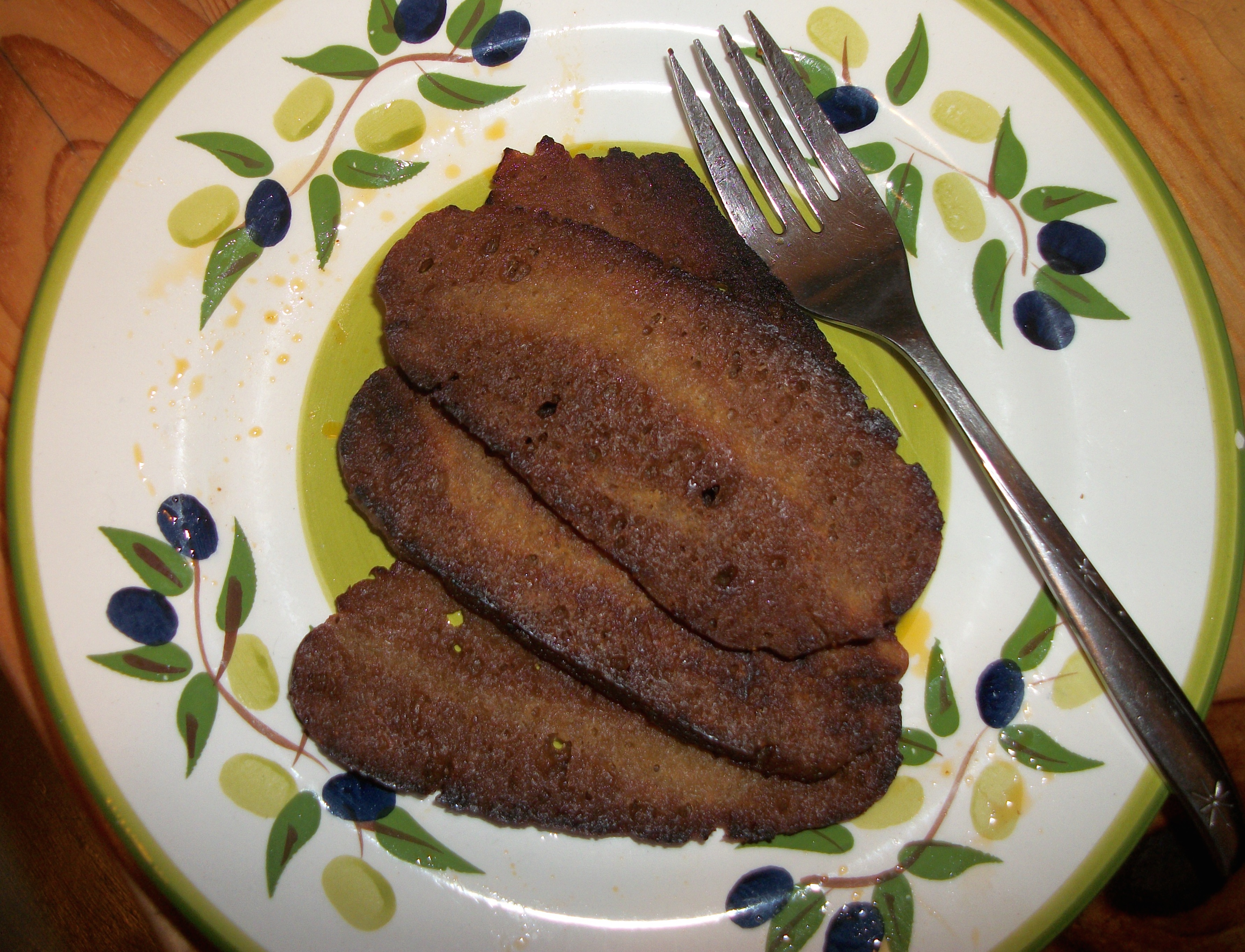
What we found was that preparing these meat substitutes makes all the difference in whether they are good or revolting. The mock duck he made was great when fried and served in flavourful oriental dishes, but took on the texture of a gumboot when boiled in a stew. The bacon was delicious, but needed to be very thinly sliced and fried hot to get that crispy bacon texture.

I prefer the bacon over the mock duck–I find that greasy, salty, crunch irresistible. And as a bonus, the bacon fits nicely into the bread oven’s heat cycle, making use of the cool tail end, and eking yet another few meals out of a bread day’s labour.

You can find the vegetarian bacon recipe Ian uses here. Whether you’re vegetarian or not, it’s a fascinating food, and well worth trying at least once, just for the adventure.