Not a Spanish Omelette

100_3995 smContinuing with the egg theme…because I’m getting three a day now, and hardly know what to do with them all…

My husband introduced me to this dish before we were even married. He called it a Spanish omelette.

It is not a Spanish omelette. It’s more akin to a Texas omelette, but without the beans.

But it’s not even really that.

But whatever you call it, it’s good! And simple to make.

Chunks of roast potatoes topped with scrambled eggs and a thick spicy tomato sauce.

This dish can be served at any time of day, and can take on whatever flavours you want in the tomato sauce. This week, I made a sauce rich with an entire colander full of spinach, fistfuls of fresh basil and oregano, and heavy in paprika (including some smoked paprika, too). Sometimes I steer the sauce toward Central America, with cilantro, sometimes toward Greece with feta cheese and olives. The potatoes and egg are flexible, and will happily nestle under whatever you pour on top.

Best of all, it tastes like junk food, but is packed with nutrients and leaves you feeling satisfied. A real stick-to-your-ribs sort of meal.

Too Hot To Eat

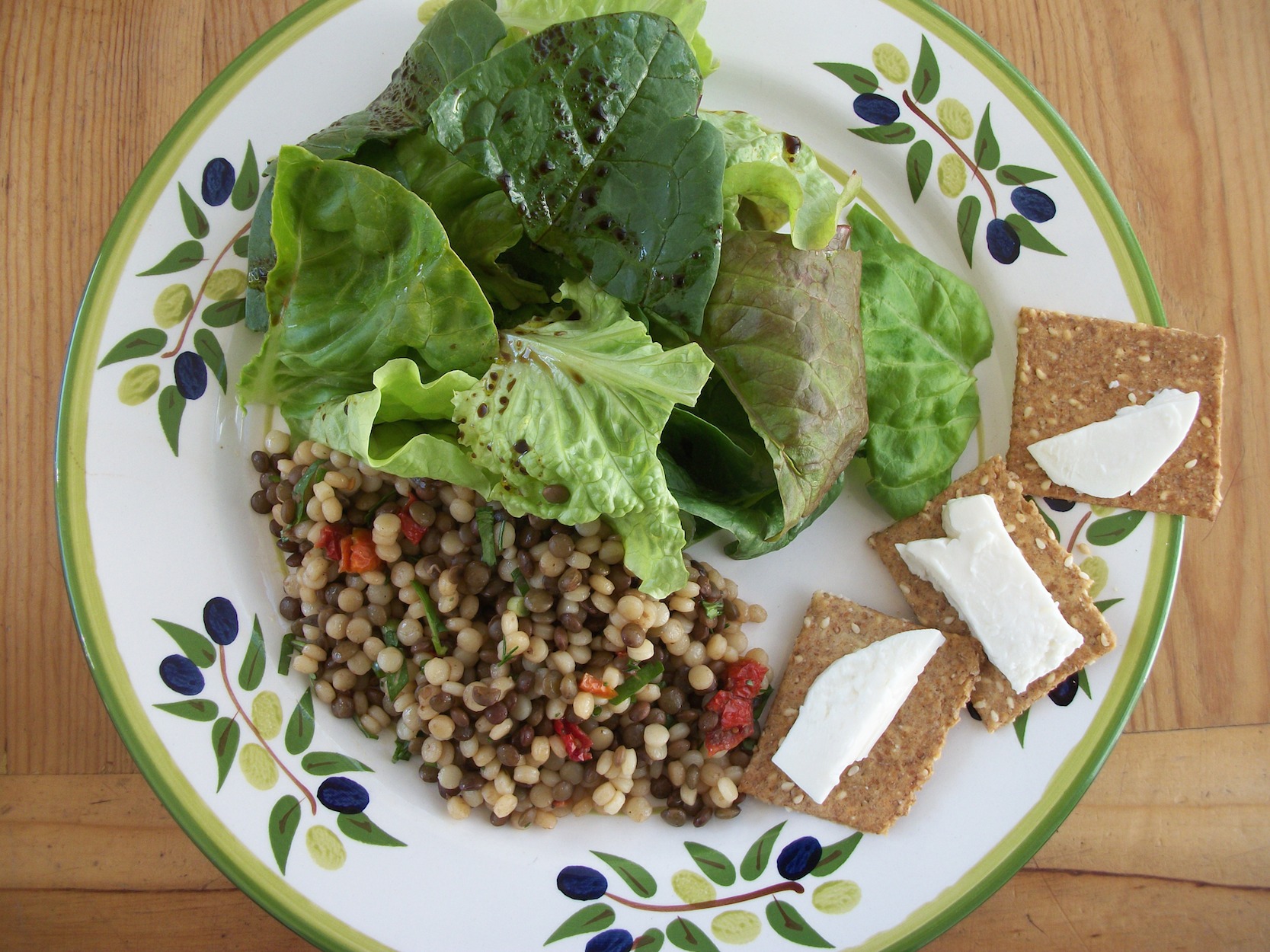
100_3989 smIt was 32°C (90°F) when we got home today. Too hot to eat a hot meal. So it was salads and cheese for dinner.

A luscious green salad of spring lettuces.

A hearty lentil salad with Israeli couscous, dried tomato, spring onion and fresh herbs.

Homemade feta on Mommy’s Magical Crackers.

A perfect summer meal!


What’s your perfect summer meal?

Cinnamon-Pumpkin Bars

100_3970smI thought it was time for another recipe, and this one is seasonally appropriate for you denizens of the Northern Hemisphere. I made it these lovely bars this week with the very last of the frozen pumpkin from last fall.

This recipe is adapted from a recipe in King Arthur Flour’s Whole Grain Baking. These are one-bowl wonders—incredibly quick and easy to mix up by hand. Something even young kids could manage on their own.

¾ cup (170g) butter

1 cup brown sugar

1 tsp vanilla

¾ tsp baking powder

¼ tsp salt

2 tsp cinnamon

¾ tsp ginger

¼ tsp cloves

¼ tsp allspice

1 egg

1 ½ cups cooked, mashed pumpkin

1 ½ cups whole wheat flour

1 ½ cups raisins or dried cranberries

Melt the butter in a largish bowl in the microwave. Add the sugar and stir. Return the mixture to the microwave and heat until it is starting to bubble. Allow the mixture to cool until it is comfortable to touch.

Beat in the vanilla, baking powder, salt and spices. Add the egg and beat until smooth. Stir in the pumpkin, flour and fruit.

Spoon the batter into a greased 9 x 13-inch pan, and bake 40 to 45 minutes at 180°C (350°F).


Feta Cheese

Feta draining the kitchen.

Feta draining the kitchen.

I’m making one of my favourite cheeses this evening—feta. It’s the cheese that inspired me to get goats in the first place.

When we lived in St. Paul, Minnesota, there was a Greek deli just a couple of miles from home—Spiros (a quick Google tells me that Spiros is no longer open). Spiros sold several different feta cheeses, half a dozen types of olives, and all manner of other Mediterranean foods. We almost always had a block of feta from Spiros in the fridge.

When we moved to New Zealand, I was dismayed at the lack of good feta available. When we needed some livestock to keep the paddocks under control (just until we got around to planting the trees…that was 10 years ago), I chose goats so that I could make proper feta.

I was not disappointed by my decision. Feta made from goat milk, and processed just right to get the crumbly texture I like…divine!

We use feta in many ways. Because it is strongly flavoured and very salty, a little goes a long way, and more is wonderfully decadent. We add it to pasta, gratins, and pizza. It browns beautifully in the oven, and the “toasty bits” are everyone’s favourites. It is, of course, an essential ingredient in Greek salad, and also goes well with lentils and grains. And it can be marinated in olive oil and herbs for an incredible pop-it-in-your-mouth snack or appetizer.

And it’s one of the easiest cheeses to make!

Broccoli raab

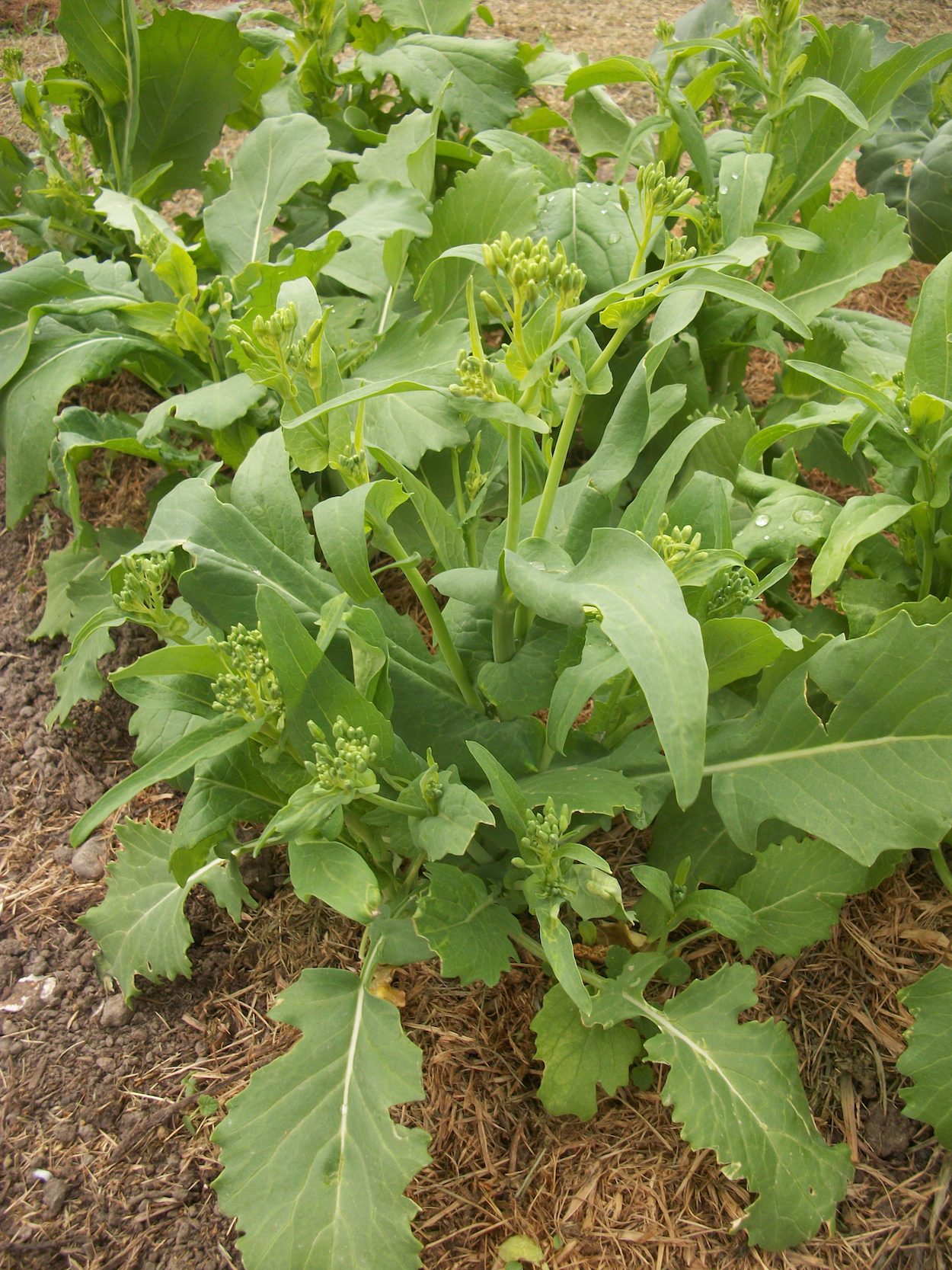
100_3940 smOne of my favourite spring vegetables is broccoli raab. Not so much because it is the best vegetable, but because it produces so early, before any of the other brassicas are ready.

Broccoli raab looks like mini-broccoli, though it is more closely related to turnip than to broccoli. Broccoli raab is eaten “lock, stock and barrel”—leaves, stem and flower buds. As one of the earliest spring vegetables at our house, it gets used in everything from stir fry to pasta to pizza to gratins.

It is more bitter and pungent than broccoli (more like turnip greens), and a little goes a long way in a dish. I plant just a small amount of broccoli raab, and by the time the other brassicas are producing, it has bolted and is ready to pull out. A perfect little filler crop that adds kick to springtime meals!

Orange cake

100_3918 cropsmI made a new cake today. It was supposed to be the Orange Cake from King Arthur Flour’s Whole Grain Baking. But my husband had just used the last of the whole wheat flour for bread, and since I was going to change the type of flour in the recipe, I made a few other changes…

The result was lovely! Crunchy on the outside and divinely soft inside. It was difficult not to just sit down and eat several slices all at once!

So here’s the recipe in all its untested glory.

2 ½ cups barley flour
1 cup all-purpose flour
2 tsp baking powder
¼ tsp salt
1 cup (250g) butter, softened
1 ¼ cup sugar
4 eggs
1 cup milk
Zested rind of 1 orange

Mix together the flours, baking powder and salt in a medium bowl. Cream the butter and sugar until light and fluffy (this will take about 5 minutes). Beat in the eggs, one at a time. Add the flour mixture alternately with the milk. Stir in the orange zest.

Spoon batter into two greased and floured 9 x 5-inch loaf pans. Bake about 1 hour at 180°C (350°F). Remove the pans from the oven and allow to cool for about 5 minutes before turning out onto a rack. Place the rack over a large baking tray, and brush the glaze (see below) over the tops, bottom, and sides of the hot loaves, allowing it to soak in. Cool fully before serving.

Orange glaze:

½ orange juice
zested rind of 1 orange
¾ cup sugar

Put all glaze ingredients into a heat proof bowl and microwave for 1 minute. Stir until the sugar is dissolved. Brush onto cake.

**The crust on these loaves is fabulous! Next time I make these I’m going to bake them in mini-loaf pans in order to increase the crust to interior ratio! They’d probably also be great as cupcakes!

Watercress

100_3897 smI probably first read The Trumpet of the Swan, by E.B. White when I was 7 years old. I remember being enthralled by the book, and ever since, I have loved the song, Beautiful Dreamer, which the mute swan Louis plays to woo his lady friend, Serena. I don’t remember much else about the book, but for some reason I vividly remember that Louis and 11-year-old Sam eat watercress sandwiches.

This was the only experience I ever had with watercress until we grew it ourselves (though thinking back, I’m pretty sure it grew in the neighbour’s stream, growing up, but I didn’t know what it was at the time).

Now, I’m very impressed that Sam ate watercress sandwiches. I can’t imagine many 11-year-olds who would do that.

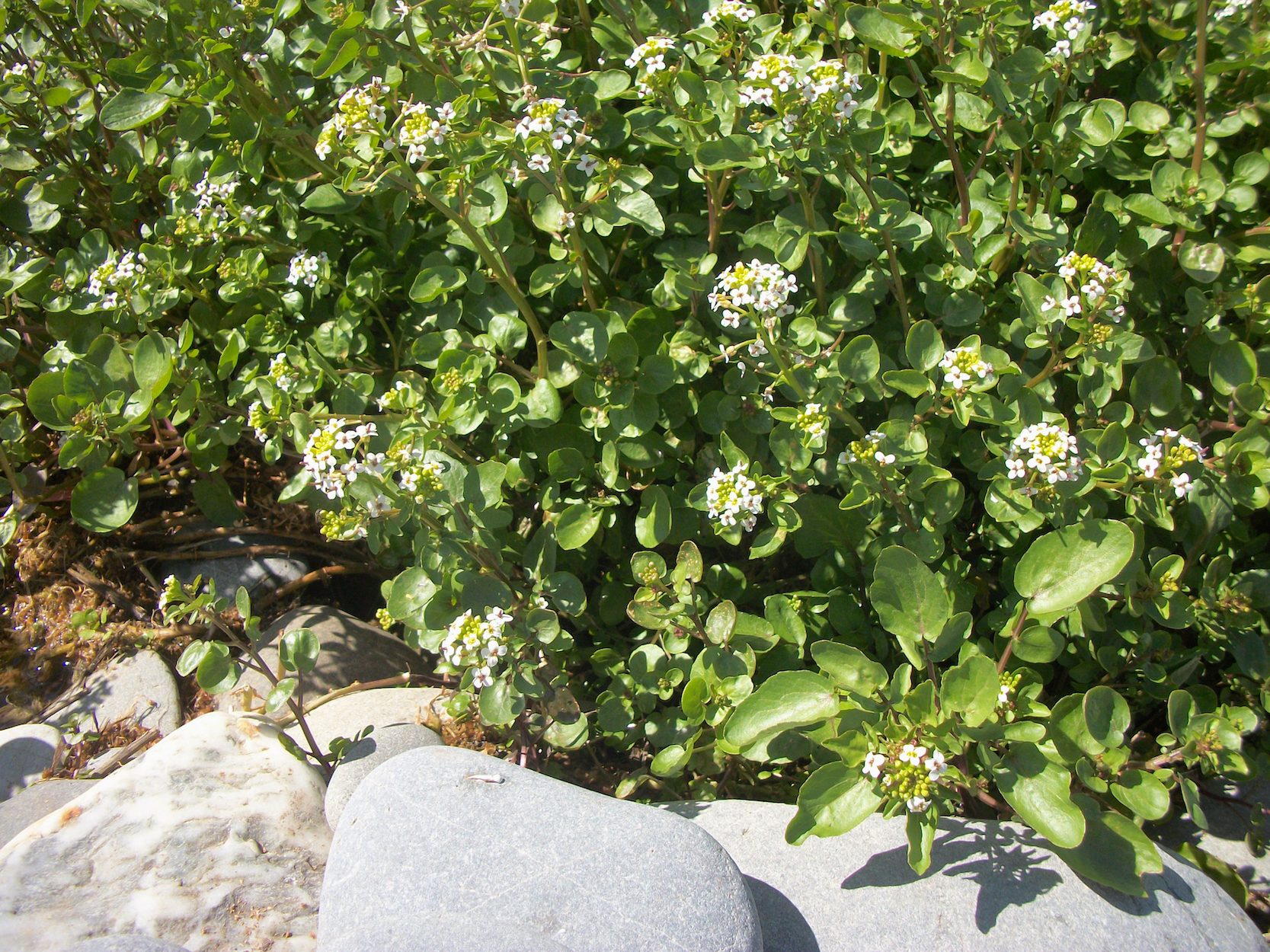
Watercress is in the mustard family, and it’s glossy leaves are sharply bitter, like a mixture of arugula and radishes. They are delicious, but challenging for the palate of a child. I enjoy them on a cheese sandwich (and my 11-year-old does, too), but I’m not sure I would want an entire sandwich of nothing but watercress.

Still, watercress is a great way to spark up salads and sandwiches, and I look forward to trying it in soups and stir-fries as well.

Salad Burnet

100_3894 smSanguisorba minor, salad burnet, began primarily as a medicinal herb. Sanguisorba means “blood absorber”, and it was thought to stanch the flow of blood. Later, it was also used as a cure for diarrhoea, digestive disorders, rheumatism and gout. It was also thought to protect against plague.

Sadly, salad burnet’s real virtues are more modest and culinary in nature. Its toothy, slightly bitter, cucumber-flavoured leaves make a delicious addition to salads, herbed butters, and cheeses. We use salad burnet heavily in the spring, when the fresh new growth is less bitter, and before the cucumbers are in—a springtime taste of summer in our salads.

But it’s virtues aren’t confined to the kitchen. Perennial, drought tolerant, and pretty, too, salad burnet is a perfect addition to your landscaping.

Salad Spinner

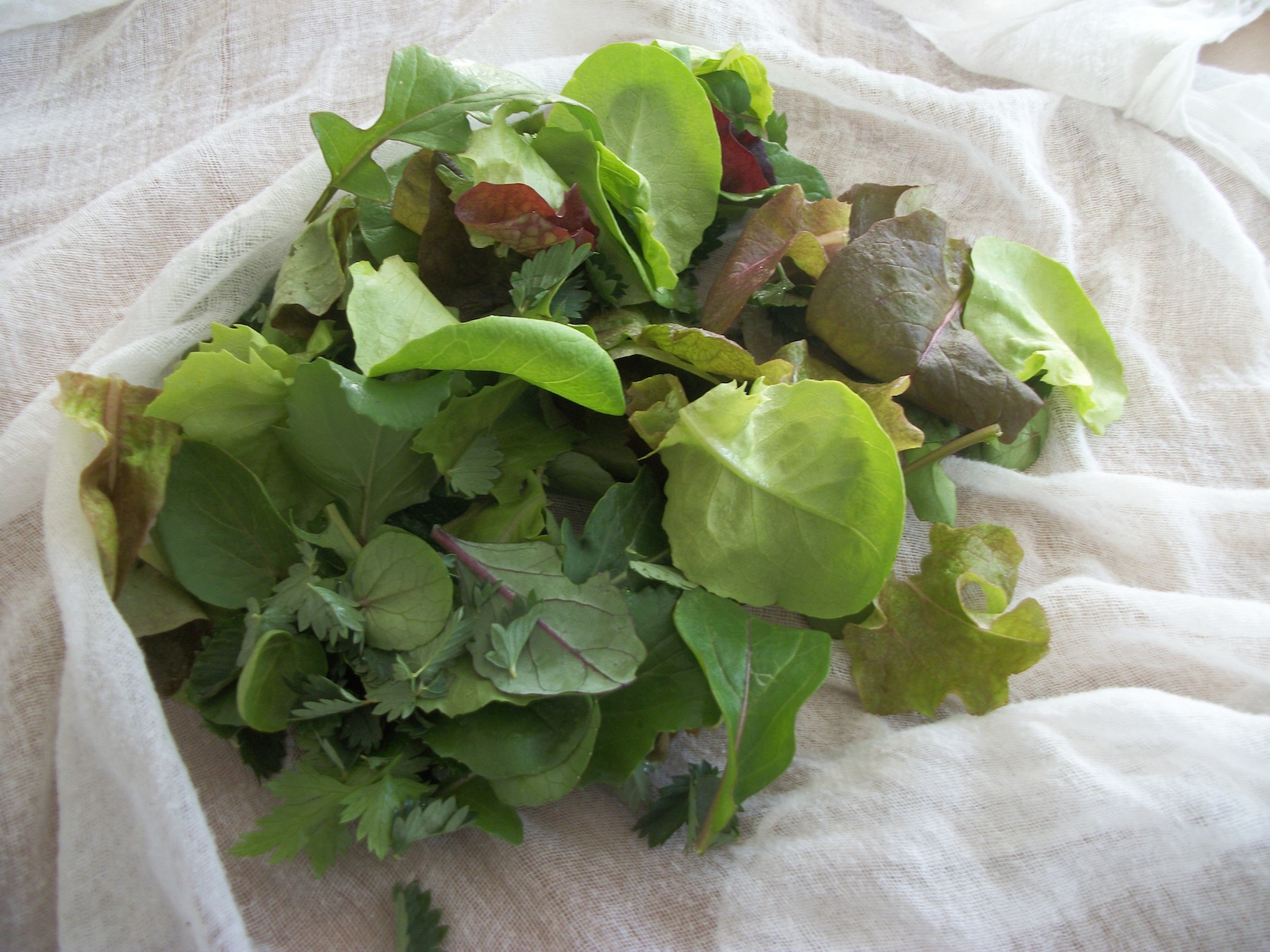
100_3890 smWe had our first salad from the new, spring-planted lettuces yesterday—a carnival of colours and flavours!

It got me thinking about salad, and the preparation of salad.

Which of course, led me to think about salad spinners.

Now, I don’t own a TV, so I don’t know if there are still salad spinner commercials, but I remember back in the 1980s when they were all the rage—fancy machines that spun your salad leaves dry. A quick Google search tells me that salad spinners are still out there, though whether they rank as such a gourmet sort of tool anymore or not, I have no idea.

Growing up, I never considered the water on my lettuce leaves. You washed it, gave it a good shake, and that was that.

But when I married, I found my husband prefers dry lettuce. I wasn’t about to buy a salad spinner, and I wasn’t going to put my lettuce in the spin cycle of the washing machine, as I’ve heard some people do (What?!).

Instead, we use a high-tech, oh-so-fancy way of spinning our salad.

Remember when you were a kid and you learned the trick where you swing a bucket full of water around without spilling a drop? Now, put your salad greens in a tea towel (I use my cheese cloths—they’re perfect!), hold onto the corners, step outside, and do the same. A few good twirls, and your salad greens are nicely dried.

Best of all, the kids LOVE doing it, especially if they get to spray a sibling with the water as they whip the towel around. One more dinner preparation task Mum doesn’t have to do!

Out of the Comfort Zone—Lavender Cupcakes

100_3879 cropsmAs with everything in life, the only way to grow is to move outside your comfort zone, to push yourself beyond your normal boundaries.

In that spirit, several months ago I photocopied a recipe for lavender cupcakes from a book I checked out of the library.

I had to wait until the lavender was flowering to make them, but today was the day.

I don’t generally like floral flavours, and lavender is an incredibly strong one. The only way I normally use lavender is as a small component of a fresh herb mixture I put on the outside of some of my cheeses. I’ve never used it as the only flavouring for anything.

I was intrigued, but dubious. Would the cupcakes even be edible? Who wants to munch on a lavender flower? Eaten directly, lavender flowers have an overpowering bitter resinous taste.

But then, so does rosemary, and I was won over to rosemary shortbread when my mother-in-law made it for us a few years ago.

I vowed to remain open-minded.

The cupcakes came out of the oven, and I iced them with lavender icing.

With some trepidation, we tried them.

“Peculiar,” said my daughter, a thoughtful look on her face. “Yes. Not bad, just…peculiar.”

I agree. This isn’t a recipe I will necessarily make again, but I’m glad I did it, at least once.