Bountiful Berries–a Summer Celebration

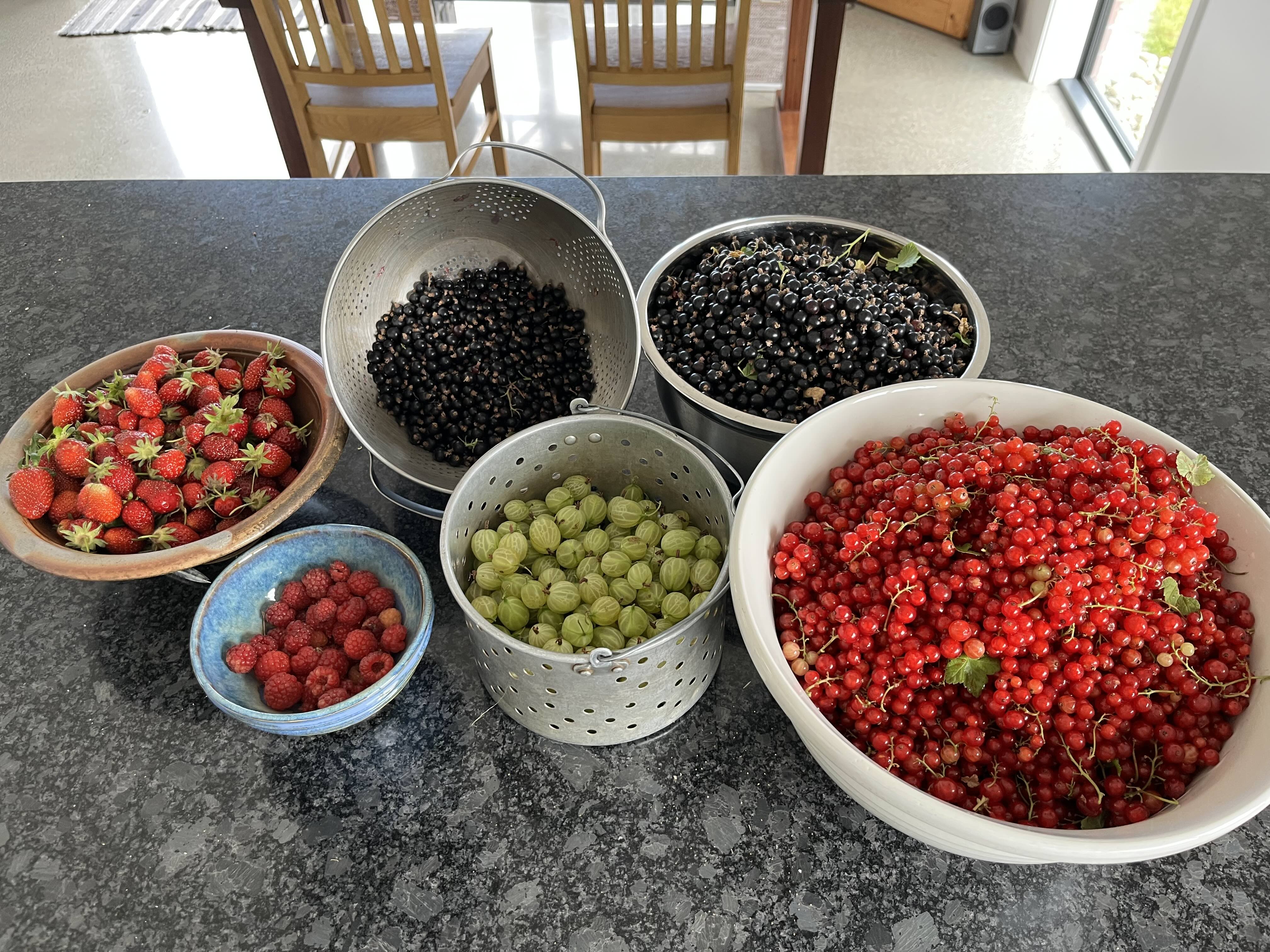
In the past two weeks, we have picked and processed (or eaten) 26.6 kg of fruit. Mostly strawberries, raspberries, black currants, red currants and gooseberries, but also a few cherries and boysenberries.

I have run out of half-pint sized jam jars, which is fine, because when you’re making jam with over 6 kg of fruit, you really want to put it in larger jars for the sake of your own sanity. The freezer, too, is beginning to fill with fruit, some of which will be taken out through the summer to combine with later crops in chutneys.

Still, the fruit keeps coming. Honestly, you can hardly tell I’ve picked currants at all. The next two weeks will likely see me pick at least another 20 kg of fruit.

And then it will be largely over. Christmas usually marks the end of the insane early summer harvest. Heading into the new year, the blueberries will begin to ripen, and raspberries, strawberries and boysenberries will continue to come in. But the obscene overabundance of berries will be over for the year. 

Although it is exhausting, there’s something magical about the December berry rush. Eating your way through the garden, having fresh berries on your breakfast cereal every morning, cramming your lunch box with fruit. Making trifle and fresh fruit ice creams. And the days are long—you can fit in a lot of picking and processing of fruit. It’s not unusual for me to be finishing a batch of jam at 10 pm. After all, it’s still light out, surely there’s time to get it done today. Never mind the clock, or the fact that it’s light before 5 am, and I’ll be springing out of bed at first light to pick more fruit before the day heats up.

Can this much work be a celebration? It feels like it. I weed, water, mulch, fertilise and prune all year, and then for a month the berries pour out their thanks. The work to gather it up is full of joy. By the end of the month, I’ve stored berries for the year. In the dark days of June, I’ll be able to make black currant tarts and enjoy the sparkling taste of the summer solstice. 

Holiday Traditions

At this time of year, I love chatting with others about their holiday traditions. Every family’s traditions are unique—a combination of family history, ancestry, and geography all mashed together with individual preferences.

Trifle has mostly replaced cookies as my Christmas baking of choice.

And they evolve over time. The Christmas traditions I grew up with are not the ones I practise today. They took a dramatic shift twenty years ago when we moved to New Zealand from Minnesota—northern hemisphere traditions make no seasonal sense here, where Christmas and the summer school holidays coincide.

So my husband and I adapted. Like most Kiwis, our holidays involve travel—we have a tradition of a family backpacking trip the week before Christmas. I always carry a little stuffed reindeer, strapped to the top of my pack, as our holiday hike mascot. We pack Christmas cookies, and usually include one ‘fancy’ camp meal (especially if the tramp extends over Christmas Day).

Our Christmas tree isn’t a pine tree—a cut tree would last about three minutes in the summer heat and wind. Instead, we make our ‘tree’ each year out of whatever materials we have on hand. Making, then decorating the tree is usually a whole-family event.

The LEGO tree of 2019 was one of my favourites, with a motor powering moving parts.

Our big Christmas meal (if we’re not on the trail) is on Christmas Eve—calzones full of vegetables from the garden. We make extras, and enjoy the leftovers for lunch on Christmas Day.

The big day is meant to be a day of relaxation for everyone, so Christmas breakfast sticky buns are made the night before, and rise in the fridge overnight, to be popped into the oven in the morning. After a lunch of leftover calzones, dinner is a big salad accompanied by cheese and bread. Simple as. No slaving in the kitchen on a beautiful summer day.

Boxing Day is beach day for us—along with most of the population of New Zealand—a day to relax with the family and celebrate summertime.

It’s a long way from the hot cocoa, turkey dinners, and carolling of Christmases in my youth, but our traditions do what all good holiday traditions do—they provide opportunities to spend time with family while enjoying seasonal delights.

So happy holidays to you all, and may you enjoy your own traditions, whatever they are! Add a comment with your own traditions!

2024 Garden Stocktake

Autumn is well underway, so it’s time to take stock of the summer season’s garden successes and failures.

Strawberry popcorn

The biggest success this past season was in the soil. All winter last year, I incorporated fresh cow manure and composted horse manure into the garden beds. Every single bed got one or the other, in addition to my own compost in the spring. And finally my efforts to improve the soil over the past four years have begun to show. There’s still a long way to go, and a lot more compost and manure to haul, but this summer most of my crops grew well, and nutrient deficiencies weren’t obvious until late in the season. A huge improvement over previous years.

Particularly nice crops this year included:

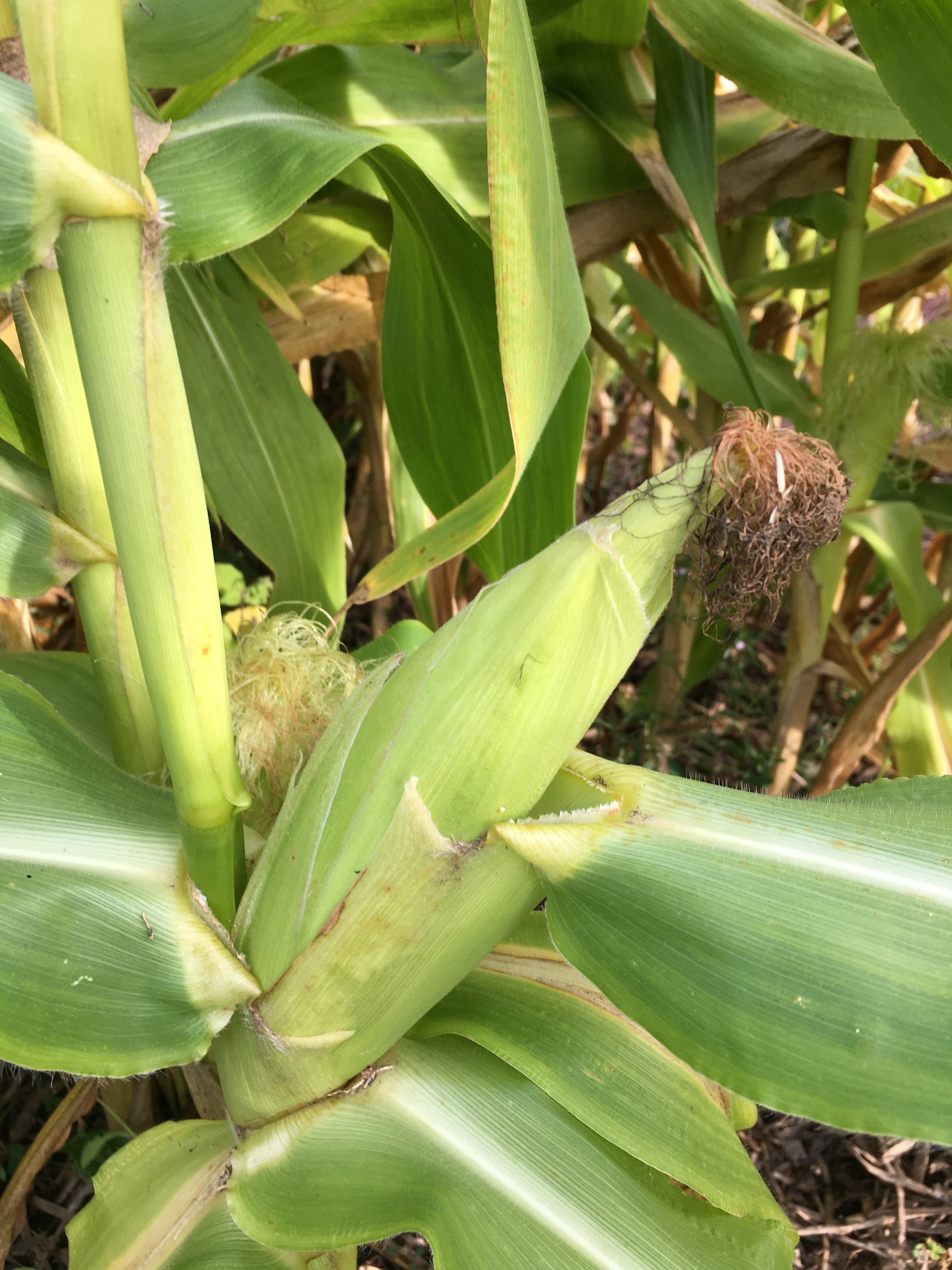
  • Strawberry popcorn—This was my first year to plant this corn. I admit I was dubious when I opened the rather expensive packet of seed to find only 15 seeds. It was clear the corn was marketed as a fun thing for kids to grow. However, every seed germinated, and the plants grew to well over 2 metres tall, dwarfing all the other varieties of corn I grew. Each plant yielded two large ears (much larger than the photo on the packet indicated they would be—very un-strawberry-like), and a few even had a third, smaller ear. I was thoroughly impressed by how much popcorn so few plants produced. Of course, the proof of the variety’s worth will be when we pop it. The Glass Gem corn I love so much is marketed as a pop corn, but we’ve found the popping to be poor. It will be a few months before we know if the Strawberry popcorn was worth it.
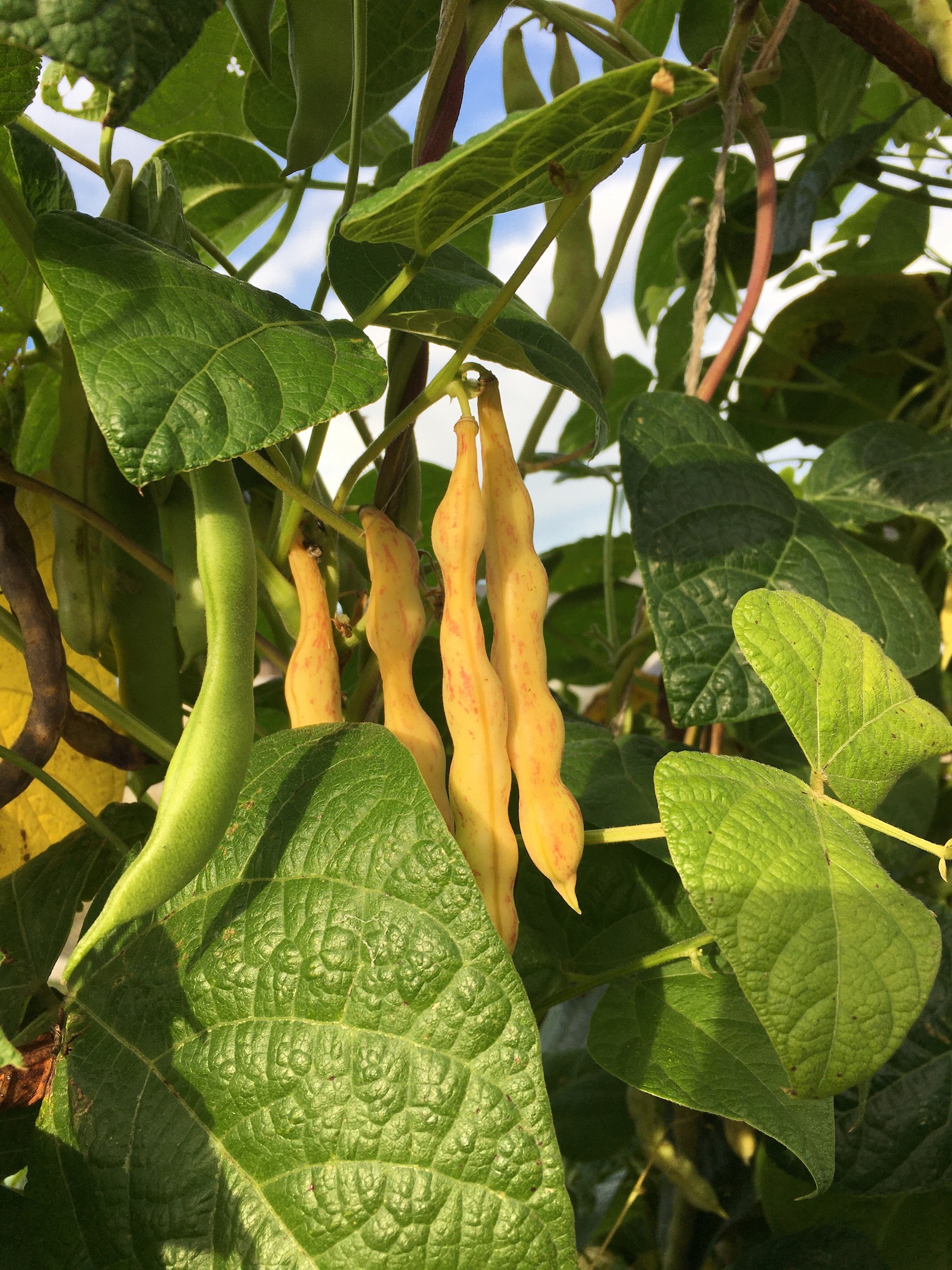
  • Dwarf bean Xera Select—I had decided not to plant dwarf green beans anymore, because the runners produced more, better beans over a longer season. But I still had seeds for a few varieties, so I planted them, thinking I simply wouldn’t buy more. But Xera Select grew beautifully—long, uniform pods, and lots of them. I might just have to plant them again next year.
  • Bicolour sweetcorn—This year we managed to have side-by-side comparisons of the flavour of two varieties of sweetcorn, and we found Bicolour to be much sweeter than Florida Supersweet. The plants didn’t seem quite so resistant to drought, though, so I might plant both varieties again next year. They were both good and produced good crops despite water and nutrient stress.
  • Cherry tomato Rosella—Oh. My. God. This is possibly my new favourite tomato. This black cherry tomato has so much flavour in each little fruit, it’s addictive. Definitely one to plant again!
  • Cherry tomato Cherry Berry—I normally stick with heirloom tomatoes, but this F1 hybrid was amazing this year—excellent flavour, and SO MANY FRUITS! Outstanding value for the space.
  • Tomato Black Brandywine—Brandywine flavour in a dusky tomato. These ripened earlier than the Brandywine Pink, which was a bonus.
  • Tomato Black Oxheart—Big, fleshy, heart-shaped fruits. These were a winner in my book for sauces and drying.
  • Melon Topaz—Honeydew in texture, with flesh the colour of a cantelope, and a flavour somewhere in between the two. These were delicious. Definitely one to plant again.

Crops that were a bit meh:

  • Tomato Costoluto Fiorentino—These tomatoes are interesting, but the fruits were smallish, and so ridgy they were a pain to deal with in the kitchen. The flavour was pretty average. At some point, I simply stopped picking them.
  • Pea Shiraz—I was excited to plant a purple snow pea this year, but the variety disappointed. A poor yield of unattractive pods that matured quickly and weren’t terribly tasty. Back to the standard snow pea for me next year.

Absolute disasters:

  • All the carrots—This year’s carrot disaster had nothing to do with the varieties I planted, and everything to do with the slugs that ate nearly all seeds, and then the birds that uprooted the few plants that managed to evade the slugs. I planted carrots three times, and ended up harvesting about 6 carrots.
  • All the potatoes—As with the carrots, the near complete failure of the potatoes had nothing to do with the plants and everything to do with pests. The rats, who had a field day in the garden all summer, tunnelled down the row of potatoes and ate every tuber. I managed to snatch a few out of their greedy jaws, but only a few.

If not for the pests, it would have been a spectacular year in the garden. Even so, nearly every preserving jar is full, the freezer is at capacity, and I’m still bringing in the pumpkins and dry beans, so I can’t really complain.

The well stocked pantry

Summer Soup 2024

Making and canning vegetable soup used to be a whole family activity, with the kids pitching in from a young age, picking and chopping vegetables alongside my husband and me. My husband would cook the soup while the kids and I washed dishes, and then I would can (bottle) it up.

We called it Summer Soup, because we made it at the height of the summer vegetable season (which ironically always falls in early autumn). On the cold rainy nights winter we could open a jar and enjoy a bowl of summer. 

When the kids were young, they delighted in recounting which vegetables they chopped, proud of their part in feeding the family. These days, making summer soup is a mostly solitary activity for me, the kids being all grown up. It hasn’t stopped me from making a vast quantity of soup. Last Sunday I designated as Summer Soup day because I had heaps of tomatoes, green beans, sweet corn, zucchini, and other vegetables to put in it.

Because it was Sunday, I started off at 5.30 am by making muffins for breakfast. While the muffins baked, I began chopping vegetables …

My husband had planned on baking bread on Sunday, but unfortunately he woke with a terrible cold that morning. He’d started his sourdough sponge the night before, so with instructions from him, I made up his bread dough after breakfast and set it to rise as I continued to chop vegetables.

The mixing bowls began to fill up in the kitchen as the morning progressed. After several hours and a few trips to the garden to pick more vegetables and dump scraps on the compost pile, I took a short break from chopping to divide the bread dough for loaves. Thankfully, my husband felt well enough at this point to form the loaves and get them started on their second rising, because I really wanted to finish chopping vegetables by lunchtime.

I finished the final chopping shortly after the focaccia came out of the oven. We sat down to enjoy fresh focaccia for lunch.

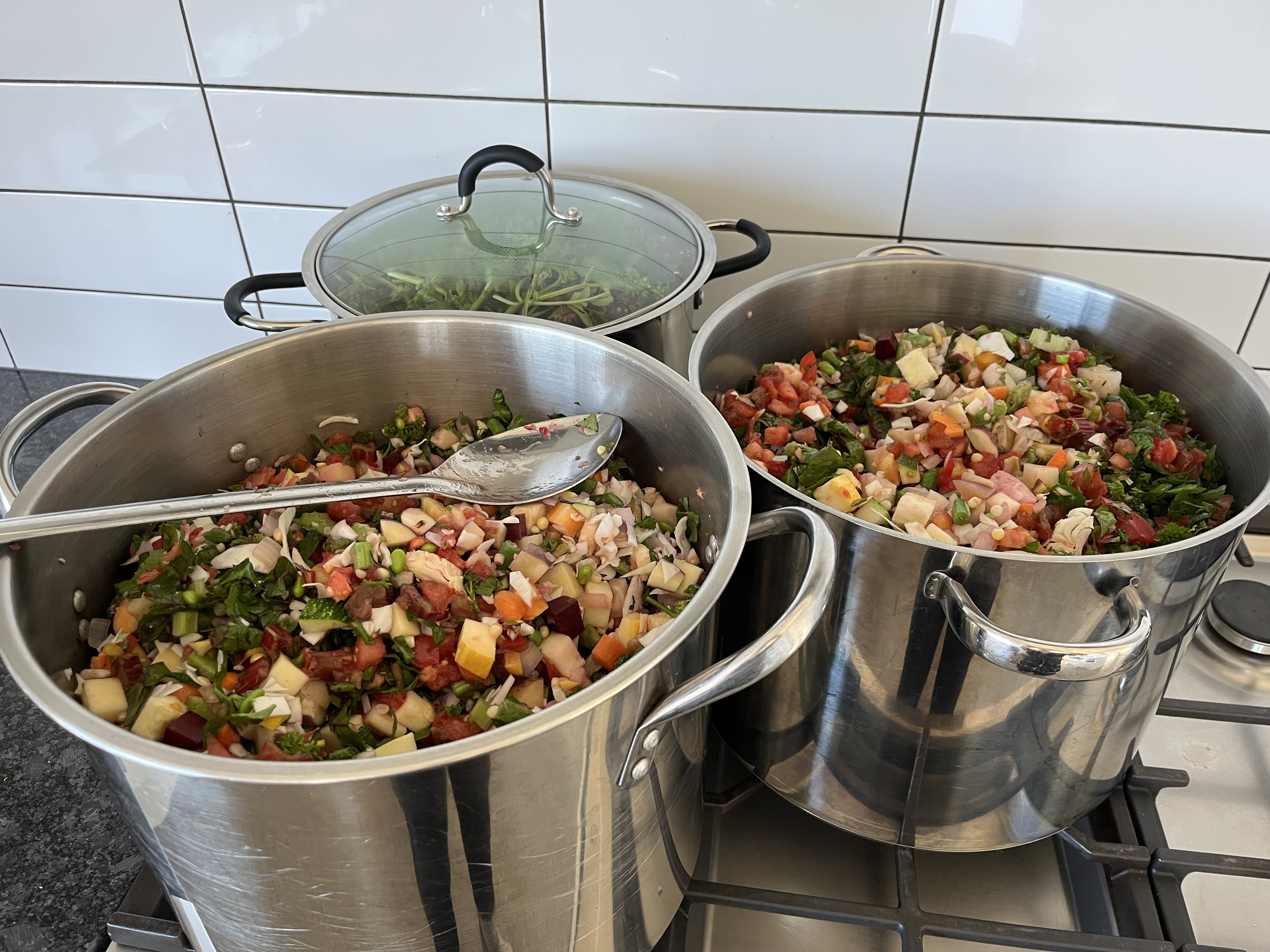
My break was short, because after lunch I began processing all those chopped vegetables. It was clear I wasn’t going to be able to fit everything into one pot, so I pulled out both my 20-litre stock pots and divided the vegetables between them. While the soup heated up, I prepared my jars and the pressure canner. I also filled my 12-litre stock pot with vegetable scraps and water and set it on the stove to simmer for a few hours for vegetable stock.

Much of the time commitment in making and canning vegetable soup is in the canning process. Each batch of seven jars has to be processed for an hour and 15 minutes, and then there’s the waiting time while the canner cools down enough to remove the jars before putting in the next batch.

While I was waiting for the canner to do its thing, I started in on the apples that needed to be processed. I peeled and sliced a mountain of apples. Once I’d emptied the soup out of one of the 20-litre pots, I refilled it with apple slices and cooked them up into apple pie filling—enough for three generously filled pies. The pie filling went into the freezer. 

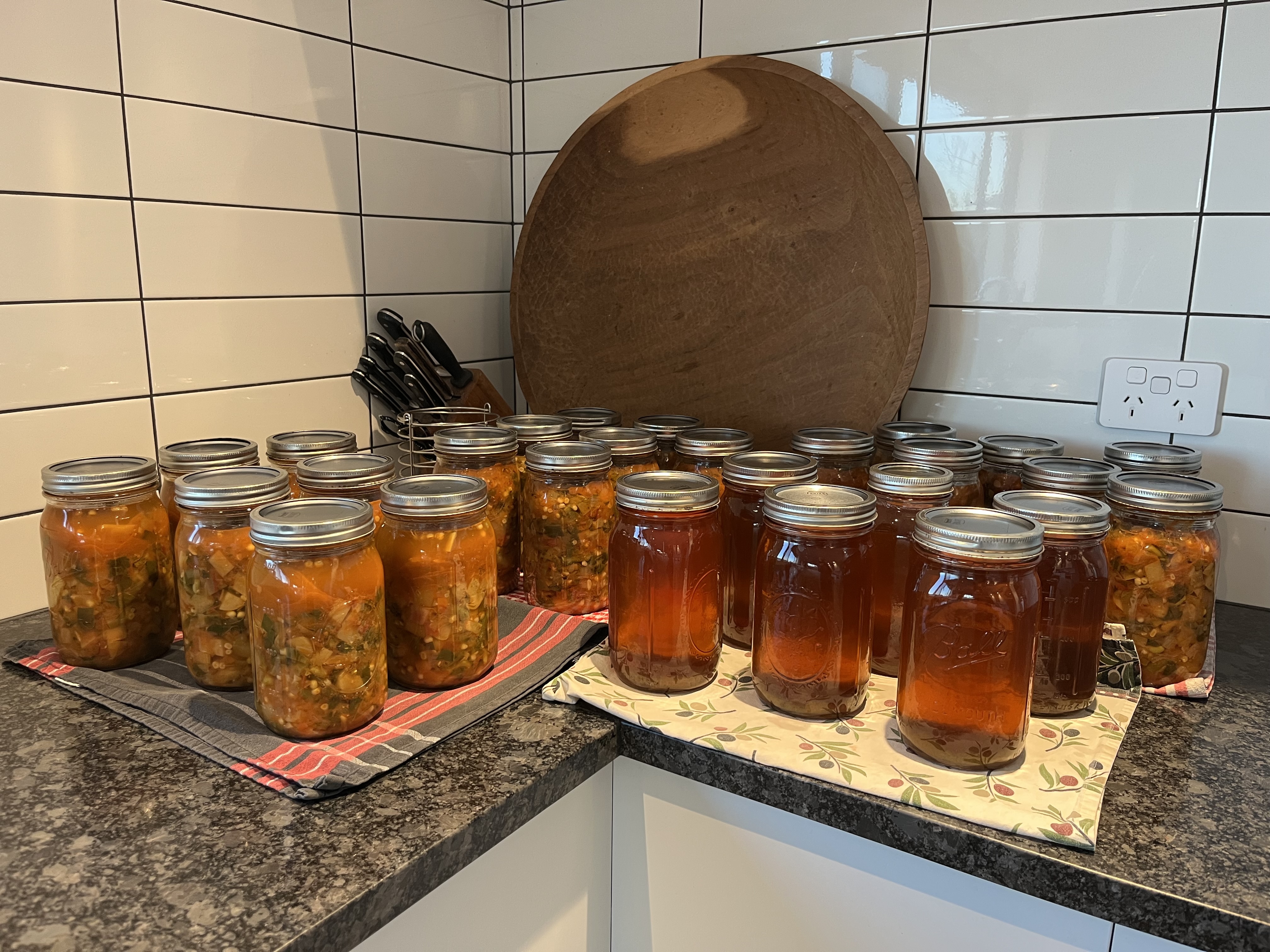
The soup seemed to never end. Even after separating off two meals worth of soup for eating this week, I ran three full canner loads (21 quarts) of soup and one full load (7 quarts) of stock. The last jars came out of the canner at 9.15 pm.

I’m glad I only make summer soup once a year, but I’m thrilled to have all that summery goodness squirrelled away in the pantry. Bring on the rain and cold of winter—I can already taste the soup (followed by a slice of apple pie, of course!).

Summer Heat, Autumnal Vibes

It’s been hot here lately, with blue skies and temperatures in the upper 20s most days—summer at its height.

But when I wake at five in the morning it is dark, and there is no working in the garden until nine in the evening anymore, unless it’s by head torch. The days are growing shorter, and there’s a feel to the air that speaks of the autumn to come. 

The cricket chorus has grown over the past few days—the summer’s crop of insects maturing to mate and lay eggs before winter. The early apples have been harvested, and pumpkins are swelling on the vines. I harvested most of my dry beans last week, too. 

Of course the summer crops—tomatoes, zucchini, eggplants, peppers, and beans—are still going strong, and will be for a while.But the seasons are turning.

I love it.

My husband and I lived for two and a half years in Panama back in the early 1990s, so we got to experience living almost on the equator. The daily temperature variation in Panama is greater than the yearly variation, and the day length variation is virtually imperceptible. The only seasonality is in rainfall—it rains from mid-March to mid-December, then stops entirely until mid-March again.

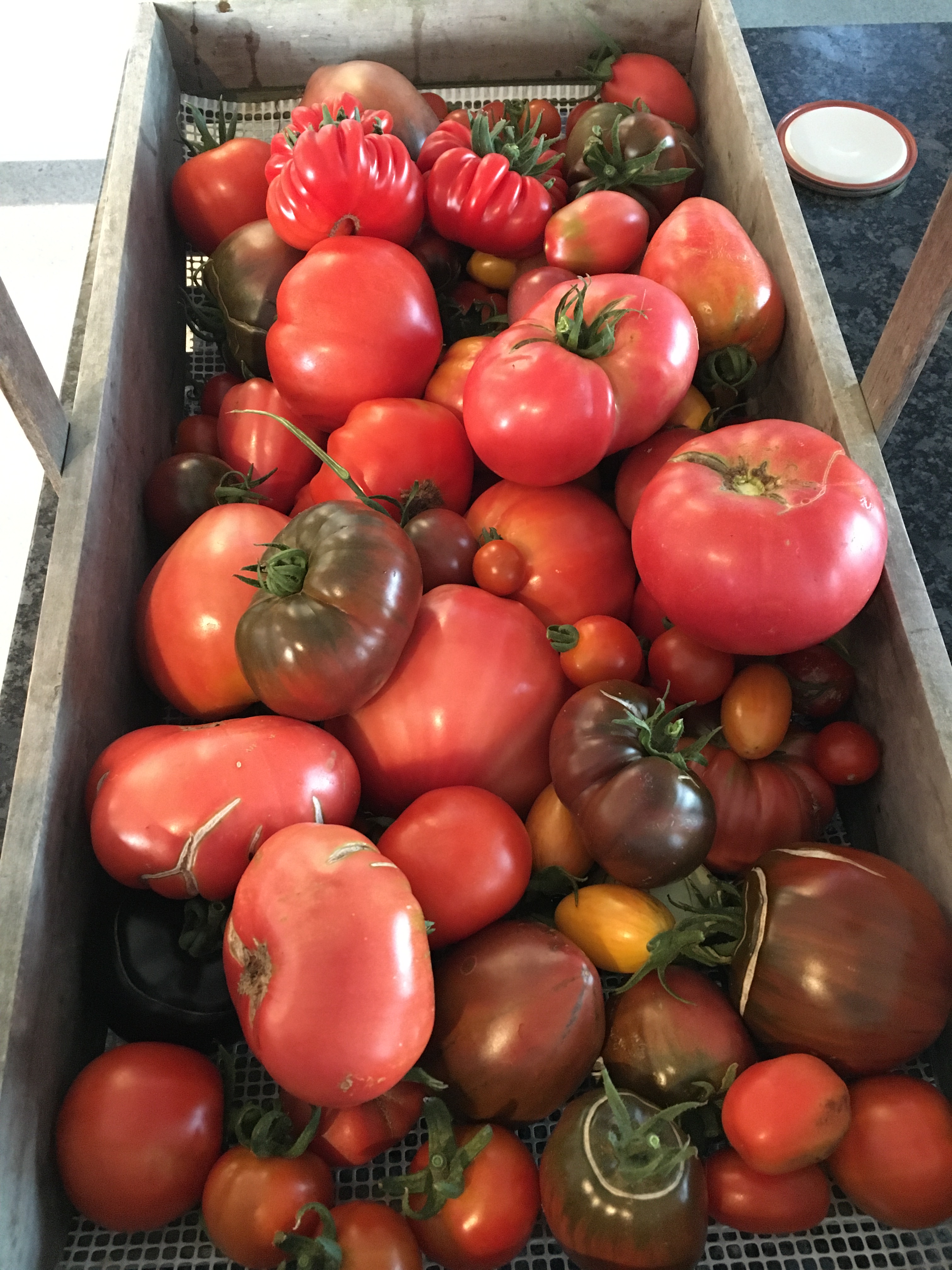
Tomato sauce made from yesterday’s harvest

After living in Pennsylvania, Michigan and Ohio for the first 22 years of my live, Panama was … well … boring from a seasonal perspective. I missed the annual markers of the Earth’s progress around the sun. Of course we had heat, but I missed the long days and drawn out sunsets of a high-latitude summer. In Panama, the sun leaps into the sky in the morning and drops like a stone below the horizon in the evening, and it does so with such precision and consistency, you can practically set your watch to it.

I missed the cold of winter, the dark days and long nights perfect for curling up with a book or sitting by the fire (though to be fair, Panama nights sometimes seemed long, because we had no electricity, one small table to sit at, and only a lopsided wooden chair and a tree stump to serve as seating).

I missed spring, for its slow unfurling of green, rising from the herbs on the forest floor to the tops of the trees as the season progressed. I missed autumn for its splash of yellows, oranges, and reds, the rime of frost on crisp mornings. I missed the bite of icy wind, the smell of snow.

New Zealand doesn’t get the extremes of seasonality I enjoyed in the northern United States. Our climate is heavily moderated by the vast Pacific Ocean in which we sit. And our native plants are largely evergreen, so green is the dominant colour all year round. But where I live, at a similar latitude to St. Paul, Minnesota (but of course on the other side of the equator), we have decent seasonality, and I love the changes throughout the year. People often ask what my favourite season is, and I have to say it’s all of them. Each season has something new and exciting to offer, and there’s no point in mourning the loss of long summer evenings, because they’ll be back. Instead, I welcome the short days, the excuse step away from the garden in the evenings. I look forward to bringing in the autumn harvest and filling the pantry with the fruits of summer. 

So bring on the shorter days. Variety is the spice of life, after all—time for some spice.

January in the Garden

January is quite possibly the best month in the garden. Seemingly overnight, the vegetables double in size. Summer crops begin ripening. Weed growth slows, and the vegetables are large enough to compete with all but the most aggressive weeds. Garden work switches from planting and weeding to picking and processing. The frenzy of December berry crops is over, and the cupboard is bursting with jam.

January is a time to enjoy the fruits of my labour. Not that there isn’t work to do, but the rewards of all my work are beginning to outweigh the effort. It’s a great way to start the new year.

Another great way to start the year is with the giant plant tags Santa Claus made me for Christmas. They’re not the most efficient markers for the garden, but they’re adorable and add a touch of whimsy.

With luck (and a lot of hard work by my husband), by the end of January, I’ll also have a nice new garden shed for storing tools and potting up plants. There will be a bit of whimsy in the shed, as well, inspired by a leaded glass window we found for it. I can’t wait to have that bit of the garden plan complete and functional!

I hope your January is full of things to enjoy and to look forward to.

Harvest Days

My hands smell like onions. My fingernails are stained purple. The walls and cabinetry in the kitchen are festooned with colourful splatters and drips. The floor is sticky underfoot.

It must be harvest time.

The garden gushes vegetables in late summer, and the shorter days warn that it’s time to start preserving the bounty before it’s gone.

One of my favourite ways to save summer’s vegetables is in summer soup (which I’ve blogged about nearly every year since 2015). Because soup uses a bit of everything, there’s no need to have vast quantities of any one vegetable. And it doesn’t matter if, say, the sweet peppers bombed or there’s an overabundance of sweet corn. Soup accepts what you’ve got and returns lovely meals all packaged and ready to go on those winter evenings when you come home late from work. It is both forgiving and giving.

So it’s worth a long day in the kitchen to make and bottle (can) a big vat of the stuff.

And while you’re at it, it’s super easy to toss carrot peels, corn cobs, celery tops, and other ‘waste’ from soup making into a large pot to simmer for stock. Run the stock through the canner after the soup, and you’ve got delicious summer flavouring for winter risottos and stews.

So I may have spent fourteen hours in the kitchen on Saturday, but at the end of the day, I had fourteen quarts of soup and six quarts of stock (and another four quarts of pickled onions, because you know, if you’re going to spend all day in the kitchen, you may as well make the most of it.

In the coming weeks, I’ll bring in the pumpkins and potatoes, freeze sweet corn, and string hot peppers for drying. The kitchen will be messy, and I’ll have too much to get done.

But when it’s all over, I’ll be able to relax, at least for a while, until the winter crops need to be weeded …

Enjoying the Shoulder Season

sunflowers
Summer sunflowers are still in full swing.

The end of February marks the end of official summer in New Zealand. The shift to autumn is full of ups and downs. The first half of this week was as hot as it gets here, with temperatures in the low 30s (around 90℉). On Tuesday, it was hot enough that my husband and I headed to the beach for a swim after work, and I didn’t even need my wetsuit—the water and the air were both warm. 

But on Wednesday, a front came through, bringing rain and a decidedly autumnal chill. By Thursday, the porcini were sprouting—a sure sign of autumn.

Of course, also on Thursday we harvested plenty of summer vegetables from the garden—zucchini, eggplant, tomatoes, peppers. The transitions between seasons are drawn out, messy affairs. The weather forecast for next week includes more summery weather intermixed with the rain and chill of autumn.

Autumn mushrooms are coming on.

So for now, we get to enjoy the delights of both seasons, harvesting summer’s bounty amidst the treats autumn brings. This weekend, I’ll plant out my winter crops, giving them time to establish during the shoulder season, before summer’s warmth leaves entirely. I’ll also harvest the soy beans and bottle up some summer soup before the vegetables are gone. Summer’s not over yet, but it’s time to start packing up. 

The Grumbling Gardener

Like every serious gardener I know, I complain a lot.

The weather’s too hot and dry. It’s too cold and wet.

The winter was too cold. The winter was too mild.

The frost came too early, it came too late.

Aphids have killed this, a fungus has stunted that.

Poor germination, poor pollination, nitrogen deficiency, weed growth, pest birds … I can always find something about the garden that’s not right. Because there is so much that’s out of my control, it can’t possibly all go right.

And like all good gardeners, I hedge my bets.

Sixteen varieties of tomato, nine types of beans, six varieties of pumpkin, four different kinds of broccoli, and three different eggplants is betting on at least one or more of those varieties not surviving, not producing anything. Twelve zucchini plants, twenty-one peppers, and fifty-nine tomato plants is betting that some will die, fruits will be eaten by the birds, and many will underproduce for one reason or another.

So today, after grumbling about dry soil, nutrient-deprived plants and destructive blackbirds, I returned from the garden with more than we could eat, as I did yesterday and the day before, and the day before that. I’m awash in garden largess, in spite of the birds, the aphids, the weather.

I’ve largely ignored rising food costs and the current egg shortage crisis. I don’t worry about what we’ll eat the next time we contract Covid and have to isolate. I plan my main picking for weekdays, when excess can be given away at work. I bottle, dry and freeze as much as I can, squirreling away the extra for the winter (hedging my bets that the winter crops won’t germinate, will be eaten by birds, will be flooded out …).

It is the precarious wealth of the garden, and January is the time when my grumbling is often silenced by the next mouthful of delicious vegetables. I can occasionally walk through the garden in January and be overwhelmed by the abundance.

Of course, once I get over that, I’m back to my grumbling. I mean, just look at this photo—the yellowed corn, the stunted pumpkins, the prematurely senescing potatoes …

Black Currant Icing

bowl of black currant icing

I made chocolate cupcakes yesterday and wanted to make use of some of the last of the fresh back currants in them. Instead of tossing a handful of black currants into the batter (which would have been lovely), I used the fruit to make a black currant icing—tart, sweet, and shockingly pink! 

You could do this with frozen currants, too, and it’s not difficult. The result is worth the bit of extra work.

100 g softened butter
3/4 cup fresh black currants
1 cup icing sugar

Place the black currants in a sauce pan and cook until soft—3-5 minutes. Press them through a sieve to remove seeds and skins. Set the puree aside to cool to room temperature.

Beat the butter until fluffy. Add 3 tablespoons of the black currant puree and beat until uniformly mixed. Sift the sugar over the butter mixture and beat until smooth. Adjust by adding more sugar or puree until the icing is spreading consistency.