Making the Most of It

August adventure day at Rakaia Gorge

August is always a month of frustration for me. On the one hand, I’m excited, because spring planting starts, and though the weather might not be the best, there is the promise of spring on its way.

But with the promise of spring on its way is the threat of winter being over. I look at the gardening tasks ahead, feeling overwhelmed and wanting to get cracking on them. But I look back at winter and feel I haven’t accomplished nearly enough while the cold weather lasted. All those sewing projects that I meant to get to, that extra writing I had hoped to do in the long dark evenings, the photographs I meant to print and put into the family photo album…August reminds me that the time for finishing indoor projects is running short.

It’s not that I didn’t do anything over winter. I was busy sewing, knitting, and writing. But there simply aren’t enough winter days for me to accomplish everything on the to-do list. When August comes round, I have to resign myself to not getting things done. I have to prioritise. That photo album? It’s been three years since I’ve put a picture in it. Looks like it’ll have to wait one more year. The jacket I wanted to make for myself will take backseat to the one my son has asked for–he needs it more. The pair of socks I started knitting last winter…well, I still have hope I’ll finish that project.

Half of me is ready for spring. Eager for warm sunny days to whip the garden into shape. The other half of me wants a succession of rainy weekends so I can finish all those winter projects.

The only reasonable thing I can do is make the most of whatever the weather gives me in August. If it rains, I’ll dive into the sewing with gusto. And as soon as the sun comes out, I’ll don gardening gloves and head outside. And if the weather is so fine, it begs for an adventure, I’ll leave everything on the to-do lists for another day.

Spring is Coming

Last weekend we were hit by a major winter storm. The weekend before, another storm dropped snow almost to sea level. A third storm is forecast to blow in over the next couple of days.

But John Snow needs to change his tune.

Spring is coming.

No question about it.

I’ve felt it.

The plants have felt it.

The birds have felt it.

Spring is coming.

Get ready.

Spring is coming.

Planning Season

It’s that time of year again, when I eagerly await the seed catalog. The garlic has been planted, and I’ve made a list of the seeds I have and the seeds I need. I’ll determine what seeds I want once the catalog arrives.

I’ve created the garden map for this coming season, but haven’t yet filled in the spaces. I’ll wait for some cold, nasty evening to do that.

I’ve been eyeing the garden itself, too. There’s still clean-up work to be done out there, and there are big mallow plants to be pulled (the chickens manage many of the weeds, but they can’t deal with mallow). I keep telling myself it won’t be long before I can get out there again. It’s a bit of a lie—it’s still six weeks before I can realistically start preparing the garden for spring. But if I keep myself busy with planning, spring will be here before I know it.

That’s my hope, anyway.

Celebrating Spinach

2016-11-09-17-53-08-smThe garden is bursting with spinach right now, and we are loving every minute of it. Most meals have spinach in them at this time of year, and some are mostly spinach with a few other things added.

This dish was one of those mostly spinach meals—soft polenta topped with garlic and spinach, cooked just until the spinach begins to give up its moisture. The dish is supposed to also have lots of onion in it, but last year’s onions have all sprouted, and this year’s aren’t ready yet, so I used a handful of chives, instead. And just because I felt like it, I sprinkled some purple chive blossoms over the top, just for the colour.

The result was pretty, and quite tasty!

The Best Laid Plans…

2016-11-05-16-46-35-smBack in mid-August, I blogged about the to-do lists that get me through spring. I make a list and stick to it. That way, everything gets done.

But what if the plants don’t pay attention to the list?

I try to maintain consistency from year to year, and I document planting dates, plant-out dates, potting-up dates. So I know that if I plant my first batch of corn in trays on the 15th of October, it will be just ready to plant out on Canterbury weekend (around the 15th of November).

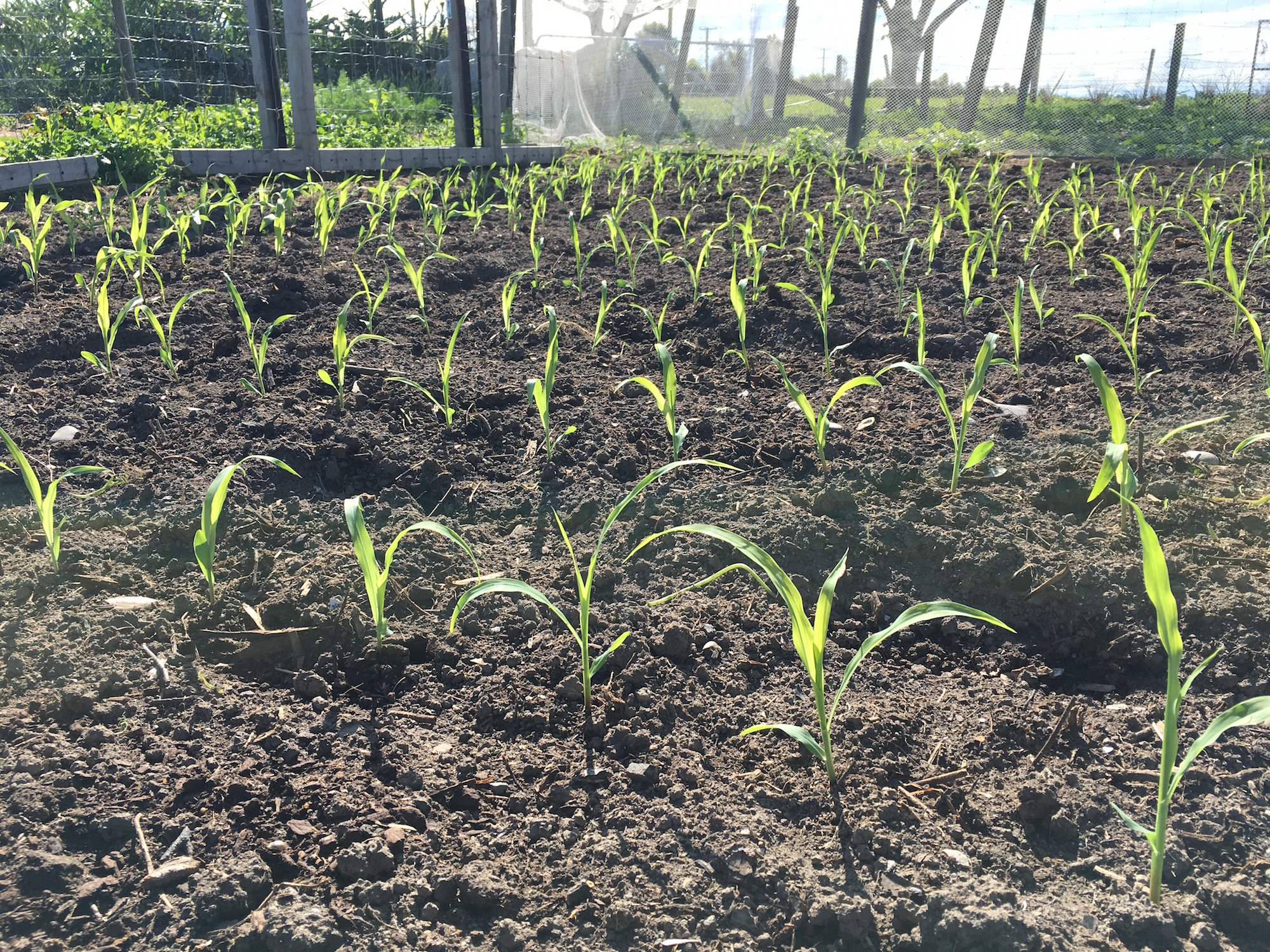
But this year, the corn was ready to plant out by the 30th of October.

The corn bed wasn’t ready yet. It’s always the last one I prepare, because it’s usually the last one to be planted out. I took the trays of corn seedlings out of my office, so they would have chilly nights to slow down their growth.

It didn’t help. The corn kept growing at a ridiculous rate.

I considered planting the corn in the beds designated for pumpkins, because they were ready. But that would have meant planting pumpkins in the same beds they were in last year. I had a lot of pest problems in those beds last year—I’d be foolish to plant the same crop there again this year.

Last weekend I got frantic. If I didn’t get the corn out to the garden in the next week, it would die in those trays.

Wednesday, I quit work at 2 pm and started preparing the beds. I got them weeded, and the soil turned. Then I realised I was going to need to turn the compost pile in order to get compost for those beds.

Turning the compost pile usually takes at least two weekends of back-breaking work.

This morning, I started on the compost pile around 6.30 am. By the time I’d turned a third of it into the empty compost bay, I was completely exhausted. And I’d only managed to get five wheelbarrow loads of compost for the corn (I really wanted nine).

So I compromised. Five loads of compost would have to be enough. I turned it in, raked the soil smooth and called the beds done. The corn was all in the ground before lunch. Whew!

Of course, it’s a week early. I have learned the hard way not to plant out too early here. My garden sits in a frost pocket. Chances are, the corn will get nipped by frost, but it was either that or watch them die in trays. Crossing my fingers and hoping for warm weather!

Aquilegia

2016-10-31-19-37-18One of my favourite flowers is blooming—Aquilegia, also known as columbine and granny’s bonnet.

I can’t tell you why I like Aquilegia so much. I’m generally not a fan of frilly flowers. Perhaps I like it because, though the flowers look delicate, the plant is tough as nails. This particular specimen is growing in what used to be the driveway—a hopelessly compacted combination of clay and rock, dry as a desert most of the time—and is all but shaded out by the pittosporum behind it. It thrives, and has even seeded itself into other places in the old driveway.

Or maybe I like it because, in the Eastern US where I grew up, the native columbine, Aquilegia canadensis, attracts hummingbirds and hawk moths. Here, the bumble bees visit it, but little else. Apparently, of the 60-70 species of Aquilegia, several have evolved exclusive relationships with particular pollinators.

Whatever the reason I like them, the flowers make me smile every time I pass them.

Midnight Flowers

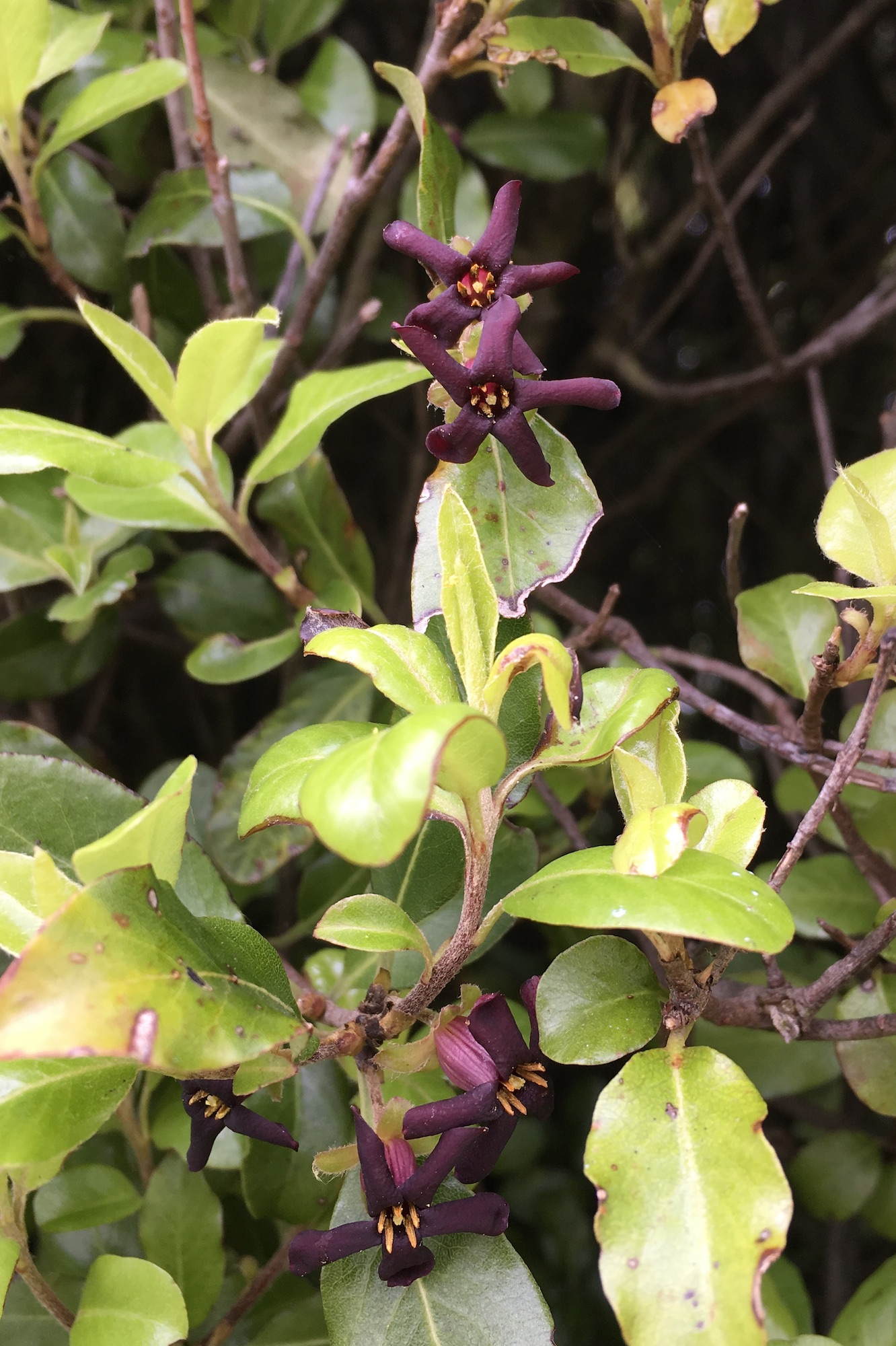
2016-10-26-15-51-31We have several pittosporums around the house, mostly Pittosporum tenuifolium, also known as kohuhu. Kohuhu are nice hedging plants, and form lovely dense shrubs when pruned. They’re a great background plant—like mood music—a lot of nice greenery, but little character.

Until they bloom, that is.

And only at night.

Pittosporum flowers are the kind of blooms that you can walk past a hundred times a day and never see. They’re about the same colour as the branches, and sit nestled among the greenery. They attract no bees or butterflies.

But walk past the same bush in the dark, and you’re practically knocked over by the smell. Heavy and clinging, the smell must attract all the night-flying moths and beetles for miles around.

I’m generally not a fan of smelly flowers, but there’s something marvellously incongruous about pittosporum flowers—so inconspicuous during the day, so in-your-face at night. The smell has become as sign of spring for me, and I always make sure my early-morning chores take me close to one of the bushes at this time of year.


Crowded House

2016-10-21-18-50-54-smLast night the temperature dipped to -1°C. Fortunately, it had been forecast, so I pulled all the tender plants out of the greenhouse and into the heated office for the night.

It was a truly glorious sight—the seed shelves full of just-sprouting cucurbits and corn, and the floor carpeted in tomatoes, eggplants, peppers, and basil plants.

I look forward to getting all those tender plants back out to the greenhouse—I can’t even walk through the office, let alone work in there at the moment—but it was fun to have all the plants together for a photo shoot.


Supreme Spring Salad

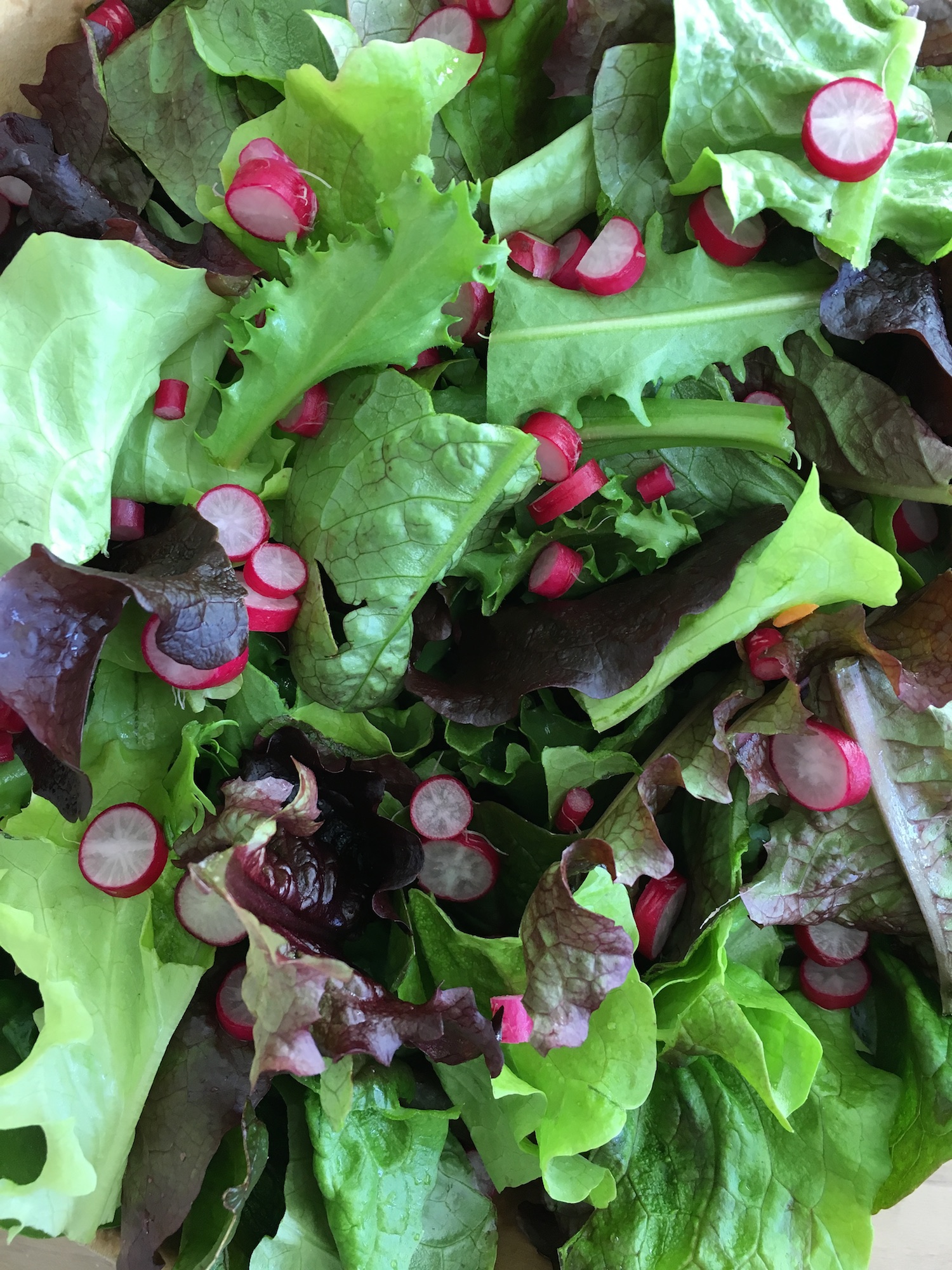
2016-10-21-17-49-45-smWe had occasional salads all winter, from the fall planting of lettuces and spinach. We’ve also had several salads from this spring’s lettuce planting. But all these salads have been small, and have required me to scrounge every available leaf to glean even a modest quantity.

Today’s salad was the first of the Supreme Spring Salads—salads for which I have so much lettuce, I can choose to pick only the best, most perfect leaves, and can adjust the proportions of each variety to perfectly suit the meal. I also had a few lovely radishes from my daughter’s garden to add to the salad, making it even more perfect.

And this was just the first. With luck (and a fair bit of weeding), we’ll have many more Supreme Salads to look forward to in the coming months.


Heating the Greenhouse DIY

greenhouse-waterjugs2-smI wish I had a heated greenhouse. I start my seeds in my office, which has decent light and can be heated at night to help heat-loving seeds germinate and keep tender seedlings from freezing.

But at some point, the plants have to go to the greenhouse or they’ll get hopelessly leggy. Besides, there’s not enough room in the office for all my seedlings, once I really get going in spring.

The greenhouse is great for raising daytime temperatures for the plants and for protecting them from harsh wind. It also protects the plants from light frosts, but sometimes the temperature dips below zero at night, and then the unheated greenhouse can’t protect my plants enough.

If I know the temperature will dive, I can haul all the plants back to my office just for the night, but it’s quite a job—several trips with the wheelbarrow—and always results in some plants getting damaged.

So I’ve gone for passive solar heating in the greenhouse. I had my daughter paint empty 3-litre juice bottles black, and I filled them with water and placed them around the greenhouse. During the day, the water in the bottles heats up, and at night, the bottles slowly release their heat.

Having only one greenhouse, I haven’t been able to scientifically test whether my hot water bottles help, but last year—the first year I deployed the bottles—I was impressed by how well the plants weathered cold nights in the greenhouse. I intend to expand the number of bottles this year, and would love to ring the entire outer edge of the greenhouse with water bottles. If all goes well, I’ll end up with my heated greenhouse, without actually heating my greenhouse.