Come to the Dark Side … we have cookies

With our switch back to standard time last weekend, we’ve most definitely entered the darker half of the year. My husband and I took our first evening walk in full dark yesterday, and we can expect months more of the same.

fig and date cookies

Part of me mourns the loss of hot sun and long days. I certainly feel the dwindling abundance of the summer garden as plants die off. But I also enjoy the darkness.

Summer is bright, noisy and frenetic. Everything is in motion. I’m in motion. Long days mean more tasks on the to-do list—an expectation to ‘make hay while the sun shines’. Summer gardening can start as early as 6 am and continue past 9 pm. It feels wrong to lay about in bed when the sun pops up at 5 am, and who wants to go to bed at 10pm, before it’s even dark?

The bonus of all that work is abundant fruits and vegetables, weed-free gardens, clean gutters, tidy lawns …

But it gets exhausting after a while.

About the time we go off Daylight Savings Time, my body has had enough. That extra hour we gain isn’t enough to make up for the post-summer exhaustion, and I find myself going to bed by 9 pm, happy that it’s dark long before then.

In addition to the extra sleep, I appreciate the calm of night. A walk in the dark is an entirely different experience than a walk during daylight hours. The chatter of sparrows and starlings is absent. Magpies are silent. Neighbourhood dogs are indoors instead of barking at passersby. Quieter sounds come to the fore—the zit-zit of katydids, or the trill of a frog. A lone sheep maa-ing in a distant paddock. The gurgle of the local water race. There is peace in the darkness that is difficult to find during the day.

In the morning, I feed the chickens in the dark. They are groggy and slow—instead of racing toward me as soon as I enter the paddock, they wander my way, muttering their greetings. 

Although there are too many streetlights near our new house that obscure the fainter stars, I still take time every morning to greet the night sky—moon, planets and constellations.

I am comfortable in the dark—it is a soft velvet cloak wrapped around my shoulders.

And when I choose to come inside in the dark of longer nights, there is the warmth of the light. The smell of cooking. The rows of pumpkins stashed on top of the cupboards. Summer’s bounty stored up for winter.

During the dark half of the year, I have extra time to spend on baking—I can make fiddly cookies, cakes with cooked frostings, fancy decorated cupcakes. I have more time for sewing, spinning, and other crafts. I can sit and read a book without feeling guilty about wasting daylight.

So while there is some sadness to the end of summer, there is also joy in the darkness. And there’s the knowledge that summer will return and I will miss the books and baking of the dark side.

Weird and Wonderful Ugni

One of the most interesting autumn fruits we grow is Ugni molinae—known as ugniberry, Chilean guava, strawberry myrtle, New Zealand cranberry, and Tazziberry. The plant is native to Chile and Argentina and is little grown outside of South America. 

The pretty little bush is sometimes grown as an ornamental here, the fruit being mostly ignored. That’s a shame, because ugniberry is such an interesting fruit. 

The small aromatic pink/red berries have a tough outer skin and a seedy interior. I think the flavour is reminiscent of vanilla custard, but others have likened it to bubble gum, cotton candy, or a combination of strawberry, pineapple and apple. Regardless of how you try to describe it, their taste is unique and delicious. 

Until recently, we had never cooked with ugniberries—we’d always eaten them fresh. In fact, few ever even made it into the house—we’d just grab handfuls to eat while we were out in the garden.

This year, however, we’ve been trying to expand our use of ugniberries. Two weeks ago I made ugniberry scones for Sunday breakfast. I made an ordinary oat-based scone with a touch of vanilla and threw in a couple of handfuls of fresh berries. The resulting scones were lovely.

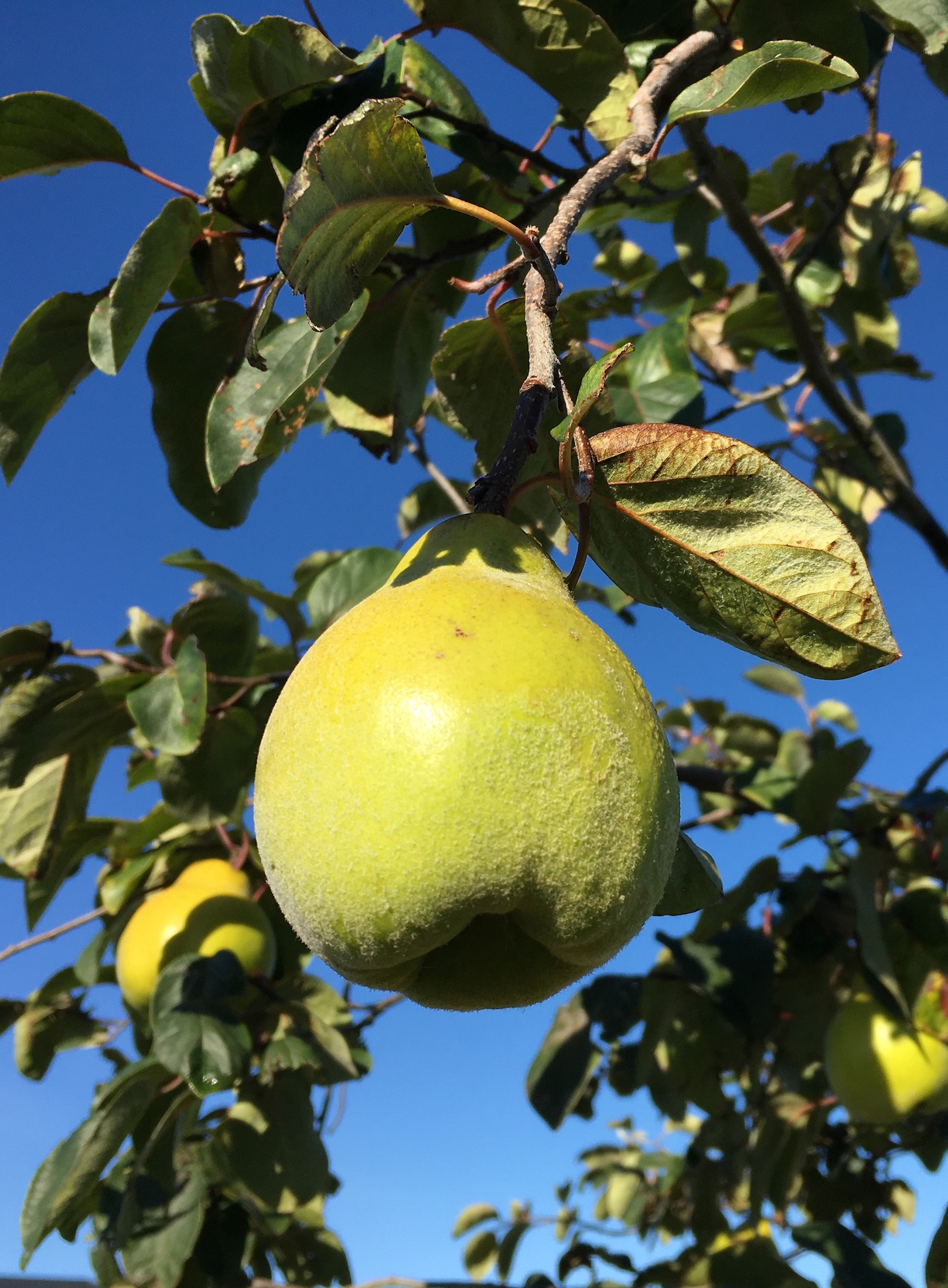
Earlier this week, my husband picked several cups of ugniberries and combined them with a quince, a few tiny apples and a bit of sugar, cooking them into a thick rose-coloured sauce with a flavour/texture combination that made me think of figs crossed with cranberries. 

I used his ugniberry sauce in a filled bar cookie laced with lemon peel. The result was so delicious that by the time I thought to take a photo of them for this blog, they were nearly gone. 

I can see why people might not like ugniberry—with tough skin and lots of tiny seeds, the texture could be off-putting—but I’ve grown more and more fond of the little fruits, and I look forward to coming up with more delicious baked goods that feature them.

Autumnal Buzz

As an entomologist, I love early autumn. Insect numbers are at their peak, and most insects are adults—their most active and visible life stage.

As a kid growing up in rural Pennsylvania, early autumn nights were nearly deafening with the cacophony of cricket and katydid chirps. Days buzzed with the sounds of cicadas and grasshoppers.

New Zealand is quieter, but autumn still has its distinct voices. Our katydids’ sharp ‘zit zit’ seems to echo from their favourite ake ake trees. Crickets twitter in the grass on sunny days. Cicadas and grasshoppers buzz from trees and bushes.

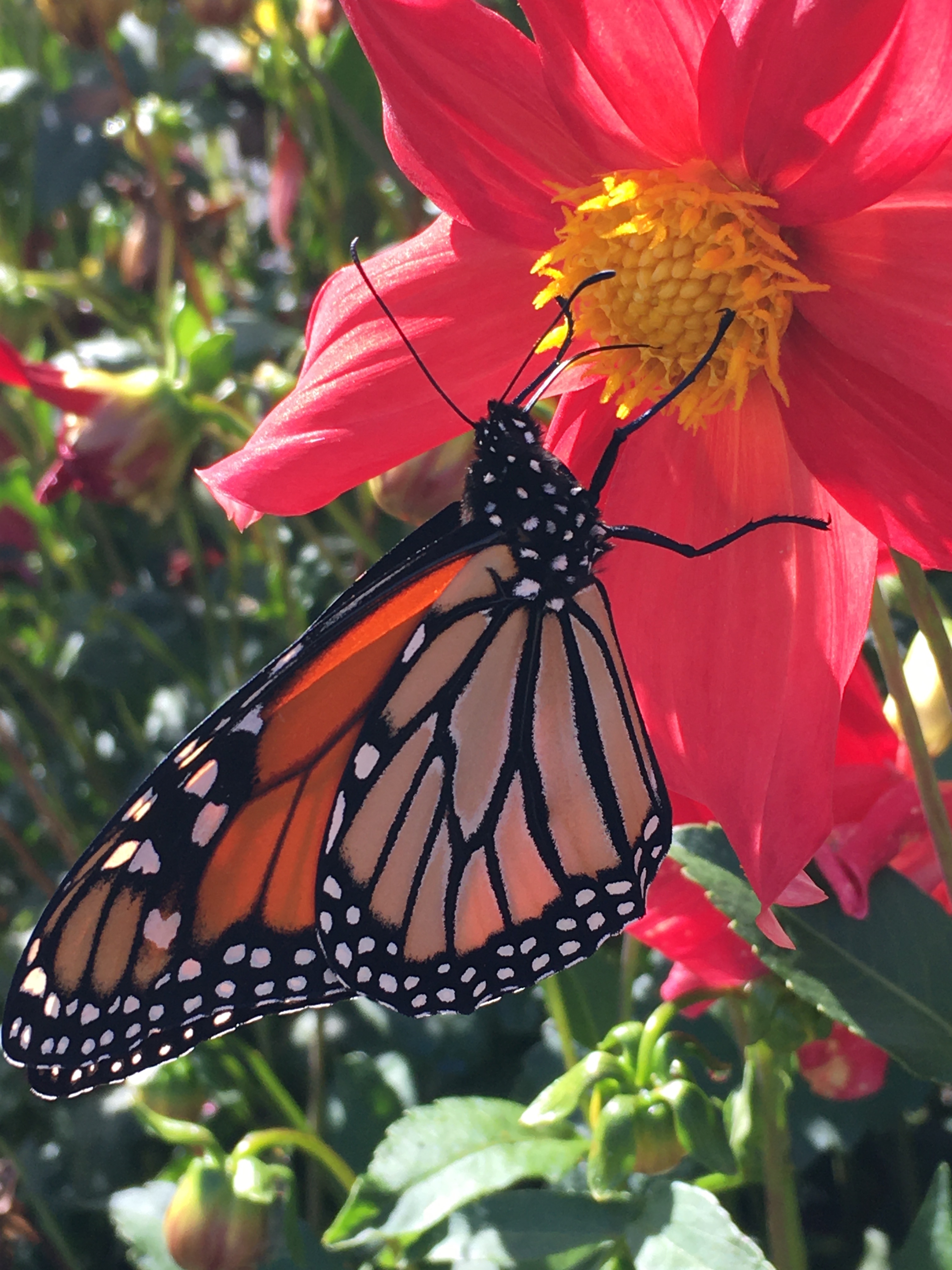
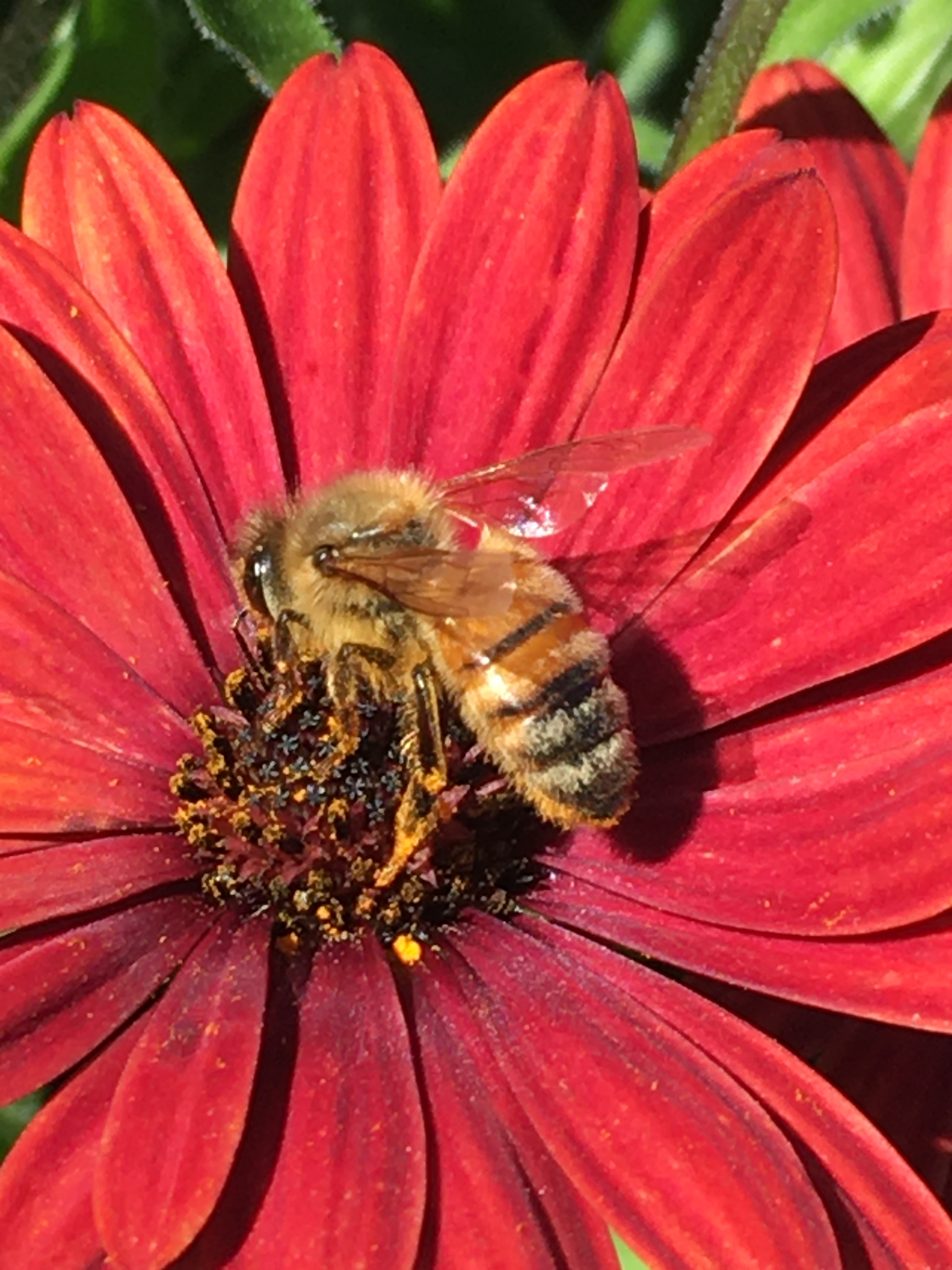
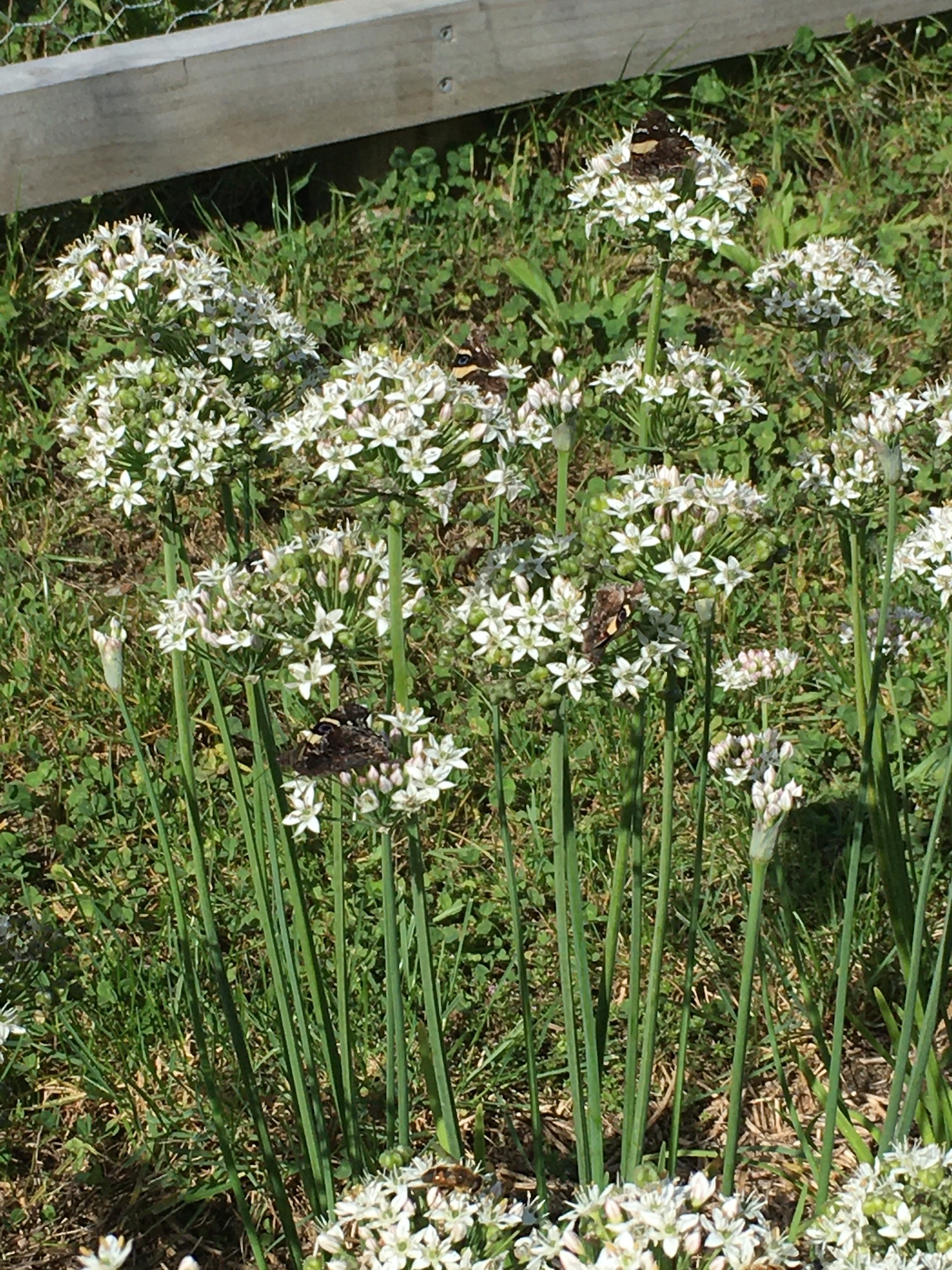
Bees and butterflies are particularly active on autumnal blooms. Many of our showy butterflies overwinter as adults, so they can be seen flitting about on warm days into late autumn.

Of course the clouds of invasive cabbage white butterflies on the brassicas and the German wasps swarming the compost pile aren’t terribly welcome. But still, I enjoy the leggy hum and flutter of the season.

Autumnal Assessment

It’s been just two weeks since I blogged about a late summer garden, and now autumn has truly set in.

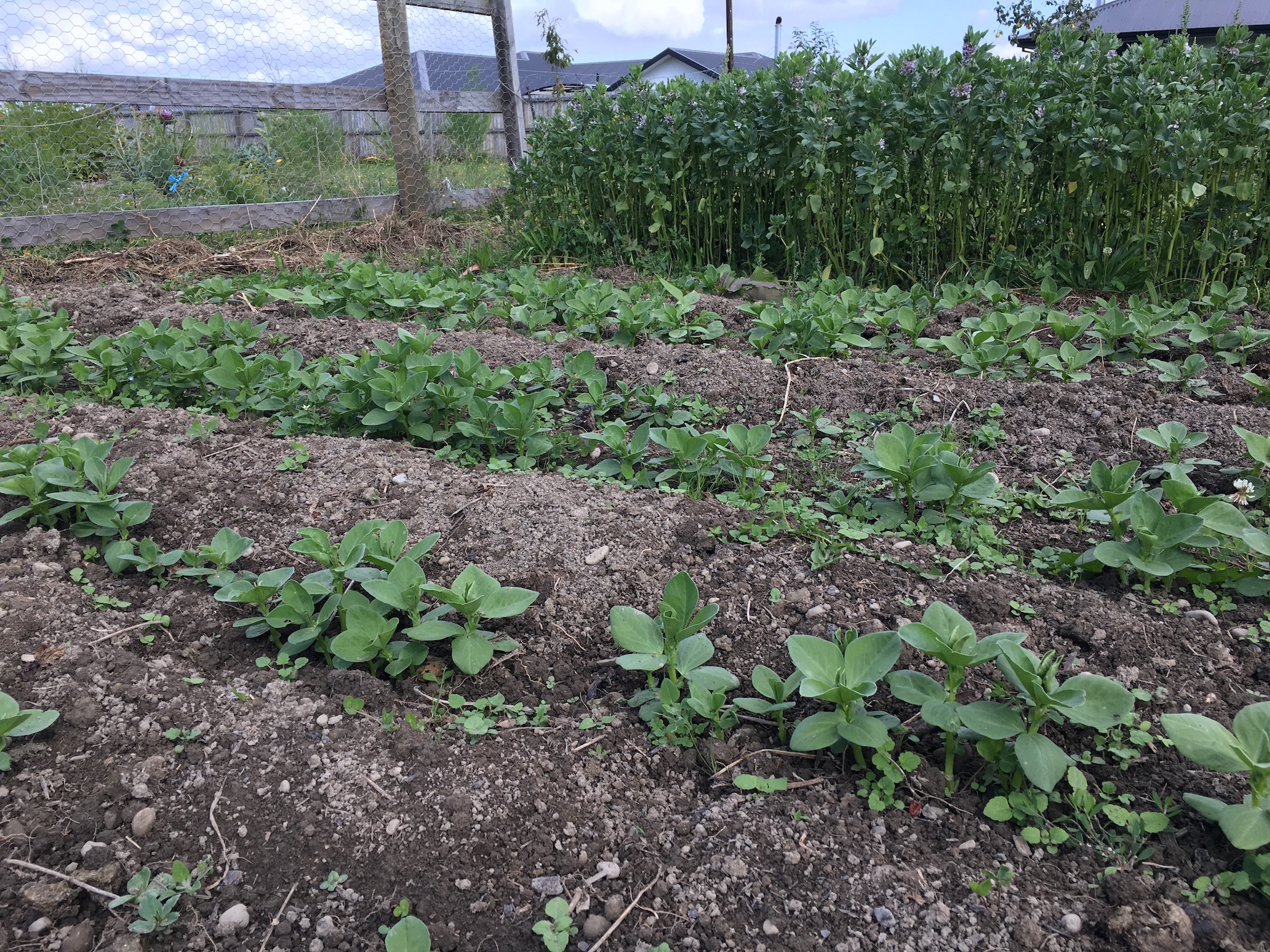
tick bean in freshly fertilised garden beds
Tick bean green manure planted next to furrows filled with cow manure.

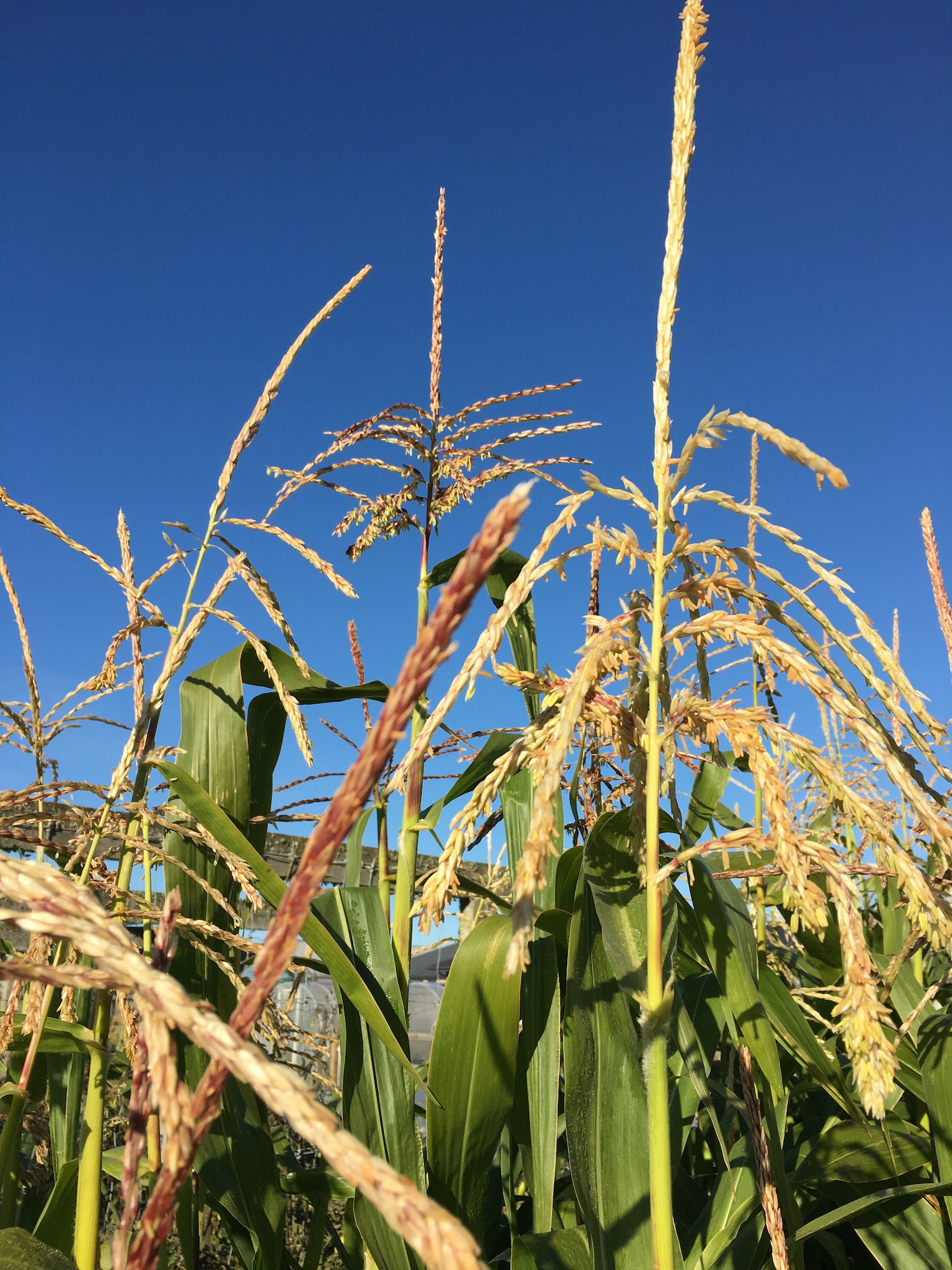
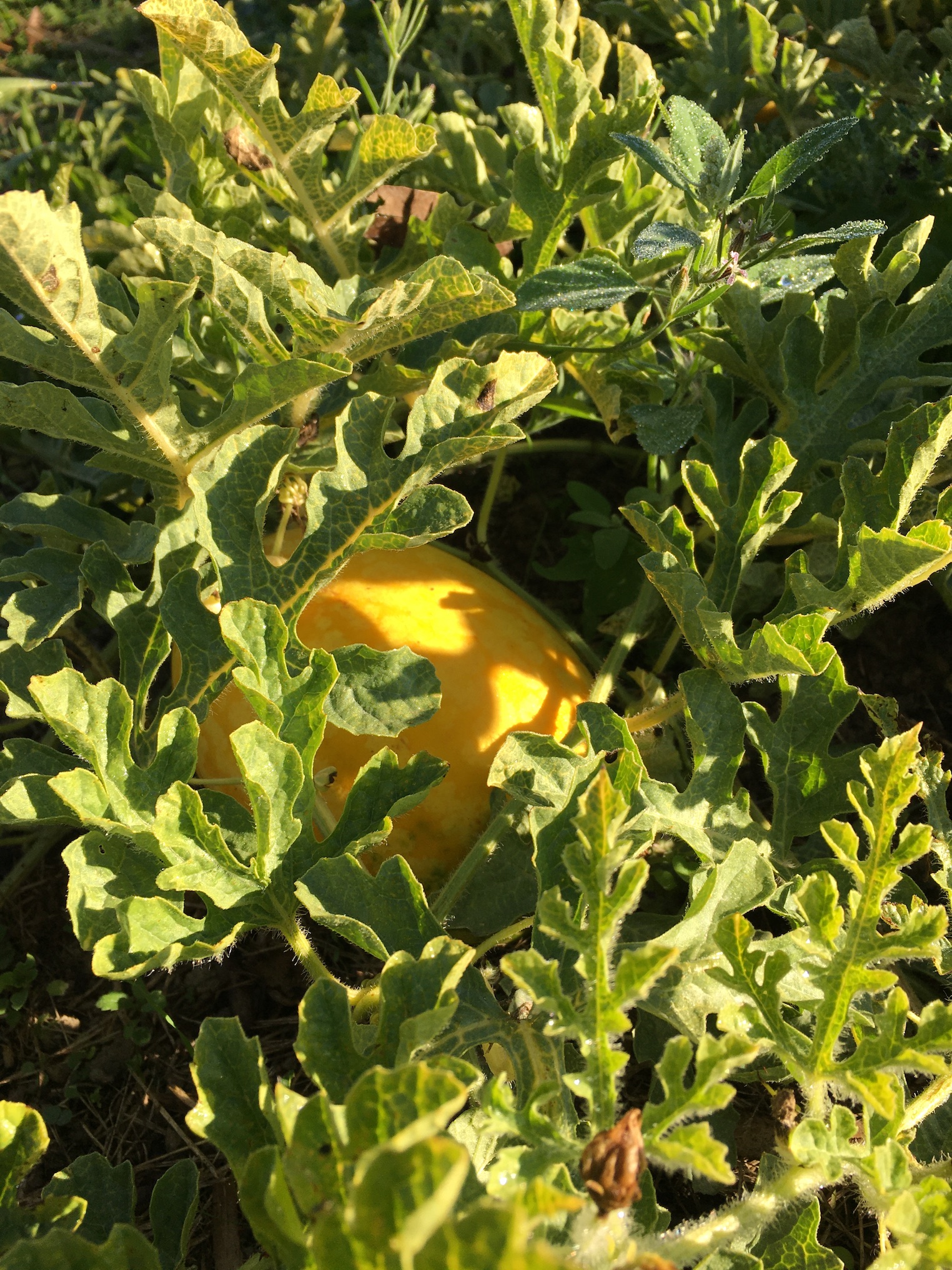
I harvested much of the remaining sweet corn, and it is now in the freezer. The pumpkin vines are beginning to die off, as are the tomatoes, cucumbers and basil. We’ve been eating lovely melons, but their days are numbered.

It is cool and drizzly today—feels like autumn.

Taking stock of how things have grown this year, it’s clear that the cow manure I incorporated into the garden over winter did amazing things. Overall, this year’s crops produced much better than last year’s. Corn in beds that got manure is twice the height of corn in beds that got none. I’ve come quite a ways from the practically nutrient-free clay I started with two years ago. 

There’s still a long way to go, though. All the plants are showing nutrient deficiency at this point of the year, and none have grown as well as they did in my old garden.

So I’ve started fertilising early this autumn. As crops have finished, I’ve been clearing garden beds and incorporating manure. With luck, I’ll be able to incorporate poo into all the beds this winter (I ran out of time last year because my weekly manure supply is limited to the production of the neighbour’s two cows.)

I’ve also included a lot of manure in this year’s compost pile. By spring, I hope to have a good six cubic metres of nutrient-rich compost to add to the garden as well. It feels good to be reclaiming this stripped paddock, restoring the mauri (life force) of the soil. I can’t wait to see how things grow next year.

Late Summer Garden

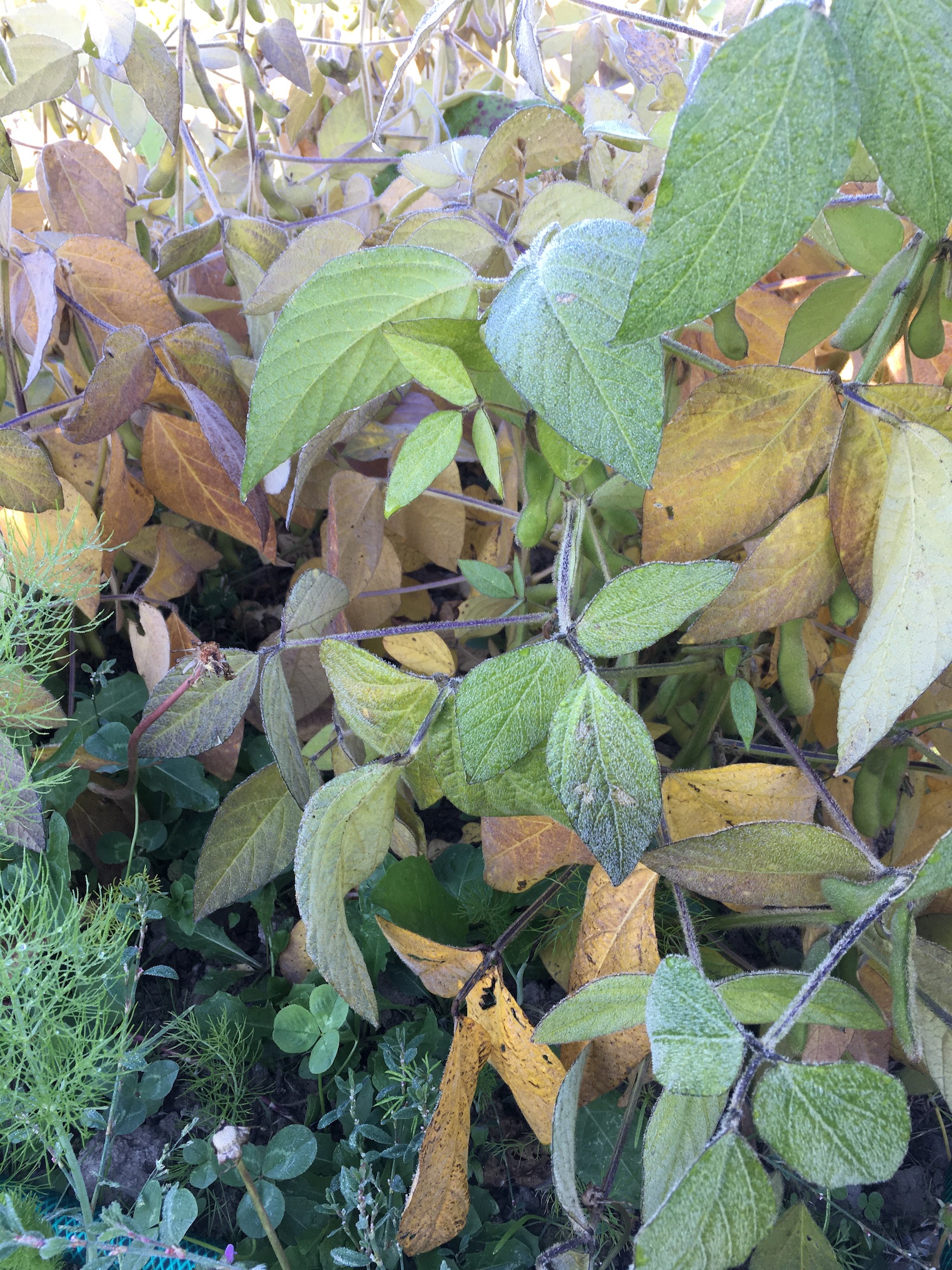
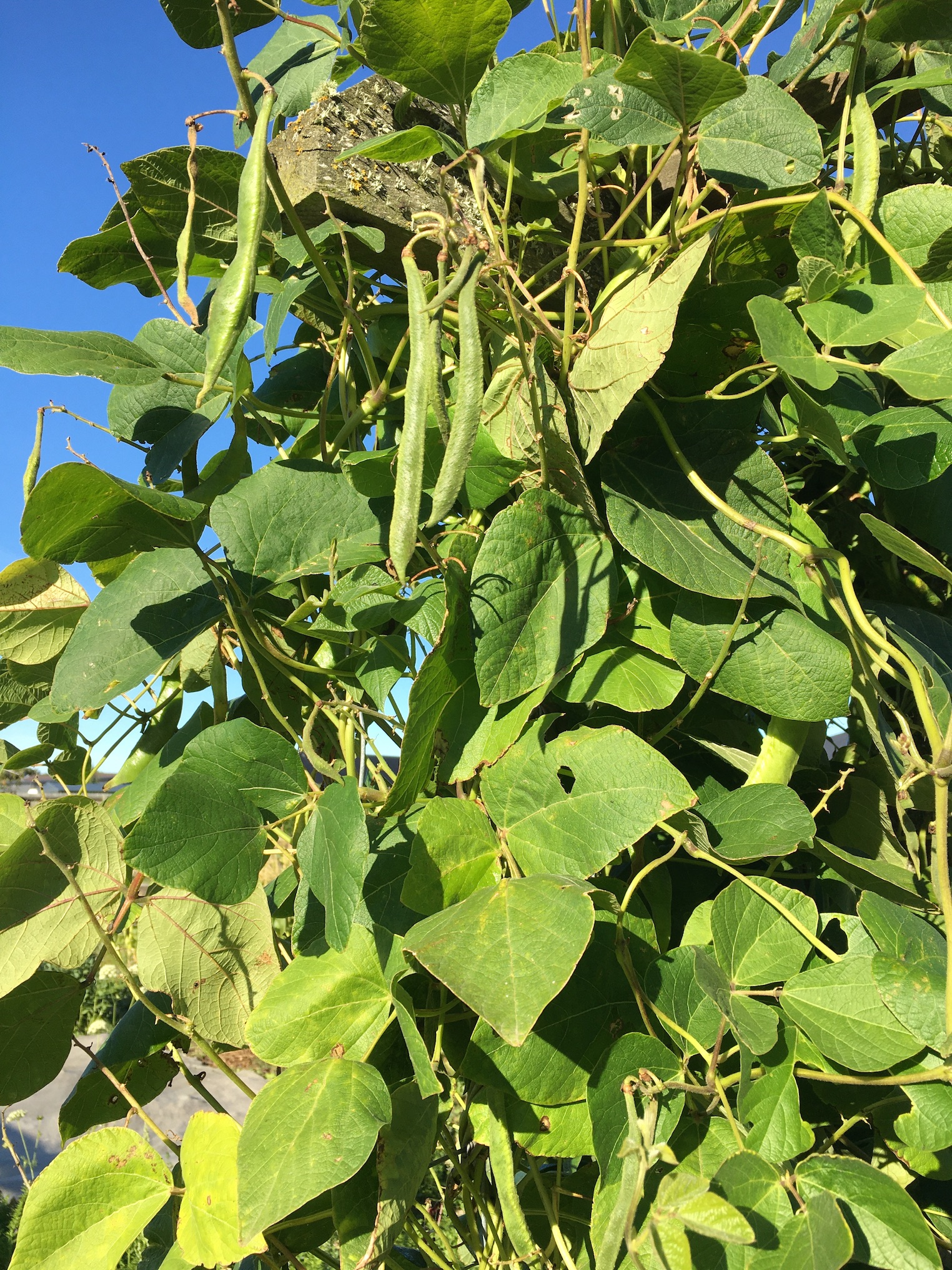
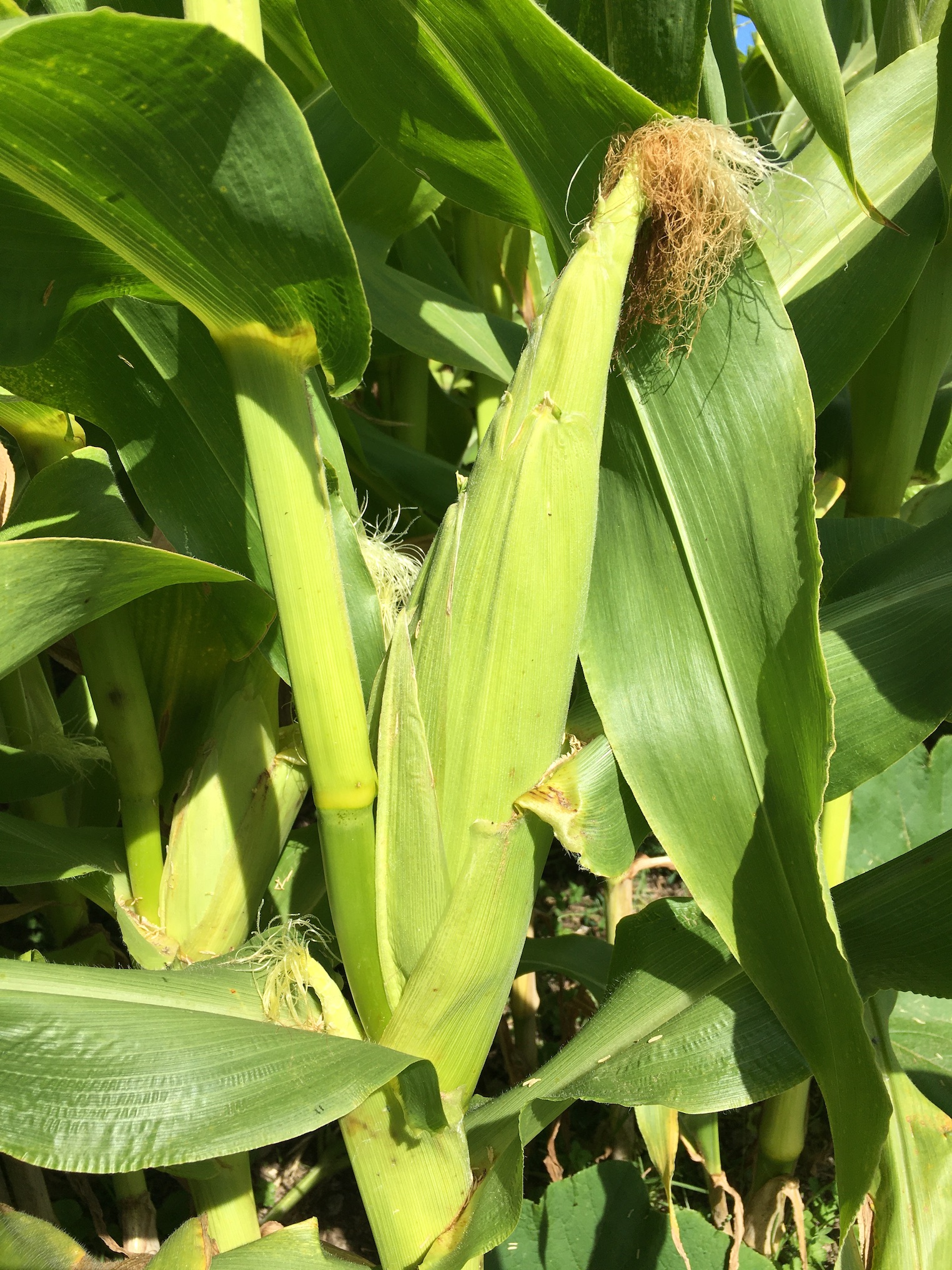
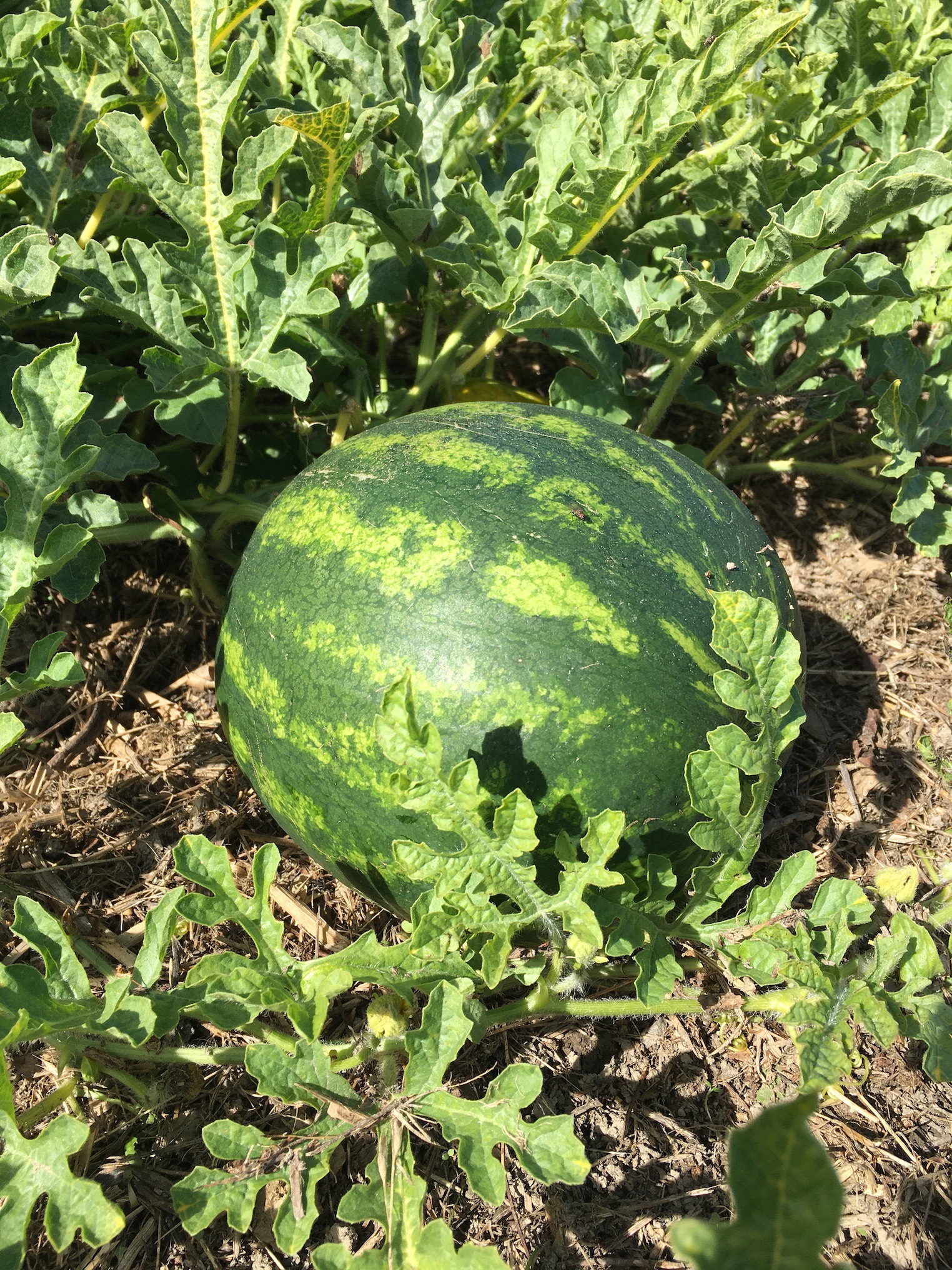
March first is considered the start of autumn here in New Zealand. As far as the garden is concerned, it’s still late summer. It’s been a cool, wet February, which has delayed crops like tomatoes, peppers, and eggplants. The extra moisture has meant bigger watermelons, though they’re ripening slowly. Sweet corn is coming on, and we’ve had some lovely meals of it, along with the first of the melons. I’ve harvested the potatoes, dry beans, and most of the soy. The pumpkins are looking gorgeous, and I’m sure we’ll have more than we can eat this winter. 

Overall, I’ve been pleasantly surprised with the garden this year. Plants are showing nutrient deficiency, for sure, but they’ve done remarkably well, considering where I started two years ago. It’s clear my applications of manure and compost are having a positive effect. And it’s just as clear it will take quite a few years to build this soil up to full productivity. 

I thought I’d treat you to a selection of images from around the garden on a beautiful crisp early autumn day. It may not be as productive as I’d like, but it’s still glorious.

The Waiting Game

This time of year can be agonising. Out in the garden, the tomatoes, zucchini, green beans, cucumbers and carrots are all producing beautifully—there’s more food than we know what to do with.

But.

The sweet corn, melons, pears and apples are still sitting there, ever so slowly maturing and ripening. I try not to check them every day—I try to be patient. If I tested one apple on our tiny trees every day, there would be none left by the time they were actually ripe. But it’s hard to be patient while awaiting such seasonal treats. And the worst thing is to NOT check and go out a few days later to find the possums have eaten them all, because they ripened while you weren’t looking.

So I tap that watermelon—does it sound hollow? I check its underside—it’s bright yellow, but I know that no matter what the books say, it doesn’t signal ripeness; it’s been yellow underneath since the fruit was the size of my fist. I peel back the husks on an ear of corn to peek at the kernels—are they plump yet? I bite into an apple, hoping for sweet, not astringent.

After decades of gardening, I’m still impatient for the fleeting pleasures of fresh sweet corn and melons, apple pie and pear tarts. I reckon that’s a good sign—I still get a thrill from the chase, the anticipation.

And one of these days soon … there will be watermelon on the table.

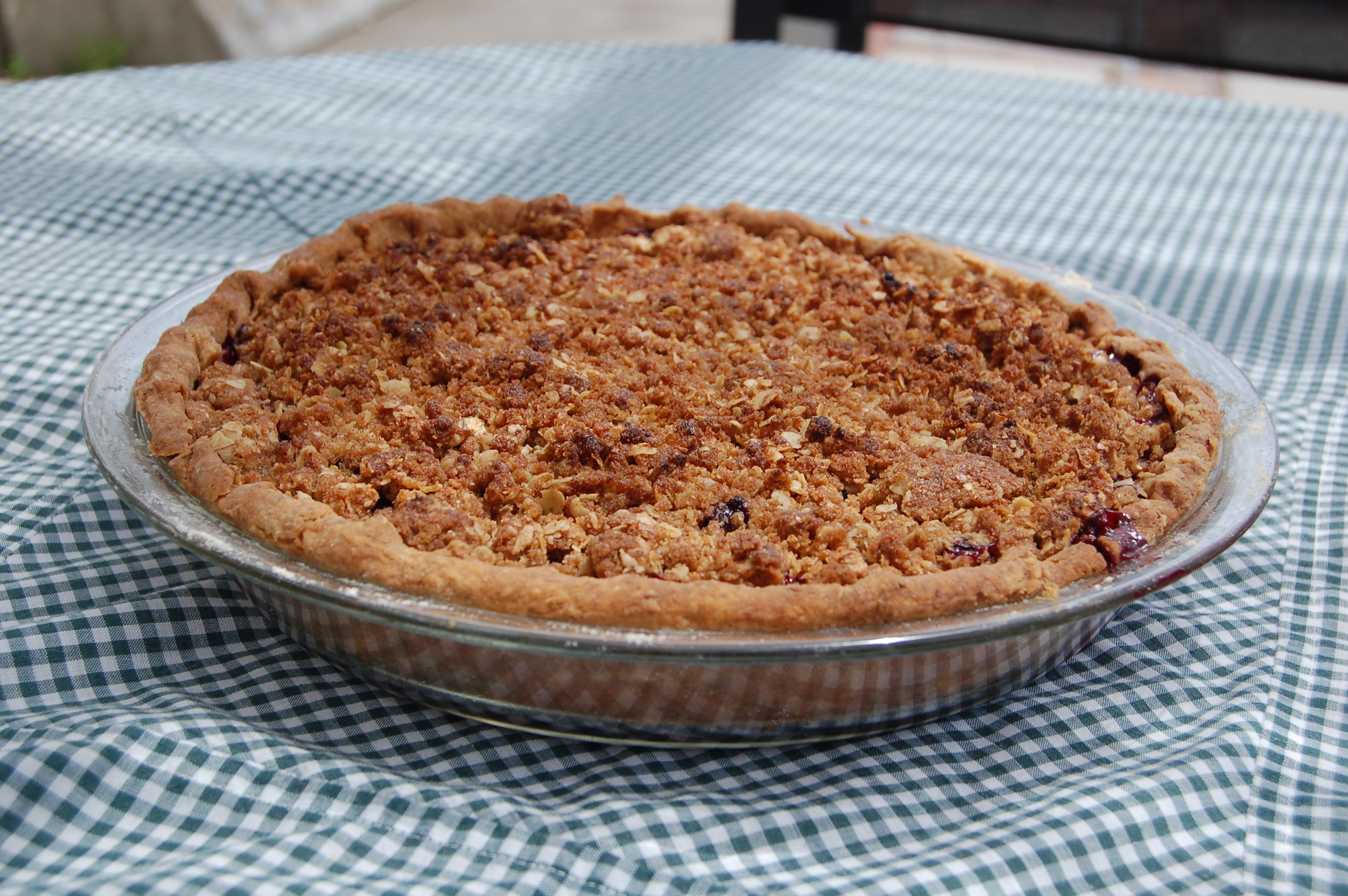
Black Currant Pie

I have blogged about black currant pie before, but it’s worth doing again. This year’s black currant harvest was overwhelming, not just because it came in the two weeks on either side of Christmas, but also because it was huge. It didn’t help that the red currants also gave a hefty crop at precisely the same time. For two weeks, I felt like all I did was pick and process currants.

Well, and eat them, too.

We use currants in ice cream, crisps, cobblers, fruit salads, and smoothies, but my favourite way to eat them is in pie.

Black currant pie is not for the sour-averse—it is a full-bodied, knock-your-socks-off type flavour. To me it is the flavour of summer. And because it works equally well with frozen berries, I always try to save enough so I can make black currant pie on the winter solstice and dream of long summer days in the chill and dark of winter. 

So revel in the intense flavours of summer and enjoy a slice of black currant pie. You can download a pdf of this recipe here.

Crust:
¾ cup all purpose flour
¾ cup wholemeal flour
¼  tsp salt
60 g butter
60 g Olivani
3-4 Tbsp ice water

Filling:
4-6 cups black currants
½ cup sugar
2 Tbsp flour

Topping:
2/3 cup flour
2/3 cup finely chopped walnuts (or rolled oats)
2/3 cup brown sugar
1 tsp cinnamon
75 g butter, melted

Crust:
Whisk together the flours and salt in a medium bowl. Cut in the butter and Olivani with a pastry knife until the largest chunks of butter are the size of small peas. Sprinkle the ice water over the flour mixture and combine with a fork until evenly moistened. Knead lightly, just until it forms a coherent dough (it will be crumbly). refrigerate while you prepare the filling and  topping.

Filling:
Combine sugar and flour in a small bowl. Mix with stemmed, washed black currants and set aside.

Topping:
Combine the flour, walnuts, sugar and cinnamon in a medium bowl. Stir in the butter with a fork until evenly moistened and crumbly.

Roll out the crust and place in a 23 cm pie pan. Pour the filling into the pan and sprinkle evenly with the topping. Bake at 200°C for 30 minutes, then reduce the heat to 170°C and bake another 30 minutes.

Serve with a generous dollop of whipped cream.

Summer Fruits

strawberries and rhubarb

Before our house was even staked out on the ground, we knew where the vegetable garden and berry fruits were going to be planted. We began preparing the garden months before the builders arrived. We took cuttings from berries at the old house, and were planting well-rooted currants and gooseberries as we finalised the design for the house. We tried to avoid mistakes we made at the last house—just one, not two, rows of bushes per bed, to make picking easier, and fewer plants overall. No need to be overwhelmed with fruit.

Last year, we harvested a handful of fruit from the currants, gooseberries, raspberries and boysenberries. The strawberries gushed fruit for the better part of the year. For barely established plants, they did well. 

This year, with most of the plants well established, we’re inundated with berries—so much for not being overwhelmed. The week before Christmas was a frenzy of fruit processing—we froze fresh fruit and fruit puree, made several batches of jam, and ate a whole lot of fruit pie, trifle and fresh berries.

Upon our return from our Christmas trip, there were even more berries ready to pick. We made more jam, preserved more whole fruit, made more pie, and have been eating fruit five times a day. The cupboard is once again packed with jam, and the freezer is stuffed with frozen berries. Thankfully, the currants and gooseberries are nearly done producing, but the raspberries and boysenberries are still going strong. The strawberries are finished with their first heavy crop, but should maintain a level of output we can easily eat for the next few months. I’m thankful the grapes are only in their first year and the blueberries aren’t doing as well as the other berries—not that I don’t want grapes or blueberries, but I’m worried about freezer and cupboard space.

lemon raspberry cake
Lemon raspberry cake

At least the fruit trees are still young—we got a handful of cherries, and will have a few pears, apples, and peaches if we’re lucky, but shouldn’t be overwhelmed.

It’s a lovely problem to have. With the summer vegetables coming on strong, too, there is a real sense of abundance in the house—a great way to start the new year.

Christmas Adventure–Gillespie Circuit

The family’s Christmas tramp this year took us to the Gillespie Circuit Track in Mount Aspiring National Park. The trip was a good adventure, through a dramatic landscape we don’t often hike in.

Day one started with a jet boat from Makarora to the confluence of the Wilkin and Makarora Rivers. It was my first jet boat ride, and I’ll admit my inner teenager was grinning as we slalomed down the river in a noisy, environmentally unsustainable fashion my adult self disapproves of.

From the mouth of the Wilkin River, we hiked upstream. It was decidedly the least interesting four hours of the trip—the area is grazed, so it was primarily a slog through a cow paddock. The track then turned into the forest and climbed steadily up Siberia Stream to Siberia Hut, where we spent two nights.

On day two, we took a day trip to Crucible Lake. The track to the lake is quite steep, but worth every step. The lake sits in a basin behind a massive glacial moraine. The glacier above the lake drops chunks of ice into the water, making it look like an enormous punch bowl. Apparently it’s popular to take a dip in the lake, but we were deterred by the ice and the cool morning air. The scale of the landscape is deceptive, and photos don’t come close to capturing it.

Day 3, Christmas Day, dawned lightly overcast—perfect for the next stage of the hike, over Gillespie Pass. The track climbs steeply over 1000 metres to the pass, first through the forest, and then into alpine scrub and tussock. Mount Awful looms over the pass, and the surrounding landscape is dominated by jagged peaks and glaciers. The taller peaks, including Mount Awful, were shrouded in cloud, but the views were nonetheless spectacular. We even got a slightly white Christmas, hiking through a couple of snow patches near the top of the pass.

If we thought the way up was steep, the way down proved us wrong—it was even steeper, dropping down a precipitous ridge to the top of the Young River. From there, the nearly flat hike to Young Hut afforded plenty of opportunity to admire the rocky ridges above and the many waterfalls cascading down from them.

Day 4 was a long but relatively gentle hike along the Young River to the Makarora River through the forest. Crossing the thigh-deep Makarora River back to the car was a refreshing end to the trip.

Being a Christmas hike, the trip naturally inspired another bad tramping Christmas song. This year’s song is to the tune of Have Yourself a Merry Little Christmas.

Have yourself a merry tramping Christmas.
Make the trailside gay.
From now on our cars will be so far away.

Here we are as in olden days,
Happy tramping days of yore.
Faithful friends who are dear to us
Sleeping near to us—they snore!

Through the years we all will tramp together
If the joints allow,
Even when we’re eighty, though I don’t know how.
So have yourself a merry tramping Christmas now.

May you all have a lovely holiday filled with your favourite people doing your favourite things!

The Gift of Rain

purple cauliflower
Purple cauliflower enjoying the rain

It’s unusual to have three days of rain in December. Usually, I’m desperately trying to keep the garden watered while the vegetables are in their early summer growth phase. Usually, I’m doing a pre-Christmas weeding of vegetables and perennials that will carry me into January with minimal weeds.

Not this year. It has been raining steadily for three days, after a week or so of showery weather. Every inch of the garden is thick with weeds, and continued rain means I’m not out there pulling them as they grow in size by the hour. I’ve braved the rain to pick vegetables for dinner and berries, which are rotting in the wet weather, but otherwise I’ve stayed indoors for three days.

I’m restless to get outside.

But I’m also thrilled with the excuse not to. Usually in December, I don’t manage to do much beyond garden work. So three days to make Christmas gifts, write, and get some nagging indoor chores done has been a gift.

It’s also been a gift to the garden. Much as I try, I can’t duplicate in watering the effect of a good rainstorm. The vegetables are growing as quickly as the weeds. Broccoli, cauliflower and cabbage  are all ready to eat. The pumpkin and zucchini plants seem to double in size every few hours. The beans have completely filled in their beds, beating out the weeds entirely. And the peas and lettuce have gotten a new lease on life, and will likely last a few more weeks than they would have otherwise.

So while I’d still rather be out in the garden, both me and the garden are taking full advantage of the gift we’ve been given.

cat at a window
The cat is a master of rainy day activity.