Ready, Set, Plant!

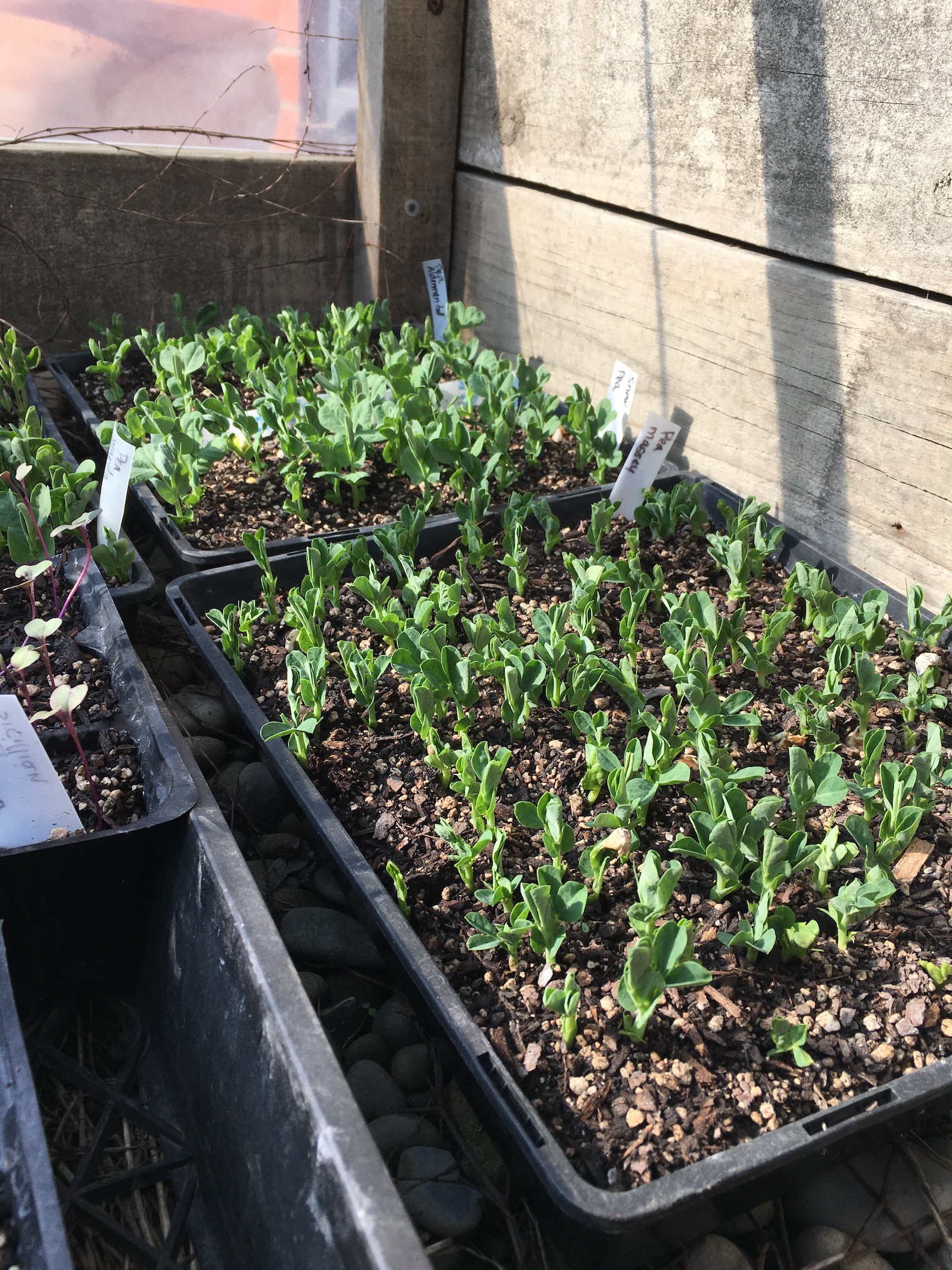
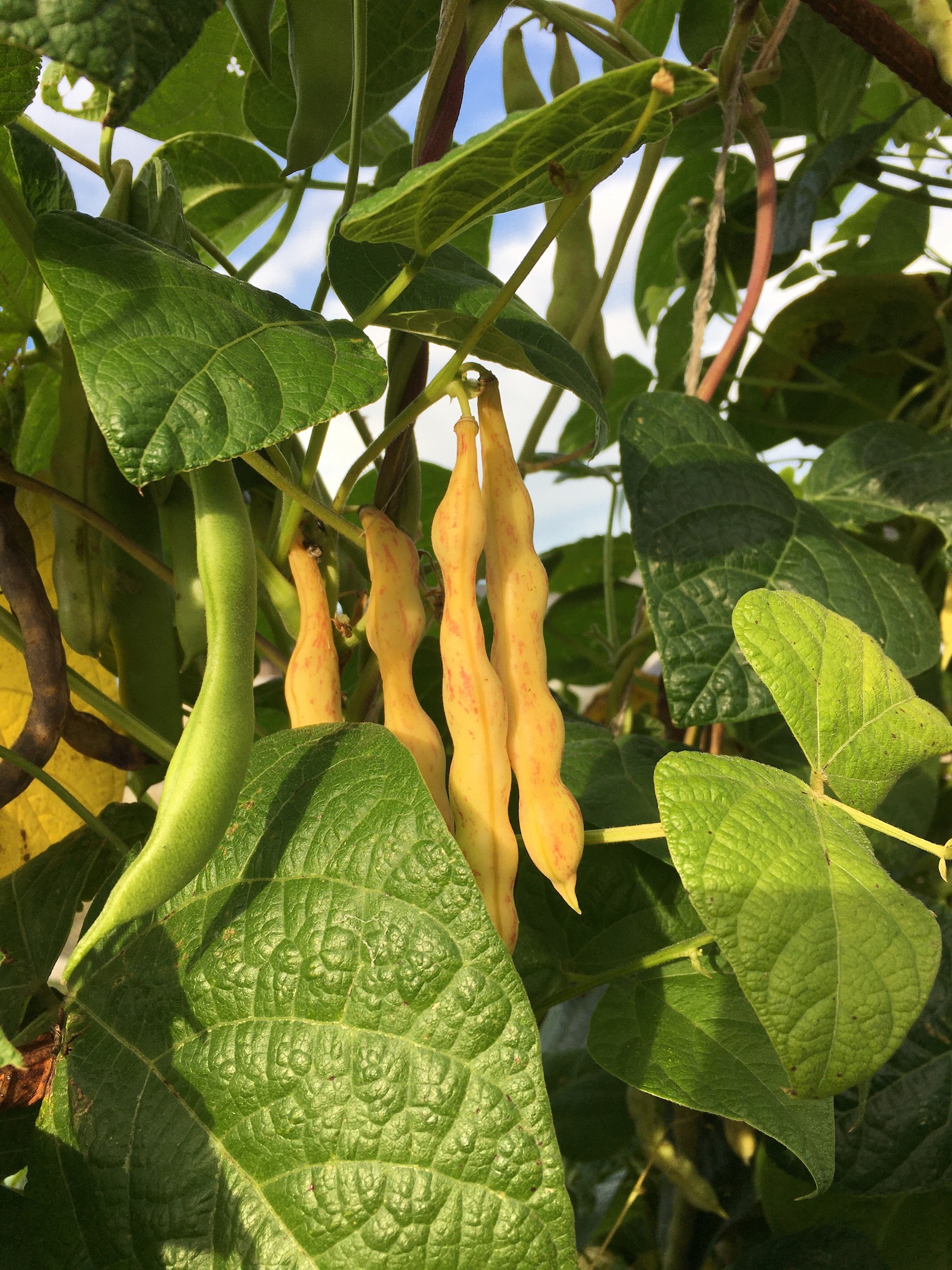
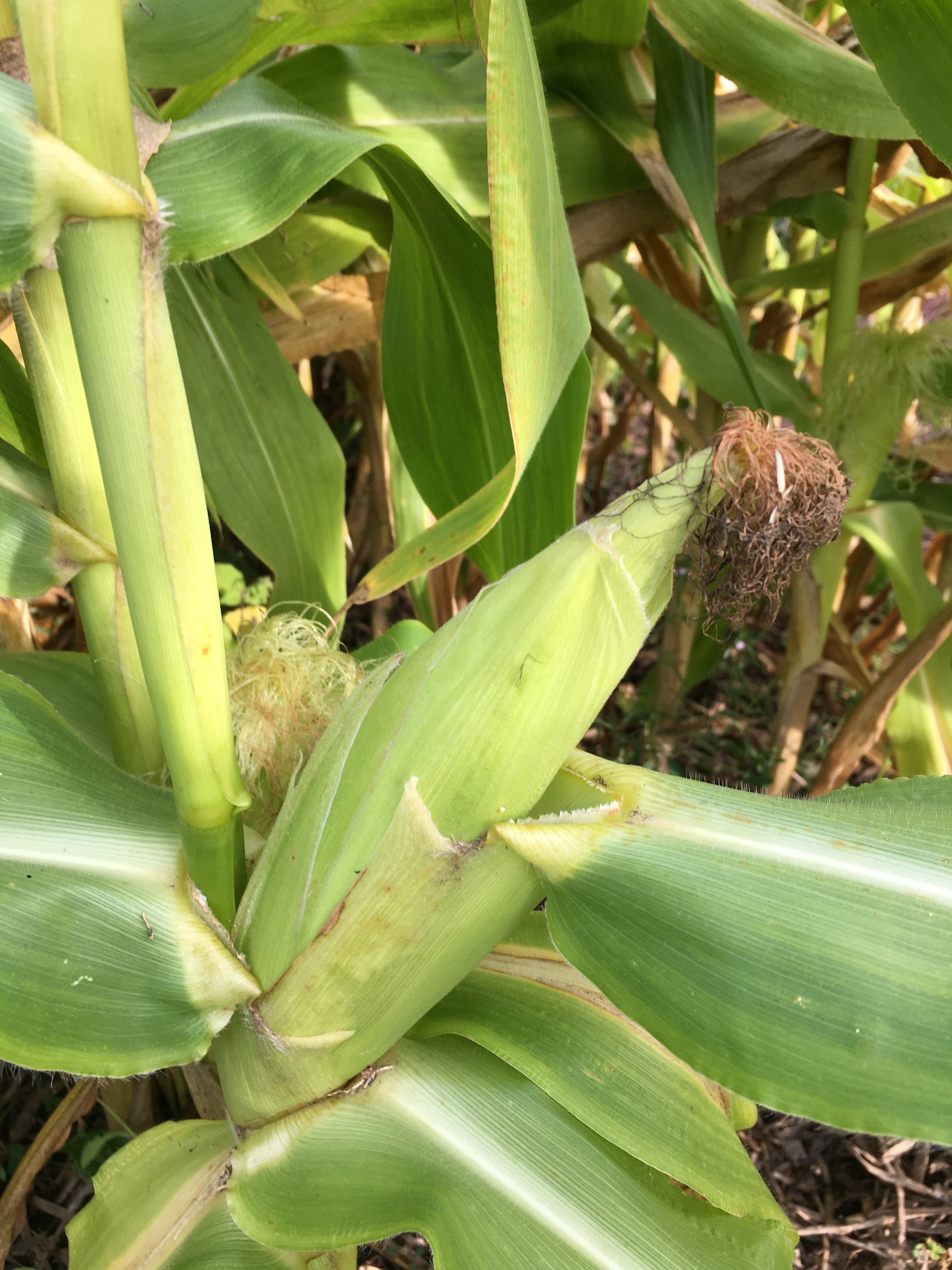
Looking forward to scenes like this in the coming weeks …

My seed order arrived last week, and I’ve stocked up on seed raising mix in preparation for this coming weekend.

The middle of August marks the start of spring planting, even though officially spring is still two weeks away (in spite of this week’s cold and snow).

This weekend I will plant hundreds of vegetable seeds—broccoli, cauliflower, cabbage, lettuces, spinach, onions, peppers, eggplants, herbs—a combination of early crops that can handle the cold and slow-growing late crops that need a long time in the greenhouse or indoors. 

This weekend is always a bit exciting and a bit daunting. Daunting because whatever winter projects I had going are doomed to the back burner until next April. Daunting because of the vast amount of work to get done in the coming months. And exciting because of the pleasure I get out of growing delicious food, and the joy of trying out new varieties of vegetables each year (this year, I’m trying Bartowich Parsley for the first time, a purple snow pea, a new hot pepper, and a couple of new tomato varieties).

I used to get overwhelmed at this time of year by the sheer amount of work ahead, but I’ve learned to manage the work, and more importantly the stress, by creating a weekend-by-weekend to-do list that runs from mid-August through the end of November. The list includes all the annual garden tasks associated with spring—planting seeds, potting up seedlings, preparing garden beds, setting up trellises, cleaning greenhouses, maintaining irrigation lines, fertilising weeding, mulching … With everything on the list, I know I won’t miss any tasks and everything will be done on time.

Obsessive compulsive? Yeah, probably. But it means I can fully enjoy each and every task without stressing about the fact I’m NOT doing something else. 

So from tomorrow, if you need to catch me on the weekend, I’ll be in the garden. 

Matariki Lights

Photo by Klemen Vrankar on Unsplash

On the eve of Matariki, I woke to an empty house, which meant I didn’t have to tiptoe around being quiet until my husband woke. 

The morning being dark and cold, I decided to start the day with music, and because we’re so close to Matariki and the promise of longer days to come, I searched up music with the word light in the title.

So my day started with Phil Collins’ song, Dance Into the Light, Lorde singing Green Light, Light (My Time Has Come) by Madison Ryann Ward, Nu Aspect’s Light, and One More Light by Linkin Park.

What a great way to start the day, to start the new year, to celebrate all that has passed and all that is to come.

Whatever your plans for celebrating Matariki this weekend, I hope it is full of the light cast by people you love and things that make you happy. 

And as I look forward to the coming growing season, the challenges and opportunities that the coming year has in store, I’m going to try to inject more music into my mornings.

So come on, dance into the light with me. Here’s a little poem I scribbled down on the solstice—it’s equally pertinent for Matariki.

On the darkest day
We turn to the light,
Hope for a ray to warm our cheek.

On the darkest day
We look to the stars,
Imagine constellations
To guide our stumbling steps.

On the darkest day
We light a fire,
Praying the kindling
Is still dry.

On the darkest day
We gather our whānau,
Tell stories of sunlight.

On the darkest day
We find comfort in the night,
In the slow circle of the seasons,
The dance of faraway suns
Across a black sky.

On the darkest day
We recall deeds of light,
Sun-dappled paths,
And warm sand.

On the darkest day,
Even on the darkest day
There is light.

Winter’s Gift

Here in the dark part of the year, the lack of daylight can be depressing. Rise in the dark, eat breakfast in the dark, have a few hours of light, then eat dinner in the dark, go to bed in the dark … And even during the day, shadows are long, and the frost lingers in every chilly pocket of the yard. The trees across the road cast shade on my office windows for much of the day, so even the sunny side of the house can feel dark.

But the low angle of the sun in winter comes with its own beauty. While my office is mostly shaded, the trees don’t provide complete shade. Shafts of sunlight track across my office as the sun moves. An antique chandelier crystal my husband bought me years ago catches the sun’s rays and fills my office with thousands of rainbows that appear and disappear throughout the day, shimmering on the white walls and ceiling and splashing across the floor. 

In summer, the sun is too high to hit the crystal—it’s shaded by the eaves. I could hang the crystal lower, so it made rainbows all year, but I like to think the rainbows are winter’s gift to me. They’re something to look forward to during these short days.

Fruity Experiments

The freezer is packed with early summer fruits—raspberries, gooseberries, red currants, and black currants. Seriously, if we don’t make a good effort to eat it, we’ll still have fruit left when summer rolls around again.

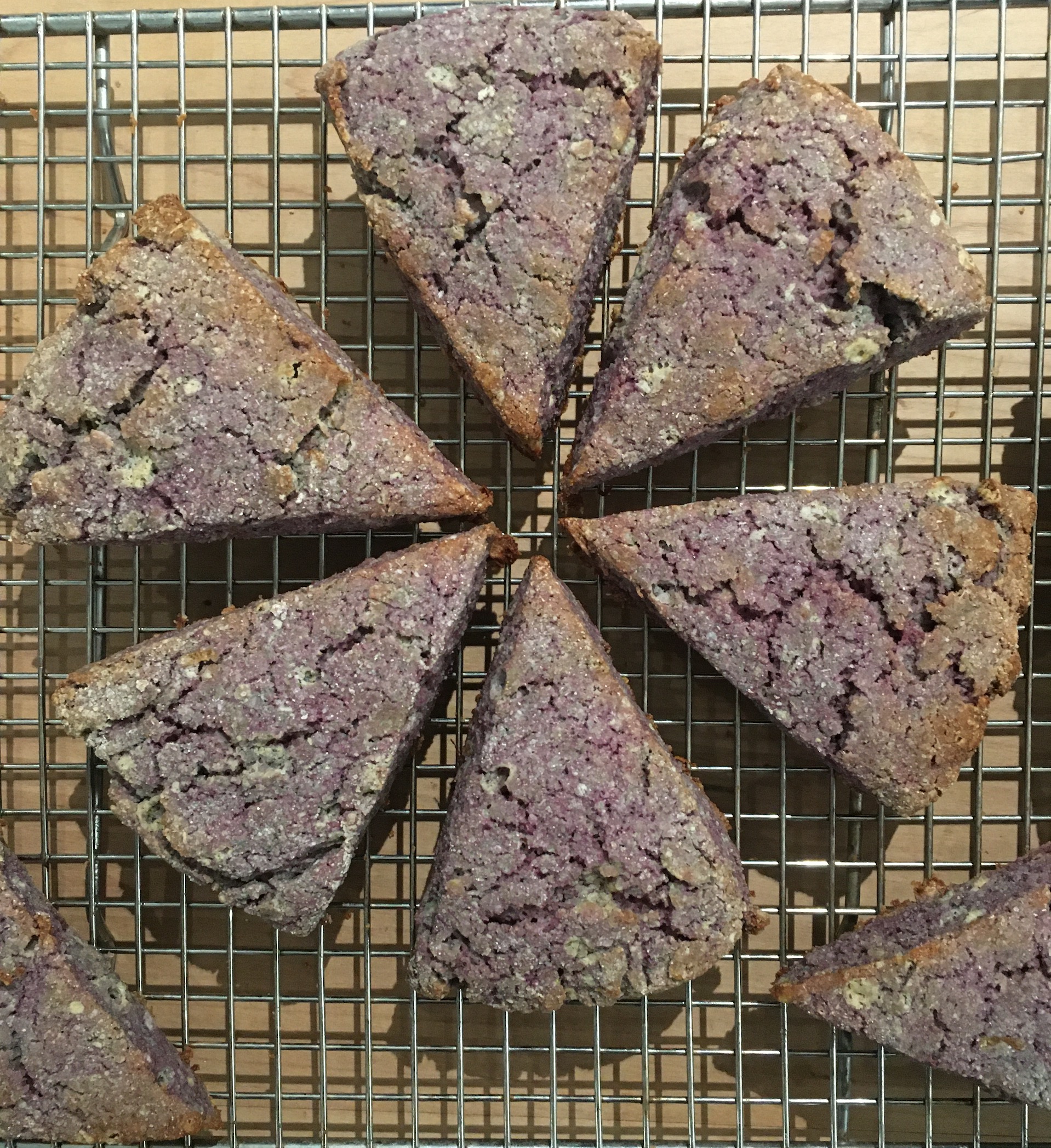
Black currant scones before baking–colour unusual, but okay…

So I’ve been experimenting with new and interesting ways to incorporate fruit into baked goods.

Two weeks ago I made a cookie bar that is supposed to be filled with chocolate fudge. I filled it with black currant puree instead, making a wonderful tart-sweet flavour bomb.

There was thawed black currant puree left over from the bars, so for Sunday breakfast I took my favourite lemon barley scone recipe (which I’ll have to blog about someday …) and substituted black currant puree for the liquid ingredients. The results were … mixed.

The flavour was good, but of course I love black currant, so I expected that. The colour, on the other hand, was more of a conversation piece than a bonus—dingy purple. The scones didn’t rise as well as they usually do either, and the texture was heavier than I would have liked.

So I’d say the scone experiment was inconclusive and needs more testing.

Black currant scones after baking–colour a bit disturbing…

I also made raspberry crisp and lemon pound cake studded with red currants over the past two weeks, and these were resounding successes. They, too, require replication.

And there’s plenty more fruit for additional studies! I don’t think it will be too much of a hardship to work our way through the frozen fruit.

Autumnal Assessment

April is upon us, and it’s time to assess how the garden year went.

In a word, it was disappointing. 

It started off bad, with my seedlings in fungal-infected seed raising mix. That problem was made worse when I contracted Covid and couldn’t move those seedlings into better mix quickly, so they languished for a while. Many were planted out late or small.

And the problems continued once plants were in the garden. Flooding last winter sucked the nitrogen out of the soil in about half the garden, leaving my pumpkins, corn, peppers and eggplants all looking anaemic. To be fair, I harvested pumpkins—enough to enjoy fresh, but not my usual quantity that lasts us all year. We also ate sweet corn, but had none extra to freeze. The peppers and eggplants were so slow to grow this year that they’re only now ripening fruits—just in time to be killed off by winter temperatures.

The tomatoes and peas grew well this year, but were decimated by birds.

The cucumbers and melons were slammed by phytophthora during an early summer wet period—most died, and those that survived grew slowly. The only cucumbers that grew well turned out inedibly bitter, and I tore the plants out of the ground.

On the positive side, the potatoes were great—died off a little earlier than I expected, but produced plenty of tubers, with little trouble in the way of pests and disease. 

The perennial fruits did well overall, too, and the freezer is stuffed with berries for the winter. Even the 3-year-old fruit trees gave us crops this year (small ones, but the trees are still tiny themselves).

So, as usual, there were wins and losses, and now I’m looking forward to how to increase the wins for next year. I spent the past several weekends digging a drainage ditch and soak pit to draw flood water off the garden this winter. Hopefully that will help retain the nutrients I’m hauling to the garden in the form of manure each week. My husband and I have also been discussing improving our bird defences before next spring—permanently netting an area of the garden for the most bird-ravaged crops. I’ve also identified some new varieties of bean that are doing better in the new garden than my standards from the old garden, and I’ll adjust next year’s planting to allow more space for the more vigorous varieties. 

That’s the best part of gardening, really. You always get another chance to do it better. So I head into autumn a little disappointed in last year’s garden, but with high hopes for what next year will bring.

Cheese and Quince Tart

Our quince tree gave its first harvest ever this year, which is exciting. I picked them today, and my husband went looking for some new (to us) recipes that use quince.

He came across Tarta de Queso y Membrillo con Almíbar de Cardamomo—Cheese and Quince Tart with Cardamom Syrup. How could I resist? 

It’s been a while since I followed a recipe in Spanish, so there was an added level of adventure for me making this recipe. I don’t think I ever bought or used azúcar flor (icing sugar) when we lived in Panama, so I had to look that one up.

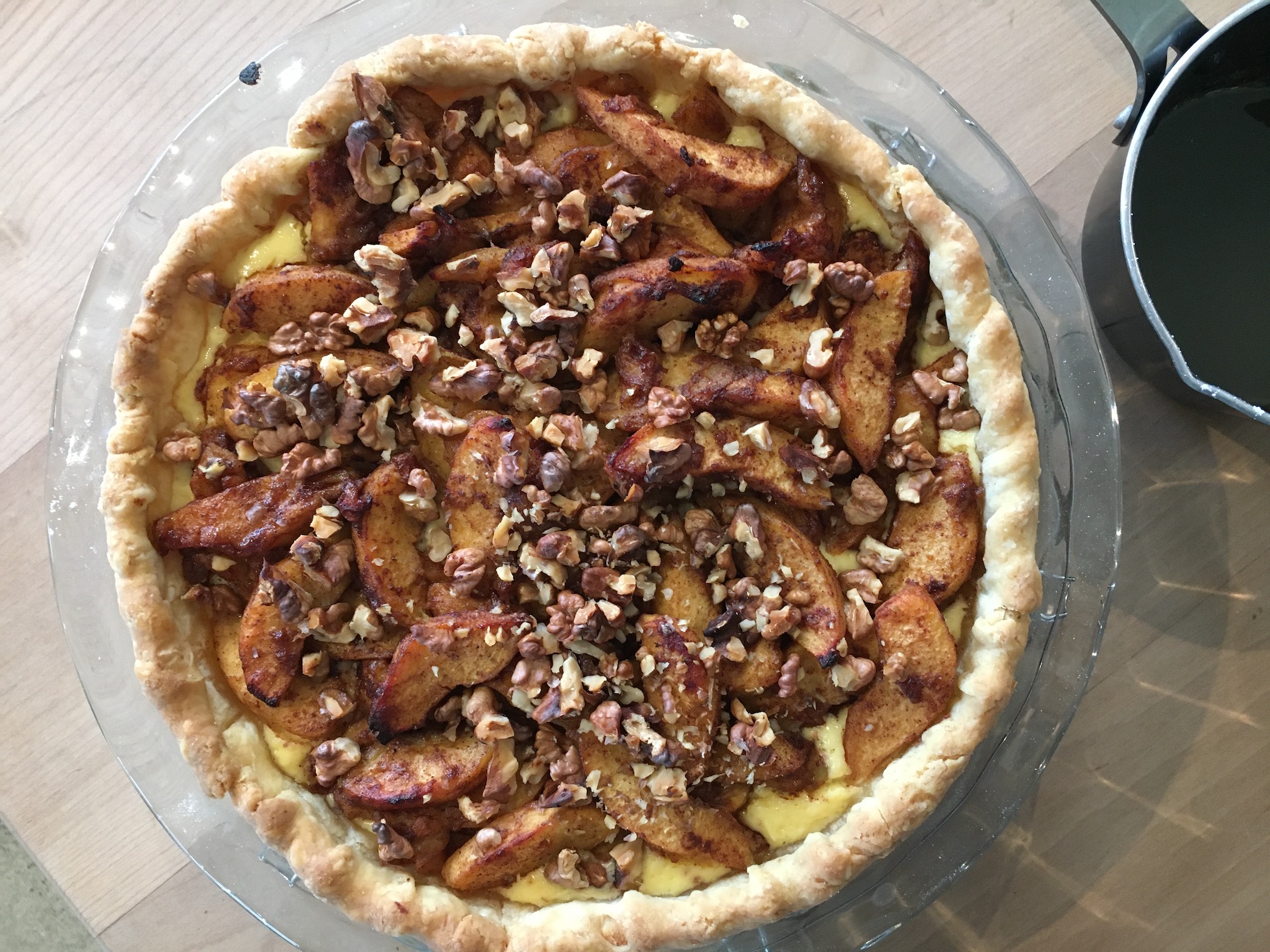
Even in your native language, this is not a tart you whip out quickly—nothing using quince is, and this has lots of different things to prepare—but it is delicious! It’s essentially cheesecake with caramelised quince in a pie crust. What’s not to like?

I modified the recipe slightly—here’s my version, in English.

Cheese layer:
1 package cream cheese
1/2 cup unsweetened yogurt
2 Tbs honey
1 egg
1 Tbs fresh lemon juice

Quince layer:
3 large or 6 small quince
1/4 cup brown sugar
25 g butter
1 Tbs cinnamon

Enough pie dough for 1 crust (see my pie dough recipe here)

1/2 cup chopped walnuts

Cardamom syrup:
3/4 cup icing sugar
3 Tbs fresh lemon juice
3 cardamom pods

Make your pie crust and refrigerate until needed.

Mix the ingredients for the cheese layer with a handheld mixer until well combined. Set aside.

Peel, core, and thinly slice the quince (you should have 7-8 cups of fruit). Place the quince, butter and brown sugar in a large skillet and cook on low heat for about 10 minutes, until the quince has softened. Stir in the cinnamon.

Roll out the pie dough and line a pie or tart pan with it. Pour the cheese mixture evenly over the bottom of the crust. Layer the caramelised quince on top, and sprinkle with chopped walnuts.

Bake at 190℃ for 40-45 minutes.

While the pie is baking, make the sugar syrup. Place the icing sugar, lemon juice and cardamom pods in a small saucepan and boil gently for 8 minutes. Remove from the heat and let cool. Drizzle over the pie when serving.

The recipe I used said to serve the tart warm, which is how we ate it this evening. But I’m looking forward to a second piece tomorrow, because I think it’ll be even better cold. 

Next time I make this (because there will no doubt be a next time), I’ll crush the cardamom pods so that the syrup is more strongly flavoured. I also think it would be even more spectacular with a cup of ugni berries (Chilean guava) tossed into the quince mixture.

If you don’t have quince, this tart would be lovely made with apple or pear, too.

Harvest Days

My hands smell like onions. My fingernails are stained purple. The walls and cabinetry in the kitchen are festooned with colourful splatters and drips. The floor is sticky underfoot.

It must be harvest time.

The garden gushes vegetables in late summer, and the shorter days warn that it’s time to start preserving the bounty before it’s gone.

One of my favourite ways to save summer’s vegetables is in summer soup (which I’ve blogged about nearly every year since 2015). Because soup uses a bit of everything, there’s no need to have vast quantities of any one vegetable. And it doesn’t matter if, say, the sweet peppers bombed or there’s an overabundance of sweet corn. Soup accepts what you’ve got and returns lovely meals all packaged and ready to go on those winter evenings when you come home late from work. It is both forgiving and giving.

So it’s worth a long day in the kitchen to make and bottle (can) a big vat of the stuff.

And while you’re at it, it’s super easy to toss carrot peels, corn cobs, celery tops, and other ‘waste’ from soup making into a large pot to simmer for stock. Run the stock through the canner after the soup, and you’ve got delicious summer flavouring for winter risottos and stews.

So I may have spent fourteen hours in the kitchen on Saturday, but at the end of the day, I had fourteen quarts of soup and six quarts of stock (and another four quarts of pickled onions, because you know, if you’re going to spend all day in the kitchen, you may as well make the most of it.

In the coming weeks, I’ll bring in the pumpkins and potatoes, freeze sweet corn, and string hot peppers for drying. The kitchen will be messy, and I’ll have too much to get done.

But when it’s all over, I’ll be able to relax, at least for a while, until the winter crops need to be weeded …

Enjoying the Shoulder Season

sunflowers
Summer sunflowers are still in full swing.

The end of February marks the end of official summer in New Zealand. The shift to autumn is full of ups and downs. The first half of this week was as hot as it gets here, with temperatures in the low 30s (around 90℉). On Tuesday, it was hot enough that my husband and I headed to the beach for a swim after work, and I didn’t even need my wetsuit—the water and the air were both warm. 

But on Wednesday, a front came through, bringing rain and a decidedly autumnal chill. By Thursday, the porcini were sprouting—a sure sign of autumn.

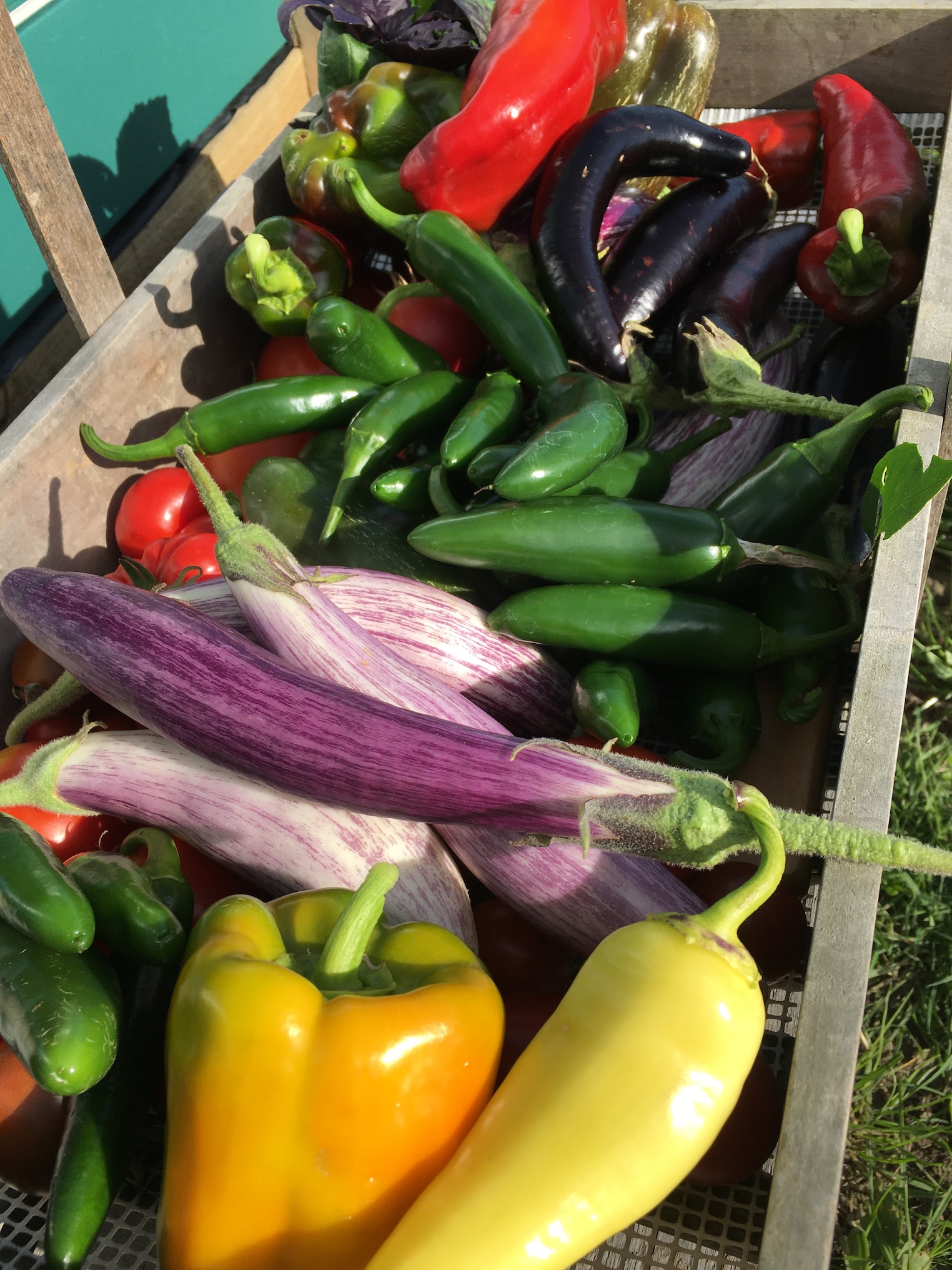
Of course, also on Thursday we harvested plenty of summer vegetables from the garden—zucchini, eggplant, tomatoes, peppers. The transitions between seasons are drawn out, messy affairs. The weather forecast for next week includes more summery weather intermixed with the rain and chill of autumn.

Autumn mushrooms are coming on.

So for now, we get to enjoy the delights of both seasons, harvesting summer’s bounty amidst the treats autumn brings. This weekend, I’ll plant out my winter crops, giving them time to establish during the shoulder season, before summer’s warmth leaves entirely. I’ll also harvest the soy beans and bottle up some summer soup before the vegetables are gone. Summer’s not over yet, but it’s time to start packing up. 

Zucchini and Tomato Tart

We’re in the bountiful days of summer right now. And while I’d like to be sitting in a chaise lounge enjoying that bounty all day, someone’s got to pick it and process it. At the moment, the processing mostly involves making pickles and chutneys, but there’s a lot more to come. Then there’s the necessary watering, weeding, tying up of tomatoes, planting of winter crops (because as John Snow says, winter’s coming)…

zucchini tomato tart

But at the end of each day, we do get to enjoy the fruits of the season. Last night I made one of my favourite mid-summer meals—zucchini and tomato tart.

The beauty of this tart belies its simplicity—just tomato and zucchini, embellished with a little parmesan cheese, garlic and basil. 

Back when I had dairy goats, I’d spread a layer of chevre on the bottom, too, which was divine. It also had the bonus of preventing the crust from getting too soggy. These days, without an unlimited supply of goat cheese, I put up with a soggy crust—the tart is still amazing.

This tart relies on having the best tomato and zucchini possible—it’s not a dish to make with out-of-season vegetables—so if you’re in the Northern Hemisphere, hang in there and enjoy this gem in July and August instead.

Download the recipe here.

The Grumbling Gardener

Like every serious gardener I know, I complain a lot.

The weather’s too hot and dry. It’s too cold and wet.

The winter was too cold. The winter was too mild.

The frost came too early, it came too late.

Aphids have killed this, a fungus has stunted that.

Poor germination, poor pollination, nitrogen deficiency, weed growth, pest birds … I can always find something about the garden that’s not right. Because there is so much that’s out of my control, it can’t possibly all go right.

And like all good gardeners, I hedge my bets.

Sixteen varieties of tomato, nine types of beans, six varieties of pumpkin, four different kinds of broccoli, and three different eggplants is betting on at least one or more of those varieties not surviving, not producing anything. Twelve zucchini plants, twenty-one peppers, and fifty-nine tomato plants is betting that some will die, fruits will be eaten by the birds, and many will underproduce for one reason or another.

So today, after grumbling about dry soil, nutrient-deprived plants and destructive blackbirds, I returned from the garden with more than we could eat, as I did yesterday and the day before, and the day before that. I’m awash in garden largess, in spite of the birds, the aphids, the weather.

I’ve largely ignored rising food costs and the current egg shortage crisis. I don’t worry about what we’ll eat the next time we contract Covid and have to isolate. I plan my main picking for weekdays, when excess can be given away at work. I bottle, dry and freeze as much as I can, squirreling away the extra for the winter (hedging my bets that the winter crops won’t germinate, will be eaten by birds, will be flooded out …).

It is the precarious wealth of the garden, and January is the time when my grumbling is often silenced by the next mouthful of delicious vegetables. I can occasionally walk through the garden in January and be overwhelmed by the abundance.

Of course, once I get over that, I’m back to my grumbling. I mean, just look at this photo—the yellowed corn, the stunted pumpkins, the prematurely senescing potatoes …