January in the Garden

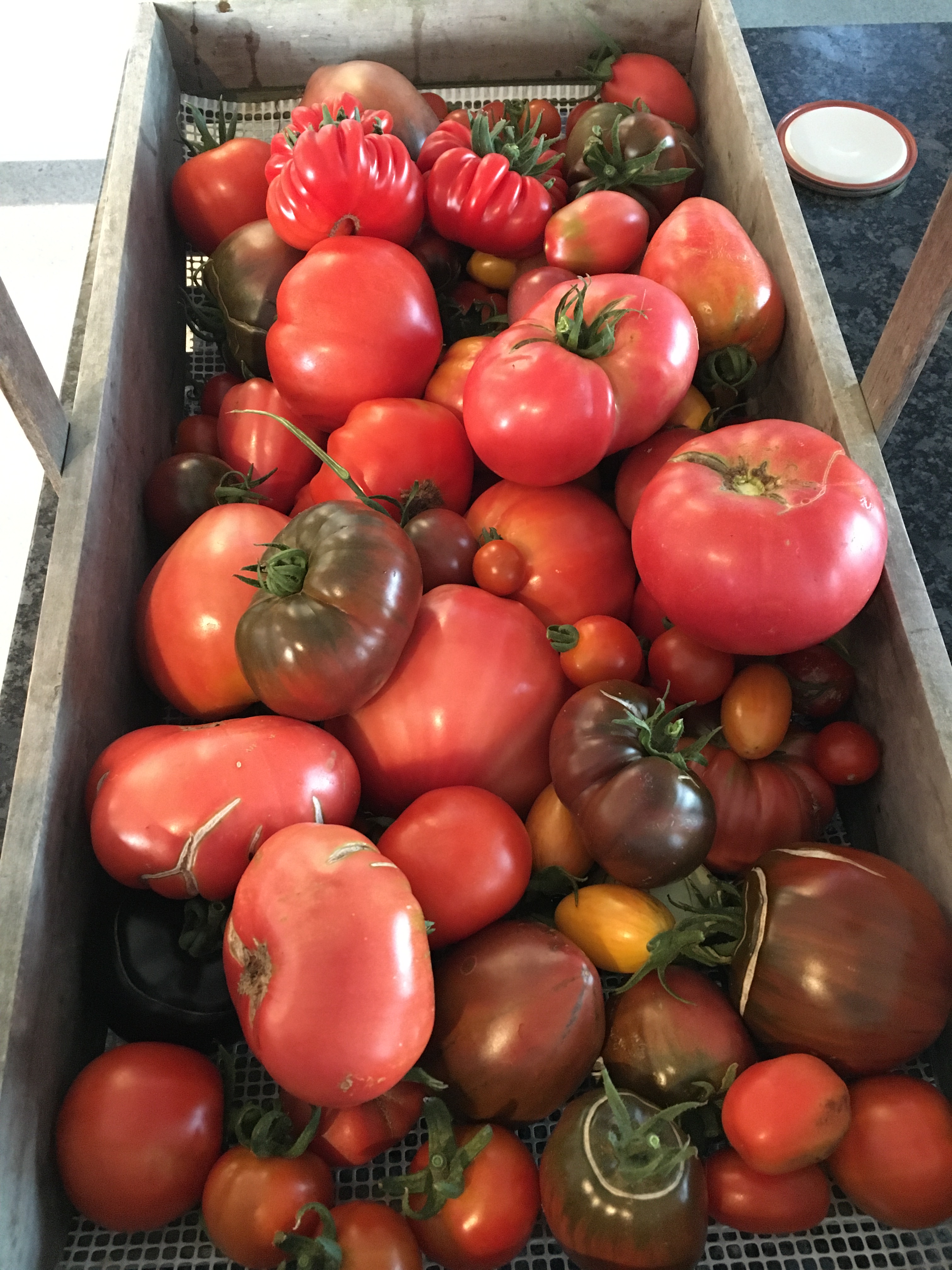
January is quite possibly the best month in the garden. Seemingly overnight, the vegetables double in size. Summer crops begin ripening. Weed growth slows, and the vegetables are large enough to compete with all but the most aggressive weeds. Garden work switches from planting and weeding to picking and processing. The frenzy of December berry crops is over, and the cupboard is bursting with jam.

January is a time to enjoy the fruits of my labour. Not that there isn’t work to do, but the rewards of all my work are beginning to outweigh the effort. It’s a great way to start the new year.

Another great way to start the year is with the giant plant tags Santa Claus made me for Christmas. They’re not the most efficient markers for the garden, but they’re adorable and add a touch of whimsy.

With luck (and a lot of hard work by my husband), by the end of January, I’ll also have a nice new garden shed for storing tools and potting up plants. There will be a bit of whimsy in the shed, as well, inspired by a leaded glass window we found for it. I can’t wait to have that bit of the garden plan complete and functional!

I hope your January is full of things to enjoy and to look forward to.

A Seasonal Celebration of Food

The traditional Christmas celebrations and decorations involving twinkling lights, snowflakes, snowmen, warm drinks and roaring fires make no sense here in Aotearoa New Zealand. But there’s plenty to celebrate at this time of year.

I always know it’s time to start thinking about the holidays when the strawberries and gooseberries ripen. I know it’s time to decorate when I can stroll through the garden, grazing on peas, gooseberries, raspberries, boysenberries and strawberries. When I can fill a colander with red and black currants. When the supermarket fruit begins to look old and nasty by comparison to what’s tumbling off the bushes at home. When it’s hard not to pick too much lettuce for the day’s salad.

Food is an important part of holiday celebrations, and for me half the celebration is the ability to eat my way through the garden. Finally in December, picking vegetables for dinner doesn’t feel like scrounging for whatever’s left from the winter crops. At some point during the month, the question of ‘what is there to cook for dinner’ shifts to ‘what needs to be eaten today’ (or processed and preserved). Jam making is my Christmas ‘baking’. Fresh berries replace the traditional bowl of mixed nuts put out for munching. Fruit ice creams and cordials are our figgy pudding and wassail. 

As we make our way toward the summer solstice, the long days provide plenty of daylight for picking and processing fruit. And because it’s the Christmas season, those long days (and nights) in the garden and kitchen feel more like a celebration than a chore.

Is there holiday stress because of the increase in garden work? You bet—I can’t tell you how many times I’ve sat in the car, bucket between my knees, shelling peas on the way to the beach so I can get the work done and still have time for fun stuff. And keeping up with the weeds is a struggle while many of the vegetables are still small. Then there’s the inevitable broken tap or pierced irrigation line you find the first time you need to water (which usually happens this month). And the constant struggle with the thieving birds, who want to partake of the garden’s bounty, too.

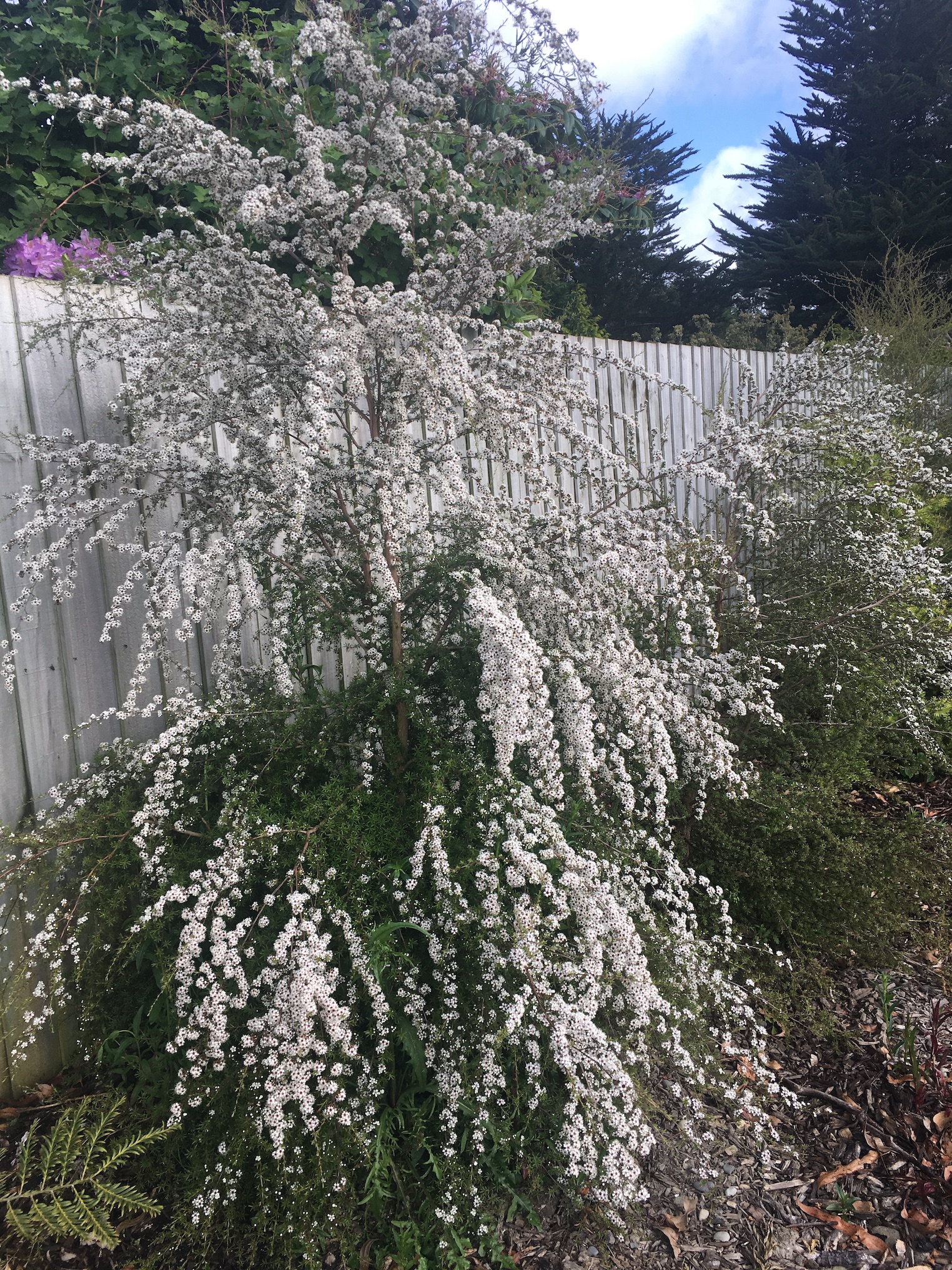
We may not have snow, but the kānuka flowers are a spectacular substitute.

But overall, the holiday season is a time to celebrate the garden’s summer bounty. It’s a time of fresh fruit and vegetables, and long days outdoors. Next week marks the end of my work year, with schools letting out for summer, and this weekend will be my first jam-making weekend of the season. Let the celebrations begin!

Ah … the holiday season …

It’s the time of year when an author’s thoughts naturally turn to …

…marketing.

Yes, it’s sad that I have spent more time considering how I’m going to sell books this holiday season than I have planning my family’s Christmas celebrations and summer holiday trips.

This year, I’ve decided to explore the summer market scene. My first market is coming up this Sunday.

The North Canterbury Creative Market will be held from 11 am to 4 pm on Sunday, 3 December at the Rangiora Showgrounds (156 Ashley St, Rangiora). I’m really excited about this market, not just for the possibility of selling some books, but also because there will be over 80 stalls bursting with locally made awesomeness. I can’t imagine a better place to find unique Christmas gifts that support local creatives.

I’ll also have a stall at the Spencer Park Market and Gala from 10 am to 4 pm on January 1st and 2nd. This event is sure to be a fun time for the whole family, with food, rides and games in addition to over 115 craft and market stalls. I can already taste the mini-donuts … 

In the pursuit of sales, I have also joined 76 other fantasy and science fiction authors to offer you an amazing lineup of gift ideas this Christmas. Check out some of these awesome books, either for yourself or those readers on your gift list.

And finally, I’ve discounted my e-books on Smashwords for their End of Year Sale. From 15 December through 1 January, my books are 50% off, along with zillions of other discounted or free books from other authors. This is definitely a sale to take advantage of. Stock up on reading material for the holidays.

And once all that marketing is out of the way, yeah, I guess I need to think about what I’m getting folks for Christmas … And I definitely need to spend a few days at the beach.

Giving Thanks

Today is Thanksgiving Day in the U.S. Although my husband and I don’t celebrate the day here with a gathering of friends and family, pumpkin pie out of season, and imported cranberry sauce like some American expats, I still like to take the day to give thanks.

Today I’m particularly thankful for a number of things. I’ve been home sick all week. Today is day nine of this miserable head cold and it’s getting really old. After more than a week of all the joys a bad cold can offer, I am incredibly thankful for the luxury of taking time off work when I’m sick.

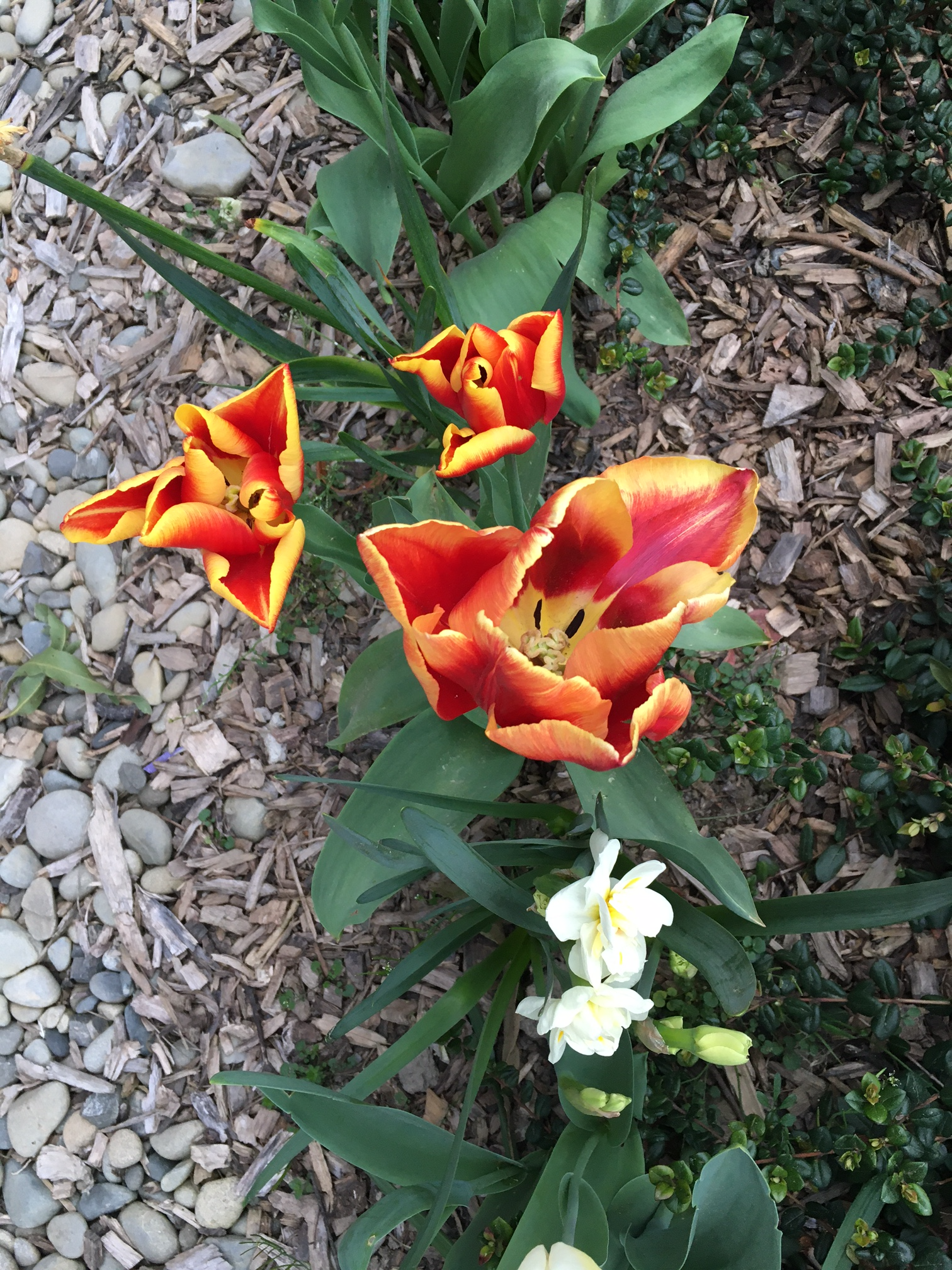
I’m thankful for the riotous display of flowers outside my office window, which made me smile in spite of feeling crummy. I am also thankful for the vegetable garden’s springtime bounty, which allowed me to hole up at home without need for a trip to the grocery store. I’m thankful for the neighbour who brought me lemons, knowing I was sick. I’m thankful for the warm sunshine I sat in at lunchtimes this week.

Today, wild wind and rain are pounding the garden and house. So today I am thankful for the rain—it was much needed. I am also thankful for a roof that doesn’t leak, and snug windows and doors through which the southerly wind can’t whistle.

Those are the little things, of course. With the drumbeat of war and disaster in the news, I’m also keenly aware of and thankful for the safety and stability of my life. My easy access to food and water. My ability to plant a garden and expect to be able to harvest it. The opportunity to live in a culture in which most people embrace diversity and treat others with respect. 

So, while I’ve had plenty to grumble about this week, I’ve also been blessed in thousands of immeasurable ways, for which I am grateful every day, not just on Thanksgiving.

May your day be filled with things to be thankful for.

Garden Transformation

The garden group I’m part of recently met at our house and took a stroll through our gardens. It was great to get ideas and advice on disease problems, nutrient deficiency issues, and all manner of other aspects of gardening.

But equally valuable was to get their perspective on the changes that have taken place in our garden over the past year. We see the place daily and don’t always appreciate how much real progress we’re making on bringing this degraded paddock back to life.

So I thought today I’d look back and do a little before/after comparison, to remind me of what all our hard work has wrought here over the past 3 years or so.

When we bought the property, there was nothing but poorly-growing pasture grass and weeds. The developer had scraped every bit of topsoil off, leaving us with heavy clay and rocks. When we had the soil tested, we found there were virtually no nutrients in it at all. Truly a blank slate. Or first attempts at growing vegetables here yielded shin-high corn plants. The tomatoes, peppers and eggplants stopped growing the moment I planted them out.

Before we even moved in, we began to plant natives around the edges of the property. The fruit trees went in during our first winter in the house, as did the roses. We bought literal truckloads of compost to add to the soil, and I’ve incorporated trailer loads of manure gifted by generous neighbours with livestock. And I can’t count the number of bales of pea straw I’ve layered over garden beds over the past three years. We picked rocks of all sizes from the ground every time we dug a hole or planted a seed. Those rocks have formed the edges of raised beds, filled gabions and created paths all over the property.  

The results have been transformative. See for yourself.

Photos taken from about the same vantage point on the property–2019 vs 2023
The view from my office window, June 2020 vs November 2023–those native trees have grown 3 metres in 3 years!

Happy Halloween

It’s Halloween, and though the spooky season is not so spooky here in the Southern Hemisphere, I do have a little poem for you–some thoughts I had on old (possibly haunted?) vs new houses back in the depths of winter.

The walls are square,
Floor level.
When you shut the window
There is no draft.

There are no spiders in the bath,
No moths flap flap flapping
Around the kitchen light.

No rats slide greasily
Through the walls.
The attic is not insulated
With bird nests and skeletons.

When it rains outdoors
It doesn’t rain inside.

In this house, there are no ghosts
Rattling the cupboards,
Moaning down the chimney,
Pacing creaky floorboards at 3 AM.

Lonely, I throw the doors and windows open.

Spooky Reading

As a kid in North America, I used to love celebrating Halloween. I love spiders, bats and black cats. I love crisp autumn days and frosty nights. I love carving pumpkins. I love making costumes—I’d start planning each year’s costume in April. 

Yes, the candy was a nice bonus, but the real fun was walking the streets after dark wearing a costume and seeing all the other creative costumes out and about.

Here in the southern hemisphere? Well, Halloween makes no sense. By the end of October, spring is well advanced. We’re on daylight savings time, so the evenings are long and bright. I’m planting pumpkin seeds, not harvesting pumpkin fruits. We’re enjoying a riotous display of colours from the flowerbeds and eating delicious springtime crops like peas, asparagus and spinach. We’re planning our summer vacations, and looking forward to days on the beach.

Spooky? Not so much.

Still, I enjoy spiders, bats and black cats at any time of year. And witches never go out of style. 

Maybe that’s why I wrote The Ipswich Witch a few years ago. Because not all witches wear black, and maybe witches enjoy a little summer sun, too. (And a good date scone.)

So here’s to all the southern hemisphere witches, who are busy tending their gardens in October, growing all those herbs for their potions, filleting their fenny snakes, and drying fresh eye of newt and toe of frog. 

Reading never goes out of style either, so whether you’re a fan of the spooky season or prefer your Halloween reading to be a bit cosier, here are a few suggestions, all written by Kiwi authors:

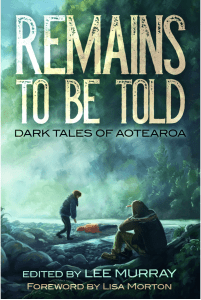
Remains to be Told: Dark Tales of Aotearoa

Remains to be Told: Dark Tales of Aotearoa is mired in the shifting landscape of the long white cloud, and deeply imbued with the myth, culture, and character of Aotearoa-New Zealand.

Curated by multi-award-winning author-editor Lee Murray, the anthology opens with a foreword by six-time Bram Stoker Awards®-winner and former HWA President Lisa Morton; and includes a brutal, lyrical poem by Kiwi resident Neil Gaiman.

Laced with intrigue, suspense, horror, and even a touch of humour, the anthology brings together stories and poems by some of the best homegrown and Kiwi-at-heart voices working in dark fiction today.

Remains to be Told features stories and poems by Dan Rabarts, Kirsten McKenzie, Celine Murray, Kathryn Burnett, Helena Claudia, Marty Young, Gina Cole, William Cook, Del Gibson, Paul Mannering, Tim Jones, Owen Marshall, Denver Grenell, Bryce Stevens, Debbie Cowens, Lee Murray, Jacqui Greaves, Tracie McBride, and Nikky Lee. 

Overdues and Occultism

(Book 1 Mt Eden Witches) by Jamie Sands

A witch in the broom closet probably shouldn’t be so interested in a ghost hunter, right?

That Basil is a librarian comes as no surprise to his Mt Eden community. That he’s a witch?

Yeah. That might raise more than a few eyebrows.

When Sebastian, a paranormal investigator filming a web series starts snooping around Basil’s library, he stirs up more than just Basil’s heart. Between Basil’s own self-doubt, a ghost who steals books and Sebastian, an enthusiastic extrovert bent on uncovering secrets, Basil’s life is about to get a lot more complicated.

Overdues and Occultism is a novella-length story featuring ghosts, witches and a sweet gay romance. It’s part of the Witchy Fiction project of New Zealand authors.

Angelfire

by Deryn Pittar and Meg Buchanan

Emma isn’t looking for trouble. She’s an angel in hiding – but her evil brother has found her.

She’s been chosen as this year’s offering for Halloween, and she’s prepared to fight to the death to prevent it happening.

Her neighbour is home on leave: Handsome, fighting fit and after one meeting their mutual attraction is sparking. Can she dare to ask for his help? Will he believe her?

He has a problem he’s struggling to conquer, but he’s used to death walking beside him and isn’t afraid of anything. Is being brave enough?

Angelfire is the first book in the touching Angelfire series. If you like appealing characters, heart-warming moments and action, then you’ll love Meg and Deryn’s exciting novel.

Author Lee Murray

For the spooky season, you can’t go wrong with just about any title by New Zealand’s mistress of horror, Lee Murray. Check out all her books on her website or her Amazon author page.

It was the best of times. It was the worst of times.

Spring is a season of contrasts. Not just the weather, which can change on a dime from cold and rainy to dry and hot, and then back again, but the spring gardening season has more ups and downs than other seasons.

Take the past two weeks, for instance. The fruit trees are in bloom, daffodils and tulips are flowering, the asparagus is up, and the berries are leafing out—the garden is green and lush, a real delight! The seeds I’ve planted over the past month are growing well, and I’ve begun planting out the frost-tolerant crops. The sun has warmed the soil, and the worms are going crazy, incorporating all the manure I added to the garden over the winter. It’s the best of times.

On the other hand, when I put the freshly sprouted peas in the greenhouse to grow for a week before planting them out, the rats and mice got into them and ate about a quarter of them. Disappointing, but to be fair, when it came time to plant them out, I had the perfect quantity for the area I had prepared, so no harm done. I set some rat traps, and planted my second planting of peas in a tray indoors.

Saturday morning, I set the new tray of beautifully sprouted peas in the greenhouse, just until afternoon when I planned on planting them out.

By the time I was ready to plant, a rat had eaten them all. Yes, during the day, while I worked just a few metres away in the garden. Gutting, especially after two weeks of having the sneaky rodent eat the bait out of my rat traps without getting caught. Grr! To add insult to injury, when I removed the pile of bricks I knew the rat was nesting under, I found a huge stash of peas and wilted pea sprouts—the little stinker wasn’t even eating them all—he was stockpiling. I have since ordered a DOC200 trap—I’m gonna get this guy one way or another before he eats more peas. 

On Sunday, we experienced a typical springtime nor’wester—warm dry wind racing across the plains at 100 kph or more. Just after lunch, a particularly violent gust blew two panels out of our new greenhouse, including one panel we’d lost in a previous wind and had reinforced so it wouldn’t happen again. Later gusts tore a third panel out as well. This greenhouse was advertised as being designed in New Zealand for New Zealand conditions. Clearly they didn’t test the thing on the Canterbury Plains. Arg! It’s the worst of times.

In spite of the delights of spring, it seems there’s always another pest, another problem to deal with. By summer, I know that most of the problems will be either solved, or abandoned as a lost cause, but in springtime, hopes run high, and disasters feel truly disastrous.

I complain, even though I know that the springtime garden disasters are fixable (for the most part). But I suppose part of why I enjoy gardening so much is the challenge. Outsmarting pests; growing crops out of season; battling poor soil, wind, drought, flooding … sometimes I think that’s half the fun.

So I look to the weather forecast for the next 24 hours—severe wind warnings and a high of 20 today, followed by snow tomorrow—and buckle up for the roller coaster ride.

Pest Management: Control

Yesterday I wrote about strategies for preventing pest problems. If you’ve taken all the measures you can to prevent pests, but the pests arrive anyway, there are different questions to ask:

Centipedes are predators of many garden pests.
  1. Do I need to worry? Low levels of pests aren’t a big deal. A few aphids, a caterpillar here or there, the odd bite out of a leaf—these things aren’t going to have a big impact on the quality or quantity of your harvest. Just keep an eye on them to be sure the problem doesn’t get worse.
  2. Can I physically remove them? I’m a huge fan of squishing and hosing pests off plants. For example, I have problems every spring with aphids on my roses. If I do nothing, the plants become completely covered, and the blooms are destroyed. So in spring, I keep an eye on the plants, and once the aphids start reproducing, I hose the plants down once a week, knocking off most of the aphids. Usually I only have to do this about three times before the aphids’ natural enemies build up enough to keep them under control without my help.
  3. Can you disrupt a critical part of your pest’s life cycle? Is there a life stage that can be easily killed, or has specific requirements you can disrupt? For example, I keep a close eye on my brassica seedlings, looking out for cabbage white butterfly eggs on the undersides of the leaves. All it takes is a quick swipe of the thumb across the bottom of each leaf to squash the eggs and eliminate future problems with caterpillars. Another example is my recent problems with slaters in my greenhouses. Discovering that the slaters are congregating between cement blocks stacked beside the greenhouse, I’ve started regularly checking and squashing all the slaters in those blocks. (I could also have moved the blocks, to eliminate the slaters’ shelter, but since the population was quite high, I thought squishing a whole lot of them would be more effective for now. Later I will probably move the blocks to make the area around the greenhouse less attractive to slaters). 
  4. Can I make use of them? Pest-covered plants, grass grubs and slugs all get thrown over the fence to my chickens, who turn them into beautiful eggs for me and save me from the disgusting task of squishing the bugs. 
  5. Can I pull out badly infested plants? If there’s a couple of plants badly infested, but the pests haven’t spread much, rip out those infested plants and destroy the pests on them. You’ll lose a few plants, but you’ll protect the rest of your crop.
Pest-gobbling chickens.

In an IPM system, you don’t consider any sort of chemical control until you’d exhausted all the possibilities above. In practice in my garden, I almost never need anything else. Occasionally, if I’ve missed an aphid infestation on a crop that can’t handle a strong spray of water, I’ll use a soap solution to kill aphids. That’s the extent of my chemical control. But if you do need to resort to chemicals, it’s important to choose the right one. The more specific it is to your pest, the better. Many modern pesticides are narrowly focused, and target specific pests, and that’s great. With a narrow target, the pesticide is less likely to kill beneficial insects or harm people and pets. Stay away from broad spectrum pesticides. Also, if you do use pesticides, be sure to follow the label directions carefully, wear protective gear, and dispose of leftover product and empty containers properly. 

Pest Management: prevention

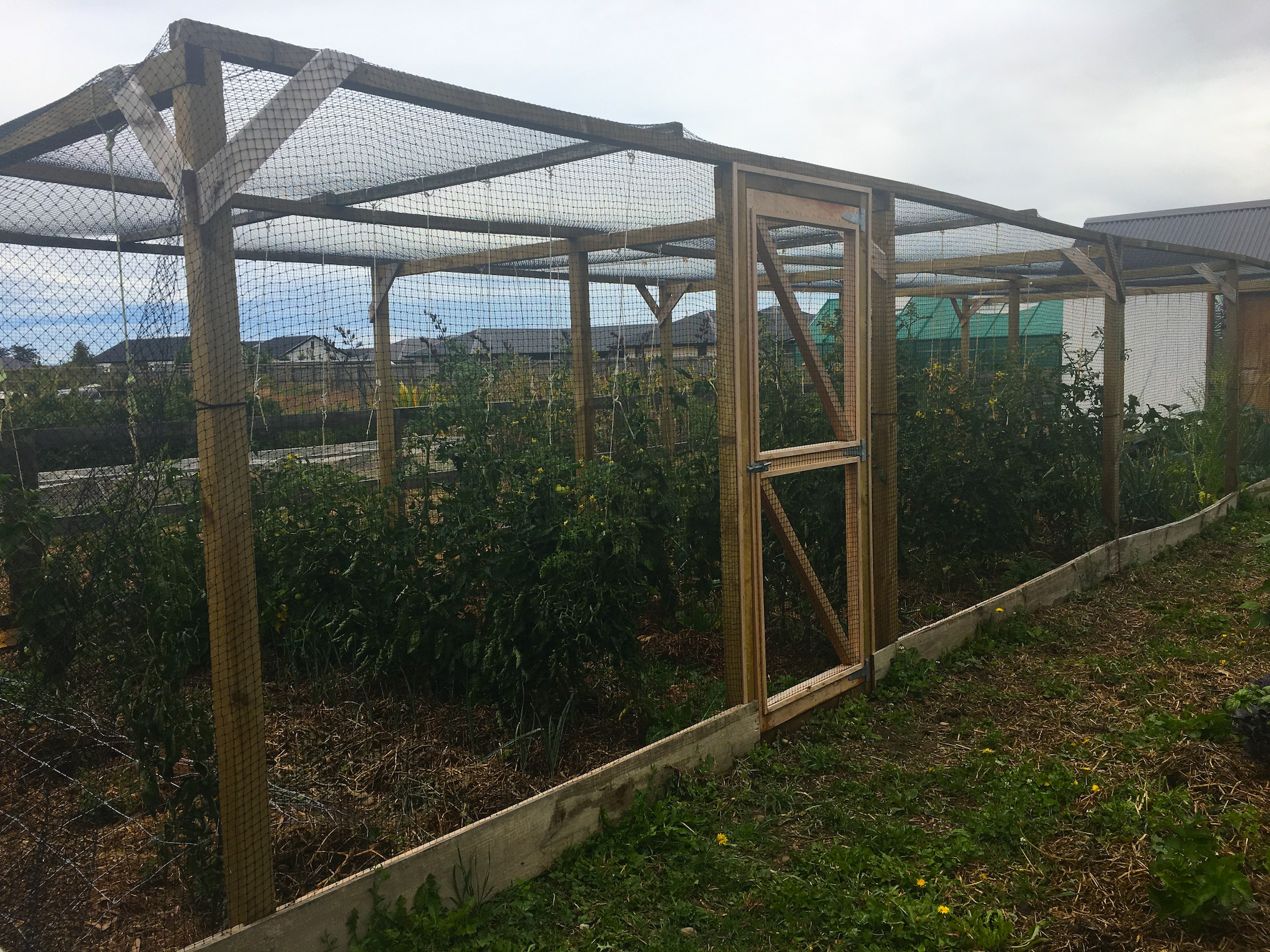
It’s nearly spring, so naturally my thoughts turn to the subject of pests. Our big pest-related project in the garden this year is bird netting a third of the vegetable garden, so we don’t lose most of our tomatoes and peas to the feathered rats.

Aphids–the one on the right is healthy, the one on the left has been parasitised by a wasp, one of the many natural enemies that keep aphids under control in the garden.

As an entomologist whose research focused on Integrated Pest Management, I always have a lot to say about pests. And it’s an important topic—globally, 30-40% of crop yield is lost to pests (interestingly, this figure didn’t change with the advent of chemical pesticides—insect pests are incredibly quick to evolve pesticide resistance). That’s a lot of wasted food!

For home gardeners, fighting pests is a daily task. Every place I’ve gardened has its own unique pest problems. Growing up in Lancaster Country, Pennsylvania, I remember the rabbits munching through the garden. In State College, Pennsylvania it was flea beetles that shot so many holes through my eggplants’ leaves they never had a chance to grow, and the squash bugs that clustered in masses under the leaves of my zucchinis. In Panama, leaf cutter ants could strip a plant bare in no time. 

In my first garden in New Zealand, aphids and rabbits were my main problems. When we first arrived on the property, there were so many rabbits I wondered if I’d be able to grow anything. A rabbit-proof fence was the first garden project there.

In my current garden, birds are my worst enemy—mostly English sparrows and European blackbirds. They strip seedlings bare, eat tomatoes, pull out onions, and scratch away mulch and soil, leaving plant roots to dry out (never mind the amount of chicken feed they snarf down every day!). 

Fortunately for me (and unfortunately for the pests), my masters degree focused on Integrated Pest Management (IPM), so I’m well-armed when it comes to tackling pest problems.

IPM is often called common sense pest control. In IPM, the goal isn’t to eliminate pests, but to minimise the damage pests cause, while choosing the most environmentally-friendly control methods that do the job.

To successfully use IPM, you must first know your enemy. What conditions does it like? What’s its life cycle? What are its natural enemies? How does it find your plants, and how does it travel? Books and the internet can tell you a lot, but careful observation of the pests in your garden is key. The particular conditions in your garden will affect how pests behave, and where their weaknesses are. If you know exactly where pests are and what they’re doing in your garden, you can begin to tackle them more effectively. For example, I know that in my current garden, there are particular varieties of squash the aphids like. By keeping an eye on those particular plants, I can catch aphid infestations early and deal with them before they spread to more plants.

Bird netting protecting pea seedlings

Once you know your pest’s habits, you can begin to consider control methods. Questions to ask:

  1. Can you time your plantings to avoid the damaging stage of the pest’s life cycle? For example, I don’t grow brassicas during the summer here—I have an early spring crop and a winter crop. By avoiding brassicas in summer, I eliminate bad problems with cabbage white butterflies, which tend to reach damaging levels around Christmas. I still have to be on the lookout for butterfly eggs on my seedlings, but once the plants are growing, they easily stay ahead of the caterpillars.
  2. Can you exclude the pests from your crops during critical time periods? For example, psyllids can transmit disease to potatoes and tomatoes, leading to poor growth and damaged tubers. By covering the plants with a fine mesh cloth, I can keep the psyllids out for most of the summer (until the plants are too big for the covers, by which point the psyllids don’t seem to be much of a problem). I do the same for my peas and lettuces—netting out birds until the plants are large enough to handle losing a few leaves. I also net my berry crops and olives before the fruits start ripening, so the birds don’t pick them before I do.
  3. Can you plant varieties the pests don’t like as much? For example, I plant mostly red varieties of lettuce, because the aphids take longer to discover them than they do the green ones. Usually, by the time the aphids find my red lettuces, they’re bolting and ready to pull out anyway.
  4. Can you plant a ‘trap’ crop that the pests like more than your favourite vegetables? I haven’t done this explicitly, but as I mentioned earlier, there are certain varieties of plants I know are particularly tasty to pests, and I closely monitor them and kill the pests on them before they can spread to other crops. A true trap crop is something you’re willing to pull out entirely when it is infested by your pest, in order to destroy the pest.
  5. Can you prevent pests from finding your crop? Interplanting different crops can help disrupt the spread of pests, because they struggle to find new plants to feed on. It can also help you make the most of the space in your garden. For example, I sometimes plant summer lettuces in the shade of my sweetcorn—not only does the shade help prevent the lettuce from bolting, it also seems to hide the lettuce from aphids.
  6. Can I encourage the pests’ natural enemies? Many pest insects are preyed upon or parasitised by the larvae of beetles , flies and wasps. The adults often eat pollen and nectar, so planting herbs and flowers is a great way to encourage many pests’ natural enemies.

All six of the questions above will help you avoid a pest problem in the first place. They are changes in the way you plant or grow your crops that make it less likely you’ll have pest problems. Tomorrow, I’ll look at what you can do once you’ve discovered pests in your garden.