Winter Tidy

Last weekend was quite warm—temperatures in the mid to upper teens—with sunshine to make me think of spring. It was a gift I didn’t want to waste.

A tidy herb garden. The wooden step had been nearly overgrown by the thymes on either side.

Most years, we have a window of beautiful weather in the depths of winter. It’s a great time to get out and do some tidying in the garden.

So last weekend, I deadheaded and trimmed the herbs and flowers. I had mostly kept up with the deadheading through the autumn, but I trimmed sparingly then, trying to coax a few more blooms out of bedraggled plants. Last weekend, I was ruthless. With fresh new growth just beginning to show, I cut away all of last year’s rangy branches, even if they managed to make it through most of winter with a few leaves intact. 

The thyme, finally mostly done blooming, got a major haircut. I reclaimed paths from great swathes of creeping thyme and from bushy thymes muscling out over the edges of their beds. I cut the mint and oregano to the ground to encourage nice lush cushions of leaves in spring. I cut off dense clumps of dead flower spikes from the winter savoury, and hacked a rangy sage back to try to improve its look. I hauled four wheelbarrow loads of dead leaves and flowers and trimmed herbs out of the front gardens. 

I actually rescued this path two weeks ago. The wet area shows where the creeping thyme was cut away. Other paths were equally invaded.

Then I turned my sights to the basket willow. It never fully loses its leaves here, but at some point in the winter, it needs to be cut to the ground. I harvested four hefty bundles of long sticks from it. I’ll use those sticks in the garden over the coming year to support plants, frost cloth and bird netting. Once the trees were levelled, it was time to tackle the thick layer of leaves they’d strewn over the path and the stones of the Zen garden. I raked them up and tucked them underneath other plants as mulch.

After the plant tidy-up, there was the garden shed to tackle. In two weeks, I’ll start using the shed weekly for starting seeds and potting up seedlings. It needs to be clean and tidy for that. So I sorted through all the stuff that had carelessly been tossed in there over the past couple of months—sacks of bird netting and potting mix, plant trays, irrigation hoses … everything that came out of the garden at the end of summer and had never been properly put away. 

My husband finished a beautiful rack on the back of the shed on Sunday, so the tidying expanded to include going through the pile of wood sitting in the orchard, and organising everything worth saving onto the new rack. Some of the things weren’t worth ‘saving’, but were worth using right away, leading to a new bench in the fern garden that I’m looking forward to sitting on with a cup of tea some day soon.

And of course, while I was at it, it was time to tidy the pile of fencing, hoops and stakes I use in the vegetable garden every summer. These items sit atop a wooden platform beside the compost pile. I hauled everything off the platform and realised the rats had shoved compost under it, nearly filling the space. 

So, the platform had to be lifted, and I hauled almost two full wheelbarrow loads of beautiful compost out from underneath and spread it on the garden. 

By Sunday afternoon, a walk through the yard was a delight, with everything neat and tidy. I had lunch on the porch, gazing out into an immaculate herb garden. I hadn’t considered it messy before, but the difference was stunning. The Zen garden, visible now that the willows are down, is a little gift every time I step outside. And I can’t wait to start seeds in the tidy garden shed.

Unfortunately, there will be no sitting outside to enjoy the garden this week. The clouds rolled in Monday morning, and by the time we got home from work, the rain had begun. It promises to be a proper winter storm, with wind, rain and temperatures in the single digits. (The snow won’t reach us here, but the mountains should be spectacular when the clouds clear.) I’ll have to enjoy the garden from indoors this week.

Frost Heave–Moving Mountains

Sometimes it’s the littlest things…

I enjoy winter hiking—I enjoy the crisp air, the opportunity to hike without sweating too much, the snow on the peaks. 

One of my favourite winter phenomena is frost heave. This is when moisture in the soil freezes. Since water expands when it freezes, the ice crystals push soil and rocks upward. We get frost heave at home, but in the mountains, where there is both more water and colder temperatures, the phenomenon can be spectacular.

On a cold Matariki morning a few weeks ago, I snapped a photo of five-centimetre-long ice needles near Foggy Peak. Each needle was topped by gravel—the whole top centimetre or more of the sloping surface lifted. As the sun rose and melted the ice, every rock fell a few centimetres downhill from where it started. I imagine this process happening daily all through winter—a slow-motion conveyor belt shifting the mountain downhill. 

Meanwhile, higher up on the mountain, water seeping into the cracks in rocks and then freezing shatters them day by day into smaller fragments to be added to the icy conveyor belt.

It is such a small thing, frost heave. But its slow action has a big effect. 

The Southern Alps are rising at a rate of 10 to 20 millimetres per year—some of the fastest rising mountains in the world. If no erosion had ever occurred, the mountains would currently stand over 20 kilometres tall. Our tallest mountain, Aoraki Mount Cook, is 3754 metres tall. 

Of course, when we think of erosion, we think of the big events like landslides and rock avalanches. These events can be spectacular. 

On 14 December 1991, a rock avalanche on Aoraki lowered the summit by 10 metres over the course of a few hours. Fourteen million cubic metres of rock and ice tumbled down the mountain at speeds of up to 300 kilometres per hour. The shock waves from the landslide were recorded on seismographs as far as 58 kilometres away.

But without frost heave, the 1991 Aoraki rock avalanche might never have happened. Frost heave slowly weakened the rocks, slowly snapped them into smaller and smaller pieces, slowly shifted their weight. Centimetre by centimetre, those little ice needles brought the mountainside down.

I like to think of frost heave as a metaphor. Each of those tiny ice crystals, by itself, can move a pebble, and together they bring down mountains.

Planning Obsession

How many varieties of tomato are too many? Do I need green and purple broccoli? Can I fit a sixth variety of carrot into my garden plan? Should I try a new type of runner bean?*

These are just some of the many questions I tackle each winter. July is a relatively quiet month outdoors, so I turn my garden energy to planning this month.

My husband laughs at me every year, because I am obsessive about planning and documenting the garden. 

In July, before the new year’s seed catalogue arrives, I create a garden map. Consulting last year’s map to be sure I’m rotating my crops from bed to bed, I mark out where each crop will be planted. That way I’m sure not to plant the potatoes next to the tomatoes (because the potatoes will no doubt sprawl into the tomatoes and make it hard to pick them), or plant my popcorn and sweetcorn next to one another (they’ll cross-pollinate and I’ll get odd corn that’s not particularly sweet and doesn’t pop). It ensures I think about how to make the most of my space. It also ensures I don’t fill up all the space with early crops, leaving no room for the later ones.

Additionally, because I know what’s going into each bed, I can easily assess which beds need to be prepared each weekend in the spring so they’ll be ready in time to receive their crops. 

Then I assess my seed situation. I keep a spreadsheet (don’t laugh—I have a lot of seeds) detailing how many seeds of each variety I have, and the plant by date (or harvest date if they’re seeds I’ve saved) of each. With all the seeds catalogued, I can make notes as to what I need to purchase.

In theory, this prevents me from spending a lot on seeds I won’t use.

The reality? I still end up with a large seed order every year. But at least I know I NEED those seeds … or something.

When it comes time to planting, I record all the seeds I plant in a garden notebook, noting how many I planted, when and how (direct seed or in pots). Later, I can then mark which seeds had poor germination or didn’t grow well. These notes get written in red pen, so I can easily locate the information when I’m deciding what varieties to plant the following year and what seeds to throw away.

And if that all sounds excessive, then you can relax—it means you don’t have a gardening problem like I do. 

And now, if you’ll excuse me, this year’s seed catalogue arrived today—I need to go choose some seeds.

* The answers to these questions, in order: you can’t have too many, yes, yes, and yes.

Mānawatia a Matariki

Today is Matariki, and like new year celebrations all around the world, it’s a day for assessing the past and planning the future. It’s a day to spend with family and friends. It’s a day to remember and honour our connections with other people, the seasons, and the land.

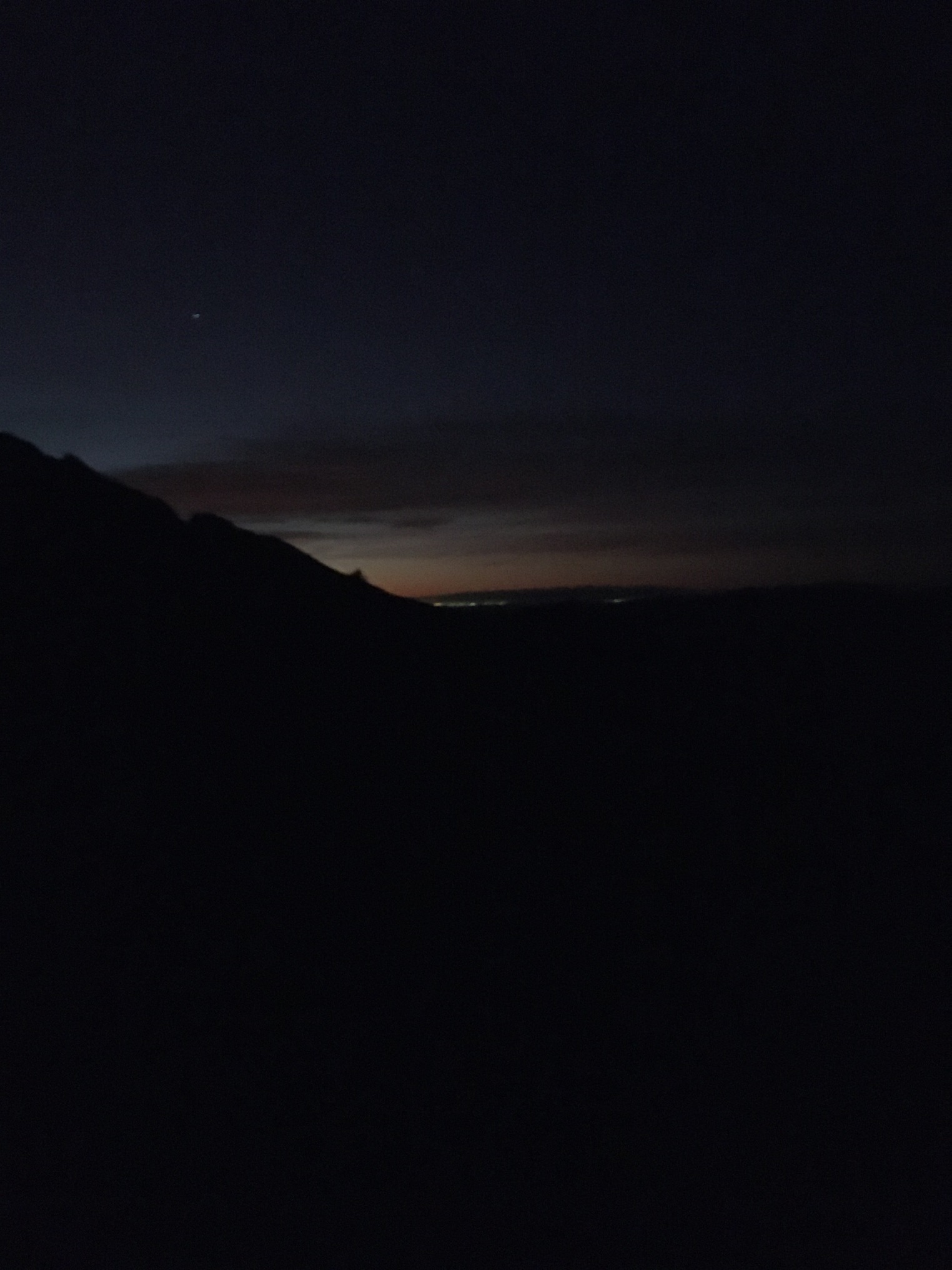
Spending time with whānau wasn’t an option for me today, so I thought I’d celebrate my connections to the seasons and the Earth instead. Before dawn I drove to Porter’s Pass and hiked up towards Foggy Peak. It was dark when I began the ascent, with just a hint of light to the east. I hiked the first 40 minutes or so with my head torch, before it was light enough to see the track.

Being midwinter, I expected it to be cold. It was actually surprisingly warm to start—the air temperature was above freezing. But the wind was stiff, and the temperature was still falling. Thankfully, there was no problem staying warm on the uphill. 

But the wind grew more fierce the further up I went. I stopped frequently to enjoy the beauty of dawn in the mountains, to gaze back at the bright smudges of towns dotting the plains, the pinpricks of light from the cars crawling up the mountain to Porters Pass. I never stopped for long, though.

I’d hoped to catch the sunrise from the summit of Foggy Peak, but as the scree gave way to icy snow, my progress slowed, and I wished for crampons. I watched sun strike the snowy peaks of the Craigieburn Range and decided that that would have to be good enough—I could push on to Foggy Peak, but I wasn’t going to sit there with a cup of tea and watch the sun rise as I’d hoped. Even if I’d been in time, it was too windy and cold.

So I had my tea in a sheltered spot lower down, where I could sit and enjoy the view. It wasn’t the summit, but it was a beautiful way to start the new year.

Mānawatia a Matariki! Happy Matariki!

The New Year Begins in Darkness

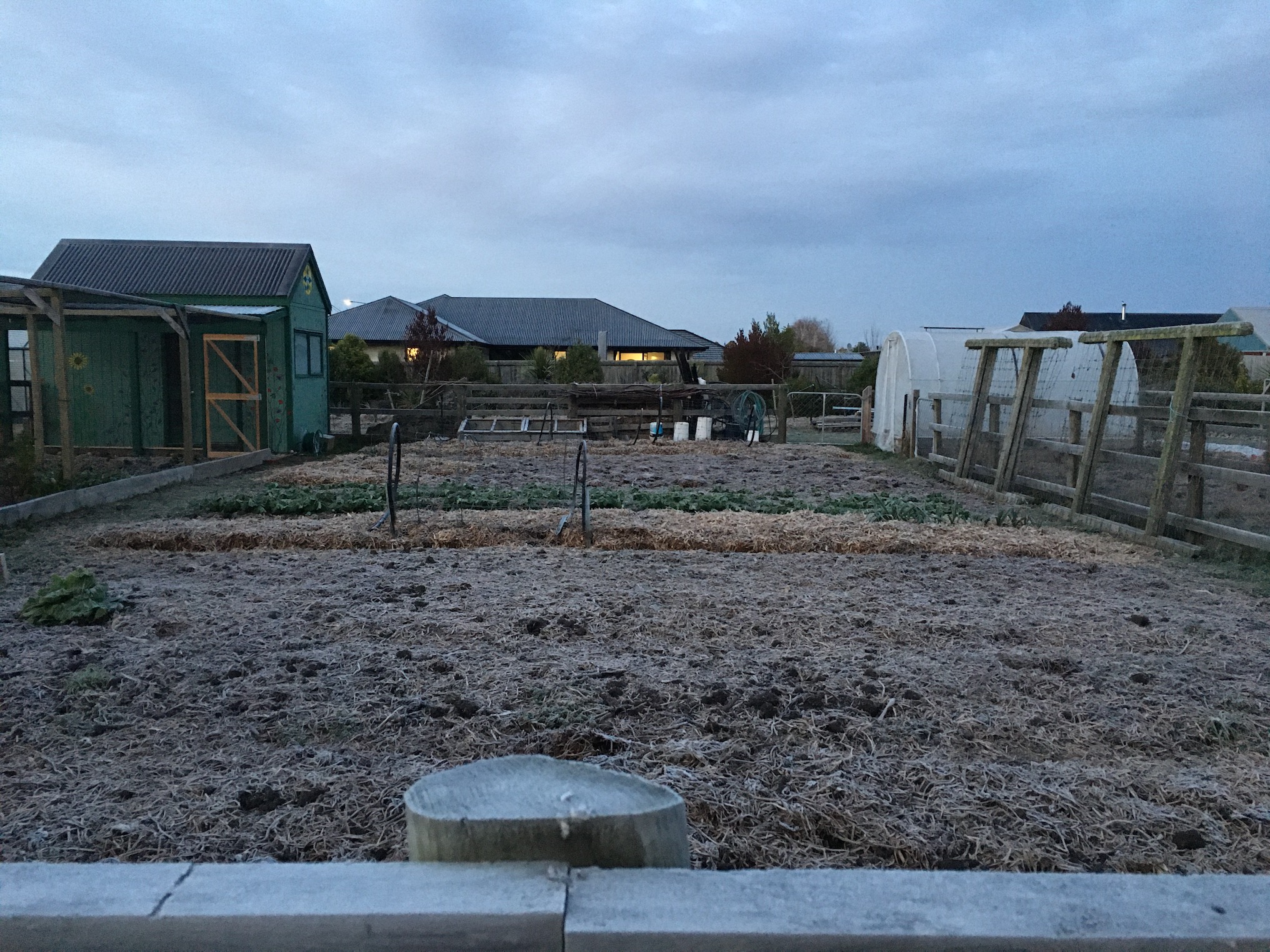
Frost on the winter garden.

Seven o’clock in the morning and it is still dark outside. Indeed, it is darker now than it was at two, when the moon hung high in the sky, bright enough to cast shadows.

It has been an unusually dry start to winter, so here at the winter solstice the darkness feels less oppressive than it sometimes does. There will be sunshine today, at least briefly.

More importantly, there will be summer’s bounty to eat, even in the darkness. 

Just a few years ago, shortly after we’d moved into the new place, I blogged about eating the last of the black currants on the winter solstice. This year on the solstice, the cupboard and freezer still groan with summer fruits and vegetables—a testament to how far the garden has come in a short time.

And because it has been dry, I’ve spent more time in the garden in May and June than I normally would. Summer’s dead plants have been cleared away, the fruit trees and berry bushes have been pruned, and the view of the garden on a frosty morning is one of tidy rest, of anticipation.

I am already thinking about spring. The autumn-planted broad beans are lush—sitting quietly in these short, cold days, but ready to burst into growth as the days grow longer in the coming weeks. I can already smell the musty scent of their September blossoms.

In the kitchen, every meal is a gift from the summer garden, from the summer me, who spent long hours picking and processing vegetables. It is hard not to feel guilty for how easy it is to prepare dinner in winter—heat a jar of vegetable soup, toss a jar of pasta sauce over noodles, thaw some frozen corn and peas … But maybe the guilt is not because I barely have to work for a meal in winter, but because I didn’t appreciate summer’s bounty enough when it was fresh. 

Here in the dark of winter, vegetable soup is a blessing, frozen sweet corn is ambrosia, and homemade tomato sauce is a more potent antidepressant than Prozac. 

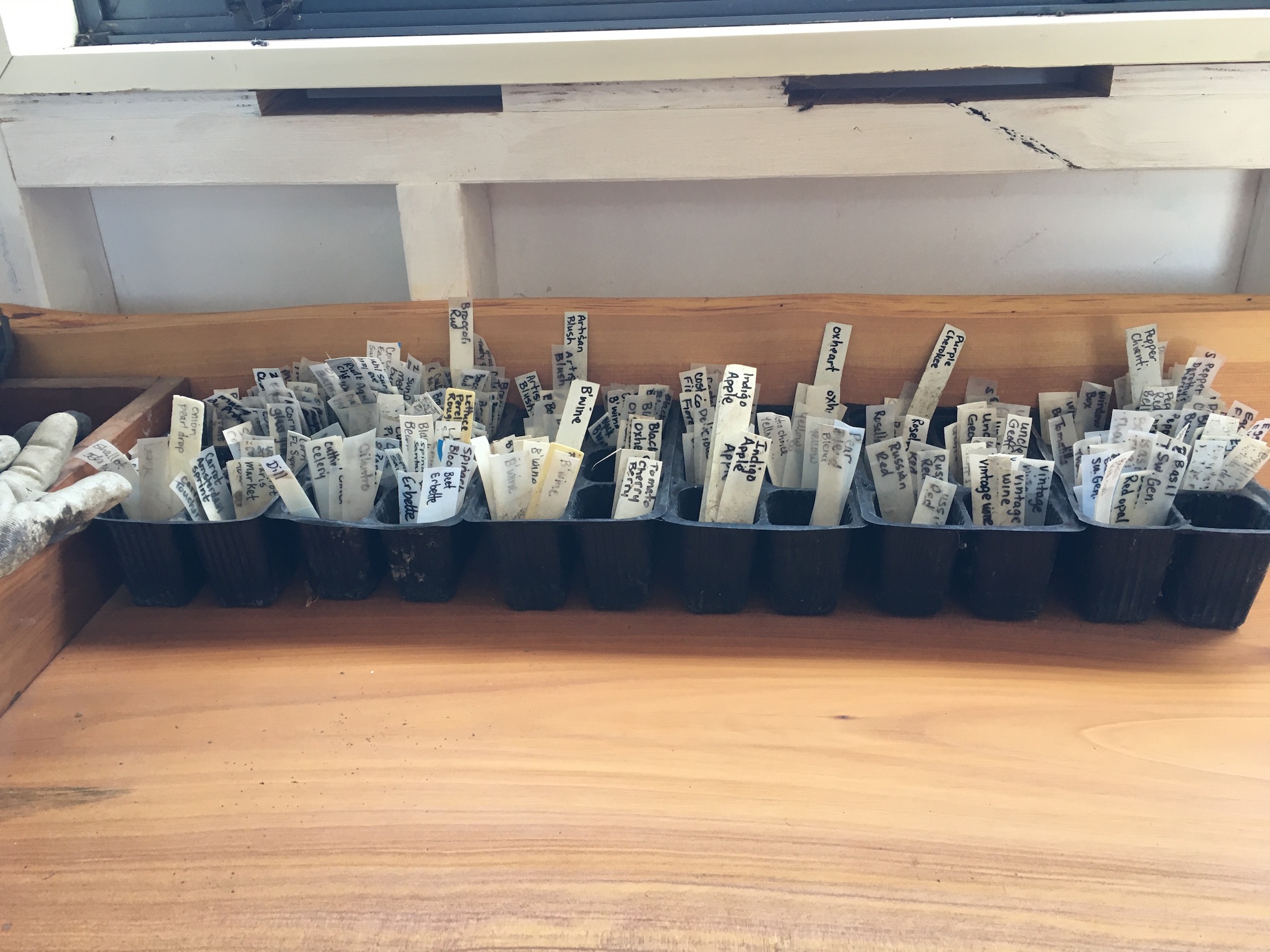
Plant tags ready for spring.

And so, there is joy and pleasure, there is the flavour of sunshine, even in the darkness.

And next week, the days will be a little longer. Next week I will take stock of my seeds and begin planning next summer’s crops. Next week we will celebrate Matariki, the start of a new year.

Autumnal Beauty

Here in Aotearoa New Zealand, most of our native trees are evergreen, so we don’t have the same spectacular autumnal colours I remember growing up in North America. There are, of course, plenty of European non-native trees planted in parks and gardens, so we do get some autumnal colour, but here in Canterbury, where summers are dry, the overwhelming landscape colour in autumn is green, as cooler temperatures and increased rainfall lead to a flush of grass growth.

In the vegetable garden, however, there’s plenty of colour. Much of it is subtle, but it speaks of autumn nonetheless.

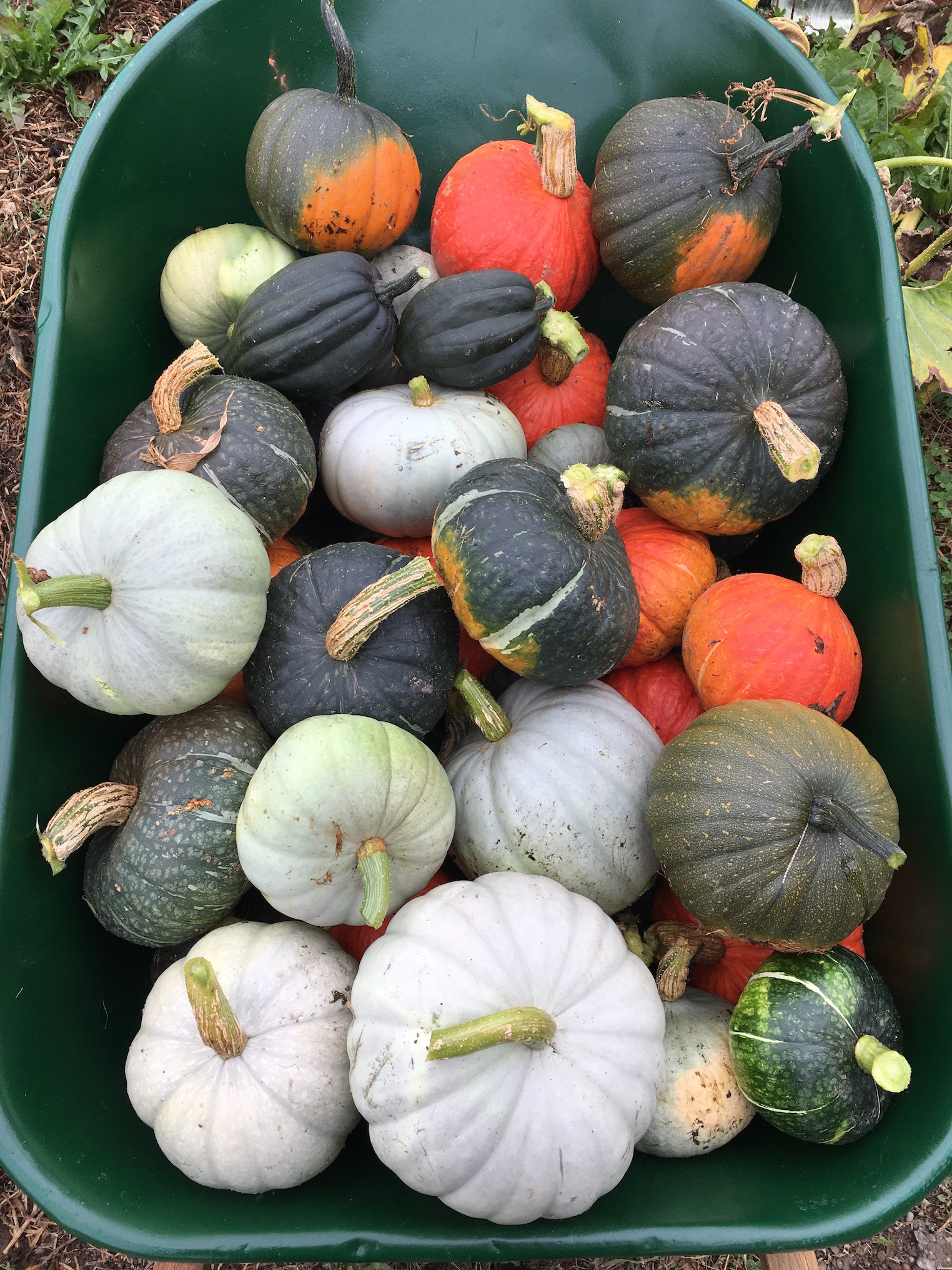
Winter squashes offer deep green, heathery grey, and orange, first in the garden, and then in the laundry room where they adorn every available surface at the moment. They’ll also offer beautiful orange in dinners throughout the coming year as we work our way through them.

Dry beans also provide colourful beauty at this time of year. Trays of drying beans on the porch make me smile: Blue Shackamaxon’s glossy black, Bird’s Egg’s speckled spheres, and Cherokee Cornfield’s riotous mix of colourful varieties.

Then there’s the flint corn. This year, I planted Strawberry Popcorn, which produces deep red kernels, and Glass Gem, with its glittering multihued kernels. Husking corn is like opening a box of crayons.

In the greenhouses, summer still reigns, offering red tomatoes, multicoloured peppers, and purple eggplants.

On top of the colourful vegetables, there are plenty of autumnal flowers in bloom: dahlias, heliopsis, and chrysanthemums provide bright splashes of yellow, orange, pinks and reds. They also attract colourful butterflies like yellow admirals, red admirals and monarchs.

So while we may not have the colourful autumn leaves, there is plenty of brightness to enjoy, even as the days grow short and dark. 

2024 Garden Stocktake

Autumn is well underway, so it’s time to take stock of the summer season’s garden successes and failures.

Strawberry popcorn

The biggest success this past season was in the soil. All winter last year, I incorporated fresh cow manure and composted horse manure into the garden beds. Every single bed got one or the other, in addition to my own compost in the spring. And finally my efforts to improve the soil over the past four years have begun to show. There’s still a long way to go, and a lot more compost and manure to haul, but this summer most of my crops grew well, and nutrient deficiencies weren’t obvious until late in the season. A huge improvement over previous years.

Particularly nice crops this year included:

  • Strawberry popcorn—This was my first year to plant this corn. I admit I was dubious when I opened the rather expensive packet of seed to find only 15 seeds. It was clear the corn was marketed as a fun thing for kids to grow. However, every seed germinated, and the plants grew to well over 2 metres tall, dwarfing all the other varieties of corn I grew. Each plant yielded two large ears (much larger than the photo on the packet indicated they would be—very un-strawberry-like), and a few even had a third, smaller ear. I was thoroughly impressed by how much popcorn so few plants produced. Of course, the proof of the variety’s worth will be when we pop it. The Glass Gem corn I love so much is marketed as a pop corn, but we’ve found the popping to be poor. It will be a few months before we know if the Strawberry popcorn was worth it.
  • Dwarf bean Xera Select—I had decided not to plant dwarf green beans anymore, because the runners produced more, better beans over a longer season. But I still had seeds for a few varieties, so I planted them, thinking I simply wouldn’t buy more. But Xera Select grew beautifully—long, uniform pods, and lots of them. I might just have to plant them again next year.
  • Bicolour sweetcorn—This year we managed to have side-by-side comparisons of the flavour of two varieties of sweetcorn, and we found Bicolour to be much sweeter than Florida Supersweet. The plants didn’t seem quite so resistant to drought, though, so I might plant both varieties again next year. They were both good and produced good crops despite water and nutrient stress.
  • Cherry tomato Rosella—Oh. My. God. This is possibly my new favourite tomato. This black cherry tomato has so much flavour in each little fruit, it’s addictive. Definitely one to plant again!
  • Cherry tomato Cherry Berry—I normally stick with heirloom tomatoes, but this F1 hybrid was amazing this year—excellent flavour, and SO MANY FRUITS! Outstanding value for the space.
  • Tomato Black Brandywine—Brandywine flavour in a dusky tomato. These ripened earlier than the Brandywine Pink, which was a bonus.
  • Tomato Black Oxheart—Big, fleshy, heart-shaped fruits. These were a winner in my book for sauces and drying.
  • Melon Topaz—Honeydew in texture, with flesh the colour of a cantelope, and a flavour somewhere in between the two. These were delicious. Definitely one to plant again.

Crops that were a bit meh:

  • Tomato Costoluto Fiorentino—These tomatoes are interesting, but the fruits were smallish, and so ridgy they were a pain to deal with in the kitchen. The flavour was pretty average. At some point, I simply stopped picking them.
  • Pea Shiraz—I was excited to plant a purple snow pea this year, but the variety disappointed. A poor yield of unattractive pods that matured quickly and weren’t terribly tasty. Back to the standard snow pea for me next year.

Absolute disasters:

  • All the carrots—This year’s carrot disaster had nothing to do with the varieties I planted, and everything to do with the slugs that ate nearly all seeds, and then the birds that uprooted the few plants that managed to evade the slugs. I planted carrots three times, and ended up harvesting about 6 carrots.
  • All the potatoes—As with the carrots, the near complete failure of the potatoes had nothing to do with the plants and everything to do with pests. The rats, who had a field day in the garden all summer, tunnelled down the row of potatoes and ate every tuber. I managed to snatch a few out of their greedy jaws, but only a few.

If not for the pests, it would have been a spectacular year in the garden. Even so, nearly every preserving jar is full, the freezer is at capacity, and I’m still bringing in the pumpkins and dry beans, so I can’t really complain.

The well stocked pantry

Summer Soup 2024

Making and canning vegetable soup used to be a whole family activity, with the kids pitching in from a young age, picking and chopping vegetables alongside my husband and me. My husband would cook the soup while the kids and I washed dishes, and then I would can (bottle) it up.

We called it Summer Soup, because we made it at the height of the summer vegetable season (which ironically always falls in early autumn). On the cold rainy nights winter we could open a jar and enjoy a bowl of summer. 

When the kids were young, they delighted in recounting which vegetables they chopped, proud of their part in feeding the family. These days, making summer soup is a mostly solitary activity for me, the kids being all grown up. It hasn’t stopped me from making a vast quantity of soup. Last Sunday I designated as Summer Soup day because I had heaps of tomatoes, green beans, sweet corn, zucchini, and other vegetables to put in it.

Because it was Sunday, I started off at 5.30 am by making muffins for breakfast. While the muffins baked, I began chopping vegetables …

My husband had planned on baking bread on Sunday, but unfortunately he woke with a terrible cold that morning. He’d started his sourdough sponge the night before, so with instructions from him, I made up his bread dough after breakfast and set it to rise as I continued to chop vegetables.

The mixing bowls began to fill up in the kitchen as the morning progressed. After several hours and a few trips to the garden to pick more vegetables and dump scraps on the compost pile, I took a short break from chopping to divide the bread dough for loaves. Thankfully, my husband felt well enough at this point to form the loaves and get them started on their second rising, because I really wanted to finish chopping vegetables by lunchtime.

I finished the final chopping shortly after the focaccia came out of the oven. We sat down to enjoy fresh focaccia for lunch.

My break was short, because after lunch I began processing all those chopped vegetables. It was clear I wasn’t going to be able to fit everything into one pot, so I pulled out both my 20-litre stock pots and divided the vegetables between them. While the soup heated up, I prepared my jars and the pressure canner. I also filled my 12-litre stock pot with vegetable scraps and water and set it on the stove to simmer for a few hours for vegetable stock.

Much of the time commitment in making and canning vegetable soup is in the canning process. Each batch of seven jars has to be processed for an hour and 15 minutes, and then there’s the waiting time while the canner cools down enough to remove the jars before putting in the next batch.

While I was waiting for the canner to do its thing, I started in on the apples that needed to be processed. I peeled and sliced a mountain of apples. Once I’d emptied the soup out of one of the 20-litre pots, I refilled it with apple slices and cooked them up into apple pie filling—enough for three generously filled pies. The pie filling went into the freezer. 

The soup seemed to never end. Even after separating off two meals worth of soup for eating this week, I ran three full canner loads (21 quarts) of soup and one full load (7 quarts) of stock. The last jars came out of the canner at 9.15 pm.

I’m glad I only make summer soup once a year, but I’m thrilled to have all that summery goodness squirrelled away in the pantry. Bring on the rain and cold of winter—I can already taste the soup (followed by a slice of apple pie, of course!).

Summer Heat, Autumnal Vibes

It’s been hot here lately, with blue skies and temperatures in the upper 20s most days—summer at its height.

But when I wake at five in the morning it is dark, and there is no working in the garden until nine in the evening anymore, unless it’s by head torch. The days are growing shorter, and there’s a feel to the air that speaks of the autumn to come. 

The cricket chorus has grown over the past few days—the summer’s crop of insects maturing to mate and lay eggs before winter. The early apples have been harvested, and pumpkins are swelling on the vines. I harvested most of my dry beans last week, too. 

Of course the summer crops—tomatoes, zucchini, eggplants, peppers, and beans—are still going strong, and will be for a while.But the seasons are turning.

I love it.

My husband and I lived for two and a half years in Panama back in the early 1990s, so we got to experience living almost on the equator. The daily temperature variation in Panama is greater than the yearly variation, and the day length variation is virtually imperceptible. The only seasonality is in rainfall—it rains from mid-March to mid-December, then stops entirely until mid-March again.

Tomato sauce made from yesterday’s harvest

After living in Pennsylvania, Michigan and Ohio for the first 22 years of my live, Panama was … well … boring from a seasonal perspective. I missed the annual markers of the Earth’s progress around the sun. Of course we had heat, but I missed the long days and drawn out sunsets of a high-latitude summer. In Panama, the sun leaps into the sky in the morning and drops like a stone below the horizon in the evening, and it does so with such precision and consistency, you can practically set your watch to it.

I missed the cold of winter, the dark days and long nights perfect for curling up with a book or sitting by the fire (though to be fair, Panama nights sometimes seemed long, because we had no electricity, one small table to sit at, and only a lopsided wooden chair and a tree stump to serve as seating).

I missed spring, for its slow unfurling of green, rising from the herbs on the forest floor to the tops of the trees as the season progressed. I missed autumn for its splash of yellows, oranges, and reds, the rime of frost on crisp mornings. I missed the bite of icy wind, the smell of snow.

New Zealand doesn’t get the extremes of seasonality I enjoyed in the northern United States. Our climate is heavily moderated by the vast Pacific Ocean in which we sit. And our native plants are largely evergreen, so green is the dominant colour all year round. But where I live, at a similar latitude to St. Paul, Minnesota (but of course on the other side of the equator), we have decent seasonality, and I love the changes throughout the year. People often ask what my favourite season is, and I have to say it’s all of them. Each season has something new and exciting to offer, and there’s no point in mourning the loss of long summer evenings, because they’ll be back. Instead, I welcome the short days, the excuse step away from the garden in the evenings. I look forward to bringing in the autumn harvest and filling the pantry with the fruits of summer. 

So bring on the shorter days. Variety is the spice of life, after all—time for some spice.

2024–Year of the Rat?

The netted ‘room’ is excellent at keeping birds out, but does nothing to thwart rats.

With a third of my garden protected with permanent bird netting this year, I was pretty smug about pests this spring. Silly me …

2023 may have been the year of the rabbit in the Chinese Zodiac, but in my garden it was year of the rat, and it seems to be continuing in 2024.

In the spring, rats ate all my pea seedlings … twice … On one of those occasions, they plundered the seedlings in the three hours the tray sat in the garden before I planted them out. I was working (planting other things) just metres away while the rat collected all the seedlings and tucked them away in its nest (I found them later when I uncovered the nest).

The rats also did good work on my first planting of corn, melons, cucumbers, and pumpkins, eating the seeds and uprooting the seedlings.

I went through three cheap rat traps (none of which actually caught a rat, and all of which quickly broke), before spending an excessive amount of money on a DOC 200 trap. This terrifying stainless-steel beauty caught its first rat within 24 hours. It has nabbed 3 rats, a hedgehog, and an English sparrow in the three months I’ve had it, which I’m quite pleased about.

Unfortunately, it has not solved my rat problem. Last week I discovered a rat (or rats) had tunnelled straight down my potato bed, eating nearly every potato in the entire bed, and damaging some plants so badly they were dying. Yesterday, I went to pick a gorgeous Black Brandywine tomato that was ripening on my now bird-protected tomato plants. I found the tomato on the ground, half eaten by little rat teeth.

I’m beginning to wonder if I will get anything off the garden this year. So far, the rats don’t seem to like courgettes or cucumbers, but my beans are planted right next to the compost pile where the rats seem to nest. Once they start plumping out, they’ll be primo rat food. And the corn? You know those rats will be scampering right up the plants to gnaw at the ears. Makes it hard to lure them to a trap when the garden is a smorgasbord of delicious food.

Makes me wish I still had a cat—the rats didn’t start to become a real problem until he was gone.

I’ve also got my first ever infestation of whitefly this year. Pretty embarrassing for someone whose Master’s degree was on greenhouse pest management. Whitefly wasn’t even on my radar, so I missed early signs of the infestation. They’re not only in the greenhouse, but outdoors as well. The key to effective integrated pest management is paying attention and catching infestations before they’re a problem, and I failed spectacularly at it. Now I’m playing catch up. My only consolation is that it looks like lots of other people are, too, because both suppliers of whitefly biocontrol agents in New Zealand are sold out. Serves me right, I guess.

So as we enter 2024, officially year of the Dragon, I’m wondering if there’s a dragon that eats rats …